Pest Library — What Actually Lives Here
Our pest library covers the insects and rodents that actually turn up in Whatcom County homes and buildings — how to identify each one, when in the year it shows up here, what it does to a structure, and what treatment realistically involves.
Call 360-410-2199 Request a free inspection
Ants
The single biggest source of calls here, and the group where identification changes the answer most — a carpenter ant and a moisture ant call for genuinely different responses.
Rodents
Crawlspaces, attics and wall voids — and, in the vole’s case, the lawn rather than the building at all. The species decides where they travel, what they will do to insulation and wiring, and whether this is our work.
Spiders
Mostly harmless, routinely misidentified, and the group where the honest answer is most often that no treatment is warranted.
Stinging insects
Wasps, hornets and bees. Two of these we treat, and two we will not — the difference is on each profile.
Structural pests
The organisms that damage the building itself. Nearly all of them here are following moisture rather than attacking sound wood.
Occasional invaders
Seasonal arrivals that come in, do nothing, and leave. Most of this group is a caulking job rather than a treatment.
Fabric and pantry pests
The ones that arrive inside something you bought. Finding the source matters more than treating the room.
Biting pests
The group people most want a fast answer on, and the group where a wrong identification costs the most.
Most pest libraries are national copy pasted onto a local site, which is why they list species that have never been recorded in this county. This one covers what our technicians actually find in Whatcom County, with the seasonal timing that applies here rather than to a national average.
The four things worth knowing about pests in Whatcom County
Damp matters more than cold
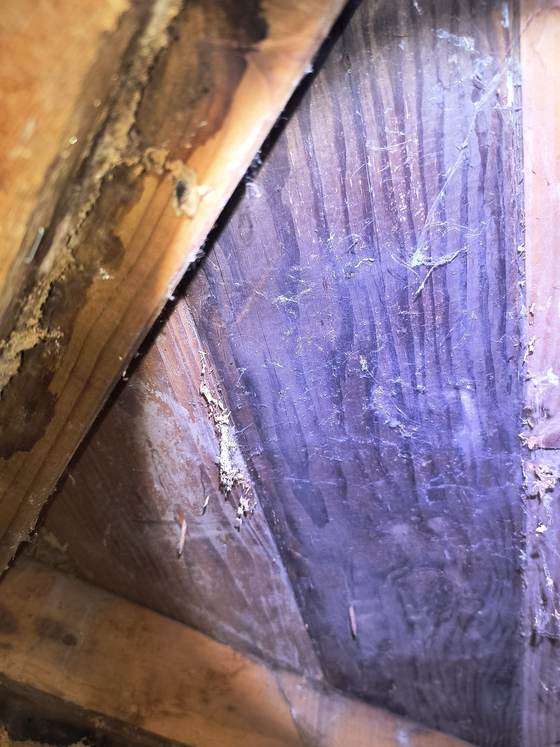
We do not get a hard winter, so populations are never reset. What we get instead is about thirty-five inches of rain spread across a long gray season, which keeps wood damp year-round. That single fact explains most of our call volume. Dampwood termites only attack wood that is already wet. Moisture ants nest in it. Carpenter ants prefer wood that has begun to soften. Silverfish, sowbugs and millipedes are all humidity-driven. When one of those appears indoors here, the useful question is where the water is, not which product to spray.
Most of what frightens people here is harmless
The giant house spider is the largest spider most people in this county will ever see indoors, and it is not dangerous. Its close relative the hobo spider carries a reputation built on research that has since been walked back — the Washington State Department of Health states plainly that hobo spiders are not considered dangerous as previously thought, and that evidence does not support the claimed link to skin necrosis. We include this because scaring customers is an easy way to sell treatments and we would rather not.
Our termites are not the ones you have read about
Termite content online is overwhelmingly written about aggressive subterranean species in the South and East. The common species here is the Pacific dampwood termite, which is a moisture-follower rather than a structural predator of sound wood. Finding them is genuinely bad news, but the news is usually about a water problem that has been running for a while rather than about an invading colony.
What this library does not cover
Birds and nuisance wildlife are not in here, because they are not what we do. Sasquatch is a pest control and exclusion company, and bird work, bats, squirrels, raccoons and opossums are all somebody else's specialty. Several of those are federally or state protected with hard seasonal timing attached, and that is work for an operator set up to handle it properly rather than for us.
If that is what you have, call anyway — we will tell you what it sounds like from the description and point you somewhere useful.
Identification is most of the value
A surprising share of what we get called about needs no treatment at all, and the difference between the two is nearly always identification. A carpenter ant and a moisture ant call for genuinely different responses. A giant house spider and a hobo spider are routinely confused, and only one of those confusions leads to unnecessary treatment. Winged carpenter ants in spring get mistaken for termite swarmers constantly.
That is why these entries lead with what the thing actually is and what it is telling you about the building, rather than with a treatment.
How to use this library
Each profile covers identification, when in the year it shows up in this county, what it actually does to a structure or to people, the signs that distinguish it from the species it gets confused with, and what treatment realistically involves. Where the honest answer is that no treatment is warranted, the profile says so.
If you have something in front of you and cannot place it, photograph it next to a coin or a fingertip for scale and send it over. Identification is free and it is the step that determines everything after it.
When to call and when not to
Not everything in this library warrants a treatment, and we would rather say so here than after you have paid for a visit.
Usually does not need us: a single large spider indoors in autumn, a few ants scouting a counter in early spring, one wasp in a room with an open window, a cluster of conifer seed bugs on a sunny wall in October. These are seasonal and self-limiting.
Worth a call: droppings anywhere in a kitchen or pantry, scratching in a wall or ceiling at night, sawdust-like frass below trim, soft or spongy wood around a window or sill, an ant trail that persists after cleaning, any wasp or hornet nest near a door or a play area, or bites appearing overnight.
Worth a call quickly: anything structural you want sealed before autumn, because the useful window for exclusion work is August and the queue for it fills up.
A note on sources
Where a profile makes a claim about risk, law or biology, it says where that comes from — Washington State Department of Health for the spider guidance, and WSU Extension for regional species behavior. We date those references so you can see how current they are.
That matters more in this field than it sounds. Pest content online is dominated by material written to sell rather than to inform, and a good deal of what circulates about hobo spiders, "murder hornets" and termites in the Pacific Northwest is either outdated or was never accurate here.
What is not in this library
You will not find fire ants, Formosan termites or brown recluse profiles here, because none of them is established in Whatcom County. They appear on a great many Pacific Northwest pest sites anyway, copied from national templates, and every time they do they make a local site slightly less trustworthy.
The black widow is a separate case and we would rather draw the line accurately than tidily. It is a genuine Washington spider rather than a national template entry: the state Department of Health describes the western black widow as common to eastern Washington, and its range follows the drier, warmer country east and south of the Cascades. On this side of the mountains it is uncommon, and the ones that do turn up are in woodpiles, meter boxes and undisturbed shed corners rather than in living space. That is a different statement from saying the species does not occur in the state, and we are not going to make the stronger one just because it reads more cleanly next to the recluse.
The widow is also only half of what the state actually says, and it is the half this page had been giving all the room to. The Department of Health names two spiders in Washington as being of medical significance, and the second is the yellow sac spider — which, unlike the widow, is common on this side of the Cascades. It is small, pale and easy to miss: it spends the day in a silk pocket where a wall meets a ceiling and hunts across walls, floors and bedding at night rather than waiting in a web, which is exactly why it is the one realistically likely to bite somebody in a Whatcom County bedroom. The bite itself is a minor event — a sharp sting, then redness and itching that settle within a day or two — and the skin-necrosis stories attached to it are as poorly supported as the ones attached to the hobo spider. Both halves of that are worth having, which is why it gets a profile of its own rather than a line in somebody else's.
If you have been told you have a brown recluse here, the identification is worth a second look before anyone treats for it.
Frequently asked questions
How do I identify a pest I found in my house?
Take a clear photo next to something for scale and send it to us. Identification drives treatment — moisture ants and carpenter ants call for genuinely different responses, and getting the species wrong wastes a visit.
Are hobo spiders dangerous?
The Washington State Department of Health states that hobo spiders are not considered dangerous as previously thought, and that evidence does not support a link between their venom and skin necrosis. Most large fall spiders found indoors here are actually giant house spiders.
Do we have termites in Whatcom County?
Yes, but not the aggressive subterranean species that drives treatment in the South. The Pacific dampwood termite is the common one here, and it goes after wood that is already wet — which usually means the real problem is a moisture source.
Pest problem in Whatcom County?
Family-owned, no long-term contracts, and every treatment is backed by our 100% Service Guarantee.
Most calls in Whatcom County are out within 1–2 days, about 3 during the late-summer peak.