
Pest Control in Lynden, Washington
Lynden is farm country and the pest work reflects it. Rodents in feed rooms and equipment sheds, fly pressure around livestock, cluster flies by the thousand in south-facing walls, and a downtown of older brick and timber buildings. We run scheduled route days up the Guide Meridian.
Call 360-410-2199 Request a free inspection
Lynden on the map
Working the farm country
Fifteen miles up the Guide Meridian from Bellingham the map changes character completely. Lynden sits in the middle of some of the most productive agricultural ground in Washington — dairy above all, plus raspberries, blueberries, seed potatoes and the supporting trades that grow up around them — and pest control out here is an agricultural service before it is a household one.
That distinction matters more than most people outside farming realize. On a dairy, a pest problem is a milk-quality problem, a feed-cost problem and a herd health problem, in that order. On a berry operation it is a food safety and crop-loss problem with a harvest window that does not move. Neither is a nuisance call, and neither is served by a technician arriving with a sprayer and a script.
The WSU Extension publications store is where the university’s bulletins for this region are published, and it is a better reference for farm ground than anything national.
We run Lynden on scheduled route days rather than as same-day fill-in work, because the drive is two lanes of road shared with tractors, trucks and feed haulers and because farm visits have to fit the operation’s own timetable. That is not a limitation we are apologetic about. It is how you get somebody who knows the property rather than whoever was closest.
Rodents on an agricultural property
Every farm has rodents. Anyone who tells you they can deliver a rodent-free farm is selling something. The realistic and achievable goal is control over where that population is allowed to be, and protection for the things that actually cost money when they are damaged.
The feed room is the center of it. Grain, pellets and supplement stored in an open shed will support a rodent population indefinitely, and no program overcomes an unlimited food supply. Metal bins with tight-fitting lids, spillage cleaned up rather than swept into a corner, pallets kept off the wall so runways are visible, and a door that closes against a proper threshold are worth more than any product we can place. On operations that get this right, everything else we do works. On operations that do not, we are managing a symptom forever, and we say so at the first visit.
Wiring is the other priority. Rodent damage to harness and control wiring in equipment, shop electrics and barn circuits is expensive and occasionally dangerous, and it is the failure mode that convinces skeptical owners the program is worth having. Tractors and machinery parked for the season are particularly vulnerable — a warm engine bay full of insulation is exactly what a rat wants in November.
Placement on a working property is constrained in ways a house never is. Anything used has to be inaccessible to cattle, calves, poultry, barn cats and working dogs, which in practice means tamper-resistant stations anchored on the exterior perimeter and mechanical control inside the buildings. Where we use rodent control products at all, we choose programs and active ingredients selected to limit secondary poisoning risk, which matters enormously here: this county’s owls, hawks and eagles hunt exactly the population we are managing, and a farm’s raptors are doing free work that we would rather not undermine.
Cluster flies, and the February phone call
If you live in the farm country and your house fills with slow, clumsy, dark flies at the window on the first mild afternoon of the year, you have cluster flies, and they are one of the most misunderstood pests in this county.
They do not breed in your house. They do not come from your rubbish or your drains, and they are not a sign of anything unsanitary. The larvae are parasites of earthworms in the surrounding fields, which is exactly why this pest is a rural one — the more pasture and cropland around a building, the worse it gets.
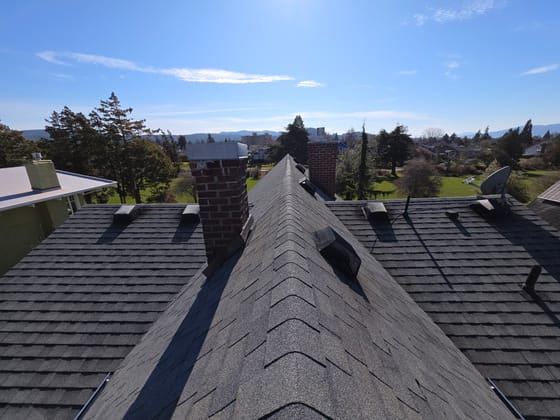
What happens is seasonal. In late summer and early autumn the adults look for somewhere to overwinter, and they choose the warmest surface available, which is a south or west-facing wall in afternoon sun. They enter through gaps in the siding, around window frames, under fascia, through unscreened gable and soffit vents, and then they settle into the wall void, the attic or the space behind the trim and go dormant. On a warm day they wake up, head for light, and come out on the interior side.
By February, killing the ones in the room accomplishes very little, because there are thousands more in the wall and they will keep emerging on every sunny day until spring. The work that matters is done in late August and September, on the outside: sealing the gaps, screening the vents, and treating the sunny elevations before the flies move in. Do that, and next February is quiet.
Flies around livestock
Fly pressure on a livestock operation is a production issue, not a comfort one, and it is one of the few pest problems where the sanitation side of the answer outweighs everything else by a wide margin.
Two species do most of the damage and they behave differently. House flies breed in moist decaying organic material — manure packs, spilled silage, wet bedding, the edges of a bunk where feed has fermented — and they are primarily a contamination and nuisance problem, moving between waste and feed and udders. Stable flies are the ones that bite, they take blood from the legs of cattle, and a heavy population measurably reduces feed intake and milk production because animals spend the day stamping and bunching instead of eating.
Both develop fast. In warm weather a house fly goes from egg to adult in a week to ten days, which means a breeding site that is missed on a Monday is producing adults before the following weekend. That short cycle is why fly programs succeed or fail on the sites rather than on the adults.
The sites are usually predictable and usually a small number of them: the wet margin at the edge of a manure pack, the spot under a leaking waterer, the spilled feed accumulating at the end of a bunk, the bedding in a calf hutch that has not been turned, the drainage low point where nothing dries out. Finding and correcting those does more than any spray program, and on the operations where we get real results it is because somebody agreed to change a management practice rather than because we applied something new. Much of the research behind that advice comes through WSU Extension in Whatcom County, which works with the dairies and berry growers here directly.
Where treatment has a place it is as support: targeted work on resting surfaces rather than blanket application, baiting placed away from feed and water, and attention to resistance, because rotating nothing is how a program stops working after two seasons. Biological control has a genuine role on some operations too, and where a farm is already running parasitic wasp releases we plan around that rather than undermining it.
Calf hutches deserve their own mention. They concentrate everything that flies need — bedding, moisture, warmth and young animals that cannot defend themselves — and they are frequently the source that a whole-farm program has been ignoring.
Wasps, ants and the buildings themselves
Farm structures generate their own set of problems that have nothing to do with livestock.
Yellowjackets nest in the ground along field edges, in the base of hay stacks, under equipment that has sat for a few weeks, and in the wall and soffit cavities of shops and barns. On a working property this is a safety issue rather than an inconvenience — a nest disturbed by a bale mover or a tractor tire puts people in hospital, and the risk peaks in late summer at exactly the point when the workload is heaviest and nobody is looking.
Paper wasps under eaves, in equipment cabs and inside idle machinery are milder and often better left alone if they are out of the way, though a nest inside a tractor cab is a genuine hazard and gets dealt with.
Carpenter ants and moisture ants work the older timber-framed buildings, particularly anywhere a roof or a gutter has been leaking into a post or a sill. On a barn the ants are usually telling you something about water before they are telling you anything about ants, and the useful visit is the one where somebody points at the source rather than treating the trail.
Mud daubers, cluster flies in the shop, and overwintering stink bugs in the south wall of the house round out the list, and none of them are serious. We say so rather than writing them up.
Downtown Lynden and the residential side
The town itself is not all farm. Front Street and the surrounding blocks hold older brick and timber commercial buildings, some of them well over a century old, with shared walls, common basements and utility chases that connect buildings whose owners have no idea they are connected.
Commercial rodent work in a downtown block is a shared problem by definition. The sanitation weak point behind one restaurant feeds the population that turns up in the shop two doors down, and treating a single tenant is a temporary result. Where we can get several tenants or a building owner working to one plan, the outcome is different in kind.
Residential Lynden runs from prewar houses near the core through postwar and midcentury stock out to newer subdivisions on the edges. The older houses have the familiar Whatcom County pattern — shallow crawlspaces, bare soil, failed vent screens, moisture ants in framing that has taken water. The newer edge subdivisions have the Ferndale pattern, which is a tight envelope with a handful of unsealed penetrations and a field on the other side of the fence.
That last combination is the one that surprises people. A new house on the edge of Lynden is backing onto open agricultural ground, and when that ground is cut or harvested the resident population loses its cover in a single afternoon and starts looking at your foundation. Harvest is as reliable a driver of rodent calls out here as rainfall is.
Berry ground and the harvest constraint
Raspberry and blueberry acreage surrounds the town, and on those operations the constraint that governs everything is the harvest window.
There are stretches of the season when we simply cannot be in the field, and any work that needs doing has to be planned months earlier. Rodent pressure off the surrounding ground is the constant, and it climbs sharply once a field is cut.
Around the packing and cooling structures the work is more conventional: rodent exclusion and fly pressure around culls and waste handling. Food safety auditing means the documentation matters as much as the result, and we build accounts here expecting the records to be read by somebody other than the grower.
Stored-product insects in feed and seed
A farm town sees these far more than a city does, and they are routinely misdiagnosed as a building problem when they are a product problem.
Beetles and moths that infest grain, seed, flour, pet food and animal feed arrive inside the product rather than walking in through a door. That single fact changes the entire response. Treating a building perimeter for an insect that came in on a pallet accomplishes nothing at all, and a great deal of money gets spent that way.
The work is finding the source. That means tracing back through what is stored, starting with whatever has been sitting longest and furthest back, checking the spillage in seams, under racking and in the corners of a feed room, and being systematic rather than hopeful. On most operations the source turns out to be a single forgotten sack or a spill in a corner that has been quietly producing adults for months.
After that it is rotation, sealed containers, cleaning the residue out of seams and racking, and monitoring long enough to confirm it is genuinely finished. We would rather write that up plainly than sell a spray schedule that leaves the source sitting where it was.
Equipment, wiring and the winter shutdown
The most expensive rodent damage on a Lynden property is rarely in the house.
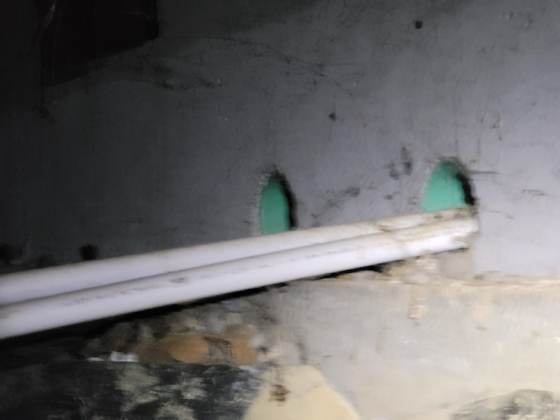
Machinery parked for the season is close to ideal habitat: a warm engine bay, insulation, wiring loom, and months of undisturbed quiet. Rodents chew harness wiring, control wiring and insulation, and the bill for a rewired harness on a tractor or a mixer wagon is the number that persuades skeptical owners a program is worth having.
The same applies to shop electrics, barn circuits, control panels and anything running through a conduit that enters a building at grade. We pay attention to those runs specifically, because damage there is expensive, occasionally dangerous, and completely invisible until something stops working.
Practical measures are unglamorous and effective. Park equipment away from standing cover and field margins where you can. Clear rodent harborage from the immediate surrounds of a machinery shed. Keep feed out of the same building as anything with wiring worth protecting. And check the machines periodically over winter rather than discovering it in April.
Spiders, silverfish and the rest of the house list
The residential side of Lynden gets the same domestic set as anywhere in the county, and the reassuring answers are worth stating.
Giant house spiders produce the September and October calls. They are harmless, established throughout western Washington, and the large fast ones people find indoors are wandering males looking for mates rather than an invasion. There is no brown recluse in this state’s northwest corner and never has been. Exterior lighting does more to create a spider problem than most people expect, because it concentrates the insects the spiders are feeding on.
Silverfish, sowbugs and millipedes belong to a damp crawlspace and are reporting a moisture condition. Stink bugs and lady beetles follow the cluster fly pattern exactly, overwintering in sunny walls and emerging indoors on the first mild day.
Wasps around a farmhouse deserve one specific mention: yellowjackets nesting in the ground along a lawn edge or at the base of a hay stack are the ones that cause genuine incidents, because they are invisible until something disturbs them and the colony is at its largest in late summer when the workload is heaviest.
What we will not sell you
Barn birds and farm wildlife. The single most common request we turn down out here. Starlings in a feed alley, swallows on a barn wall, something living in a shop roof — none of it is work we take on, and we will say so at the first call rather than after a site visit.
Mole trapping. The methods that actually work are restrictively regulated in Washington and most of what is sold to homeowners does not work.
A rodent-free farm. Nobody can deliver one. What we quote is control over where the population is allowed to be and protection for what costs money when it is damaged.
What a visit looks like out here
We start by asking what the operation is and what its rules are, because on a working property that shapes everything else. Biosecurity protocols, where we may drive, what may be placed and when we may be in a barn are not obstacles — they are the job.
Then we walk it. The feed storage, the alleys, the roost sites, the perimeter, the shop, the outbuildings, the wiring runs and the places somebody has already noticed a problem. You get a plain account of what is happening, what is driving it, what we can change and what is a management or housekeeping change on your side. If the biggest available win is a lid on a feed bin, we will say that first, before anything we would be paid for.
Inspections are free for everything we handle, with bed bugs the single exception — those carry a verification fee that is credited against treatment if you go ahead. No long-term contract is required, on a house or on a farm.
Frequently asked questions
Do you work on dairies and working farms around Lynden?
Yes, and it is a substantial part of what we do up there. Farm work runs on the operation's own calendar and biosecurity rules rather than ours, and anything placed has to sit where livestock, working dogs and equipment cannot reach it. We plan around milking, feeding and harvest.
Why does my Lynden house fill with flies in February?
Those are almost certainly cluster flies, which spent the winter dormant inside your south or west-facing wall and woke up on the first warm afternoon. They breed in earthworms out in the fields, not in your house, and the durable fix is sealing the exterior gaps they used in autumn.
How often do you get up to Lynden?
We run scheduled route days rather than fitting Lynden in between Bellingham jobs, because it is fifteen miles of two-lane road and farm traffic each way. That means timing depends on where in the week your address falls, and we will tell you what that looks like when you call.
Do you handle rodents in equipment sheds and outbuildings?
Yes, with a realistic goal. A pole barn with a gravel floor and a roll-up door was never going to be rodent-proof, so we defend the things that matter — the feed room, the wiring, the shop — and run a monitored program in the buildings that cannot be sealed properly.
Are you licensed to work in Washington?
Every applicator on our crew holds a current Washington State Department of Agriculture license, and we publish the numbers next to the names on this site so anyone can check them. On agricultural accounts we can supply that documentation for your own records.
Guides
From the blog
Pest problem in Lynden?
Family-owned, no long-term contracts, and every treatment is backed by our 100% Service Guarantee.
Most calls in Whatcom County are out within 1–2 days, about 3 during the late-summer peak.
Last updated