
Rodent Control & Mouse Exterminator in Bellingham & Whatcom County
Rodent control here is exclusion first and trapping second. We find how they are getting in, seal those entries, trap the animals already inside, then clean up the contamination they left. Trapping alone empties a house temporarily; sealing a quarter-inch gap in the foundation is what actually ends it.
Call 360-410-2199 Request a free inspection
The autumn move indoors, on video

Where they actually get in
- Soffit and roofline gaps Where the roof meets the wall, and where two roof planes meet. Roof rats work the top half of a building and this is the way in.
- Gable and attic vents A louvered vent with no screen behind it is an open door. Screens rust, bend outward and are rarely looked at.
- Chimney and flashing The gap where a chimney passes the roofline, and lifted or torn flashing around it.
- Branches touching the roof A limb over the roof is a bridge. Cutting it back is usually cheaper than anything done afterwards.
- Gutters and downspouts The bracket line gives a climbing route, and a downspout against siding hides the gap behind it.
- Utility penetrations Water and waste pipes, electrical, cable, and the dryer vent. Drilled oversize, sealed with foam if at all.
- Where siding meets foundation The single most common entry we find. A continuous line around the whole building, and nobody looks at it.
- Crawlspace vents Screens corrode from the ground side. Weeds growing across a vent are why one goes unchecked for years.
- Crawlspace access hatch Often a board leaning against an opening. It keeps the weather out and nothing else.
- Garage door corners The bottom corners, where the seal lifts away from the jamb. Visible as daylight from inside with the door shut.
- Door thresholds A worn sweep under an exterior door. Check it the same way — from inside, in daylight.
- Woodpiles and vegetation Not an entry point but the reason there is pressure on one. Cover against the wall is harborage, and it feeds everything above.
Every one of these is something we seal. If you want it looked at rather than guessed at, call or text 360-410-2199 — or read how the work is done on the exclusion and repairs page.
Rodents: the job at a glance
| What it covers | Norway rats, roof rats, house mice and deer mice in the crawlspace, attic and walls |
|---|---|
| Included | Finding and sealing the entries, trapping along mapped routes, return visits until it is quiet, and cleanup |
| Not included | Nuisance wildlife larger than a rat, which is not work we take on |
| How long it takes | Exclusion in one to two days; trapping runs one to three weeks with return visits |
| Timing | August and early September, before the rain drives them in |
| What it costs | Free estimate, set by access, crawlspace clearance, how much needs sealing and how far contamination spread |
The Whatcom County rodent year
Ask most people why rats come indoors and they will say cold. That is half the answer, and the missing half is the one that decides when the work should be done.
Two things happen here, in order. The rain moves them. We do not get a sustained hard freeze, but we do get roughly thirty-five inches of rain, and through the dry part of summer Norway rats live outdoors perfectly well — in blackberry, under decking, in woodpiles, along creek corridors and greenbelts, in the field margins out toward Lynden and Everson. Then the rain sets in around late September, the ground saturates, burrows flood, and every one of those animals is displaced and looking.
Then the cold decides where they end up. A genuinely cold snap on top of a displaced population is what turns looking into entering, and it is the sharpest predictor of the calls we take. Your crawlspace is dry and it is warm, and by that point it is the best address available.
The consequence is the same either way, and it is the single piece of timing advice worth acting on in this county: the useful window for rodent work is August and early September, before the rain has moved anything and well before the first cold snap concentrates it. By November we are working a structure that already has a population inside it, which is a longer and more expensive job than closing the same gaps eight weeks earlier.
What you actually have
Correct identification changes the work, so it is worth being specific rather than saying “rodents.”
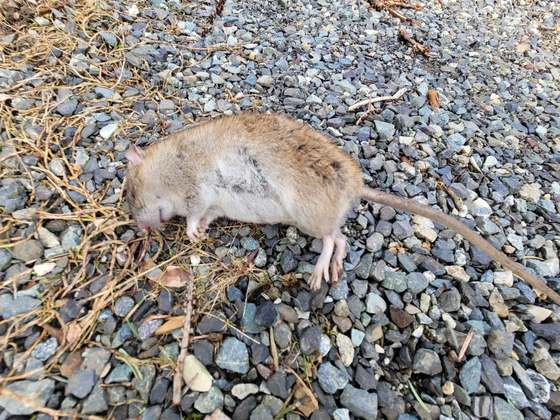
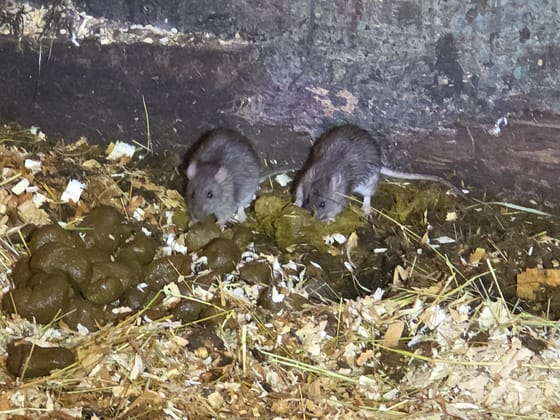
Norway rat. The dominant rat here by a wide margin. Heavy-bodied, blunt nose, tail shorter than the body, and a burrower — which is why they turn up under slabs, decking, sheds and in crawlspaces rather than in attics. Droppings are large and blunt-ended, around three-quarters of an inch. If you have rats in Bellingham, this is almost certainly what you have.
Roof rat. Present but far less common in this county. Slighter, pointed nose, tail longer than the body, and a climber. When we do find them it is usually in attics and upper structure rather than crawlspaces, and often on properties with heavy tree contact to the roofline.
House mouse. Small, gray-brown, droppings the size of a rice grain with pointed ends. Mice need very little — a quarter inch of gap and a few grams of food a day — and they do not need to travel far, which is why a mouse problem is often confined to one part of a house while a rat problem involves the whole structure.
Deer mouse. White belly, distinctly bicolored tail, larger eyes and ears than a house mouse. Common in rural and forest-edge properties: Sudden Valley, the Lake Whatcom shoreline, Edgemoor, and the farm country north and east of the city. Deer mice matter for one specific reason, covered below under health.
Telling the difference is not academic. Rats and mice respond to different trap placements, different spacing and different bait. A trap line set for rats will sit untouched in a house that has mice.
How they are getting in
Every rodent job is really an exclusion job, and exclusion starts with knowing where to look. On Whatcom County housing stock, the same short list accounts for most of what we find.
Foundation vents. The single most common entry on older Bellingham homes. Original screens rust out, get pushed in, or were replaced at some point with hardware cloth too coarse to matter. In the prewar neighborhoods — Lettered Streets, Columbia, Sunnyland, York, parts of Fairhaven and South Hill — this is the first thing we check and frequently the whole answer.
Post-and-pier and settled foundations. A lot of pre-1940 housing here sits on post-and-pier, and eighty-odd years of settlement opens gaps between the foundation and the framing above it. These are hard to see from outside and obvious from inside the crawlspace.
Utility penetrations. Water, gas, electrical, cable, and every line added since. Almost nobody seals these properly, and a contractor running a new line in 2019 had no reason to think about a rat. Look for the gap around the pipe, not the pipe.
Garage door corners. The bottom corners of a sectional door almost never seal, and a garage is usually connected to the rest of the structure.
Soffit and roofline. Where the roof meets a wall at a change of pitch there is often a genuine hole. On newer hillside construction — Alabama Hill, Barkley, Cordata, King Mountain — combined with tree or fence contact, this is how you get animals in the attic rather than the crawlspace.
Dryer and bath vents. Plastic louvered covers break, and the duct behind them is a sheltered highway.
Crawlspace access doors. Frequently warped, frequently propped, occasionally missing.
The number to remember is a quarter inch. That is the figure in Bellingham’s own rental inspection checklist, which flags foundation openings larger than a quarter inch as an infestation risk. If a code inspector is looking for it on a rental, it is worth looking for on a house you own.
It is also the right number for rats, which surprises people, because every extension source gives a larger figure for the animal itself. University of Nebraska Extension, eXtension, UC IPM and WSU Extension all put rats at slightly more than half an inch to pass through, and mice at slightly more than a quarter. What reconciles the two is the framing Washington’s Department of Fish and Wildlife uses: a rat requires a quarter-inch hole to chew larger and squeeze through. The exclusion threshold is not the dimension the animal fits through. It is the dimension at which the animal can get its incisors around an edge and begin removing material, and with rodent incisors growing continuously the removal gets done. Half-inch mesh over a crawl vent stops a rat and passes a mouse; quarter-inch mesh stops both and denies the rat the edge it needs. That is why one figure covers all three species we work on here.
Signs, and what each one tells you
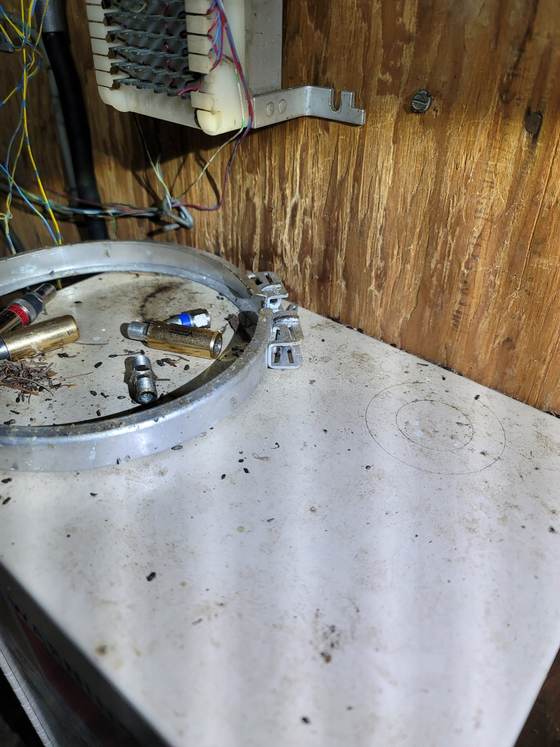
Droppings. The most informative evidence on the property. Size tells you species. Location tells you travel routes and where to set. Condition tells you timing — fresh droppings are dark and pliable, old ones are gray, dry and crumble under pressure. A crawlspace with only old droppings is a different situation from one with fresh, and it changes what we recommend.
Rub marks. Rodents follow the same routes and carry oil and dirt in their coats, leaving dark smudging along joists, pipe runs and wall bases. Rub marks are how we find the highway rather than guessing at it.
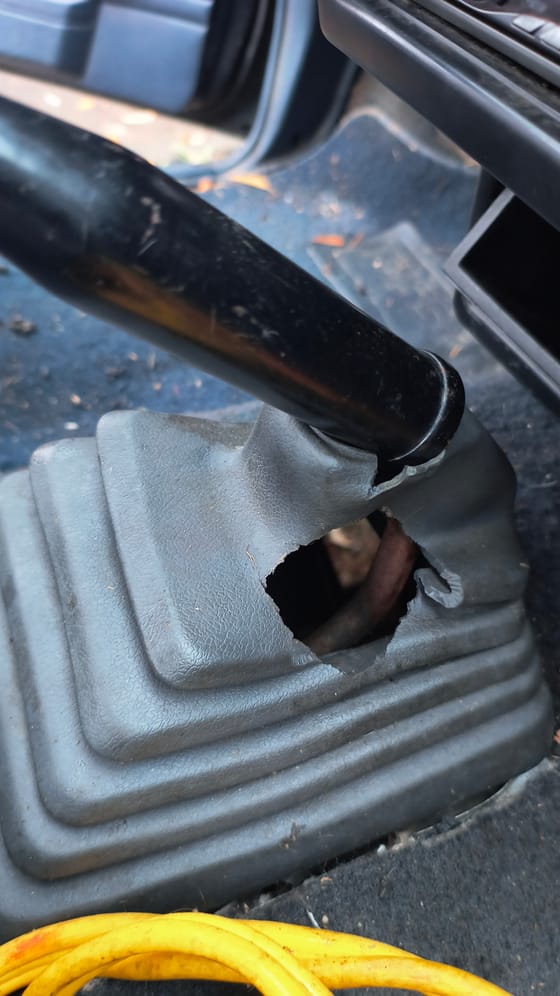
Gnawing. Incisors grow continuously, so rodents gnaw constantly. Fresh gnawing on wood is pale; older gnawing has weathered. Gnawed wiring is the one that matters most, and it is the reason we take attic and crawlspace activity seriously rather than treating it as a nuisance.
Sound. Scratching or scurrying overhead at night, usually just after dark and again before dawn. Rats in a crawlspace are often heard as thumps rather than scratching.
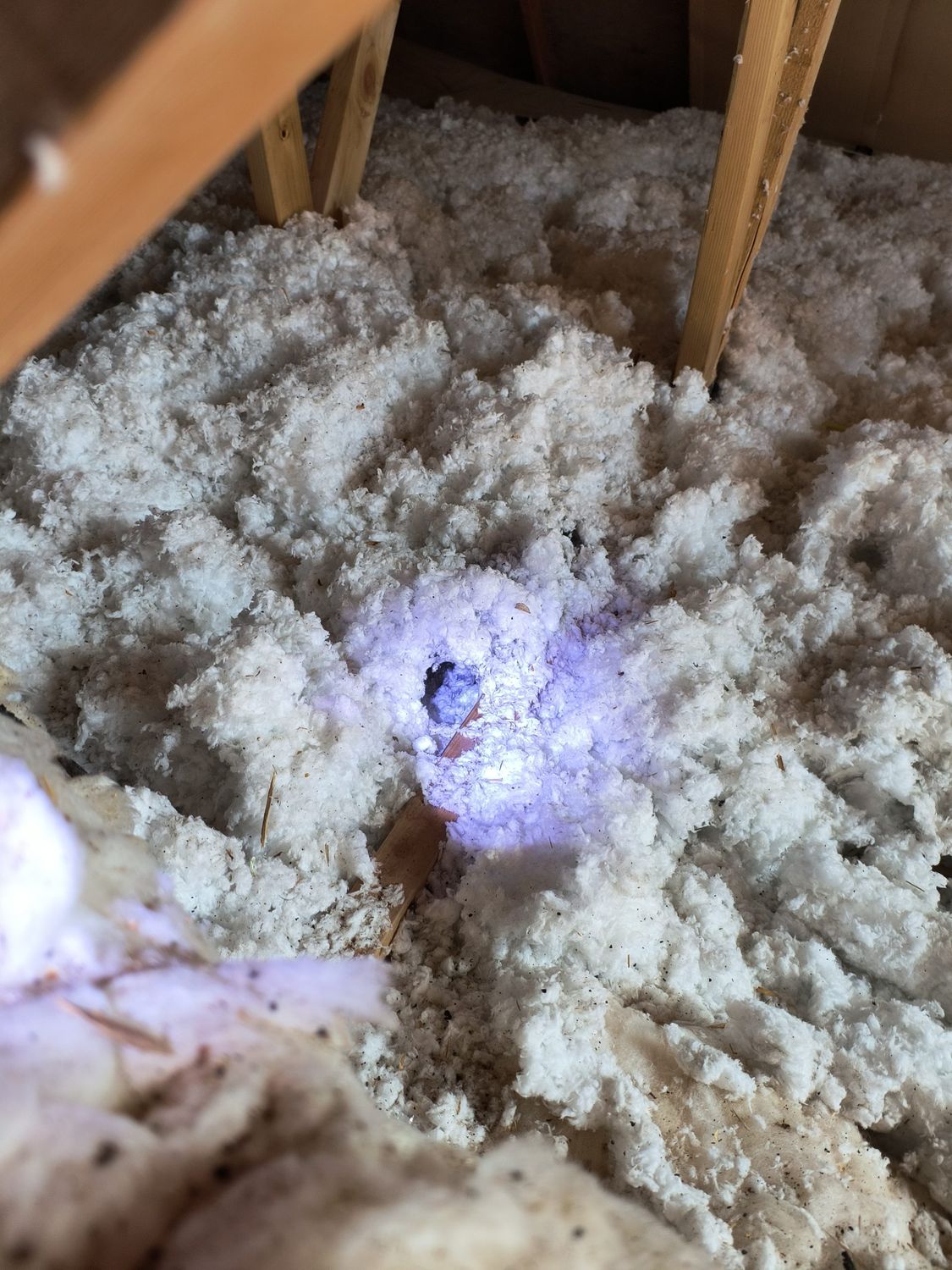
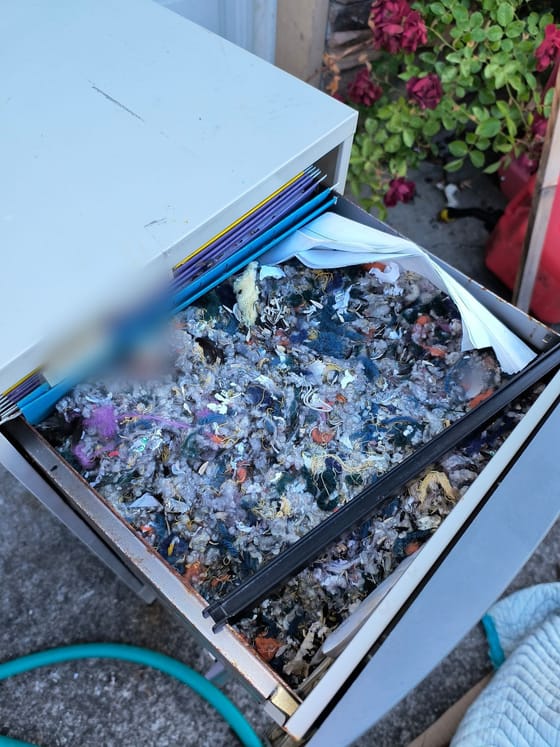
Disturbed insulation. Tunneling and flattened runs through batts, and in a long-running infestation, insulation compressed and contaminated to the point where it has lost most of its R-value.
Pets. A cat or dog fixating on one spot on a wall or ceiling is worth believing. They are frequently right, and they are frequently the first sign.
How we work a rodent job
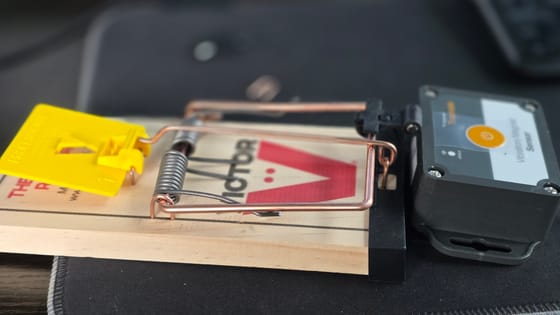
On commercial accounts, the devices can carry sensors that count interactions and time-stamp them, and that tell us when a trap has fired so somebody is sent to service it. That is an add-on rather than part of a residential job — see remote rodent monitoring.
Inspection. We get into the crawlspace and the attic. This is not optional and it is not a walk around the outside of the house — the entries and the evidence are inside those spaces, and a company quoting rodent work without going into them is quoting a guess. We map entry points, activity, contamination extent and the condition of the insulation.
Exclusion. Sealing every entry we found, using materials rodents cannot get through: hardware cloth of the right gauge, sheet metal, mortar where appropriate. Not expanding foam alone, which a rat will chew through in an evening, and not steel wool by itself, which rusts out. This is the part of the job that ends the problem, and it is where the money should go.
Trapping. Snap traps and multi-catch devices set to the mapped routes, in the numbers the activity justifies. We return to check and reset, because populations come out over days rather than at once. Trapping after exclusion — not before — so we are not removing animals while the door is still open.
Monitoring. We keep the line running until it goes quiet, and quiet means several visits with nothing, not one.
Cleanup and restoration. Droppings and contaminated material removed, surfaces treated, and where insulation is compromised, removal and replacement. This gets scheduled after trapping is complete, so we are not restoring a space that is still occupied.
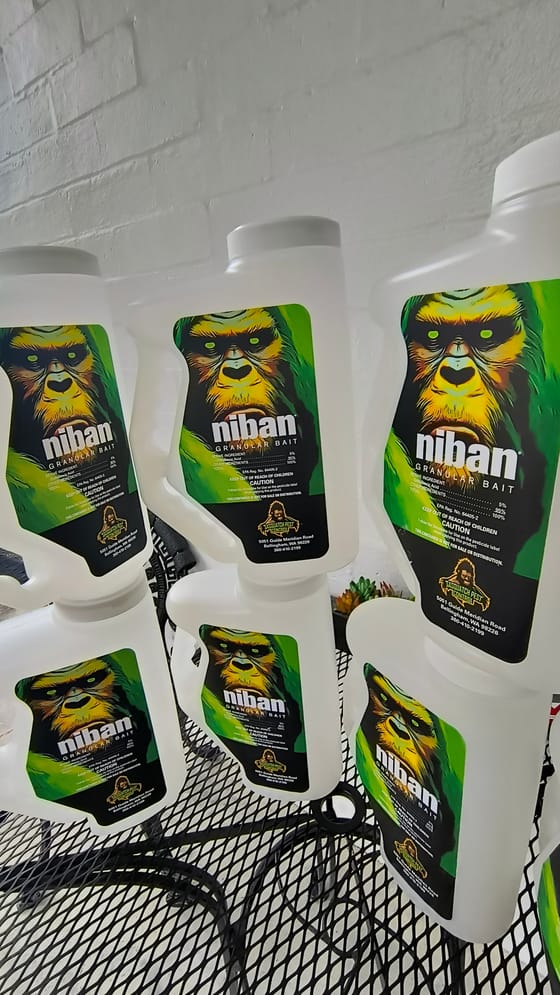
How we use rodenticide, and what we choose
We run rodenticide programs where they are the right tool, and we are deliberate about which products go into them. This is worth explaining, because “do you use poison” is one of the first questions people ask and the honest answer has more in it than yes or no.
Secondary poisoning is the concern that drives the product choice. The classic problem with rodent bait is not the rodent — it is what eats the rodent afterward. Older anticoagulant chemistries kill slowly, so a baited animal keeps moving for days and a share of them die in the open, where they are taken by barn owls, red-tailed hawks, coyotes and cats. Barn owls in particular are among the most effective rodent control any rural Whatcom property has, and poisoning them to kill their prey is a bad trade on a working farm.
So we select rodenticides formulated to limit or prevent that secondary exposure, rather than defaulting to whatever is cheapest per bait block. That choice costs slightly more per station and it protects the predators already working your property for free.
Placement is as important as product. Every bait placement goes in a tamper-resistant station, positioned along mapped runs rather than scattered, and recorded so anyone auditing the site — or you, a year later — can see exactly where devices sit and why.
Interior work is trapping. Bait belongs on the exterior and in stations. We trap inside, because a rodent that dies in a wall void or under a floor becomes a decomposition and blowfly problem in a place you cannot reach. Trapping puts the animal somewhere we can remove it.
And none of it substitutes for exclusion. A bait program manages pressure on a property; it does not stop animals entering a building. The quarter-inch gap is still the thing that decides whether you have rodents indoors, which is why the sequence on every job is exclusion first, trapping for what is already inside, and bait where exterior or commercial pressure genuinely warrants it.
The damage, and why waiting costs more
Wiring. Rodents gnaw insulation off conductors. This is the risk that justifies acting quickly, and it is not theoretical.
Insulation. Beyond the tunneling, urine and droppings saturate batts and destroy R-value. Attic insulation replacement is routinely the largest single line on a rodent job, and it scales directly with how long the animals were there.
Contamination. Rodents are incontinent as they travel, so a route is a contaminated surface, and it is often above your ceiling or below your floor.
Structure. Long-running crawlspace infestations damage vapor barrier and ductwork, and a torn duct in a contaminated crawlspace moves that air into the house.
Secondary pests. Rodent nests support mites and dermestid beetles, and when the rodents are removed or die, those move inward looking for somewhere else to be.
Health, stated plainly
Rodent droppings and urine carry pathogens, and the sensible response is straightforward handling precautions rather than alarm.
The one worth naming specifically is hantavirus, which in Washington is carried by the deer mouse. It is tempting to file that as a country problem, and the state does not let you. The Washington State Department of Health states that infected deer mice live throughout the state and that people are at risk for hantavirus pulmonary syndrome in any part of Washington. What concentrates the risk is not a map, it is a situation: a closed-up space holding rodent droppings and nesting material that somebody then disturbs. Cabins, sheds, barns, garages, stored vehicles and crawlspaces are the settings the guidance names, and a detached garage behind a house in town qualifies as readily as a cabin at the end of a gravel road.
Rarity is the other half of that picture and belongs in the same breath rather than in a separate one. The department reports typically one to five cases a year statewide, with about one in three of the people diagnosed having died. Its surveillance guideline records 58 Washington cases in total through 2022, 20 of them fatal, and approximately 70 percent reporting exposure in eastern Washington. Severe consequence, low probability — which is exactly the combination where following a method beats either panic or dismissal.
Transmission is by inhaling aerosolized material from dried droppings, urine and nesting material, so the practical rule follows directly: do not dry-sweep or vacuum rodent droppings. Ventilate the space first, wet the material down with a disinfectant, use gloves and appropriate respiratory protection, and bag it. The state’s full procedure, down to soaking times and glove materials, is set out on the deer mouse profile.
Leptospirosis is the other one worth knowing about, spread through contaminated water and of most relevance where standing water and rodent activity overlap.
If any of that sounds like more than you want to take on, that is exactly why cleanup is part of the job rather than something we hand back to you.
Which rodent, and where
Two numbers worth having before the geography, both from our own call volume.
Between the rats it runs about sixty-forty in favor of roof rats. That is not the split most people expect, and it changes where a job starts: roof rats work the upper half of a building, so a roof rat house is a roofline, soffit and overhanging-branch problem, while a Norway rat house is a foundation, crawlspace and drain problem. Guessing wrong means sealing the wrong half.
Mice are the county’s animal rather than the city’s. Inside Bellingham the calls are mostly rats. Mice take over wherever a property backs onto standing timber or open field — Yew Street Hill, Edgemoor and the north end of the city where the developed edge runs out, and then most of the rural county: Deming and Maple Falls up the valley, Everson out on the farm ground, and south through Bow and Alger. The rule that predicts it is not the town, it is what the back fence faces.
Around the county
Prewar Bellingham — Lettered Streets, Columbia, Sunnyland, York, South Hill. Post-and-pier foundations, failing vent screens, unsealed penetrations. Norway rats in crawlspaces. Almost always an exclusion job.
Newer hillside and edge — Alabama Hill, Barkley, Cordata, King Mountain. Soffit and roofline entry, tree and fence contact, attic activity. More often roof-level work.
Student rental belt — Sehome, Happy Valley, near campus. High turnover, food handling that varies by tenant, and split responsibility between owner, manager and occupant. Rats rather than mice, the same as the rest of the city — Norway rats at ground level, roof rats wherever a tree or a wire reaches the roofline.
Up around the lake. Sudden Valley, Silver Beach and Edgemoor bring deer mice and forest pressure, seasonal spikes, and often a long-empty second home.
Farm country — Lynden, Everson, Nooksack, Sumas. Field margins, feed and grain storage, outbuildings and equipment sheds. Volume is higher and the work is structural. This is also where we most want the owls kept alive.
Waterfront — Blaine, Birch Bay and the harbors. Marina and gear storage, plus a lot of housing sitting empty through the wet months with nobody noticing what moved in.
Renting, or managing a rental
Rodents are the pest that most often turns into an argument about who pays, and in Bellingham that argument has a legal shape worth knowing before you have it.
Washington’s landlord-tenant law, RCW 59.18.060, puts responsibility for pest control on the landlord — with a specific carve-out where the dwelling is a single-family residence, or where the infestation was caused by the tenant. In an apartment building the duty usually falls on the owner. In a rented house it frequently does not, which surprises tenants regularly.
Bellingham adds a second layer. Municipal code chapter 6.15 requires rental properties to pass a certified inspection, and the checklist explicitly names foundation openings larger than a quarter inch as an infestation risk. That turns exclusion from good practice into a compliance item, and it means a landlord who seals the crawlspace is buying two things at once.
We work with tenants, owners and property managers, and where the answer depends on which of those you are, we will say so rather than quietly billing whoever called.
Commercial rodent work
Commercial accounts differ in what gets documented rather than what gets done. Device placement is mapped so an auditor or inspector can see the layout without taking anyone’s word for it, every visit produces a record of findings and actions, and the recommendations that sit on your side — a dock door that does not seal, waste stored too close to the building, drainage keeping a slab damp — go in writing rather than being mentioned in passing.
The pressure points are consistent across the county: loading docks and roll-up doors, dumpster enclosures, utility chases between units, feed and grain storage on agricultural sites, and gear storage around the marinas. In multifamily buildings the shared wall and utility chase is the whole problem, because treating one unit while the adjacent one is untouched simply relocates the population.
What it costs
We quote from the inspection rather than a price list, because the range is genuinely wide. A mouse problem confined to one part of a house with two entry points is a small job. A 1920s farmhouse with rats through the crawlspace, forty feet of failed vent screening, and insulation that needs removing and replacing is not.
What moves the number is access and extent rather than the animal: crawlspace clearance, how much of the perimeter needs sealing, whether the siding is sound enough to seal against, and how far the contamination has spread. You get the figure in writing before anything starts, and the estimate is free.
Keeping them out
Trim vegetation and tree limbs back from the roof and walls. Keep bark mulch and soil below the siding line. Store feed, seed and pet food in sealed containers rather than bags. Deal with fallen fruit. Keep firewood off the ground and away from the house. Manage standing water and get downspouts discharging away from the foundation. Check vent screens once a year — spring is a good habit — and seal every new penetration the moment a contractor makes one.
None of that substitutes for exclusion on a house that already has a gap. It is what keeps a sealed house sealed.
Related work
Rodent jobs frequently turn into exclusion and repair work, and where contamination is significant they extend into crawlspace cleanout and restoration and attic insulation replacement. If what you are hearing overhead turns out to be larger than a rat, that is nuisance wildlife rather than a rodent, and it is not work we take on. We will tell you what it sounds like and point you to somebody who does.
Frequently asked questions
Why do rodents come indoors in the fall here?
It is the rain rather than the cold. Whatcom County does not get a hard freeze, so rodents are not driven in by temperature the way they are elsewhere. What drives them in is water — as the ground saturates through September and October, burrows flood and the dry space under your floor becomes the best available option.
How small a gap can a mouse get through?
A house mouse needs about a quarter inch, which is roughly a pencil. Extension guidance puts rats at slightly more than half an inch to pass through, but a quarter inch is enough for a rat to get its incisors on an edge and chew the hole to fit. So the quarter-inch figure is the one to build to for both, and it is written into Bellingham's own rental inspection checklist as an infestation risk.
Do you use rodent bait, and is it safe around wildlife and pets?
Yes, as part of a program rather than as the whole program. We use rodenticides selected specifically to limit secondary poisoning risk to the owls, hawks and other predators that hunt rodents here, and every placement goes in a tamper-resistant station that is mapped and documented. Interior work is handled by trapping, and exclusion is still what ends the problem.
Should I clean up rodent droppings myself?
Do not dry-sweep or vacuum them. Disturbing dried droppings and urine aerosolizes the material, and deer mice anywhere in Washington are a hantavirus consideration. Ventilate the space, wet the material down with a disinfectant, and use gloves and a proper respirator — or have us handle it as part of the job.
How long does rodent work take?
The exclusion is usually one to two days depending on the structure. Trapping runs one to three weeks with return visits, because a population does not walk into traps all at once. Cleanup and any insulation replacement is scheduled after the trapping is finished, so we are not restoring a space that is still occupied.
Will they just come back?
Not through a gap that is sealed. Rodents return to structures, not to addresses, so a house that has been properly excluded stops being available. What brings them back is a new entry — a failed vent screen, a settled foundation, a contractor who ran a new line through the rim joist and did not seal it.
Guides
- Pest Control in Washington Schools
- Sealing a Building Before Fall
- The Commercial Pest Year in Whatcom County
- Who Pays for Pest Control in a Washington Rental
- How to Choose a Pest Control Company in Whatcom County
- The Whatcom County Pest Year
- WDO Reports in a Washington Property Sale
- What Drives the Cost of Pest Control
- What Integrated Pest Management Actually Means
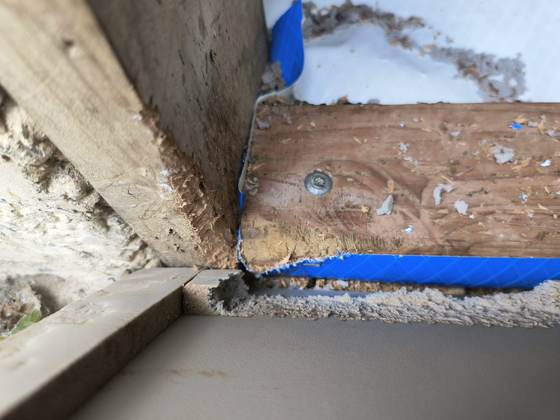
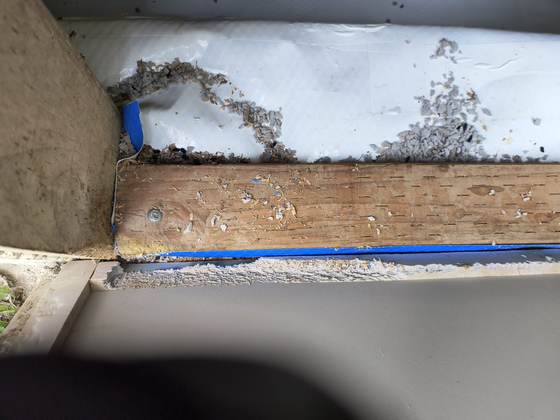
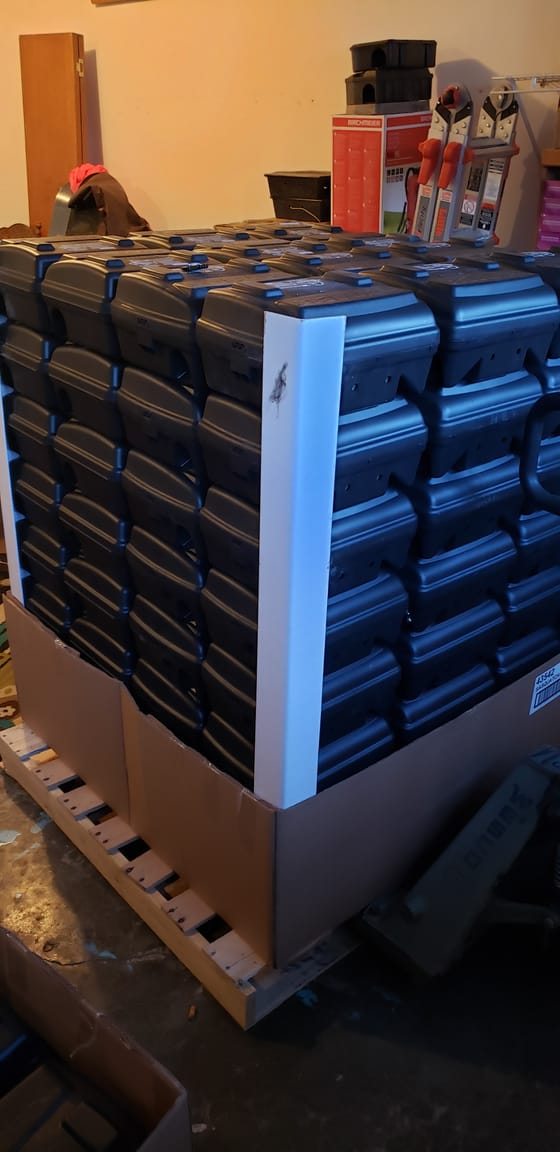
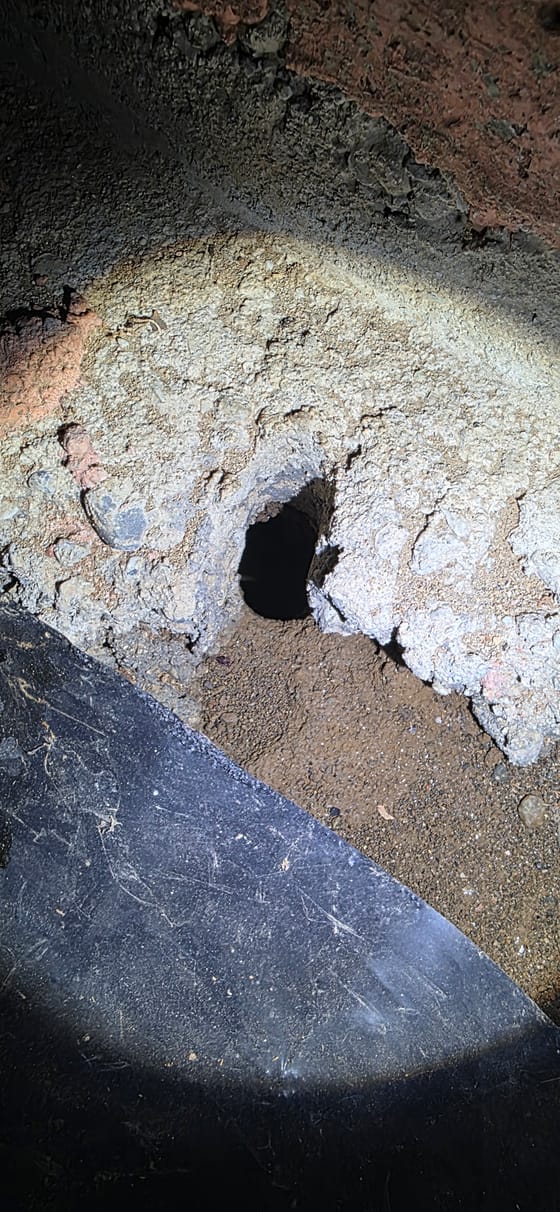
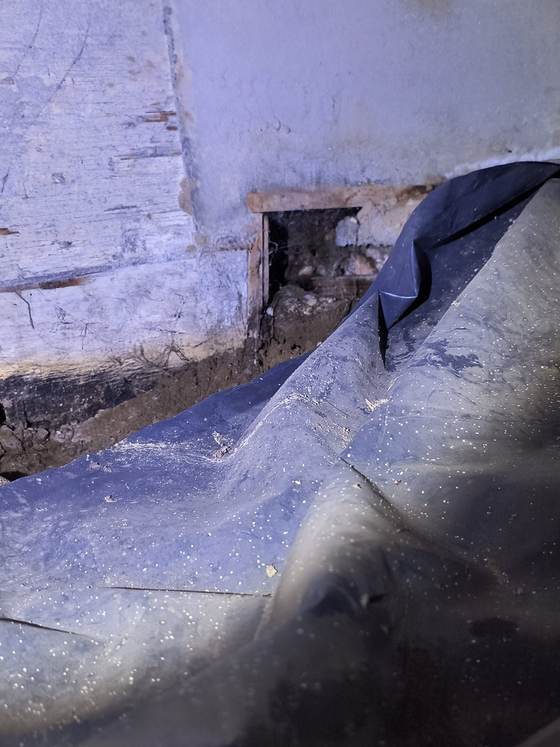
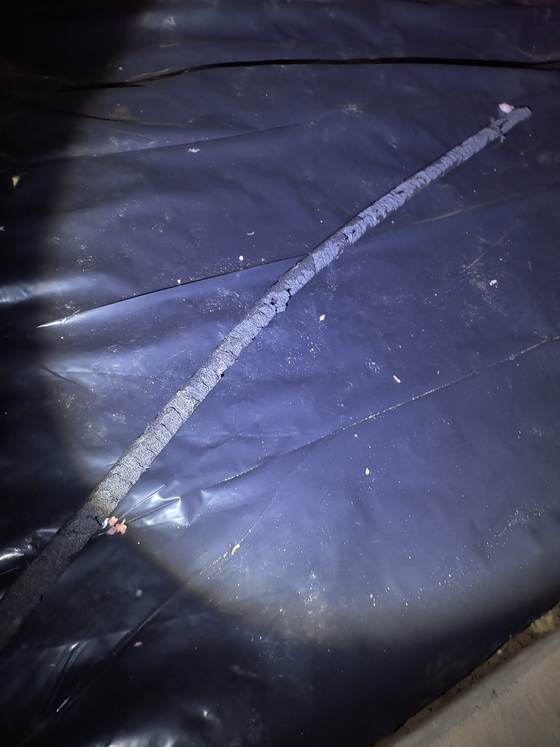
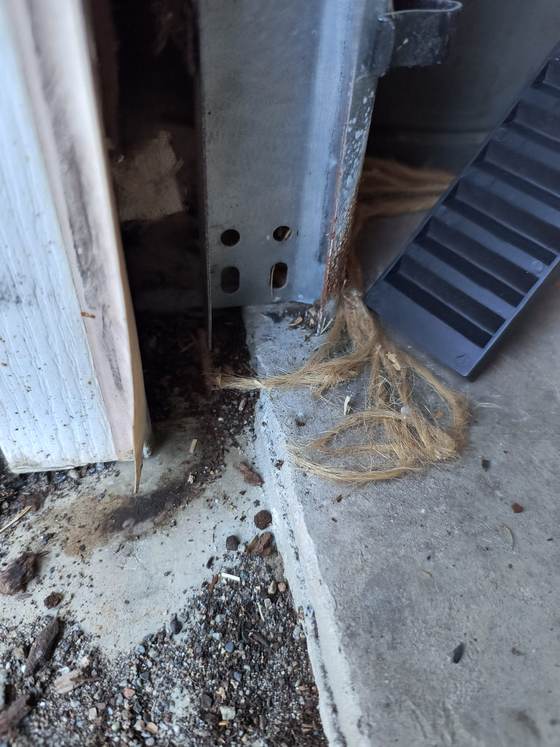
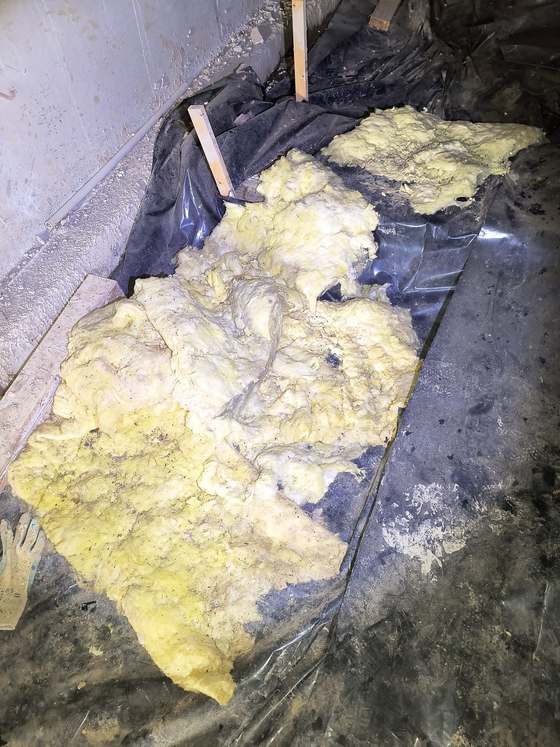
Rodent work: 17 photographs from real jobs
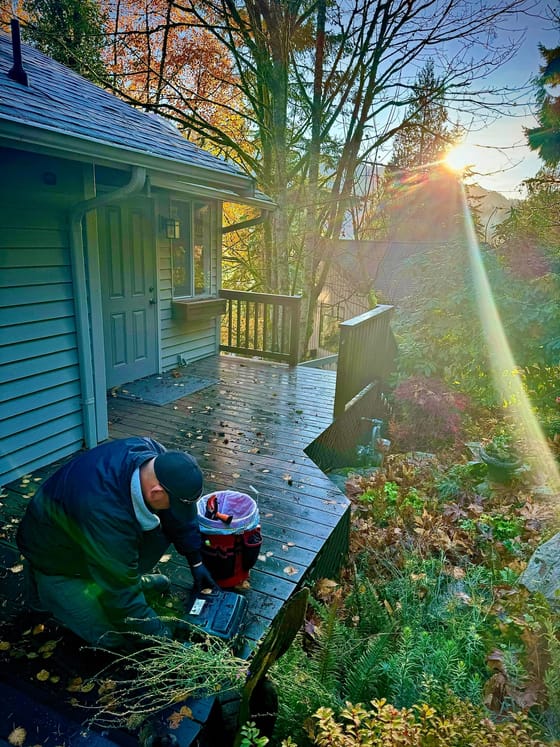
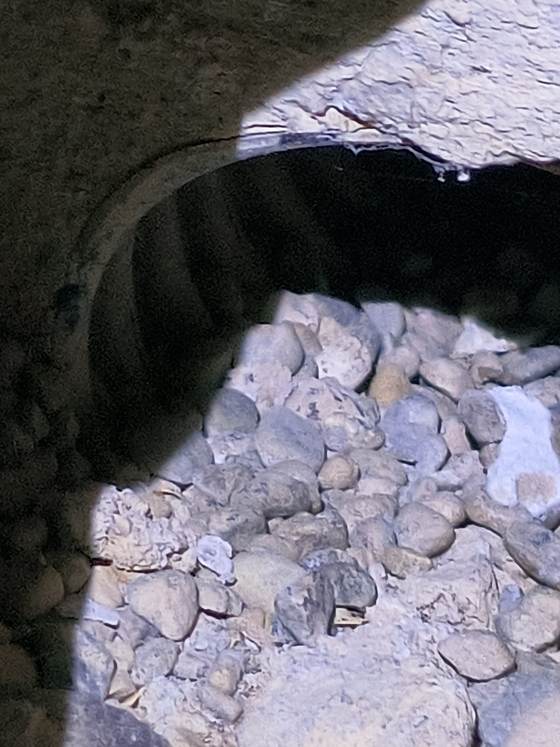
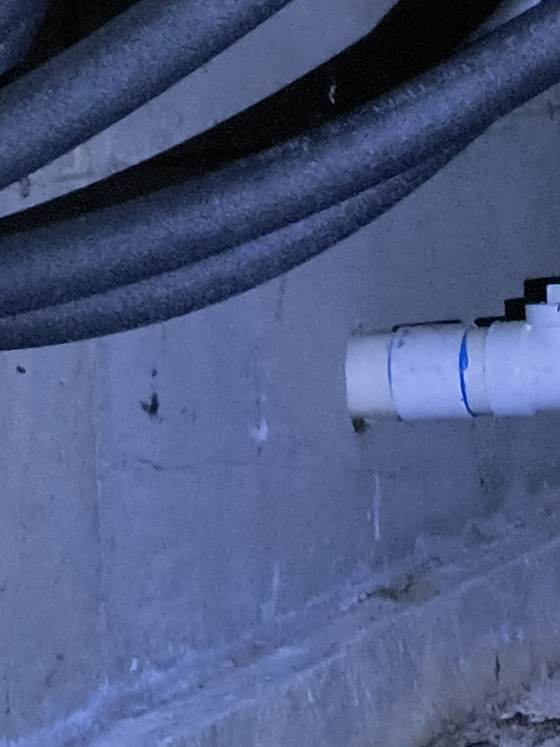
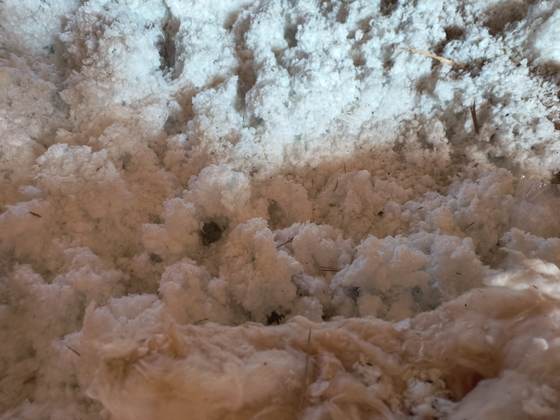
Every one of these was taken on a job in Whatcom or Skagit County by whoever was doing the work. Stock photography is close to universal in this trade and a reader has no way to tell by looking, which is the only reason it is worth saying out loud. The rest of the archive is on the gallery.
From the blog
Rodent & Mouse Control in Whatcom County?
Family-owned, no long-term contracts, and every treatment is backed by our 100% Service Guarantee.
Most calls in Whatcom County are out within 1–2 days, about 3 during the late-summer peak.
Last updated