
Pest Control in Sumas, Washington
Sumas is a very small town carrying a large commercial footprint. An international truck crossing with the freight, staging and warehousing that come with it, farm ground on every side, and housing that has been through serious flooding and rebuilt since.
Call 360-410-2199 Request a free inspection
Sumas on the map
A small town with a large front door
Sumas has a very small population and an international land border crossing, and that combination produces a pest profile out of all proportion to its size.
The commercial and logistics footprint here — truck crossing, brokerage, staging, warehousing, fuel and the businesses that serve cross-border traffic — means a meaningful share of our work in this town is commercial rather than residential. Around it, in every direction, is farm ground. And underneath it all is a town that has been through severe flooding and rebuilt.
Those three things account for nearly everything we get called about here.
Freight, warehousing and the commercial side
Goods arrive from somewhere else, and whatever traveled with them arrives too. That is the fundamental fact of pest work anywhere freight concentrates, and it is why a warehouse in Sumas has an exposure that a house a mile away does not.
Warehousing and staging. High ceilings, large openings, and dock doors that are open for much of the working day out of operational necessity. Sealing such a building completely is not achievable and quoting as though it were would be dishonest. The realistic approach is a defended perimeter, controlled interior placements, and attention to the specific points where product and pallets are handled.
Yards and open ground. Staging yards, trailer parking and the vegetated margins around them support rodent populations that then work into the adjacent structures. A great deal of what determines a warehouse’s interior pressure is happening outside its walls, in ground nobody thinks of as part of the building.
Pallets and product. Wooden pallets stored outdoors and brought in are a classic introduction route, for rodents and for stored-product insects alike. Where a client can stage pallets away from the wall and rotate stock properly, the difference is measurable.
Documentation. Commercial and cross-border accounts frequently answer to somebody other than the owner — an auditor, a customer, an insurer. So the program is built to be read: devices mapped and numbered, service records that follow a logical sequence, and findings written plainly, including the ones about housekeeping and sanitation that we could quietly service around instead. We put those in the report because a client who fixes a dock housekeeping problem gets a better result than one who buys more visits.
Food handling. The businesses serving a crossing run at irregular hours with heavy turnover, and the waste handling reflects that. As with food service anywhere, most of the genuinely available improvement is in the bins, the enclosure and the timing rather than in anything applied.
Flood recovery
Sumas took severe flood damage in November 2021, and a large share of the town’s buildings have been through inundation and rebuilding since. That history is still the most important thing about many of these structures from our point of view.
The sequence on a flood-affected building is not negotiable. Wet insulation comes out — it does not recover, it holds moisture, it accelerates decay in the framing above it, and it is ideal nesting material. The space gets dried properly, with attention to the framing and not just the surface. The vapor barrier is re-established over clean ground. Only then does exclusion and treatment hold.
Treating a wet, insulated crawlspace produces a building that is still damp, still attractive to everything moisture-driven, and still deteriorating, with an invoice attached. We would rather explain that than take the work in the wrong order.
Rebuilt buildings also have new geometry. Sections repaired at different times meet at junctions that did not previously exist, utilities were rerouted, and skirting and venting were sometimes replaced quickly under real pressure. Those junctions are where we find entry points, and it is why we go underneath rather than quoting from the driveway.
Decay fungus is the quiet consequence. Sustained moisture in framing produces decay that continues long after the water has gone, and decay rather than insects is what actually costs structural capacity in this climate. Where we find it we say so, and frequently the person you need next is a contractor.
Farm ground on every side
The agricultural work around Sumas is the same trade as the rest of the north county, at a scale between Everson and Lynden.
Feed-room rodents are the center of it. An open shed with grain or pellets supports a population indefinitely, and nothing we apply overcomes an unlimited food supply. Metal bins with tight lids, spillage cleaned rather than swept aside, and pallets kept off the wall so runways stay visible do more than any program. Where an owner does that, everything else works.
Farm guidance for this county is published by WSU Extension’s Whatcom County office, and it is written for the people working the ground rather than for a national audience.
Equipment and wiring are the priority that persuades skeptics. Rodent damage to harness wiring, shop electrics and machinery parked for the season is expensive and sometimes dangerous.
Placement constraints are the same as anywhere with livestock: tamper- resistant stations anchored outside, mechanical control within buildings, and nothing reachable by cattle, poultry, barn cats or working dogs. Where rodent control products are used at all we choose programs and active ingredients selected to limit secondary poisoning risk to the raptors and pets that share this country.
Stored feed is the reservoir. Grain and pellets in open storage feed rodents and draw pigeons and starlings too. Bird work is not something we do, as the section on what we will not sell says, but closed bins and cleaned-up spillage take away what brings both, and that lasts in a way that scaring birds never does.
Flies around livestock are a production problem rather than a nuisance one, and they are won or lost on breeding sites rather than on adults. The wet margin of a manure pack, a leaking waterer, feed fermenting at the end of a bunk, bedding that has not been turned, the drainage low point that never dries — a short and predictable list, and correcting it beats any spray schedule.
Stink bugs and Asian lady beetles
Both are overwintering insects rather than a structural problem, and both are a real and recurring Sumas call. They gather on sunlit walls in autumn — south and west faces, warm afternoons — and then work into the building through the same small gaps everything else uses. The important thing to know is that once they are inside a wall void, treating them there is the wrong move: they die in the cavity, and what is left behind draws carpet beetles the following spring. The work is exterior, and it belongs before they gather rather than after.
The residential town
The housing in Sumas is a small-town mix, with the added complication that much of it has been repaired or rebuilt in the last few years.
Older stock carries the standard regional pattern: shallow crawlspaces over bare earth, failed vent screens, framing that has taken water and now supports moisture ants, and the damp-crawl company of sowbugs, millipedes and springtails. Newer and rebuilt sections tend to be tight envelopes with a handful of service penetrations closed with expanding foam, which stops drafts and does not stop a rodent.
Because the town sits in open agricultural country, the harvest effect is pronounced. Cutting a field removes cover in an afternoon and the displaced population goes to the nearest structure. Combined with the autumn rain and the low ground, that makes September and October the decisive weeks of the year here.
Cluster flies are heavy, as they are anywhere surrounded by pasture. They breed in earthworms out in the fields, overwinter in south and west-facing walls, and emerge indoors on the first mild afternoon of the year. Nothing about that reflects on the house. The durable fix is exterior work in late summer, sealing the gaps and screening the vents before they move in, rather than chasing them at the window in February.
Carpenter ants and moisture ants
Both are common here and the distinction matters.
Moisture ants colonize wood that is already wet and decaying. Finding them is useful information: the water is the problem and the ants are the symptom. Treating without correcting the source produces a new colony in the same wood, which on flood-affected property is a particularly common outcome.
Carpenter ants carve their nests out of wood, and they favor wood that has already started to soften. The parent colony is nearly always outdoors — a stump, a fence post, a landscape timber, a woodpile — with satellites inside the structure. The satellites are what people see, and treating them without locating the parent is why these jobs develop a reputation for coming back.
Every spring somebody brings us a winged carpenter ant convinced it is a termite. Ants have an elbowed antenna, a pinched waist and wings of unequal length; termites have a straight antenna, a uniform body and four wings of equal size. Correct identification changes the whole approach, and we would rather establish it on a free visit than sell the wrong treatment.
The Sumas year
Winter. Interior rodent work and damage assessment, in houses and in commercial buildings alike. On rebuilt property this is when the gaps left by a hurried repair start showing themselves.
Late winter. Cluster flies and lady beetles emerge at sunny windows on the first mild afternoon, which surprises people who associate flies with summer.
Spring. The busiest planning stretch. Anything structural on a commercial building has to be identified and scheduled now rather than reacted to in July, because summer is when the freight and the wasps both peak. Ants become active, and wasp queens found nests that are trivial to deal with at this stage.
Summer. Peak freight movement, peak fly pressure around livestock, and peak wasp activity from July as colonies mature and workers switch to sugar. It is also the correct window for structural exclusion work: dry ground, dry crawlspaces, and access at its easiest.
Harvest and autumn. Fields are cut, cover disappears, the rain returns and the low ground saturates. A displaced population moves toward buildings over a few weeks. For commercial premises this is when yard margins and staging areas matter most, because that is where the pressure is coming from.
What we will not sell you
Bird work or wildlife removal. Businesses under time pressure ask, and the answer does not change: it is not what we do. We will say so on the phone and point you to somebody who handles it rather than taking the booking.
A sealed warehouse. A building with dock doors open through the working day cannot be made rodent-proof and anyone promising otherwise is either inexperienced or selling. What we quote is a defended perimeter, controlled interior placement and an honest account of the housekeeping points that matter.
A recurring program over a wet crawlspace. On flood-rebuilt property this is the easiest way to be overcharged. Drying and removal come first; service laid over an unresolved moisture problem is a subscription rather than a solution.
Mole trapping. Common request on acreage here, and not something we do. The methods that work are restrictively regulated in Washington and most of what is sold to homeowners does not work, so we would rather refer you than take the money.
Stored-product insects
Worth its own section here, because a town with warehousing sees these more than a town without one, and because they are routinely misdiagnosed.
Beetles and moths that infest stored grain, flour, seed, pet food, dried goods and animal feed arrive inside the product rather than walking in through a door. That distinction changes everything about the response. Treating a building perimeter for an insect that came in on a pallet accomplishes nothing.
The work is finding the source. That means tracing back through stock to the infested lot, looking at what has been sitting longest and furthest back, checking spillage in seams and under racking, and being systematic rather than hopeful. In a feed room or a warehouse the source is frequently a single forgotten bag or a spill in a corner that has been quietly producing adults for months.
After that it is stock rotation, sealed containers, cleaning of the residues in racking and floor seams, and monitoring to confirm it is actually finished. On a commercial account we would rather write that up plainly than sell a treatment schedule that leaves the source in place.
Spiders and the domestic list
The household side of Sumas is the standard regional set. Giant house spiders generate the autumn calls and are harmless — the large fast ones are wandering males, not an invasion, and there is no brown recluse in this state’s northwest corner. Silverfish, sowbugs and millipedes belong to the damp crawl and are reporting a moisture condition rather than a pest problem in their own right.
Ants in a town that has been rebuilt
Carpenter and moisture ants are worth a second look here because the rebuild history changes where they turn up.
A building repaired after water damage has new framing meeting old framing, and the junctions between them are rarely as tight as either section on its own. Where a repair was done quickly and under pressure — as many were — there can be original material left in place that took moisture and never fully dried, sitting directly against new lumber.
That is precisely the condition moisture ants want, and it is why we sometimes find them in a building that looks freshly finished. The ants are not a comment on the repair. They are reporting that something behind the new surface is still damp, and that is genuinely useful information for an owner to have before it becomes a decay problem.
Carpenter ants work differently, preferring wood that has begun to soften and keeping a parent nest outdoors. On these lots the parent is usually in a stump, a fence post, a woodpile or a landscape timber, and finding it is what makes the treatment hold rather than repeat.
In both cases the diagnostic question is the same one: where is the water coming from, and is it still coming.
Spiders and the seasonal domestic list
The household calendar here is the standard regional one.
Giant house spiders generate the autumn calls, and the answer is reassuring: harmless, long established in western Washington, and the large fast ones are wandering males rather than an infestation. Exterior lighting concentrates the insects they feed on, so a fixture change frequently does more than a treatment.
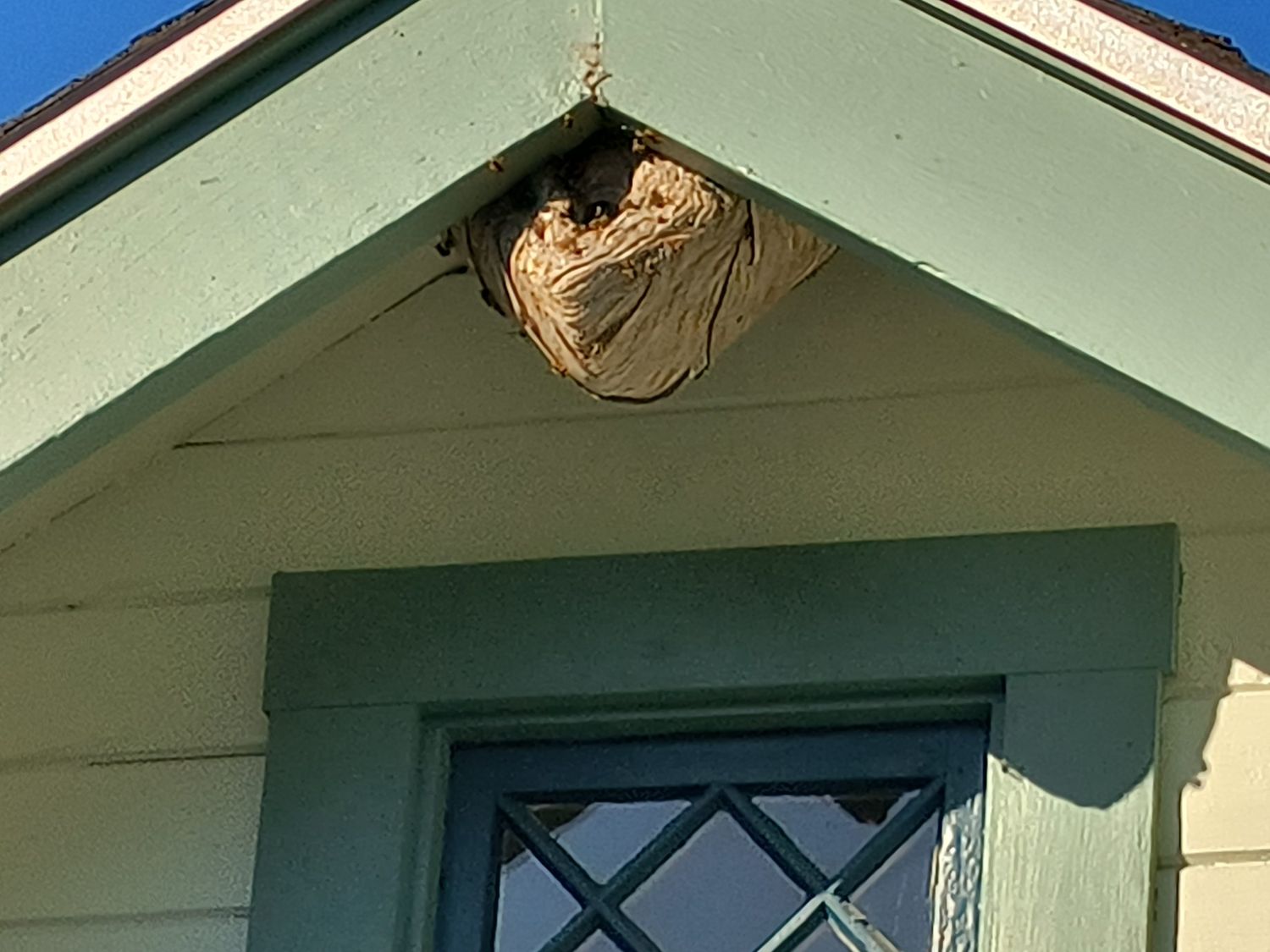
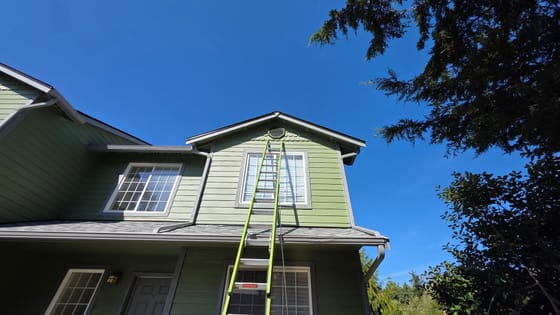
Stink bugs and lady beetles overwinter alongside the cluster flies in sunny walls and emerge on the same mild afternoons. Silverfish and sowbugs belong to the damp crawl. Wasps peak from late July, and on a rebuilt building the new soffit and eave detailing is often exactly the sheltered cavity a colony wants.
Moisture, and why it is the recurring theme
Almost everything on this page traces back to water, which is worth stating plainly.
The flood history is the obvious part, but the ordinary Whatcom County pattern runs underneath it regardless: no sustained hard freeze, a long wet season, and wood that never fully dries. Both halves of that are in the record — NOAA’s US Climate Normals give the thirty-year averages for temperature and rainfall at stations near here. Populations are never reset by winter, and damp framing supports the whole moisture-driven cast — moisture ants, decay fungus, dampwood termites, silverfish and the crawlspace insects.
So the diagnostic question on nearly every visit is the same. Where is the water coming from, is it still coming, and is the answer a treatment or a repair. On a rebuilt building it is frequently a repair, and saying so costs us the recurring service.
How we work in Sumas
Sumas is about twenty-three miles out, with the last stretch on two-lane road shared with farm and truck traffic, so it sits on scheduled route days rather than same-day availability. We will tell you which day that means rather than promise a window we cannot keep.
On a commercial or agricultural site we start with your requirements — access, hours, safety rules, biosecurity, audit obligations — because those shape everything that follows. On a house we start outside with grade, drainage, vents, penetrations and the state of the envelope, then go underneath properly with a light, which on a rebuilt building is where the useful information is.
You get a plain account: what we found, what is causing it, what needs doing now, what can wait, and which items belong to a builder rather than to us. Where the biggest available improvement is a housekeeping change or a repair, we lead with that even though it is not work we get paid for.
Inspections are free for every pest we handle, with bed bugs the single exception — those carry a verification fee credited against the treatment if you proceed. There is no long-term contract, on a house, a farm or a commercial building.
Frequently asked questions
Do you handle warehouses and freight buildings?
Yes, and it is a good share of our Sumas work. Warehousing is documented program work rather than single visits — mapped placements, records that hold up to an audit, and realistic goals for a building whose dock doors are open most of the day.
Why do commercial buildings here get more rodent pressure?
Because freight moves rodents the way it moves everything else, and because staging yards and open ground next to buildings support populations that then work inside. A warehouse with constant vehicle movement and open doors has a fundamentally different exposure to a house a mile away.
Our building flooded. Where do we start?
Drying and removal before anything else. Wet insulation holds moisture, accelerates decay and makes excellent nesting material, so it comes out rather than being treated around. Once the space is dry and sound, exclusion actually holds. The reverse order wastes the work.
How far out is Sumas for you?
About twenty-three miles, and the last stretch is two-lane road with farm and truck traffic. It sits on scheduled route days rather than same-day availability, and we will tell you which day that means rather than promising a window we cannot keep.
Do you work with the farms around Sumas?
Yes. Feed-room rodents and fly pressure around livestock are the usual list, and the work runs on the operation's calendar rather than ours. We plan agricultural accounts ahead rather than treating them as call-outs.
Is there a charge for coming out?
Not for any pest except bed bugs, which carry a verification fee that is credited against treatment if you proceed. That applies to commercial buildings as well as houses — we will come, look properly, and quote.
Guides
Pest problem in Sumas?
Family-owned, no long-term contracts, and every treatment is backed by our 100% Service Guarantee.
Most calls in Whatcom County are out within 1–2 days, about 3 during the late-summer peak.
Last updated