
Pest Control in Alger, Washington
Alger is forest-edge country at the top of our Skagit run. Scattered rural housing on acreage, a lot of it cedar and a lot of it built against standing timber, which sets the work: carpenter ants in softened wood, rodents pushing in off the treeline, and outbuildings nobody can seal.
Call 360-410-2199 Request a free inspection
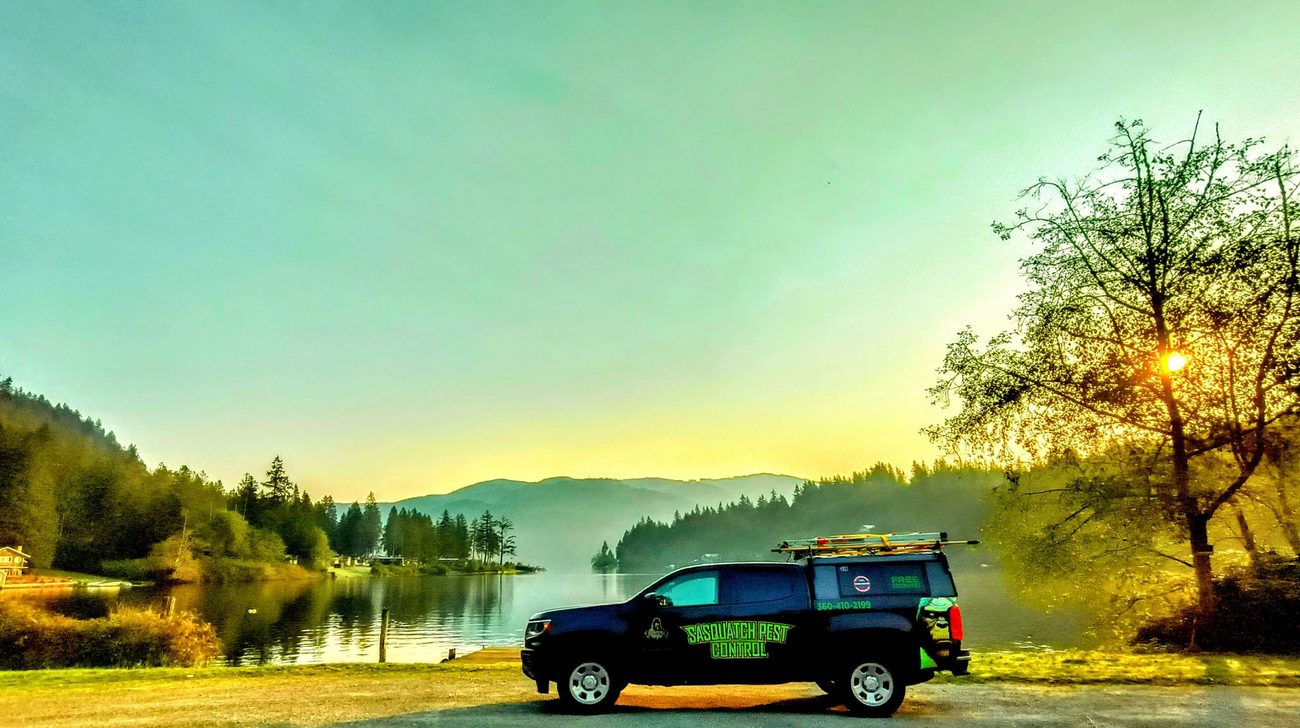
Alger on the map
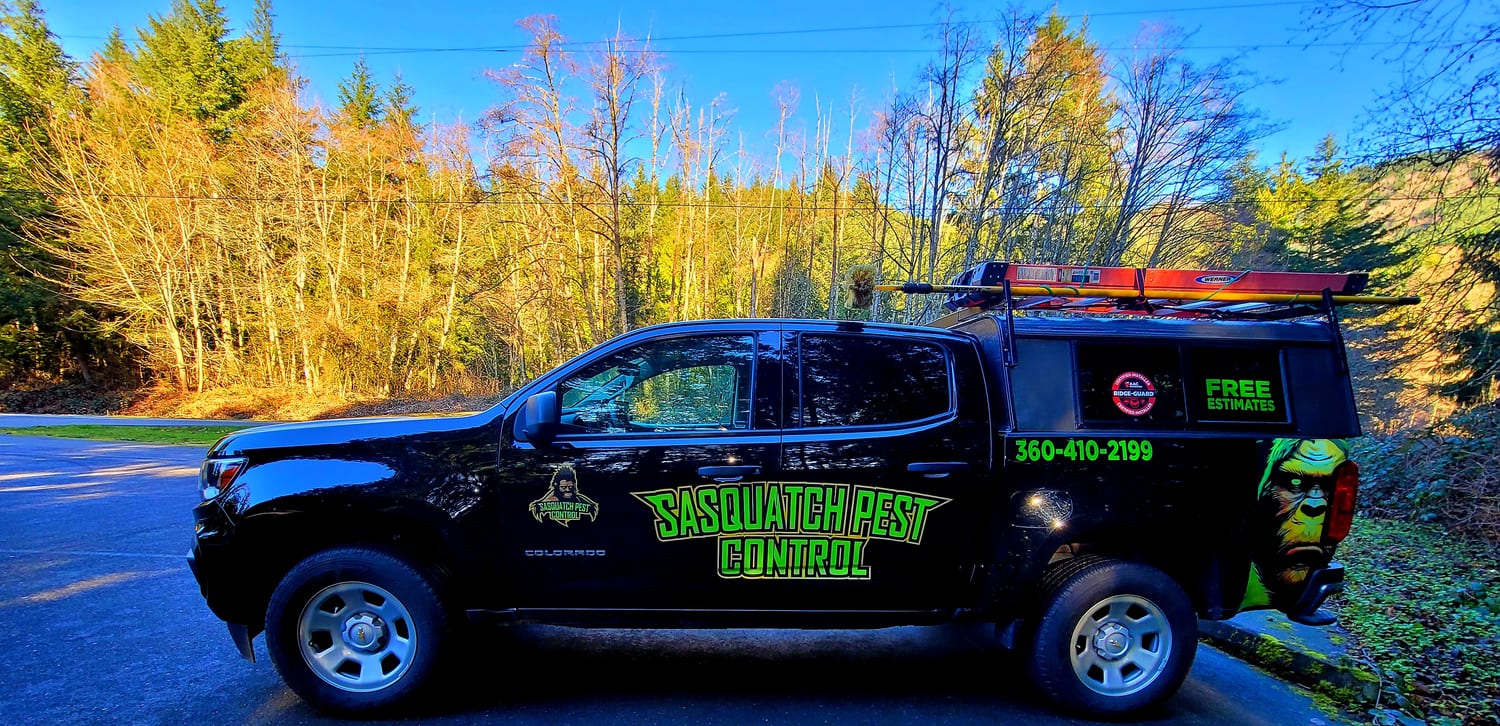
Living against the forest
Alger sits in the foothills where the freeway climbs away from the Samish valley, and it is the top of our Skagit run — close enough to Bellingham to be an easy part of a route we are already driving.
It is also unambiguously forest-edge country. The housing is rural and scattered, frequently on acreage, commonly with a shop or a barn and a couple of outbuildings, and very often placed deliberately close to standing timber because the trees are the reason people live there.
That single fact — buildings against a working forest — sets almost everything about the pest work here.
Carpenter ants, which are the defining problem
There is more cedar and more weathered wood per property here than anywhere else on our Skagit run, and carpenter ants follow it.
They do not eat wood. They excavate galleries in it to nest, and they strongly prefer material that has begun to soften — which is precisely what cedar trim, fascia, deck framing, fence posts and the bottom edge of siding become after a few decades in this climate.
Carpenter ants in buildings get regional coverage in the PNW Insect Management Handbook, which WSU produces together with Oregon State and the University of Idaho.
The critical part, and the part most treatment misses, is the colony structure. A mature population here almost always has a parent nest outdoors: a stump left from clearing, a standing dead tree, a fallen log, a landscape timber, a fence post, a woodpile. Inside the building there are satellite nests, and the satellites are what people see — workers crossing a counter, coarse frass below a window, a rustling in a wall at night.
Treating the satellite while the parent sits untouched twenty feet away gets you a quiet couple of months and a repeat call. That is the whole reason this work has a reputation for coming back.
So a first visit here is investigative before it is anything else. We walk the property looking for the parent colony: the stump nobody thinks about, the section of deck framing that stays wet, the dead limb over the roof, the old timber wall, the wood stacked against the shop. Where we find it, the result holds. Where it turns out to be on a neighboring parcel or out in the trees beyond the property line, we will say so plainly rather than implying we have solved something we have not.
Frass is the useful field diagnostic. Carpenter ants push shavings out, so the debris below a gallery is fibrous and often contains insect body parts — different from the hard pellets a dampwood termite leaves and different from the fine powder below a wood-boring beetle hole.
Rodents off the treeline
The second constant, and the reason exclusion matters more here than treatment.
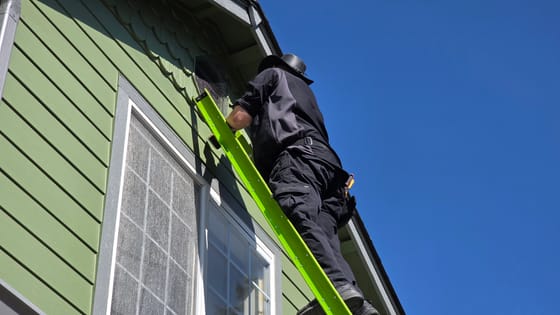
Wooded ground gives rodents continuous cover right up to the foundation. On an open lot in town an animal has to cross exposed ground to reach a building; here it does not, and the population outside is permanent regardless of anything done to the property.
Deer mice come in off the wooded margins, along with Norway rats and house mice. They find the crawl vents, the skirting, the gap where a deck meets the house, the point where a service line enters, and the underfloor space of any outbuilding.
Where droppings need clearing in an enclosed space, we will tell you to ventilate the area first and avoid sweeping or vacuuming dry material. That is the sensible precaution regardless of what the risk turns out to be in any particular building, and it costs nothing to do it properly. Deer mice are the species behind that advice, and the Washington State Department of Health page on hantavirus explains why it matters in rural buildings like the ones out here.
The work that actually changes the outcome is at the interface rather than in the woods. Trim the branch bridging to the roof. Screen the vents with material that will still be there in ten years. Close the gap under the deck. Move the woodpile off the wall. Correct where landscaping and brush run straight up against the siding. Trapping alone against a treeline is a subscription rather than a result, and we would rather tell you that at the first visit than at the fourth.
Outbuildings, and being honest about them
Nearly every property here has a shop, a barn, a garage or a run of storage buildings, and the honest position on those is worth stating plainly.
A pole building with a gravel floor and a roll-up door is not going to be rodent-proof. It never was. Quoting as though it could be sealed is how a client ends up disappointed by a program that was never capable of the result.
What is achievable is a sensible hierarchy. Defend the buildings that can genuinely be closed — the house first. Protect the things inside the ones that cannot: the feed, the stored goods, and above all the wiring. Then monitor rather than pretend.
Wiring is the priority that persuades people. Rodent damage to shop electrics, control panels and the harness on machinery parked for the season is expensive and occasionally dangerous, and a warm engine bay full of insulation is exactly what a rat wants in November. Equipment stored over winter deserves a look in February rather than a discovery in April.
Stored feed, seed and pet food are the other pivot. An open sack in a shed will support a population indefinitely, and nothing we apply overcomes an unlimited food supply. Metal bins with tight lids, spillage cleaned rather than swept aside, and pallets kept off the wall so runways stay visible are worth more than any product.
Firewood, and why we always mention it
Wood heat is common out here and firewood storage is the single most overlooked pest factor on a rural property.
A stack against the house is harborage directly against the structure. It holds moisture against the siding. It is exactly the sort of decaying timber carpenter ants nest in, so it frequently turns out to be the parent colony site we have been looking for. And it brings spiders, beetles and other insects to within inches of the wall.
Wood carried inside brings whatever is living in it into a warm room, which is where the alarming spider on the hearth in January comes from.
The advice is free and it works: stack it off the ground, well away from any building, and bring in only what you will burn that day.
Spiders and centipedes
The heaviest pressure of anywhere on our Skagit run, and for a straightforward reason — damp wooded ground produces insects in quantity, and spiders follow the food.
Giant house spiders generate the autumn calls. They are harmless, long established in western Washington, and the large fast ones people find are wandering males seeking mates rather than an infestation. There is no brown recluse in this corner of the state and never has been.
Exterior lighting matters far more than people expect. A bright white fixture on a rural house on a warm night concentrates insects, and the spiders arrive to eat them. Changing the fixture frequently does more than any treatment.
Centipedes belong to the same damp-ground story and turn up in crawlspaces and basements. They are unsettling and essentially harmless, and they are reporting a moisture condition rather than being a problem in their own right.
Wasps on acreage
Worth its own note because on rural property this is a safety issue rather than a nuisance one.
Yellowjackets nest in the ground along the edges of clearings, in banks and root-bound slopes, under equipment that has sat for a few weeks, and in the wall and soffit cavities of shops and outbuildings. Those nests are invisible until something disturbs them, and a colony hit by a mower or a piece of machinery in late summer puts somebody in hospital. The colony is at its largest and most defensive in exactly the weeks when there is most outdoor work being done.
Bald-faced hornets build the gray paper nests people photograph, often in a tree or under an eave, and on a wooded lot they are frequently not noticed until the leaves come down.
Paper wasps under eaves, in equipment cabs and in the corners of outbuildings are the mildest of the three, and where they are somewhere nobody goes we will often say to leave them alone rather than treat for the sake of it.
The cheapest intervention by a wide margin is a walk of the eaves, outbuildings and ground edges in late spring, when a founding nest is the size of a golf ball.
Wells, septic and the damp-building list
Most property out here is on a well and a septic system, and both are worth mentioning.
Drain flies and fungus gnats around a slow drain, a wet spot in a yard or a struggling system are a symptom to read rather than a pest to spray. Where we find them the useful conversation is about the drainage and the system, not about an application.
The wider damp-building list follows the same logic. Sowbugs, millipedes, springtails and silverfish in a crawlspace are all reporting moisture. Moisture ants in framing mean the wood is already wet and already decaying, and treating them without correcting the water produces a new colony in the same timber.
On a rural property the water is usually not hard to find: a downspout discharging at the foundation, grade sloping toward the building, a crawlspace with no sound vapor barrier over bare earth.
The Alger year
Winter. Rodents indoors, and the damage from the autumn becoming visible. Firewood brings the occasional startling spider into a warm room.
Spring. Carpenter ants become active and the first sighting is usually indoors, because they have wintered in damp framing. Wasp queens found nests — the cheapest possible moment to deal with them and the moment nobody is looking.
Summer. Wasp season, and the correct window for everything structural. Dry ground, dry crawlspaces, easy access. Anything preventive should be scheduled here, and on a wooded lot that means the vents, the skirting, the deck gap and the branches over the roof.
Autumn. The decisive weeks. The rain returns and everything living in the surrounding woods starts looking for somewhere dry. A building sealed in August does not have the winter problem.
What we will not sell you
Anything living that is not an insect or a rodent. On a wooded lot the question comes up constantly — something in the attic, something under the deck, something on the roof at night. Insects and rodents are ours; wildlife belongs to a specialist, and we will tell you which one you have.
Mole trapping. Common request on acreage and not something we do. The methods that work are restrictively regulated in Washington.
Endless trapping against an open treeline. If the building is not sealed, that is a recurring cost rather than a solution, and we would rather quote the exclusion.
A recurring program over an unresolved water problem. Drainage first.
The crawlspace, and why we always go under
On rural acreage the crawlspace is where the answer is, and it is the step most commonly skipped by whoever came before us.
These buildings frequently sit on piers or a shallow stem wall over bare earth, with a vapor barrier that is either absent or was laid decades ago and has since been pushed aside by every tradesman who has been under there. Bare soil puts ground moisture straight into the space and into the joists above it, continuously, in a climate that supplies plenty.
That single condition drives most of what people call us about. Moisture ants colonize framing that has softened. Decay fungus runs where the wood stays wet, and decay rather than insects is what actually costs structural capacity here. Sowbugs, millipedes and springtails live in the damp and occasionally come up into the house. Rodents nest in insulation that is hanging loose because it absorbed moisture and lost its grip.
So a proper visit means going under with a light — on our back if that is what the clearance requires — and following the affected framing to see how far it actually runs. A report that says a joist is affected is not the same as knowing whether that continues four feet into a bay nobody could reach on the day.
Where the space needs remediation, the sequence is not negotiable. Wet or soiled insulation comes out rather than being treated around. The space gets dried. The barrier goes back over clean ground. Only then does exclusion and treatment hold, and doing it in the other order means installing new material into a building that is still open and still wet.
Wells, water and what it means for the work
Most property here is on a well and a septic system, and both change how we approach a site.
A private well is a good reason to lead with exclusion and contained placements rather than anything broadcast, and to think about where surface water goes before scheduling exterior work. It is not a complication so much as a constraint we would apply anyway on wooded ground, but it is worth saying plainly to an owner who asks.
Septic systems produce their own diagnostic signals. Drain flies and fungus gnats around a slow drain, a persistently wet patch in a yard, or a soft spot over a drain field are a symptom to read rather than a pest to spray. Where we find them the useful conversation is about the system and the drainage, not about an application, and the person you need is usually not us.
What the season does to access
Worth mentioning because it affects planning more than people expect on wooded acreage.
Through the wet months a good share of the ground here does not dry out. Crawlspace access that is straightforward in August can be standing in water in January, exterior work is limited by what the weather allows, and a long driveway that is fine in summer is a different proposition after a week of rain.
That is the practical reason we push structural work into late summer out here rather than simply preferring it. The window when the ground is dry, the crawlspace is workable and the exterior is accessible is genuinely short, and it closes before most people think about pest control at all.
How we work in Alger
Alger sits on scheduled route days rather than same-day availability, though being on the corridor makes it one of the easier Skagit addresses for us to reach. Mention your driveway when you call if it is a difficult one — it changes what we can bring.
A visit starts outside and works the things this ground produces: the condition of the cedar, the stumps and standing dead wood on the lot, the woodpile, the roofline and the limbs reaching it, the vents and skirting, the outbuildings, and the grade against the foundation. Then the crawlspace, then the attic, then inside.
You get a plain account of what is happening and why, what needs doing now, what can wait, and which items are a building repair, a tree job or a drainage correction rather than a pest treatment. On this kind of property a real share of the answer is not something we get paid for, and we say it anyway.
Coming out and looking is free for everything but bed bugs, and we do not ask anyone to commit to a term.
Frequently asked questions
Why do carpenter ant treatments here keep coming back?
Because the parent colony was never found. A mature population keeps its parent nest outdoors — a stump, a dead limb, a fence post, a woodpile — with satellites inside the building. Treating the satellite while the parent sits twenty feet away buys a couple of quiet months.
Can my shop or barn be made rodent-proof?
Honestly, no. A pole building with a gravel floor and a roll-up door was never going to be sealed, and quoting as though it could be would be dishonest. What we do is protect the things that matter inside it and defend the buildings that can genuinely be closed.
Is Alger actually on your routes?
Yes. It sits right on the corridor between Bellingham and Mount Vernon, which makes it a natural part of a run we are already driving rather than a detour. It is on scheduled route days rather than same-day availability.
What comes in off the treeline?
Deer mice and rats using continuous cover to reach the buildings, and the heaviest spider and centipede pressure of anywhere on our Skagit run. Wooded ground gives them cover right up to the foundation, which is not true of an open lot in town.
Does my woodpile matter?
More than almost anything else on a rural property. Stacked against the house it is harborage directly against the structure, it holds moisture, and it is exactly the decaying timber carpenter ants nest in. Moving it off the wall resolves more problems than most of what we could sell you.
My driveway is steep and long. Is that a problem?
Not usually, but mention it when you call. It changes what we can bring and how long the job takes, and on rural acreage the crawl access is often on the far side of the building from wherever a truck can stop.
Is the inspection free?
Free for every pest we handle, with bed bugs the one exception — those carry a verification fee credited against treatment if you proceed. On acreage that inspection usually covers the outbuildings as well as the house.
Guides
Pest problem in Alger?
Family-owned, no long-term contracts, and every treatment is backed by our 100% Service Guarantee.
Most calls in Whatcom County are out within 1–2 days, about 3 during the late-summer peak.
Last updated