
Crawlspace Cleanout & Restoration in Whatcom County
After rodents or long-running moisture, a crawlspace needs more than a treatment. We remove contaminated insulation and debris, treat the surfaces, install a proper vapor barrier, screen the vents and re-insulate. Done in the right order, it ends the pest problem and dries the framing above it at the same time.
Call 360-410-2199 Request a free inspection
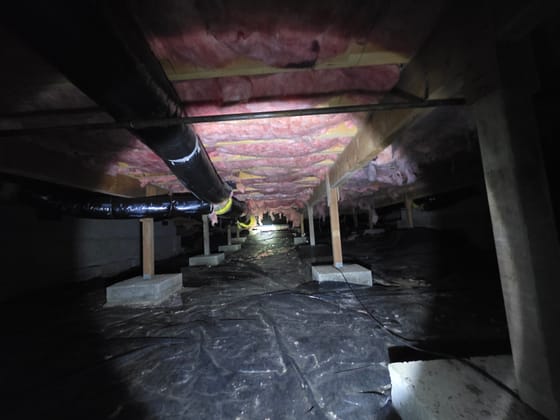
Crawlspaces: the job at a glance
| What it covers | Crawlspaces fouled by rodents or long-running moisture, cleaned out and closed up |
|---|---|
| Included | Removing contaminated insulation and debris, surface treatment, a sealed vapor barrier, vent screens, an access door and new insulation |
| Not included | Structural framing repair, foundation work, drainage excavation, plumbing and roofing |
| Order of work | Rodents out and confirmed quiet first, then removal, treatment, moisture work and re-insulation |
| How long it takes | One to three days for most homes, depending on square footage, clearance and how much comes out |
| What it costs | Free estimate from the site visit, set mostly by clearance height, square footage and contamination |
What is actually under most houses here
Crawlspaces in this county are wetter than almost anywhere else in the continental United States, and a great many of them have never been properly finished.
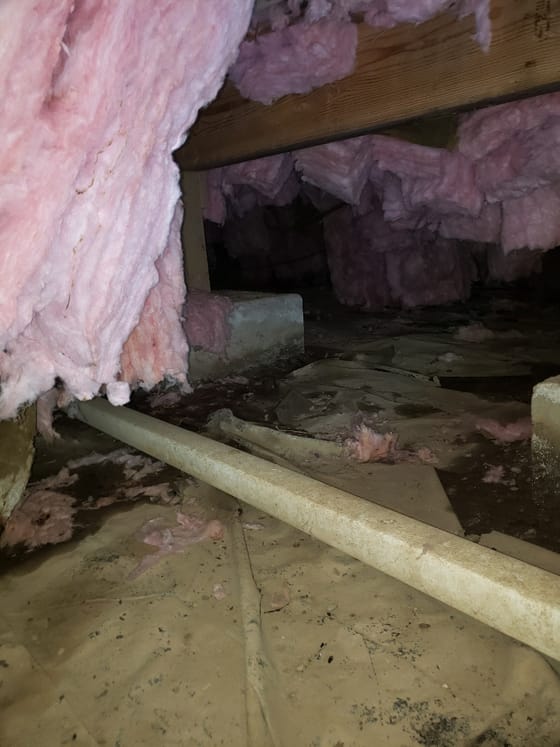
The typical older Bellingham crawlspace has bare soil or a barrier that was installed decades ago and has since torn, shifted or been pulled aside by someone running a duct. Ground moisture evaporates continuously into that space. Some of it leaves through the vents when they are clear, and a great deal of it goes upward into the joists, subfloor and sill plates.
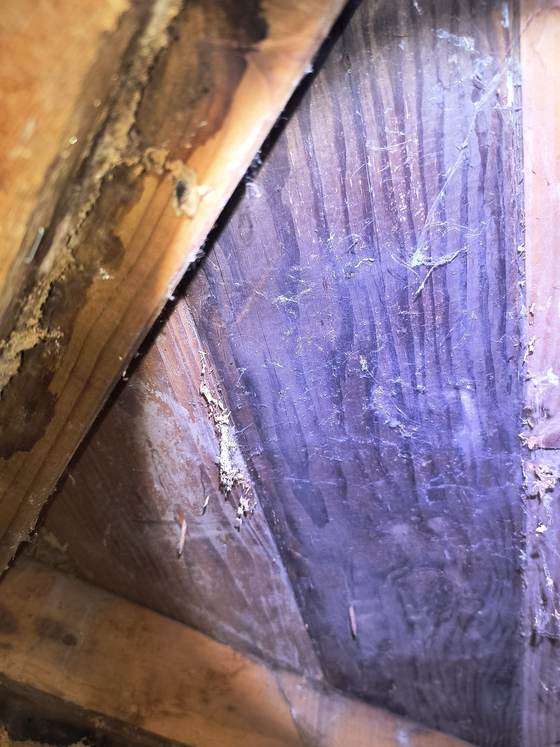
That is the mechanism behind most of what we get called about. Wood at elevated moisture content supports dampwood termites, moisture ants, anobiid beetles and fungal decay — none of which can establish in dry lumber. Add a failed vent screen and you have rodents as well, in a space nobody looks at.
Mold follows the same water, and the EPA’s mold course puts the mechanism plainly: growth needs a moisture source, and taking that source away is the control. It is why sheeting on the ground does more for a musty crawlspace than anything applied to the framing above it.
The crawlspace is where the majority of a Whatcom County pest problem physically lives, and it is the part of the house homeowners have least information about.
When restoration is warranted
Not every crawlspace needs this work, and we would rather say so than sell it.
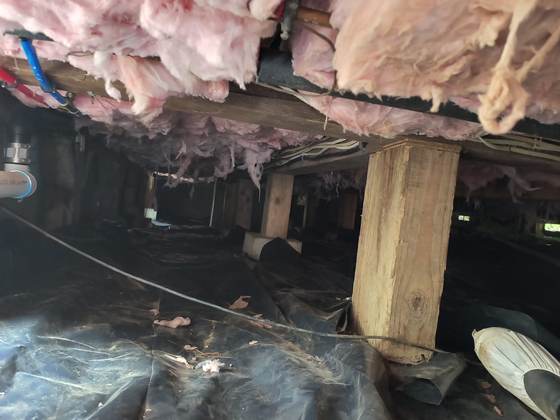
It is warranted when insulation has been used as nesting or is saturated, when there is significant droppings and urine contamination, when the vapor barrier is missing, shredded or was never installed, when insulation has fallen off the joists and is lying on the ground holding moisture, when there is standing water or persistently saturated soil, or when moisture readings in the framing are high enough to support decay and wood-destroying insects.
It is not warranted when the barrier is intact and sealed, insulation is dry and in place, and there is no contamination or active moisture source. A dusty crawlspace is not a problem. A dry one with old, harmless spider webbing is not a problem either.
We will tell you which one you have, and we will show you photographs rather than asking you to take our word for it, because you are not going to crawl under there to check.
The order matters more than anything
This is the single most important thing on this page.
Rodents out first. Exclusion and trapping, confirmed quiet over several visits. New insulation installed while a population is still active is nesting material you paid for. Any company willing to re-insulate before the animals are gone is arranging to sell you the same job twice.
Then remove. Contaminated insulation, droppings, nesting material, old torn barrier, construction debris, and any wood left on the ground by whoever built the house.
Then treat the surfaces. Appropriate disinfection of the soil surface and the framing where contamination was heaviest.
Then the moisture work. Vapor barrier properly lapped, sealed and run up the foundation walls where appropriate. Vent screening that is both rodent-proof and actually open to airflow. An access door that seals and latches and can still be opened by someone who needs to get in.
Then re-insulate, into a space that is now dry and closed.
Skip a step or run them out of order and the result is a well-insulated, freshly sealed home for the next population.
The health side, stated plainly
Rodent droppings and urine carry pathogens, and dried material becomes airborne when it is disturbed. That is the whole reason this work has a method rather than being a matter of a shovel and a bin bag.
The one to name specifically is hantavirus, which in the western United States is associated with deer mice — making it a rural and forest-edge concern here rather than a downtown one. The transmission route is inhaling aerosolized material from dried droppings, urine and nesting.
So the practical rule for anyone thinking of doing this themselves: do not dry-sweep and do not vacuum. Ventilate the space first, wet the material down with a disinfectant, use gloves and appropriate respiratory protection, and bag it rather than sweeping it.
We are not raising this to frighten anyone into hiring us. It is a genuinely manageable risk with the right handling, and if you would rather do it yourself you should know how.
What you get beyond pest control
A meaningful part of the value here has nothing to do with insects, and it is worth counting when you are deciding whether the job is worth it.
Insulation that works. Batting that has been nested in, compressed or saturated has lost most of its R-value. Replacing it restores the performance you already paid for once.
Warmer floors. The most common thing customers report afterward, and it is simply the insulation doing its job again.
Less decay in the framing. A dry crawlspace does not support fungal decay in the joists and sill plates above it. Over a decade that is a structural maintenance saving rather than a comfort one.
Better air. Air moves upward from a crawlspace into the living space through every penetration in the floor. A contaminated crawlspace is contributing to what you breathe upstairs.
Fewer secondary pests. Rodent nesting hosts mites and dermestid beetles, and when the rodents leave those move inward looking for somewhere else to be.
Vapor barrier or full encapsulation?
Worth being straight about, because encapsulation is heavily marketed and is frequently more system than a Whatcom County house needs.
A vapor barrier is sheeting across the ground, lapped and sealed, that stops soil moisture evaporating into the structure. Combined with working vents and sensible drainage, this is the right answer for most homes here and it is dramatically cheaper.
Encapsulation seals the entire space — ground and walls — and generally adds a dehumidifier or conditioned air. It has real applications: a crawlspace with a persistent groundwater problem that cannot be drained, or one where ducts and equipment live and need to be inside the thermal envelope.
The honest position is that a properly installed barrier, screened vents and corrected drainage solves the great majority of what we see. Where the bigger system is genuinely warranted we will say so, and where it is not we will tell you that too — and encapsulating a space that still has a drainage problem underneath it is a way of sealing the problem in.
What we do, what we hand off, and to whom
We are a small local company. Being straight about the limits of that is more useful to you than pretending there are none.
Ours. Cleanout, contaminated material removal, surface treatment, vapor barrier, vent screening and repair, access doors, insulation removal and replacement at normal residential scale, and the exclusion work that keeps it closed.
Handed to a local insulation contractor we work with. Where the insulation side of a job is beyond what a small crew should take on — a large footprint, a full removal and replacement across the whole structure, or work needing equipment we do not carry — we bring in people who do that every day rather than stretching to cover it. We coordinate the sequencing, we stay accountable for the pest work, and you will know before anything begins who is doing which part.
Neither of us. We are not general contractors, and in a crawlspace that boundary comes up most often around structural damage.
We do not do structural framing repair, foundation work, drainage excavation, plumbing or roofing. Where a joist has lost section to decay, it needs replacing by a carpenter, and installing new insulation against compromised framing is covering up a problem rather than fixing it. Where groundwater needs a drain or a sump, that is an excavation job.
When we find those, you get them described clearly enough to get a sensible quote from the right trade, and where we can we will point you at someone locally who does that work well.
Around the county
Older Bellingham, above all. The Lettered Streets, Columbia, Sunnyland, York and South Hill stock. Post-and-pier, low clearance, bare soil or a barrier from another era, and a century of gutter history. The highest concentration of this work in the county, and often the only real fix for a recurring insect problem upstairs.
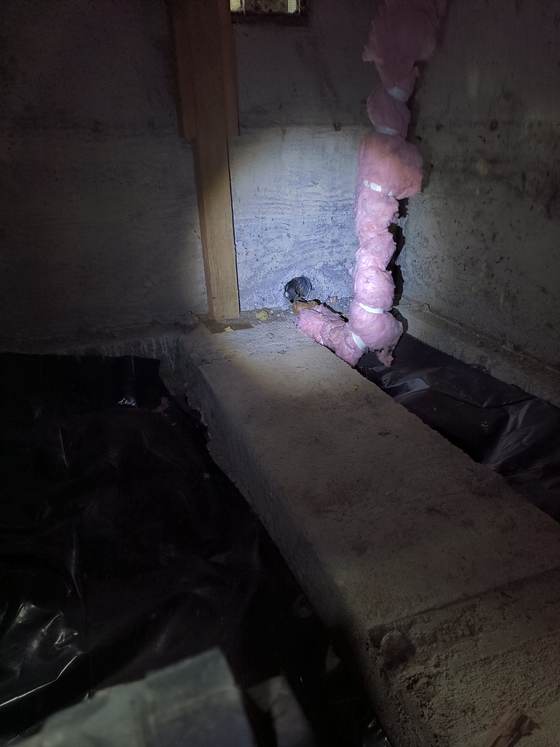
Around Lake Whatcom — Sudden Valley, Silver Beach, Edgemoor. Sloped lots push water toward foundations, and 1970s construction against a forest edge brings rodents in through vents that have been open for years.
Rural and agricultural — Lynden, Everson, Nooksack, Sumas. Larger footprints, outbuildings, and deer mice rather than house mice, which raises the handling requirements.
Waterfront and seasonal — Blaine, Birch Bay and Semiahmoo. Homes standing empty through the wet months, where nobody notices a vent screen that failed in November until April.
Newer construction — Barkley, Cordata, King Mountain. Usually better detailed, and when we do find a problem there is normally a specific cause: a downspout discharging under the house, or irrigation running against the foundation.
What comes out, and where it goes
Worth describing, because “cleanout” is vague and people reasonably want to know what is actually happening under their floor.
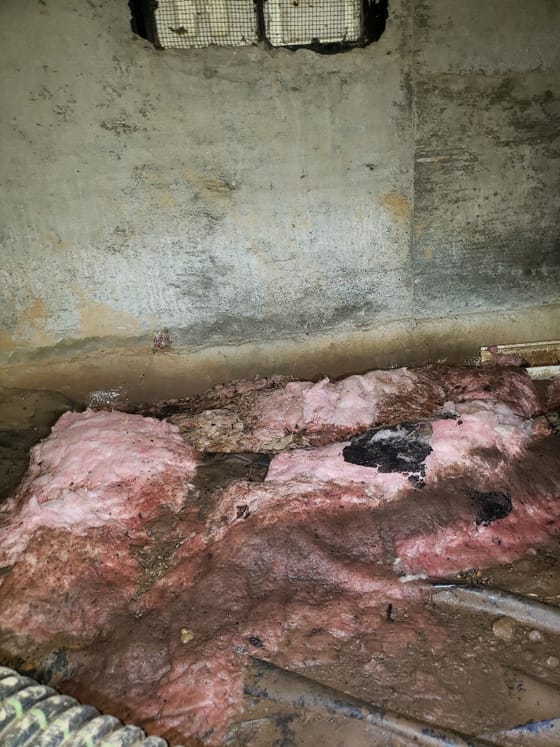
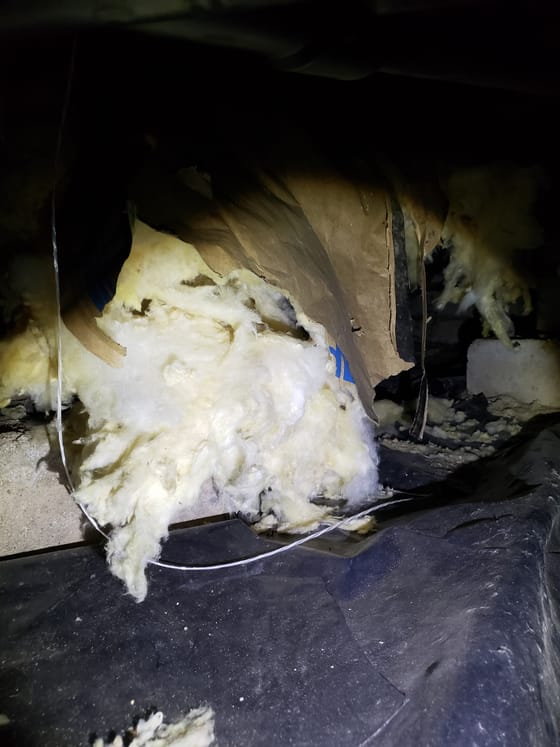
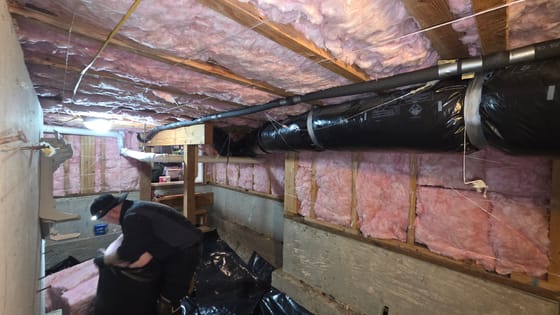
Contaminated insulation. Batting that has been nested in, urine-saturated or has fallen from the joists comes down and is bagged. On a badly affected crawlspace this is the bulk of the volume, and it is the part that most changes how the space smells afterward.
Droppings and nesting material. Wetted down first, never swept dry, bagged and removed rather than raked to one side.
The old barrier. Torn plastic that has been shifted and walked on for decades traps moisture underneath it rather than blocking it, so it comes out before the new one goes down.
Construction debris. Offcuts, form boards, buried lumber and the general archaeology of whoever built the house. Every piece of wood on the ground is a colony site for moisture ants and dampwood termites within a few feet of the structure.
Occasionally, the unexpected. Abandoned ducting, a forgotten pet, stored belongings from a previous owner, and on older properties the occasional buried oil line. We tell you what we find rather than quietly bagging it.
Material is removed from the property. Nothing is pushed into a corner and covered with new sheeting, which is a real practice and one you would never see.
The photographs
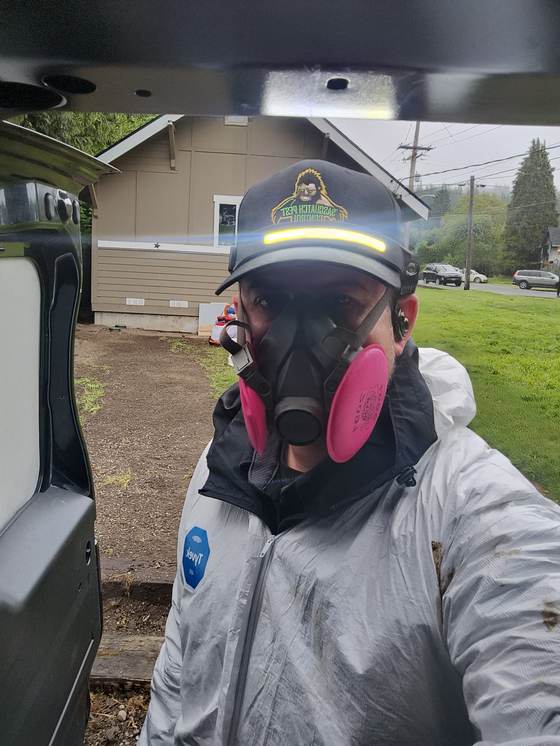
We document a crawlspace before, during and after, and you get the images.
That is not a marketing flourish. You are being asked to pay for work in a space you will never look at, performed by people you are trusting, and the only honest way to close that gap is to show you. It also gives you a baseline: if something changes in three years, there is a record of what it looked like when we finished.
For rentals and property managers the same record has a second use, since it evidences the condition of the space at a point in time.
What it costs
Quoted from the site visit, and driven mostly by three things.
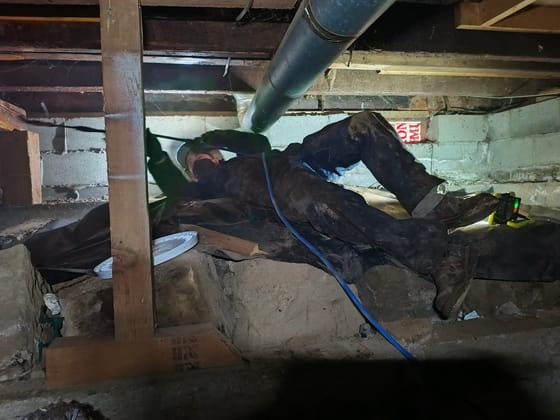
Clearance height is the biggest single factor. A crawlspace you can move around in is a different job from eighteen inches on your back, and the difference in labor is substantial.
Square footage, straightforwardly.
Contamination extent — how much material has to come out, whether insulation is coming down across the whole footprint or in sections, and how much surface treatment is warranted.
This is one of the larger residential jobs we do, and it is worth saying that the comparison is not against doing nothing. It is against a recurring insect problem upstairs that will not resolve, insulation that is not performing, and framing that is slowly getting worse. You get the figure in writing before anything starts and the estimate is free.
Timing
Late summer and early autumn is the best window, for the same reason it is the right time for exclusion: it gets ahead of the rodent push that comes with the September and October rain, and the space is at its driest.
Winter is workable and occasionally better for diagnosis, because a drainage problem is actually running in February rather than sitting invisible in August. If you want to know what your crawlspace really does, that is when to look.
Attics, which are the same job upside down
Everything above applies to attics with three differences worth knowing.
Contamination spreads further. Attic insulation is usually blown-in rather than batted, so rodent contamination disperses through the material instead of staying in identifiable sections. That tends to make removal all-or-nothing rather than sectional.
The entry points are higher. Soffit returns, roofline junctions at a change of pitch, gable vents and anywhere a branch or fence gives access to the roof. The exclusion work happens on a ladder instead of on your back.
Squirrels and bats are not our work. Squirrels do far more structural damage than rats, chewing framing and wiring rather than just traveling it. Bats carry seasonal restrictions — exclusion cannot happen during the maternity period, so the work waits for the window rather than the schedule. Getting them out is a wildlife specialist’s job rather than ours, and it is timing-led. We will do the restoration once the animals are properly out, but the removal is somebody else’s job and we will say so.
The energy argument is stronger in an attic than a crawlspace, because that is where most of a house’s heat loss occurs. Replacing contaminated attic insulation is usually the single largest efficiency gain available on an older Bellingham home, and it happens to also be the pest fix. See attic insulation.
Rentals, sales and property management
Two situations where this work carries weight beyond the pest problem.
Rentals. Bellingham Municipal Code 6.15 requires rental properties to pass a certified inspection, and the checklist flags foundation openings larger than a quarter inch. A crawlspace restoration that includes vent screening and a sealed access door addresses that directly, and the photographic record documents the condition at a point in time. Turnover is the cheapest moment to do it — empty unit, easy access, no scheduling around a tenant.
Sales. A crawlspace with contaminated insulation and a missing barrier is something a buyer’s advisor will find and price against, usually at more than the work costs. Doing it before listing removes a negotiating lever. Doing it after purchase is often the first thing a new owner of an older Bellingham home should budget for.
Questions worth asking any company
If you are getting more than one quote for this work — and you should — these are the questions that separate them, whoever you end up hiring.
Did they actually go under the house? A quote produced from the access hatch is a guess. Ask what the clearance is, what the barrier condition is, and where the entry points are. Anyone who has been under there can answer.
What is the sequence? If exclusion and trapping do not come before re-insulation, the job is being sold in the wrong order and you will be paying for it twice.
What barrier material, and how is it sealed? Lapped, sealed and secured, or loose sheeting laid on the ground. It makes the difference between a barrier and a tarp.
What happens to the old material? Removed from the property, or pushed to a corner and covered.
Will you see photographs? You are paying for work in a space you will never enter. If nobody is offering to show you, ask why.
What is out of scope? Structural repair, drainage excavation and plumbing are other trades. A company that says it will handle everything is either subcontracting it or planning to work around it.
After the work
A restored crawlspace does not need attention often, but it is worth knowing what to keep an eye on.
Check the vent screens once a year. Spring is a good habit. They are the first thing to fail, usually from weather rather than animals, and a screen that has come loose reopens the whole envelope.
Watch what other trades do. A plumber, an electrician or an HVAC contractor working under the house will move the barrier to get where they need to be, and very few of them put it back properly. It is worth asking them to, and worth a look afterward.
Keep the exterior working. Gutters clear, downspouts discharging away from the foundation, and soil and bark mulch kept below the siding line. Most crawlspace moisture originates outside the crawlspace.
Note anything that changes upstairs. A recurring insect problem in one room, a floor that feels colder than it did, or a musty smell that returns are all worth mentioning, because they are usually the crawlspace telling you something.
Related work
This work almost always follows rodent control and runs alongside exclusion and repairs. Where the attic is also involved, that is attic insulation removal and replacement. And where the moisture has been running long enough to bring in wood-destroying insects, see termites and wood-destroying pests and moisture ants.
Frequently asked questions
Do I actually need my crawlspace insulation replaced?
Only if it is contaminated or has lost its function. Insulation that has been used as rodent nesting, saturated with urine, or fallen off the joists is doing nothing for you and is holding moisture against the wood. Insulation that is dry, intact and in place stays where it is — we are not going to sell you a replacement you do not need.
Can I clean out the crawlspace myself?
You can, with real precautions. Do not dry-sweep or vacuum rodent droppings — disturbing dried material aerosolizes it, and deer mice in rural Whatcom County are a hantavirus consideration. Ventilate first, wet everything down with a disinfectant, and use gloves and proper respiratory protection. Most people would rather we did it.
What is the difference between a vapor barrier and encapsulation?
A vapor barrier is sheeting over the ground that stops soil moisture evaporating into the structure. Encapsulation seals the whole space including the walls and usually adds conditioning. For most Whatcom County homes a properly installed and sealed ground barrier plus working vents and drainage does the job. We will tell you honestly when the bigger system is not warranted.
Will this help with anything besides pests?
Yes, and it is a fair part of the value. A dry crawlspace means less decay in the framing above it, insulation that actually performs, and less moisture and odor moving up into the living space. People routinely notice the floors feel warmer afterward.
Do I have to get rid of the rodents first?
Always. Restoring a crawlspace that still has an active population means installing new insulation for animals to nest in. The order is exclusion and trapping, confirm it is quiet, then clean and restore. Any company willing to re-insulate before that is done is selling you the same job twice.
How long does it take?
Most residential crawlspaces are one to three days depending on square footage, clearance height and how much material has to come out. Low clearance is the biggest factor — an eighteen-inch crawlspace takes considerably longer to work than one you can move around in.
Guides
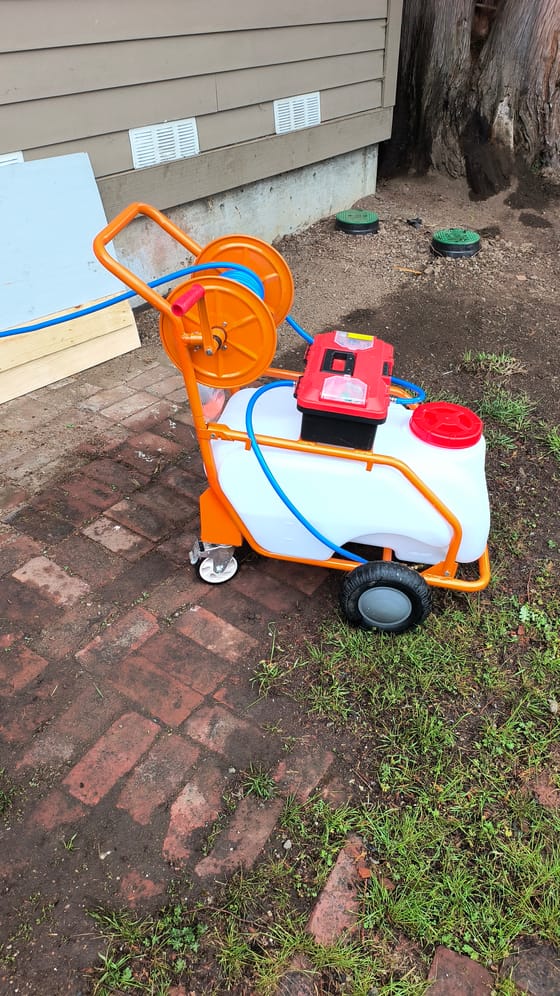
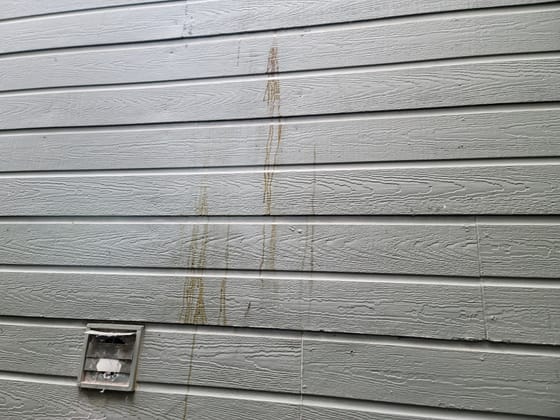
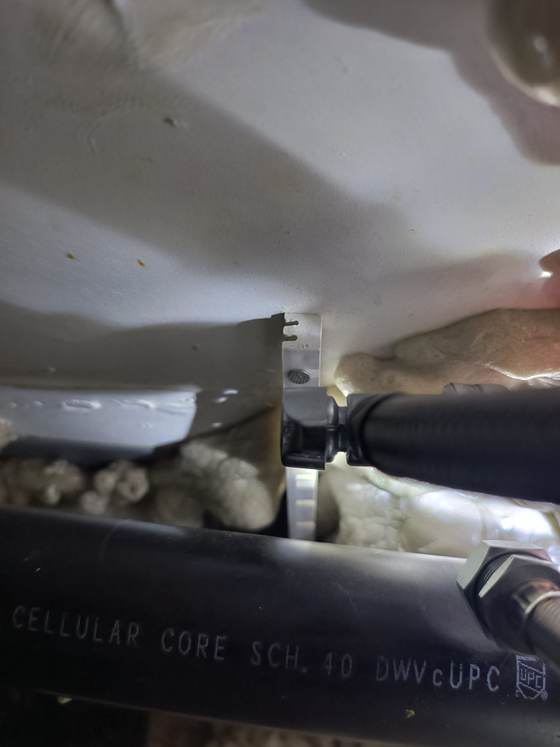
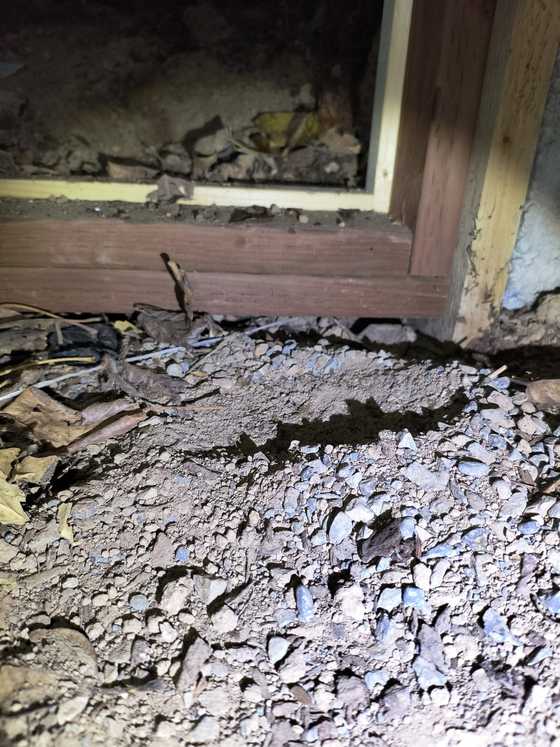
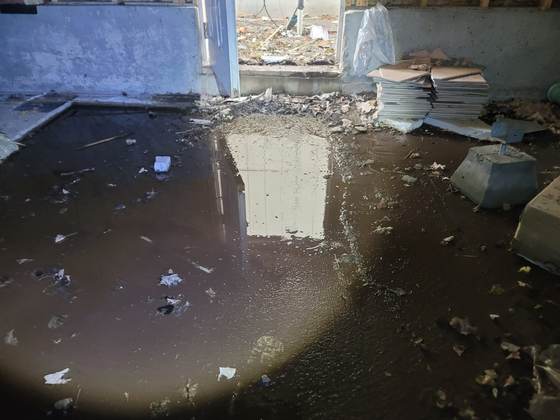
Crawlspaces: 16 photographs from real jobs
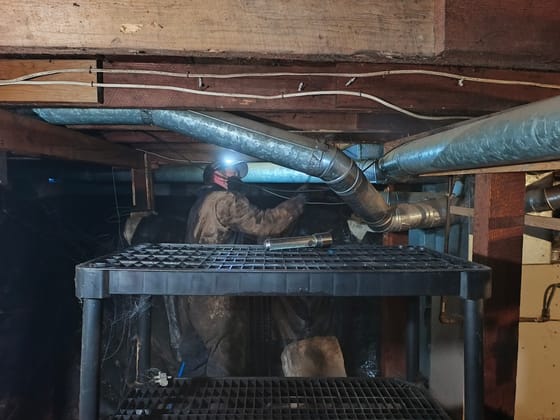
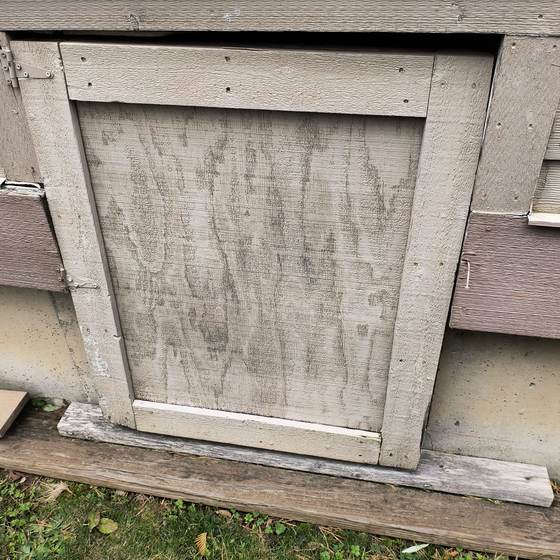
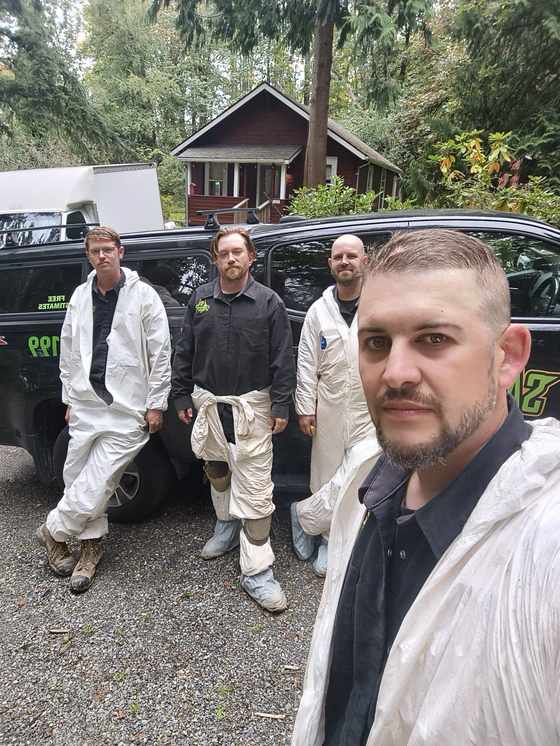
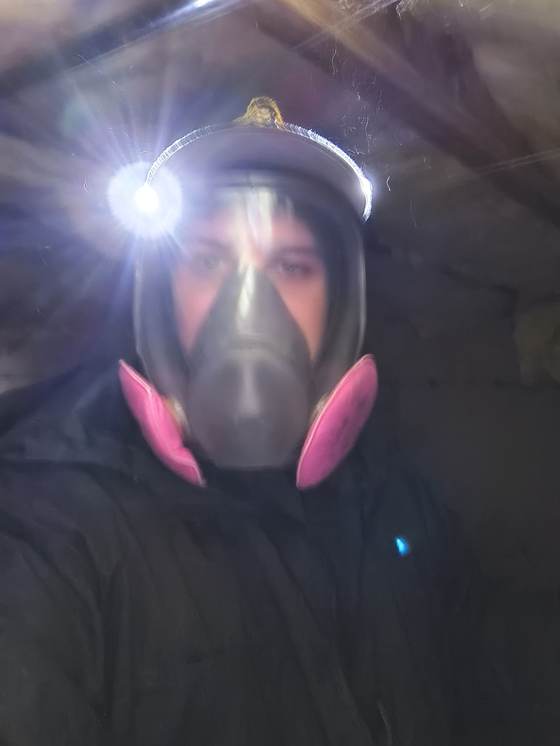
Every one of these was taken on a job in Whatcom or Skagit County by whoever was doing the work. Stock photography is close to universal in this trade and a reader has no way to tell by looking, which is the only reason it is worth saying out loud. The rest of the archive is on the gallery.
Crawlspace Cleanout & Restoration in Whatcom County?
Family-owned, no long-term contracts, and every treatment is backed by our 100% Service Guarantee.
Most calls in Whatcom County are out within 1–2 days, about 3 during the late-summer peak.
Last updated