
Pest Control in Blaine, Washington
Blaine is a border town, a working harbor and a seasonal-home community at once, and each of those brings its own problem. Rodents through the marina and the freight corridor, salt working on every building envelope, and houses that sit empty for months at a time.
Call 360-410-2199 Request a free inspection
Blaine on the map
Three towns wearing one name
Blaine is the most varied small place we work. Within a few square miles there is an international land border with its commercial traffic, a working harbor with commercial and recreational moorage, a resort spit, an older residential town, and a large stock of houses that stand empty for much of the year. Those are not variations on a theme. They are four different jobs.
What ties them together is the water and the exposure. Everything here sits close to salt and close to wind, and both work on a building continuously.
The marina
Blaine Harbor is a genuine working facility, and marinas have a rodent ecology of their own.
Rats move along dock lines, through utility runs and between vessels. Storage lockers, gear sheds and the sheds where people keep bait, line and equipment are the reservoir. Live-aboard and long-term moored boats add food. The result is a population that belongs to the facility rather than to any one owner, which is the single most important thing to understand about it — treating one boat or one locker while everything around it goes untouched achieves nothing that lasts.
Our work here is on the shore-side structures and the fixed facilities, and it is program work rather than visit work: mapped placements, protected from weather and from non-target animals, on a schedule, with a record. Rodents in a marina are a permanent management problem rather than something you solve once.
Boat owners get a short, useful list. Do not store food aboard over winter. Bait and pet food belong in hard containers, not in a locker. Shore power cords and lines are highways, and a rat will use one without hesitation. Anything soft and fibrous left in a cabin becomes nesting material by February.
Semiahmoo and the spit
Semiahmoo is its own environment: a narrow sandspit with water on both sides, serious wind exposure, resort and condominium structures, and residential property with some of the highest salt exposure in the county.
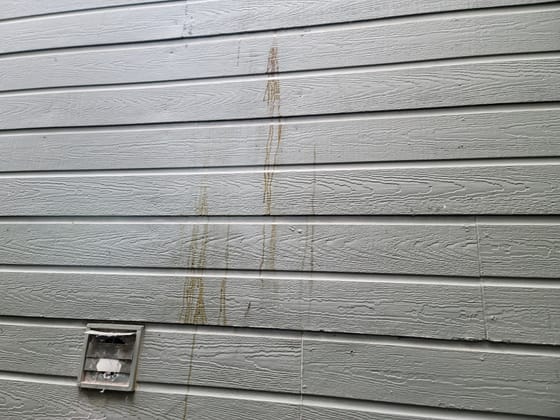
Wind and salt matter more than anything biological out there. Vents work loose. Screens corrode. Sealant fails early. Trim and flashing move. Every one of those is an entry point, and on the spit they open faster than they do a mile inland.
That drives our material choices. Ordinary galvanized hardware cloth is not adequate in this exposure — it corrodes, and an exclusion that fails in three winters was money wasted. Marine-grade stainless mesh, appropriate fasteners and sealants specified for coastal use cost more at the outset and are the only version of the job worth doing here. We would rather quote the durable version and explain why than win the work with a cheaper specification that will not survive.
Driftwood on the beaches
One local source worth naming, because it does not apply anywhere else we work. The beaches here accumulate driftwood, and driftwood that has sat wet on a shore for years is carpenter ant habitat by the time it is picked up. A load carried home for a firepit, a border, a bit of landscaping or a woodshed brings the colony with it and sets it down against a building. We find carpenter ants started this way in Blaine more than anywhere else in the county, and the tell is that the nest is outdoors, recent, and nowhere near the water damage that usually explains one.
Oregon State’s Solve Pest Problems walks through carpenter ants and the wood they choose, for readers on this side of the country.
Houses that stand empty
A large share of Blaine and Semiahmoo property is seasonal, second homes, or owned by people who are elsewhere much of the year. Many owners are Canadian and cross regularly rather than living here.
There is a persistent and completely understandable assumption that an empty house has fewer pest problems. The opposite is true, and it is one of the most useful things we can tell a seasonal owner.
An unoccupied house is quiet. Nothing disturbs anything. Lights do not go on, doors do not open, floors are not walked on. It is dry inside while the whole county is wet outside. Nobody notices a scratching sound in November, nobody sees the droppings in December, and nobody spots the wasp nest in the eave growing through July. So a problem that would be caught in its first week at an occupied house runs undisturbed for four or five months.
Then the owner arrives in spring, and what would have been a straightforward call has become soiled insulation, chewed ducting, a stained ceiling or a substantial nest.
The answer is timing. Get exclusion work done in late summer before you leave — that is when the crawlspaces are dry, the wasp season is over, and the autumn rodent movement has not started. Have somebody look at the place mid-winter if you can. And where an owner cannot easily be here, we can do the assessment while they are in town and schedule the work around their travel rather than around ours.
Wasps deserve a specific mention for empty houses. A queen founds a nest in April or May in a sheltered eave or a soffit, and with nobody there to notice, it grows all summer without interruption. The nests we find at vacant Blaine properties in August are routinely larger than anything we see at an occupied house, for exactly that reason.
There is also a practical matter worth settling before you drive north. Anything inside the building needs somebody able to let us in and authorize the work — an owner who is in town that week, a neighbor holding a key, a property manager, or the office at a gated development. We will not enter a house on a verbal say-so from somebody we cannot confirm has the authority to give it, and a job that stalls at the door on a Blaine route day usually waits until the next one rather than being refitted the same afternoon. Ten minutes arranging access in September saves that entirely.
The border and the commercial corridor
The Peace Arch and truck crossings put a genuine commercial and logistics economy into a small town: freight staging, warehousing, brokerage offices, duty free, fuel and food service, and the parking and yard space that goes with them.
That is commercial pest work and it behaves like commercial pest work anywhere freight moves. Goods arrive from elsewhere with whatever traveled with them. Staging yards and open ground support rodent populations that then work into adjacent buildings. Food service near a crossing runs at odd hours with heavy turnover. Warehousing has high ceilings, big openings and doors that spend a lot of the day open by necessity.
Programs here are built on documentation and on realistic goals. A warehouse with a dock door open eight hours a day is never going to be sealed, so the work is a defended perimeter, controlled interior placements, and attention to the sanitation and housekeeping points that actually feed the population. We put those in the report rather than quietly servicing around them.
The residential town
Away from the water and the crossing, Blaine is an ordinary older small town, and it has ordinary older small town problems.
The housing runs from prewar and postwar stock near the original core out through midcentury development to newer building on the edges. The older houses carry the familiar Whatcom County pattern: shallow crawlspaces, bare soil, vent screens that rusted out years ago, and framing that has taken water somewhere and now supports moisture ants.
Carpenter ants are the persistent one. There is a lot of cedar in this town, a lot of it is now fifty years weathered, and softened cedar trim and fascia is what a satellite colony wants. As everywhere in this county, the parent colony is usually outdoors in a stump or a dead limb, and the job is to find it rather than to keep treating the trail.
Rodents follow the same seasonal logic as the rest of the county, with the addition that shoreline riprap, driftwood and the marine bank are good harborage and sit immediately adjacent to housing in a way they do not inland.
What the exposure does to a building
Worth setting out plainly, because it explains most of the difference between working here and working in Bellingham.
Salt accelerates corrosion on every metal component of the building envelope — vent screens, flashing, fasteners, door hardware, hardware cloth from a previous exclusion attempt. Wind drives rain horizontally into assemblies designed for rain that falls downward, and it works trim, siding and flashing loose over time. Sun and salt together degrade sealants and gaskets faster than they degrade inland.
Every one of those failures is an opening. So the honest description of pest work on the Blaine waterfront is that it is largely building envelope work with a biological motive, and that it needs redoing on a longer cycle than the same work would inland — inspected periodically rather than assumed to be permanent.
The Blaine year
The calendar out here runs differently from the inland county, mostly because the water moderates the temperature and because so much of the housing is occupied seasonally.
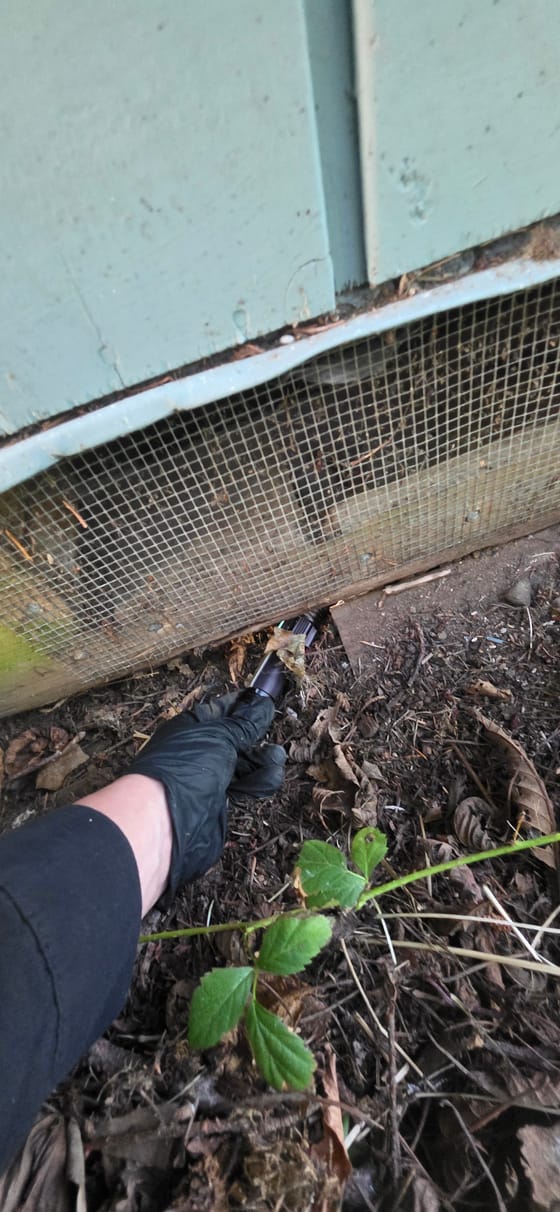
Winter. Rodent pressure indoors, concentrated in the empty houses where nobody is there to hear it. Storm weather works at the building envelope through the winter, opening the gaps that get used later. Very few calls, and most of the damage that gets discovered in April is happening now.
Early spring. Owners return, and this is our busiest stretch for Blaine. People open a house that has been shut since October and find what moved in. Ants become active, and in this housing stock they are usually reporting a water problem.
Late spring. Nesting is underway and the legal window has closed on anything with eggs or young in it. Wasp queens are founding nests in eaves and soffits, particularly at properties standing empty. This is the cheapest possible moment to deal with a wasp problem and almost nobody is here to notice it.
Summer. Peak occupancy and peak wasp activity from July onward as colonies mature and workers switch from protein to sugar. It is also the right window for exclusion: dry crawlspaces, and easy access to the exterior.
Early autumn. The most important six weeks of the year here, and the most commonly wasted. Owners are closing houses up and leaving. The rain is arriving and the rodent movement is beginning. Work done in this window prevents the winter problem entirely; work deferred to spring is remediation instead.
Food service, and the small commercial accounts
Blaine has a lot of food handling for its size — the marina, the crossing, the resort, and a downtown that swells in summer. Small commercial food accounts here have a particular shape.
Seasonality is the first thing. A kitchen running flat out from June to September and quietly the rest of the year has a pest profile that tracks that curve, and a program built on identical monthly visits year-round is both overservicing the winter and underserving the summer. We would rather scale it.
Outdoor seating and open-air service is the second. Wasps and yellowjackets converge on outdoor food, and by August a patio is a genuine customer-experience problem rather than a hygiene one. Some of the fix is physical, some of it is waste handling and timing, and very little of it is something applied.
Waste is the third and it is where most of the real progress is available. A dumpster with a broken lid, an enclosure that cannot be closed, or bins staged outside a back door overnight will support a rodent population that no service schedule overcomes. We put that in the report, because quietly working around it while billing monthly would be dishonest.
The other household pests
Away from the water, Blaine gets the same domestic list as the rest of the county, with local emphasis.
Spiders are heavy here, and the autumn wandering season brings the usual run of calls about large fast spiders indoors. These are almost always giant house spiders — harmless, established throughout western Washington, and moving because males are looking for mates rather than because it is cold. Exterior lighting matters more than people expect: a bright fixture concentrates the insects that spiders eat, and the spiders follow the food.
Cluster flies and overwintering insects find the sunny elevations, which on the waterfront means the south and west walls that also take the worst of the weather. They emerge on the first mild afternoon and confuse people who assume flies belong to summer.
Carpenter ants and moisture ants track the same water problems described above, and in this exposure the water problems are common.
Rodents are the constant. Norway rats along the shoreline, the riprap and the harbor; house mice everywhere; and deer mice in the more rural properties toward the county line. Where droppings need cleaning up in an enclosed space we will tell you to ventilate first and avoid sweeping or vacuuming dry material, because that is the sensible precaution regardless of what the risk turns out to be in any given building. State health guidance on hantavirus is where that precaution comes from, and deer mice are the reason it applies out toward the county line rather than at the harbor.
Drayton Harbor and the tidal ground
The shallow water and tidal flats around Drayton Harbor shape the shoreline properties in a way that is easy to miss from the road.
Tidal flats produce insects in quantity, and insect production feeds everything above it, the spiders included. Properties backing onto that ground get a heavier flying-insect load on summer evenings than anywhere inland, and the exterior lighting question becomes correspondingly more important. A bright white fixture on a shoreline house on a warm August night is doing more to create a spider problem than anything else on the property.
Driftwood, riprap and the vegetated bank are excellent rodent harborage sitting directly against housing. It is not something to be eliminated — it is the shoreline, and it belongs there — so the work is about the building rather than the bank: closing the crawl vents properly, keeping the crawl hatch sound, and making sure the gap where a deck meets the house is not an open invitation.
Ants and the damp-building list
Blaine’s older stock and its exposure combine to produce a predictable set of moisture-driven problems.
Moisture ants are the honest ones. They colonize framing that is already wet and already softening, so finding them is a finding about water rather than about ants. In this town the water is usually arriving horizontally — wind-driven rain into an assembly designed for rain that falls straight down, or a failed sealant joint on a weather elevation.
Carpenter ants prefer wood that has begun to soften and keep a parent colony outdoors, commonly in a stump, a fence post or a woodpile. Treating the trail indoors without locating that parent is why these jobs get a reputation for returning.
Underneath both sits the damp-crawl company — sowbugs, millipedes, springtails and silverfish — none of which are a serious problem in themselves and all of which are reporting the same condition. Where a crawlspace is genuinely wet, the durable answer is drainage and a sound vapor barrier rather than repeated treatment, and we would rather say so.
How we work in Blaine
Blaine is twenty-two miles from our shop, mostly freeway, and it sits on scheduled route days rather than being fitted in between city jobs. We would rather tell you which day that puts you on than promise a window we cannot hold.
A visit starts outside, with attention to the things this town does to buildings: the vents, the flashing, the trim, the roof edge, the state of any previous exclusion work, and where the wind and water actually hit. Then the crawlspace and the attic. Then the interior.
You get told what we found, what is causing it, what should be done now, what can wait, and which items are a building repair rather than a pest treatment. For seasonal owners we will also tell you frankly what is worth doing before you leave and what can safely wait until you are back.
Inspections are free for every pest we handle here, bed bugs excepted — those carry a verification fee that is credited against treatment if you proceed. There is no long-term contract and no multi-year agreement to escape from.
Frequently asked questions
Why does salt air change how exclusion is done here?
Because ordinary galvanized mesh and untreated fasteners corrode fast in this exposure, and an exclusion that fails in three winters was never worth paying for. Marine-grade stainless and sealants specified for coastal use cost more up front and are the only version that lasts out here.
Do you service boats and marina structures?
We work the shore-side structures, storage buildings and the fixed marina facilities. Rodents in a marina move along dock lines and through storage, so treating one boat while the surrounding buildings go untouched is a temporary result at best.
My Blaine house sits empty over the winter. What should I do?
Get the exclusion done in late summer before you leave, rather than discovering the problem in spring. An unoccupied house through a wet Whatcom winter is quiet, undisturbed and dry, which is close to ideal for rodents. Empty houses do not get fewer pests, they get more.
Does the border crossing affect pest pressure?
Around the commercial corridor, yes. Freight, staging yards and warehousing move rodents the way they move everything else, and the buildings serving that traffic see pressure a residential street a mile away does not. It is a commercial pest problem rather than a household one.
Does salt air change how exclusion work is done?
It changes the materials. Ordinary galvanized mesh and untreated fasteners corrode quickly in this exposure, and an exclusion that fails in three winters was not worth doing. Marine-grade stainless and appropriate sealants cost more up front and are the only thing that lasts out here.
How often do you get out to Blaine and Semiahmoo?
Blaine sits on scheduled route days rather than same-day fill-in work, because it is twenty-two miles up the freeway from our shop. Tell us when you call and we will say honestly which day that puts you on rather than promising something we cannot hold.
Are inspections free in Blaine?
Free for every pest we handle, with bed bugs the single exception — those carry a verification fee, credited against treatment if you go ahead. For seasonal owners we can do that assessment while you are in town and schedule the work around your travel.
Guides
From the blog
Pest problem in Blaine?
Family-owned, no long-term contracts, and every treatment is backed by our 100% Service Guarantee.
Most calls in Whatcom County are out within 1–2 days, about 3 during the late-summer peak.
Last updated