
Pest Control in Acme, Washington
Acme sits on the South Fork Nooksack, and the river is what makes the work here different. A high water table keeps crawlspaces damp, the riparian corridor carries rodents along the valley floor, and farm ground and standing timber press in from either side of one road.
Call 360-410-2199 Request a free inspection

Acme on the map
One road, one river, and the valley between them
Acme is not laid out like a town. It is a stretch of Highway 9 — the Valley Highway — with working farms strung along it, a school, a fire station, and a scattering of houses and acreage running back toward the hills on either side. North of it is Van Zandt. South of it are Clipper and Wickersham. Together they make up the South Fork Valley, and the volunteer fire district that covers all of them spans more than twelve miles of that single road.
That is a useful figure to hold on to, because it describes the place better than a population number would. Twelve miles of valley, one highway, and no part of it more than a few hundred yards from either the river or the treeline.
Lake Whatcom is to the west, the North Cascades and the Mount Baker–Snoqualmie National Forest to the east, and the South Fork of the Nooksack runs the length of the floor between them. Almost every property we work on here has farm ground on one side and standing timber on the other, and the two send entirely different problems at entirely different times of year.
The river is what makes this different
Plenty of rural Whatcom County is farmland against forest. Deming is, sixteen miles north of here on the other fork. Custer is open country. What Acme has that neither of those has in the same measure is a river running the whole length of the community, close to the buildings, on a floor that does not drain quickly.
Three consequences follow from that, and between them they account for most of what we are called out here to deal with.
The water table is high. In a valley floor with a river through it, ground water sits closer to the surface than it does on higher ground, and it moves seasonally. That is why crawlspaces here are damp in a way that has nothing to do with the roof.
The riparian corridor is a highway. The vegetated strip along a river is continuous cover, food and water running for miles. It is one of the best rodent habitats in the county, and it passes within a short walk of nearly every building in the valley.
High water relocates things. When the river comes up, it floods burrows along the bank. Whatever was living in them does not drown; it moves to higher ground, and higher ground here means somebody’s shop, barn or crawlspace.
Damp crawlspaces, and why the roof is not the answer
The single most common thing we find under a house in this valley is a wet crawlspace with a perfectly sound roof above it.
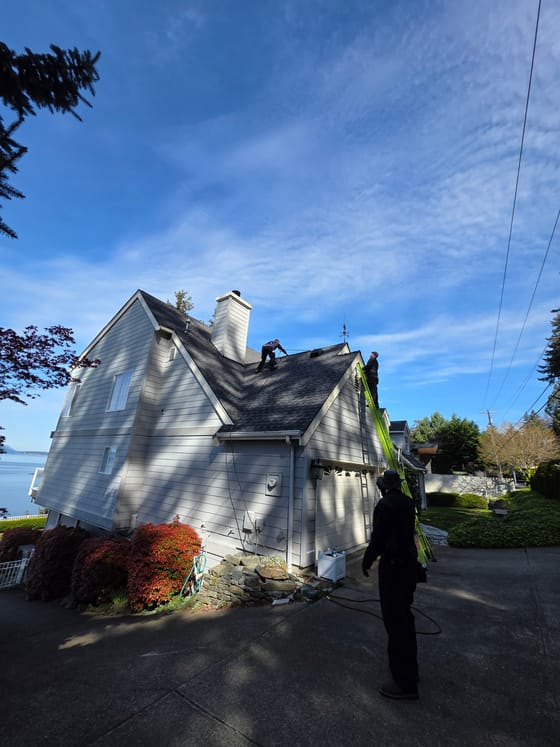
People reasonably assume moisture comes from above, so they clear the gutters, check the flashing and look for a leak. In a valley floor that is usually the wrong direction to be looking. Moisture is wicking up out of bare soil, driven by a water table that sits close to the surface, and a vented crawlspace over damp ground stays damp no matter what the roof is doing.
That matters for pest control rather than only for building maintenance, because damp wood is what turns a house from unattractive to habitable for several of the things that live around here.
Carpenter ants do not eat wood, but they excavate galleries in it, and they excavate softened wood far more readily than sound wood. A rim joist that has spent fifteen years above damp soil is a materially easier target than one that has not.
Wood-boring beetles and decay fungi need moisture content that dry timber never reaches. The presence of either is a moisture report before it is a pest report.
Rodents do not need the damp, but they are drawn to the warmth and the cover, and a crawlspace with degraded insulation hanging out of the joists is better nesting than anything outdoors.
The fix is unglamorous and it works: a ground-contact vapor barrier over the soil, drainage corrected where it is obviously wrong, and the venting sorted out one way or the other. That is building work rather than treatment, and it is the reason a fair number of our jobs in this valley involve no product at all.
What the river corridor sends, and when
Most residential rodent work in Whatcom County is house mice. In the South Fork Valley we see a great deal of rat work alongside it, and the distinction is worth making before anybody sets a trap, because the two animals do not behave the same way.
Mice occupy small spaces, breed quickly and travel very little. A mouse problem tends to be local to one building and one route in, and it escalates fast once it starts.
Rats range considerably further, are markedly cautious about anything new in a familiar run, and produce a different signature. Heavy movement in a floor or wall at night, gnawing that has gone through something structural, chewed wiring in a shop, a crawlspace vent enlarged rather than merely entered — those lean rat rather than mouse.
Getting that wrong costs a fortnight. A rat will avoid an unfamiliar object in its run for days, so a placement strategy that works on mice reads as failure on rats until somebody realizes what they are actually dealing with. We work it out from the droppings, the gnawing, the runs and the smell before anything gets deployed. The University of California’s IPM program on rats sets out the same behavior, and it is worth reading before you buy traps for a South Fork property.
There is a seasonal shape to it as well. Farm ground supports large outdoor populations quite happily through the warmer months, and those animals only come at buildings when something changes — the ground is worked, cover is cut, a food source moves into storage, or the weather turns. Cutting and harvest strip cover from a great deal of ground in a short space of time, and the animals living in it have to go somewhere within the week. For what happens on the farm side of the fence, WSU Extension’s Whatcom County office is the local publisher on crops, pasture and the pests that arrive with them.
When the river comes up
High water is a normal feature of life here rather than an exceptional one, and it produces a pest problem with a shape worth knowing about in advance.
The sequence is consistent. Water rises and floods burrows along the bank. Displaced animals move laterally and upward onto whatever ground stays dry, which is where the buildings are. Within a few days a property that had no rodent activity at all has a great deal of it, arriving all at once and often into outbuildings first.
Two things are worth saying about that. The first is that it has nothing to do with how well a place is kept. It is a displacement event, and immaculate properties get it as readily as neglected ones.
The second is that it has an end. This is not a permanent condition to be managed indefinitely with a recurring contract — it is a defined problem with a beginning, and the useful response is to deal with the animals that arrived and close the openings they used, so that the next time the water comes up they have nowhere to go on your property.
The other half of a flood is the moisture that stays behind. Wet insulation does not dry out on its own under a floor, and saturated material left in place is a nesting substrate and a fungal problem at the same time. Removing it is part of the job rather than an upsell.
Carpenter ants, and the timber on the other side
The forest on the valley walls does what forest does everywhere in this county: it maintains a very large number of carpenter ant colonies that have nothing to do with anybody’s house until they expand.
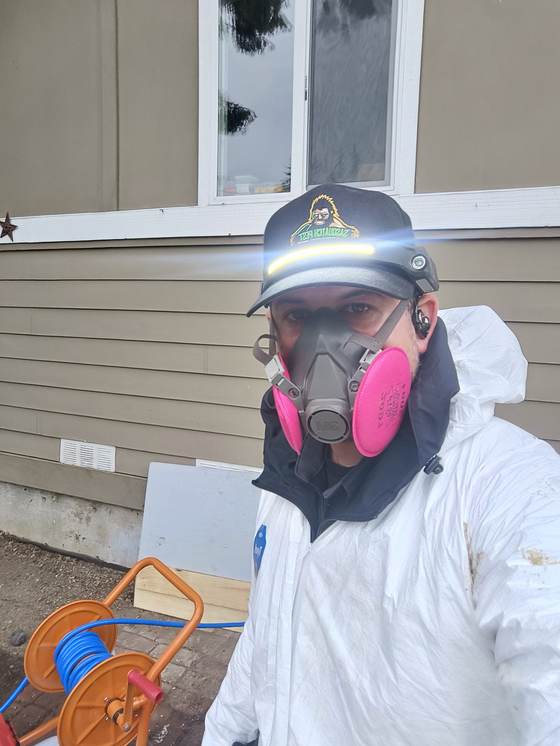
A mature colony establishes itself outdoors in a stump, a fallen log or the punky base of a standing tree, and then pushes satellite colonies outward. Those satellites hold workers and older larvae rather than the queen, and a wall void, a rim joist or a door frame suits them as well as another log does.
In a subdivision a building generally has to generate its own problem over years of unnoticed moisture. On a forest edge the colony is already there and only has to move part of itself indoors — and in this valley the moisture the ants prefer is supplied for them by the ground.
That combination is why the season here is a genuine season. Activity begins as the ground warms and builds through summer. The first sign for most households is not damage but large black ants indoors in March or April, one or two at a time, usually near a window or a sink. They get killed and forgotten. What they actually indicate is that something nearby has become active and started foraging.
Winged ants indoors are a different and more serious signal, because they mean a mature reproducing colony. If they are emerging inside the building rather than arriving through a door, the colony is in the structure.
The third sign is frass — the sawdust-like material pushed out of galleries, often mixed with insect fragments, accumulating below a crack or a joint. Frass means an active nest above it, and where it lands tells us where to look.
The autumn wave
From late September the valley produces the same set of visitors it produces every year, and they arrive together.
Multicolored Asian lady beetles gather on sun-warmed walls on the first genuinely cold afternoons, working the south and west elevations, and then move into gaps around trim, siding laps and attic vents.
Brown marmorated stink bugs do the same thing on the same walls at roughly the same time.
Cluster flies collect in upstairs rooms and window channels, usually in numbers that seem out of proportion to any opening anybody can find.
Spiders come indoors for their own reasons, and this is the time of year people notice them.
The lady beetles will nip — a light bite that stings briefly and does nothing afterward. Beyond that, none of the three breeds indoors and none of them damages the building. That is not a reason to shrug at them — a room full of lady beetles is genuinely unpleasant, and the smell of a stink bug that has been trodden on lasts — but it does change what a sensible response looks like.
Because they do not reproduce inside, the population indoors is entirely a function of how many got in. Repeated interior spraying through the winter kills what is already there and does nothing about the supply. Correctly timed exterior work before the wave, plus sealing the openings they use, addresses the supply. That is the whole of the difference between a house that has this problem every year and one that does not.
Two kinds of building, two different jobs
Property here splits fairly cleanly, and the split predicts the work.
The old farmhouses and the original valley stock were built long before anyone thought about sealing a building envelope. Post-and-pier foundations, board crawlspace hatches, penetrations drilled generously and never closed, screening that has corroded from the ground side. None of that is damage. It is a building doing what it was built to do, in an era with different expectations. Exclusion work on these places is patient and detailed, and it is where most of the benefit is.
The newer construction — and there is more of it than there was, as the valley has drawn retirees and people working remotely — is tighter, but it is not sealed. The failures are different and more predictable: utility penetrations foamed rather than closed, garage door corners that show daylight from inside, crawlspace vents with the screen stapled rather than fitted, and landscaping installed right up against the siding.
The one thing both share is outbuildings, and on acreage that is the whole game. Shops, barns, woodsheds and pump houses sit closer to cover than the house does and are sealed to a much lower standard. They fill first. The house fills from them. Sealing the house on a property whose shop is open does not remove the population — it concentrates it and moves the problem indoors.
We quote the site here rather than the building, and if somebody only wants the house done we will say plainly what that will and will not achieve.
Wasps, and the ones that matter
Yellowjackets in this valley are mostly a late-summer problem and mostly an outdoor one, and the nests that cause real trouble are the ones nobody can see.

Ground nests are found by machine rather than by eye — a mower, a brush cutter, a tractor working an edge — and that is how people end up in an emergency room. On acreage, knowing where the activity is before August is worth a great deal, and it costs nothing to have somebody look while they are on the property for something else.
Aerial nests under eaves and in outbuildings are more visible and less dangerous, but a nest in a shop doorway is still a nest in a shop doorway. Bald- faced hornets build the gray paper footballs people photograph; European paper wasps build the small open combs under railings and window frames and are far less inclined to defend them.
Honey bees are a different matter entirely and we do not treat them. If a swarm has moved into a wall we will say so and point you at somebody who removes them properly.
What we would rather you did not pay us for
A fair amount of what gets sold as pest control in a valley like this one is really moisture work wearing a different hat, and it is worth saying which is which before anybody quotes you.
If the carpenter ants are in a rim joist that has been sitting above bare damp soil for two decades, treating the ants deals with this year’s colony and leaves the condition that invited it. The vapor barrier is the durable fix and it is cheaper over ten years than the treatment repeated ten times. If the rodents are coming through a corroded crawlspace vent, a new vent screen ends that route permanently and no product does.
That is not us talking ourselves out of work. Exclusion and crawlspace restoration are a large share of what this company does, and they are better work than spraying — they are finished when they are finished. What we will not do is put a building on a recurring treatment for a problem that a morning with a drill and some hardware cloth would have ended.
Getting service out here
The honest limitation is scheduling rather than distance. Twenty-five miles southeast puts Acme on route days rather than in the same-day rotation, and we would rather tell you that up front than take a booking we cannot honor.
What that means in practice: we will name a day, we will turn up on it, and if something moves we will tell you before you have spent an afternoon waiting. The most common thing people out here say about pest control companies is not that they charged too much — it is that they never came back. There is no rural surcharge on our pricing, and Van Zandt, Clipper and Wickersham run on the same schedule as Acme itself.
For work across the rest of the county, see our Whatcom County service area, or Deming for the North Fork valley, which has a similar mix of farm and forest and a noticeably different set of problems.
Frequently asked questions
Do you actually come out to Acme?
Yes, and to Van Zandt, Clipper and Wickersham with it. Twenty-five miles southeast on Highway 9 is a scheduled run rather than a same-day one, so we will name a day rather than promise a window we cannot keep. What we will not do is quote it and then not turn up, which is the usual complaint about getting service out here.
Why is my crawlspace wet when the roof and gutters are fine?
Because in a valley floor the water is often coming from below rather than above. A high water table wicks moisture up through bare soil, and a vented crawlspace over damp ground stays damp regardless of how good the roof is. A ground-contact vapor barrier does more for that than any amount of guttering.
The river came up and now we have rats. Are those connected?
Almost always. High water floods burrows along the bank and pushes whatever was living in them onto higher ground, which is where the buildings are. The arrival is sudden, it has nothing to do with how clean the house is, and it is worth treating as an event with an end rather than a permanent condition.
Should the barn and the shop be included?
On acreage, yes, and it is worth understanding why. Outbuildings sit closer to cover and are sealed to a lower standard, so they fill first and the house fills from them. Working on the house alone moves the population rather than reducing it. We price the site.
What are the beetles covering the south wall every October?
Multicolored Asian lady beetles, usually alongside brown marmorated stink bugs and cluster flies. They gather on sun-warmed siding on the first cold afternoons and then work their way into gaps. The lady beetles can give you a small nip and they leave a yellow stain if squashed; the other two do neither. What none of them does is breed indoors or damage the building, which is exactly why the answer is sealing and timing rather than spraying inside all winter.
We are on a well and a septic system. Does that limit what you can do?
It shapes placement rather than ruling things out. Nothing goes near a wellhead or over a drain field, and we will tell you before we work anywhere close to either. Out here that is routine, not an obstacle — most of the properties we service in this valley are on both.
Is there a charge to come and look?
Only bed bugs carry one, and it is a verification fee credited against the treatment if you go ahead. Everything else we come out, look at properly and quote at no charge.
Guides
Pest problem in Acme?
Family-owned, no long-term contracts, and every treatment is backed by our 100% Service Guarantee.
Most calls in Whatcom County are out within 1–2 days, about 3 during the late-summer peak.
Last updated