
Roof Rat — The Climber in the Attic
Rattus rattus · Rodents
The roof rat is the less common of our two rats and the one that lives above you. It climbs branches, cables and rough siding, enters at soffits and vents, and nests in attic insulation rather than in burrows. Look at the roofline first; a crawlspace search will miss it.
Call 360-410-2199 Request a free inspection
We treat this, and finding it usually warrants treating.
Roof rat at a glance
| Size | Similar overall length to a Norway rat but slenderer; five to ten ounces, sleek and agile |
|---|---|
| Tail | Longer than the head and body combined — the most reliable single check against a Norway rat |
| Face and ears | Pointed muzzle; ears long enough to reach and cover the eyes when folded forward |
| Droppings | About half an inch, slender and often slightly curved — smaller than a Norway rat's |
| Where it lives | Off the ground — attics, trees, overgrown shrubbery and vines; it rarely digs a burrow |
| Where in the county | Mostly the coastal edge and waterfronts, and any property with trees touching the roof |
| When pressure builds | From late September, peaking through October and November |
Signs you have them
- Noise overhead after dark, starting within an hour of dusk and moving along the ceiling line
- Droppings on the tops of stored boxes rather than beside them
- Dark smudging from oil and grit at height along top plates, over beams and at the edge of a soffit return
- Gnawed rims on plastic tote lids stored in a loft
- Fruit opened on the branch with the flesh taken, often overnight and high in the tree
- A ceiling stain with no plumbing above it and no roof leak to explain it
The other rat
Most rat content treats the animal as a single species with a single set of habits, and in a county with both of ours that assumption sends people to the wrong half of the building.
Rattus rattus — the black rat, the ship rat, the roof rat, depending on which century’s name you prefer — is the climbing one. Washington Department of Fish and Wildlife describes it as similar in overall length to the Norway rat but slenderer and darker, with a tail longer than the head and body combined, and records it building nests in attics, trees and overgrown shrubbery or vines. WDFW adds that it rarely bothers digging a burrow at all when an off-the-ground site is available.
That single preference reorganizes everything. The entries are at roof height rather than at grade. The travel routes are cables, branches and pipe runs rather than foundation edges. The nesting material is attic insulation rather than crawlspace batts. The traps go on horizontal timbers eight feet up. A technician who searches a crawlspace for this animal can spend a thorough hour and find nothing at all while it sleeps directly above the bedroom ceiling.
Telling the two apart in thirty seconds
The differences are not subtle once you know what to compare, and UC IPM sets them out in exactly the terms that are usable in the field.
Ears. Fold one forward. On a roof rat it is long enough to reach and cover the eye. On a Norway rat it falls short.
Tail. Longer than head and body together on a roof rat; shorter on a Norway rat. This holds on a dead animal in a trap and it is the most reliable single check.
Muzzle. Pointed on a roof rat, blunt on a Norway rat.
Build and weight. Five to ten ounces, sleek and agile against seven to eighteen ounces, large and robust.
Droppings. Cornell’s identification guidance puts roof rat droppings at about half an inch, more slender and often slightly curved, against three-quarters of an inch to an inch and capsule-shaped for a Norway rat. On a dusty attic top plate that difference is visible without measuring anything.
Where the sign is. This is the honest tiebreaker. Both species climb — WDFW is explicit that both are good climbers — but only one of them prefers to live overhead. Height is not proof, and combined with the tail and the ears it is close enough.
Where they turn up in this county
WDFW gives the distribution note that matters locally: roof rats prefer saltwater-influenced warmer climates and are often seen in port cities and coastal towns. That is a description of the western edge of this county.
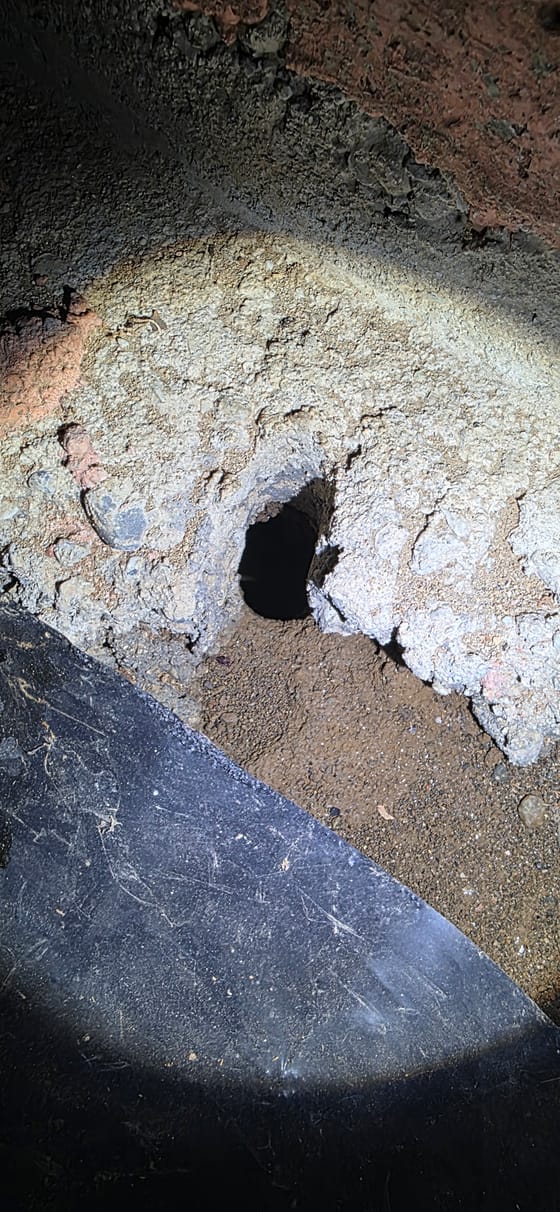
So the properties where we expect to find them are not distributed evenly. Working waterfront and marina areas, where gear storage and vessel traffic have been moving rats around for as long as there have been docks. Blaine, Birch Bay, Semiahmoo and the Fairhaven waterfront. Older commercial blocks downtown, where false ceilings and shared service chases give a climber an interior highway that never touches the ground.
Then, quite separately, any property with mature tree cover in contact with a roof. Around Lake Whatcom, in Sudden Valley, along the Edgemoor and Silver Beach lanes and through the older parts of the city where the street trees have been in place for eighty years, the branch touching a gutter is doing exactly what a ladder does.
None of that makes the roof rat the common rat here. The Norway rat still accounts for most of what we find. It makes the roof rat the one that gets missed on the properties where it is present, which is a different and more expensive kind of error.
Fruit, nuts and what feeds a climber
UC IPM records that roof rats travel up to three hundred feet or more for food, and this species has an old and well-earned reputation for fruit.
In Whatcom County that means the unpicked apple and plum trees in half the older back yards, the fallen fruit nobody clears, hazelnuts, the grape vine on the south fence, and — reliably — bird feeders. Chicken feed matters here as it does for every rodent, but the specific signature of a roof rat property is fruit damage with the skin opened and the flesh taken while the fruit is still on the branch, often overnight and often high in the tree.
Cutting that supply does not resolve an infestation on its own. It changes how attractive the property is relative to the one next door, which over a season is worth more than it sounds.
Signs, read from below
Very few people find this by going into the attic. It announces itself in other ways.
Noise overhead after dark, starting within an hour of dusk, running in bursts and returning before dawn. Sound that travels along a ceiling line over a couple of seconds is an animal on a run, and that is the most useful thing you can tell us.
Droppings on the tops of stored boxes rather than beside them, which is a consequence of an animal that arrives from above.
Smudging where a horizontal surface meets a vertical one at height — along a top plate, over a beam, at the edge of a soffit return. Rats carry oil and grit in their coats and deposit it on the routes they repeat.
Gnawed rims on plastic tote lids in a loft, which is a rat-sized job rather than a mouse-sized one.
A stain on a ceiling with no plumbing above it and no roof leak to explain it.
And in an occupied house, odor working down through the unsealed penetrations every ceiling has — recessed light housings, bath fan bodies, the attic hatch, the gap at the top of an interior wall.
The attic insulation problem
An attic is a hostile place to live. It is hot in July, cold in January, and a long way from anything to eat. What makes it worth the climb is the insulation, which from the animal’s point of view is a warehouse of soft, dry, warm, endlessly available building material.
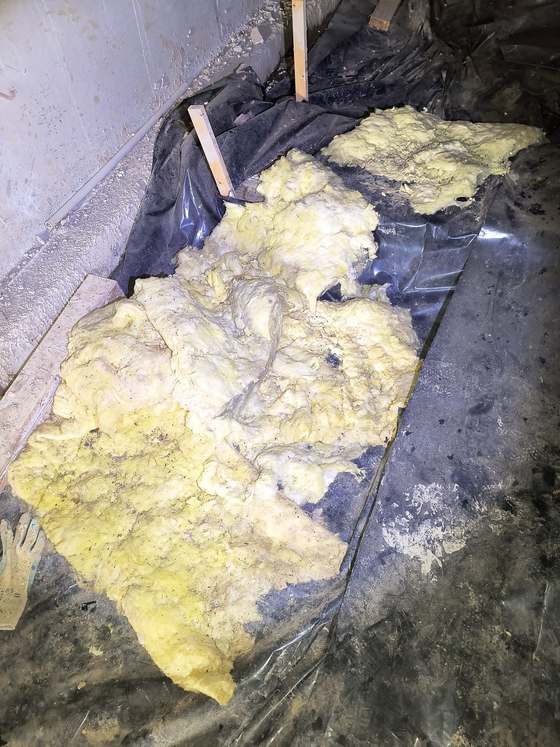
So roof rat activity in a roof space is insulation activity almost by definition. The material gets pulled into heaps, tunneled through, flattened along the routes used most, and wetted. Each of those reduces the volume of still air the material holds, and since that trapped air is the entire mechanism by which insulation works, the loss in performance follows the loss in loft closely.
The visual from the hatch is misleading. A roof space can look adequately insulated while a large share of its effective value has gone, because compression is invisible from twenty feet away and the bare bays are behind the ones you can see.
What to do about it is a genuine judgment rather than a script. Material that is matted across an area, distributed with nesting and waste, saturated to the point where you smell it before you see it, or tunneled until its structure has gone, should come out — that is attic insulation removal and replacement, and it is frequently the largest line on the job. Material that is dry, lofted and intact under a scatter of droppings should be cleaned and left, and being told that is one of the reasons to have somebody competent look rather than somebody selling.
The one option that is never right is blowing new insulation over contaminated material. It buries the waste, keeps the odor, and buys the same job again in three years with more of it to remove.
What the damage adds up to
The nuisance case for dealing with this is the noise. The actual case is what gets chewed while nobody can see it.
Wiring. A roof space is full of cable — lighting circuits, low-voltage runs, thermostat and alarm wiring, sometimes communications — and cable sheathing is one of the materials a rodent works on because it has to. Teeth that grow five inches a year are maintained by gnawing rather than by choice. This is the damage with the worst consequence and the least visibility.
Ducting at height. Where an air handler or ductwork runs through an attic, a breach vents conditioned air into an unconditioned space and moves air from a contaminated one back into the rooms below.
Plumbing. Supply lines to an upstairs bathroom pass through the same voids. A pinhole in plastic pipe above a ceiling is discovered as a stain rather than as a leak, usually some weeks later.
Stored belongings. Cardboard is a resource and everything soft in it is nesting material. Clothing, linen, camping equipment, upholstered items, paper records and photographs all get shredded for material rather than eaten, and the loss is frequently the thing people mind most. After a roof problem is resolved, moving anything that matters into rigid sealed containers is worth doing for its own sake.
Secondary pests. An established rodent presence supports flies and dermestid beetles that feed on waste and nesting material, and when the rodents are removed those look for somewhere else to be — which is usually downward, into the rooms you use.
The timing of it here
The seasonal curve is the same one that governs everything else in this county, and it is driven by water and cover rather than by temperature. Pressure builds from late September, peaks through October and November, and stays elevated through a winter that never resets anything.
WDFW records rats breeding year-round with reproduction concentrated in the warmer months — litters of six to ten, three weeks of gestation, weaning at about twenty days and breeding maturity at three to four months. The summer population is the one that arrives at your roofline in the autumn, which is why the arithmetic rewards acting before the arrival rather than after it.
There is a practical argument for doing roofline work in July or August that has nothing to do with pests. The weather is workable, the roof space is accessible and dry, and the sealing is being done to an empty building rather than around a live population. In a Whatcom County November the number of days suitable for working at height is genuinely limited, and a job booked in the autumn frequently waits on the weather before it waits on anything else.
Almost nobody does this in August. It is still the cheaper version of the same project.
False ceilings, shared roofs and commercial buildings
The roof rat’s preference for horizontal voids off the ground makes it disproportionately a commercial and multifamily problem, and those buildings fail in ways a single-family house does not.
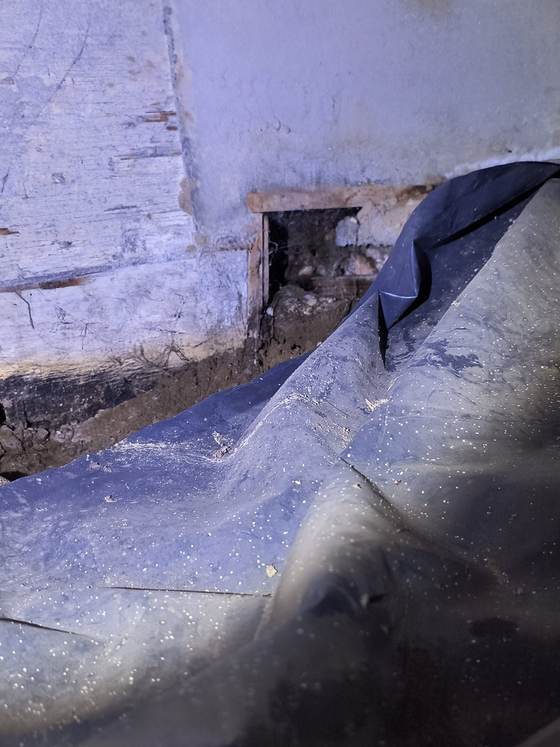
A suspended ceiling is a continuous highway above a whole floor plate, connected to every tenancy that shares it. A roofline that runs across four units belongs to none of them individually. Service chases between suites carry pipe, conduit and animals in the same direction. And restaurant and grocery premises supply the food that makes the whole arrangement worth occupying.
In a shared building the problem is frequently not yours in origin and reaches you anyway, through a party wall or over a common roof. Treating one tenancy while the adjacent one is untouched relocates a population rather than reducing it, which is why the sensible unit of work in those buildings is the structure rather than the suite. If you are a manager or a tenant in that position, say so when you call, because the scope of what actually needs doing is set by the building and not by your lease.
The numbers, and one comparison to retire
Roof rats are smaller than Norway rats and the exclusion threshold does not change for it.
The eXtension wildlife damage guidance sets the working figures at any opening greater than half an inch for rats and larger than a quarter inch for mice, with nineteen-gauge half-inch mesh specified for rat exclusion and twenty-four-gauge quarter-inch mesh for mice. Whatcom County’s health department gives residents the simpler version: seal holes and gaps bigger than a quarter of an inch.
The quarter-inch figure is the one to build to, and the reason is in WDFW’s phrasing rather than in the arithmetic. A rat needs only a quarter-inch hole to chew larger and squeeze through. Teeth that grow five inches a year make a half-inch requirement academic wherever a quarter-inch edge is available to work on.
A comparison worth deleting from your mental toolkit while we are here: a hole “the size of a dime” is not a mouse-sized hole and is nothing like a rodent exclusion standard. The dime is 0.705 inches across by the Mint’s own specification — most of three quarter-inches, and larger than the half-inch rat threshold. Seal to a pencil width instead. It is the right size and it is in everybody’s drawer.
Trapping a climber
Everything about trapping this species is a variation on one point: the animal is not on the floor.
Traps go where the runs are, which is up. UC IPM’s guidance for roof rats is off-the-ground placement — ledges, shelves, beams, branches — as against the wall-and-corner placement that works for a ground species. In a roof that means top plates, rafter ties, joists beside a run of smudging, and the pipe or cable the animal is using as a bridge. Traps get fastened down rather than balanced, because a struck trap that falls into insulation is lost.
Expect several nights of nothing. UC IPM notes that rats detect and avoid new objects and new foods, and that this neophobia is thought to be more pronounced in roof rats than in Norway rats. Of the two species, this is the one that will step around a trap for the better part of a week. Setting traps unset for a few days, then arming them, is a real technique rather than a delay.
Numbers, not cleverness. A run that supports a colony needs a line, not a pair. Under-trapping produces a small catch and a wary remainder.
And do not put bait inside a roof. An animal that dies on a wall top or in a soffit return is somewhere nobody can reach without opening the building, and the odor and the flies that follow it run for weeks. Bait belongs in tamper-resistant stations on the exterior where it belongs at all, which is a decision about property pressure rather than a default.
The secondary-poisoning question deserves the same plain answer here as anywhere. Anticoagulants kill slowly enough that a poisoned rat keeps moving, and whatever takes that rat takes the dose with it. WDFW notes that carcasses can carry several lethal doses and that pets and wildlife are poisoned this way. EPA withdrew the second-generation compounds from consumer products for that reason, citing the risk to non-target species that eat bait once or eat animals that have. Owls and hawks are the ones with the most to lose, and on most properties they are already working the same problem for nothing.
What a roof rat carries
WDFW lists bubonic plague, salmonella, leptospirosis and tularemia among the diseases spread from Old World rats to people. That is the accurate general statement and it is worth reading with proportion: the everyday mechanism in a Whatcom County house is contamination of food and surfaces, not anything dramatic.
What this animal is not is the hantavirus story. Washington’s health department attributes hantavirus pulmonary syndrome here to deer mice, states that infected deer mice live throughout the state, and reports one to five cases in a typical year. Whatcom County’s guidance says the same. If you have read that rats in an attic are a hantavirus risk in this region, the attribution is wrong.
The cleanup rule is unaffected by any of that, because you cannot species-identify dried waste by looking at it. Air the space for at least thirty minutes before entering, never sweep or vacuum dry droppings or nesting material, wet everything with a ten percent bleach solution and give it ten minutes, wear gloves, use disposable towels and bag the lot. An attic is the worst possible place to improvise on this, because the material is dry and the ventilation is poor.
Exclusion at height
Closing a roofline is the same discipline as closing a foundation performed somewhere less convenient, and the difference in convenience is most of why it gets skipped.
The recurring defects are consistent: the soffit-to-fascia junction, especially where it returns at a corner; open rafter tails on older construction; gable and box vents with corroded or missing screening; the junction where a porch or garage roof runs into an upper wall; and service penetrations at height, which are sealed to a poorer standard than anything at ground level because whoever ran them was on a ladder.
Then the ladder the animal uses. Branches over or touching a roof, ivy and dense climbing growth on a wall, a trellis, a downspout, a fence run that arrives at a roof edge. Cutting to a genuine clear gap is often the cheapest single measure available on a property and it is frequently the one that decides the outcome.
Materials are the other half. Metal mesh behind vents, sheet metal at gaps that will be gnawed at directly, blocking at rafter tails, proper vent covers fastened to sound substrate rather than stapled over a hole. Expanding foam is an air seal and never a barrier, at any height. This is exclusion and repair work and it is the half of the job that keeps working after the invoice is paid.
Which is the honest qualification on the verdict above. We treat this, and treatment on its own is a subscription. A roof rat colony removed from an unsealed building is a vacancy, and vacancies in this county fill from late September onward.
When it is not a roof rat
Daytime noise overhead, heavier than a rat, is usually something else. Squirrels are the common mistake and they are not rodent work as we scope it; bats and birds sit further outside it again, with legal timing attached. We will tell you what your description sounds like and point you toward somebody equipped for it, and it costs nothing to ask.
Norway rats also reach attics, particularly in buildings where an interior chase gives them a route up from the crawlspace without ever going outdoors. So height alone does not settle the species question — which is why the tail and the ears are worth the thirty seconds.
Mice in a roof space are quiet, leave rice-grain droppings and build discrete fist-sized nests rather than sprawling through several bays. That is a house mouse job and a different trap line.
Getting it looked at
The useful visit walks the roofline from outside, gets into the roof space where it is safe to do so, checks the tree and utility contact, and then checks the crawlspace anyway — because a meaningful share of attic activity arrives from below through a wall rather than over the roof.
You get a direct account of what is up there, whether it is even ours to handle, where it is getting in, what the roofline needs and whether the insulation can honestly stay. More on the general shape of that work is on rodent control and, for the material question specifically, on rodents in the attic insulation.
Frequently asked questions
Are roof rats actually found in Whatcom County?
Yes, though not in the numbers the Norway rat reaches. Washington's wildlife department describes the species as favoring saltwater-influenced warmer climates and turning up in port cities and coastal towns, which describes Bellingham, Blaine and Birch Bay accurately enough to take seriously.
What is the fastest way to tell the two rats apart?
Fold the ear forward in your mind's eye. A roof rat's ear is long enough to cover the eye and a Norway rat's is not. The tail confirms it: longer than head and body together on a roof rat, shorter on a Norway rat. Weight and build follow the same split.
How is one getting into my attic?
Almost always at the line where the roof meets the wall — a soffit-to-fascia gap, an open rafter tail, a gable vent with failed screening, or the junction where a lower roof runs into an upper wall. Branches, cables and trellis are the ladder that makes those reachable.
Why are my traps in the attic not catching anything?
Usually because they are on the deck and the animal is not. A roof rat works the top plates, rafters and pipe runs, so traps belong on those surfaces rather than on the floor. Add the neophobia problem and a trap line needs several nights before it means anything.
Does the insulation have to come out?
Sometimes and not always. Matted, tunneled or urine-saturated material has lost most of its function and should go. Dry, lofted batts carrying scattered droppings can be cleaned in place, and blowing new material over contaminated insulation is the one option that is never right.
Can I put bait up there instead of trapping?
It is the fastest route to a second problem. An animal that takes bait dies where it feels safest, which in a roof is inside a soffit return or on a wall top, and neither can be reached without opening something. Trapping keeps the carcass where somebody can remove it.
Sources
- Washington Department of Fish and Wildlife — Living with wildlife: Rats — read September 1, 2026
- Washington Department of Fish and Wildlife — Old World Rats (publication 00631) — read September 1, 2026
- UC IPM Pest Notes — Rats (Norway rat and roof rat) — read September 1, 2026
- Cornell University IPM — Mouse and rat biology and behavior — read September 1, 2026
- eXtension Wildlife Damage Management — Rodent exclusion methods — read September 1, 2026
- Whatcom County Health and Community Services — Rodents — read September 1, 2026
- Washington State Department of Health — Hantavirus — read September 1, 2026
- US EPA — Restrictions on rodenticide products — read September 1, 2026
- United States Mint — Coin specifications — read September 1, 2026
- Washington State Department of Health 333-161 — Plague Surveillance in Washington State, Summary Report 1975-2008 — read September 3, 2026
Rules change. This page is scheduled for review against its sources by September 1, 2027. If you are reading it after that date and something looks out of step with the current rule, the rule is right and we are wrong — please tell us.
Pest problem in Whatcom County?
Family-owned, no long-term contracts, and every treatment is backed by our 100% Service Guarantee.
Most calls in Whatcom County are out within 1–2 days, about 3 during the late-summer peak.
Last updated