
Boxelder Bug — Red Lines, Big Numbers, No Damage
Boisea rubrolineata · Occasional invaders
Boxelder bugs are flat black insects with thin red lines that gather in dense clusters on sunlit walls each autumn, then overwinter in cavities. They eat nothing indoors, reproduce only on maples and boxelders outside, and damage nothing but light-colored fabric they walk across.
Call 360-410-2199 Request a free inspection
Rarely worth treating. Usually this is a sealing or cleaning job.
Boxelder bug at a glance
| Size and shape | About half an inch, flat and elongated |
|---|---|
| Color and markings | Dark gray to black, with thin bright red or orange lines that form a rough X at rest |
| Nymphs | Smaller, wingless and bright red — the same species, not a second insect |
| How to tell it from a stink bug | Narrow with red pinstriping and packed in a crowd; the stink bug is a mottled brown shield with no red |
| When you see it | Clustering on sunlit walls in autumn, then again in March or April trying to leave |
| Damage | None to the structure; body fluids and droppings can stain light fabrics and walls |
| Do we treat it | Rarely — sealing gaps before the end of August does more than any spray |
Signs you have them
- Dozens or hundreds of dark, red-lined bugs packed together on a sunny south or west wall in October
- Small bright red nymphs mixed in among the adults
- Bugs working into window-frame joints, lifted siding laps or soffit returns
- Stains on pale curtains, trim or upholstery where they have walked or been crushed
- Sluggish bugs on sunny indoor windowsills in early spring
The wall that turns red and black
Somewhere in early October a Whatcom County homeowner walks around the corner of their house and finds a couple of hundred insects packed onto the siding in the afternoon sun. Flat, dark, half an inch long, marked with sharp red lines, sitting shoulder to shoulder and not doing anything in particular.
That is the boxelder bug, and the number is genuinely startling the first time. Everything else about it is mild. It has no jaws, no sting, no interest in your food or your timber, and no capacity to produce a single new individual inside your house.
This page exists to say that at length, because a wall covered in insects is one of the easiest things in this trade to sell a treatment against, and it is mostly not a treatment problem.
Which boxelder bug
Worth a paragraph, because most of the boxelder bug writing online describes a different animal from the one on your siding.
The insect on the eastern seaboard and across the Midwest is Boisea trivittata. Ours is Boisea rubrolineata, the western boxelder bug, and the Pacific Northwest Pest Management Handbooks — published jointly by WSU, Oregon State and the University of Idaho — cover it under that name.
The two are close relatives with near-identical habits, so the general advice travels. Where they differ is in the fine detail of markings and in the host lists that matter locally, which is why the regional handbook is the source we work from here rather than a national page.
Recognizing one
The adult is about half an inch long, flat and elongated. The wings and thorax are dark gray to black, overlaid with thin bright red or orange lines: a set running lengthwise on the plate behind the head, a line down each side, and a diagonal on each wing. Folded at rest, those lines resolve into a rough X or a narrow triangle, depending on how the wings have settled.
The nymphs look like adults that have been left out in the rain — smaller, wingless, and a startling bright red with dark markings that increase as they grow. People often report them as a separate and more alarming insect. They are not; they are the same species four weeks earlier.
The eggs are red too, laid in the bark crevices of host trees in spring. You will rarely see them, and there is no reason to look.
The overall impression at a distance is of something narrow and dark with red pinstriping, gathered in a dense patch rather than scattered. Both halves of that description matter, because the clustering is as diagnostic as the color.
What it is not
Three insects arrive on the same walls in the same fortnight here, and boxelder bugs are the easiest of the three to place.
Not a brown marmorated stink bug. WSU’s own identification publication, FS079E, separates the two explicitly. The stink bug is a broad shield, mottled gray-brown, with pale bands near the antenna tip and no red anywhere. It also tends to turn up as scattered individuals rather than in a packed group.
Not a western conifer seed bug. That one is longer, brown, and carries an obvious flattened widening on the hind leg. It also flies loudly, which a boxelder bug does not.
Not a beetle. Boxelder bugs are true bugs with sucking mouthparts and overlapping membranous wingtips, and they belong to a different family from the stink bugs entirely. That is more than a taxonomic footnote: it is why they cannot chew, cannot bore, and cannot do anything to a structure at all.
Not a bed bug, which we mention only because the two words sit close together in an anxious search and the answer is worth having quickly. A bed bug is small, oval, wingless and reddish-brown, it does not gather on the outside of a house, and nothing about a boxelder bug’s behavior resembles it.
The trees, and how far they travel
These insects live on maples. The primary host is boxelder itself, Acer negundo, with other maple species and ash as regular alternates. The handbook notes that in high-population years they will also feed on developing fruit — apple, cherry, peach, pear, plum — and its pear entry files the species as a minor orchard pest where boxelder or maple stand nearby, particularly along riparian ground.
Damage to the trees is slight. The landscape entry describes little damage to ornamentals beyond some leaf distortion, and notes that harm to host seed is minimal because the damaged seeds drop later in the season anyway.
So the tree is where they come from and not something they are destroying. Which brings up the question every second customer asks.
Would removing the maple end this? Almost certainly not, and we would rather say so than sell the reasoning behind an expensive afternoon with an arborist. The regional handbook records that adults fly several miles from their feeding sites. Minnesota Extension puts it more bluntly still: removing boxelder trees in your yard is not a good way to manage boxelder bugs, because the adults can travel a couple of miles from their food source.
There is a contrary view in print. Colorado State’s fact sheet suggests removing female boxelder trees as the durable fix. We follow the regional source and the flight-distance evidence: cutting one tree in a landscape full of maples changes very little, and a mature tree is worth more than an October inconvenience. If a seed-bearing boxelder is coming out anyway for another reason, fine — but do not take it out on the strength of this.
The year they have
One generation, or possibly two, and the sources are not unanimous.

The handbook’s boxelder entry states there is only one generation per year. Its maple entry describes two. Both cannot be right for the same latitude, and in a cool maritime climate with a short warm season, one is the safer expectation for Whatcom County. We flag the disagreement rather than picking the more dramatic number, because the practical advice does not change either way.
The cycle runs like this. Adults that survived the winter emerge as the weather steadies and move to their host trees, where the females lay red eggs into bark crevices. Nymphs hatch and feed through the summer on leaves, flowers, twigs and then, most importantly, on the developing seeds. By late August and September the new adults are mature, and it is that cohort — well-fed, fully grown and looking for shelter — that arrives on your siding.
Only fully grown adults get through a winter. Any nymph still on a tree in November is not going to become anything.
Why they choose your wall
The mechanism is heat, and it is the same for every overwintering insect in this library.
On an autumn afternoon a sunlit wall is measurably warmer than the ground and the vegetation around it, and a light-colored south or west elevation is warmest of all. Insects motivated to find shelter move up the thermal gradient and end up concentrated on that surface, which is why the north side of the same building stays empty.
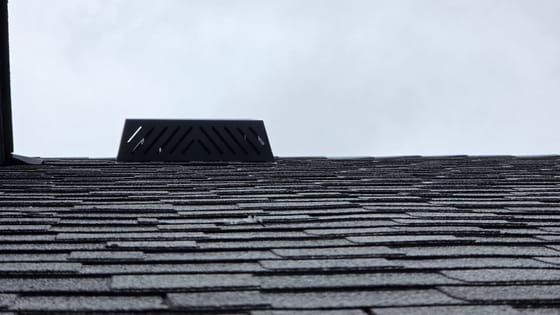
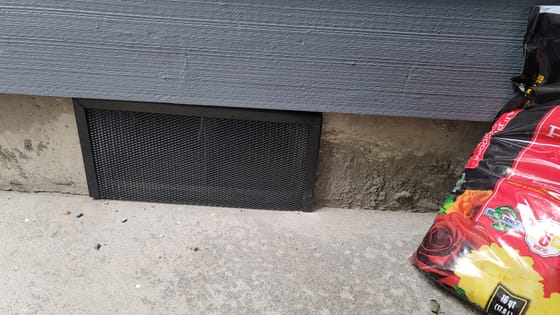
From the wall, they explore. Any crevice gets investigated and any crevice that leads somewhere gets used — the joint where a window frame meets siding, a lifted lap, the open end of a vinyl panel, a soffit return nobody closed, a vent screen that rusted through some years ago. The handbook’s own management advice for this species is to repair screens and caulk around windows and doors, and to screen soffits, corner trim and attic vents, in summer.
Then they go still. Adults overwinter in protected sites — hollows in trees, accumulated debris, and the cracks and crevices of buildings — and stay largely inactive until something warms them.
What they do indoors, which is nothing
Set this out plainly, because the fear is usually larger than the fact.
They do not feed. There is no plant tissue in a wall cavity and nothing in a kitchen cupboard interests an insect built to drain maple seeds. Colorado State notes they may attempt to feed on a houseplant without causing damage, which is about the limit of it.
They do not breed. Reproduction happens on the host tree in spring, not in your attic, and the population inside a building can only shrink across a winter.
They do not damage anything structural. No chewing, no boring, no nesting, no tunneling.
The one genuine cost is marking. The handbook warns that their body fluids stain fabrics and surfaces, and Minnesota Extension adds that they can stain walls, curtains and other surfaces with their excrement. On white trim, pale curtains or a light sofa arm that is a real annoyance, and it is the whole reason for the advice below.
Vacuum, do not crush
The correct tool is a vacuum cleaner and the correct instinct is not to squash.
Crushed boxelder bugs mark light-colored surfaces and produce an unpleasant odor. Minnesota Extension’s position once they are indoors is that the only practical control is physical removal, by vacuum or broom, and that insecticides are not recommended once the bugs have emerged into the inside of the house.
Empty the canister outdoors and seal what is in it, because a proportion of them will still be alive.
While we are here, a related point that gets misapplied from a neighboring species: the National Pesticide Information Center states that killing one of these overwintering bugs does not attract more, and that the odor released will not attract other bugs. Crush them if you must — you will simply have a mark on the wall and a smell in the room, and no further consequence.
Why our verdict is that treating is rarely warranted
The line at the top of this page says rarely worth treating, and it is not modesty. It is what the regional handbook says.
Its household entry on this species records that insecticide treatment has not been very successful, that residual sprays applied by a professional may reduce entry but will not remove the population, and that treating infested trees near a structure has limited effect. That is the pest management handbook for this region — written by three land-grant universities, with nothing to sell — telling you that the product is the weak half of the answer.
What we can honestly offer is two things.
An exterior application in late August or early September, to the elevations they gather on, before the gathering starts. It reduces the number that get in. It is a residual on siding in a climate with thirty-five inches of rain, so it does not last the season, and we would rather you knew that at the point of sale than in January.
The sealing, which is the half that keeps working. Boxelder bugs are small, slow and toothless, so caulk and intact insect screen are enough — no hardware cloth, no sheet metal. That is exclusion work, it is bought once, and it closes the same openings that admit cluster flies and overwintering stink bugs.
What we will not do is treat the wall void once they are in it. Very little reaches a dormant insect wedged in a cavity, and a treatment that worked would leave an accumulation of dead insects in an inaccessible space for carpet beetles to breed in. Swapping a staining nuisance for a fabric-destroying one is a poor trade at any price.
The spring repeat
In March or April they come back, and it looks like the treatment failed.
It did not. Minnesota Extension describes the surviving overwintered bugs becoming active, attempting to move outdoors, and a good many becoming trapped inside instead. What you are watching is the population leaving, or trying to.
Vacuum them, open a window on the sunny side if that is practical, and know that by May the building will be empty of them until the new adults mature at the end of summer. Nothing you do in spring affects next autumn. The month that affects next autumn is August.
Around this county
Riparian ground and the river corridors. Boxelder is a floodplain tree, and the Nooksack corridor, the sloughs and the wet margins around Everson, Nooksack and Deming carry the host in quantity. Properties on that ground see the heaviest autumn numbers in the county.
Rural and agricultural Whatcom — Lynden, Everson, Sumas. Maples in shelter belts and hedgerows, outbuildings with generous gaps, and the handbook’s pear note is relevant wherever an orchard sits near that kind of planting.
Older city stock in the Lettered Streets, Columbia, Sunnyland and York, where street maples are mature and original window framing gives them a hundred ways in.
Newer developments around Ferndale, Lynden and the Bellingham edge, where the walls are large, pale and sunlit but the detailing is tight, so plenty land and comparatively few get through.
Waterfront and seasonal property at Blaine, Birch Bay and Semiahmoo. A house closed up from October to April accumulates a population with nobody to notice, and the owner meets the whole winter’s arrivals at once on a spring windowsill.
Why it is always the same wall
Two things fix the location, and neither of them is anything you have done.
The first is geometry. The elevation that held the afternoon sun last October holds it this October, the tree line that shades the north side has not moved, and the openings the insects used are still open. A building is a very stable object from an insect’s point of view.
The second is that these are gregarious animals. They gather in dense clusters rather than spreading out, both on the wall and in whatever cavity they settle into, and a site that has worked before tends to keep working. That is why a household can describe the affected corner of the building to us over the phone with real precision, year after year, and why we can usually predict which side of the house we will be working on before arriving.
The useful consequence is that this is a predictable problem rather than a random one. If a house gathered them last autumn it will gather them this autumn, which means the sealing can be scheduled in August on the strength of last year’s experience instead of waiting to see what happens.
Children, pets and the things people worry about
The questions arrive in a fairly fixed order and they all have short answers.
Are they dangerous to a dog or a cat? No. An animal that eats one is eating an insect with an unpleasant defensive taste and nothing else. There is no venom and no toxicity of consequence, and the usual outcome is a pet that does not try it twice.
Can a child pick one up? Yes. They are slow, they do not sting, and the rare bite reports in the literature involve handled insects rather than aggression. A child holding a boxelder bug will end up with an unremarkable insect on a palm and possibly a faint smell on their fingers.
Do they carry disease? No. They feed on maple seeds. There is no route from a seed to a person.
Will they get into food? They have no interest in it and no equipment for it. An individual might wander across a counter on the way to a window, which is a hygiene inconvenience rather than a contamination event.
Do they bite the way a bed bug does? They do not feed on blood at all, and nothing in a boxelder bug’s biology has any use for a person.
This is one of the better animals in the county to be relaxed about, and a household that gets comfortable with the identification stops paying attention to them within a season or two, which is the outcome we would prefer.
When it is worth a phone call anyway
Given everything above, there are still three situations where we would rather hear from you.
When the identification is not settled. A dense group of dark insects on a wall is worth a photograph, because a boxelder bug and a brown marmorated stink bug carry entirely different implications — one is a nuisance and one is worth reporting to WSU. Photograph one on a flat surface next to a coin, and the answer usually takes seconds.
When they are getting into rooms in quantity. Insects reaching living space means there is a route from the cavity into the house — around a recessed light housing, a bathroom fan surround, an attic hatch, the top of an interior wall. That is worth closing, and it is a different job from sealing the outside.
When there is an accumulation. A building that has hosted these for years may have a quantity of dead insects in an attic or a wall, and dead insects feed carpet beetles, which do damage wool and textiles. Where the accumulation is accessible it is worth clearing as part of the sealing work rather than as an emergency.
Outside those three, a broom and a vacuum in October and a call in August is the whole of it, and we will say so on the phone rather than booking a visit that cannot change anything.
What is not worth your money
A fogger. It does not reach a wall void, which is where they are, and it puts product through the rooms, which is where they mostly are not.
Ultrasonic devices. Nothing.
An interior residual through the winter. They are dormant, not foraging, so they are not crossing treated surfaces in any useful pattern.
Sealing in November. Understandable and backwards. It shuts in what is already there and stops the warm-day escapees leaving. Minnesota Extension’s timing advice is to make the repairs before the end of August, and that is the right instruction.
Removing a healthy tree, for the reasons above.
Anything at all, in a light year. Some autumns they barely appear. The handbook attributes the swing to environmental conditions, and it means a quiet October is weather rather than an achievement — yours or ours.
The short version
Black with red lines, in a crowd, on the sunny wall, in October. Harmless. Not breeding indoors, not eating anything, not damaging the structure, effectively not biting. They stain, so use a vacuum rather than your hand.
The one thing that changes next winter is closing the gaps in late summer, and the one thing we would talk you out of is cutting down a maple to solve it.
Frequently asked questions
What are the black bugs with red lines on my wall?
Boxelder bugs, and the count is usually in the dozens or hundreds. The regional handbook puts the adult at about half an inch, dark gray to black across the wings and thorax with thin bright red markings. The very small bright red ones alongside them are the same species, immature.
Are they going to damage the house or the furniture?
No. They have sucking mouthparts made for seeds and leaves, so they cannot chew wood, fabric or paper, and they build nothing. The one real cost is marking: their body fluids and droppings stain light-colored walls, curtains and upholstery, which is the argument for a vacuum over a shoe.
Do boxelder bugs bite?
Effectively no. Colorado State Extension records that on rare occasions they have been reported to bite people, which is a long way from a biting insect. Nothing about them carries disease, and no household in this county needs to worry about being bitten by one.
Will cutting down the maple stop them?
Probably not, and we would not advise it. The regional handbook records that adults fly several miles from their feeding sites, and Minnesota Extension states directly that removing boxelder trees is not a good way to manage them. You would lose a tree and keep most of the insects.
Why are there suddenly hundreds when there were none last year?
Numbers swing hard between years. The handbook attributes that to environmental conditions, and in practice a warm dry summer produces a heavy autumn while a cool wet one passes almost unnoticed. A quiet year is not evidence that anything you did worked.
Can you spray the wall in October and end it?
Not with an honest description of the result. By the time the wall is covered, a share of the population is already behind it, and the handbook's own line on this insect is that insecticide treatment has not been very successful. Sealing in late summer is the intervention that changes a winter.
Why are they back inside in March?
Because the ones that spent the winter in your wall are trying to leave. Minnesota Extension describes surviving bugs becoming active in spring, moving toward the outdoors, and many getting trapped inside instead. It is the end of last autumn's arrivals rather than the start of anything.
Sources
- PNW Pest Management Handbooks — Nuisance and household pests: Boxelder bug — read September 2, 2026
- PNW Pest Management Handbooks — Boxelder (Acer negundo): western boxelder bug — read September 2, 2026
- PNW Pest Management Handbooks — Maple (Acer): western boxelder bug — read September 2, 2026
- PNW Pest Management Handbooks — Pear: western boxelder bug — read September 2, 2026
- University of Minnesota Extension — Boxelder bugs — read September 2, 2026
- Colorado State University Extension — Boxelder bugs (5.522) — read September 2, 2026
- WSU Extension Publications — Pest Watch: Brown Marmorated Stink Bug (FS079E) — read September 2, 2026
- National Pesticide Information Center (Oregon State University and US EPA) — Stink bugs — read September 2, 2026
Rules change. This page is scheduled for review against its sources by September 2, 2027. If you are reading it after that date and something looks out of step with the current rule, the rule is right and we are wrong — please tell us.
Pest problem in Whatcom County?
Family-owned, no long-term contracts, and every treatment is backed by our 100% Service Guarantee.
Most calls in Whatcom County are out within 1–2 days, about 3 during the late-summer peak.
Last updated