
Spider Control in Bellingham & Whatcom County
Nearly every large spider found indoors here in fall is a giant house spider, and it is harmless. We treat the exterior, remove webbing and reduce the insect prey that draws them, and we will tell you when what you have does not need treating at all. Identification comes before anyone recommends a service.
Call 360-410-2199 Request a free inspection
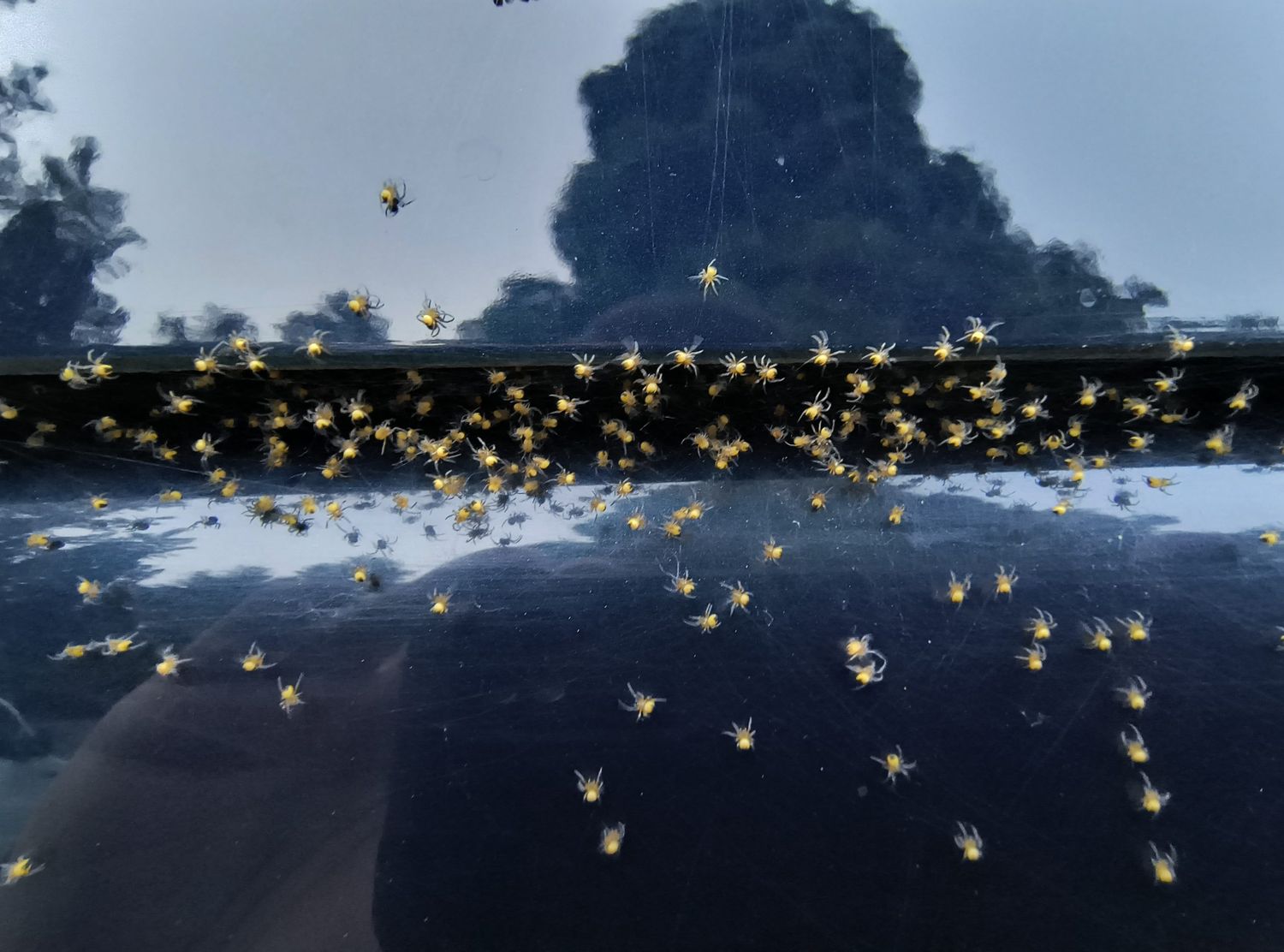
Spiders: the job at a glance
| What it covers | Spiders and webbing on eaves, entries, porches, garages, crawlspaces and outbuildings |
|---|---|
| Included | Identification, web and egg sac removal, advice on prey and lighting, and targeted exterior treatment |
| Not included | Blanket interior spraying, or a September treatment for males wandering in the mating season |
| Timing | Spring and early summer, when web removal and treatment do the most good |
| Guarantee | Backed by our 100% Service Guarantee |
| What it costs | Free estimate, sized by the physical work: height, eaves, outbuildings and neglected spaces |
The correction that most of this industry gets wrong
Start here, because it is the single most useful thing on this page and because the pest control trade has spent two decades getting it wrong in a direction that happens to sell treatments.
The hobo spider has a reputation in the Pacific Northwest for causing necrotic skin lesions. That reputation traces to research published in the 1980s and 90s which was subsequently not supported by later work. The Washington State Department of Health now states plainly that hobo spiders are not considered dangerous as previously thought, and that the evidence does not support a link between hobo spider bites and tissue necrosis.
That is a meaningful change, and it has not filtered through to most of the websites you will find searching for spider control in this region — because “harmless spider” is a harder thing to sell than “dangerous spider.”
We are putting it at the top of our spider page because we would rather be trusted than sell an unnecessary treatment. There are good reasons to want fewer spiders around a house. Fear of a bite that the state health department says is not what it was claimed to be is not one of them.
What you actually have
Giant house spider. This is the big one. Large-bodied, long-legged, brown, and the spider that produces the majority of “there is an enormous spider in my bathtub” calls in Whatcom County. It is a funnel-web weaver, it is harmless to people, and it is very likely the spider you are looking at right now if you came to this page in September.
It is also a useful animal to have around. It is territorial, it takes a continuous volume of insects, and it will take other spiders. What we are not going to tell you is that it hunts hobo spiders down, which is the version of this that circulates and which we cannot source. What is sourceable is UC IPM’s observation that in parts of the Pacific Northwest the giant house spider has competitively displaced the hobo spider. Whatever is happening between the two of them, the practical shape of it is that where the big harmless one is well established, the one carrying the reputation is scarcer.
Hobo spider. A close relative, similar in appearance, and not separable from a giant house spider by eye. Reliable identification means examining the reproductive structures under magnification, on a mature specimen — WSU Extension’s identification factsheet states that without them you cannot definitively identify a hobo spider, and UC IPM’s pest note on the species says the same thing in different words, that telling funnel weavers apart is work for a qualified arachnologist.
Both of those go straight to the genitalia, and neither mentions chevrons at all. That is worth knowing, because the abdominal chevron is the test circulating most widely online and it is the one we used to repeat on this page. A character that the two authorities on identifying this spider do not bother to print is not a character anybody can identify it with across a kitchen. Saying plainly that reliable separation is a microscope job is both truer and harder to argue with than offering a key that does not work.
There is one thing worth trying at home, and it needs the animal in a clear container so you can look at it from below. WSU’s key separates the two on the sternum, the plate on the underside between the leg bases: a pale stripe down the middle on a hobo spider, three or four pairs of pale spots along the sides on a giant house spider or a barn funnel weaver. Spots mean it is not a hobo. That is the only field character that does real work, and on an animal moving at the speed these move it is still not easy.
The practical implication is uncomfortable for the fear-based version of this page: if you cannot reliably tell them apart by eye, and the one you cannot rule out is not dangerous, then the identification largely stops mattering for safety. It still matters for honesty.
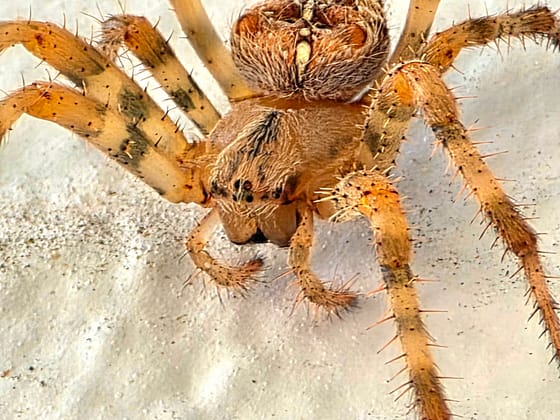
Cross orbweaver. The garden spider that builds a classic wheel-shaped web across your back door in late summer, often with a large, patterned, alarming-looking body. Completely harmless, and an efficient predator of flying insects. We remove webs where they are genuinely in the way. We do not recommend treating for them.
Cellar spider. Small body, absurdly long thin legs, untidy webs in corners of basements, crawlspaces and garages. Harmless, and another spider that preys on other spiders.
Yellow sac spider. Small, pale yellow-green, active hunter rather than a web sitter, often found in a small silk retreat where a wall meets a ceiling. This is one of the few local spiders whose bite reliably produces a genuine reaction — usually localized pain and redness rather than anything severe. Worth knowing about precisely because it gets less attention than the species that do not deserve theirs.
Black widow. Western black widows are a Washington species, and the state Department of Health describes them as common to eastern Washington. The range tracks the drier, warmer country east and south of the Cascades, so on this side of the mountains they are uncommon rather than routine, and the ones that do turn up are in woodpiles, meter boxes and undisturbed shed corners rather than in a house. The marking is distinctive enough that a photograph settles it.
Brown recluse. Not established in Washington. Nationally, bites attributed to brown recluse vastly outnumber the spider’s actual distribution, and a great many “recluse bites” turn out on investigation to be infections or other skin conditions entirely. If you have been told you have them in Whatcom County, get a second look before anyone treats.
Why fall is spider season
Every year, from roughly August through October, people in this county discover large spiders indoors and conclude the spiders are coming in from the cold.
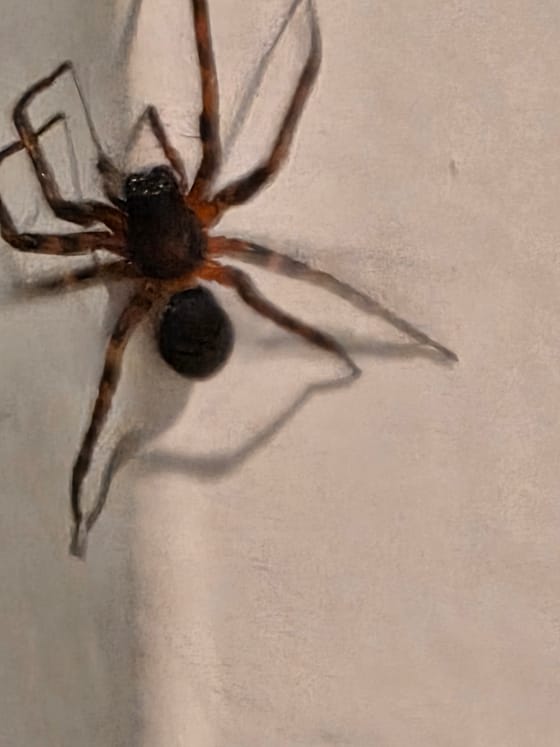
That is not what is happening. Those are adult males wandering to find mates. They have spent the year growing, they have reached maturity, and they are moving — across floors, up walls, into bathtubs where the smooth sides trap them. It is a mating season, not a migration, and it has almost nothing to do with temperature.
Two things follow. First, the spiders you are seeing largely did not just move in; many of them have been living in and around the structure all along. Second, the season ends on its own. A treatment applied in late September gets credit for something that was going to happen in three weeks regardless.
We will tell you that rather than sell you the September treatment, and we would rather do the useful version of the work — exterior, exclusion and prey reduction — in spring and early summer.
Why spraying does less than you would expect
Worth being straight about, because it is why our approach leans on physical work rather than product.
Spiders are built differently from insects in ways that matter here. They walk on the tips of their legs, so they contact far less treated surface than a cockroach or an ant crossing the same band. They do not groom themselves the way insects do, so they ingest less of what they do contact. And they are predators rather than foragers — they are not attracted to bait, and they are not following a trail you can intercept.
What does work is a combination.
Remove the webs. Physically taking down webbing and egg sacs removes the population’s infrastructure and its next generation at the same time. It is unglamorous and it is the most effective single thing done on a spider job.
Cut the food supply. Spiders are where their prey is. A house with heavy exterior insect pressure will have spiders no matter what is sprayed on the siding, and reducing the insects reduces the spiders more reliably than treating the spiders does.
Fix the lighting. This is the most underrated intervention. White exterior lights pull in flying insects all night, and the spiders set up exactly where the food is. Switching to warm-toned or yellow bulbs, or moving fixtures away from doors, visibly reduces spider populations around entries within a season.
Close the gaps. Door sweeps, weatherstripping, window screens, vent screens, and gaps around utility penetrations.
Then treat, in the right places. Targeted exterior application around entry points, eaves and foundation, timed for spring and early summer when it does the most good, rather than blanket interior spraying.
Around the county
Older Bellingham — Lettered Streets, Columbia, Sunnyland, York, South Hill. Unsealed crawlspaces, original single-glazed windows and a century of settlement gaps make for a lot of interior harborage. Cellar spiders in the crawlspace, giant house spiders in the living space.
Against the treeline. Sudden Valley, Silver Beach, Edgemoor and the Whatcom Falls corridor. Heavy exterior insect pressure off the treeline and water, which means high spider numbers regardless of treatment. Exterior lighting choices matter more here than anywhere else in the county.
Newer hillside — Alabama Hill, Barkley, Cordata. Better sealed, so the problem is more often webbing on eaves, entries and outdoor living space than spiders indoors.
Rural and agricultural — Lynden, Everson, Nooksack, Sumas. Outbuildings, equipment storage and barns carry large populations, and in those structures spiders are largely doing useful work.
Waterfront — Blaine, Birch Bay and Semiahmoo. Seasonal homes standing empty through the wet months accumulate webbing undisturbed, so the spring visit is often mostly cleaning rather than treating.
The spider year here
February through April. Egg sacs laid the previous year hatch and spiderlings disperse. Almost nobody notices, and it is the cheapest point in the year to intervene, because removing egg sacs in late winter prevents a population rather than reducing one.
May through July. Growth. Populations build alongside their insect prey, and webbing starts accumulating on eaves, entries and outdoor furniture. This is the window where treatment and web removal do the most good and the one most people skip.
August through October. The wandering season. Mature males leave their webs to find females, and this is when the large spiders appear indoors and when the calls come. It is also, unhelpfully, the least productive time to treat.
November through January. Activity drops sharply. Surviving females shelter and egg sacs sit through winter waiting for spring. A good time for the cleanup work — clearing webbing from crawlspaces, garages, sheds and eaves — because nothing is rebuilding it immediately.
Bites, and being straight about them
Spider bites are massively over-diagnosed, in Washington and everywhere else. Studies that follow up on presumed spider bites consistently find that most turn out to be something else — commonly bacterial skin infections, which can look strikingly similar and are considerably more common than a spider that bit someone in their sleep.
Most local spiders cannot meaningfully penetrate human skin, and the ones that can generally only bite when trapped against the body — rolled onto in bed, pressed inside clothing, caught in a glove. Unprovoked bites are rare.
If you have a lesion you are worried about, the useful step is a physician rather than a pest control company, and the useful thing to bring is the spider if you have it. We can identify what you caught. We cannot diagnose a wound, and we would be doing you a disservice by guessing.
What we will say is that a spider identification is not a medical opinion, and any company offering one is going beyond what it knows.
When it genuinely is worth treating
We have spent most of this page talking you out of unnecessary work, so here is the other side.
Treatment is worth it when webbing is persistent on entries, eaves, porches and outdoor living areas and keeps returning after removal. When there is a heavy population in a garage, shed or crawlspace that people use regularly. When someone in the household has a genuine phobia — that is a real quality-of-life issue and we do not dismiss it. When a commercial site has an appearance standard, which for hospitality, healthcare, food handling and retail is a legitimate business requirement rather than a preference. And when a spider that does warrant attention, such as a yellow sac spider population in living space, is actually present.
What we will not do is tell you that a giant house spider in your bathtub in September is a danger to your family.
How we work a spider job
Identify what is actually present, and say so honestly. Remove webbing and egg sacs from eaves, entries, corners, porches and outbuildings. Assess and reduce the insect prey base, including the lighting question. Apply targeted exterior treatment at entry points, foundation and eaves, timed for when it matters. Recommend the exclusion work that closes the gaps for good. And schedule for spring and early summer where we can, because that is when this work pays.
Every treatment is backed by our 100% Service Guarantee, and the estimate is free.
What it costs
Spider work is quoted from the property, and the number tracks how much physical work is involved rather than how much product goes on.
A house with webbing on eaves, entries and a porch that needs clearing plus a targeted exterior treatment is a straightforward visit. What raises the number is scale and access — a two-story home with deep eaves, a large outbuilding, or a crawlspace and garage that have not been cleared in years and are effectively a cleaning job before anything else happens.
Recurring exterior programs make more sense for spiders than for most pests we handle, because the driver is continuous exterior pressure rather than a discrete colony to eliminate. If that is the right answer for your property we will say so, and if a single spring visit will do it, we will say that instead.
The estimate is free, and it will include the honest version of whether the work is worth doing at all.
What to do with the one in your bathtub
The practical question people actually have in September.
A giant house spider in a bathtub is stuck — the sides are too smooth to climb and it fell in overnight hunting. It is not there to menace anyone. Drop in a towel or a length of toilet paper and it will climb out on its own, or catch it under a glass with a card slid underneath and put it outside.
It did not come up the drain, either, which is the other thing people ask. A working trap holds standing water in the bend below the plughole and a spider is not swimming up through it. What happened is that one hunting across the floor at night went over the rim, found the enamel too slick to climb back out, and was still there in the morning. The bath is somewhere it fell into rather than a route it used, and why sealing a drain or running the hot tap changes nothing about how many you find next September.
Killing it is a choice rather than a necessity, and it is worth knowing what goes with it. This is a territorial predator working through insects nightly that will take other spiders as well, and it belongs to the species UC IPM credits with having competitively displaced hobo spiders across parts of this region. The one you remove was holding ground against something.
If you want it identified, photograph it from above with something for scale before you release it. We identify for free, and a photo settles most questions in a minute.
What we would ask you not to do is buy a fogger. Total-release aerosols are close to useless against spiders — they do not reach the harborage, they leave residue across surfaces people touch, and they kill the insects that were feeding something you would rather keep.
Spiders in crawlspaces, garages and outbuildings
Most of the spider volume on any Whatcom County property is in the spaces people do not spend time in, and that is where the useful work usually happens.
Crawlspaces. Cellar spiders and giant house spiders both do well down there, because it is undisturbed, humid and full of prey. On older Bellingham housing with an unsealed crawlspace, this is effectively a reservoir that restocks the living space above it. Clearing webbing and dealing with the moisture does more than any interior treatment.
Garages and sheds. Stored boxes, stacked material and undisturbed corners are ideal harborage, and a garage attached to the house is a doorway. This is the single most common place we find heavy webbing on a residential job.
Barns and outbuildings. Rural properties around Lynden, Everson and Nooksack carry enormous spider populations in outbuildings, and in most cases they are doing useful work on flies and other insects. We clear what is in the way and leave the rest, unless the building is one people work in daily.
Boats and seasonal storage. Covered moorage and stored equipment around Blaine, Birch Bay and the harbors accumulate webbing through the off-season with nobody disturbing it. A spring clean-out is usually the whole service.
The common thread across all four is that clearing and drying the space beats spraying it, and that the result holds for a season rather than a fortnight.
Related work
Because spider numbers track their prey, a spider problem is often really an insect problem — which is why this work frequently overlaps with fly control and general perimeter treatment. Sealing the gaps that let spiders in is exclusion and repair work, and it reduces rodents and overwintering insects at the same time. If the crawlspace is the source, crawlspace cleanout and restoration addresses the conditions rather than the symptom. And if what you have found is small, dark and moving in a column rather than alone, that is more likely ants.
Frequently asked questions
Are hobo spiders dangerous?
The Washington State Department of Health states that hobo spiders are not considered dangerous as previously thought, and that evidence does not support a link between their bite and skin necrosis. The necrosis claim came from early research that later work did not confirm. Most large spiders found indoors here are giant house spiders anyway.
Do we have brown recluse in Washington?
No. Brown recluse are not established in Washington, and the vast majority of bites attributed to them nationally occur well outside their actual range. If someone has told you that you have brown recluse in Whatcom County, that identification is worth a second opinion before anyone treats for it.
Why do big spiders appear indoors every fall?
They are adult males wandering to find mates, roughly August through October. They are not moving in because it is getting cold and they are not a sign of an infestation. It is a mating season, it ends, and the same thing happens the following year regardless of what you spray.
Does spraying actually work on spiders?
Less well than most people assume. Spiders walk on the tips of their legs and pick up far less residue than an insect does, and they do not groom the way insects do. What genuinely reduces spiders is removing webs, cutting the insect prey they are hunting, and closing entry points.
Are the big webs in my garden a problem?
Almost certainly cross orbweavers, which build the classic orb web across a doorway or between shrubs in late summer and are entirely harmless. They are efficient predators of the insects you would rather not have. We remove webs where they are in the way and generally leave the spiders alone.
What about black widows?
Western black widows exist in Washington but are associated with the drier country east and south of the Cascades. They are uncommon in Whatcom County. If you believe you have found one, photograph it rather than assuming — the marking is distinctive, and misidentification is far more common than the spider.
Guides
From the blog
Spider Control in Whatcom County?
Family-owned, no long-term contracts, and every treatment is backed by our 100% Service Guarantee.
Most calls in Whatcom County are out within 1–2 days, about 3 during the late-summer peak.
Last updated