
Pest Control in Bellingham, Washington
Sasquatch Pest Control is based on the Guide Meridian and works every Bellingham neighborhood. The job here changes street by street: prewar crawlspaces on the flats, cedar and forest edge on the hillsides, and high-turnover rentals near the university. We find the entry point before we treat anything.
Call 360-410-2199 Request a free inspection
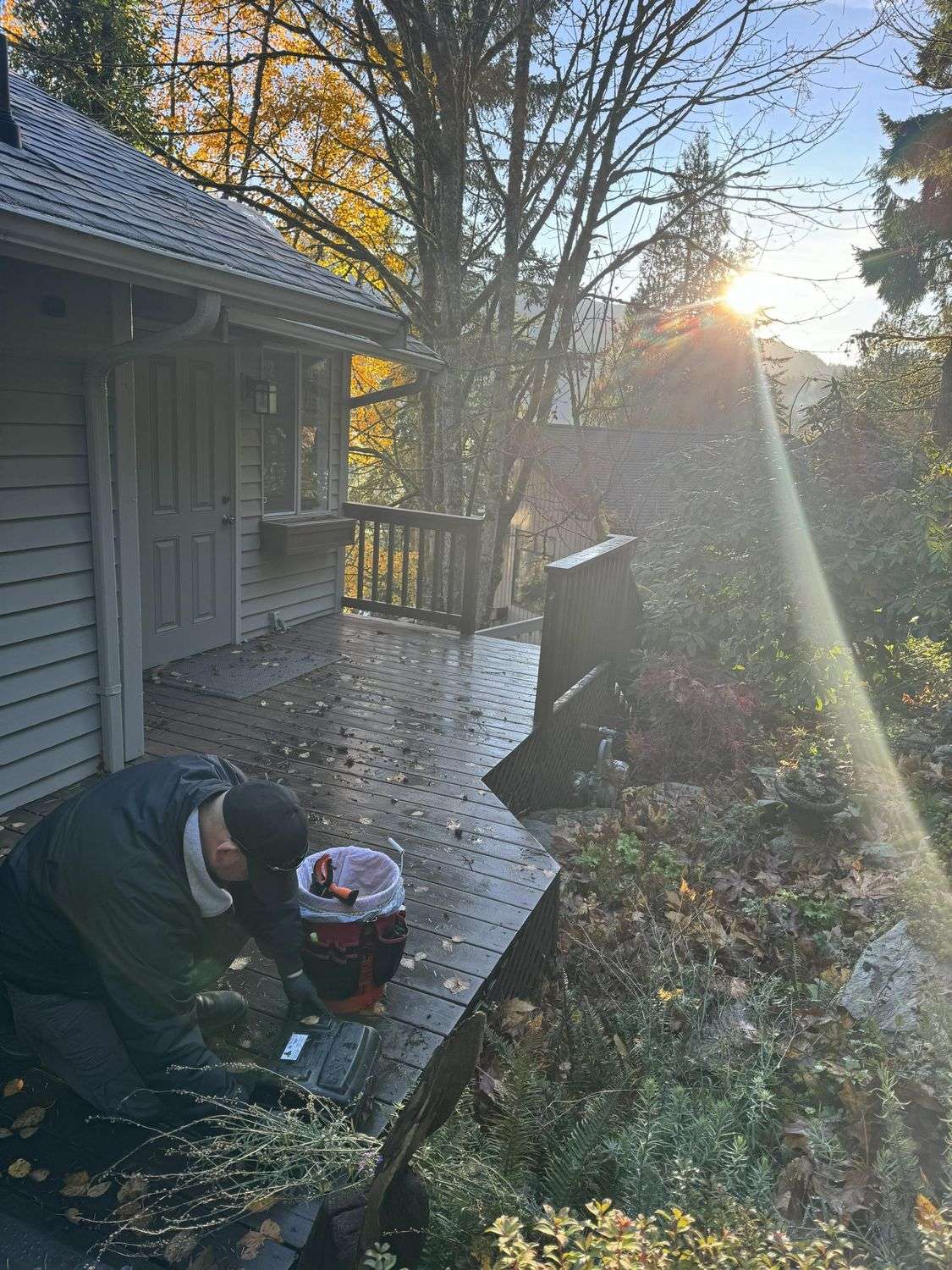
Bellingham on the map
One city, a dozen different jobs
Bellingham looks like a single market on a map and behaves like several. The city grew outward and upward in distinct waves, and each wave left behind a different way of failing. A house on the north flats and a house on Alabama Hill are three miles apart and have almost nothing in common from our side of the work. We do not treat them the same, and the first thing that happens on any call here is working out which Bellingham we are standing in.
That is not a sales position. It is the practical reality of a city where the oldest houses predate the First World War, the newest went up last year, and the ground underneath ranges from marine clay on the flats to sandstone on the hills to saturated lakeside soil out toward Silver Beach.
The neighborhoods, grouped by what actually happens in them
The City recognizes twenty-five neighborhoods. From a pest standpoint they sort into about six groups, and knowing which group an address falls in tells you most of what you need to know before the truck arrives.
The prewar flats
The Lettered Streets, Columbia, York, Sunnyland, Roosevelt and the older parts of Birchwood are the oldest continuously occupied residential ground in the city. Small lots, alleys behind the houses, mature street trees, and building stock that in many cases predates 1930.
Structurally these houses share a set of features that were entirely reasonable at the time and are a gift to rodents now. Post-and-pier foundations with a short crawlspace and a bare dirt floor. Skirting rather than a continuous stem wall. Balloon or near-balloon framing, where the stud cavity runs from the sill plate to the top plate without a firestop, so a mouse that enters at grade can be in the attic without ever crossing an open room. Original board sheathing that has shrunk and left gaps. And decades of accumulated utility penetrations — gas, water, electrical, cable, three generations of phone line — each one drilled oversize and none of them ever sealed.
The alleys matter too. Alley-served neighborhoods concentrate garbage, and garbage concentrates rats. A block where every can sits out on the same alley on the same night supports a population that no amount of interior work will touch. The Washington State Department of Health’s guidance on rodent pests puts the same emphasis on removing food and shelter before anything else. On these streets the conversation frequently has to widen from one house to the block.
The pests follow directly: Norway rats and house mice in the crawl and the walls, carpenter and moisture ants in any framing that has taken water, and sowbugs and millipedes in the damp crawl itself. The correct work is exclusion — sealing the envelope, screening the vents, closing the penetrations — with treatment as the part that handles what is already inside.
The hillsides and the forest edge
Alabama Hill, King Mountain, parts of Barkley, Edgemoor, South Hill and Whatcom Falls sit on slopes with trees. The stock is mostly 1960s through 1980s: cedar and T1-11 siding, generous soffit and ridge venting, split levels, and daylight basements cut into the grade.
Cedar is the recurring theme. It weathers beautifully and it softens, and softened cedar is exactly what carpenter ants want. Fifty years in, the fascia, the trim boards and the bottom edge of the siding are frequently punky enough to host a satellite colony, and the parent colony is usually in a stump or a standing dead tree at the property line rather than in the house at all. Treating the kitchen counter where the ants are walking does nothing. Finding the tree does.
Slope creates its own problems. A daylight basement means part of the foundation is buried and part is exposed, and the transition is where water and insects both get in. Sloped crawlspaces collect water at the low end. Retaining walls hold moisture against structure. Landscaping installed to control erosion becomes a highway for rodents from the greenbelt to the house.
These neighborhoods also produce the heaviest carpenter ant pressure in the city, because there is more weathered cedar per house here than anywhere else and the parent colony is usually a stump or a dead limb somewhere on the lot.
The student belt
Sehome, Happy Valley, the streets immediately below the Western campus, and increasingly the apartment stock in Cordata and along the Barkley corridor. This is not a housing-stock category so much as a turnover category.
Two things drive everything here. First, tenancy cycles: a large fraction of this housing empties and refills in June and again in September, and furniture moves between buildings in the back of pickup trucks. That is the single most effective bed bug transport mechanism in the county. Second, density and shared structure: in a multi-unit building the pests are a building-level population, not a unit-level one, and treating one apartment while the neighbors go untreated simply relocates the problem across a shared wall.
Cockroaches — German cockroaches specifically, which are an indoor, human-associated species rather than anything that comes out of a crawlspace — are the other signature of this belt. They travel in appliances, in cardboard and in kitchen equipment, and they persist because they breed faster than an unplanned treatment schedule can knock them back.
Our approach in this belt is always a building plan first: map the units, identify the source, treat in a coordinated pass, and follow up on a schedule that matches the life cycle rather than the invoice. Landlords who fight this end up paying for the same problem three times.
The lakeside
Silver Beach, Samish and the Lake Whatcom shoreline edge of the city. Cedar again, water again, and the added constraint that this is Bellingham’s drinking water catchment. We favor exclusion, habitat correction and contained placements on these properties and we watch the weather before doing exterior work here at all.
Practically, lakeside houses get carpenter ants in the cedar, rodents pushing in off the treeline, and the heaviest spider and centipede pressure inside the city limits. Docks and boathouses add their own rodent question, and seasonal occupancy adds another.
The greenbelt-adjacent middle
Cornwall Park, Whatcom Falls, parts of Puget and the streets that back onto the creek corridors. Bellingham is unusually generous with greenbelt, which is one of the best things about living here and a permanent source of wildlife pressure. Rodents use the greenbelt as continuous cover from one end of a neighborhood to the other.
The fix is nearly always about the interface: trimming the branch that bridges to the roof, screening the vent, capping the chimney, correcting the grade where the greenbelt meets the lawn. Trapping alone in a greenbelt-adjacent house is an annuity for the pest company and a waste of money for the homeowner.
Downtown and the commercial corridors
City Center, Irongate, the Meridian corridor and the Guide. Shared party walls, common utility chases, food service, dumpster enclosures and loading docks. This is genuinely different work, run on documentation and inspection readiness rather than on a single visit.
In a downtown block the rodent population is shared between buildings whether the tenants like it or not, and the sanitation weak point in one restaurant feeds the population that shows up next door. Commercial work here means device placement to a plan, a service record that will stand up to a health inspection, and enough honesty to tell a client when the actual problem is a dumpster lid rather than anything we can treat.
Rats, and the specifically Bellingham version of the problem
Norway rats are the most common single reason a Bellingham household calls a pest company, and the local pattern is worth understanding because it is not the one described in national material.
Through spring and summer, rats here live outdoors and do well at it. Himalayan blackberry — which is everywhere, in every greenbelt, along every alley and across every vacant lot — is close to ideal habitat: dense, thorned, impossible for predators to work through, and adjacent to human food. Add decking with a gap underneath, woodpiles, compost, chicken coops, bird feeders and the creek corridors, and the city supports a substantial outdoor population that most residents never see.
Blackberry is a management job in its own right, and local guidance on cutting it back comes from WSU Extension’s Whatcom County office.
Then the rain arrives. Somewhere between late September and early November the ground saturates, burrows flood, and that entire outdoor population needs somewhere dry. Your crawlspace is dry. Your garage is dry. The soffit space above your porch is dry. There is no mystery in it — it is a housing crisis with a predictable date.
Which is why the most valuable thing we do in this city is exclusion work in August. A house sealed before the rain never has the interior problem. A house sealed in December has an interior problem plus a sealed-in animal, and the order of operations gets much more complicated.
Chickens deserve a specific mention. Backyard flocks are common in Bellingham and they are, from a rat’s perspective, a reliable year-round feed station. We do not tell people to get rid of their chickens. We do tell them that spilled feed and an open feed bin are what turn an ordinary yard into a rat-supporting one, and that the coop needs to be built like it is trying to keep rats out, because it is.
Old fruit trees do the same job without anyone deciding to feed anything. The prewar flats are full of plums, apples and pears planted eighty years ago, and from late August a mature tree puts down more fruit than a household picks up. That windfall ferments on the ground through precisely the weeks the outdoor population is building condition for winter, and a food-scrap cart whose lid no longer seats properly does the same on a smaller scale. Neither is an argument for taking the tree out. Clearing under it weekly through September is worth more than anything we could place.
Ants in a city built on wet ground
Two ants matter here and they are commonly confused.
Moisture ants are the honest ones. They are attracted to wood that is already wet and already decaying, and finding them is genuinely useful information: it means there is a water problem, and the ants are the symptom. Killing them without fixing the water gets you a new colony.
Carpenter ants are the expensive ones. They excavate galleries in wood to nest, they prefer wood that has begun to soften but will work sound timber once established, and a mature colony in Bellingham typically has a parent nest outdoors — a stump, a dead limb, a fence post, a landscape timber — and satellite nests inside the structure. The satellites are what you see. Treating them without locating the parent means a reprieve rather than a solution.
Spring is when both become visible, and it is also when people mistake winged carpenter ants for termite swarmers. The difference is straightforward once somebody shows you: ants have an elbowed antenna, a pinched waist and two pairs of wings of unequal length; termites have a straight antenna, a uniform body and four wings of the same size. We would much rather identify it correctly on a free visit than sell the wrong treatment.
The fall spider season
Every September the phone starts ringing about large fast spiders indoors, and every year the answer is the same and reassuring. These are almost always giant house spiders, which are established throughout western Washington, are harmless to people, and are not moving indoors because it is getting cold. Adult males are wandering because they are looking for mates, and the ones people find in bathtubs are males that got in, could not climb back out and are simply stuck.
Bellingham has no brown recluse. It has never had brown recluse. Black widows exist in Washington but are associated with the drier country east and south of the Cascades and are genuinely rare here. Anyone who tells you otherwise while holding a quote is selling fear.
What we can do is reduce the population sensibly: knock down webs on the exterior, deal with the harborage under decks and in crawl vents, correct the exterior lighting that concentrates the insects the spiders are eating, and seal the gaps at door sweeps and thresholds that most of them use to get in.
Wasps, hornets and the Bellingham summer
Yellowjackets are the main event, and they turn up in three places with predictable regularity: in the ground along the edge of lawns and greenbelts, in wall voids entered through a gap in the siding or a failed vent screen, and in soffits and eaves on the sunny side of a house.
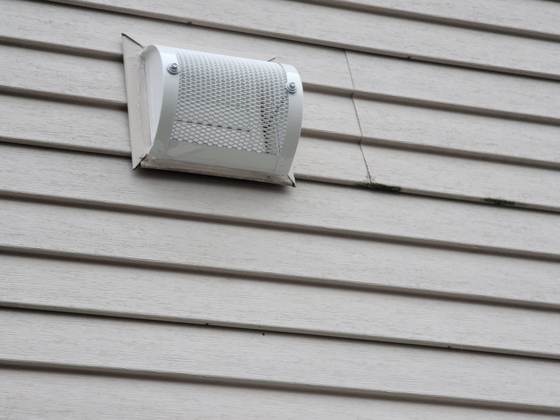
The seasonal shift matters. Early in the summer a colony is feeding protein to brood and is essentially uninterested in people. From late July the brood production winds down, the workers switch to sugar, and that is when they start appearing at picnics, cans of soda and fallen fruit. The colony is also at its largest and most defensive at exactly that point, which is why late-season nests are the ones that put people in urgent care.
Bald-faced hornets build the gray papery football nests people photograph and send to us, and they get reported as northern giant hornets several times a year. The genuine northern giant hornet was detected in this county between 2019 and 2021 and was declared eradicated from the United States in December 2024. We are glad to look at a photograph and tell you what you have.
Paper wasps under eaves and deck rails are the mildest of the three and often do not need treating at all if they are somewhere people are not. We will say so.
Cockroaches, and where they actually live
Worth being specific about, because the work goes where the insects are.
German cockroaches are indoor, human-associated, and travel in appliances, cardboard and kitchen equipment. They breed fast and are concentrated in the multi-unit and rental stock, and they need a coordinated building-level plan rather than unit-by-unit treatment.
They live in the kitchen and bathroom voids rather than under the building, so the work is harborage, baiting and the neighboring units. An insect found only in a damp crawlspace is a different conversation, which is why identification comes first.
How we actually work here
We are based on the Guide Meridian, which puts every Bellingham neighborhood inside a short drive, and it is why city addresses are usually a day or two and why an active wasp nest or a rodent in living space can often be handled faster than that.
A first visit starts outside. We walk the perimeter looking at grade, drainage, siding-to-foundation transitions, vents, penetrations and vegetation contact. Then the crawlspace, with a light and on our stomach if that is what it takes, because that is where the evidence is in this city. Then the attic. Then the interior, and only then a conversation about what to do.
You get told what we found and what is causing it, what needs doing now, what can wait, and which parts are a building repair rather than a pest treatment. If the honest answer is that a contractor should fix a gutter before we do anything, that is the answer you get. Inspections are free for every pest we handle in the city with the single exception of bed bugs, which carry a verification fee that is credited against treatment if you go ahead.
No long-term contract is required to work with us, we do not lock people into multi-year agreements, and we would rather keep a customer because the work is right than because leaving is difficult.
Also across Bellingham: Birchwood, Columbia, Cornwall Park, King Mountain, Meridian, Puget, Roosevelt, Samish, South, South Hill, Sunnyland, Western Washington University, York. These share a housing stock with the neighborhoods listed at the top of this page and are covered here rather than on a page of their own.
Frequently asked questions
How fast can you get to a Bellingham address?
Bellingham is our home city, so a day or two is the normal wait and it is often sooner for an active wasp nest or a rodent in living space. Around three days is realistic at the height of the autumn. We are on the Guide Meridian, so no part of the city is more than about fifteen minutes from the shop.
Why do so many older Bellingham houses have rodent problems?
Because the prewar stock sits on post-and-pier foundations with crawlspaces that were never sealed, and the framing cavities run uninterrupted from the crawl to the attic. Once something is under the house it has a route to every floor, which is why the fix is structural rather than chemical.
When is the worst time of year for rats in Bellingham?
Late September through November. Rats live outdoors in blackberry, decking and creek corridors all summer, then the rain floods the burrows and they all move at once. Sealing a house in August is straightforward. Sealing it in November means dealing with what already got in.
Do you treat student rentals and apartment buildings?
Yes, and we do a lot of it around Sehome, Happy Valley and the Cordata corridor. Multi-unit work needs a building-wide plan rather than unit-by-unit treatment, because a single treated apartment in an untreated building just moves the problem next door.
Are your inspections free in Bellingham?
Free for every pest we handle here, with one exception. Bed bugs carry a verification fee, and that fee is credited against the treatment if you decide to go ahead. Everything else — rodents, ants, wasps, spiders, crawlspace concerns — costs nothing to have us look at.
Do you use rodenticide in a city with this much wildlife?
Only where it is the right tool, and always with the raptor population in mind. Bellingham has owls, eagles and hawks throughout the greenbelts, so where we do use rodent control products we choose programs and active ingredients designed to limit secondary poisoning risk to non-target animals and pets.
Which Bellingham neighborhoods do you cover?
All of them. The city has twenty-five official neighborhoods and we run routes through every one, from the Lettered Streets and York on the north flats to Edgemoor and South Hill above Fairhaven, and out to Silver Beach on the Lake Whatcom shoreline.
Guides
From the blog
Pest problem in Bellingham?
Family-owned, no long-term contracts, and every treatment is backed by our 100% Service Guarantee.
Most calls in Whatcom County are out within 1–2 days, about 3 during the late-summer peak.
Last updated