
Pest Control in Everson, Washington
Everson sits on the Nooksack, and water shapes the pest work here more than anything else. Buildings that have taken flood water, crawlspaces rebuilt afterwards, and displaced rodents moving off saturated ground. Around that, small farm country with the feed-room and fly problems that come with it.
Call 360-410-2199 Request a free inspection
Everson on the map
The river decides most of it
Everson sits on the Nooksack where the valley opens out, and the river is the single most important fact about pest work in this town.
Both Everson and neighboring Sumas have taken serious flood water within recent memory, most severely in November 2021, and a great many buildings here have been through the cycle of inundation, drying, gutting and rebuilding. That history is still visible in the crawlspaces, and it changes what we find and what we recommend.
Even in ordinary years, the low ground saturates weeks ahead of higher ground. Everything living in the floodplain — and there is a large permanent population in the brush, the field margins and the riverbank — moves toward buildings when its burrows go under. That is why Everson properties see autumn rodent activity while Bellingham is still enjoying dry weather.
Flood-affected buildings
This is the part of the work most specific to this town, and the part where sequence matters more than product.
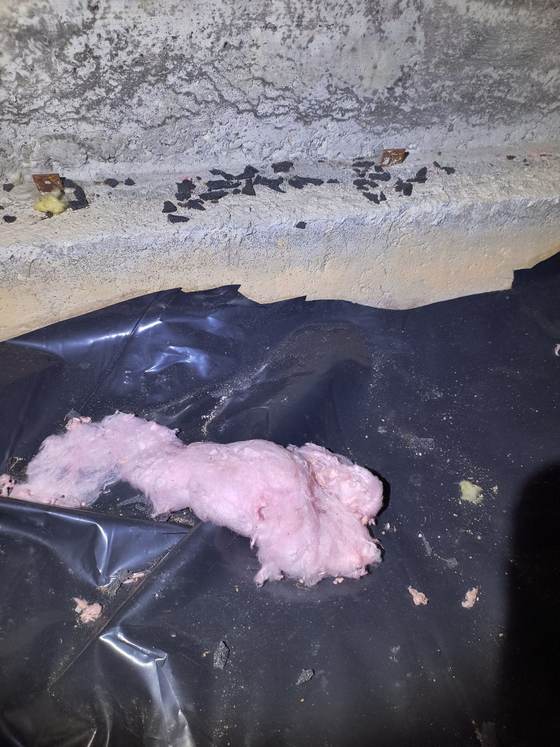
A crawlspace that has taken water needs three things before any pest work is worth doing. The insulation comes out. Wet fiberglass does not recover; it holds moisture, it accelerates decay in the joists above it, and it is excellent nesting material. Treating around it is money spent on the wrong problem. The space gets dried. Properly, with attention to the framing rather than just the surface. The EPA’s explanation of why mold grows is a short read on why that drying has to happen quickly and why wet material left in place does not recover. The vapor barrier gets re-established over clean ground.
Only then is exclusion and treatment durable. Doing it the other way around — sealing and treating a wet, insulated crawl — produces a building that is still damp, still attractive and still deteriorating, with a service invoice attached.
The other thing flooding leaves behind is a changed building. Rebuilt sections meet original framing at junctions that were not there before, and those junctions are frequently the entry points we end up finding. Utilities get rerouted. Skirting and vents get replaced quickly under pressure and not always completely. None of that is a criticism of anyone’s rebuild — it is simply where to look, and it is why we go under rather than quoting from the driveway.
Decay fungus deserves specific mention on flood-affected property. Sustained moisture in framing produces decay that continues long after the water is gone, and decay is what actually costs structural capacity in this climate. Where we find it, the honest answer often involves a contractor rather than us, and we say so.
Small-farm country
Everson and the Goshen corridor are agricultural, but at a different scale from Lynden a few miles north. Much of what we work on here is a house with a shop, a barn and two or three outbuildings, or a modest dairy or berry operation rather than a large one.
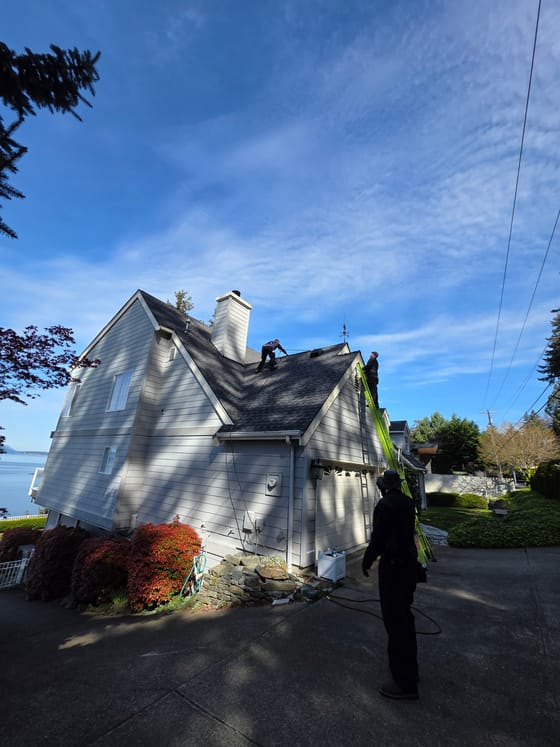
That scale changes the sensible approach. On a small property the realistic goal is not a pest-free farm, which does not exist anywhere. It is a defended perimeter around the buildings that matter — the house, the feed storage, anything with wiring worth protecting — and honest expectations about the buildings that were never going to be sealed.
Feed is the pivot, as it always is. Grain and pellets in an open shed will support a rodent population indefinitely and no program overcomes an unlimited food supply. Metal bins with tight lids, spillage cleaned up rather than swept aside, and pallets kept off the wall so runways are visible are worth more than anything we can apply. Owners who do that see results. Owners who do not are paying us to manage a symptom, and we tell them so at the first visit rather than the fourth.
Small farms in this county have WSU Extension’s Whatcom County program behind them for the dairy, berry and pasture side of the work.
Wiring is the priority that convinces people. Rodent damage to equipment harness, shop electrics and barn circuits is expensive and occasionally dangerous, and machinery parked for the season is especially vulnerable. A warm engine bay full of insulation is exactly what a rat wants in November.
Placement is constrained. Anything used has to be inaccessible to livestock, poultry, barn cats and working dogs, which in practice means tamper-resistant stations anchored on the exterior and mechanical control inside. Where we use rodent control products we choose programs and active ingredients selected to limit secondary poisoning risk, which matters a great deal in country where owls, hawks and eagles are hunting the same population.
Chicken coops
Backyard poultry is common here and it is a rodent magnet, which is worth saying plainly because people are attached to the birds and assume the problem is the birds. It is not. It is the feed, the spillage under the feeder, and the coop floor — a heated, dry, covered structure with food in it, standing in open ground. We deal with rodents around coops in Everson constantly, and the work is almost always the same: get the feed into hard containers, clear the spill, and close the coop itself rather than treating the yard around it.
Flies, where there is livestock
Where there are animals there are flies, and it is a production issue rather than a comfort one.
House flies breed in moist decaying organic material — manure packs, spilled silage, wet bedding, fermenting feed at the edge of a bunk — and move between waste and feed. Stable flies bite, taking blood from the legs of cattle, and a heavy population measurably reduces intake because animals spend the day stamping and bunching rather than eating.
Both develop fast enough that a breeding site missed on Monday is producing adults by the weekend. Which is why fly programs succeed or fail on the sites rather than on the adults, and the sites are usually a small and predictable number: the wet margin of a manure pack, the spot under a leaking waterer, feed accumulating at the end of a bunk, bedding in a calf hutch that has not been turned, the drainage low point that never dries.
Correcting those does more than any spray program. Where treatment has a place it is as support — targeted work on resting surfaces, baiting placed away from feed and water, and attention to resistance, because rotating nothing is how a program quietly stops working after two seasons.
Cluster flies and the overwintering crowd
If you live out here, the first mild afternoon of the year brings slow dark flies to the inside of your windows, and it confuses people every single year.
Cluster flies do not breed in your house and are not a sign of anything unsanitary. Their larvae are parasites of earthworms in the surrounding fields, which is exactly why this is a rural problem — the more pasture and cropland around a building, the worse it is.
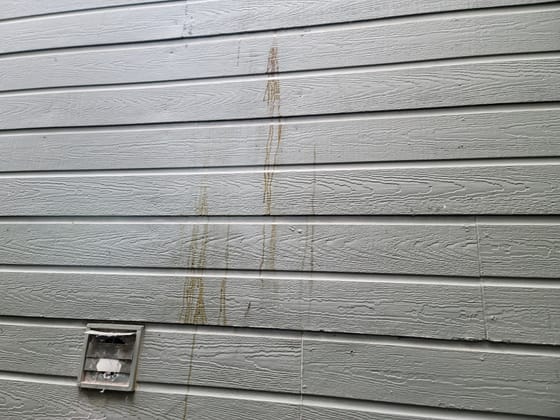
In late summer the adults look for somewhere to overwinter and choose the warmest available surface, which is a south or west-facing wall in afternoon sun. They enter through gaps in siding, around window frames, under fascia and through unscreened gable and soffit vents, then go dormant in the wall void or the attic. On a warm day they wake, head for light, and appear indoors.
By February, killing the ones in the room accomplishes very little, because there are thousands more in the wall. The work that matters happens in late August and September on the outside: sealing the gaps, screening the vents, and treating the sunny elevations before they move in. Do that and the following February is quiet.
Stink bugs and lady beetles behave the same way, and the same sealing deals with them.
The town itself
Away from the farms, Everson is a small town with a compact core and a mix of older and newer residential stock.
The older housing carries the familiar Whatcom County pattern: shallow crawlspaces over bare earth, foundation vents that rusted through years ago, framing that has taken water at some point and now supports moisture ants, and stud cavities that let something entering at grade reach the attic without crossing a room.
The newer stock on the edges has the opposite profile — a tight envelope with a handful of service penetrations closed with expanding foam. Foam stops drafts and does not stop a rodent. The dryer vent, the hose bib, the heat pump line set, the electrical entry and the gap under the garage door seal are the recurring five, and they are on nearly every house of that era.
The complication specific to Everson is that a new house on the edge of town is backing onto open agricultural ground. When that field is cut or harvested, the resident population loses its cover in an afternoon and starts looking at the nearest foundation. Harvest drives rodent calls out here as reliably as rainfall does.
Carpenter ants, moisture ants and the water story
Everything moisture-driven is amplified in a river town.
Moisture ants are the honest ones — they colonize wood that is already wet and already decaying, so finding them is useful information rather than merely a problem. The ants are the symptom and the water is the cause, and treating without correcting produces a new colony in the same wood.
Carpenter ants are the expensive ones. They excavate galleries to nest, prefer wood that has begun to soften, and a mature colony almost always has a parent nest outdoors — a stump, a fence post, a landscape timber, a woodpile — with satellites inside the structure. Treating the satellite without locating the parent is a reprieve rather than a solution.
Both show themselves in spring, which is also the season winged carpenter ants get taken for termite swarmers. Look at the wings first. A termite’s four are all the same length and extend well past the body; an ant’s front pair is noticeably longer than the back. Shed termite wings on a sill are often a small pile of identical ones. Getting the identification right on a free visit beats selling you the wrong treatment.
The Everson year
The calendar here is set by the river and the fields rather than by temperature.
Winter. Rodent activity indoors at its peak, because everything that came in during the autumn is still there. On flood-affected property this is also when damage becomes obvious — soiled or collapsed insulation, chewed ducting, a stain spreading in a ceiling, or a smell in a room that turns out to be something dead in a cavity.
Late winter. Cluster flies and other overwintering insects wake on the first mild sunny afternoon and appear at south-facing windows. This generates most of our February phone calls out here and almost none in the city.
Spring. Ants become active, and because they have wintered in damp framing the first sighting is usually indoors. Swarmers appear on windowsills and get mistaken for termites. Wasp queens found nests, which is the cheapest possible moment to deal with them and the moment nobody is looking.
Early summer. Fly pressure builds around livestock as temperatures rise and generation times shorten. Wasp colonies grow. On farm property a ground nest found later by a mower or a bale mover is a genuine safety incident, so this is when it is worth walking the ground.
High summer. Exclusion season, and the eight weeks that decide the following winter. Dry ground, dry crawlspaces, and the river low. Everything preventive should happen now — the vents, the penetrations, the skirting, the crawlspace work.
Harvest and autumn. The decisive stretch. Fields are cut and cover vanishes overnight, the rain returns, the low ground saturates, and a large displaced population moves toward buildings within a few weeks. Work completed before this prevents the winter problem. Work deferred becomes remediation instead.
What we will not sell you
Mole trapping. It comes up constantly on acreage here and we do not do it. Washington’s rules on the methods that actually work are restrictive, most of what is sold to homeowners is theatre, and we would rather point you to somebody who specializes in it than take money for a result we cannot stand behind.
A recurring program on top of an unresolved water problem. On flood-affected and river-adjacent property this is the most common way to be overcharged. If a crawlspace is wet, the honest answer is drying and removal first, and a quarterly service laid over a wet crawl is a subscription rather than a solution.
Treatment for an inactive infestation. Old galleries in a joist and old exit holes are evidence of history, not of current activity. Damage persists for decades after the insects have gone, and we would rather establish which we are looking at than treat a museum piece.
A soil barrier for dampwood termites. The species has no soil dependency, so treating a perimeter for an insect living in a wet header is spending money on the wrong problem entirely.
Spiders, and the rest of the domestic list
Away from the farms and the river, Everson gets the same household list as everywhere else in the county.
Giant house spiders bring the September and October phone calls, and the answer is reassuring: they are harmless, established throughout western Washington, and the large fast ones people find are males wandering in search of mates rather than anything responding to cold. There is no brown recluse here and never has been. Exterior lighting does more to create a spider problem than most people realize, because it concentrates the insects the spiders are eating.
Silverfish, sowbugs and millipedes all belong to the damp crawlspace rather than to the house, and every one of them is telling you about moisture. On river-adjacent property that message is usually worth acting on.
Stored-product insects on a farm property
Worth its own section, because they are common out here and routinely misdiagnosed as a building problem.
The beetles and moths in grain, seed, flour, pet food and livestock feed come in with the product, not through a gap. Treating a perimeter for an insect that came in on a pallet achieves nothing, and money gets spent that way regularly.
The work is finding the source: tracing back through what is stored, starting with whatever has sat longest and furthest back, and checking spillage in seams, under racking and in the corners of a feed room. It is usually a single forgotten sack or a spill that has been producing adults for months.
After that it is rotation, sealed containers, cleaning residue out of seams, and monitoring long enough to be sure it is finished.
Wasps on a rural property
Worth its own note because on acreage this is a safety issue rather than a nuisance one.
Yellowjackets nest in the ground along field and lawn edges, at the base of hay stacks, and under equipment that has sat for a few weeks. Those nests are invisible until something disturbs them, and a colony hit by a mower or a bale mover in late summer puts somebody in hospital. The colony is largest and most defensive in exactly the weeks when the workload is heaviest and nobody is looking down.
Paper wasps under eaves and inside idle machinery are milder, though a nest in a tractor cab is a genuine hazard. Nothing is cheaper than walking the eaves, the outbuildings and the ground edges in late spring, while a founding nest is still no bigger than a golf ball.
How we work in Everson
Everson is seventeen miles out and the last stretch is two-lane road shared with farm traffic, so it sits on scheduled route days rather than same-day availability. Tell us when you call and we will say honestly which day that puts you on.
On a farm or a working property we start with your rules — biosecurity, where we may drive, what may be placed, when we may be in a barn. On a house we start outside, looking at grade and drainage, the siding-to-foundation transition, vents, penetrations and what the surrounding ground is doing. Then the crawlspace, properly and with a light, which on a flood-affected property is where the real information is. Then the attic and the interior.
You get a plain account of what we found, what is driving it, what needs doing now, what can wait, and which items are a building repair rather than a pest treatment. If the biggest available improvement is a lid on a feed bin, a downspout moved, or wet insulation removed, that is what we lead with, before anything we would be paid for.
Inspections are free for everything except bed bugs, which carry a verification fee credited against treatment if you go ahead. No long-term contract, on a house or on a farm.
Frequently asked questions
My crawlspace flooded. What needs to happen before pest treatment?
Drying and removal come first. Wet insulation is nesting material and it accelerates decay, so it comes out rather than being treated around. Once the space is dry and the vapor barrier is sound, exclusion and treatment actually hold. Reversing that order wastes the treatment.
Why does Everson get rodents earlier in the autumn than Bellingham?
Because the low ground around the river saturates weeks before higher ground does. When burrows in the floodplain go under, everything living in them moves toward buildings at once. Properties near the river routinely see activity while the city is still enjoying September.
Do you work with the smaller farms around Everson and Goshen?
Yes, and most of the agricultural work here is at that scale — a house, a shop, a barn and a few outbuildings rather than a large operation. The approach is the same: protect the feed, the wiring and the buildings that can be closed, and be realistic about the ones that cannot.
How often do you get out to Everson?
Everson sits on scheduled route days rather than same-day work, because it is seventeen miles out and the last stretch is two-lane road shared with farm traffic. Tell us when you call and we will say honestly which day that puts you on.
Why do I get flies at the window in February?
Those are cluster flies. They overwintered in your south or west-facing wall and woke on the first mild afternoon. They breed in earthworms out in the fields rather than anywhere in your house, which is why this is a rural problem, and the durable fix is sealing the exterior in late summer.
Is the inspection free out here?
Free for every pest we handle, bed bugs excepted — those carry a verification fee credited against treatment if you proceed. That includes going into the crawlspace, which on a flood-affected property is usually where the useful information turns out to be.
Guides
Pest problem in Everson?
Family-owned, no long-term contracts, and every treatment is backed by our 100% Service Guarantee.
Most calls in Whatcom County are out within 1–2 days, about 3 during the late-summer peak.
Last updated