
Norway Rat — The One Under Your Floor
Rattus norvegicus · Rodents
The Norway rat is the common rat in Whatcom County and it works at ground level. It burrows, it lives under floors and decks rather than in roofs, and it moves indoors when autumn rain floods the ground it was living in. Sealing the building is the durable half; trapping only empties it.
Call 360-410-2199 Request a free inspection
We treat this, and finding it usually warrants treating.
Norway rat at a glance
| Size | About sixteen inches nose to tail tip; seven to eighteen ounces, heavy through the shoulders |
|---|---|
| Tail | Scaly, and shorter than the head and body combined — the detail that separates it from a roof rat |
| Face and ears | Blunt muzzle; ears do not reach the eyes when folded forward |
| Droppings | Three-quarters of an inch to an inch, blunt-ended and capsule-shaped |
| Where it lives | At ground level — burrows, crawlspaces, under decks and the lower floors of buildings |
| When it moves in | Autumn, when the rain floods the ground it was living in |
| Health | Associated with Seoul virus and leptospirosis, not the deer mouse hantavirus |
Signs you have them
- Burrow entrances two to four inches across along a foundation, smooth-edged and clear of leaves and webbing
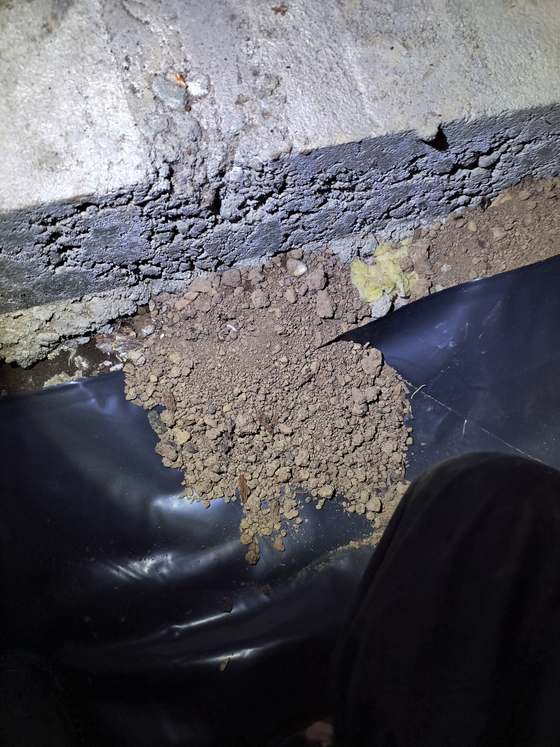
- A fan of loose soil below an entrance and a worn path running away toward food or water
- Capsule-shaped droppings three-quarters of an inch or longer, often near deck skirting
- Gnawed edges on vents, skirting or doors, where a quarter-inch gap has been chewed up to size
- Movement heard low in the walls or under the floor rather than overhead
The rat that is actually here
Washington has exactly two established rat species, and both arrived on ships. WSU Extension puts it plainly: the Norway rat and the black rat, neither of them native, both of them here long enough that nobody thinks of them as introduced any more. Of the two, the Norway rat is what turns up in most Whatcom County buildings.
Washington Department of Fish and Wildlife describes an animal averaging sixteen inches nose to tail tip, grayish-brown top and bottom, heavy through the shoulders, with a scaly tail slightly shorter than the head and body combined. That last detail is the one worth memorizing, because it is the single measurement that separates this species from the one it gets mistaken for.
What makes the Norway rat matter in this county is not its size. It is where it chooses to live. This is a ground animal. WDFW records it nesting at or below ground level and in the lower floors of buildings, digging burrows typically less than eighteen inches deep and three feet long with entrances two to four inches across. Everything about the way it uses a property follows from that preference, and so does everything about where you should be looking.
Norway rat or roof rat
The two get written about as though they were interchangeable, and they are not. Sending somebody into an attic to look for a Norway rat wastes an afternoon; sending them into a crawlspace to look for a roof rat wastes the same afternoon in the other direction.
UC IPM sets out the differences cleanly. The Norway rat is the larger and more robust of the two at seven to eighteen ounces, with a blunt muzzle and ears that do not reach its eyes when folded forward. Its tail is shorter than head and body together. The roof rat is sleeker at five to ten ounces, pointed in the face, with ears long enough to cover the eyes when folded, and a tail longer than head and body together.
The droppings separate them too. Cornell’s rodent identification guidance gives Norway rat droppings as three-quarters of an inch to an inch, blunt at the ends and capsule-shaped. Roof rat droppings run to about half an inch and are more slender. If what you are looking at on a crawlspace vapor barrier is nearer an inch than a half, you are dealing with the ground species.
Behavior is the tiebreaker when the evidence is ambiguous. Both climb — WDFW is clear that both are good climbers, and a Norway rat will happily run a three-inch pipe. But a roof rat prefers to be off the ground and a Norway rat prefers not to be, and given a choice each takes the option that matches its build.
Where it lives on a Whatcom County property
Start outside and low. Blackberry is the single best rat habitat this county produces, and there is a great deal of it — thickets along creek corridors, the back of a greenbelt, the fence line nobody has cut for six years. Woodpiles stacked on soil. Sheds set on skids. The dead space beneath a deck. Compost that is a heap rather than a bin. Stacked pallets, tarped equipment, an old boat on a trailer that has not moved since 2019.
Then look at the building’s waterline. WDFW notes that rats travel fifty to three hundred feet from a nest for food and water, and that they cannot go long without drinking. In a wet county that constraint almost never binds, which is part of why our populations are steady rather than boom-and-bust.
Inside a building, the Norway rat’s territory is the crawlspace, the underside of the ground floor, the garage, the utility room and the base of the wall cavities that connect them. It reaches upper floors through vertical chases rather than over the roof. When people describe a thump rather than a scratch beneath a living room floor, this is the animal they are describing.
Reading a burrow
Burrows are the best evidence a property gives you and almost nobody looks for them, because they sit at ankle height against a foundation and under vegetation.
An active burrow entrance is smooth-edged and clear of leaf litter and spider webbing, with a fan of loose soil pushed out below it and a beaten path running away from it toward food or water. WDFW’s two-to-four-inch figure is a useful filter — smaller than that and you are looking at something else entirely.
Two or three burrows along the sunny side of a foundation, a run worn through the grass toward a bird feeder, and droppings near the deck skirting will tell you more about the size of the problem than a week of listening at the floor. It is also the part of a property a homeowner can survey without going anywhere unpleasant.
The year, which runs on rain first and then cold
Two mechanisms, in that order, and most accounts of autumn rats only carry the second one.
The rain moves them. We do not get a sustained freeze, but we do get a long saturating wet season, and a burrow eighteen inches into soil that has taken on thirty-odd inches of annual rainfall stops being habitable. The animal that dug it is displaced by groundwater before the temperature has done anything at all. That is why the prevention work belongs in late summer rather than in the cold.
The cold is what then drives the activity. Once they are already displaced and looking, a genuinely cold snap is what pushes them from under the deck and the blackberry into the building itself, and it is the sharpest predictor of the calls we take. Rain relocates them; cold decides where they end up. The dry, heated underside of a house is the nearest available replacement, and it is available because of a vent screen that rusted through some years ago.
That gives a real and unusually specific piece of timing advice. The work that prevents a winter of rats is done in the second half of August, on a dry crawlspace, with nothing living in it. Almost nobody books it, because in August the house seems fine.
Breeding runs against the same calendar. WDFW records year-round reproduction concentrated in the warmer months, litters of six to ten, three weeks in gestation, weaning at about twenty days and breeding maturity at three to four months. An August population is the one that arrives in November.
Half an inch, a quarter inch, and the dime that is wrong
Numbers matter here more than adjectives, so here are the ones that hold up.
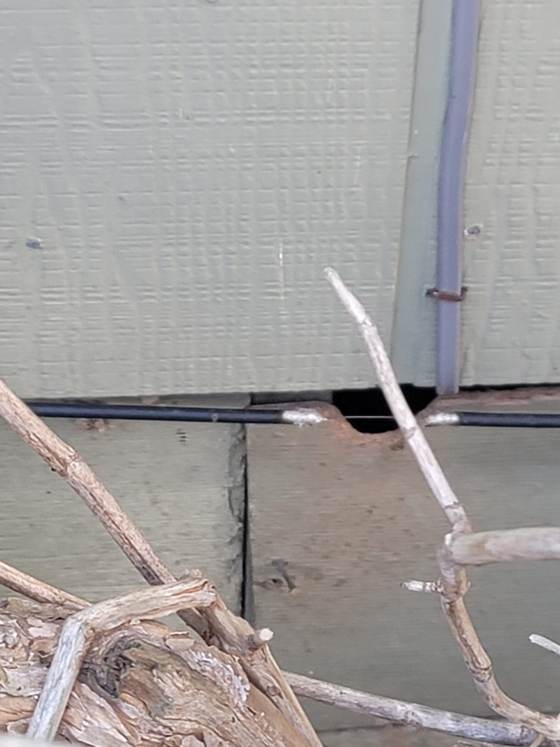
University of Nebraska Extension’s rodent-proof construction guidance states that rats need slightly more than a half-inch gap to enter and mice slightly more than a quarter inch. WSU Extension gives the same half-inch figure for rats. Whatcom County’s own health department tells residents to seal holes and gaps bigger than a quarter of an inch.
Then there is the figure that actually decides whether a building holds. WDFW’s framing is that a rat requires a hole a quarter-inch across to chew larger and squeeze through. That is a different claim from the one most people take away, and it is the more useful one. The threshold is not the size the animal fits through. It is the size at which the animal can get its incisors around an edge and start work — and with teeth growing five inches a year, the work gets done.
Which brings us to a comparison that circulates constantly and is simply incorrect. A mouse-sized hole is routinely described as “the size of a dime.” The United States Mint publishes the dimensions: a dime is 0.705 inches across. That is nearly three times a quarter inch, and it is larger than the half-inch rat figure. Anybody sealing to a dime is leaving both species a doorway and believing the building is closed.
Use objects that are the right size instead. A quarter inch is the width of a standard pencil. Three-quarters of an inch — comfortably enough for an adult Norway rat, and the figure worth working to on a foundation — is the width of a penny, which the Mint gives as 0.750 inches. Those two comparisons are dimensionally honest. The dime is not, and it appears on a great deal of pest control content including, historically, some of ours.
What the damage actually is
Wiring. Cable sheathing is a chewable material sitting in exactly the spaces this animal occupies. It is the damage with the worst tail risk and the one nobody can see from inside the house.
Plastic supply lines. PEX under a floor is soft enough to breach, and a pinhole leak in a crawlspace can run unnoticed for months, which produces a wet crawlspace, which produces a second and larger set of problems.
Ducting. Flexible duct tears easily. A breached supply run heats the crawlspace instead of the house and moves air out of a contaminated space into the rooms above it.
The vapor barrier. Norway rats burrow beneath sheeting rather than walking over it. The barrier ends up torn, displaced and useless as a ground-moisture control, which is a building-performance loss on top of a pest problem.
Stored goods. Cardboard is a resource rather than a container. Anything soft in a garage or under a house is nesting material.
Insulation, and the honest version of that conversation
Fiberglass under a floor is the best nesting material most buildings contain, and an established crawlspace population does three things to it. It pulls batts down out of the joist bays to build with. It compresses what remains into flattened runs. And it saturates the material with urine, after which the fibers settle and stay settled.
The consequence people underrate is thermal. Insulation works by holding still air in a low-density mat, so anything that reduces the loft reduces the performance close to proportionally. A crawlspace that has been worked over for two winters costs measurably more to heat above, and in a climate with a long mild heating season that cost runs quietly for years.
The decision that follows is a real one and it goes both ways. Widespread contamination — material pulled down across many bays, nesting distributed through the space, saturation you can smell, a barrier that has been tunneled under and shredded — is a case for taking it out and starting again, which is crawlspace cleanout and restoration rather than pest work. Scattered droppings on dry, lofted, intact batts is not, and we would rather say so standing in the crawlspace than sell the larger job.
Where the activity ran overhead as well, attic insulation replacement is the same decision applied to a different space. In both cases the sequence is fixed: animals out, building closed, material replaced last. New insulation installed into an open building is a donation to next autumn.
What a Norway rat carries, and what it does not
This is worth getting exactly right, because the risk that gets attached to rats in popular writing is frequently the wrong one.
Hantavirus is not a rat story in Washington. The Washington State Department of Health states that hantavirus-infected deer mice excrete the virus in urine, saliva and droppings, that infected deer mice live throughout the state, and that one to five cases are reported in a typical year. Whatcom County’s health department says the same thing in the same terms. The animal named in that guidance is Peromyscus maniculatus, and it is not the animal in your crawlspace.
The department’s surveillance guideline is where the scale of it lives, and the scale is easy to lose in a one-line warning. It records 58 cases in Washington altogether through 2022, 20 of them fatal, with about 70 percent of exposures reported on the east side of the state. That last figure is the one a reader in Whatcom County should hold onto. The health department does not exclude western Washington from its risk statement and neither do we, but the recorded exposure history is heavily weighted to the dry country, and a page that quotes the fatality rate without quoting the distribution is selling alarm rather than reporting it.
There is a rat hantavirus, and it is a different and rare thing. CDC identifies Seoul virus as a hantavirus carried by Norway rats, found in both pet and wild rat populations including in the United States. It causes a hemorrhagic rather than a pulmonary illness and it is uncommon. We name it because omitting it would be tidier than it is honest, not because it should change what you do.
Leptospirosis is the one with local weight. It spreads through water contaminated with infected animal urine, which makes standing water plus rat activity the combination that matters — and this is a county with a great deal of standing water. It is also a genuine risk to dogs.
Then the ordinary ones. WDFW lists salmonella and tularemia alongside leptospirosis for Old World rats. Food contamination is the everyday mechanism rather than anything exotic.
Handling follows from all of it identically. Do not dry-sweep and do not vacuum droppings or nesting material. Washington’s health department directs airing an enclosed space for at least thirty minutes, wetting the material with a ten percent bleach solution and leaving it ten minutes, then wiping up with paper towels while wearing gloves and bagging everything. Because you cannot tell a deer mouse dropping from a house mouse dropping by eye, that method is the right one for all rodent waste regardless of what you think left it.
Trapping, including where it fails
Trapping is how anything inside a building envelope gets removed, and it is a skill rather than a purchase. It also fails in specific, repeatable ways, which are worth naming.
Neophobia is the first one. UC IPM describes rats as quick to detect and avoid new objects and new foods, and notes that they often ignore traps and baits for the first several days. A trap line that produces nothing on night one has not failed; a trap line moved on night two has. Set them, leave them, let the animals get bored of them.
Under-trapping is the second and the most common. A crawlspace run carrying an established colony needs traps in double figures. Two traps on a run like that remove two animals and educate the rest.
Placement against the wall is the third. Rats travel with a flank in contact with a vertical surface — WSU Extension describes them using the same routes repeatedly along a wall, fence or other boundary. A trap set out in the open, with the trigger facing the wrong way, sits in a place the animal never goes.
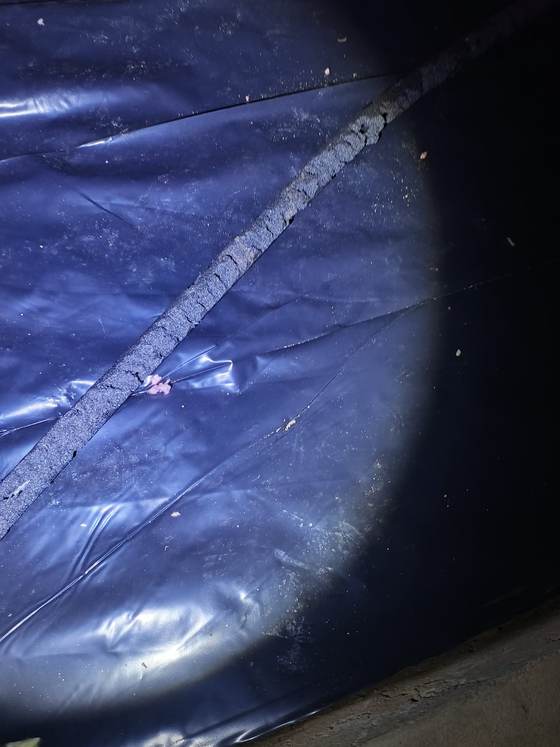
And here is the local one that catches everybody. Where a crawlspace has a vapor barrier, Norway rats very often travel underneath the sheeting rather than across it. Every trap on top of the plastic is then sitting above a runway it will never intersect, and the job looks unresponsive when it is simply set on the wrong plane. The tell is a raised, meandering ridge in the sheeting, and sometimes a smell of disturbed soil. The answer is to cut in, set below, and patch afterward.
Glue boards are not part of this. They are slow, they catch non-target animals, and they leave a live animal in a state most people find genuinely distressing.
Rodenticide, stated with the risk attached
Bait has a place on the exterior of a property under real pressure, and the reason to discuss it openly is that the risk it carries is not to the rat.
Anticoagulant baits kill slowly. An animal that has taken a lethal dose keeps moving and feeding for days, and a share of those animals die in the open where something else finds them. WDFW states the mechanism plainly: dead rats and mice may contain several lethal doses, and secondary poisoning of pets and wildlife is possible where carcasses are consumed over a few days — with the further note that for the strongest compounds a single carcass may be enough.
The animals downstream of that are the ones already doing rodent control for free. Barn owls, red-tailed hawks, coyotes, and the neighborhood’s cats and dogs. On a Lynden or Everson property with outbuildings and a resident owl pair, poisoning the predator to kill the prey is a straightforwardly bad trade.
EPA has moved on part of this. The second-generation anticoagulants — brodifacoum, bromadiolone, difenacoum and difethialone — are no longer registered for consumer products, precisely because they pose greater risks to non-target species that feed on bait once or that feed on animals that have. They remain available to professional and agricultural users, which puts the choice on the company rather than on the label.
So the position here is: bait selected for reduced secondary exposure rather than by price, always in a tamper-resistant station, always mapped, exterior only — and trapping inside the envelope, because an animal that dies inside a floor structure is a decomposition and blowfly problem in a place nobody can reach.
Exclusion is the half that lasts
The verdict at the top of this page says we treat this, and that is true. It would be dishonest to leave it there.
Trapping is a recurring cost. It removes the animals present and does nothing about the opening that admitted them, so a building that is trapped and not sealed produces a new population on roughly an annual cycle. The work that changes the outcome is physical: quarter-inch hardware cloth over vents in the gauge that survives this climate, sheet metal where an edge will be gnawed, mortar into masonry, a crawlspace hatch that closes and latches, and every utility penetration closed with something that has no give in it.
Nebraska Extension specifies nineteen-gauge half-inch mesh to exclude rats and twenty-four-gauge quarter-inch mesh to exclude mice; the quarter-inch cloth does both jobs and is what we default to. What does not work, in any gauge, is expanding foam on its own, steel wool packed into a hole, vinyl weather stops, or window screen asked to do a rodent’s job.
That is exclusion and repair work, and on a rat problem it is almost always the better purchase. We say so knowing it argues against the recurring half of our own business.
When it is not a Norway rat at all
Two corrections worth making before anyone treats.
If the noise is overhead, in daylight, and sounds heavier than a rat, it is probably not one of ours. Squirrels, raccoons and bats all end up in Whatcom County roof spaces, none of them is rodent work as this company defines it, and several carry legal timing constraints. We will say what it sounds like from your description and point you somewhere useful rather than selling a rodent program.
And if the animal is small, sharply bicolored with a white belly, and you are on a wooded or field-edge property, you are looking at a deer mouse rather than a young rat. That distinction is the one that actually changes the health guidance, which is why it appears twice on this page.
What the work looks like
Someone goes the length of the crawlspace with a light rather than reporting from the hatch, walks the exterior at ground level, and reads the burrows, runs and droppings for size, age and direction. That produces a mapped list of openings and a realistic account of how long this has been running.
Then trapping on the mapped runs in the numbers the activity justifies, revisited and adjusted rather than laid out and left. Then sealing in metal. Then, only if the contamination genuinely warrants it, removal and replacement of the insulation — with the smaller version of that job offered where the smaller version is the truth.
Most of this is covered in more depth on rodent control and, for the specific case under a floor, on rats in the crawlspace. Assessment is free, and if the honest recommendation on your property is a drainage contractor rather than a pest company, that is what you will be told.
Frequently asked questions
How do I know whether I have a Norway rat or a roof rat?
Look at the tail and the height. A Norway rat's tail is shorter than its head and body combined, its ears do not reach its eyes when folded forward, and it works at ground level. A roof rat is slighter, its tail is longer than head and body, and it lives above you.
How big a gap does a Norway rat actually need?
Extension guidance puts it at slightly more than half an inch to pass through. The more useful number is a quarter inch, because that is enough for a rat to get its incisors around an edge and gnaw the hole up to a size that fits, which is how most rat entries are actually made.
Can I get hantavirus from a rat in my crawlspace?
Not the kind Washington worries about. The hantavirus that causes lung disease here is carried by deer mice, and Washington's health department names them specifically. Norway rats are associated with a separate and rare hantavirus called Seoul virus, and with leptospirosis, which matters more locally.
Why did a rat set off the trap and get away?
Usually placement and tension rather than luck. Rats approach along a wall, so a trap sitting proud of the run gets hit from the wrong angle. Under-trapping is the other half — a run that justifies twelve traps and gets two teaches the colony what a trap is.
Does rat bait hurt owls?
It can, and that is the reason product choice matters. A rat carrying a lethal dose keeps moving for days, and predators that take it absorb what it absorbed. Barn owls and red-tailed hawks hunt the same rats you are trying to remove, and poisoning them is a poor trade on any rural property.
Do the rats come back after the crawlspace is sealed?
Rats return to buildings that are still open to them. A property whose foundation, vents, hatch and penetrations have been closed in metal stops being available, and what usually reopens it is somebody else's drilling — a new cable, a heat pump line, a replaced dryer vent.
Sources
- Washington Department of Fish and Wildlife — Living with wildlife: Rats — read September 1, 2026
- WSU Extension — Rats and Their Behavior, Part 1 — read September 1, 2026
- UC IPM Pest Notes — Rats (Norway rat and roof rat) — read September 1, 2026
- University of Nebraska Extension — Rodent-Proof Construction, Structural — read September 1, 2026
- Whatcom County Health and Community Services — Rodents — read September 1, 2026
- Washington State Department of Health — Hantavirus — read September 1, 2026
- Washington State Department of Health — Hantavirus surveillance guideline (DOH 420-056) — read September 2, 2026
- CDC — Seoul virus guidance for rats — read September 1, 2026
- US EPA — Restrictions on rodenticide products — read September 1, 2026
- United States Mint — Coin specifications — read September 1, 2026
- Washington State Department of Health 333-161 — Plague Surveillance in Washington State, Summary Report 1975-2008 — read September 3, 2026
Rules change. This page is scheduled for review against its sources by September 1, 2027. If you are reading it after that date and something looks out of step with the current rule, the rule is right and we are wrong — please tell us.
Pest problem in Whatcom County?
Family-owned, no long-term contracts, and every treatment is backed by our 100% Service Guarantee.
Most calls in Whatcom County are out within 1–2 days, about 3 during the late-summer peak.
Last updated