
Deer Mouse — The One the Health Guidance Is About
Peromyscus maniculatus · Rodents
The deer mouse is the hantavirus species in Washington and an animal of woodland edge, cabins, sheds, garages and crawlspaces rather than kitchens. A white belly with a hard edge and a furred two-tone tail separate it from a house mouse. Never dry-sweep or vacuum its droppings.
Call 360-410-2199 Request a free inspection
We treat this, and finding it usually warrants treating.
Deer mouse at a glance
| Belly and flanks | White underside, legs and feet, with a sharp line where the brown back stops |
|---|---|
| Tail | Furred and sharply two-toned, dark above and light beneath |
| How to tell it from a house mouse | Bigger eyes and ears and a furred bicolor tail; a house mouse is one gray tone with a bare, scaly tail |
| Where it lives here | Woodland edge, cabins, sheds, garages, barns, trailers and crawlspaces rather than kitchens |
| Home range | A third of an acre to four acres or more, so it visits a building rather than settling in a cupboard |
| Health risk | The hantavirus carrier in Washington — cases are rare, but its droppings are never swept or vacuumed |
| Damage | Nests in mattresses, upholstery, clothing and insulation; chews wiring in stored vehicles |
Signs you have them
- A hoard of seeds, nuts or pet food packed into a boot, glove, drawer, tool tray or engine bay
- Droppings along shelf edges in a cabin, shed or trailer that has been shut for months
- Shredded nesting material in a mattress, cushion, stored sofa or box of linens
- Chewed corners on stored boxes and nesting under the cowling of a mower, tractor or boat
- Tunneled or compressed insulation in the crawlspace or attic
An outdoor animal that lets itself in
The most useful thing to understand about this species is where it belongs.
A house mouse is a building animal. It has lived alongside people for so long that a heated structure is effectively its habitat, and it settles into one and stays. A deer mouse is not that. UC IPM describes Peromyscus maniculatus as the most abundant and widely distributed mammal in North America, living across forest, grassland, scrubland and farmland, and notes that it is not common in urban and residential areas unless there are large or numerous parks and fields nearby.
What it does instead is move into structures that sit inside its habitat and that nobody is using much. UC IPM is specific about this: deer mice readily enter vacated homes, cabins and other structures to nest and store food.
In Whatcom County that maps onto a very recognizable list. A cabin above Lake Whatcom that gets opened at Easter. A shed at the back of a Sudden Valley lot. A detached garage in Deming that holds a boat and not much else. A barn or an equipment shed out toward Everson or Nooksack. A crawlspace under a house at the edge of the greenbelt. A travel trailer parked under trees since September. A seasonal place at Birch Bay shut from October to May.
That is the animal. It is not the mouse in the pantry of a Sunnyland rental, and the difference matters, because the health guidance attached to it is real and the wrong species carrying it eventually stops being believed.
Deer mouse or house mouse
This is the identification that changes the advice, and it is easy once you know what to look at. Both UC IPM publications set out the same features.
The belly. A deer mouse has white undersides, legs and feet, and there is a distinct line of demarcation where the brown of the back stops and the white starts. It is a switch rather than a fade, and it runs cleanly along the flank. A house mouse is one tone from shoulder to belly, gray to gray-brown, blending.
The tail. This is the one that settles arguments. A deer mouse tail is moderately to well furred and sharply two-toned — dark on top, light beneath, with the boundary running straight along its length. A house mouse tail is scaly, has almost no fur, and is the same color the whole way round.
Eyes and ears. Larger on a deer mouse, noticeably so once you have the two in mind. It gives the animal a rounder, more open-faced look that people describe as prettier, which is usually the first thing anybody says about one.
Overall size. UC IPM gives deer mice as larger overall in body size than house mice. It is not a big difference and it is the weakest of the four checks, so do not rely on it alone.
If you have a live animal, or a clear photograph, the tail alone is enough.
The cache is a signature
There is a fifth check that costs nothing and that almost nobody knows about.
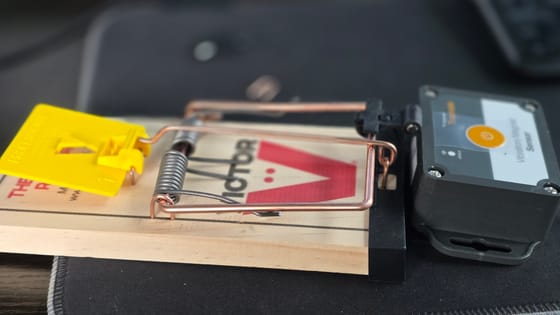
UC IPM records that deer mice tend to cache food supplies — acorns, seeds, nuts — and names this as a useful characteristic for identification. House mice do not do this in any comparable way.
So a neat hoard of Douglas-fir seed, hazelnuts, sunflower hearts or dry pet food packed into somewhere enclosed is a strong pointer. The places people find them are consistent and slightly comic: the toe of a boot in a mudroom, a glove in a garage drawer, the pocket of a coat left in a shed, a tool tray, the air filter housing of a vehicle, the inside of a barbecue cover, a stored kayak.
If you find a cache, you have both an identification and a location, which is more than a scatter of droppings gives you.
Hantavirus, stated accurately
This is the reason the deer mouse gets its own page rather than a paragraph on another one, and it is the section where being precise matters most.
What the state says. The Washington State Department of Health states that hantavirus-infected deer mice shed the virus in urine, saliva and droppings, that infected deer mice live throughout the state, and that people are at risk for hantavirus pulmonary syndrome in any part of Washington. It gives typically one to five cases reported each year, and about one in three of the people diagnosed have died. Infection comes from breathing contaminated dust after disturbing or cleaning rodent droppings or nests, or from living or working in rodent-infested settings. Symptoms begin one to eight weeks after inhaling the virus, opening with three to five days of fever, muscle aches, headache, nausea, vomiting and fatigue.
What the longer guideline adds. The department’s surveillance guideline carries the figures that put the public page in proportion, and they are worth having. Through 2022 there had been 58 cases in Washington in total, 20 of them fatal — a case fatality of 34 percent. Between zero and five cases are reported annually. Cases have occurred in most counties, but approximately 70 percent reported exposure in eastern Washington. The activity most associated with exposure is cleaning buildings that hold rodent nests or contamination, particularly rodent-infested cabins, homes, barns, vehicles and outbuildings.
What that means on this side of the Cascades. Both things are true at once and neither cancels the other. The reservoir animal genuinely lives here, the route of exposure genuinely exists here, and the state does not carve western Washington out of its risk statement. At the same time, this is a disease that has produced fewer than sixty confirmed cases in the entire state across decades, with most reported exposures east of the mountains, in a state of eight million people.
So the honest framing is not “you are in danger” and it is not “this does not happen here”. It is that the consequence is severe and the probability is low, which is the exact situation in which a method is worth following. You put on gloves and wet the material down not because you expect to be the case, but because the cost of doing it is fifteen minutes and the cost of the alternative is not proportionate.
Anybody selling you a treatment on the strength of this is overreaching, and anybody telling you it is a non-issue in western Washington is going further than the state’s own guidance does.
The cleanup method, in order
This is Washington’s own procedure, and it is the part of this page worth printing out. It applies to any rodent waste, not just to what you think is a deer mouse, for the simple reason given in the FAQ above.
Air the space first. Open it up and leave it for at least thirty minutes before anybody goes in to work. On a crawlspace, an attic or a closed cabin, do that from outside rather than standing in it.
Do not stir up dust. The health department’s instruction is explicit: do not vacuum, do not sweep, and do not disturb the material by any other means. The whole exposure route is airborne particulate from dried droppings, urine and nesting material, and dry brushing is the single act most likely to create it.
Wear the right gloves. Rubber, latex, vinyl or nitrile. Not fabric or work gloves.
Wet everything down and wait. Mix one and a half cups of household bleach into a gallon of water and soak the droppings, the nesting material and the surrounding surface. Leave it for ten minutes before touching anything. The soaking time is not optional and it is the step people cut short.
Lift it with damp towels, bag it, seal the bag, and put it in an outside bin.
Then wipe the area again with the bleach solution and wash your hands properly afterward even though you wore gloves.
For a large accumulation, an enclosed space, or nesting material in quantity, a properly fitted respirator is a reasonable step rather than an overreaction. UC IPM points to HEPA-equipped respiratory protection for full protection, and a paper dust mask is not the same category of thing.
Whatcom County Health and Community Services publishes the same procedure locally, down to the thirty-minute airing, the glove materials and the instruction not to vacuum or sweep. If you would rather read it from a public health source than from a company that stands to be paid for the work, that is the right instinct and both documents are linked below.
And if any of that sounds like more than you want to take on in a crawlspace or a roof space, it is a legitimate part of the job rather than something we hand back to you at the end.
Opening a building that has been shut
Because this is the situation the guidance was written for, it is worth setting out as a sequence rather than a principle. It applies to a cabin in April, a shed you have not been into since autumn, a trailer coming out of storage, or a crawlspace hatch nobody has lifted in three years.
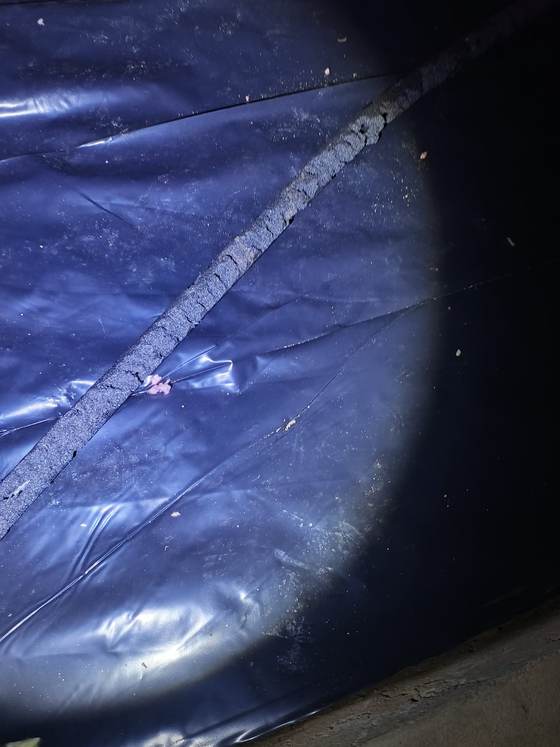
Open it and walk away. Doors, windows, vents, hatch — everything that opens. Then leave it for the full thirty minutes rather than the two it takes to carry the cooler in. This single step is the one the state guidance leads with and the one that gets skipped, because nobody drives to a cabin to stand outside it.
Look before you touch anything. Droppings along a shelf edge, a chewed corner on a box, shredded material in a drawer, a cache, a nest in a mattress or a cushion. Note where it is and how much. That map decides where the traps go and how far the cleanup runs, and it is gone the moment somebody starts tidying.
Do the contaminated areas first, wet, before the unpacking. It is tempting to get settled and deal with it later, and later is always after somebody has walked the material around the building on their shoes.
Deal with soft furnishings deliberately. A mattress or a cushion with nesting in it is not a wipe-down job. Bag it and take it out, or accept that you are keeping the contaminated material.
Then look at how it got in, while the building is empty and you can see the inside of the shell. This is the only moment in the year when sealing an outbuilding is easy, and it is the difference between doing this once and doing it every spring.
If the building has been shut for a long time and the contamination is substantial — nesting material through the insulation, droppings across a floor you cannot easily wet down, an odor you can smell from the doorway — it is reasonable to have somebody else do it. That is not an upsell. It is a respirator, a method and a bag rather than a broom, and plenty of people would rather buy that than own it.
Where they get in, and what they nest in
Deer mice use the same openings every rodent uses, at the same quarter-inch threshold set out on the house mouse page and in Whatcom County’s own rodent guidance, which tells residents to seal holes and gaps bigger than a quarter of an inch. UC IPM’s exclusion advice for this species is the same figure — seal openings larger than a quarter inch — with the note that plastic screening, rubber, vinyl, insulating foam and wood all get gnawed through.
Where the pattern differs from a house mouse is what they are aiming at.
Outdoors, UC IPM describes nests built from stems, twigs, leaves and grass roots, sited in tree hollows, in stumps, under rocks and logs, and in abandoned squirrel and bird nests. Indoors, the same instinct produces nests inside whatever soft material a building contains — which the same publication lists as upholstered furniture, mattresses, clothing and paper.
That list is why a deer mouse problem in a seasonal building so often reads as property damage rather than as a pest sighting. The stored sofa in a garage, the mattress on the bunk at the cabin, the box of linens in a shed, the seat foam in a parked boat, the insulation in a crawlspace: these are not incidental casualties, they are the objective.
The home range problem
House mouse work is close-quarters work because the animal lives in a small space. Deer mouse work is not, and this is where people go wrong with traps.
UC IPM gives the deer mouse home range as a third of an acre to four acres or more, and draws the practical conclusion itself: habitat modification alone cannot resolve an infestation, because the animal is not confined to the patch you cleaned up.
Two things follow.
The building is inside the territory, not the territory itself. A deer mouse comes and goes. So the useful question on a property is not only where in the structure it is nesting, but which edge it is arriving from — the woodpile against the shed, the brush line at the back fence, the ivy on the bank, the tall grass along a ditch.
Removing the animals present does not end the pressure. Another one moves into the same shed, using the same gap, on much the same timetable. That makes sealing the durable half of this work in a way it is for every rodent, but even more so, because the population outside is not something anybody is going to reduce.
UC IPM’s habitat advice is the ordinary one — clear overgrown shrubs, hedges and weeds, and take wood and brush piles and fallen trees away from around buildings. On a wooded lot in this county, that gets you a defensible margin rather than an empty landscape, and a defensible margin is the realistic goal.
What they damage
Soft goods, comprehensively. The list above, and it is the damage people actually notice.
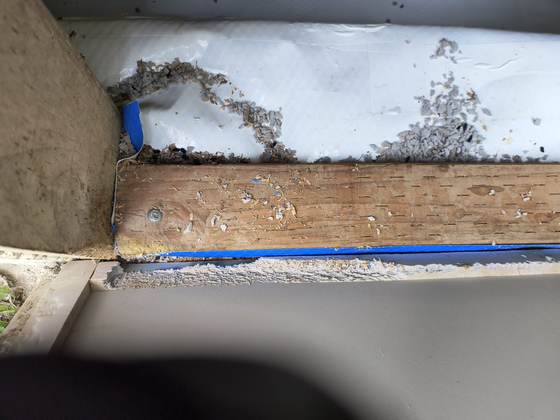
Wiring and vehicles. A deer mouse in a stored vehicle, a mower, a tractor or a boat will nest in an air box or under a cowling and chew what is nearby. On rural properties this is frequently the most expensive thing the species does.
Insulation. Nesting and tunneling in crawlspace batts and attic material, with the same consequence set out on our rodent pages: insulation works by holding still air, and anything that compresses it or wets it takes that away. Whether it needs removing or cleaning is a real decision and it goes both ways.
Stored food and seed. Caching means they move it rather than just eating it, so a bag of birdseed can be relocated in useful quantity into somewhere you did not expect.
Contamination of surfaces, which given the section above is the one that determines how the cleanup gets done.
Trapping, and the two tools that are not available
Trapping is the method, and the mechanics are close to house mouse work with two differences.
Set where the animal travels, not where you found the evidence. In a shed or a cabin that means along walls, at the base of stored items, at the points where the structure connects to the outside, and in the crawlspace or the underfloor if there is one. UC IPM’s spacing guidance is the same as for house mice — traps no more than about ten feet apart, set close to walls.
Bait with peanut butter, or peanut butter mixed with rolled oats or cereal. UC IPM names exactly that, and on a seed-caching animal it works well.
No toxic bait. This is the point most people are surprised by, and it is worth stating plainly: UC IPM records that there are no toxic baits registered for controlling deer mice in residential settings. Only first-generation anticoagulants and zinc phosphide are registered for the species at all, and those sit outside residential use. So for a homeowner in Washington, trapping and sealing are not the preferred approach, they are the approach.
No glue boards. UC IPM cautions specifically against glue boards for this species because of the hantavirus risk — a live animal struggling on a board produces exactly the urine, droppings and disturbance the whole guidance is written to avoid. We do not use them for any rodent, and here there is a specific reason on top of the general one.
Closing the building
Everything above argues toward the same conclusion, which is that the durable work on a deer mouse is physical rather than chemical.
Quarter-inch hardware cloth over vents and openings, in a gauge that survives this climate. Sheet metal where an edge will be gnawed. Doors that close on a seal rather than approximately. A crawlspace hatch that latches. Every utility penetration filled with something that has no give in it. And on outbuildings — which is where this species usually is — a floor-to-wall junction that is actually closed, because a great many sheds and barns in this county are not.
That is exclusion and repair work, and on a seasonal building it is what makes the difference between opening up to a cleanup every spring and opening up to a building.
The comfortable window for it is the second half of August, on a dry structure, before the autumn push. Nobody books it then, because in August nothing is wrong.
The season, here
Pressure follows the same curve as everything else in this county — rising from late September, hard through October and November, elevated all winter. The mechanism is the ordinary one: cover dies back, outdoor food declines, ground saturates, and a dry closed building becomes the best thing available.
The deer mouse variation on it is the empty building. A cabin, a trailer or a shed left shut from autumn to spring is undisturbed for the entire period when pressure is highest, which is why the population found on opening day is frequently established rather than new. Breeding is not the constraint either. UC IPM gives litters of three to six and females reproductively active as early as six weeks old, so a pair that got in during October is not a pair by March.
Which is the argument for going in carefully in the spring rather than cheerfully. The building you are about to sweep out is exactly the setting the health guidance was written about.
When it is not a deer mouse
If the animal is uniformly gray-brown from shoulder to belly with a bare tail of one color, it is a house mouse, and the work is tighter, more indoors, and organized around a much smaller territory.
If the droppings are clearly larger than a grain of rice with blunt ends, you are dealing with a rat rather than either mouse, and the trap numbers and the gap sizes both change.
If the animal has a short furred tail, small partly hidden ears and a blunt face, and the damage is to your lawn and your shrubs rather than inside a building, that is a vole and it is a different page with a different answer.
And if biting started in a bedroom a couple of weeks after rodent activity in that part of the building stopped, look at rodent mites before anybody treats a mattress.
Where to start
Tell us what you have found and where, leave a representative patch of evidence undisturbed if you reasonably can, and do not start sweeping.
Somebody will look at the whole structure rather than the room — the crawlspace the length of it with a light, the outbuildings, the exterior at ground level, and the edge habitat that is feeding the property. You get a plain account of the entry points, the trap plan, what the cleanup involves, and whether any insulation genuinely needs to come out.
The broader shape of that work sits on rodent control, and where the activity has been in a roof space it runs into rodents in the attic insulation.
Frequently asked questions
How likely is hantavirus in western Washington, honestly?
Uncommon, and weighted heavily to the other side of the mountains. Washington's health department guideline records 58 cases statewide through 2022 and notes that roughly 70 percent of them reported exposure in eastern Washington. It is a reason to use a method, not a reason to be frightened.
What is the correct way to clean up droppings and nesting material?
Air the space for at least thirty minutes before you go in. Wet everything with a bleach solution of one and a half cups per gallon of water and leave it soaking ten minutes. Wear rubber, latex, vinyl or nitrile gloves, lift it with damp towels, and bag it. Do not sweep and do not vacuum.
Where can I read the official guidance rather than a pest company's version?
The Washington State Department of Health publishes both a public hantavirus page and a longer surveillance guideline, and Whatcom County Health and Community Services publishes local rodent guidance. All three are listed in the sources at the foot of this page.
Can you tell a deer mouse dropping from a house mouse dropping?
No, and neither can we. They are close enough in size and shape that nobody should be making that call by eye. It is exactly why the careful handling method applies to all rodent waste regardless of what you believe left it.
Why are my kitchen traps catching nothing?
Frequently because a deer mouse is not living in your kitchen. UC IPM gives its home range as a third of an acre up to four acres or more, so it visits a building rather than settling into a cupboard, and the traps belong where the animal is actually traveling.
Is there a bait I can put down for deer mice?
Not in a home. UC IPM states there are no toxic baits registered for controlling deer mice in residential settings, which leaves trapping and sealing as the entire toolkit available to a householder in Washington.
What is the pile of seeds in my toolbox?
A food cache. Deer mice store supplies, and a hoard of seeds, nuts or acorns packed into a drawer, a boot, a glove or an engine bay is close to a signature. UC IPM names caching as a behavior useful for telling this species from a house mouse.
We only use the cabin a few weekends a year. What should we do first?
Open it up and let it air before you start moving things around, and treat the first hour as cleanup rather than unpacking. A structure shut for months is the classic setting for this animal, and it is the setting the state health guidance was written for.
Sources
- Washington State Department of Health — Hantavirus — read September 2, 2026
- Washington State Department of Health — Hantavirus surveillance guideline (DOH 420-056) — read September 2, 2026
- UC IPM Pest Notes — Deer Mouse — read September 2, 2026
- UC IPM Pest Notes 7483 — House Mouse — read September 2, 2026
- Whatcom County Health and Community Services — Rodents — read September 2, 2026
- Washington State Department of Health 333-161 — Plague Surveillance in Washington State, Summary Report 1975-2008 — read September 3, 2026
Rules change. This page is scheduled for review against its sources by September 1, 2027. If you are reading it after that date and something looks out of step with the current rule, the rule is right and we are wrong — please tell us.
Pest problem in Whatcom County?
Family-owned, no long-term contracts, and every treatment is backed by our 100% Service Guarantee.
Most calls in Whatcom County are out within 1–2 days, about 3 during the late-summer peak.
Last updated