
Cluster Fly — Pollenia spp.
Pollenia spp. · Occasional invaders
Cluster flies are slow dark flies that overwinter inside buildings and reappear at upper windows on warm winter days. Their larvae develop outdoors as parasites of earthworms, so there is no breeding site indoors and nothing about cleanliness is involved. Sealing before autumn is the durable answer.
Call 360-410-2199 Request a free inspection
Sometimes worth treating, sometimes not — it depends on what is below.
Cluster fly at a glance
| Size | Slightly larger than a common house fly |
|---|---|
| Color and markings | Dull gray with black markings on the abdomen; golden-yellow hairs on the thorax give a faint gold sheen |
| Behavior | Slow and sluggish — bumps against glass, crawls as much as it flies, easy to catch by hand |
| How to tell it from a blow fly | Dull, slow and gray-gold, where the blow flies that mean something died are shiny metallic blue or green |
| Where it breeds | Outdoors only — the larvae develop inside earthworms in soil, never in the house |
| When you see it | On sunlit south and west walls in October; at upstairs windows on warm spells from November to February |
| Damage | Cannot damage the house, though dead flies in a void can feed carpet beetles |
| Do we treat it | Depends — an exterior application in late August or early September; never indoors; sealing is what lasts |
Signs you have them
- Slow, dark flies at the same two or three upstairs windows on warm winter days
- A dozen or more flies on an upper-floor windowsill in January or February
- Flies gathering in numbers on sunlit south and west walls on mild October afternoons
- Flies emerging at a window frame edge, recessed light, bathroom fan surround or attic hatch
- An accumulation of dead flies in the attic or behind a soffit
The fly nobody expects
It is January. There is a slow, dark, slightly hairy fly bumping against the inside of an upstairs window, and there are eleven more on the sill. Outside it is 40 degrees and raining. Nothing has been left out, nothing has died, and nobody can work out where they came from.
This is a cluster fly, genus Pollenia, and it is one of the few insects on this website whose entire story happens somewhere other than where you find it.
The short version: the fly in front of you grew up inside an earthworm in the lawn last summer, came into the building in October through a gap you have never noticed, and has spent the winter dormant in a wall void or an attic. A warm spell woke it, it went toward the light, and the light was your window.
It is not breeding in your house. It is not feeding on anything in your house. It cannot damage your house. And — this is the part worth saying loudest — it says nothing whatsoever about how clean your house is.
The earthworm, which is the whole explanation
Almost everything counterintuitive about this insect follows from one fact about its larvae.
Adult cluster flies emerge in spring, feed on nectar and plant material, and lay eggs on soil that contains earthworms. The larvae that hatch are parasitoids: they find an earthworm, enter it, and develop inside it. When development is complete they pupate, and the next generation of adults emerges from the ground. Penn State Extension records three to four generations, sometimes more, across a season; Utah State puts it at up to four. So a population builds through the summer and peaks going into autumn.
Every stage of that happens outdoors, in soil, with no reference to buildings at all.
Two consequences follow and they explain the entire shape of this problem.
This is a lawn and pasture problem, not a housekeeping problem. Earthworm populations are highest in permanent grass — lawns, pasture, field margins, orchard floors, the grassy verges of a rural lane. A property surrounded by those things sits in the middle of a cluster fly nursery, and a property in the middle of a paved city block does not. That is the actual variable, and it has nothing to do with the household.
And sanitation is irrelevant. Adults take nectar. Utah State’s note is that unlike other flies they avoid garbage and animal waste. There is no bin, no drain, no forgotten produce and no dead animal in this story anywhere. The whole diagnostic routine that works on every other fly — find the moist organic breeding site — has no target here, which is why people who follow that advice end up cleaning a kitchen that was never the problem.
A blow fly that is not a filth fly
Worth a short section, because it is the one thing about the classification that genuinely confuses people who look it up.
Cluster flies sit in the family Calliphoridae — the blow flies. That is the same family as the metallic blue and green flies that develop in carrion and that, found indoors in numbers, mean something has died in a wall or under a floor.
Same family, completely different life. The metallic ones are a genuine finding worth acting on. The cluster fly, in the same family, is a soil parasitoid of earthworms and a nectar feeder that has never been near a carcass.
That matters practically for a couple of reasons. It is why a search engine will sometimes hand you the wrong answer and set off an unnecessary hunt for a dead rodent. And it is why the correct first move on any fly indoors is to look at the animal rather than to reason from family names: shiny, fast and metallic means one thing; dull, slow and gray-gold means another entirely.
Recognizing one
The identification is easy once you know what to look at, and it hinges on three things.
Size. Penn State describes them as slightly larger than the common house fly. Noticeably bigger without being dramatic.
Color and the golden cast. Dull gray with black markings on the abdomen, and — the diagnostic feature — golden-yellow hairs on the thorax that can give the whole front of the fly a faint golden sheen. The hair is especially dense on the underside between the legs. In good light, on a windowsill, the gold is visible without a lens.
Behavior. Slow. Genuinely slow: they bump against glass rather than flying with purpose, they are easy to catch by hand, and they crawl as much as they fly. That sluggishness is the single most reported characteristic and it is a consequence of a dormant insect that has only partly woken up.
Numbers and place. Upper floors, at windows, in quantity, in the wrong season. A dozen flies in a February bedroom is a pattern almost nothing else produces.
Set against the alternatives: house flies are smaller, grayer, faster and associated with waste and warm weather. Blow flies proper are shiny metallic blue or green. Fungus gnats are tiny, dark and delicate, drifting around houseplants. Drain flies are small, fuzzy and sit motionless on bathroom walls. The fly control page works through the whole set, because on flies the species really does decide where to look.
The name, and why we list a genus
Two small points about naming, both of which come up.
“Cluster” is literal. The insect is named for what it does in the autumn — gathering in aggregations, on walls outside and then in voids inside. It is a description of behavior rather than of the animal, which is unusual and which is why the name is so useful: if the flies are not in a group, they are probably not these.
And this profile is filed under Pollenia rather than under a single species. Penn State’s fact sheet works from Pollenia rudis, which is the classic and the one most literature names, but several closely related flies in the genus do the same thing and are not separable by anybody standing on a landing with a fly on the windowsill. Nothing a household would do changes between them. They share the earthworm biology, the autumn move, the dormancy and the answer, so the page covers the group and says so rather than implying a determination nobody made.
Why your building, and why the upstairs windows
The autumn behavior is what turns a soil insect into a household one.

As the season turns, the adults produced by the last generation of the summer look for somewhere to spend the winter. Penn State’s list of what they use is worth reading in full, because it makes clear that buildings are one option among several natural ones: hedgerows, the space under the bark of dead and dying trees, the crevices of south-facing cliffs and rock faces, and the cracks, crevices and voids of sheds, garages, barns and houses.
A building, in other words, is being read as a warm south-facing rock face. The flies gather on sunlit walls on mild autumn afternoons, work into whatever gaps are available, and settle into the void behind. Utah State notes the preference for the upper levels of a structure — attics, wall voids and false ceilings — which is why the whole problem plays out on the top floor.
Then, when a warm spell in December or February raises the temperature in that void, some of them rouse. Penn State’s description of what happens next is precise and slightly sad: they crawl out of wall voids and attics in a confused attempt to go back outside. They orient toward light. In an upper wall cavity the nearest light is an upstairs window, and they emerge at the frame into the room rather than out through the siding.
That is the entire mechanism, and it explains the two things people find maddening. The flies keep coming back because the same overwintering population is being woken repeatedly rather than a new one arriving. And they concentrate at two or three specific windows because those are the ones nearest the void they are in.
The detailed version of what to do about that — which openings, in what order, and why the interior sealing matters as much as the exterior — is on cluster flies in upstairs windows, which is the practical companion to this page.
The same story as the stink bugs
Cluster flies almost never arrive alone, and the reason is that they are one member of a group of insects doing exactly the same thing on exactly the same calendar.
The brown marmorated stink bug, the boxelder bug, the western conifer seed bug, some ladybird beetles, and mated paper wasp and yellowjacket queens all gather on warm sunlit walls in October, use the same soffit gaps and window surrounds, settle into the same voids, and emerge on the same warm days. Different orders, different diets, identical behavior.
This is genuinely good news, because it means the work is shared. The gaps that admit a cluster fly admit a stink bug. The late-summer sealing that keeps out one keeps out all of them. And the timing is the same for the whole group.
We are not going to restate that case here when it is already made properly elsewhere. The brown marmorated stink bug profile covers the overwintering group and the sealing calendar in detail, the western conifer seed bug and boxelder bug profiles cover the others, and stink bug control is the service side of it. If you have flies at the glass in February and shield-shaped bugs on the siding in October, you do not have two problems. You have one set of openings.
What the flies are actually telling you
Since the insect itself is telling you nothing about your housekeeping, it is worth asking what it is telling you, because there is real information in it.
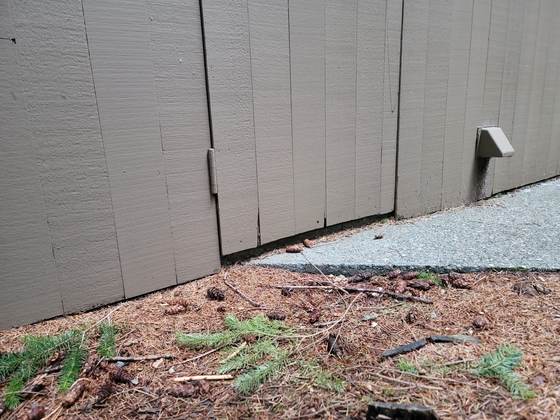
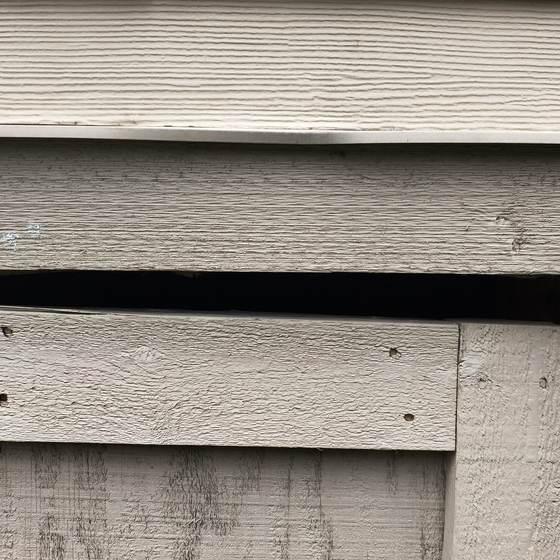
Where your envelope leaks at height. Cluster flies enter high — soffit junctions, fascia gaps, roof-to-wall details on additions, gable and roof vents with damaged screening, the open ends of vinyl siding, utility penetrations, chimney flashing, and the surrounds of upstairs window frames. A house that takes hundreds of them is a house with a lot of small openings up where nobody looks.
Which void connects to which room. The windows that produce flies are the windows nearest the occupied cavity, and the route they take out of it — a window frame edge, a recessed light housing, a bathroom fan surround, an attic hatch — is a route air takes as well. There is a heating bill inside this information.
Which elevations get the sun. They gather on south and west walls, and strongest on light-colored walls that hold heat. That tells you where the sealing effort belongs, which is not usually where somebody would start.
For one autumn, in other words, several hundred small insects map the top half of your building for you. Note the windows they come out of before you do anything else.
The dead flies, which is the part people skip
A share of the overwintering population dies in the void, and in a building that has had this for years the accumulation can be considerable.
Dead insects are food. Carpet beetles and larder beetles breed in an accumulation of fly carcasses in an attic or a soffit, and their larvae disperse into the rooms below, where they damage wool and stored textiles. Penn State makes the point specifically as an argument against indoor insecticide use: killing the flies where they sit produces exactly the carcass supply that draws carpet beetles in.
So a vacuum is the right tool for the ones in the room, and clearing an accessible attic is part of doing the job properly rather than an upsell. Where the accumulation is inside a closed wall cavity it may not be reachable at all, which is one more argument for keeping them out rather than dealing with them once they are in.
Where this happens in Whatcom County
The pattern here follows land use more than anything else.
Rural and acreage property — Lynden, Everson, Nooksack, Sumas, the lanes off the Guide, and the ground toward the border. Permanent pasture and grass carry high earthworm populations, which means the fly population generated around a rural house is far larger than around a house in town. Well-managed soil with plenty of earthworms is exactly what a farm wants, and this comes attached to it. Farm outbuildings compound it, because barns and equipment sheds are additional overwintering sites sitting fifty yards from the house.
Older city housing — the Lettered Streets, Columbia, Sunnyland, York. Not much lawn per lot, but a great many small openings at height: original window casings, open soffit runs, aged flashing and complex rooflines. Moderate outdoor pressure, high indoor penetration.
Newer construction on open ground — Barkley, Cordata, King Mountain and the newer stock around Ferndale. Large unshaded south and west elevations facing open lawn are close to ideal gathering surfaces, and the numbers on the siding in October can be startling. The compensation is that the detailing is better and the sealing work is straightforward.
Waterfront and seasonal property — Blaine, Birch Bay, Semiahmoo. Houses shut up through the wet months fill quietly, and the owner arrives in April to windowsills full of them and no idea what happened.
Lakeside and greenbelt lots — Sudden Valley, Silver Beach, Edgemoor. Mixed, and generally lighter, because there is less permanent grass and more shade on the walls.
The year, as it runs in this county
Written out because the whole recommendation is a calendar, and because knowing which month you are in tells you what is worth doing.
March and April. Survivors of the overwintering population leave the building and go back to the soil to lay. You may see a last flurry at windows as they exit. Nothing needs doing, and this is the point at which an attic accumulation is worth clearing while it is dry and empty.
May through July. The population is entirely in the ground, invisible, running through generations inside earthworms. Nobody thinks about cluster flies in June, which is a shame, because this is the quiet stretch in which the sealing work could be scheduled without any pressure.
Late August into early September. The decision window. The last generation of adults is out, the numbers are at their annual peak, and they have not yet moved to the walls. This is when an exterior application to the gathering elevations does its work and when sealing has the most value per hour. It is also, unhelpfully, when nobody has a fly problem and nobody calls.
October. The gathering. Mild afternoons put them on the south and west walls in numbers, and they work into the gaps over a few weeks. By the end of the month the population that will spend the winter in your building is already in it, and the treatment window has closed behind them.
November through February. Dormancy, punctuated. Every warm spell or heating run rouses a batch, which emerges at the nearest upper window. This is when the calls come, and it is the least productive month of the year to do anything but vacuum.
The awkward shape of that calendar is the honest core of this page: the problem is visible in January and solvable in August, and those are six months apart.
Our verdict, and what it turns on
This one genuinely depends, and the variable is the calendar more than the property.
An exterior treatment is worth doing when it goes on the gathering elevations in late August into early September, ahead of the move indoors. Penn State’s timing note is the same: exterior applications belong in the autumn just before congregation. Done then, on the right walls, it reduces what gets in, sometimes substantially.
The same treatment is close to pointless in November, because the flies are already inside the wall and nothing applied to the siding reaches them.
Sealing is worth doing whenever you start, and it is the half of the work that lasts. It also does something for rodents, wasps and every other overwintering insect at the same time, which is why we would rather sell an afternoon of exclusion than a schedule of visits.
And an interior treatment is not worth doing at all, for the carpet beetle reason above and because product applied in living space does not reach an insect dormant in a cavity.
So: worth treating, on the right wall, in the right three weeks. Not worth treating outside that window, and never worth treating indoors. That is a narrower recommendation than most companies will give you and it is the one the extension guidance supports.
What we will not sell you
A monthly plan through the winter. The population inside the building is fixed once they are in. Repeat visits do not reduce it and the calendar proves it.
A treatment for the lawn. The larvae are inside earthworms in soil across your property and your neighbors’, earthworms are the last thing anybody should be treating a lawn against, and it would not work.
A promise that they will stop. The source is the ground around the building and neither of us can change that. What good work achieves is a large reduction in what gets in and what emerges into rooms, and on a complex older building the honest goal is management rather than an empty attic.
An urgent attic cleanout where the accumulation is light. Where it is heavy it genuinely wants dealing with, and we will show you which of the two you have.
What to tell us if you call
Which windows. Two or three specific ones almost always, and that narrows the void they are in more than anything else you could say.
Which walls they gather on outside in October, if you have noticed. That is where an exterior application would go.
Whether the flies are dull and slow or shiny and fast. It is the difference between this page and a search for something dead in a wall.
What else appears on the same walls. Stink bugs, boxelder bugs, seed bugs or ladybird beetles alongside the flies means one sealing project rather than four problems.
And when you are calling. In August we will talk about treatment and sealing. In January we will tell you honestly that the useful treatment window has gone, recommend a vacuum, and put the sealing in the diary for the end of summer.
Related work
The practical, building-by-building version of this is cluster flies in upstairs windows. The species-by-species guide to every other fly, and why finding the source is the whole job on all of them, is fly control. The sealing itself is exclusion and repairs, and the other insects using the same gaps on the same schedule are covered under stink bug control.
Frequently asked questions
Does having cluster flies mean my house is dirty?
No, and the biology rules it out. The larvae are internal parasites of earthworms in soil, so the population is generated by the lawn and the ground around you rather than by anything indoors. Adults feed on nectar and have no interest in garbage or waste.
Where are they breeding inside my house?
Nowhere. Penn State states plainly that these flies are not reproducing within the structure. Every fly you find indoors developed outside in an earthworm months ago and came in through a gap in autumn to spend the winter.
Why do they only turn up on warm days?
Because they are dormant rather than dead. A mild spell or a heating system warms the void they are in, some of them rouse, and Penn State describes them crawling out of wall voids and attics in a confused attempt to get back outside. They orient toward light, which is your window.
How do I tell one from a house fly?
Size, speed and sheen. A cluster fly is slightly larger than a house fly, dull gray with black markings, and slow enough to catch by hand. Look for golden-yellow hairs on the thorax, which give a faint golden cast that a house fly does not have.
How many generations are there in a year?
Three or four, sometimes more, across a growing season. That is why the numbers going into autumn can be very large even on a property that saw almost none in spring — the population has been building in the soil all summer.
Is it worth treating the lawn to get rid of the source?
No. The larvae are inside earthworms distributed through soil across your property and everybody else's, earthworms are exactly what you want in a lawn, and no treatment reaches that situation usefully. The productive work is on the building, not the ground.
Should I spray them at the window?
It does very little and it has a downside. Penn State notes that killing them indoors leaves carcasses that draw carpet beetles, which then become their own problem in the rooms below. A vacuum removes the flies without leaving anything behind.
Do you treat for cluster flies?
It depends on the calendar and the building. An exterior application to the walls they gather on works when it goes down in late summer before they move in, and does almost nothing once they are in the wall. Sealing is the half that lasts either way.
Sources
- Penn State Extension — Cluster flies — read September 2, 2026
- Utah State University Extension — Cluster flies — read September 2, 2026
Rules change. This page is scheduled for review against its sources by September 2, 2027. If you are reading it after that date and something looks out of step with the current rule, the rule is right and we are wrong — please tell us.
Pest problem in Whatcom County?
Family-owned, no long-term contracts, and every treatment is backed by our 100% Service Guarantee.
Most calls in Whatcom County are out within 1–2 days, about 3 during the late-summer peak.
Last updated