Commercial Pest Control in Whatcom County
Sasquatch Pest Control runs recurring, documented pest control and exclusion programs for businesses across Whatcom County. We build the program around your facility, keep records clean enough for an inspection or an audit, and work on a schedule that fits your operation rather than ours.
Call 360-410-2199 Request a free inspection
Choose your industry
Documented, discreet, dependable
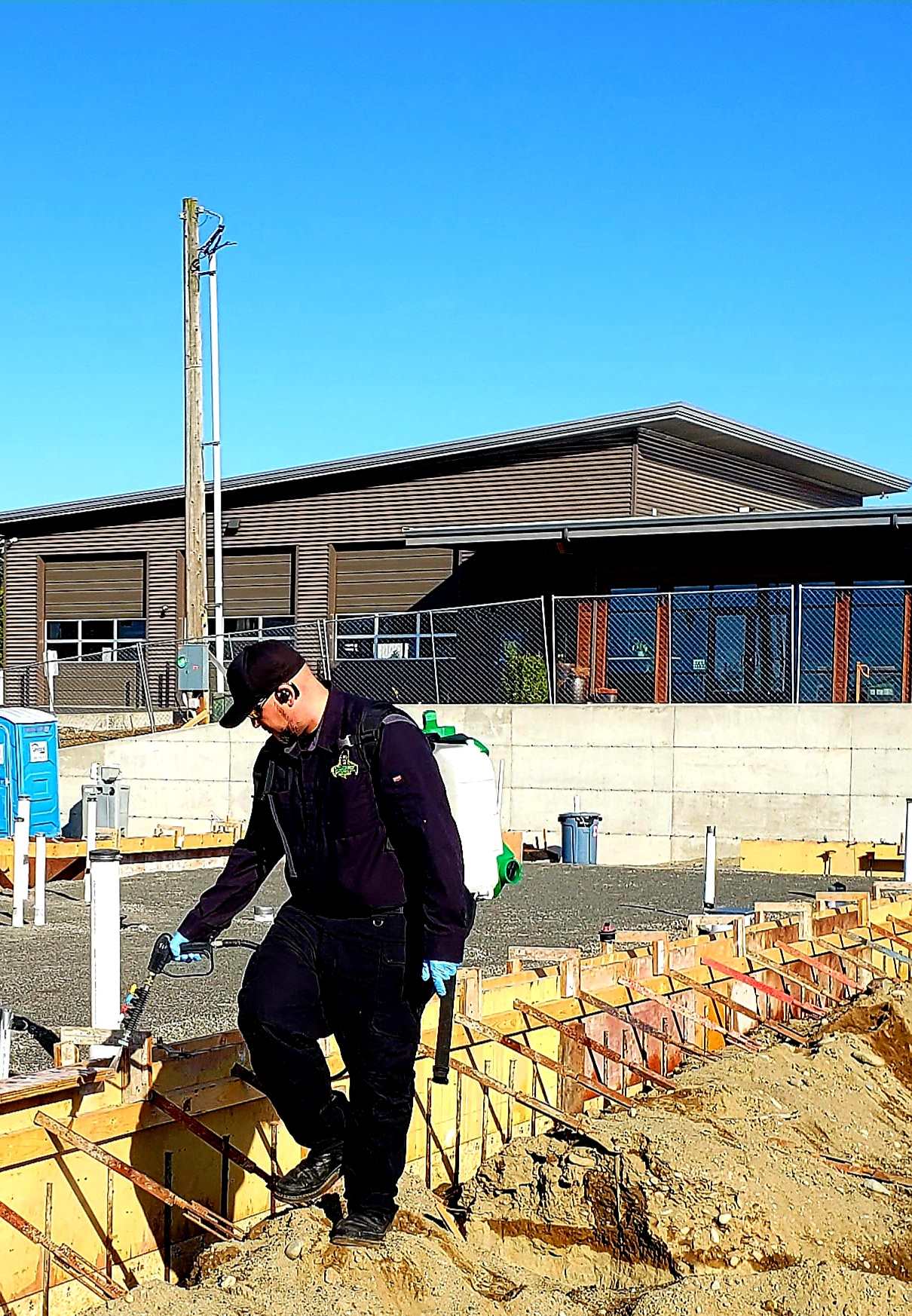
Commercial work is judged on three things: whether the pressure actually goes down, whether your customers ever notice us, and whether the paperwork holds up when someone asks for it. We build programs around all three.
What a commercial program actually includes
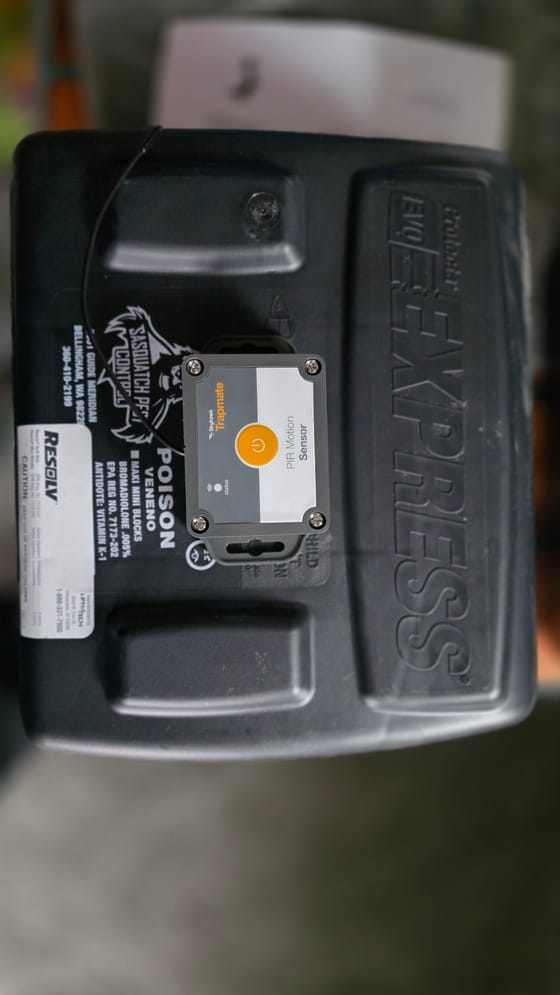
A commercial account is not a residential visit performed more often. The differences are structural. Scheduling is built around your operation, which for food service and retail usually means before opening or after close, and for a school means working around occupancy and notification requirements. Device placement is mapped, so anyone auditing the site can see the layout rather than taking our word for it. And every visit produces a record of what was found, what was done, and what needs attention from your side.
That last point is the one that separates programs. Plenty of operators will service a building. Fewer will hand you documentation that survives contact with an inspector, and fewer still will tell you in writing that the problem is a door sweep you need to replace rather than something they can spray.
Industries we work with
Each of these has its own pressure, its own regulatory surface and its own scheduling constraints. Where a vertical has its own page it is linked below; the rest are described here until there is enough that is genuinely specific to say about them to justify a page of their own.
Agriculture — the Lynden and Everson corridor
Whatcom County is serious dairy country, and the defining problem is rodents in feed. Grain and supplement in open storage supports a population indefinitely, and for a producer already managing herd health that is a biosecurity issue rather than a nuisance. The work is structural: sealing the feed room, protecting wiring in shops and equipment, and being honest that a pole barn with a gravel floor was never going to be rodent-proof. Fly pressure around livestock runs a close second, and it is won on breeding sites rather than on adults.
Marinas and working waterfront
Around Squalicum Harbor and Blaine Harbor the problem is rodents, and they belong to the facility rather than to any one owner. They move along dock lines, through utility runs and between vessels, with gear sheds and storage lockers acting as the reservoir. Treating one boat or one locker while everything around it goes untouched achieves nothing durable, so this is program work on the shore-side structures with mapped placements and a record.
Food handling, retail and hospitality
Loading docks, dumpster enclosures, covered entries and back-of-house storage are where the pressure concentrates. For anyone operating under a food safety program, documentation is not an add-on — it is the deliverable alongside the service.
Schools, healthcare and public buildings
Washington has specific rules about pesticide application at schools, including notification requirements and posting. We schedule around them rather than around us, and for these accounts we lean harder on exclusion and sanitation than on application wherever the situation allows it.
Multifamily, HOAs and property management
With 57.4% of Bellingham households renting, this is a large share of the county's building stock. The recurring issues are bed bugs moving between units, rodents exploiting shared walls and utility chases, and the split responsibility between an owner, a manager and a tenant. Bellingham Municipal Code 6.15 requires rental properties to pass a certified inspection, and the checklist explicitly flags foundation openings larger than a quarter inch as an infestation risk — which makes exclusion work a compliance item, not just good practice.
Warehousing and distribution
High ceilings, large openings and dock doors that stay open through the working day. Sealing such a building completely is not achievable and quoting as though it were would be dishonest. What works is a defended perimeter, controlled interior placements, attention to the yard margins that are actually feeding the population, and stored-product monitoring — because those insects arrive inside the product rather than through a door.
How a commercial program actually runs
Six stages, and the order is the point. Most of what goes wrong on a commercial account goes wrong because somebody started at stage three.
- Assess. Walk the building before quoting it. Where the access is, where the harborage is, how waste moves, what the yard margins are doing, and which of those a program can change and which a manager has to.
- Exclude. Close what can be closed. On a commercial building that is never everything — a dock door open all day is not a sealing problem — so the honest scope is a defended perimeter rather than a sealed one.
- Treat. Targeted, and material-appropriate to the setting. A food plant, a school and a boatyard are three different sets of constraints on the same active ingredient.
- Monitor. Devices where devices earn their place, mapped so an auditor can follow the layout without taking anybody's word for it.
- Document. Every visit produces a record of what was found and what was done. This is half the service on a regulated site and it is the half that gets skipped.
- Verify. Go back and check the thing you did worked, and change the program when the site says so rather than when the calendar does.
A program against a spray contract
Both arrive monthly. They are not the same purchase, and the difference only becomes visible when something is wrong.
| Generic spray contract | An actual program | |
|---|---|---|
| What is bought | A visit | An outcome, with the visit as the means |
| Scope | Perimeter spray, same route every time | Written scope built from the walk, revised when the site changes |
| Exclusion | Rarely included, usually quoted separately | Central, because access is what sustains the population |
| Record | A service slip | Findings, actions, device map, and the items on your side |
| When an auditor asks | You assemble it afterwards | It already exists, in order |
| When pressure changes | Same visit, more often | The program changes |
The compliance surface we keep you ready for
We are a pest control company and not your auditor, so this is what we can actually do rather than a promise about your certification. What a pest program contributes to an audit is a documented history: a device map, a dated record of findings and corrective actions, and evidence that the recommendations on your side were made in writing and not just mentioned.
In this county that most often means the Washington State Department of Health food code for anything serving food, WSDA licensing for the application itself, third-party audit schemes on the processing and packing side, and — for rental housing — the Bellingham rental registration and inspection program, which is a different animal from the rest and is covered on the rodent control page. Washington's food rules are an adoption of the FDA Food Code, which requires a food establishment to control the presence of insects and rodents on its premises.
What we will not do is tell you a program guarantees an audit result. It does not. It removes one of the common reasons for failing one.
Getting started on a commercial account
We walk the site first, and for anything larger than a single storefront that walk takes a while, because most of what matters is not where the activity is — it is where the access is. Dock doors that do not seal, gaps at utility penetrations, drainage that keeps a slab damp, vegetation held against an exterior wall, and how waste is stored between collections.
What comes back to you is a written program: the scope, the visit frequency, what happens on each visit, the device map where devices are involved, and the things on your side that will make or break the result. Then we run it, and we adjust it when the site tells us to rather than when the calendar does.
There is no long-term contract requirement. Commercial programs are recurring because pest pressure is recurring, but the service agreement sets out the cancellation terms in plain language and you are free to use them.
Who signs off on the work
For most commercial accounts there are two audiences for the same service: the person who has to live with the building day to day, and the person who has to answer for it when an inspector, an auditor or an insurer asks. Those two want different things from a pest program, and a program that only serves one of them fails.
We write the record for the second audience and run the service for the first. That means a facilities manager gets a technician who knows the building and does not need re-briefing every visit, and an owner or compliance lead gets documentation that stands on its own without a phone call to interpret it.
Exclusion is where we are most useful commercially
If there is one thing to take from this page, it is that the exclusion side is where we differ most from what else is available in this county. Plenty of operators will service a site monthly. Far fewer will tell a client that the reason the program is not working is a dock housekeeping problem, a yard margin nobody manages, or a rim joist that has been open since the building went up.
That matters commercially because recurring service on an unresolved structural problem is an indefinite cost with no end date attached. We put those findings in the report — including the ones we could quietly service around instead — because a client who fixes them gets a better result than one who simply buys more visits.
It is also seasonal. The right window for structural work is late summer, when the ground and the crawlspaces are dry and the autumn rodent movement has not started. Planning it then is cheaper than reacting in November.
- Dairy & livestock
- Berry & food processing
- Marinas & waterfront
- Restaurants & food service
- Schools & childcare
- Healthcare & senior living
- Retail & grocery
- Multifamily & apartments
- HOAs & community associations
- Property management
- Government & municipal
Frequently asked questions
Do you provide documentation for audits and inspections?
Yes. Every commercial visit is logged with what was found, what was done and what was recommended, and the service history is available when an inspector or auditor asks for it. For food-handling accounts that record is part of the deliverable, not an extra.
Can you work outside our business hours?
Usually. Retail, food service and healthcare accounts are commonly serviced before opening or after close, and we schedule around your operation. Tell us the window that works and we will build the route around it.
Do commercial accounts require a long-term contract?
No. Commercial programs are recurring by design because pest pressure is recurring, but we do not lock you into a multi-year term. The service agreement sets the schedule, the scope and the cancellation terms in writing.
What kinds of businesses do you work with?
Dairy and agricultural operations, food processing, marinas and waterfront facilities, restaurants, schools, healthcare and senior living, retail, apartments and HOAs, property managers, and municipal buildings across Whatcom County.
Guides
- How to Choose a Pest Control Company in Whatcom County
- Low-Impact Treatment, and What It Can and Cannot Do
- Pest Control in Washington Schools
- The Commercial Pest Year in Whatcom County
- What Drives the Cost of Pest Control
- What Integrated Pest Management Actually Means
- Who Pays for Pest Control in a Washington Rental
Pest problem in Whatcom County?
Family-owned, no long-term contracts, and every treatment is backed by our 100% Service Guarantee.
Most calls in Whatcom County are out within 1–2 days, about 3 during the late-summer peak.