
Rodent Mite — The Problem That Looks Like Bed Bugs
Liponyssoides sanguineus · Biting pests
Rodent mites live on mice and rats. When the host dies or the nest is abandoned, they disperse through the building and bite whoever is there. The marks get mistaken for bed bugs, and bed bug treatment does nothing. Finding and removing the nest is what ends it.
Call 360-410-2199 Request a free inspection
We treat this, and finding it usually warrants treating.
Rodent mite at a glance
| Size | About the size of the period at the end of a printed sentence |
|---|---|
| What it is | An eight-legged arachnid that lives on rats and mice, not an insect |
| When it bites people | After its rodent hosts are trapped, poisoned, die or leave — often two to four weeks later |
| How to tell it from bed bugs | Sudden onset in one room with nothing found on the bed — no spotting, shed skins or eggs |
| Survival without a host | Cannot live on people; unfed females last on the order of ten days |
| Health | The house mouse mite carries rickettsialpox, reported mostly from the northeastern US |
| Do we treat it | Yes — at the nest: treat it, remove it and close the opening; bed bug treatment does nothing |
Signs you have them
- Itchy marks starting suddenly in one room, often an upstairs bedroom, with no travel or new furniture
- Biting that begins a few weeks after rodent noise stopped or a trapping job ended
- Tiny moving specks on a pale pillowcase or sheet of white paper
- A feeling of something crawling on the skin, with nothing found on the bed after a proper search
- Droppings, gnawing, odor or shredded nesting material in the attic, soffit or wall above the room
The call this page exists for
Somebody starts getting itchy marks overnight. It is one room, usually a bedroom, often upstairs. Nothing has changed — no travel, no secondhand furniture, no guest. The bed has been stripped and searched more than once and there is nothing on it. A bed bug treatment has sometimes already happened and made no difference at all.
And two or three weeks before it started, there was a rodent problem in that part of the building. Scratching in the ceiling that stopped. A mouse job that finished. A rat that was trapped or that died somewhere in a wall. Occasionally nothing anybody did — just noise overhead that went quiet on its own.
That sequence is the whole story, and it has a name. When a rodent nest loses its occupants, the mites that were living on those animals leave it looking for something else to feed on, and what they find is the people in the room below.
This is the page that stops somebody spending money on the wrong problem, which is why it exists even though the species involved is one most people have never heard of.
Bites do not identify anything, here or anywhere
Before any of the rest of it, the same principle that governs our bed bug page governs this one, and it cuts both ways.
A mark on skin is a reaction. Reactions vary enormously between people, they can be delayed, and a great many things that are not bites produce marks that look exactly like bites. Nobody — not us, not a photograph, not a search engine — can look at a forearm and name the arthropod.
Penn State Extension puts the operational version of this about as plainly as an extension service ever puts anything: until you have determined what is causing the condition, do not apply insecticides or repellents to household items, pets or yourself, because doing so with no physical evidence of a specific arthropod could make the situation worse rather than better.
So this page is not telling you that itchy marks after a rodent problem are definitely mites. It is telling you that the sequence is a known one, that it is frequently missed, and that it is worth ruling in or out by looking at the building rather than by treating a bedroom.
Penn State also records something worth carrying with you if the search comes up empty. Many people experience the sensation of being bitten by something that cannot be found, and the causes are frequently unknown. Several medical conditions produce a feeling of insects biting or crawling on the skin, and so do environmental irritants such as fiberglass and carpet or clothing fibers, and some medications. That is not a suggestion that anybody is imagining anything. It is the reason a definite negative from a structural search is a genuinely useful thing to own.
What a rodent mite actually is
A mite is not an insect. It is an arachnid — Minnesota Extension gives the adult form as two main body parts and eight legs — and the practical consequence is that it does not look or move like anything you have a mental picture of.
Texas A&M AgriLife’s list of the species that invade buildings covers four, and two of them are the rodent ones:
The tropical rat mite, Ornithonyssus bacoti, which Texas A&M names as one of the most common house-invading species. Its normal hosts are rats and other rodents.
The house mouse mite, Liponyssoides sanguineus, associated with the house mouse and the species in the header of this page.
The other two on that list are bird mites — the tropical fowl mite and the northern fowl mite — and they matter here because they produce an identical household experience from a different source. Minnesota Extension’s bird mite guidance names the northern fowl mite and the chicken mite as the two most common, and puts them at about a thirty-second of an inch, brownish or grayish, darkening after feeding, and visible to the naked eye if you know what you are looking for.
Size is the reason nobody finds them. Texas A&M’s comparison for rat mites is the size of the period at the end of a printed sentence. They move, which is what people actually notice — a sense of something traveling on skin or across a pale surface rather than a bug being seen.
Multiple stages feed on blood. CDC’s control manual records that for the house mouse mite the protonymphs, deutonymphs and adults all take blood, which means the population arriving in a room is not just adults.
Generations are short. The same manual gives a complete generation for the tropical rat mite at about two weeks. That is why a situation can escalate over a fortnight rather than building slowly.
They cannot make a living on you. Texas A&M is direct that these mites are not truly parasitic on humans. They bite while searching, and they cause dermatitis and itching, but they do not colonize a person, a bed or a wardrobe the way a bed bug colonizes a room.
Why they leave the nest
A mite on a living rodent has no reason to go anywhere. The host is warm, it returns to the nest, and the whole life cycle runs inside a space the size of a grapefruit.
What breaks that is losing the host. CDC’s manual sets out the three circumstances under which people get bitten, and they are worth quoting in substance because they cover essentially every case we see: death of the rodent through trapping, poisoning or disease; destruction of the rodent harborage; or the animals being excluded from the premises.
Texas A&M frames the same thing from the household’s side — infestations are sometimes first noticed following extermination, or after the natural hosts have died or left the structure.
Read those together and an uncomfortable implication falls out, which we would rather state than let you discover. Dealing with rodents can precipitate this. A successful trapping program, a poisoning done by somebody else, or a building sealed with a population still inside it all remove the host and leave the parasites without one. It is not a sign that the rodent work was done badly. It is a predictable consequence of the animals going away, and it is one of the several reasons we trap inside a building envelope rather than baiting, and seal after rather than before.
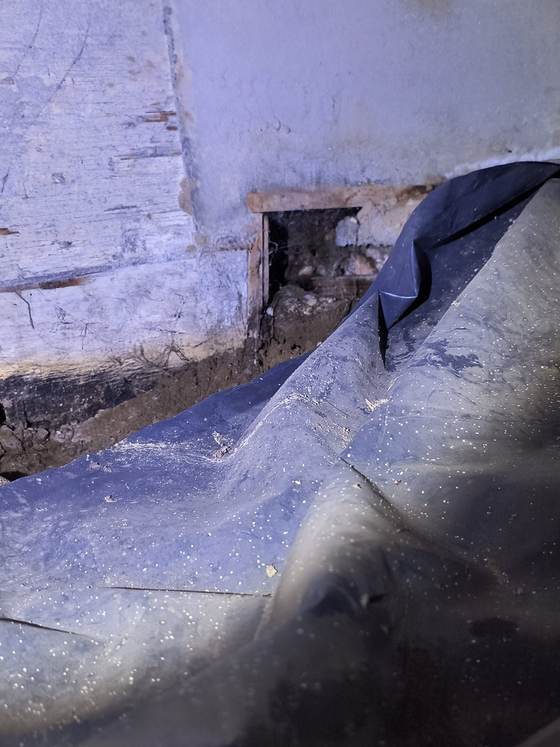
The mites disperse outward and downward from the nest, because they are looking for a warm-blooded animal and gravity and building cavities both run that way. A nest in a soffit produces biting in the room below it. A nest in a wall void produces biting against that wall.
The timeline is the strongest evidence you have
Almost nobody arrives at this diagnosis from the insect. They arrive at it from the sequence, and it is worth writing yours down before anybody visits.
The shape that points here:
Sudden onset. Biting starts within a week or two rather than building slowly over months. Bed bug populations grow; this one arrives.
One room, or one part of a building. Usually a bedroom, often upstairs, often against an exterior wall or under a roof space.
Nothing to explain it. No travel, no secondhand furniture, no visitor, no new mattress. This is the detail that makes people doubt themselves, and it is actually a clue.
A preceding rodent history at roughly two to four weeks’ distance. Noise in a ceiling that stopped. A trapping program that finished. A dead-animal odor that came and went. A neighbor’s rodent work in a shared building, which is the version people never think to mention.
Nothing found on the bed. No spotting, no shed skins, no eggs, no insects, after a proper search.
Any one of those on its own means little. All five together is a strong enough picture to justify going into an attic instead of taking a mattress apart again.
Describing the skin symptoms, not diagnosing them
We are not medically qualified and this section is written accordingly. What follows is what the extension and public health sources describe, and it stops there.
Texas A&M records that affected people experience dermatitis and itching. Penn State’s description of the sensation is that the bites of these mites feel like a slight sting — noticeable but not very painful. Minnesota Extension’s account of the closely related bird mites is that the bites are generally annoying, that reactions vary between people, and that some people find them more painful than others.
That is the extent of what can responsibly be said. In particular:
We will not tell you that a pattern of marks is characteristic. It is not, for this or for any biting arthropod, and the various patterns that circulate online for bed bugs are not diagnostic either.
We will not tell you what a specific mark is. That is a physician’s question and it stays one.
We will not tell you that a reaction proves the presence of anything. Skin reacts to a great many things and the search for a physical specimen is what settles the question.
Scratching has its own consequences. Broken skin can become infected, and that is a medical matter independent of what caused the itch.
When to see a doctor. If the reaction is severe, if it is spreading, if there are signs of infection, if there is any systemic symptom such as fever, or if the problem continues after the structural work is done and the source has been dealt with. Also, straightforwardly, if it is distressing you. A negative structural search is useful information for a clinician and it is worth taking with you.
Why bed bug treatment does nothing here
This is the practical center of the page and it is worth being explicit about the mechanism, because “it will not work” is less convincing than why.
Bed bug work is aimed at harborage in and around a bed. Mattress seams, box spring corners, frame joints, headboards, bedside furniture, carpet edges, baseboards. That is where bed bugs live, that is where they breed, and treating those places is exactly right for that insect. Washington’s Department of Health describes bed bugs being carried into homes on luggage, furniture, bedding and clothing, which is a description of an insect that arrives with your belongings and stays with them.
Rodent mites are not in any of that. They are in a nest, in a structural cavity, and the room is where they end up rather than where they live. Treating the bedroom removes the individuals present at that moment. The nest is untouched and keeps releasing more, so the marks resume within days and the household concludes that a treatment failed when in fact it was applied to the wrong location entirely.
Texas A&M states the underlying rule without hedging: control of rodent or bird mites cannot be achieved until the primary mite host is dealt with.
The financial version of this matters too. A bed bug job in this county begins with a paid verification visit precisely because a meaningful share of bed bug calls turn out not to be bed bugs. Where the search of a sleeping area comes back clear and the rodent history is there, that verification has done its job — it has redirected the question to the structure rather than authorizing a treatment.
It is self-limiting, but only after the nest is gone
There is genuinely good news in this and it deserves its own section, because people arrive at this page frightened that they have acquired something permanent.
These mites cannot sustain a population on people. Texas A&M is clear they are not truly parasitic on humans, and CDC’s manual gives the survival figure that follows from it: unfed female tropical rat mites live on the order of ten days once the host has been removed, against up to a couple of months when they are feeding regularly on a proper host.
So once the source is gone, this ends on its own. It is not a chronic condition, it is not something that spreads with your laundry to a new address, and it does not require you to throw anything away.
The qualification is the whole job: once the source is gone. A nest still sitting in a soffit is still a host site, still holds material, and can still be reoccupied by the next rodent that finds the same opening. The self-limiting part only starts when the nest does not exist any more.
Confirming it, which is worth doing properly
Collect something. Clear tape pressed onto a pale surface where you have felt something, or onto skin, or run along a windowsill or a headboard. Texas A&M notes these mites can be picked up with wet fingers or sticky tape. A specimen settles in a minute what a description circles around for half an hour.
Use a light surface. A sheet of white paper or a pale pillowcase left in place makes a moving speck visible in a way a patterned duvet never will.
Do not scrub the room first. The same rule that applies to a bed bug search applies here, and for the same reason.
Expect the identification to be genus-level at best. Texas A&M is honest that distinguishing between species of Ornithonyssus requires special expertise. For deciding what to do, it does not matter much: rodent mite or bird mite changes where the nest is, and both answers point at the structure rather than at the bed.
And accept that a negative is possible and still useful. These animals are small, mobile and not always present in the room when somebody looks. Not finding one does not close the question, which is why the rodent history and the structural search carry as much weight as the specimen does.
Where the nest actually is
The search follows the rodent rather than the mite, and in Whatcom County housing the shortlist is familiar.
Attic insulation, directly above the affected room, which is the most common finding by some distance.
A soffit or a boxed eave, particularly where a roof meets a wall at a change of pitch.
A wall void, entered from the crawlspace below or the attic above, with the nest sitting on a fire block or at a top plate.
A chimney chase or a plumbing chase, which frequently runs the full height of a building.
Behind or beneath a built-in cabinet run, over a ceiling in the story below.
A crawlspace, where the affected room is on the ground floor.
The tells that come with it are the ordinary rodent ones: droppings, an odor, gnawing, rub marks, shredded material, and a history of noise. If none of that exists anywhere in the building, the diagnosis is worth reconsidering rather than pursuing.
What the work involves
A structural search rather than a bedroom one. The attic, the soffits, the roofline, the wall voids and the crawlspace, looking for current or recent occupation. This is a different job from a bed bug search and it goes to different parts of the building.
Treat the nest site before disturbing it. Texas A&M’s professional guidance is to apply a pesticide spray or a desiccant dust to the nest area before the nest itself is removed, specifically to prevent the mites dispersing further into the structure as the material is taken out. Pulling a nest out of a soffit untreated is the one action most likely to make a bad fortnight worse.
Remove the nest and the contaminated material, and where insulation is involved, decide honestly whether it comes out or gets cleaned. That decision goes both ways and it is set out on our attic insulation and crawlspace restoration pages.
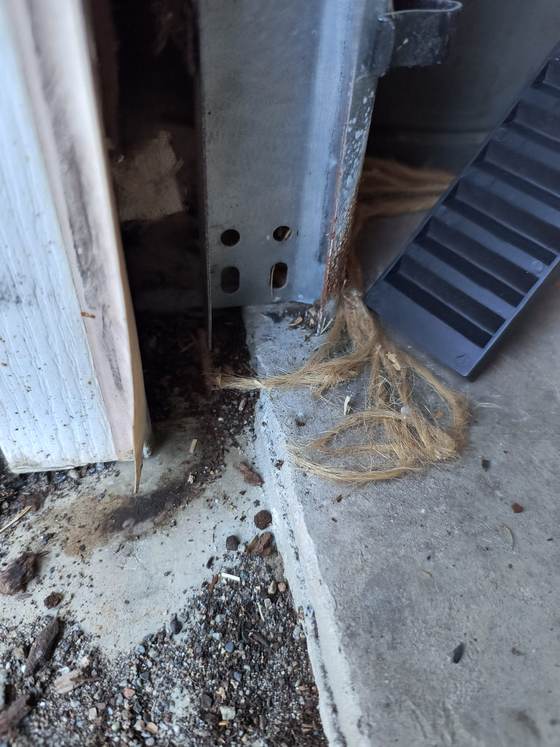
Close the opening. Otherwise the same cavity is reoccupied and you get the same fortnight again in a year.
Then, and only then, deal with the room. Minnesota Extension’s advice for the bird equivalent is physical removal first — vacuum them up or wipe them with a moist cloth — with residual product treated as a preventive measure around entry points rather than as the control. A room treatment after the source is gone is finishing work. Before it, it is decoration.
And say what the timeline looks like. Biting usually falls away over days to a couple of weeks once the source is out, not immediately, and reading that tail-off as failure is how good work gets abandoned halfway.
The disease question, kept in proportion
There is a real association here and it is worth stating accurately rather than either omitting it or leaning on it.
CDC identifies rickettsialpox, caused by Rickettsia akari, as transmitted through the bite of infected house mouse mites, Liponyssoides sanguineus, carried by the common house mouse. Cases occur occasionally throughout the United States, but CDC records them as most often reported from the northeastern United States and particularly from New York City. The illness is described as less severe than Rocky Mountain spotted fever, and CDC’s prevention advice for it is rodent control rather than anything aimed at the mite directly.
CDC’s older control manual fills in the history: the species is a proven vector of rickettsialpox in Massachusetts, Connecticut, New York and Pennsylvania, and the classic 1946 New York outbreak was resolved by fixing garbage disposal practice and controlling the house mouse population, which took the mites with it.
For the tropical rat mite, the same manual records severe rat-mite dermatitis worldwide, notes that laboratory work has shown it capable of transmitting rickettsialpox, and is careful to say that natural transmission to people has not been confirmed. An early suggestion of murine typhus transmission was not borne out by later experimental work.
So: a documented association, a northeastern and urban case pattern, and nothing resembling a Washington public health issue. If you have been bitten by mites in a Bellingham bedroom, the honest medical framing is that the itch is the problem. It is still worth mentioning the exposure to a doctor if you become unwell, because context is useful to a clinician and costs nothing to provide.
We are including this rather than leaving it out because a page that names the house mouse mite and says nothing about what it is best known for is not being straight with you.
When the nest is a bird’s
This is the boundary worth being clear about before anybody books anything.
Bird mites produce an identical household experience from a different source — Minnesota Extension notes they may enter homes to search for food when nests are on or in buildings, and that removing and disposing of empty nests is the control. But a bird nest in a soffit, a vent, a chimney or a wall is bird work, and birds are not something this company takes on. Several species carry legal protections with hard seasonal timing attached, and that is work for an operator set up to handle it properly.
If the search points at a bird nest rather than a rodent nest, we will say so, tell you what we think is going on, and point you toward somebody equipped for it rather than taking a job we should not take.
What else produces the same complaint
Bed bugs, obviously, and the search that rules them in or out is a real piece of work with definite evidence attached — spotting, shed skins, eggs. That is the bed bug page.
Fleas, where marks concentrate around ankles and lower legs and there is an animal in the picture, including an animal that recently stopped being in the picture.
Carpet beetle larvae, whose larval hairs and hemolymph cause an acquired allergic reaction — Penn State describes it as needing long exposure to sensitize, which is why one person in a household reacts and nobody else does — in some people with no bite occurring at all.
Scabies, which is a mite living in skin rather than in a building. It is entirely a medical matter, no pest control work affects it, and it is worth knowing it exists because it produces intense night-time itching with nothing ever found in the room.
Fiberglass and other fibers, which Penn State names directly, and which turn up more than people expect after insulation work.
Non-arthropod causes, medical and environmental, which are Penn State’s longest category and which nobody in this trade is qualified to assess.
What we will not do
Treat a bedroom on suspicion. Applying product around where somebody sleeps without an established cause is not a neutral act, and if the cause is not an arthropod it changes nothing except the bill.
Tell you what your skin condition is. We will tell you what is and is not in your building, which is the half of the question a doctor cannot answer.
Sell a bed bug program to a rodent mite problem, which is the specific failure this page exists to prevent.
Promise an immediate end. The source has to come out first, and the tail-off runs for days to a couple of weeks after that.
Where to start
Tell us the sequence — when the biting started, which room, who is affected, and what was happening in the building in the month before. The rodent history is the part people leave out because they think it was resolved, and it is frequently the most important sentence in the conversation.
Collect anything you can on clear tape and leave the room broadly as it is.
Then we look at the structure rather than the bed. The related pages are rodent control for the source, and bites but no bugs found for the wider question of what else produces marks with nothing to show for it.
Frequently asked questions
Why did the biting start right after the rodents were dealt with?
Because that is the trigger rather than a coincidence. Texas A&M AgriLife records that these infestations are sometimes first noticed following extermination, or after the natural hosts have died or left the structure. The mites lose their host and disperse looking for another.
Can the marks on my skin tell me whether this is mites or bed bugs?
No. A mark on skin is a reaction rather than an identification, which is the same principle set out on our bed bug page. Penn State's guidance is explicit that you should not apply anything until you have determined what is actually causing the condition.
Will a bed bug treatment fix this?
No, and it is an expensive way to learn that. Bed bug work is aimed at harborage in and around a bed. Rodent mites are arriving from a nest elsewhere in the structure, and while that nest is there the source keeps producing them.
Can you even see them?
Barely. Texas A&M describes rat mites as about the size of the period at the end of a printed sentence. They can be lifted on clear tape or a damp fingertip, but telling one species from another takes a specialist and a microscope.
Do rodent mites live on people or in bedding?
They do not establish on people. Texas A&M notes they are not truly parasitic on humans, which means they bite while searching for a proper host but cannot maintain a population on you, in your hair or in your laundry.
Is there a disease risk from being bitten?
Small and specific. CDC identifies the house mouse mite as the vector of rickettsialpox, caused by Rickettsia akari, and reports that cases occur occasionally across the United States but are most often reported from the northeast, particularly New York City.
How long does it take to settle once the nest is out?
Usually weeks rather than months. Without a host the mites cannot sustain a population, and CDC's control manual records unfed female rat mites surviving on the order of ten days once the host is gone.
Should I see a doctor about this?
If the skin reaction is severe, spreading, becoming infected or continuing after the structural work is finished, yes. We can establish whether there is an arthropod in your building. What a mark on somebody's skin actually is remains a medical question.
Sources
- Penn State Extension — Is Something Biting Me? — read September 2, 2026
- Texas A&M AgriLife Extension, Citybugs — Biting Mites — read September 2, 2026
- CDC — Mites of Public Health Importance and Their Control — read September 2, 2026
- CDC — About Other Spotted Fever Rickettsioses (rickettsialpox) — read September 2, 2026
- University of Minnesota Extension — Bird and rodent mites — read September 2, 2026
- Washington State Department of Health — Bed Bugs — read September 2, 2026
Rules change. This page is scheduled for review against its sources by September 1, 2027. If you are reading it after that date and something looks out of step with the current rule, the rule is right and we are wrong — please tell us.
Pest problem in Whatcom County?
Family-owned, no long-term contracts, and every treatment is backed by our 100% Service Guarantee.
Most calls in Whatcom County are out within 1–2 days, about 3 during the late-summer peak.
Last updated