
Pest Control in Burlington, Washington
Burlington is the commercial heart of Skagit County, and most of our work here is commercial. Large-format retail, distribution and food service with big flat roofs, constant dock traffic and yard margins that feed the population. Around it, newer housing built on former farm ground.
Call 360-410-2199 Request a free inspection
Burlington on the map
A commercial town
Burlington is where Skagit County shops, and the built environment reflects it. Large-format retail, distribution and warehousing, restaurants and drive-through food service, hotels, and the road and parking infrastructure that ties them together, concentrated around the freeway interchange.
That makes our Burlington work predominantly commercial, and commercial pest control is a genuinely different discipline from residential. It runs on documentation, on realistic goals for buildings that cannot be sealed, and on a willingness to tell a client that the reason their program is not working has nothing to do with the program.
The buildings, and why they behave as they do
Large-format commercial construction has a consistent set of features and each one is a pest consideration.
Dock doors and receiving. Open for much of the working day out of operational necessity, with a leveling plate, a gap under the seal when a trailer is not docked, and constant traffic across the threshold. This is the single largest opening in the building and it cannot be closed.
Flat and low-slope roofs. Large expanses of membrane with parapets, mechanical curbs, drains and roof penetrations for every service. Ponding water where drainage is imperfect. Roof-level access to soffits and mechanical spaces.
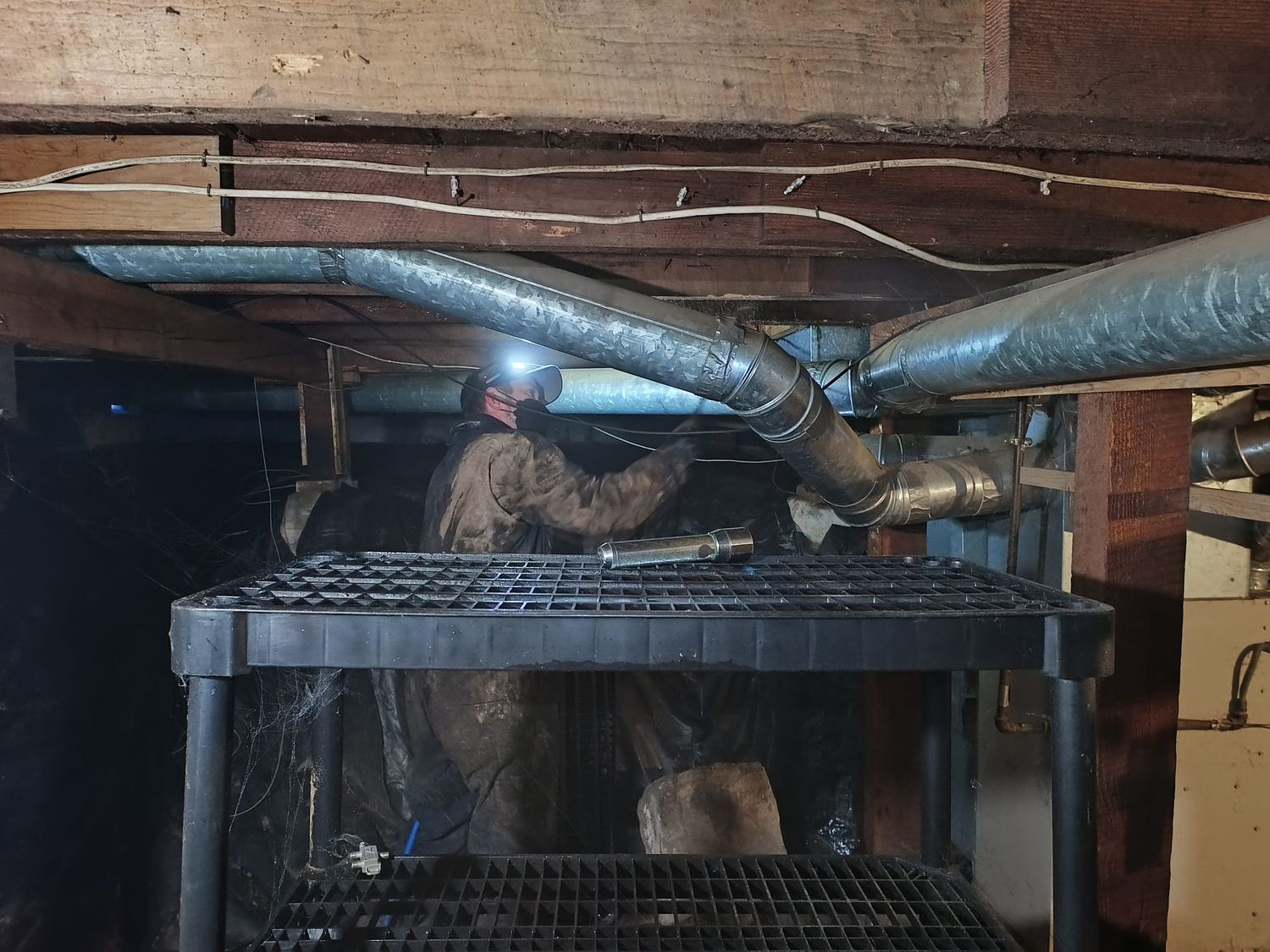
Suspended ceilings and service voids. A continuous concealed space above the sales or work floor, running the full footprint, carrying every service. Once something is up there it has unimpeded access to the whole building and nobody looks until a tile stains.
Waste enclosures. Usually a masonry corral with gates that no longer close against the ground, compactors with a leaking seal, and cardboard staged outside because the baler is full. This is very often the real driver of everything else, and it is the thing most likely to be someone else’s contract to fix.
Landscaping and yard margins. Islands, berms, the vegetated strip along a fence line, the untended ground behind a building. All of it is harborage, all of it is immediately adjacent to the structure, and almost none of it is anybody’s explicit responsibility.
The exterior is usually the answer
The most useful thing we bring to a Burlington commercial account is a habit of looking outward before looking in.
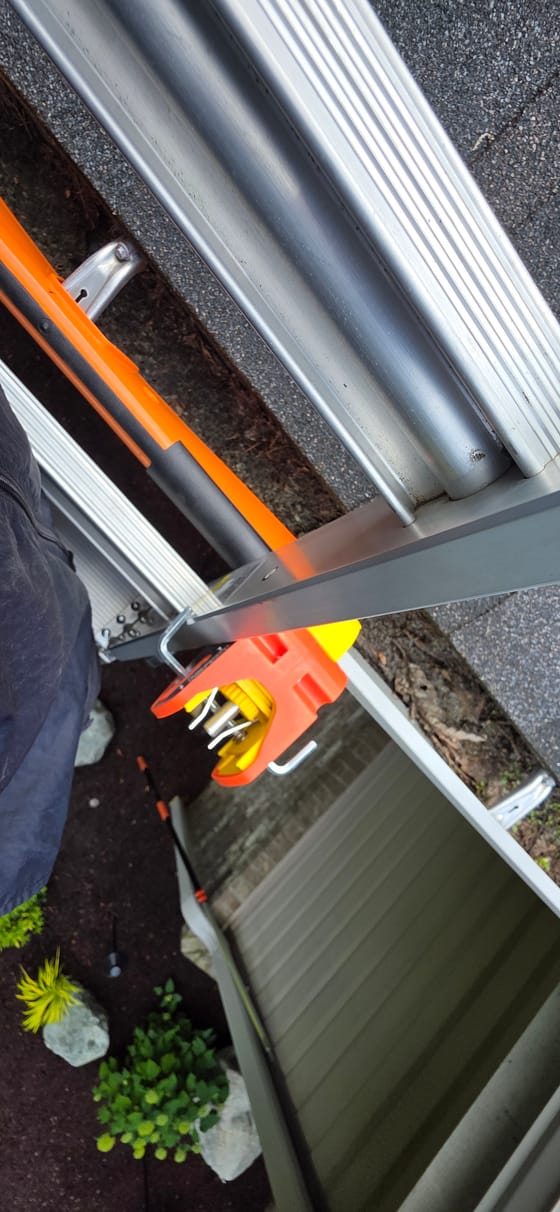
An interior rodent sighting on a retail floor is nearly always the visible end of an exterior population. Something is supporting that population — a waste enclosure that cannot be closed, a landscaped bed against a warm wall, a drainage low point that never dries, an adjacent vacant lot, a neighboring tenant’s receiving practice. Placing more devices inside without changing any of that is an indefinite cost with no end date. That is the approach the UC Statewide IPM Program takes with rats as well — the harborage and the food come out first, and devices come after.
So a proper first visit here means walking the full perimeter and the yard, looking at the waste situation honestly, checking the dock aprons and thresholds and the exterior of every penetration, and reading the landscaping as habitat. Then the interior, the ceiling void and the receiving area.
You will get told which findings are ours to fix and which are a housekeeping, landscaping or building-maintenance issue on your side. Some clients do not enjoy that conversation. The ones who act on it stop paying us to manage a symptom.
Stored-product insects
A distribution town sees these constantly, and they are routinely misdiagnosed as a building problem when they are a product problem.
Beetles and moths that infest grain, flour, seed, pet food, dried goods and animal feed arrive inside the product. That single fact changes the entire response: treating a building perimeter for an insect that came in on a pallet accomplishes nothing at all, and a great deal of money gets spent that way.
The work is finding the source lot. That means tracing back through stock, starting with whatever has been sitting longest and furthest back, checking spillage in racking seams, under pallets and in the corners of a storage area, and being systematic rather than hopeful. In most warehouses the source is a single damaged sack or a spill in a corner that has been quietly producing adults for months.
After that it is stock rotation, sealed containers where practical, cleaning residue out of racking and floor seams, and monitoring long enough to confirm it is genuinely finished. On a commercial account we would rather write that up than sell a treatment schedule that leaves the source sitting where it was.
Food service on the corridor
Restaurants and drive-throughs on a busy retail corridor have their own shape.
Volume and hours are the first factor. High throughput, long service days and staff turnover mean housekeeping standards vary more than in a smaller operation, and the gap between the closing checklist and what actually happens at eleven at night is where problems start.
Drive-through service adds a specific issue: a service window that opens repeatedly all day, usually into a warm kitchen, with a queue of vehicles and frequently a bin nearby. Flies are the obvious consequence and they are won on breeding sites and waste timing rather than on adults.
Grease is the third. Interceptors, the ground around them, and the drain lines that feed them support drain flies and cockroaches, and no amount of surface treatment substitutes for cleaning them properly.
German cockroaches are the species that matters in a commercial kitchen. They are indoor and human-associated, they travel in cardboard, appliances and equipment, and they breed faster than an unplanned treatment schedule can knock back. Getting on top of them needs a coordinated pass, sealed harborage in equipment voids, and follow-up on an interval that matches the life cycle rather than the invoice.
Hotels and lodging
The interchange supports a cluster of lodging, and that means bed bugs.
A bed bug problem in lodging is not a hygiene failure and it is not a reflection on housekeeping. It is a matter of what arrives in luggage, and any property that turns rooms over regularly is exposed however well it is kept. The operators who handle it best accept that and build detection into the routine; the ones who assume it cannot happen to them find out late.
Early detection is everything. Found while it is still confined to one room, it stays a one-room job. The same problem discovered three months later, after housekeeping carts and guests have moved between floors, is a property-wide treatment at several times the cost.
Bed bugs are the one service where our assessment is not free — there is a verification fee, credited against treatment if you proceed. Everything else we handle costs nothing to have us look at.
The residential side
Away from the corridor, Burlington is mostly newer housing, and it is a straightforward job compared to the commercial work.
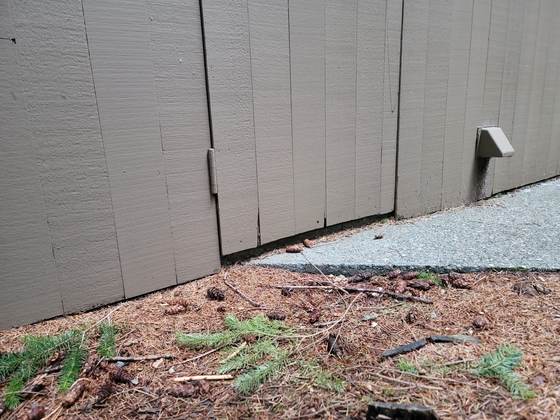
Modern envelopes here are genuinely good until a trade puts a hole in one. The recurring failures are the same five we find everywhere in newer construction: the dryer vent at the rim joist, the hose bib and irrigation supply, the heat pump line set with its crescent gap, the clustered electrical entry, and the garage door bottom seal on a settled slab. Each closed with expanding foam, which stops drafts and does not stop a rodent.
What sharpens it here is what sits behind the fence. Much of this housing was built on former farm ground and open agricultural land is still adjacent. When a field is cut the resident population loses its cover in an afternoon; when the autumn rain floods the low ground it happens again. Harvest drives rodent calls in Burlington as reliably as rainfall does.
Wasps are the other residential constant. Newer construction offers vented ridges, continuous soffit venting and generous eave overhangs — sheltered cavities with easy access — and landscaping that has not matured enough to compete for the space. Yellowjackets also nest in the ground along lawn edges backing onto open ground, which describes a lot of properties here.
On the agricultural side of the fence, the county’s extension work is run out of WSU Extension in Skagit County, which publishes for growers and homeowners alike.
Ant control in Burlington, and the damp list
Odorous house ants and pavement ants come in along the slab edge, the sill and service penetrations, drawn by whatever is available in a kitchen. In the newer subdivisions an irrigation system keeps the bed against the house permanently damp and the bark mulch never dries, which is most of the reason they are there.
Moisture ants are a different message. They colonize wood that is already wet, so finding them means finding a water problem, and treating without correcting it produces a new colony in the same timber.
Carpenter ants take the middle ground and keep a parent colony outdoors. On newer lots that parent is frequently a landscape timber, a fence post or a stump left from clearing.
Flies, and where they actually come from
Fly pressure on a commercial site is won or lost on breeding sites rather than on adults, and the sites are usually a short and predictable list.
House flies breed in moist decaying organic material. On a retail or food corridor that means the residue in and under a waste enclosure, the ground around a compactor, a grease interceptor and the soil near it, spillage in a receiving area that gets swept rather than washed, and any drainage low point that never dries out.
Drain flies are a specific and commonly misread case. They breed in the organic film lining drains, floor sinks and the underside of drain covers, so surface spraying does nothing and the population continues. Cleaning the film out mechanically is the only thing that ends it, and where a client does that the problem stops within a fortnight.
Both develop fast enough in warm weather that a site missed on Monday is producing adults before the weekend. That short cycle is why a fly program built on adult knockdown alone quietly fails every summer, and why we spend the first visit looking for sources rather than spraying.
Roof and mechanical spaces
Worth its own note because on large-format buildings this is where problems originate and nobody looks.
A flat roof carries every mechanical service, and each one is a penetration. Curbs, conduit entries, refrigeration lines, exhaust fans and drainage all pass through the membrane, and the sealing around them degrades on a much shorter cycle than the roof itself. Ponding water where drainage is imperfect keeps those areas wet and accelerates it.
Once something is through the roof plane it is into the ceiling void, which on these buildings runs the full footprint and connects everything. That is how a problem that started at a rooftop unit shows up as droppings above a sales floor two hundred feet away, and why chasing it at the point of sighting rarely resolves anything.
Roof-level inspection is part of a proper commercial program here, and it is the part most often skipped.
Hotels, and why detection beats reaction
The interchange supports a cluster of lodging and it is worth being specific about how that work actually goes.
Detection is the whole game. A bed bug problem caught in one room while it is still one room is a contained job with a predictable cost and no reputational consequence. The same problem three months later, after housekeeping carts and guests have circulated, is a floor or property-wide treatment at several times the price, with rooms out of service during the season you most need them.
That means the useful investment is not a bigger treatment, it is a routine that finds things early: briefing housekeeping on what to look for and making it safe to report, encasements on mattresses and box springs as standard because they both reduce establishment and make evidence obvious, and inspecting the rooms adjacent to any confirmed one rather than only the reported room.
Guests very often do not report. They leave a review instead. So the operators who do best are the ones who assume exposure is normal for any property with turnover and build detection into the week, rather than treating each incident as an anomaly.
Rodent and mouse control on the residential edges
One thing worth spelling out for anyone living on the newer edges of town.
The population outside your fence is permanent and it is not going to be reduced. Open agricultural ground supports it regardless of anything done to your property, and that is simply what living beside farmland means.
What is achievable is making your building genuinely unattractive and genuinely sealed. That is a finite piece of work with an end point — the penetrations, the vents, the garage seal, the grade against the siding, the landscaping held off the foundation — and once it is done properly it stays done for years.
The timing that matters is August. A house sealed before the autumn movement does not have the interior problem at all. A house sealed in December has an interior problem plus whatever is now sealed inside with you, and the order of operations gets considerably more complicated.
What we will not sell you
Anything with feathers or fur. Property managers ask about roof-nesting birds and about animals in a ceiling void often enough that it is worth stating: we do pest control and exclusion, and that scope stops at birds, bats, squirrels and other wildlife. We will tell you on the phone and hand you a better number than ours.
A sealed warehouse. Repeating it because it is the promise most often made on this corridor. A building with dock doors open through the working day cannot be made rodent-proof, and quoting as though it could be is how a client ends up disappointed by a program that was never capable of the result.
More devices in place of a fix. Where the driver is a waste enclosure that will not close, a landscaped bed against a warm wall or an untended yard margin, adding interior stations is an indefinite cost. We would rather write the finding and lose the upsell.
Perimeter treatment for stored-product insects. They came in on a pallet. Treating the outside of the building for them is money spent on the wrong problem, and it is one of the most common misdiagnoses we see in distribution.
Mole trapping. The methods that work are restrictively regulated in Washington and most of what is sold to property managers does not work.
Ants on commercial landscaping
Worth a note because it is the most common insect call we get from property managers on this corridor, and the cause is nearly always the same.
Commercial landscaping is irrigated, mulched and planted tight against warm building walls. That combination keeps the bed against the structure permanently damp and the bark never dries, which is close to ideal for odorous house ants and pavement ants. They then enter along the slab edge, through the sill, or via a service penetration, and appear inside a break room or a customer area.
The durable corrections are landscaping decisions rather than pest ones: pulling mulch back off the foundation, adjusting irrigation heads that spray the building, and leaving a dry band at the base of the wall. Where a client makes those changes the treatment holds. Where they do not, we are back next spring.
How we work in Burlington
Burlington sits on scheduled route days rather than same-day availability. For a commercial account the schedule is built around your operating hours and receiving times, which usually matters more than which calendar day it is.
Commercial work here is a written program rather than a series of visits: mapped and numbered placements, records that a third party can follow, realistic goals stated up front for buildings that cannot be sealed, and findings that include the housekeeping and maintenance items rather than quietly routing around them.
Residential work starts outside with the penetrations, the grade, the vents and what the ground behind the property is doing, then underneath, then inside.
Either way you get a plain account of what is happening and why, what needs doing now, what can wait, and which items belong to a builder, a landscaper or a waste contractor rather than to us. There is no charge to come and quote, bed bugs aside, and no contract length attached to any of it.
Frequently asked questions
Can a warehouse actually be made rodent-proof?
No, and anyone promising it is either inexperienced or selling. A building with dock doors open through the working day cannot be sealed. What we quote is a defended perimeter, controlled interior placements and honest attention to the yard margins and housekeeping that are actually feeding the population.
Why do we keep getting insects in stored product?
Because they arrived inside the product rather than through a door. Beetles and moths in grain, flour, seed, pet food and dried goods come in on a pallet, so treating a building perimeter accomplishes nothing. The work is tracing back to the source lot.
Do you provide documentation for audits?
Yes, and for most Burlington commercial accounts that is half the value. Devices mapped and numbered, service records that follow a logical sequence, and findings written plainly — including the housekeeping ones we could quietly service around instead.
What drives rodent pressure on a retail site?
Usually something outside the building. Landscaped islands, vegetated margins, the strip behind a fence line nobody manages, and waste enclosures that cannot be closed properly. The interior problem is generally a symptom of the exterior one.
Do you work on residential in Burlington too?
Yes. The newer subdivisions have tight envelopes with a handful of unsealed service penetrations, and open ground behind them that empties at harvest. It is a different job from the commercial corridor and usually a straightforward one.
How quickly can you get here?
Burlington sits on scheduled route days rather than same-day availability, because it is a real drive from Bellingham. For a commercial account we build the schedule around your operating hours, which usually matters more than the calendar day does.
Is there a charge to come and quote?
No, for every pest except bed bugs, which carry a verification fee credited against treatment if you proceed. That applies to commercial buildings as well — we will come, walk it properly and put a scope in writing.
Guides
Pest problem in Burlington?
Family-owned, no long-term contracts, and every treatment is backed by our 100% Service Guarantee.
Most calls in Whatcom County are out within 1–2 days, about 3 during the late-summer peak.
Last updated