
Pest Control in Ferndale, Washington
Ferndale is the fastest-changing part of our territory, and most of its new housing stands on ground that was farmland a decade ago. The field mice and rats did not leave when the fields did. We work the whole city, from the Main Street core out to Cherry Point.
Call 360-410-2199 Request a free inspection
Ferndale on the map
A city built on top of its own pest problem
Ferndale has grown faster than anywhere else in Whatcom County, and it has grown outward across ground that was in agricultural production within living memory. That single fact explains most of what we get called about here.
When a field becomes a subdivision, the voles, deer mice, house mice and Norway rats that were living in that field do not relocate to another county. They lose their cover and their food source in the same summer, and then eighty new buildings appear with warm cavities, landscaped beds, irrigation, garbage and pet food. From a rodent’s point of view a new Ferndale subdivision is an upgrade, and the first autumn after a development finishes is reliably the busiest one that neighborhood will ever have.
Homeowners find this hard to believe, and reasonably so. People expect a new house to be sealed. New houses here genuinely are tighter than the prewar stock in Bellingham — better sheathing, continuous housewrap, sealed sill plates, and in the newer subdivisions a conditioned crawlspace rather than a vented one. But tightness is not the same as sealed, and the failure points are boringly consistent.
Where a new house actually leaks
The envelope on a modern Ferndale home is usually good until a trade puts a hole in it. Every penetration is drilled by a subcontractor working at speed, and the standard closure is a bead of expanding foam. Foam stops drafts. It does not stop a rodent, which will chew through it in an evening.
The recurring five, in rough order of how often we find them:
The dryer vent, where the duct passes the rim joist and where the exterior flap has warped or the louver has broken. The hose bib and the irrigation supply, both drilled generously to allow for the escutcheon. The heat pump or air conditioning line set, which enters at an angle and leaves a crescent gap at the top of the hole. The electrical service and low-voltage entries, frequently in a cluster with a single oversized opening behind the panel. And the gap at the garage door bottom seal, particularly on a slab that has settled slightly, which is a wide-open door for a mouse and is on almost every house we look at.
Add to those the crawlspace or foundation vents, where the factory screen is often a light aluminum mesh that a rat opens with no real effort, and the attic-to-garage transition, which in a lot of production framing has an unsealed top plate.
None of this is a defect in the building. It is a set of small, cheap oversights that only matter because they are on the outside of a warm dry box in a county where the rain drives everything indoors in October. Whatcom County’s forecasts come from the National Weather Service office in Seattle, and the week their rain arrives is the week our phone starts.
The old core is a different city
Main Street and the streets immediately around it are not the Ferndale of the new subdivisions. This is the original town, with prewar and postwar stock, smaller lots, mature trees and a set of commercial buildings on shared walls.
Here the problems look like the ones we deal with in Bellingham’s older neighborhoods: short crawlspaces with dirt floors, foundation vents that rusted out decades ago, framing that has taken water at some point and now hosts moisture ants, and commercial buildings where a rodent population is genuinely shared between tenants who each assume it is somebody else’s problem.
Older Ferndale houses also carry the region’s other classic issue, which is that the ground drains poorly and always has. Marine clay under a shallow crawlspace means standing water in winter, and standing water under a house means the whole moisture-driven cast: moisture ants, sowbugs, millipedes, springtails and, over time, decay in the joists that turns a pest call into a structural conversation.
The river, and why it moves the calendar
The Nooksack runs along the north and east side of the city and Ferndale sits partly in its floodplain. The river has flooded seriously within recent memory and the low ground saturates well ahead of the rest of the county.
For us that means the autumn rodent movement in the river-adjacent parts of Ferndale runs two to three weeks earlier than it does in town. When the low ground goes under, everything living in it moves at once and it moves uphill toward buildings. Properties along the corridor, out toward the Pioneer Park side and down the river road, see the first activity of the season while Bellingham is still enjoying September.
The corridor is also continuous habitat. Blackberry, cottonwood, brush and undisturbed bank running for miles gives rodents cover from one end of the city to the other with no break. You cannot treat a corridor. What you can do is make the specific building unattractive and impenetrable, and accept that the population outside the fence is permanent.
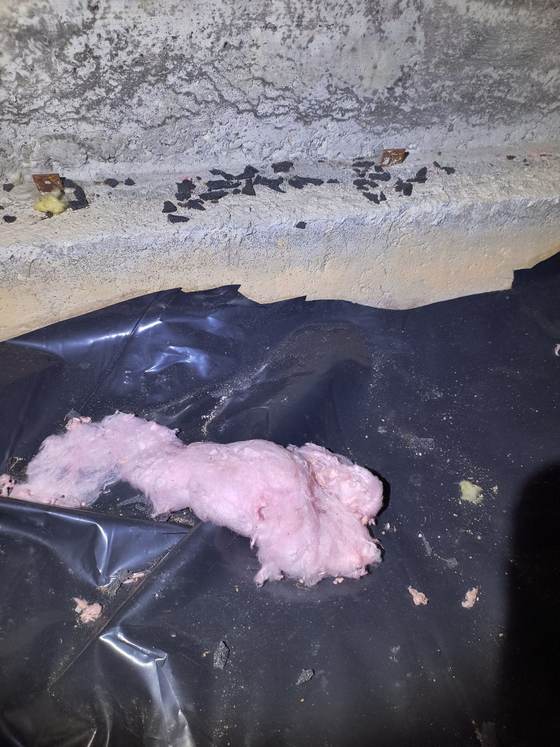
Flooding leaves its own aftermath. A crawlspace that took water needs the insulation assessed and usually replaced, the vapour barrier redone and the space dried before anything else is worth doing, because wet fiberglass is both a rodent nesting material and a decay accelerator. We would rather tell somebody that than sell them a quarterly service on top of a wet crawl.
Farms, acreage and the properties in between
A great deal of Ferndale is neither subdivision nor downtown. It is acreage: five, ten or forty acres with a house, a shop, a barn, a couple of outbuildings and possibly livestock.
These properties need a different conversation. A shop building with a roll-up door and a gravel floor is never going to be rodent-proof, and pretending otherwise wastes the owner’s money. The realistic goal is a defended perimeter around the buildings that matter — the house, the feed room, anything with wiring worth protecting — and a monitored, contained program in the buildings that cannot be sealed.
Feed is the pivot. A bag of grain in an open shed supports a rodent population indefinitely, and no program overcomes an unlimited food source. Metal bins with tight lids, spillage cleaned rather than swept aside, and feed stored away from the wall so runways are visible are worth more than anything we can apply. Owners who do that see results quickly. Owners who do not, do not, and we tell them so at the first visit rather than at the fourth.
Livestock changes what can be used and where. Anything placed has to be inaccessible to animals and working dogs, which usually means tamper-resistant stations anchored on the exterior and mechanical control inside. Horses, poultry and cattle each add their own constraints and we work to them.
Cherry Point and the industrial corridor
West of the city, the Cherry Point industrial area is a significant employer and a genuinely different class of pest work. Refining, chemical and heavy industrial sites operate under safety and contractor management systems that govern everything from where a technician may park to what may be placed within a process area.
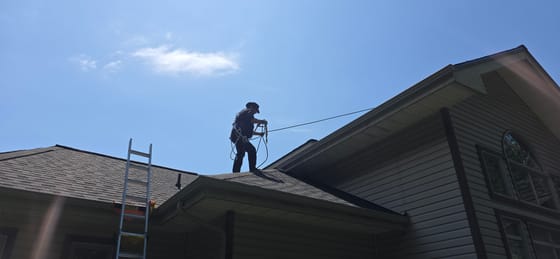
Industrial pest work is documentation work. Devices mapped and numbered. Service records that a third-party auditor can follow. Placements that do not conflict with the site’s own hazard controls. Exclusion specified to survive weather that would strip an ordinary installation inside two winters.
We approach these accounts as a program with a written scope rather than as a series of visits, and where the right answer is a housekeeping or sanitation correction on the site’s side, we put it in the report rather than quietly selling more service around it.
Manufactured and mobile homes
Ferndale and the surrounding area have a large stock of manufactured homes, both in parks and on private lots, and they are their own category of pest problem with almost nothing in common with stick-built housing.
The critical feature is the belly. Underneath the floor of a manufactured home there is a sealed cavity containing the insulation and, in most cases, the ductwork, closed off by a fabric or plastic membrane usually called the belly wrap or bottom board. That membrane is thin, it is punctured by every plumber and technician who has ever worked under the home, and once a rodent is through it the animal is inside a warm, dry, fully insulated cavity that runs the entire length of the building with no interior access whatsoever.
From in there, rodents chew the flexible ductwork, nest in the insulation, and come up around the plumbing penetrations at the tub, the toilet flange and the kitchen sink. Residents report mice appearing in a kitchen cabinet and cannot work out where they are coming from, because the answer is a hole in a membrane they have never seen.
Skirting is the other half of it. Vinyl skirting is not a barrier — it is a visual screen. It gets damaged by mowers and weather, it is rarely fastened continuously at the bottom, and there is almost always a gap where it meets the ground on a settled lot or at the point where a utility line crosses. Behind it sits the entire underside of the home, undefended.
Doing this properly means going under, assessing the bottom board, patching it where it is repairable rather than papering over it, sealing the plumbing and duct penetrations from below, and re-establishing the skirting as an actual barrier with a buried or staked bottom edge. It is more work than most people expect and it is the only thing that holds. Baiting a manufactured home while the belly is open produces the same call again next October.
Park settings add the shared-population problem familiar from apartments. If the homes on either side are open, one sealed home helps that household and does not reduce the population in the park. Where a park manager wants a real result, the work has to be planned at the park level.
The Ferndale year
The seasons drive our schedule here more sharply than they do in the city, partly because so much of the city sits on or near open ground.
Late winter brings the overwintering insects out of the walls on the first mild afternoon — cluster flies and stink bugs at south-facing windows, which is what generates most of our February phone calls in the rural parts of town.
Spring is ants. Odorous house ants and pavement ants become active as soon as the ground warms, and in the irrigated subdivisions they turn up indoors before anyone has seen them outdoors.
Early summer is wasp foundation. A queen starts a nest somewhere sheltered in April or May, and the difference between dealing with it then and dealing with it in August is the difference between a five-minute job and a defensive colony of several thousand. This is the least glamorous and most useful work we do.
High summer is exclusion season. Dry ground, dry crawlspaces and easy exterior access. Everything preventive that is going to get done should get done in July and August, and on a Ferndale property that usually means the penetrations, the vents, the garage seal and the skirting.
Autumn is the reckoning. The rain returns, the floodplain saturates, the fields are harvested and cut, and everything living in the open ground moves toward buildings within a few weeks. Field harvest matters here in a way it does not in Bellingham — cutting a field removes cover overnight and the displaced population goes somewhere, and what it goes to is the nearest structure.
The farming calendar that drives all of that is documented locally by WSU Extension’s Whatcom County office, which works with the growers on this ground.
Winter is interior work, damage assessment and crawlspace remediation: soiled insulation, chewed ducting, the smell in a bedroom that turns out to be something dead in a wall cavity.
What we deal with most in Ferndale
Rodents. Norway rats and house mice, driven by farmland conversion, the river corridor and the seasonal rain. This is more than half our Ferndale work and the answer is almost always exclusion plus a defended perimeter rather than interior baiting.
Wasps and hornets. Newer construction here generates a lot of eave, soffit and vented-ridge nests. The overhangs are generous, the venting is continuous and the landscaping has not matured enough to compete for the space. Yellowjackets also nest heavily in the ground along the edges of lawns that back onto field or brush, which describes a great many Ferndale properties.
Ants. Along irrigated foundations in the newer neighborhoods, where a sprinkler system keeps the bed against the house permanently damp and the bark mulch never dries. Odorous house ants and pavement ants come in through the slab edge and the sill; carpenter ants are more of a problem in the older stock and the wooded lots east of town.
Cluster flies and stink bugs. Rural and edge-of-field properties get the overwintering insects hard, in south and west-facing walls, and the residents find them on the first warm afternoon in February when everything else is quiet.
Stored-product insects. Beetles and moths in feed, seed and dried goods on the acreage. They arrive inside the product rather than through a door, so the work is finding the source lot rather than treating a perimeter.
Two things we will not sell you
Moles come up constantly on Ferndale acreage and open lots, and we do not do mole trapping. Washington’s rules on the methods that actually work are restrictive, the alternatives sold to homeowners are largely theatre, and we would rather send you to somebody who specializes in it than take money for a result we cannot stand behind.
We also do not offer scent-detection dog work for bed bugs. It is a real discipline with real handlers and it is not something we are set up to provide, so if that is what a situation calls for we will say so and point you toward it.
Being clear about the edges of what we do is part of the reason people keep calling us back for the things we are good at.
How we handle a Ferndale call
Nine miles of freeway from our shop means Ferndale is genuinely quick for us, and that is not a small thing when somebody has a nest by their front door or is hearing something in the ceiling at two in the morning. Most calls here are handled within the week.
The visit starts on the outside. We walk the full perimeter looking at every penetration, the grade, the vents, the garage seal and the vegetation contact, because on a Ferndale house that walk usually finds the entire problem. Then the crawlspace or the attic, depending on what is being reported. Then the interior.
You get a plain account of what we found and why it is happening, what should be done now, what can wait, and which items are a builder or contractor job rather than ours. If a subdivision house needs six penetrations sealed and nothing else, that is what we will tell you, and we will not attach a treatment plan to it to make the ticket bigger.
Inspections are free for every pest we handle here, bed bugs excepted — those carry a verification fee, credited against treatment if you decide to proceed. There is no long-term contract, and there is no multi-year agreement to get out of if you would rather not continue.
Frequently asked questions
Why do brand-new Ferndale houses get rodents?
Because the subdivision was built on farmland and the rodent population that lived in that field is still there. A new house is tighter than an old one, but it still has a dryer vent, a hose bib and a service penetration, and those are usually foamed rather than properly sealed.
How far is Ferndale from your shop?
About nine miles up the freeway from our base on the Guide Meridian, which makes Ferndale one of the quickest addresses in the county for us to reach. The usual wait is a day or two, stretching to about three in the autumn, and urgent wasp or rodent work is often sooner.
Do you work with Cherry Point industrial sites?
We handle commercial and industrial accounts across the corridor, which is documented work run to a plan rather than a single visit. Industrial sites need placements that survive a contractor audit and a service record that holds up, and we build the program around the site's own safety requirements.
Does the Nooksack River affect pest pressure in Ferndale?
Considerably. The river corridor is continuous cover and the floodplain saturates early, which pushes rodents out of the low ground and toward houses ahead of the rest of the county. Properties near the river typically see their autumn rodent movement two or three weeks before town does.
Are wasps worse in new construction?
In our experience yes, in one specific way. Vented ridges, continuous soffit venting and generous eave overhangs give yellowjackets and paper wasps sheltered cavities with easy access, and new landscaping has not yet grown in enough to compete. Newer Ferndale subdivisions generate a lot of eave and soffit nests.
Do you cover the farms and acreage around Ferndale?
Yes. A working property is a different job from a house — outbuildings, feed storage, livestock access and equipment sheds all change what can be placed and where. We build farm programs around keeping the population outside the building envelope rather than promising a rodent-free barn.
Is the inspection free in Ferndale?
Free for everything we handle, with the single exception of bed bugs, which carry a verification fee that is credited back against treatment if you proceed. That includes crawlspace and attic checks, which is usually where the useful information turns out to be.
Guides
From the blog
Pest problem in Ferndale?
Family-owned, no long-term contracts, and every treatment is backed by our 100% Service Guarantee.
Most calls in Whatcom County are out within 1–2 days, about 3 during the late-summer peak.
Last updated