
Pest Control in Sedro-Woolley, Washington
Sedro-Woolley is an old mill town and the building stock tells you so. Dense prewar and early postwar housing on shallow crawlspaces, a downtown of connected commercial buildings, the Skagit corridor along one side and the forest edge beginning on the other.
Call 360-410-2199 Request a free inspection
Sedro-Woolley on the map
A mill town, and what that left behind
Sedro-Woolley grew as a mill and railroad town, and the housing stock reflects exactly that history. A dense core of worker housing built for people employed within walking distance, laid out on small lots, much of it going up between roughly 1900 and 1950, with a compact commercial downtown at the center and the valley opening out around it.
That is a specific inheritance from our side of the work, and it makes this town behave much more like Bellingham’s prewar neighborhoods than like the newer parts of Skagit County a few miles west.
The other two facts that matter are geographic. The Skagit runs along one side of town, and the valley begins climbing toward the Cascades on the other. So a single small town sits between a major river corridor and a forest edge, and gets pressure off both.
The housing, and how it fails
Older Sedro-Woolley housing shares a set of characteristics that were entirely sensible when they were built and are a straightforward invitation now.
Shallow crawlspaces over bare earth. Very often no vapor barrier at all, or one that was laid decades ago and has since been pushed aside by whoever last ran a pipe. Bare soil puts ground moisture directly into the space and into the joists above it, continuously, in a climate that supplies plenty of it.
Post-and-pier foundations and early stem walls. Frequently with skirting rather than a continuous closed perimeter, and access hatches that no longer seat properly.
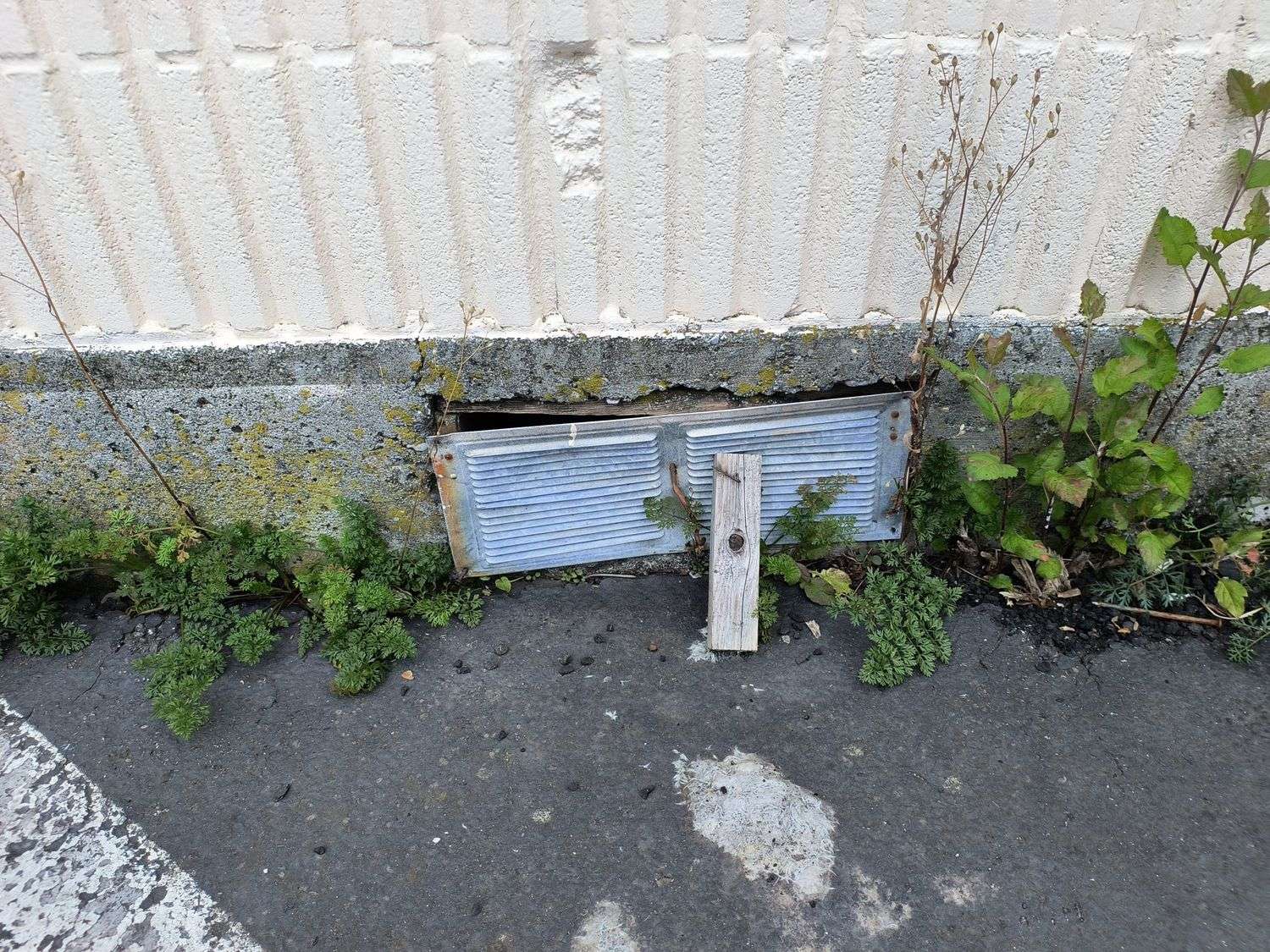
Foundation vents that failed long ago. The original screen was light material, it has rusted through at a corner, and it has been open for years. A vent screen is one of the cheapest and highest-value things to replace properly on a house of this era.
Balloon or near-balloon framing. Stud cavities that run from the sill plate to the top plate without a firestop. Something entering at grade can be in the attic without ever crossing an occupied room, which is why people hear scratching upstairs and cannot understand how anything got there.
A century of accumulated penetrations. Gas, water, waste, electrical, three generations of telephone and cable, a redundant oil line, an abandoned chimney thimble. Each drilled generously by whoever was doing that job on that day, and essentially none of them sealed.
The pests follow from that list without much mystery. Norway rats and house mice under the floor and inside the walls. Carpenter and moisture ants in framing that has taken water. Sowbugs, millipedes, springtails and silverfish in the damp space underneath, every one of which is reporting a moisture condition rather than being a problem in its own right.
The correct work is structural. Seal the envelope, screen the vents with material that will still be there in ten years, close the penetrations, and get a proper barrier over clean ground. Treatment handles what is already inside. Without the first part you are buying the same service again next autumn.
Carpenter ants, the local signature
If there is one insect that defines older Sedro-Woolley property, this is it, and the reason is simply age.
Carpenter ants do not eat wood. They excavate galleries in it to nest, and they strongly prefer wood that has already begun to soften. A house that has stood for a hundred years in this climate has almost certainly had water into the framing somewhere — a gutter that overflowed for a decade, a window flashing that failed, a porch roof that leaked quietly, a sill plate close to grade. Those areas are what a colony wants.
The part most treatment gets wrong is the colony structure. A mature population here keeps a parent nest outdoors — in a stump, a fallen log, a fence post, a landscape timber, a woodpile — with satellite nests inside the building. The satellites are what people see: workers on a counter, coarse frass below a window, a rustling in a wall at night.
Treat the satellite while the parent sits twenty feet away and you get a quiet couple of months. That is the entire reason carpenter ant work has a reputation for coming back, and it is why our first visit here is investigative before it is anything else. We are looking for the parent: the stump nobody thinks about, the section of deck framing that stays wet, the old timber retaining wall, the woodpile against the garage.
Where we find it, the result holds. Where it sits on a neighboring property we will say so plainly and plan around it rather than implying we have solved something we have not.
Frass is the useful field diagnostic. Carpenter ants push shavings out, so the debris below a gallery is fibrous and often contains insect body parts. That is different from the hard pellets a dampwood termite produces and different again from the fine powder below a wood-boring beetle exit hole, and the distinction changes the treatment entirely.
Moisture ants, and reading them correctly
Moisture ants get confused with carpenter ants constantly and the message they carry is different.
They colonize wood that is already wet and already decaying. They are not capable of establishing in sound dry lumber, so finding them is genuinely useful information: the water is the disease and the ants are the symptom.
On this housing stock the source is usually on a short list. A gutter that has been overflowing down a wall. A downspout discharging at the foundation. A crawlspace with no working barrier and standing groundwater. Plumbing weeping slowly inside a wall. Siding in contact with soil or bark mulch. Window flashing that failed years ago. A porch or deck ledger flashed badly or not at all.
Kill the ants without correcting any of that and you get a new colony in the same timber within a season or two. Which is why, on a good share of these visits, the most valuable thing we do is point at a gutter and tell you the person you need next is a roofer rather than us. That costs us work regularly and it is the correct answer.
Wood-boring beetles and decay
Damp crawlspaces in old housing produce two things people find alarming and frequently misread.
Anobiid beetles are genuinely common in this region’s older crawlspaces. The signature is small round exit holes with fine powder below them, in joists, subfloor and sill. The question that decides everything is whether the infestation is active or historic, because damage persists for decades after the insects have gone and exit holes in a joist are not by themselves evidence of anything current. We would far rather establish that than treat a museum piece, and if it is old and inactive we will tell you so even though it costs us the job.
Decay fungus is not an insect and is frequently the more consequential finding. Sustained moisture in framing produces decay that continues indefinitely, and decay rather than insects is what actually costs structural capacity in this climate. The moisture thresholds that decay needs are set out in the USDA Wood Handbook, and they are the reason a crawlspace that never dries is a structural question rather than a pest one. Where we find it, the honest answer often involves a contractor, and the pest treatment is the small part of the project.
Both trace back to the same condition, which is why we spend so much of a visit here on water rather than on insects.
Downtown and the connected block
Sedro-Woolley has a compact commercial core of older buildings, many sharing walls.

The consequence is one that surprises tenants: those buildings are connected. Party walls, common basements, utility chases and service runs pass from one into the next, along with drainage that has been extended repeatedly as tenants changed. A rodent population in that block is a single population using the whole structure, and it has no interest in the property lines.
So treating one unit while the buildings either side do nothing produces a temporary result. The animals move, wait, and return. Businesses can spend years paying for monthly service against a population that was never theirs alone.
Where a building owner or several tenants will work to one plan, the result is different in kind rather than incrementally better. That is a harder conversation than selling one contract, and it is the honest one.
Old commercial buildings also carry old openings — an abandoned pipe run, a filled coal chute, a service entry from a utility that no longer exists, a void above a suspended ceiling nobody has looked into in decades. Tracking those down is the bulk of the job, which is why a first downtown visit done properly runs longer than owners expect.
Rodent control along the river corridor
The Skagit runs along the town and the dike and drainage system that manages it runs with it.
A dike, from our point of view, is a linear habitat corridor with excellent cover, running for miles, immediately adjacent to buildings. Sloughs, drainage ditches and the vegetated margins between fields do the same on a smaller scale. The result is continuous connectivity: rodents move the length of the valley without ever crossing open ground.
Nobody can treat a corridor like that, and nobody should try. What you can do is defend the specific building, and accept that the pressure against it is constant rather than seasonal.
The low ground also saturates first. When burrows flood, everything living in them moves toward buildings, and river-adjacent property here sees that two or three weeks before the higher ground does.
Any building that has taken water needs the sequence respected: wet insulation out rather than treated around, the space dried properly, the barrier re-established over clean ground. Only then does exclusion hold. Treating a wet insulated crawl produces a building that is still damp, still attractive and still deteriorating, with an invoice attached.
The eastern edge and the forest
East of town the valley climbs and the character changes to forest edge, and a good share of the housing out that way is cedar against standing timber.
That brings its own set: carpenter ants in softened cedar trim and fascia, rodents pushing in off the treeline through crawl vents and skirting, and the heaviest spider and centipede pressure in the area, all of it driven by abundant insect production in damp wooded ground.
The fix is at the interface rather than in the woods. Trim the branch bridging to the roof. Screen the vent properly. Close the gap where a deck meets the house. Move the woodpile off the wall. Correct where landscaping runs straight up against the siding. Trapping alone against a treeline is a subscription rather than a result, and we would rather say that at the first visit than at the fourth.
For the yard and acreage side of that work, WSU Extension’s Skagit County office is the service that advises property owners in this county.
Our routes do thin out as you go further east up the valley. For an address well beyond town, call and ask rather than assuming — we will tell you honestly whether we run there.
Firewood, and why it matters here
Wood heat is common in this part of the county and firewood storage is one of the most reliably overlooked pest factors on a property.
A stack against the house wall is harborage directly against the structure. It holds moisture, it shelters rodents, it is exactly the sort of decaying timber carpenter ants nest in, and it brings spiders, beetles and other insects to within inches of the siding. Wood carried inside brings whatever is in it into a warm room, which is where the alarming-looking spider on the hearth in January comes from.
The advice is simple and free. Stack it off the ground, away from the building, and bring in only what you will burn that day. That single change resolves more problems on a rural property than most of what we could sell you.
The year here
Winter. Rodent activity indoors at its height, and the season when the autumn’s damage becomes obvious: soiled insulation, chewed ducting, a stain in a ceiling, a smell that turns out to be something dead in a cavity. Firewood brings the occasional startling spider indoors.
Late winter. Overwintering insects wake on the first mild afternoon and appear at south-facing windows.
Spring. Carpenter and moisture ants become active, and because they have wintered inside damp framing the first sighting is usually indoors rather than out. Swarmers appear on windowsills and get mistaken for termites. Wasp queens found nests, which is the cheapest possible moment to deal with them.
Summer. Wasp season, and the correct window for everything structural: dry ground, dry crawlspaces, easy access to the exterior. Anything preventive should happen now.
Autumn. The decisive stretch. The rain returns, the low ground saturates, and the population outside moves toward buildings within a few weeks. Work done before this prevents the winter problem entirely; work deferred becomes remediation.
What we will not sell you
Anything with fur or feathers. Birds, bats, squirrels, raccoons and other wildlife are outside what we do. We handle insects and rodents, and we will tell you which you have and who to call for the rest.
Mole trapping. What actually works on moles is heavily restricted in this state, and the products on the hardware-store shelf mostly are not it.
A recurring program over a wet crawlspace. On this housing stock that is the easiest way to be overcharged. Drying, removal and drainage come first.
Treatment for a beetle infestation with no evidence of current activity. Old exit holes are history rather than a problem.
Spiders, and the reassuring answer
Every autumn the calls start about large fast spiders indoors, and in a town with this much old housing and this much wooded ground nearby the load is genuinely heavy.
They are almost always giant house spiders. Harmless, long established throughout western Washington, and the large ones people find are wandering males looking for mates rather than an infestation responding to cold. The ones stranded in a bathtub are males that got in and could not climb back out.
The brown recluse does not live in this part of Washington and never has. Black widows exist in Washington but belong to the drier country east and south of the Cascades. Anyone telling you otherwise while holding a quote is selling fear rather than a service, and on old housing there is usually plenty of real work to do without inventing any.
What actually reduces the population is unglamorous: clearing exterior webbing, dealing with harborage under porches and in crawl vents, moving the firewood off the wall, correcting exterior lighting that concentrates the insects they feed on, and sealing the door sweeps and thresholds most of them use to get in.
It sits on scheduled route days rather than same-day availability, because it is a genuine drive and the last part is not freeway. We will tell you which day that means rather than promise a window we cannot hold.
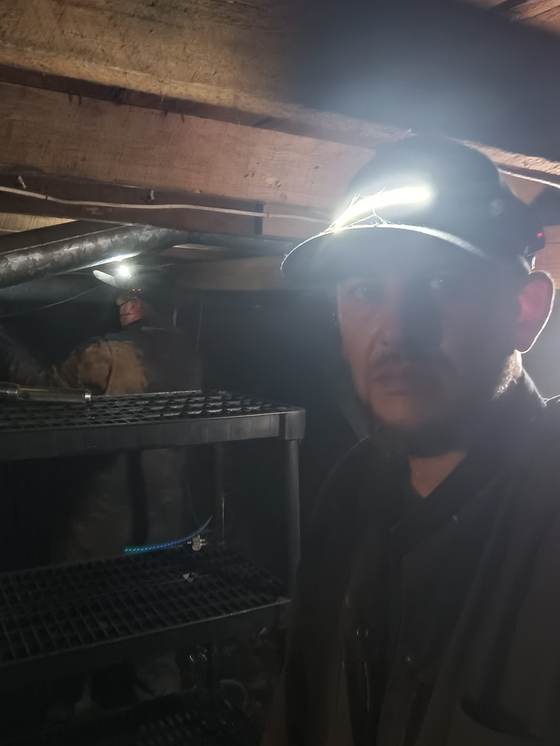
A visit starts outside: grade and drainage, the siding-to-foundation transition, vents, penetrations, vegetation and firewood contact, and the state of any previous exclusion work. Then the crawlspace, properly and with a light, which on this housing stock is nearly always where the answer is. Then the attic and the interior.
You get a plain account of what we found, what is causing it, what needs doing now, what can wait, and which items are a building repair rather than a pest treatment. On a century-old house a real share of the answer is carpentry, drainage and roofing, and saying so costs us the recurring service and earns the next three referrals.
Inspections are free for every pest we handle, bed bugs excepted — those carry a verification fee credited against treatment if you go ahead. There is no long-term contract.
Frequently asked questions
Why are carpenter ants such a problem in Sedro-Woolley?
Because a lot of the housing is old enough that the framing has taken water somewhere over the last century, and carpenter ants prefer wood that has begun to soften. The parent colony is usually outdoors in a stump or a fence post, with satellites inside the structure.
My house has a dirt crawlspace. Does that matter?
It matters a great deal. Bare earth puts ground moisture straight into the space and into the framing above it, which is what supports moisture ants, decay fungus and the whole damp-crawl group. A sound vapor barrier over clean ground is one of the highest-value things you can do.
How often do you get out to Sedro-Woolley?
It sits on scheduled route days rather than same-day availability, because it is a real drive from Bellingham and the last stretch is not freeway. Ask when you call and you will get a straight answer about which day that is.
Why does my downtown building keep getting rodents after treatment?
Because in an old commercial block the buildings are connected — shared walls, common basements and utility runs — so the population belongs to the block rather than to your address. Treating one unit while the neighbors do nothing moves the problem rather than ending it.
Does the river affect pest pressure here?
Yes. The Skagit corridor is continuous cover running along the town, and the low ground saturates before the higher ground does. Properties near the water see their autumn rodent movement earlier than the rest of town, sometimes by two or three weeks.
Do you cover the acreage east of town?
Up to a point. Our routes thin out as the valley climbs toward the Cascades, so for an address well east of town call and ask rather than assuming. We would rather tell you honestly than book it and work out the logistics afterwards.
Is there a charge for the visit?
No charge for any pest except bed bugs, where there is a verification fee that comes off the treatment if you go ahead. That includes going into the crawlspace, which on this housing stock is nearly always where the useful information turns out to be.
Guides
Pest problem in Sedro-Woolley?
Family-owned, no long-term contracts, and every treatment is backed by our 100% Service Guarantee.
Most calls in Whatcom County are out within 1–2 days, about 3 during the late-summer peak.
Last updated