
Attic Insulation Removal & Replacement
After rodents, attic insulation is usually contaminated through rather than in patches. We handle the pest half — trapping, exclusion and the crawlspace work — and bring in a local insulation crew for the attic removal and replacement itself, on one coordinated job with one sequence and one point of contact.
Call 360-410-2199 Request a free inspection
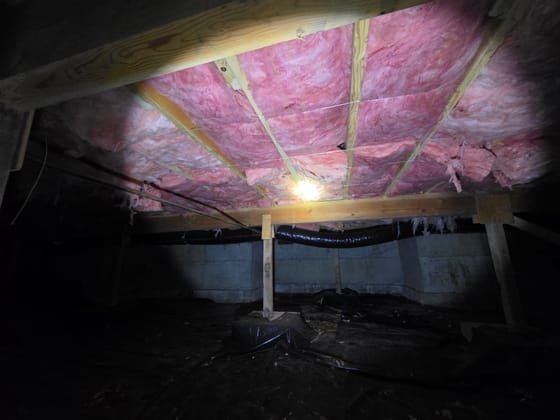
Insulation: the job at a glance
| What it covers | Attic insulation fouled by rodents, taken out and replaced once the animals are confirmed gone |
|---|---|
| Who does what | We do the trapping, exclusion and crawlspace insulation ourselves; a local insulation crew we work alongside removes and replaces the attic insulation |
| Included | Vacuum removal into sealed bags, debris removal, disinfection where it was worst, a ventilation check and new insulation with the depth marked |
| Not included | Air sealing, roofing, electrical work on knob-and-tube wiring, and carpentry on decayed framing |
| How long it takes | One to two days for the insulation crew in most attics, after our exclusion and trapping are done |
| What it costs | Priced from square footage, existing insulation, contamination and access; free estimate, in writing before anything starts |
Why this ends up being a pest page
Attic insulation replacement sits on a pest control site for a simple reason: almost every one we do follows an animal.
Rodents tunnel through blown-in insulation and nest in it, and they are incontinent as they travel, so a run becomes a contaminated channel rather than a single soiled patch. Over a season that channel spreads across a surprising share of an attic, and compressed, soiled material has lost most of the R-value you are paying to heat against.
What all three leave behind is the same: material that has lost most of its function, holds contamination and odor, and is sitting directly above the ceiling of the rooms you live in.
Contaminated, or just thin?
Two genuinely different jobs, and the honest distinction matters because one of them costs several times the other.
Contaminated insulation needs removing. Rodent runs and nesting, urine saturation, or material that has fallen off the framing and been lying on the ceiling drywall. Adding new insulation over it seals the contamination in, does nothing about the smell, and wastes good material on a bad substrate.
Thin but clean insulation can be topped up. If what is there is dry, intact, uncontaminated and simply insufficient — which describes a great many older Bellingham attics that have never been upgraded — adding to it is legitimate and substantially cheaper.
We will tell you which one you have, with photographs. You are not going into the attic to check and you should not have to take anyone’s word for it.
The order, again
Same rule as the crawlspace, and it is worth repeating because getting it wrong is expensive.
Exclusion and trapping first, confirmed quiet over several visits. Then removal, treatment and re-insulation.
New insulation installed into an attic that still has an active population is nesting material you have paid to provide. Any company willing to re-insulate before the animals are confirmed gone is arranging to do the job twice.
Where the animal was not a rodent, that removal is somebody else’s job before ours. We do not do bird or wildlife work, so the sequence there is their specialist first, our restoration second, and we will say so plainly rather than starting work over an unresolved problem.
What the work involves
Two crews, one job, in this order. Ours does the pest side and the crawlspace; the insulation contractor does the attic.
Removal by vacuum. Blown-in material is vacuumed into sealed bags rather than handled loose, with the hose run out through a window, hatch or gable vent. Batting is bagged in place. Access routes through the house are protected.
Contamination and debris removal. Nesting material, droppings, guano and anything an animal has brought up there.
Surface treatment. Appropriate disinfection of the joists, ceiling deck and framing where contamination was heaviest.
A note on air leaks. Not work we do, and described below — but with the attic stripped it is the one moment the ceiling penetrations are visible, so we photograph what we find and tell you before anything goes back over it.
Ventilation check. Soffit vents clear rather than stuffed with old insulation, baffles installed so new material cannot block airflow at the eaves, and ridge or gable venting confirmed working.
Exclusion confirmation. Every roofline entry closed, because there is no sense insulating a space that is still open. That is exclusion work and it belongs in the same project.
Re-insulation to current recommended levels, evenly distributed, with the depth marked so it can be verified later.
Air leaks, which we will point out and do not seal
We do not offer air sealing. It is worth saying plainly, because a lot of companies fold it into an insulation quote and it is the kind of thing a homeowner assumes is included. It is not included here.
What we will do is tell you what is there. With the attic stripped back to the joists, that is the one moment in the life of the house when every ceiling penetration is visible, and it would be a waste of the access not to say so.
Here is why it matters. Insulation slows heat conduction. It does not stop air moving. Warm, moist air from the living space rises and leaks into the attic through every penetration in the ceiling — recessed light fixtures, bath fan housings, plumbing stacks, wiring holes, the attic hatch, and the top plates of interior walls, which are usually the single largest leak in the building and are invisible once insulation is down.
Two consequences. The heat you paid for leaves. And the moisture it carries condenses on cold roof sheathing, which over winters produces damp sheathing, degraded insulation and eventually the moisture conditions that bring in the wood-destroying insects discussed elsewhere on this site.
So if you are going to have it done, the moment is while the attic is open and before new material goes down — sealing costs a fraction of the insulation itself, and blowing over unsealed penetrations buries the problem under material that will then underperform for the life of the house. We photograph what we find and hand it to whoever does the sealing, which will be a weatherization or insulation contractor rather than us.
What you get for it
Comfort, quickly. Most heat loss goes up, so upstairs rooms hold temperature noticeably better. People report it within a week of cold weather.
Lower heating cost, for the same reason. On an older Bellingham home going from badly under-insulated to current levels, this is real money annually rather than a rounding error — though anyone quoting you an exact payback figure is guessing at your habits.
The odor stops. Immediate, and usually the first thing customers mention after a contaminated removal.
Cleaner air below. Air moves from the attic into the living space through the same penetrations it leaves by. A contaminated attic is contributing to what you breathe.
Drier sheathing, which is a structural maintenance saving over a decade rather than a comfort one.
Fewer secondary pests. Rodent nesting hosts mites and dermestid beetles, and when the host animals leave, those move inward.
How much insulation is right
Whatcom County sits in a marine climate zone where the current recommendation for attics is roughly R-49 to R-60.
A great many houses here are well short of that. Homes from the mid-century era frequently have a third of it. Even homes that were adequate when built are often underperforming now, because insulation that has been compressed, walked on, disturbed by animals or partially fallen is delivering well below its nominal rating.
Depth matters more than people assume, and it is worth having marked at completion so anyone can verify it later without guessing.
Around the county
The century-old city housing. Lettered Streets, Columbia, Sunnyland, York, Roosevelt and South Hill. Original or minimal insulation, decades of rodent access through soffit and roofline gaps, and knob-and-tube era wiring that needs identifying before anything is blown in. The largest efficiency gains in the county are in these attics.
Around Lake Whatcom — Sudden Valley, Silver Beach, Edgemoor. 1970s construction against a forest edge, heavy rodent pressure off the treeline, and roofline and soffit gaps that have been open for years.
Newer hillside — Alabama Hill, Barkley, Cordata, King Mountain. Generally adequate insulation, so the work here is usually contamination-driven rather than performance-driven, and often follows a specific soffit entry.
Rural — Lynden, Everson, Nooksack, Sumas. Larger footprints, deer mice rather than house mice, and outbuildings that may need including. The species matters beyond identification: the Washington State Department of Health names the deer mouse as the animal that carries hantavirus in this state, and its advice is to dampen droppings and nesting material rather than stir them up dry, which is how we handle that material out here.
Waterfront and seasonal — Blaine, Birch Bay and Semiahmoo. Homes empty through the wet months where an entry point can go unnoticed for a whole season, so contamination is frequently more advanced than the owner expects.
Where we hand off, and to whom
We are a small local company and we would rather tell you the limits of that than stretch past them.
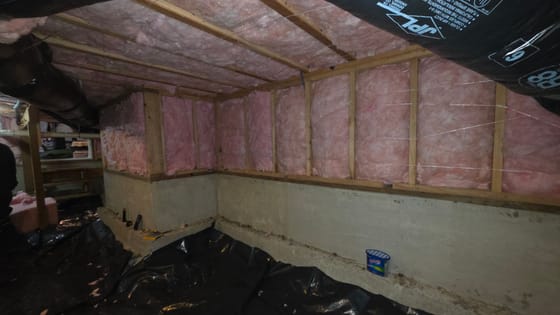
We do this work ourselves down below. Crawlspace insulation and vapor barrier, small removals and spot repairs, the trapping and the exclusion, and the part that decides whether any of it holds — confirming the animals are gone and every roofline entry is closed.
The attic goes to a local insulation crew we work alongside. Removal and replacement up there is their trade, they do it every day, and they carry the equipment and the numbers for it. We scope the job with them and we stay accountable for the pest side of it, which is the side that determines when they can start.
That is a deliberate choice rather than a gap. A company that says yes to every scale of job either turns work away quietly or does the big ones badly, and we would rather be straight about which jobs are ours. You will know before anything starts who is doing which part and what each is charging.
And some of it is not either of us. We are not roofers, electricians or general contractors, and attics are where that boundary comes up most.
If the sheathing is damp or deteriorated, that is a roofing and ventilation question before it is an insulation one, and insulating over it makes it worse. If there is knob-and-tube wiring, that needs an electrician’s assessment before anything is blown over it. If framing has lost section to decay or chewing, it needs a carpenter.
When we find those, you get them described clearly enough to get a sensible quote from the right trade. We would rather delay the job than insulate over a problem and hand you a warmer version of it.
What it costs
Priced from the attic, driven by square footage, existing insulation type and depth, contamination extent and access.
Two honest notes.
Removal and replacement is a genuinely large residential job, and the comparison is not against doing nothing — it is against a contaminated attic that keeps smelling, insulation that is not performing, and an entry point that has not been closed.
And if the insulation is clean and simply thin, say so and get it topped up instead. That is a much smaller number, and we would rather do the small job correctly than sell the large one unnecessarily.
The estimate is free and the figure is in writing before anything starts.
Timing
Any time of year works, with two preferences.
Late summer and early autumn is best, because it pairs with the exclusion that should precede it and gets ahead of the rodent push that comes with the September and October rain.
Before winter is the practical deadline if the driver is comfort or heating cost, since the benefit only shows up when the weather does.
The attic work is scheduled with the insulation crew rather than by us alone, so the window is theirs as well as ours. If a bat colony is involved, the insulation work follows the exclusion window rather than your calendar or ours.
What we find up there
The attic is the least-visited part of most houses, and what turns up is consistent enough to list.
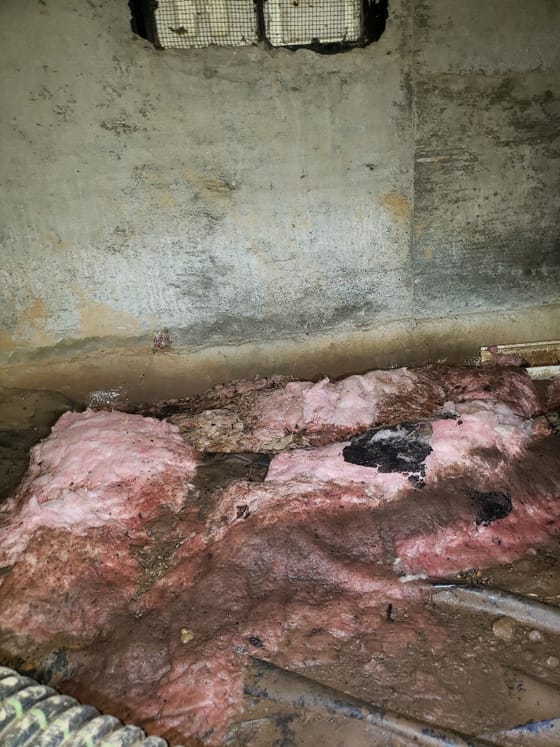
Rodent runs through blown-in material. Channels compressed to the ceiling deck, usually following the top plates of interior walls because that is the easiest travel route. The insulation either side may look fine while the runs themselves are contaminated through.
Insulation off the framing. Batts that have slipped or fallen and are lying on the ceiling drywall, where they hold moisture rather than resisting heat.
Blocked soffit vents. The single most common ventilation fault. Insulation pushed into the eaves during the original install, or by an animal, closing off the intake that the whole attic depends on. Baffles fix it and are cheap.
Bath fans venting into the attic. Genuinely common in older homes, and it means the moisture from every shower is being deposited directly onto the roof sheathing. It needs ducting to the exterior, and it is worth finding.
Recessed lights and open penetrations. The air leaks described above, plus older fixtures that cannot be safely covered with insulation and need identifying before anything is blown.
Knob-and-tube wiring. In prewar Bellingham housing this is a real possibility, and it changes the job — it needs an electrician’s assessment before insulation goes over it, and that is not a corner to cut.
Stored belongings. Boxes, decorations and the occasional forgotten item, frequently sitting directly on insulation and compressing it. Where a household needs attic storage, a raised platform preserves the insulation underneath and is worth building into the job.
Damp or stained sheathing. Which is a roofing and ventilation question before it is an insulation one, and the reason we look up as well as down.
You get photographs of all of it. It is the only part of the house where the owner genuinely has no idea what the condition is, and that information is worth as much as the work.
Blown-in or batts?
A reasonable question and the answer is mostly about the attic rather than the material.
Blown-in — usually fiberglass or cellulose — is what most attic replacements use here, because it fills irregular spaces, works around framing and wiring without gaps, and reaches the eaves properly where batts frequently do not. It is also faster to install to a consistent depth. The disadvantage is that it is harder to move if someone needs to work up there later.
Batts make sense in a small, regular, easily accessible attic, or where a household genuinely needs to use the space. They are much less forgiving of poor installation — a batt with a gap at the edge or compressed around a wire is underperforming in a way that is easy to see and easy to ignore.
The honest position is that installation quality matters more than the choice between them. Blown-in at an even depth with clear soffit intake beats meticulously specified batts with gaps at every joist end, and the reverse is also true.
What we will not do is recommend a material because it prices better on the estimate. The attic decides.
For landlords and property managers
Two reasons this comes up outside owner-occupied homes.
Turnover is the cheap moment. An empty unit means no scheduling around a tenant, unrestricted access, and no disruption to anyone. Insulation work at turnover costs less in practice than the same job during occupancy.
It shows up in condition and cost. A contaminated attic produces odor complaints that get attributed to everything but the ceiling, and a badly insulated one produces heating complaints and higher tenant costs. Where heating is included in rent, the arithmetic is direct.
The photographic record from the job also evidences the condition of the space at a point in time, which is useful at both ends of a tenancy.
For portfolios rather than single properties, this usually sits alongside a broader commercial program rather than being handled per unit.
Ventilation, which decides whether any of it works
Insulation and ventilation are frequently treated as separate trades, and in an attic they are the same conversation.
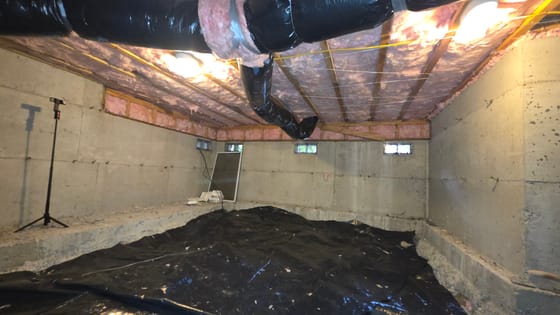
A vented attic is supposed to move outside air in at the eaves and out at the ridge or gable, keeping the sheathing near outdoor temperature and carrying away whatever moisture gets past the ceiling. When that airflow is working, a cold attic is a dry attic. When it is blocked, the attic becomes a condensation chamber every winter.
Soffit intake is where it usually fails. Insulation pushed into the eaves — during the original install, by an animal, or by whoever last blew material in without baffles — closes the intake completely. From below, everything looks fine. The symptom shows up as damp sheathing, frost on nails in cold weather, and insulation that never performs to its rating.
Baffles are the fix, and they are inexpensive. Fitted at each rafter bay before insulation goes down, they hold a clear channel from the soffit up past the insulation line. Any attic job that blows material to depth without them is storing up the problem it was meant to solve.
Exhaust matters too. Ridge venting, gable venting or roof vents need to be open and not obstructed. Mixing vent types can short-circuit the airflow so that air enters and leaves at the top without ever passing the eaves.
And bath fans have to go outside. Venting into the attic is common in older Bellingham homes and it deposits the moisture from every shower directly onto the roof deck. Ducting it to the exterior is a small job with a large effect.
We check all of this as part of the work rather than as an add-on, because insulating an attic with blocked intake is spending money to make it damper.
After the work
Two habits keep an attic in the condition you just paid for.
Look after any trade has been up there. An electrician, a plumber, an antenna installer or a solar crew will move insulation and baffles to get where they are going, and very few put them back. A ten-minute look afterward catches it while it is still trivial.
Watch for the symptoms rather than inspecting. A room that stops holding temperature, frost on nail points in cold weather, a musty smell returning, or sounds overhead are all the attic telling you something changed. Those are worth a call; routine inspection is not necessary.
Related work
This work almost always follows rodent control or a wildlife specialist’s removal work, and it belongs in the same project as the exclusion and repairs that close the entry points. Where the crawlspace is in similar condition — and on older homes it usually is — see crawlspace cleanout and restoration.
Frequently asked questions
Do you do the attic work yourselves?
The pest half, yes: trapping, exclusion, the crawlspace, and confirming the animals are gone before anything goes back in. The attic removal and re-insulation is done by a local insulation crew we work alongside, because that is their trade and they do it every day. We scope it together, the sequence is ours to get right, and you will know before it starts who is doing which part.
Does the insulation really need removing, or can you just add on top?
If it is contaminated, it needs removing. Adding new insulation over rodent-fouled material seals the contamination in, does nothing about the odor, and puts good material on top of bad. Where insulation is simply thin but clean and dry, topping up is legitimate and cheaper, and we will say so.
Do you air-seal the ceiling before re-insulating?
No. Air sealing is not work we offer, and we would rather say so than let you assume it is included. What we will do is tell you where the leaks are before new material goes over them, because with the attic stripped back every ceiling penetration is visible. Having the work done is a job for a weatherization or insulation contractor, and it is worth doing while the attic is open.
How much insulation should I have?
For our climate zone the current recommendation for attics is roughly R-49 to R-60. A great many older Bellingham homes have half that, and a fair number have compressed or fallen material that is performing well below its nominal rating.
Will I actually notice a difference?
Usually yes, and faster than people expect. Most of a house's heat loss goes up, so an attic that goes from poor to correct changes how the upstairs holds temperature. The odor difference after a contaminated removal is immediate and is often what customers comment on first.
Do the rodents have to be gone first?
Completely, and confirmed over several visits. New insulation installed while a population is active is nesting material you paid for. Exclusion and trapping first, then removal and replacement — any other order means doing it twice.
How long does it take and how messy is it?
Most attics are one to two days for the insulation crew, after our exclusion and trapping are finished. Removal is by vacuum into sealed bags rather than by hand, with the hose run out of a window or hatch, and the route through the house protected. It is a contained process, but it is not a quiet one.
Guides
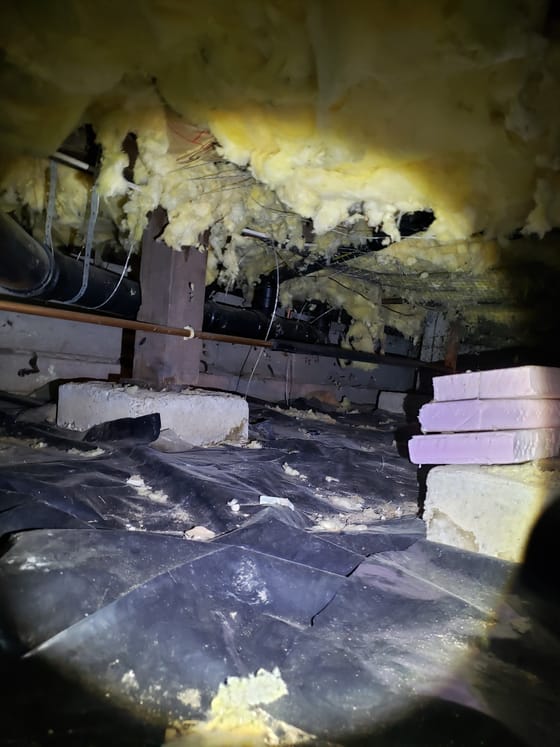
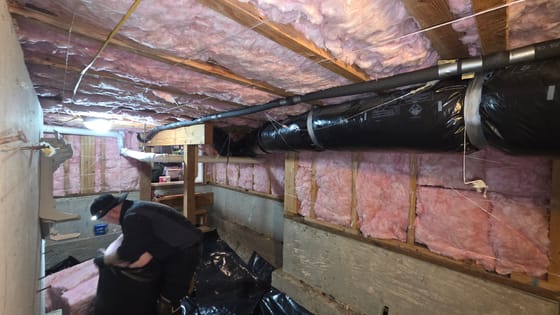
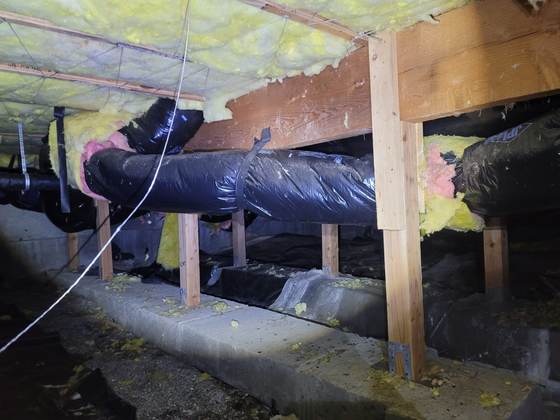
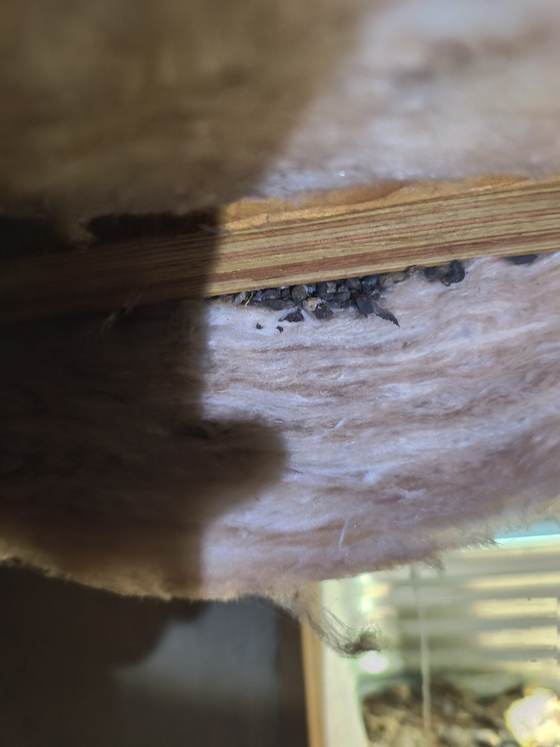
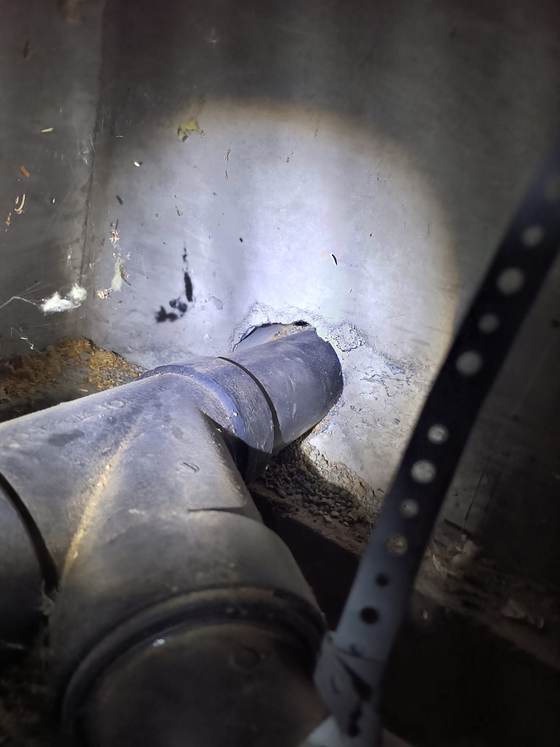
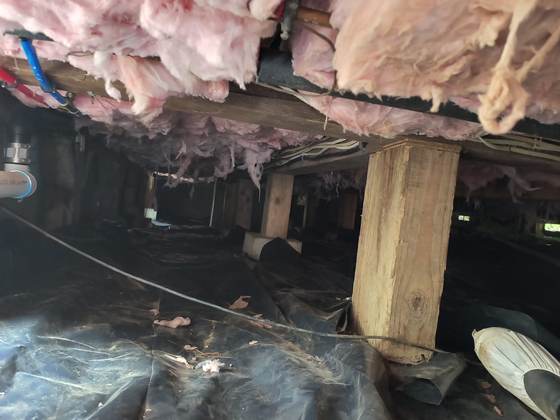
Insulation: 4 photographs from real jobs
Every one of these was taken on a job in Whatcom or Skagit County by whoever was doing the work. Stock photography is close to universal in this trade and a reader has no way to tell by looking, which is the only reason it is worth saying out loud. The rest of the archive is on the gallery.
Attic Insulation Removal & Replacement in Whatcom County?
Family-owned, no long-term contracts, and every treatment is backed by our 100% Service Guarantee.
Most calls in Whatcom County are out within 1–2 days, about 3 during the late-summer peak.
Last updated