
Pest Control in Mount Vernon, Washington
Mount Vernon is the largest place we work in Skagit County and it splits three ways. A genuine historic downtown where rodent populations are shared between buildings, older riverfront housing on the low ground, and newer subdivisions backing straight onto farmland that empties twice a year.
Call 360-410-2199 Request a free inspection
Mount Vernon on the map
The county seat, and three towns inside it
Mount Vernon is the largest place we work south of the county line, and like most towns of its age it is really several places sharing a name. From our side of the work there are three, and the address tells you which one you are in before anything else does.
There is the historic downtown, with commercial buildings on shared walls. There is the older residential ground, much of it low and close to the river. And there is the newer development on the edges, built outward across what was agricultural land within living memory.
Each of those fails differently, and the mistake we see most often is a program designed for one being applied to another.
Downtown, where the problem belongs to the block
Mount Vernon has a real historic core — masonry and timber commercial buildings, many over a century old, built shoulder to shoulder.
That construction has a consequence people find genuinely surprising. Buildings in a block like this are connected. Shared party walls, common basements, utility chases and service runs that pass from one building into the next, and old drainage that was extended and re-extended as tenants changed. A rodent population in that block is a single population using the whole structure, and it does not recognize the property lines.
Which means treating one tenant while the buildings either side do nothing produces a temporary result at best. The animals move, wait, and come back. We have watched businesses spend years paying for monthly service against a population that was never theirs alone.
Where we can get a building owner, or several tenants, working to one plan, the outcome is different in kind — not incrementally better but actually resolved. That conversation is harder than selling one contract, and it is the honest one.
The other downtown feature is age itself. Old buildings have old penetrations: abandoned pipe runs, a filled-in coal chute, a service entry from a utility that no longer exists, gaps behind a suspended ceiling that nobody has looked above in decades. Finding those is most of the work, and it is why a proper first visit downtown takes longer than people expect.
Food service in old buildings
A good share of the downtown is food service, and it is a specific job.

The building is the first constraint. Older drainage, floors that have been resurfaced repeatedly, equipment fitted into spaces not designed for it, and voids behind and beneath fixtures that cannot easily be reached. Those voids are where German cockroaches persist, and they are why a kitchen can look immaculate and still have a problem.
Waste is the second and it is where most of the genuine progress sits. A dumpster with a broken lid, an enclosure that cannot be closed, or bins staged in an alley overnight will support a rodent population that no service schedule overcomes. We put that in the report. Quietly servicing around a waste problem while billing monthly would be dishonest, and it also does not work.
Deliveries are the third. Cardboard and pallets arriving from elsewhere bring what traveled with them, and in a shared block one tenant’s receiving practice becomes everybody’s problem.
Rodent control on the river and the low ground
The Skagit is a serious river with a long flood history, and Mount Vernon sits against it behind a dike and floodwall system.
From our point of view a dike is a linear habitat corridor with excellent cover, running for miles, immediately adjacent to buildings. The sloughs, drainage ditches and vegetated margins between fields do the same thing on a smaller scale. The result is continuous connectivity — rodents move the length of the valley without ever crossing open ground.
You cannot treat a corridor and it would be wrong to try. What you can do is defend the specific building and accept that the pressure against it is constant rather than seasonal.
The low ground also saturates early. When the water table comes up and burrows flood, everything living in them moves toward buildings, and riverfront and low-lying properties here see that weeks before the higher ground does. If you live down near the water, your autumn starts earlier than your neighbor’s on the hill.
For any building that has taken water at some point, the sequence matters more than the product. Wet insulation comes out rather than being treated around — it holds moisture, accelerates decay in the framing above it and makes excellent nesting material. The space gets dried properly. Why material that stays wet keeps growing things is laid out plainly in the EPA’s mold course, and it is the reason the drying step cannot be skipped. The vapor barrier is re-established over clean ground. Only then does exclusion hold.
The older residential stock
Away from downtown, the older Mount Vernon housing carries the standard Pacific Northwest pattern and it is the same pattern we deal with in Bellingham’s prewar neighborhoods.
Shallow crawlspaces over bare earth. Post-and-pier foundations or early stem walls. Foundation vent screens that rusted through decades ago and have been open ever since. Board sheathing that has shrunk. Stud cavities that run from the sill plate to the top plate without a firestop, so something entering at grade has an uninterrupted route to the attic. And a century of accumulated utility penetrations, each drilled oversize and none of them ever sealed.
The pests follow directly. Norway rats and house mice in the crawl and the walls. Carpenter and moisture ants in any framing that has taken water. The damp-crawl company underneath — sowbugs, millipedes, springtails and silverfish — all of which are reporting a moisture condition rather than being a problem in their own right.
The correct work is structural: sealing the envelope, screening the vents properly with material that will last, and closing the penetrations. Treatment handles what is already inside. Without the first part, you are buying the same service again next year.
The new edges, and the farmland behind them
Mount Vernon has grown outward, and the newer subdivisions sit against agricultural ground.
That produces a specific and initially baffling situation: brand-new houses with rodent problems. Owners find it hard to credit, because people reasonably expect a new building to be sealed. The newer stock genuinely is tighter — better sheathing, continuous housewrap, sealed sill plates, and in some cases a conditioned crawlspace rather than a vented one.
But tightness is not the same as sealed, and the failure points are boringly consistent. The dryer vent where the duct crosses the rim joist and the exterior flap has warped. The hose bib and irrigation supply, drilled generously. The heat pump line set, which enters at an angle and leaves a crescent gap at the top of the hole. The electrical and low-voltage entries, often clustered behind a panel in one oversized opening. And the gap under a garage door seal on a slab that has settled slightly, which is on nearly every house we look at.
Each of those was closed with expanding foam by a subcontractor working at speed. Foam stops drafts. It does not stop a rodent, which opens it in an evening.
Behind the fence is the actual driver. Open agricultural ground supports a large permanent population, and that population moves twice a year for reasons that have nothing to do with cold. Harvest removes cover overnight — a field that was habitat in the morning is bare dirt by evening — and everything living in it looks for the nearest structure. Then the autumn rain floods the low ground and does the same thing again, harder.
The storage that goes with valley ground matters as much as the fields do. Bulb sheds, seed and produce storage, feed rooms and equipment barns hold something edible and something soft to nest in right through the winter, and on this edge of town they sit closer to the new streets than most buyers realize when they look at the view. A population wintering in a shed two fields away is a population with a very short walk to your garage in February, which is why we would rather scope the outbuilding alongside the house where the owner of one will talk to the owner of the other.
Growers and storage operators in the valley have WSU Extension’s Skagit County office for the cropping and storage end of this, which is the half no householder controls.
Ant control in Mount Vernon, and what the ants are telling you
Two ants matter here and they get confused constantly.
Moisture ants only establish where the wood has already taken water and started to break down. Finding them is useful information rather than merely a problem: the water is the disease and the ants are the symptom. Treating them without correcting the source produces a new colony in the same timber, which on low-lying Mount Vernon property is a common and expensive outcome.
Carpenter ants excavate galleries to nest and prefer wood that has begun to soften. A mature colony almost always keeps its parent nest outdoors — a stump, a fence post, a landscape timber, a woodpile — with satellite nests inside the structure. The satellites are what people see, and treating them while the parent sits twenty feet away is why these jobs develop a reputation for returning.
In spring, winged carpenter ants get mistaken for termite swarmers regularly. Ants have an elbowed antenna, a pinched waist and wings of unequal length; termites have a straight antenna, a uniform body and four wings of the same size. Identification is the cheapest thing we do and it changes everything after it.
The year in Mount Vernon
Winter. Indoor rodent activity peaks, since whatever got in during autumn has not left. Damage becomes visible — soiled insulation, chewed ducting, a stain in a ceiling, a smell in a room that turns out to be something dead in a cavity.
Late winter. Cluster flies and other overwintering insects wake on the first mild afternoon and appear at south-facing windows. More pronounced on the properties with open ground around them than in town.
Spring. Ants wake up, and having spent the winter in damp framing, they are usually first seen inside. Swarmers appear on windowsills. Wasp queens found nests, which is the cheapest possible moment to deal with them and the moment almost nobody is looking.
Summer. Wasp season, and the correct window for everything structural. Dry ground, dry crawlspaces, easy access to the exterior. Anything preventive should be scheduled here rather than reacted to in November.
Harvest and autumn. The decisive stretch, sharper here than anywhere in our home county because of the sheer acreage. Fields are cut, the rain returns, the low ground saturates, and a very large displaced population moves toward buildings within a few weeks of each other.
Spiders, and the autumn phone calls
Every September the calls start about large fast spiders indoors, and the answer is reassuring rather than alarming.
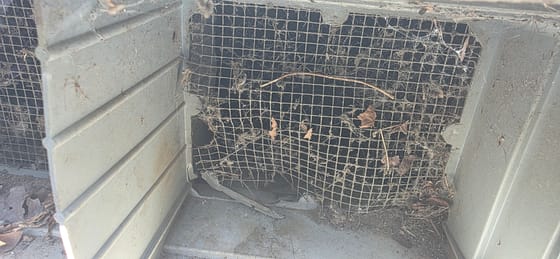
These are almost always giant house spiders. They are harmless, long established throughout western Washington, and they are not coming inside because it is getting cold — adult males are wandering in search of mates, and the ones found stranded in a bathtub are males that got in and could not climb back out.
There is no brown recluse in this corner of the state and there never has been. Black widows exist in Washington but are associated with the drier country east and south of the Cascades and are uncommon here. Anyone telling you otherwise while holding a quote is selling fear rather than a service.
What genuinely reduces the population is unglamorous: knocking down exterior webbing, dealing with the harborage under decks and in crawl vents, correcting exterior lighting that concentrates the insects the spiders are eating, and sealing the door sweeps and thresholds most of them use to get in.
Cockroaches, and where they actually live
Worth being specific about, because the treatment only works where the insects actually are.
German cockroaches are indoor and human-associated. They travel in cardboard, appliances and kitchen equipment, they breed quickly, and they are concentrated in food service and multi-unit housing. In a building with shared structure they need a coordinated, building-level plan — treating one unit while the neighbors go untreated moves the population rather than reducing it.
They are a kitchen, bathroom and appliance-void insect rather than something that comes up from under the floor, so an insect found only in a damp crawlspace is a different job, and in the older low-lying housing here that is worth checking before anyone treats a kitchen.
Getting the identification right first is the cheapest thing we do on the visit.
What we will not sell you
Anything that is not an insect or a rodent. Birds on a downtown parapet, an animal in a ceiling void, a bat in an attic — none of that is ours. Sasquatch does pest control and exclusion, and we would rather send you to the right operator on the first call than take a booking we cannot serve.
Mole trapping. Washington tightly restricts the methods that genuinely work, and most of what a homeowner can buy does nothing.
A recurring program over an unresolved water problem. On low-lying and flood-affected property this is the most common way to be overcharged. Drying, removal and drainage come first; quarterly service laid over a wet crawlspace is an indefinite cost rather than a solution.
Treatment for an inactive infestation. Old galleries and old exit holes are evidence of history, not of current activity.
Multi-unit and rental housing
Mount Vernon has a substantial rental and apartment stock, and multi-unit work follows different rules from a single house.
The governing fact is that in a building with shared structure the pests are a building-level population rather than a unit-level one. Wall voids, plumbing chases, shared attics and common utility runs connect units, and an animal or an insect moves through those without regard to who pays which lease.
So treating one unit while the ones either side go untreated relocates the problem, usually next door, and often back again a month later. Tenants reasonably conclude the treatment failed. It did not fail; it was scoped wrong.
What works is a building plan: mapping which units are affected, identifying the source, treating in a coordinated pass, and following up on an interval matched to the life cycle rather than to the billing cycle. Landlords who resist that frequently end up paying for the same problem three times.
Bed bugs and German cockroaches are the two that most reward this approach and punish the alternative most severely. Both travel between units readily, and both are far cheaper to resolve early and thoroughly than late and piecemeal.
How we work here
Mount Vernon sits on scheduled route days rather than same-day availability, because it is a genuine drive from our base in Bellingham. We will tell you which day that puts you on rather than promise a window we cannot hold, and if something is urgent — a nest by a door, a rodent in living space — say so and we will do what we can.
A visit starts outside. Grade and drainage, the siding-to-foundation transition, vents and penetrations, vegetation contact, and the state of any previous exclusion work. On a commercial building it starts with your operating constraints instead, because those shape everything after them. Then the crawlspace, properly and with a light. Then the attic and the interior.
Afterwards you hear, in plain terms, what we found and why, what has to happen now and what can wait, and which items are repairs to the building rather than pest work. On older Mount Vernon property a real share of the answer is drainage and carpentry, and saying so costs us the recurring service.
Inspections are free for every pest we handle, bed bugs excepted — those carry a verification fee credited against treatment if you proceed. No long-term contract, on a house or a commercial building.
Frequently asked questions
Why does treating my downtown building never seem to hold?
Because in an old downtown block the rodent population belongs to the block rather than to any one address. Shared walls, common basements and utility chases connect buildings whose owners have no idea they are connected. Treating one tenant while the neighbors do nothing relocates the problem.
How often do you get down to Mount Vernon?
It sits on scheduled route days rather than same-day availability, because it is a genuine drive from Bellingham. When you call we will tell you which day that puts you on instead of promising a window we cannot hold.
Why do rodents show up in my new subdivision house?
Because the ground it was built on was farmland, and the population that lived in that field did not move away. A new house is tighter than an old one, but it still has a dryer vent, a hose bib, a line set and a garage door seal, and those are usually foamed rather than sealed.
Does the Skagit River affect pest pressure here?
Considerably. The river corridor and the dike system are continuous cover running the length of the valley, and the low ground saturates early. Riverfront and low-lying properties see their autumn rodent movement well before the higher ground does.
Do you work with downtown restaurants?
Yes. Food service in an old building is a different job from a modern unit — shared structure, older drainage and a waste situation that is often the real driver. We put the housekeeping findings in the report rather than quietly servicing around them.
When is the worst time of year here?
Late September through November, and harvest sharpens it. Cutting a field removes cover in an afternoon and the displaced population goes to the nearest structure, then the rain floods the low ground and does it again. Those weeks decide the whole winter.
Is the visit free?
Free for every pest we handle, with bed bugs the single exception — those carry a verification fee that is credited against treatment if you go ahead. That includes going into the crawlspace, which is usually where the useful information is.
Guides
Pest problem in Mount Vernon?
Family-owned, no long-term contracts, and every treatment is backed by our 100% Service Guarantee.
Most calls in Whatcom County are out within 1–2 days, about 3 during the late-summer peak.
Last updated