
Pest Exclusion & Repairs in Bellingham & Whatcom County
Exclusion is the physical work of closing the gaps pests use to get into a building. Treatment manages a population; exclusion removes the access. On most Whatcom County homes it is the highest-value hour we spend on the property, and it reduces rodents, wasps, spiders and overwintering insects at the same time.
Call 360-410-2199 Request a free inspection
What we seal, and where it is
Exclusion: the job at a glance
| What it covers | Closing the gaps that let rodents, wasps, spiders and overwintering insects into the building |
|---|---|
| Included | A walk outside and through the crawlspace and attic, then hardware cloth, sheet metal, mortar and vent covers fixed to sound substrate |
| Not included | Roofing, siding replacement, structural framing repair, plumbing and drainage excavation |
| Order of work | If animals are inside, trapping comes first and sealing follows once it is quiet |
| Timing | August and early September, before rodents move in; spring is the second-best window |
| What it costs | Quoted from the walk-through, mostly by access; the estimate is free |
The argument for doing this at all
Nearly every page on this site ends up pointing here, and it is worth saying why plainly, even though it is the opposite of how pest control is usually sold.
A treatment manages a population. It reduces what is present, it has to be repeated, and it is billed on a schedule. Exclusion removes the access. It is bought once, it keeps working while it stays intact, and it does not care whether the population outside your walls goes up or down.
For most of what we get called about in Whatcom County — rodents above all, but also wasps in wall voids, spiders, and the overwintering insects that pile onto south-facing walls every October — the entry point is the actual problem and the insects are the symptom. Closing a foundation vent that has been open for fifteen years does more for a rodent problem than any number of visits.
We say this knowing it argues against the recurring revenue that most of this industry is built on. If you are choosing between a quarterly plan and sealing your crawlspace, seal the crawlspace.
A quarter of an inch
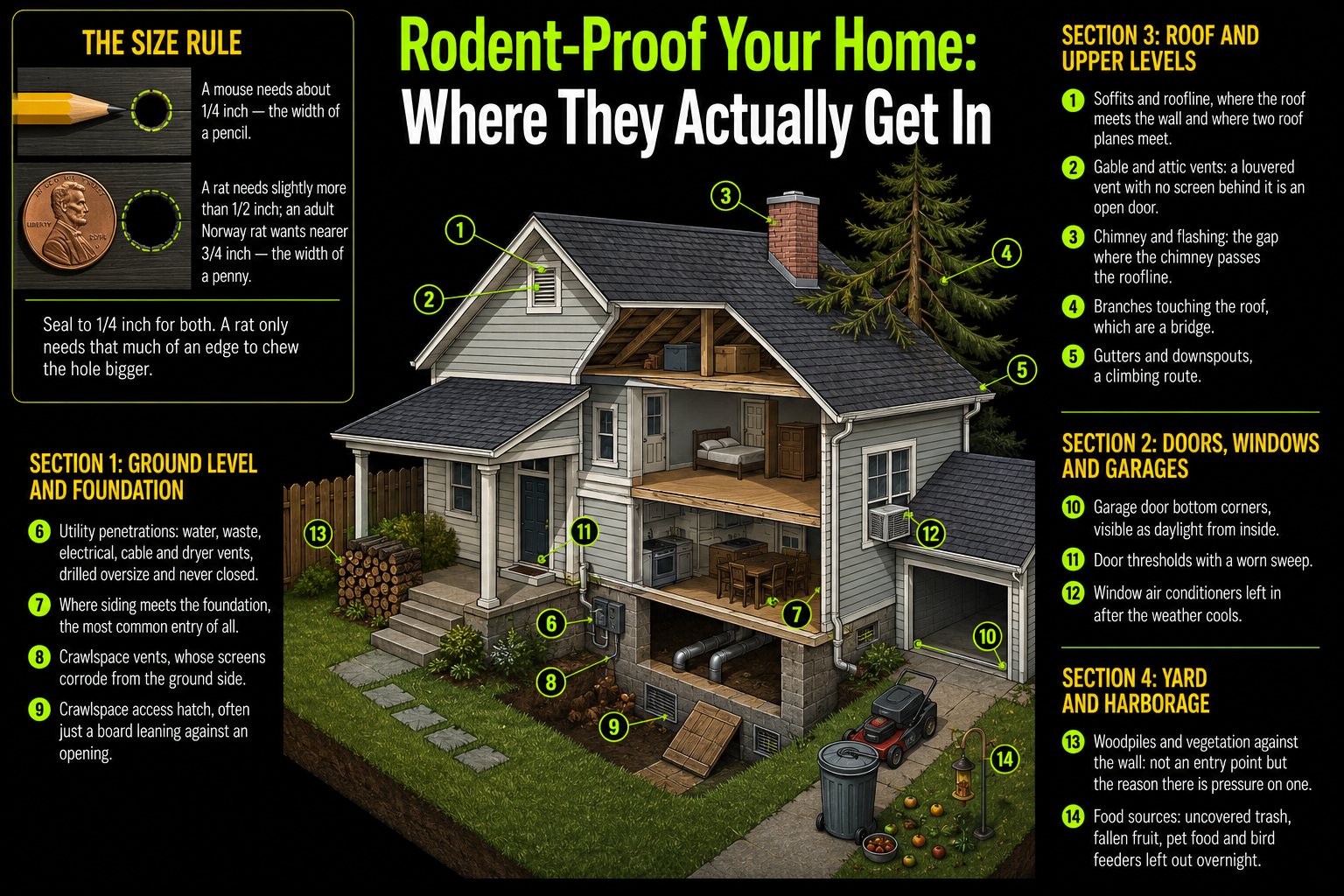
That is the number worth remembering. A house mouse gets through roughly a quarter inch — about a pencil. Both species can also work a gap considerably smaller than the body looks, because the skull is the limiting dimension and it is flatter than people expect.
Rats are the part of this that gets muddled, so it is worth setting out carefully. Every extension source we work from gives rats a larger opening than mice: University of Nebraska Extension and eXtension put it at slightly more than half an inch, WSU Extension gives the same half inch, and UC IPM agrees. None of them offers a smaller adult figure, and any page that quotes one for a “young” rat is inventing a distinction the literature does not draw.
What makes the quarter inch correct for rats anyway is a different claim, and Washington’s Department of Fish and Wildlife states it directly: a rat needs only a quarter-inch hole to chew larger and squeeze through. That reframes the whole question. The number that decides whether a building holds is not the dimension the animal passes through unaided — it is the dimension at which it can get its incisors around an edge and start removing material. Rodent incisors grow continuously and are worn down by gnawing, so an edge is an opportunity. Seal to half an inch and you have built to the animal’s body. Seal to a quarter and you have built to its teeth, which is the one that lasts.
This is not folklore. Bellingham Municipal Code chapter 6.15 requires rental properties to pass a certified inspection, and the checklist explicitly flags openings in the foundation larger than a quarter inch as an infestation risk. The city wrote the number into its own rental standard.
If a code official is looking for it on a rental, it is a reasonable standard for a house you live in.
Where they actually get in
On Whatcom County housing stock the same short list accounts for most of what we find. This is roughly the order we check.
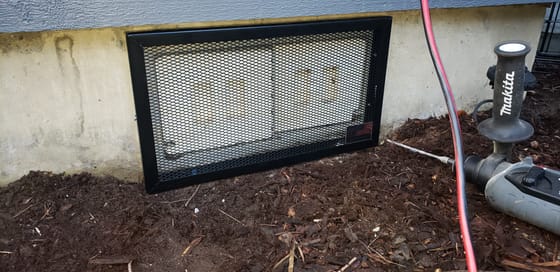
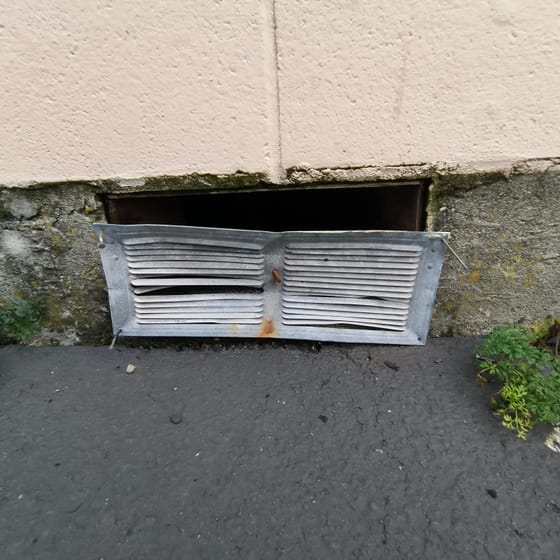
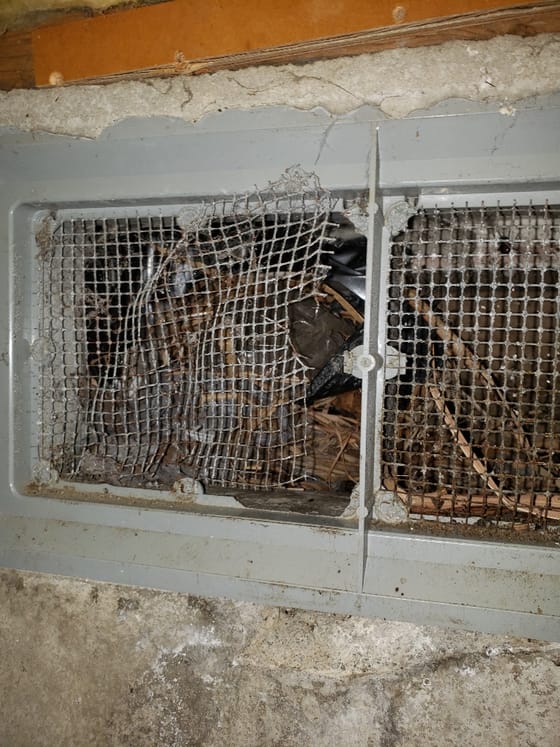
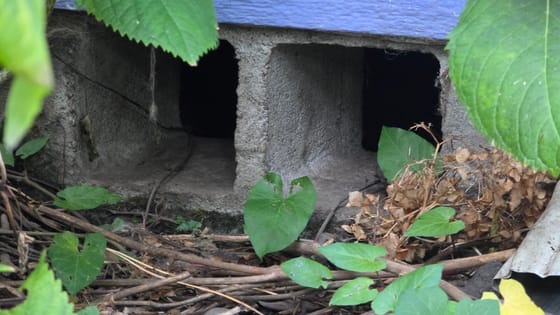
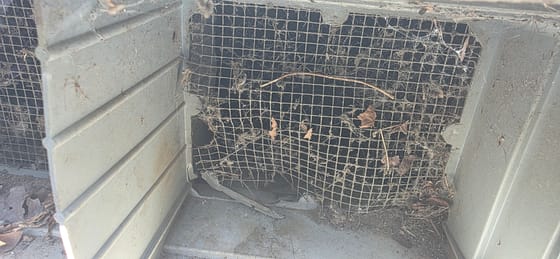
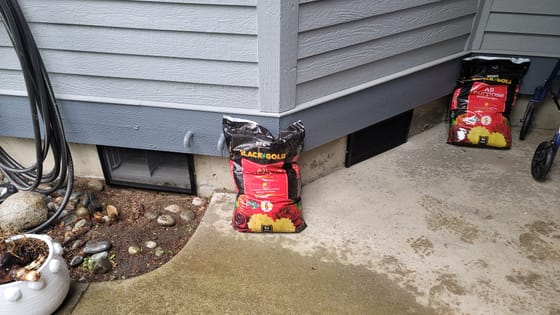
Foundation vents. The single most common entry on older Bellingham homes. Original screens rust through, get pushed in by weather or animals, or were replaced at some point with mesh too coarse to matter. In the prewar neighborhoods this is frequently the whole answer.
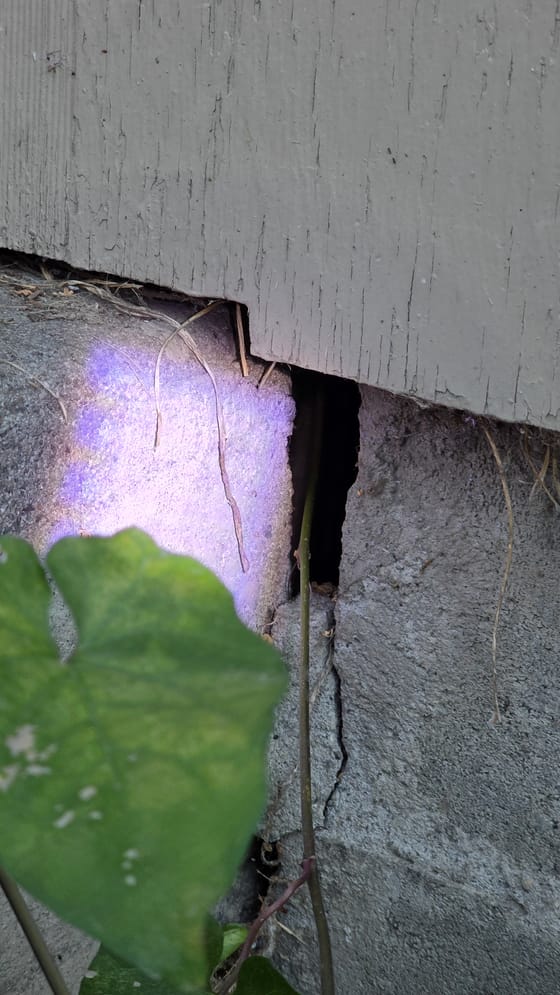
Post-and-pier gaps. A great deal of pre-1940 housing here sits on post-and-pier, and eighty-odd years of settlement opens gaps between the foundation and the framing above. Invisible from outside, obvious from inside the crawlspace.
Utility penetrations. Water, gas, electrical, cable, and every line added since the house was built. Almost nobody seals these, and the contractor who ran a new line in 2019 had no reason to think about a rat. The gap around the pipe is the issue, not the pipe.
Garage door corners. The bottom corners of a sectional door essentially never seal, and the garage is usually connected to the rest of the structure.
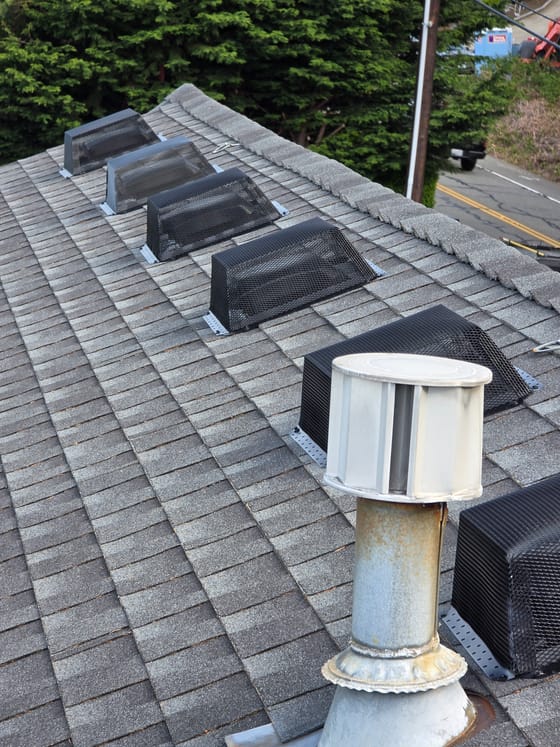
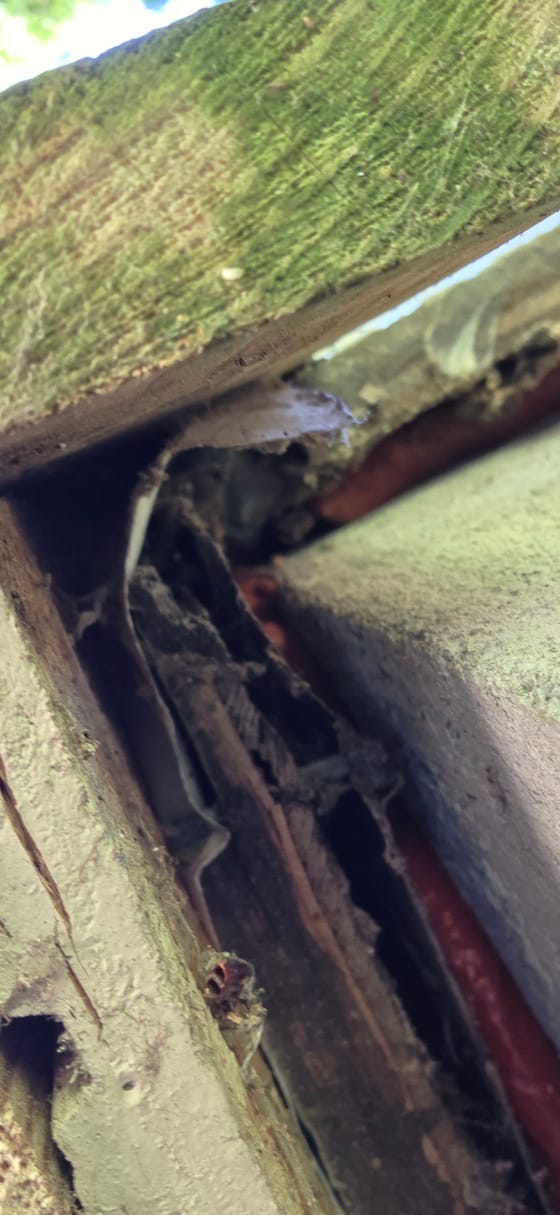
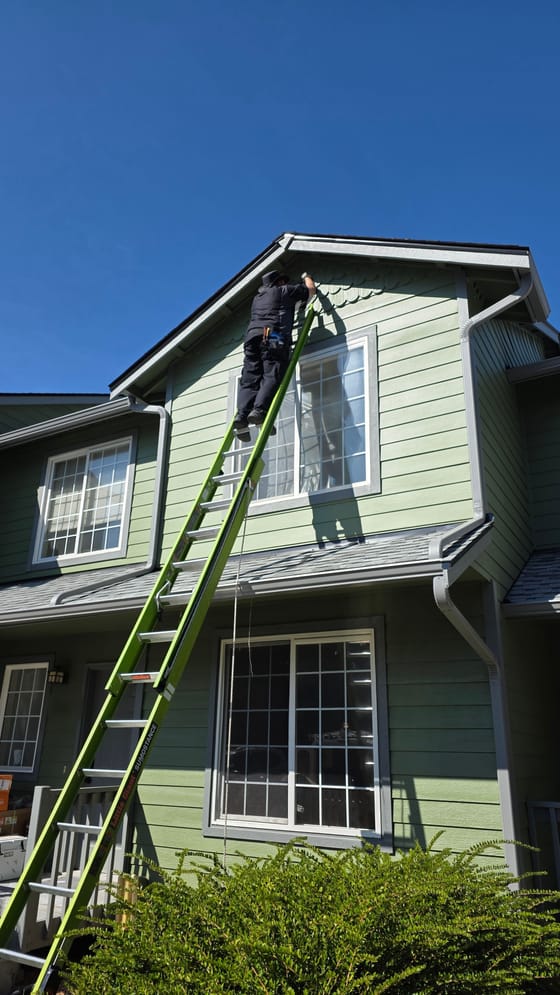
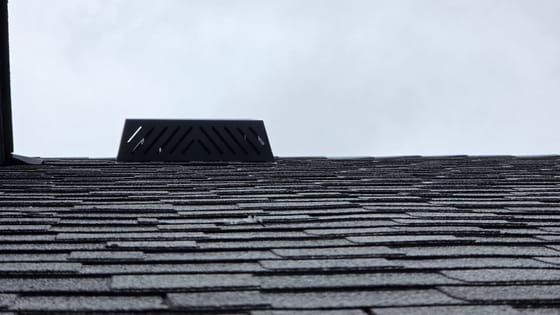
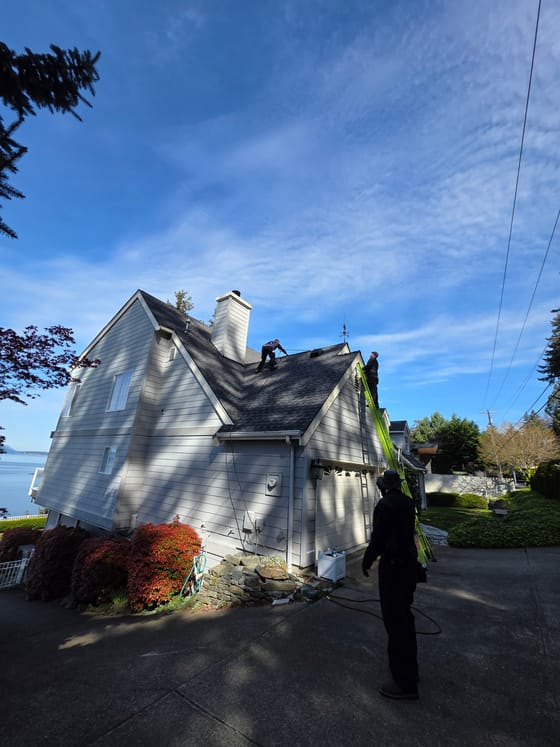
Soffit and roofline. Where a roof meets a wall at a change of pitch there is often a genuine hole. Combine that with tree or fence contact and you get animals in the attic rather than the crawlspace.
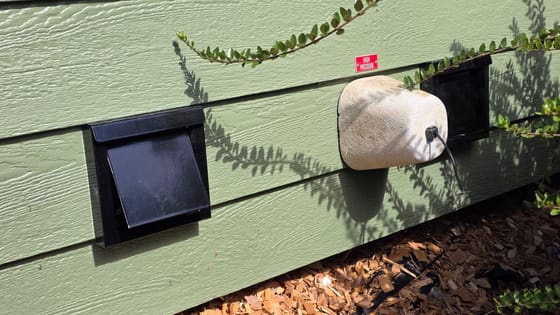
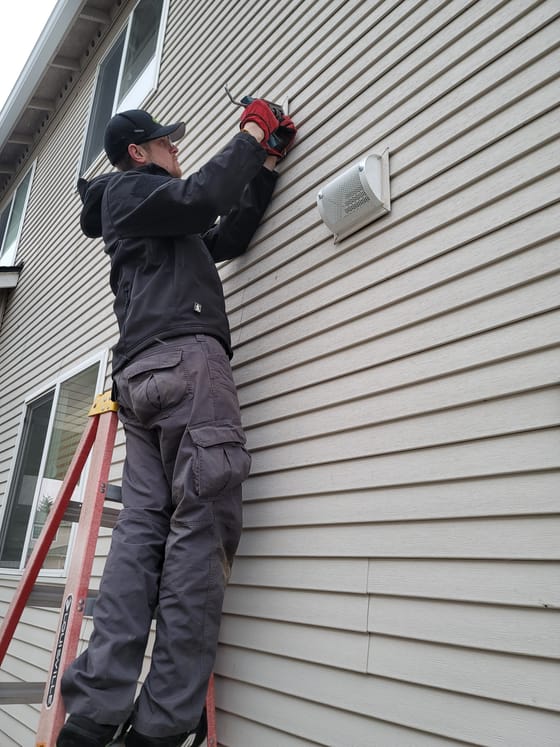
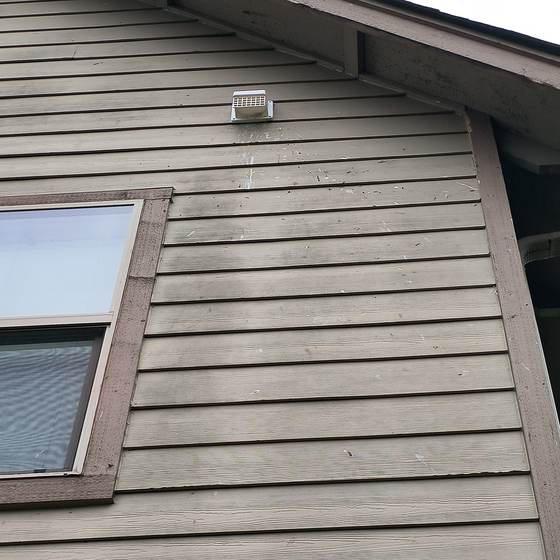
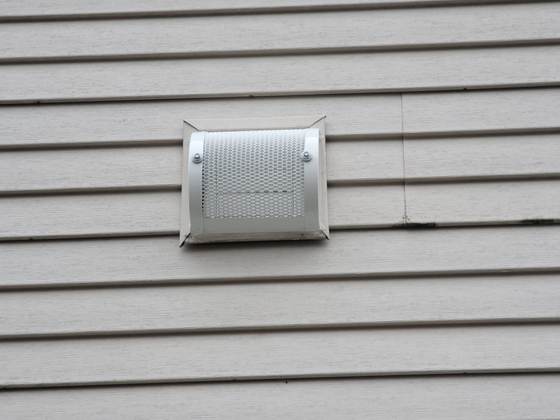
Dryer and bath vents. Plastic louvered covers break, and the duct behind them is a sheltered highway straight into the building.
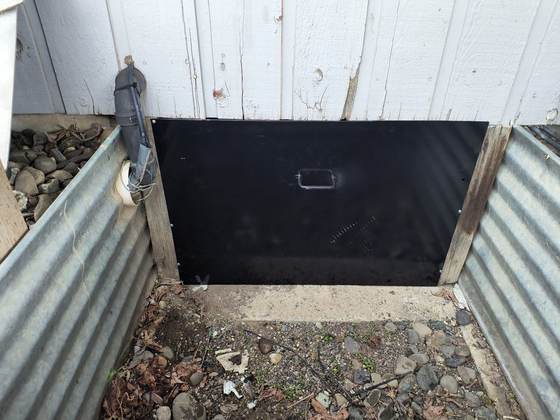
Crawlspace access doors. Warped, propped open, or missing entirely.
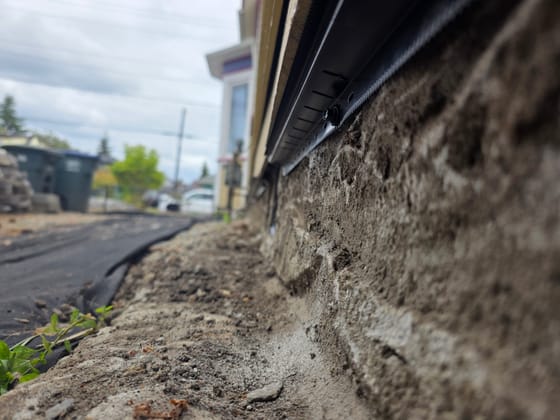
Siding at grade. Where siding meets or disappears below soil and bark mulch, which is both an entry point and a moisture problem feeding carpenter ants and dampwood termites.
Deck ledgers and rim joists. The junction is frequently unsealed, and on older decks the flashing is either failing or was never there.
Materials, which is where most exclusion fails
The difference between exclusion that lasts a decade and exclusion that lasts a season is almost entirely material choice. This is the part homeowners and a fair number of contractors get wrong.
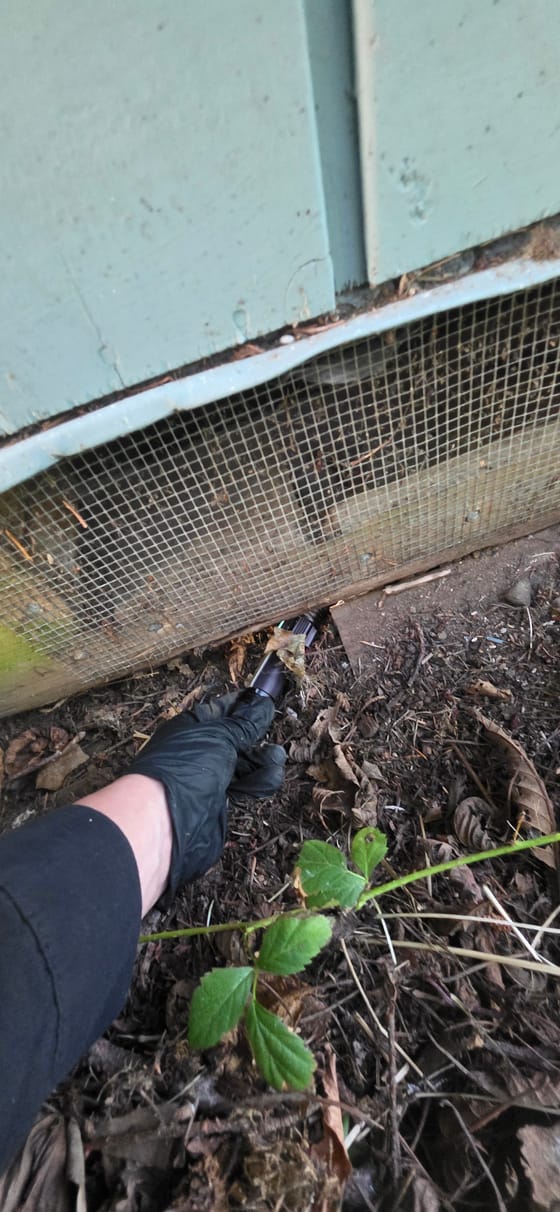
Hardware cloth, at the right gauge and mesh, is the workhorse. Quarter-inch mesh for rodents, finer where insects matter. Cut oversize, fastened properly to sound substrate, not stapled loosely over a hole.
Sheet metal where something will be chewed at directly — corners, edges, door bottoms, anywhere a rodent gets purchase.
Mortar and appropriate patching compound for masonry and concrete gaps.
Copper mesh as a packing material behind a sealant, because it does not rust out the way steel wool does in this climate.
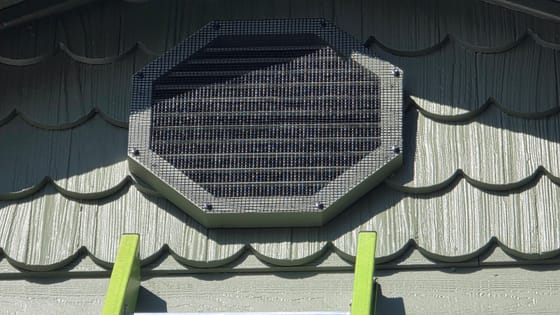
Purpose-made vent covers, for the openings where mesh is the wrong answer. A dryer vent is the clearest case: it has to shed lint and let a flap swing, and hardware cloth over one packs solid within a season, so screening it trades a rodent problem for a dryer that does not vent. We install manufactured rodent- and wildlife-proof covers made for that job instead — dryer terminals first, and the other utility penetrations where a fabricated patch would foul something that has to move.
Mesh size is a real trade-off rather than a detail. Quarter-inch hardware cloth stops rodents and passes airflow, but it is an open door to a wasp queen or a cluster fly, so on a vent that has to do both jobs we back the rodent mesh with a finer insect screen and accept the slight loss of ventilation.
What does not work on its own:
Expanding foam. A rat chews through cured foam in an evening. It has a legitimate role as an air seal behind a physical barrier, and no role as the barrier.
Steel wool alone. Rusts out, then leaves both a hole and a stain.
Caulk. Fine for insects at a tight joint, irrelevant to anything with teeth.
Screen door mesh or window screen over a rodent-sized opening. It is an insect material being asked to do a rodent job.
The other half of durability is fastening. Correct material fixed badly is a flap rather than a barrier, and this is where most well-intentioned DIY work comes apart — usually at the top edge, usually within a year.
The crawlspace
On the housing stock in this county, the crawlspace is where most of this work happens and where most of the value is.
Vapor barrier. A functioning ground barrier stops soil moisture evaporating into the framing above. Its absence is the root cause behind moisture ants, dampwood termites and anobiid beetles, and it is one of the cheapest interventions available.
Vent screening. Two problems solved at once — airflow that actually works, and a closed door to rodents.
Access door. A door that seals, latches and can still be opened by someone who needs to get in.
Drainage and standing water. Sometimes ours to address, sometimes a groundwater or downspout problem that belongs to another trade. We will say which.
Insulation and debris. Contaminated or fallen insulation holds moisture against joists and hosts secondary pests. Where that has gone far enough, the job becomes crawlspace cleanout and restoration.
One job, several problems solved
This is the part that makes exclusion good value rather than merely effective.
The same work reduces rodents, because it closes their entries. It reduces wasps in wall voids, because it closes the siding gaps a queen uses in spring — and it does so safely, because sealing happens after a colony is dead rather than while it is alive. It reduces spiders, by cutting both their access and the insect prey coming through the same gaps. It reduces overwintering insects — cluster flies, boxelder bugs, conifer seed bugs — which are looking for exactly the small gaps in south-facing walls that exclusion closes. And it reduces moisture-driven insects by improving the conditions rather than treating the symptom.
It also does things that are not pest control at all. A sealed, screened, barriered crawlspace is a drier crawlspace, which means less decay, better insulation performance and lower heating loss.
What we do not do
We are not general contractors and we will not pretend otherwise to keep a job.
We do pest-related repair: vent screening and replacement, crawlspace access doors, sealing penetrations, damaged soffit and trim where it is the entry point, vapor barrier, insulation removal and replacement, and the exclusion materials described above.
We do not do roofing, siding replacement, structural framing repair, plumbing or drainage excavation. When the honest fix is one of those, we say so, describe it clearly enough that you can get a sensible quote, and where we can we will tell you who does that work well locally.
That distinction matters most when there is decay. Wood that has lost structural section needs replacing, and screening over it is cosmetic. We would rather lose the sealing work than seal a rotten sill plate and call it done.
Rentals and property management
Because Bellingham’s rental standard is explicit about the quarter-inch threshold, exclusion is a compliance item here rather than just good practice.
For an owner or manager, the sensible pattern is exclusion at turnover, when the unit is empty and access is easy. It is cheaper then than during occupancy, it avoids scheduling around a tenant, and it puts the work in before the next tenancy rather than during a complaint.
For multifamily buildings, shared walls and utility chases mean the building is the unit of work, not the apartment. Sealing one unit’s penetrations while the chase above it stays open moves the problem rather than solving it.
Washington’s landlord-tenant law, RCW 59.18.060, generally places responsibility for pest control on the landlord in multi-unit buildings, with a carve-out for single-family residences and for infestations caused by the tenant. Where the answer depends on which side of that you are on, we will say so plainly rather than billing whoever called.
Timing
August and early September is the window. Rodents move indoors as the ground saturates through late September and October, so sealing before the push means sealing an empty structure. Sealing in November means sealing animals in, which is why at that point exclusion has to follow trapping rather than lead it.
Spring is second best. Overwintering insects have left, wasp queens have not yet established, and there is time before summer.
After any trade has been on the property. A new cable run, a replaced dryer vent, a plumbing repair or a solar install reopens the envelope. It is worth a look after work of that kind, because a carefully sealed house can be reopened by one afternoon of somebody else’s drilling.
Around the county
Pre-1940 city stock. Lettered Streets, Columbia, Sunnyland, York and Roosevelt. Post-and-pier, failing vent screens, unsealed penetrations and siding close to grade. The highest-yield exclusion work in the county, and often the whole solution to a rodent problem.
The newer hillside developments. Foundations up here are generally sound, so the work moves upward — soffit returns, the junctions where a roofline meets a wall at a change of pitch, and wherever landscaping has grown into contact with the siding. Different job, same principle.
Around Lake Whatcom — Sudden Valley, Silver Beach, Edgemoor. Cedar construction, decks and ledger boards against a forest edge. Exclusion here is usually combined with moisture correction.
Rural and agricultural — Lynden, Everson, Nooksack, Sumas. Outbuildings, equipment sheds and open structures, where the work is closing bays and feed storage as much as houses.
Waterfront — Blaine, Birch Bay and Semiahmoo. Salt air degrades fasteners and flashing faster, and seasonal homes stand empty through the wet months with nobody to notice a new gap.
What a job actually looks like
The walk. Someone goes around the outside of the building slowly, then gets into the crawlspace and the attic. That last part is not optional — the entries and the evidence are inside those spaces, and a quote produced from a walk around the outside is a guess. We come out of it with a mapped list of openings, their sizes, what is behind each one, and the condition of the substrate around them.
The conversation. You get that list before any work happens, including the items that are not ours. If a downspout is dumping against the foundation or the siding has gone soft at grade, that goes on the list too, marked as somebody else’s trade.
Sequencing. If there is an active population inside, exclusion does not go first. Sealing a building with rodents in it produces animals that cannot get out and eventually die somewhere inaccessible. The order is trap, confirm quiet, then seal. On an empty structure — a vacant rental at turnover, a seasonal home before the wet months — we can seal straight away.
The work. Materials cut to fit and fastened to sound substrate, working from the ground up. Most of the labor is access rather than installation: getting to a rim joist behind stored belongings, or working an eighteen-inch crawlspace on your back.
The walk-through afterward. We show you what was closed and with what. On a crawlspace job that usually means photographs, because you are not going to crawl under there to check and you should not have to take it on faith.
Why exclusion is undersold in this industry
Worth naming, because it explains why you may not have been offered it before.
Exclusion is hard work. It happens in crawlspaces and on ladders, it takes hours rather than minutes, it requires materials and tools rather than a tank, and it cannot be done by a technician moving through eight stops in a day. A recurring treatment route is a far more comfortable business to run — predictable revenue, short visits, no confined spaces.
It also does something a treatment plan does not: it reduces the customer’s need for future visits. A company optimizing for recurring revenue has a structural reason not to lead with it.
We would rather sell the thing that works and be the company you call for the next house. That is the whole argument, and it is why this page exists on a pest control site at all.
Vacant and seasonal properties
A specific case worth calling out, because it is common around Birch Bay, Blaine, Semiahmoo and the lake.
A house standing empty through a Whatcom County winter has nobody to notice the first sign of anything. Nobody hears the scratching, nobody sees the droppings accumulate, nobody spots the vent screen that came loose in a storm in November. By the time an owner arrives in April, a small entry has been a large problem for four months, and it frequently involves contaminated insulation rather than just animals.
For those properties the sensible pattern is to seal the envelope in early autumn before the property closes up for the season, rather than reacting in spring. It is dramatically cheaper, and it means arriving to a house rather than to a cleanup.
What it costs
Quoted from the walk-through, because the range is genuinely wide and depends on access more than anything else.
A handful of foundation vents on a single-story house with a workable crawlspace is a contained job. A prewar house with forty feet of failed screening, an eighteen-inch crawlspace, siding soft at grade and a soffit that needs work is a larger one, and part of it may need another trade first.
The honest framing is this: exclusion is usually a larger single number than a treatment and a smaller number than repeated treatment over a few years. On a rodent problem it is almost always the better purchase. We will tell you where the line falls on your property, and the estimate is free.
Related work
Exclusion sits alongside rodent control, which is where most of it originates, and crawlspace cleanout and restoration and attic insulation where contamination has gone far enough. Sealing a wall after a wasp colony is dead is part of that job rather than a separate one. And where the driver is water rather than a gap, the relevant pages are ants and termites and wood-destroying pests.
Frequently asked questions
What size gap actually matters?
A quarter inch is the working number — roughly a pencil. A house mouse needs about that. Rats are given slightly more than half an inch in the extension literature, but a quarter inch is all one needs to get its teeth on an edge and gnaw the hole to size, so the standard does not change. Bellingham's rental inspection checklist flags foundation openings larger than a quarter inch as an infestation risk.
Can I just use expanding foam?
Not on its own. A rat will chew through cured foam in an evening, and steel wool packed alone rusts out within a season or two in this climate. Foam has a place as a sealant behind a physical barrier, but the barrier has to be hardware cloth, sheet metal or mortar. Material choice is most of what separates exclusion that lasts from exclusion that does not.
Is exclusion worth it if I am already on a treatment plan?
It is usually worth more. A recurring treatment manages pressure on a property and has to keep being paid for. Exclusion is bought once and keeps working. If you are choosing between them for a rodent problem, close the gaps first — that is the honest answer even though it is the smaller recurring number for us.
Do you do the structural repairs too?
We do pest-related repair — vent screening, crawlspace access doors, sealing penetrations, damaged soffit and trim, vapor barrier, insulation. We are not general contractors. Where the fix is roofing, siding replacement, plumbing or structural framing, we will tell you plainly and hand it off rather than working around it.
When is the best time to have exclusion done?
August and early September, before the rain drives rodents indoors. Sealing a house in late October means sealing animals inside it, so at that point exclusion has to follow trapping rather than lead it. Spring is the second-best window, after overwintering pests leave and before wasps establish.
How long does exclusion last?
Properly installed hardware cloth and sheet metal last for years — this is not a treatment that wears off. What needs occasional attention is anything a contractor opens afterward. A new cable run, a replaced dryer vent or a plumbing repair reopens the envelope, and those are worth checking after any trade has been on the property.
Guides
- Low-Impact Treatment, and What It Can and Cannot Do
- Sealing a Building Before Fall
- Who Pays for Pest Control in a Washington Rental
- How to Choose a Pest Control Company in Whatcom County
- The Whatcom County Pest Year
- WDO Reports in a Washington Property Sale
- What Drives the Cost of Pest Control
- What Integrated Pest Management Actually Means
The same door, before and after
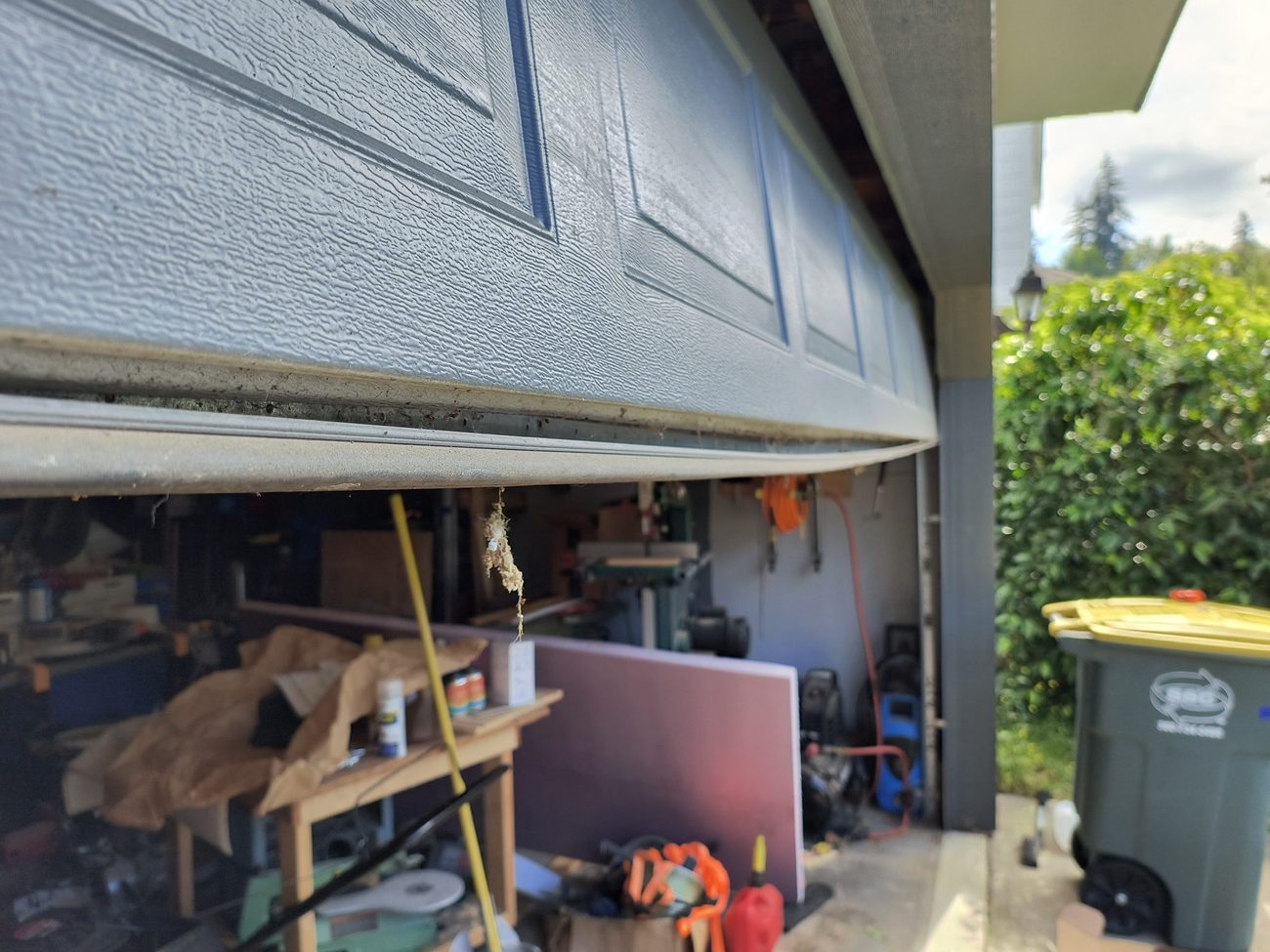
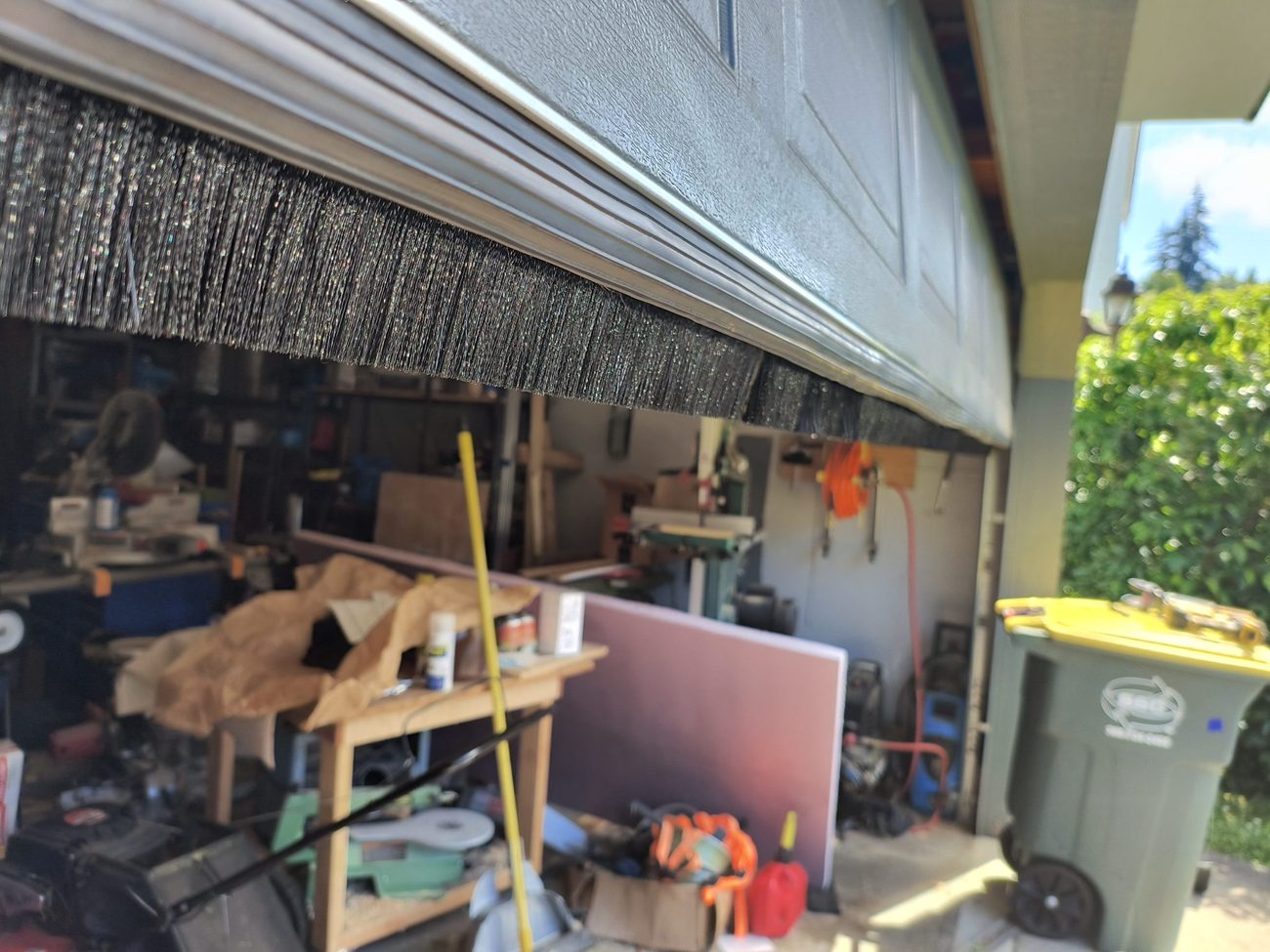
The same door, the same morning. A garage door seal is the single most common way a rodent walks into a house in this county, and it is invisible from inside because the door still closes and still looks shut. What went on is an Xcluder rodent-proof seal: a heavy rubber gasket lined with a fill fabric made to stop rodents chewing through it, with a brush strip behind it on the inside face that follows a worn or uneven slab and closes the small gaps rubber alone leaves.
Exclusion and metalwork: 23 photographs from real jobs
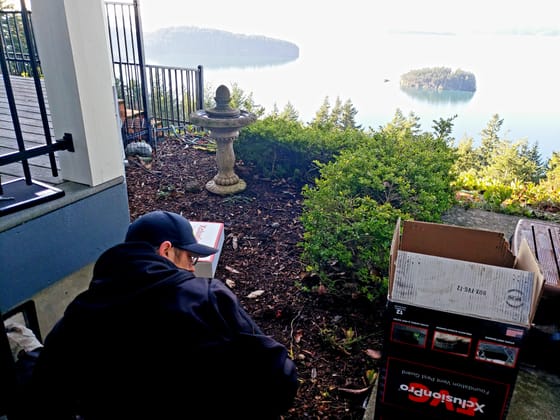
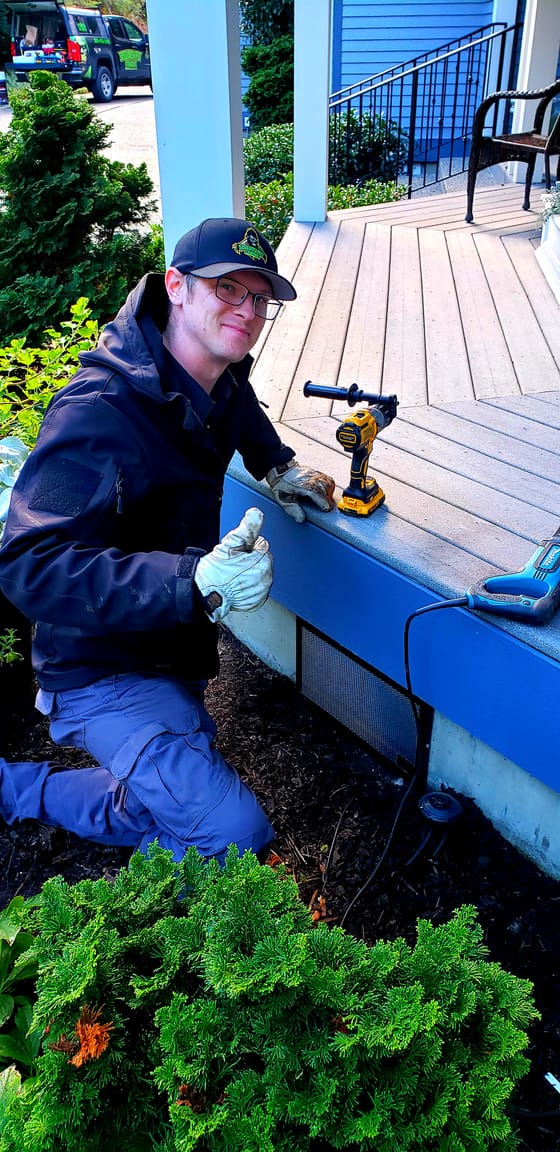
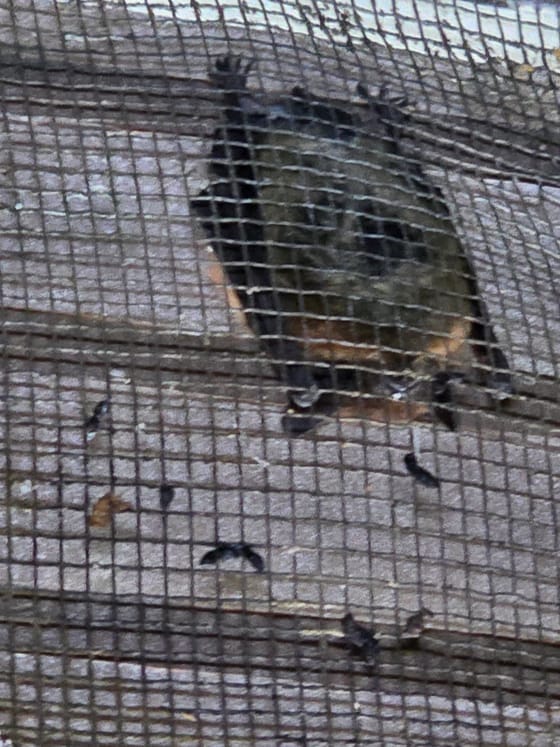
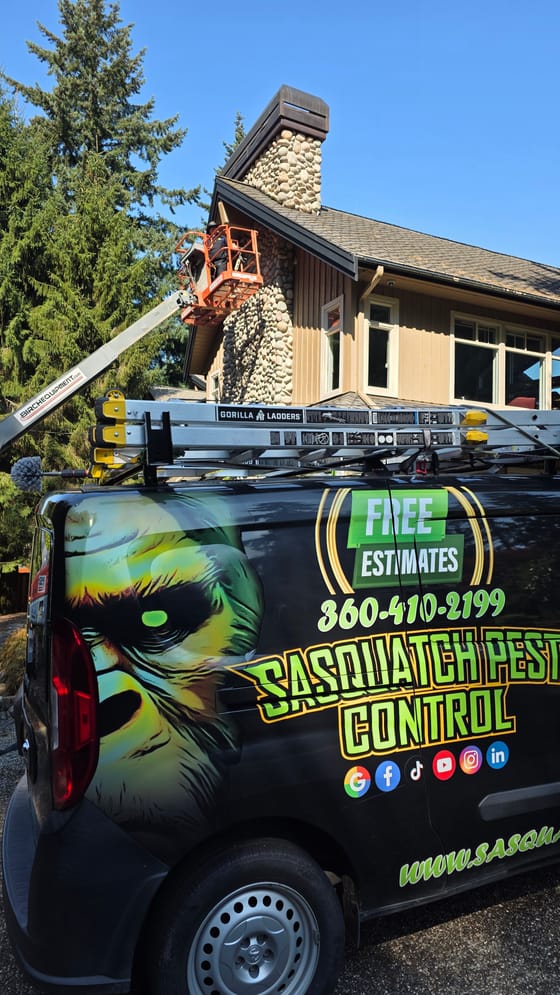
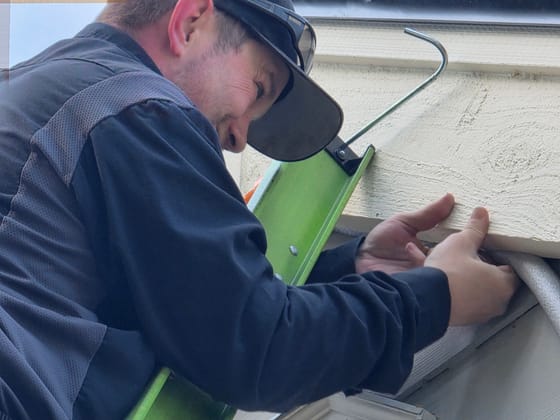
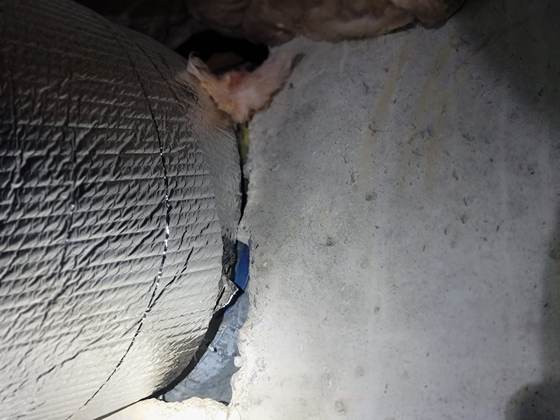
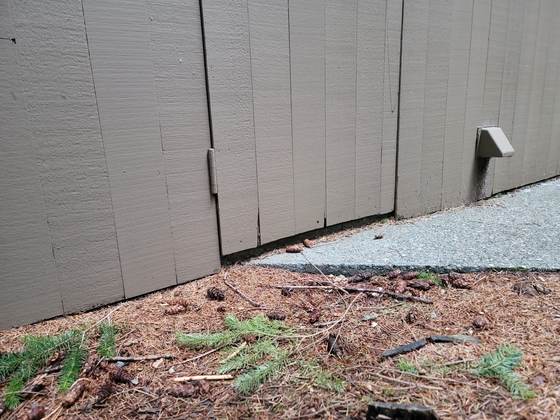
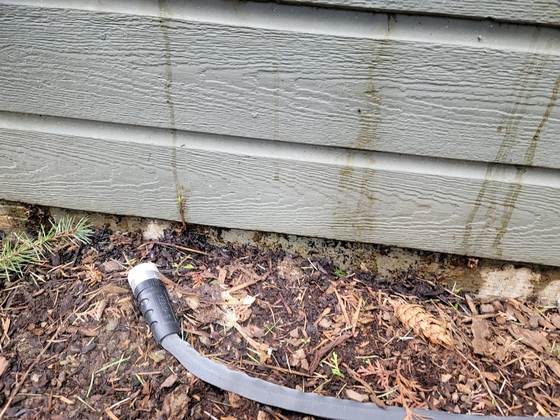
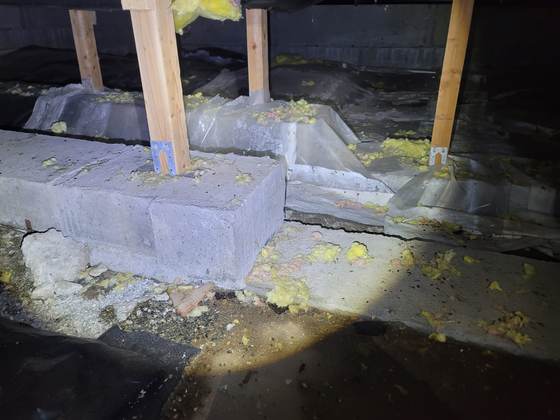
Every one of these was taken on a job in Whatcom or Skagit County by whoever was doing the work. Stock photography is close to universal in this trade and a reader has no way to tell by looking, which is the only reason it is worth saying out loud. The rest of the archive is on the gallery.
From the blog
Pest Exclusion & Repairs in Whatcom County?
Family-owned, no long-term contracts, and every treatment is backed by our 100% Service Guarantee.
Most calls in Whatcom County are out within 1–2 days, about 3 during the late-summer peak.
Last updated