
Common House Bugs in Washington State
Most insects found in a Washington house belong to four groups: autumn invaders coming in to overwinter, moisture-loving species that signal a damp building, stored-product pests in the kitchen, and fabric pests. WSU Pestsense covers all of them for this state, and only a minority of them ever warrant treatment.
Call 360-410-2199 Request a free inspection
The short version
| The four groups | Autumn overwintering invaders, moisture-driven species, stored-product pests, and fabric pests |
|---|---|
| The commonest autumn arrivals | Cluster flies, boxelder bugs, western conifer seed bugs, Asian lady beetles, stink bugs |
| What moisture brings | Moisture ants, dampwood termites, silverfish, springtails, sowbugs, millipedes, centipedes |
| Usually harmless, often panicked about | Cellar spiders, pillbugs, psocids, pseudoscorpions, clover mites, grass-carrying wasps |
| Kissing bugs | Not in Washington. CDC lists each triatomine species by state and Washington appears for none |
| How many warrant treatment | A minority. Most of this list is a sealing, drying or housekeeping question |
- Note where you found it: kitchen, bathroom, crawlspace, upstairs window or stored food each point at a different group.
- Note the month. Autumn arrivals, spring emergences and midsummer wanderers are three different conversations.
- Count. One insect is an event; the same insect repeatedly in the same place is a pattern worth tracing.
- Check for water before anything else if it came from a crawlspace, a bathroom or a wall near plumbing.
- Photograph it from above against something pale with a coin for scale before you squash it.
- Send the photograph in. Identification costs nothing and most of the time the answer is that nothing needs treating.
What actually turns up inside a house here
Less variety than people expect, and nearly all of it falls into four groups.
Western Washington has a specific climate and a specific building stock — wet winters, mild summers, crawlspaces, and a great deal of wood — and the insects that end up indoors here reflect that. WSU Pestsense maintains fact sheets for the household and structural pests of this state, and running down that list against what we actually see on jobs produces four recognizable groups plus a handful of outliers.
Autumn invaders. Species that overwinter as adults and come indoors to do it. They arrive in October, they do no damage, and they are a sealing problem.
Moisture species. Insects that need damp conditions and are therefore telling you something about the building before they are telling you anything about themselves.
Stored-product pests. Kitchen and pantry insects, which arrive in packaging rather than through a gap.
Fabric pests. Carpet beetles and clothes moths, which are slow, quiet, and noticed late.
Then there are ants, which are their own category and the largest single service we run, and spiders, which have their own guide.
The autumn arrivals
The biggest group by phone call volume, and the one that worries people most unnecessarily.
Every October the same set of insects appears on sunny south and west walls and starts working its way into window frames, soffits and attics:
- Cluster fly — slow, furry, in upstairs windows all winter. Breeds in earthworms outdoors, never indoors.
- Boxelder bug — black with red lines, in numbers, on the warm wall.
- Western conifer seed bug — large, brown, clumsy, and the one most often mistaken for something dangerous.
- Multicolored Asian lady beetle — not the native lady beetle, and it stains.
- Brown marmorated stink bug — shield-shaped, and the smell is real.
None of them breeds indoors. None of them damages anything. They came in through gaps that were there before they arrived, which is why the entire answer to this group is sealing a building before fall and why the work is worth doing in August rather than in October. The problem page for the pattern is bugs on the south wall every October.
The ones that mean a moisture problem
The most useful group on this page, because the insect is a symptom.
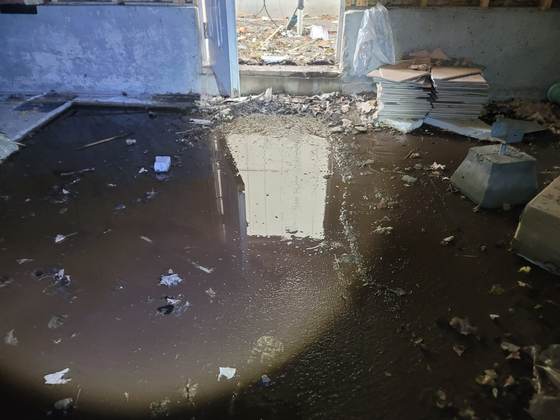
Silverfish in a bathroom, springtails around a shower tray or a damp doorframe, sowbugs and pillbugs against a foundation, millipedes coming under a door after rain, psocids or booklice on damp plaster and stored paper — every one of those is an animal that cannot survive in dry conditions.
Two of this group do matter structurally. Moisture ants nest in wood that is already wet and are among the most reliable indicators of a leak there is, which is the subject of moisture ants mean a water problem. And the Pacific dampwood termite needs wood with high moisture content, which in this county means a wet crawlspace, a failed gutter or ground contact.
Why this keeps happening here is the subject of why crawlspaces here stay wet. The short version is that a vented crawlspace in a maritime climate spends much of the year taking on moisture it cannot shed, and a great deal of what people call a bug problem is a ventilation and drainage problem wearing legs.
The kitchen and the pantry
These arrive in a bag, not through a window.
Indianmeal moth is the common one — the small moth flying in lazy loops near the ceiling, with webbing and clumped grain in a bag of flour, birdseed, dried fruit or pet food. Sawtoothed grain beetle and the cupboard and drugstore beetles WSU lists are the same story in a different shape.
The important thing about this group is that treatment is almost never the answer. The infestation is in a specific package; finding that package ends it. Spraying a kitchen does not, and WSU’s standing advice against pesticide on food preparation surfaces applies with full force. The service page is beetle and pantry pest control and the moth side is moth control.
Fruit flies, fungus gnats and drain flies are a related family of complaints with a related answer — find the wet medium, remove it — and they are covered under fly control and in how long do flies live.
Fabric, carpet and wool
Slow, quiet, and noticed after the damage.
Carpet beetle larvae feed on wool, silk, felt, feathers, pet hair and the dust under furniture that nobody moves. Webbing clothes moth does the same in stored wool. Both are found late, because the first sign is damage rather than an insect, and both concentrate in the places nobody disturbs — under a heavy sofa, behind a wardrobe, in a box in a closet.
Carpet beetle is also the species most often confused with bed bugs, which is worth knowing before anybody panics about a bedroom.
The ones that bite, and the ones that only look as though they should
A short real list and a much longer imaginary one.

Actually bite people here. Bed bugs, cat fleas, rodent mites after a rodent problem has been resolved and the mites have lost their host, and the western black-legged tick outdoors. That is close to the whole list for a house in this county.
Look alarming, do not bite. Western conifer seed bugs, earwigs, house centipedes, mud daubers, grass-carrying wasps, pseudoscorpions, and nearly every spider in the building. Earwigs in particular carry a reputation out of all proportion to anything they do.
If something is biting you and you cannot find it, that is a specific problem with a specific set of answers, and bites, but no bugs found works through it properly.
Are there kissing bugs in Washington?
No — and the question is asked often enough in this state to need a straight answer.
CDC publishes the United States distribution of triatomine bugs species by species, with the states each one occurs in. Washington does not appear for any of them. The listed ranges run through the Southwest, the South and the Southeast: the nearest states on the list are California, Nevada, Utah and Colorado, and most species are confined to Arizona, New Mexico and Texas.
What gets photographed and sent to us as a possible kissing bug is, almost every time, a western conifer seed bug. It is large, brown, flat-backed, flies badly, lands on people, and turns up indoors in exactly the season when somebody has just read an article about Chagas disease. It feeds on conifer seeds and cannot bite a person.
This is the same shape of answer as brown recluse spiders in Washington: a frightening species that genuinely exists, genuinely matters where it lives, and does not live here.
The ones that are not insects at all
Worth separating, because the treatment logic is different.
Clover mites — the tiny red specks on a sunny wall in spring and autumn. Arachnids, lawn feeders, harmless, and the subject of their own profile.
Sowbugs and pillbugs — crustaceans, closer to a crab than to a beetle, and entirely dependent on damp.
Millipedes and house centipedes — many-legged, unrelated to each other, and both moisture indicators.
Pseudoscorpions — tiny, with visible pincers, genuinely startling at first sight, and predators of other small household arthropods. They are a sign of a healthy building rather than a sick one.
And spiders, which have their own guide because the questions people ask about them are different from the questions they ask about anything else.
Which of these actually need treating
A minority, and that is the point of writing the list out.
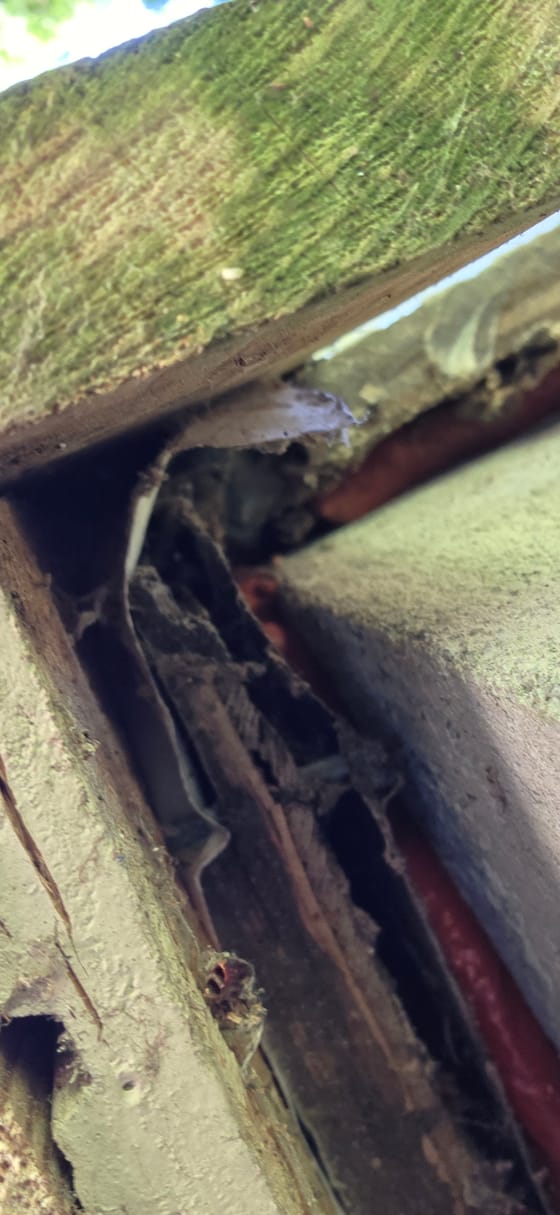
Treat, usually. Carpenter ants in a structure. Bed bugs. German cockroaches. Fleas with an active host. Dampwood termites and powderpost beetles in sound structural wood. A yellowjacket nest somewhere people go.
Fix the building instead. Every autumn invader. Every moisture species. Most spiders. Most millipede, sowbug and silverfish complaints.
Fix the cupboard instead. Every stored-product pest.
Do nothing. Pseudoscorpions, most solitary wasps, cellar spiders, lady beetles, a single wandering anything.
The honest version of the whole subject is in what integrated pest management actually means and in low-impact treatment, and what it can and cannot do.
Identifying what you have
Photograph it before you squash it.
From above, against something pale, with a coin or a ruler in frame for scale, and in focus. That single photograph settles most identifications in seconds, and it costs you nothing to send one to us. The whole library, species by species, is at the pest library.
What is worth telling us alongside it: where you found it, what month, whether there was one or several, and whether that spot is damp. Those four things usually matter more than the photograph does, because they decide which of the four groups above you are in — and that, rather than the species name, decides what anybody should do about it.
Frequently asked questions
What are the most common bugs in Washington houses?
By volume: autumn overwintering insects like cluster flies, boxelder bugs and western conifer seed bugs; moisture-driven species like silverfish, springtails and sowbugs; ants, which are the single largest service category here; and spiders, which arrive on their own schedule in late summer.
What are the tiny bugs in my bathroom?
Usually silverfish or springtails, and occasionally psocids. All three are telling you the same thing, which is that something in that room stays damp longer than it should. Dealing with the moisture does more than anything sprayed at the insects.
Are there kissing bugs in Washington state?
No. CDC publishes the US distribution of triatomine bugs species by species and state by state, and Washington does not appear for any of them. The nearest listed states are California, Nevada, Utah and Colorado. What gets mistaken for one here is usually a western conifer seed bug.
Why do bugs come inside in the fall here?
Because several species overwinter as adults and look for a sheltered, dry cavity to do it in. They gather on warm sunny walls in October and work their way into the first gap they find, which is usually around a window frame or at the top of a wall.
Which house bugs actually damage a building?
A short list: carpenter ants, dampwood termites, anobiid powderpost beetles and wood-boring weevils. Everything else on this page is a nuisance, a signal of a moisture problem, or both. That distinction is the one worth getting right before anybody spends money.
Do I need a quarterly spray for these?
For most of them, no. Overwintering insects are a sealing problem, moisture species are a drying problem, and stored-product pests are a cupboard problem. There are households where a recurring program makes sense, and we would rather explain which those are than assume yours is one.
What is the small gray thing with many legs in my bathroom?
Most likely a silverfish if it is flat, tapered and fast, or a house centipede if it is long-legged and alarming. Both are moisture indicators. Neither is dangerous, and the centipede is actually hunting the other insects in the room.
Is finding one insect a sign of an infestation?
Usually not. A single wanderer means very little. What matters is repetition: the same species in the same place over days or weeks means something is either breeding nearby or getting in through a route that is still open.
Sources
- WSU Pestsense — full alphabetic pest list — read November 12, 2026
- WSU Hortsense — Vespidae: paper wasps, yellowjackets, hornets and potter wasps — read November 12, 2026
- CDC — Triatomine species in the United States, by state — read November 12, 2026
- PNW Insect Management Handbook — public health pests — read November 12, 2026
Rules change. This page is scheduled for review against its sources by November 12, 2027. If you are reading it after that date and something looks out of step with the current rule, the rule is right and we are wrong — please tell us.
Related guides
Pest problem in Whatcom County?
Family-owned, no long-term contracts, and every treatment is backed by our 100% Service Guarantee.
Most calls in Whatcom County are out within 1–2 days, about 3 during the late-summer peak.
Last updated