
Sealing a Building Before Fall
Late summer is the window. Cluster flies, stink bugs, boxelder bugs, seed bugs and ladybird beetles all move indoors as nights cool, and rodents move in on the same schedule through the same openings. Once anything is in a wall void, sealing and interior treatment both arrive too late to help this year.
Call 360-410-2199 Request a free inspection
The short version
| When to seal | The last two weeks of July through the end of August, before insects and rodents start probing the building |
|---|---|
| Calendar reminder | Third week of July, the last point to book exclusion work and still have it finished in time |
| When things get in | Roughly the third week of September to the first week of November, insects and rodents through the same openings |
| Sealing in late October | Traps whatever is already in the wall void; rodents die out of reach and dead insects feed carpet beetles |
| Rodent mesh | Quarter-inch hardware cloth. Half-inch stops rats but passes mice, and rats get through chicken wire |
| Insect-only openings | Caulk and insect screen are enough on their own, because overwintering insects cannot chew |
| Vents and unexplained holes | Screen anything that exists for airflow; close outright any opening nobody can say what it was for |
| DIY or hand it over | Door sweeps, garage seals and ground-level penetrations are DIY; ladder, roofline and under-house work is worth handing over |
- Check whether the building already holds a population: droppings, gnawing, window insects last winter, wasp traffic on the siding.
- Deal with what is inside before sealing: trap rodents and confirm the building is quiet.
- Close from the ground up: foundation line, crawl vents, penetrations and doors, then the roofline last so the ladder comes out once.
The six weeks that decide the winter
There is a specific, narrow, and slightly unfair fact underneath almost every winter pest call in Whatcom County: the problem arrived during a six-week stretch in the autumn, through openings that were there all year, and the only cheap moment to have done something about it was several weeks before anybody had a reason to think about it.
Late summer is when this work is worth doing. October is when the phone rings. The distance between those two is the whole subject of this page.
This is not a subtle argument and it is not ours. University of Minnesota Extension, writing about the insects that pile onto walls every autumn, tells homeowners to make repairs to the openings they get in through before the end of August. Penn State Extension, writing about cluster flies, says mechanical exclusion is the best method for keeping them out of buildings, and that where an exterior application is used it belongs in the autumn just before the flies congregate. Neither source recommends anything for a wall cavity in January, because there is nothing useful to recommend.
What is actually arriving, and why it all arrives together
Two entirely separate groups move toward buildings on the same schedule, for the same reason, through the same gaps. That coincidence is what makes late-summer sealing such good value, because one afternoon’s work addresses both.
The overwintering insect complex. Cluster flies, brown marmorated stink bugs, boxelder bugs, western conifer seed bugs and ladybird beetles are unrelated animals with different diets and different life cycles, and they all do the identical thing in October. As nights cool, the adults that need to survive to spring look for a sheltered crevice, gather on the elevations holding the afternoon sun, and work inward through whatever openings already exist. Minnesota Extension’s own framing is that chilly mornings and shorter days send them out to settle in for the winter — and that because they are not feeding while they sit on the outside of a building, products aimed at feeding insects have nothing to act on.
None of them can make a hole. They have no jaws for it. Every route in was already there.
The species-level detail — how to tell them apart, what each one does, and why none of them damages anything indoors — is on the brown marmorated stink bug, cluster fly, boxelder bug and western conifer seed bug profiles, and there is no point restating it here. What matters for this page is the timing, which is identical across all of them.
Rodents, on a few weeks’ delay. As nights cool and outdoor cover dies back, a heated building stops being one option among many and becomes the best one available. Mice come first and rats follow. Unlike the insects, they can make an opening — a quarter-inch gap is enough to get incisors around an edge and start removing material — which is why the standard for rodent work is a physical barrier rather than a sealant.
Put those together and you get a single window. From roughly the third week of September to the first week of November, a building is being probed continuously by two different kinds of animal using the same list of openings. Everything that is going to get in gets in during that stretch.
Why the wall void changes everything
The reason the calendar is so unforgiving is that the barrier between “outside” and “inside a cavity” is the only barrier that matters, and it is one-way in practice.
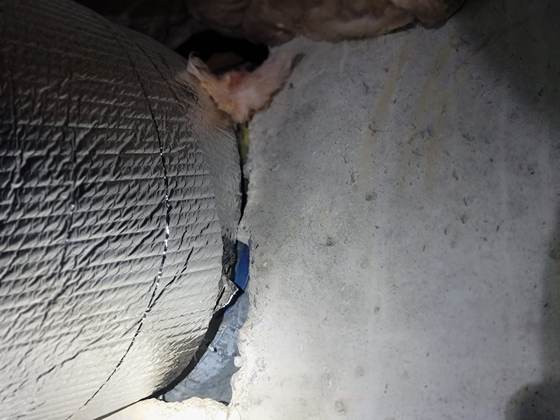
Once an overwintering insect is in a wall void, a soffit run or an attic, almost nothing reaches it. It is not feeding, so a residual has nothing to be picked up from. It is not moving across surfaces in any consistent pattern, so contact is a matter of luck. It is wedged in a space with no access. Minnesota Extension does not recommend indoor insecticides for these insects at all, on the grounds that they are not living or reproducing indoors in the first place.
And the version that appears to succeed is worse than the version that does not. Penn State makes the point explicitly for cluster flies: killing them where they sit leaves carcasses, carcasses feed carpet beetles and larder beetles, and the larvae disperse into the rooms below to work on wool and stored textiles. You would be trading a harmless nuisance for a destructive one, in a space you cannot get into.
Rodents produce a different but equally awkward version. Seal a building with an active population inside and the animals cannot get out, which means they die somewhere inaccessible, which means a smell, flies and eventually opening something up.
So the rule that governs the whole job: the sealing has to happen before, or it has to happen after a population is confirmed gone. There is no version where you close a building in late October and get a good outcome from it.
Walking the building
Allow an hour. Go in order rather than wandering, take notes, and photograph anything you are not going to fix today. This is roughly the order we work in.
Foundation and rim joist
Start at one corner and go all the way round, low, looking at the band where the foundation meets the framing above.
On the pre-war housing stock in the older Bellingham neighborhoods, this line is where the money is. Post-and-pier construction plus eighty years of settlement produces genuine gaps between foundation and framing that are invisible from outside and obvious from underneath. On newer stem-wall construction the line is tighter and the failures are localized — a form-tie hole, a crack, a place where a contractor cut through.
Also look at the relationship between the ground and the building. Soil or bark mulch bridging up to the siding is both an entry route and a moisture problem, and correcting it is a shovel rather than a trade.
Crawl vents
The single most common entry on older houses here, and the item most often “fixed” in a way that does not hold.
Check each one for three things: whether the screen is intact, whether it is metal, and whether the mesh is fine enough to matter. Original screens rust through in this climate. Replacements are frequently window screen, which is an insect material asked to do a rodent job, or coarse mesh, which stops nothing. Also check that the vent is not buried behind landscaping or half-filled with soil, because a blocked vent is a moisture problem before it is anything else.
The detail on this — mesh, gauge, fastening and how it interacts with required ventilation area — is on crawlspace vent screening.
The crawlspace access
Warped, propped, missing, or opening into a space stacked with belongings. It needs to close, latch, and still be openable by somebody who has to get in.
Utility penetrations
Water, gas, electrical, cable, refrigerant lines, irrigation, and every service added since the building went up. UC IPM lists openings around water pipes, electric wires, sewer pipes, drain spouts and vents among the primary rodent routes into buildings, and in our experience almost nobody seals them.
The gap around the pipe is the issue, not the pipe. A hole cut generously with a hole saw and never closed is a standing invitation, and the contractor who ran the line in 2019 had no reason to think about it.
Check hose bibs, exterior outlets, and anywhere a low-voltage line has been stapled through siding.
Dryer and bath vents
Plastic louvered covers crack, warp and stop closing, and the duct behind them is a sheltered run straight into the building. Minnesota Extension names dryer vents specifically in its list of what to seal against autumn invaders.
Check that the flap actually falls shut. Check the perimeter where the hood meets the siding. And check for any disused duct that terminates in open air behind a cover nobody has looked at in a decade.
Soffit and fascia
This is where the overwintering insects get in, and it is why so many buildings still have the problem after somebody has carefully sealed everything reachable from the ground.
Look at open soffit returns, the junction where a soffit meets a wall, gaps at the fascia line, and the open ends of vinyl siding and its J-channel. Penn State lists cracks around windows, doors, siding, utility pipes, behind chimneys and underneath the fascia as the openings to seal for cluster flies, and that list maps almost exactly onto what we find.
Binoculars from the ground are a legitimate first pass. A ladder is the second.
Roofline, vents and chimney
Gable vents and roof vents with damaged or coarse screening. Any point where a lower roof meets an upper wall, which on a house with an addition is often a genuine hole rather than a gap. Chimney flashing, and the chimney crown itself. Roof penetrations for plumbing vents and flues.
Anything overhanging — a branch touching the roof, a climber on the siding — is a route as well as an opening, and cutting it back is part of this job.
Doors, sweeps and thresholds
Every exterior door, and particularly the ones nobody thinks of as exterior: the garage side door, a basement door, a shop or utility door. Stand inside with the door closed and look for daylight underneath.
Minnesota Extension’s advice is to install door sweeps or thresholds on all exterior entry doors, and this is the highest return per dollar of anything on this list. It is also the item that wears out — a sweep on a door used forty times a day has a service life measured in a few years.
The garage
Worth its own stop, because it is usually treated as outside the building and is usually connected to it.
The bottom corners of a sectional door essentially never seal, and the gap there is exactly the size that matters. The seal along the bottom of the panel hardens and stops conforming to an uneven slab. And the wall between the garage and the house is frequently penetrated for services without anybody closing the holes, so a garage that admits mice admits them to the kitchen a day later.
Materials, which is where most of this fails
Correct material fastened badly is a flap, not a barrier. Wrong material fastened well is worse, because it looks finished.
Quarter-inch hardware cloth is the workhorse for rodents. UC IPM’s rule is that every opening larger than a quarter inch should be closed to exclude both rats and mice, and it is emphatic that lightweight chicken wire is not a candidate — rats pass through the openings. Its own material specifications run to galvanized wire cloth and expanded metal in the 16 to 19 gauge range, which is the useful part of the guidance: mesh size decides what gets through, gauge decides whether it survives being chewed.
Quarter-inch mesh is the right call rather than half-inch because half-inch stops rats and passes mice, and a building sealed against only one of the two is not sealed.
And here is the trade-off worth understanding. Quarter-inch hardware cloth stops rodents and passes air, which is exactly what a crawl vent needs. It is also an open door to a wasp queen looking for a wall void in spring, and to every insect on the overwintering list. Where a single opening has to do both jobs, the answer is to back the rodent mesh with a finer insect screen and accept a small reduction in airflow. Screening for rodents alone on a vent that has historically produced wasps is solving half a problem and calling it done.
Sheet metal anywhere something will be chewed at directly: door bottoms, corners, edges, the leading edge of anything a rodent can get purchase on.
Copper mesh as packing behind a sealant, because it does not rust out the way steel wool does in this climate.
Mortar and masonry patch for concrete and block.
Caulk and insect screen are sufficient — genuinely sufficient — for the overwintering insects on their own. They cannot chew, so a sealed joint holds. Minnesota Extension recommends silicone, elastomeric latex or silicone-acrylic caulk, spray foam or copper mesh for larger spaces, and sealing masonry openings of an eighth of an inch or larger. On a soffit run or a window-to-siding joint where rodents are not a factor, this is the whole material list.
What does not work on its own: expanding foam as a barrier, which a rat removes in an evening; steel wool alone, which rusts out and leaves a hole and a stain; window screen over a rodent-sized opening; and any of the above stapled loosely across a hole rather than cut oversize and fastened to sound substrate. Most failed exclusion comes apart at the top edge within a year, and it comes apart because of fastening rather than material.
Screening is not blocking
One error is common enough to warrant its own warning, and it is usually made by somebody being conscientious.
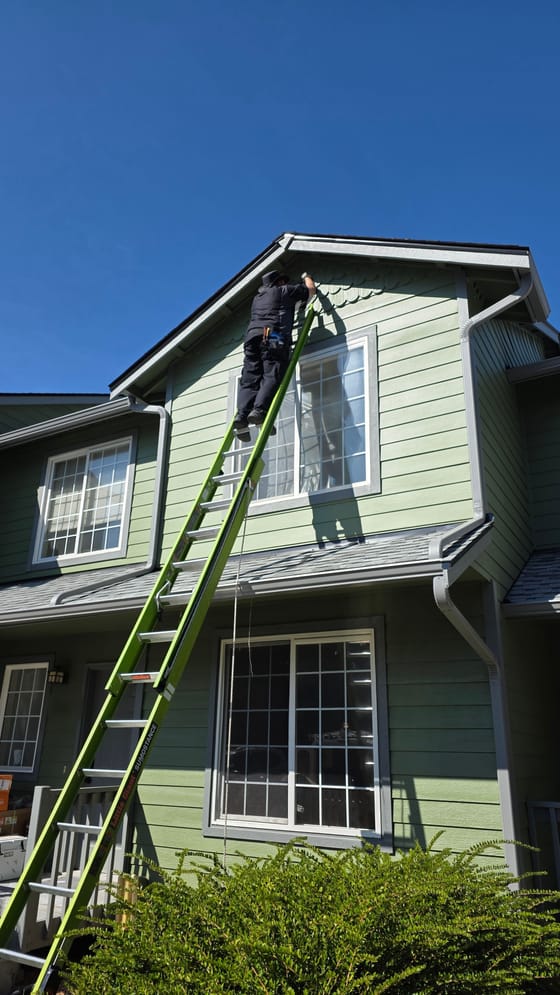
A crawl vent is not a defect. It is part of a moisture system, and Washington’s code sets a minimum ventilation area for the under-floor space precisely because the alternative is a space that cannot shed what the ground puts into it. Blocking vents with foam board, plastic sheet or expanding foam because rodents were coming through them trades a rodent problem for a decay problem, and decay is the more expensive of the two by a wide margin.
The same logic applies at the roof. Soffit and roof vents are there to move air through the attic. Closing them because insects were getting in produces condensation, damp insulation and eventually the conditions for exactly the organisms this whole exercise is meant to keep out.
So the operation is screening, not blocking. Every opening that exists for ventilation stays open and gets a barrier across it that passes air and stops animals. Every opening that exists for no reason — a redundant duct, an abandoned penetration, a hole somebody cut and never closed — gets closed outright.
If you are unsure which category an opening falls into, the test is simple: ask what it was for. If the answer is airflow, screen it. If nobody can say what it was for, it is a hole.
The longer version of why this matters in this climate is why crawlspaces here stay wet, which is the moisture side of the same building.
What to do yourself, and what to hand over
There is a real division here and it is mostly about height and confined space.
Reasonable to do yourself. Door sweeps and thresholds. Garage door seals. Sealing around hose bibs, outlets and low-voltage lines. Caulking window and door perimeters at ground level. Clearing soil and mulch away from siding. Cutting back vegetation touching the walls. Replacing an accessible crawl vent screen where the opening is sound and reachable. Closing the interior side of things — around a recessed light housing, a bathroom fan surround, an attic hatch, the gap behind baseboards on an exterior wall — which Penn State specifically recommends to stop insects emerging out of a cavity into rooms.
That last category deserves emphasis because it is undervalued. It does not stop anything entering the building, but it stops it entering the room, and for most households that is the part actually experienced.
Worth handing over. Anything on a ladder, which is most of the soffit, fascia and roofline work and is where the overwintering insects are getting in. Anything under the house, where the work is on your back in limited clearance and the gaps are the ones nobody has ever seen. Anything where the substrate has gone soft, because screening over decayed wood is cosmetic. And anything on a building that already has something living in it, because then the job has a sequence and getting the sequence wrong is the expensive mistake.
Sequence, which matters more than thoroughness
Three steps, in this order, always.
Check first. Before closing anything, establish whether the building already has a population. Droppings, gnawing, staining along a run, insect accumulation at windows in the previous winter, wasp traffic at a specific point on the siding. This is a genuinely different question from where the openings are, and it is the one people skip.
Deal with what is inside. Trap, confirm quiet, then move on. On an empty structure — a vacant rental at turnover, a seasonal property before it closes for the winter — this step disappears and sealing can start immediately.
Then close, from the ground up. Foundation line, vents, penetrations, doors, then the roofline. The order is practical rather than doctrinal: the low work is faster, and finishing the roofline last means the ladder comes out once.
The honest position on the timing
This page argues against our own autumn.
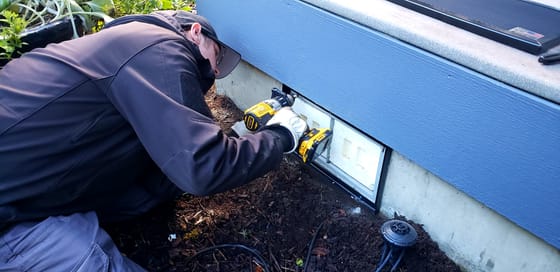
August and September are our heaviest weeks and October is barely quieter, because as the wasp work falls away the rodent work picks straight up. A good share of that rodent autumn is buildings that would not have needed us if somebody had spent an afternoon on them in August. Publishing that is not generosity; it is the position we would rather compete on. A building sealed in late summer is a customer who calls us about the next house, and a customer paying a subscription to manage a problem that a day of work would have addressed is a customer with a reason to leave.
The uncomfortable part is that August is the month in which nothing is wrong. There is no scratching in the wall, no insect at the window, no reason to think about it. That is precisely why it works, and it is also why almost nobody books it.
If you take one thing away: put a reminder in the calendar for the third week of July. Not because anything happens in July, but because it is the last point at which you can book the work and still have it done in time.
If it is already autumn
The advice does not become useless, it just changes shape.
Do the checking step properly, because it now matters. Close what can be closed without trapping anything inside — door sweeps, thresholds, garage corners, utility penetrations at ground level, anything on a wall that has no cavity behind it. Leave the wall voids and the roofline until you know what is in them. Deal with what is already inside on its own terms: vacuum the insects rather than spraying them, and trap rodents before sealing.
Then put the full walk in the diary for July. A single winter of noting which windows produce insects and which walls they gather on outside is genuinely useful information for next summer’s scope, and it is free.
Related work
The service page for this is pest exclusion and repairs, which covers materials, the crawlspace and what we will and will not take on. The specific jobs most of this walk produces are sealing a quarter-inch foundation gap and crawlspace vent screening. For the insects themselves, stink bug and boxelder bug control and bugs on the south wall every October are the practical pages, and cluster flies in upstairs windows covers the version of this that shows up in February. The rodent half is rodent control. And the year this page sits inside is the Whatcom County pest year.
Frequently asked questions
When exactly should this work be done?
The last two weeks of July through the end of August. University of Minnesota Extension puts it plainly for the insect side, advising that repairs to openings be made before the end of August, and the rodent push here starts a few weeks after that.
Why does sealing in October not work?
Because by then the animals are on the inside of the barrier. Closing the openings traps an overwintering population in the wall and, with rodents, produces animals that cannot get out. The work still has to be done, but it has to follow trapping rather than lead it.
Will an interior spray deal with insects already in the wall?
Very little of it reaches an insect wedged dormant in a cavity, and the treatment that does succeed leaves a mass of dead insects behind for carpet beetles to develop in. The extension guidance on this is consistent across several states.
What mesh should I be using?
Quarter-inch hardware cloth is the working standard for rodents, because a mouse gets through anything looser. Where wasps or overwintering insects also matter, back it with a finer insect screen and accept a small loss of airflow rather than screening only for one of the two.
How much of this can I do myself?
More than most people expect at ground level: door sweeps, thresholds, garage corners, accessible vents, sealing around hose bibs and utility lines. What is worth handing over is anything needing a ladder, anything at the roofline, and anything under the house.
Does sealing the house also help with wasps and spiders?
It does, and that is much of the argument for doing it. The same gaps admit a wasp queen looking for a wall void in spring, and door sweeps and thresholds cut the autumn spider traffic more than any application does.
What if I have already left it too late this year?
Do the exterior work anyway, in the order that makes sense: confirm nothing is living inside first, close what can be closed safely, and put the full walk in the calendar for next July. A late start still beats another full winter with the openings open.
Sources
- University of Minnesota Extension — Boxelder bugs (exclusion, timing and materials) — read September 2, 2026
- Penn State Extension — Cluster flies — read September 2, 2026
- UC IPM Pest Notes — Rats (rat-proofing openings and materials) — read September 2, 2026
- University of Minnesota Extension — As temperatures fall, home-invading insects come knocking — read September 2, 2026
Rules change. This page is scheduled for review against its sources by September 2, 2027. If you are reading it after that date and something looks out of step with the current rule, the rule is right and we are wrong — please tell us.
Related guides
Pest problem in Whatcom County?
Family-owned, no long-term contracts, and every treatment is backed by our 100% Service Guarantee.
Most calls in Whatcom County are out within 1–2 days, about 3 during the late-summer peak.
Last updated