
Pest Control in Maple Falls, Washington
Maple Falls sits where Whatcom County stops being farmland and starts being the mountain. A large share of the buildings up here are rented by the night, which makes bed bugs the problem that defines the area, and the busy season is winter — the opposite of almost everywhere else we work.
Call 360-410-2199 Request a free inspection

Maple Falls on the map
Twenty-six miles up, and a different economy at the top
Maple Falls is the junction where Silver Lake Road meets the Mount Baker Highway, and it is the last place on the way up the valley that functions as a crossroads rather than as a turn-off. Above it the road climbs toward Glacier and the mountain; below it the valley widens back out into the farm ground around Deming and Nooksack.
That position matters more than the elevation does. Pest control in most of this county is written around terrain — what grows next to the building, what the ground does when it rains, how old the framing is. Up here the terrain is only half of it, because a large proportion of the buildings between Maple Falls and Glacier are not lived in by the people who own them. They are rented by the night. Snowline, Peaceful Valley and Mt. Baker Rim are substantially vacation-rental communities, the county’s own cabins and lodge at Silver Lake Park take bookings a mile north up Silver Lake Road, and a great many individual properties run on a listing site.
A building that hosts thirty or forty different parties between November and April has a pest exposure that nothing in Lynden or Ferndale has, and it is not a worse exposure, just a different one. The things that arrive in a suitcase do not care how well the crawlspace is sealed.
So this page is organized around that, rather than around the same forest-edge sequence that applies ten miles down the road in Deming. Much of that applies here too, and the parts that do are covered below. But if you manage a property up this valley, the section you want is the next one.
Winter is the busy season, and that inverts the calendar
Almost every other page on this site is written for a building that is used less in winter. Up here a great many are used more.
That single fact reverses most of the normal advice. The quiet, empty months when exclusion work is easy to schedule are the summer ones; the months when a problem gets discovered and has to be dealt with between bookings are the snowy ones. A rodent coming indoors in December is coming into a building with the heat on, a full kitchen and people in it, rather than into a shut-up house nobody will open until May. The pressure is higher and the tolerance is lower, because somebody is paying to be there.
It also changes when the useful work can be done. Sealing a building is outdoor work on the outside of a wall, and from the first lasting snow until it goes, the bottom few feet of that wall — where most of the entry points are — cannot be seen, let alone worked on. The window for doing exclusion properly on an upper-valley property closes earlier than it does in town and opens later, which is why we would rather look at a cabin in September than in January, even though January is when it is noticed.
Bed bugs are the problem this area actually has
This is the one that distinguishes Maple Falls from everywhere else we work, and it is worth saying plainly: bed bugs are not a sign of a dirty building, and in a nightly rental they are not a sign of a badly run one either. They are a sign that a lot of people have slept there.
Bed bugs move with luggage, bedding, clothing and furniture, and WSU Extension’s PestSense fact sheet describes the mechanism without any of the folklore: they hitch rides and lay eggs on the things people carry, and they move between rooms on infested items. Nothing in that list has anything to do with how a property is kept. A cabin that takes forty bookings a season is simply exposed forty times.
What makes them expensive up here is the turnover itself. In a house, an infestation is found by the people living with it, usually within a few weeks, because somebody is being bitten in the same bed every night. In a rental nobody stays long enough to join the dots. A guest wakes up with marks, blames the hot tub or the bedding, says nothing or leaves a review that mentions nothing useful, and goes home — possibly with the problem in their bag. The next party arrives to a cleaned room. By the time it is identified, it has had a season to spread through a building and sometimes between buildings under the same management.
The practical consequences are these. Finding it early is worth far more here than anywhere else, because the clock runs in bookings rather than in weeks. Over-the-counter sprays are worse than useless on a changeover, because they scatter an infestation into adjacent rooms without ending it and resistance to the common consumer active ingredients is widespread. And a treatment has to be planned around the booking calendar, honestly, in advance — which means telling a manager that a two-hour gap is not a treatment window rather than taking the job and hoping.
Our bed bug work starts with a paid verification visit for exactly this reason. It is the only pest we charge to come and look at, and it is credited against the treatment. Up here it pays for itself more often than it does in town, because carpet beetles and the small marks they leave on bedding get reported as bed bugs regularly, and treating a building for the wrong insect costs a great deal more than a verification visit does.
What a changeover crew can realistically be asked to check
Cleaning crews on a turnover have between forty minutes and a couple of hours for a whole cabin, and asking them to do a proper bed bug inspection is asking for something that cannot be delivered. Asking them to look at four specific things on the bed, every time, is reasonable and catches a lot.
Mattress seams and the piping around the edge, particularly at the head end. The underside of the bed frame where the slats meet the rails. The back of the headboard, especially where it is bolted or hangs on a cleat. And the seam of any upholstered chair in the bedroom. What they are looking for is not insects — those hide during the day — but small dark spotting that does not wipe off like a stain, shed skins, and occasional live insects in the tightest crevices.
Two more things help more than their effort suggests. Pale mattress encasements make the evidence visible instead of hiding it in a seam, and pitfall interceptors under the bed legs turn a question into a record that anyone can read on the next visit. Neither treats anything. Both mean a problem is found in the first fortnight rather than in the third month.
Rodents, and what the snow does to the timing
Rodent work up here follows the same basic rules as anywhere in the county, with one change: snow removes the walk from the equation.
In open country a mouse crossing to a building is exposed, and that exposure limits how casually it happens. Under a snowpack there is a sheltered layer at ground level that runs continuously from the brush line to the foundation, and an animal can travel it without surfacing. A heated building at the end of that run is the warmest, driest, best-provisioned thing for a long way, and in a valley where most of the heated buildings have people cooking in them all weekend, it is also the best-smelling.
So the arrival is concentrated into the weeks after the snow settles rather than spread across the autumn, and it goes straight to the heated structure rather than working through the outbuildings first the way it does on farm ground further down the valley. Deer mice are the common animal in the wooded parts, house mice around the more developed clusters, and Norway rats wherever there is sustained rubbish or feed.
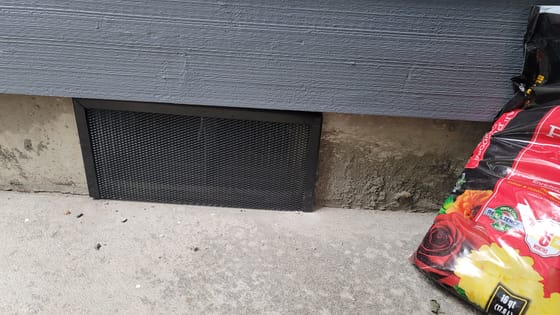
The entry points are the ordinary ones and they are all low: a crawlspace vent with failed screening, a gap where a line passes through the rim joist, the base of a garage door, the sill under a deck. Every one of them is under the snow line from the first real storm onward. That is the whole argument for doing this work in the autumn, and it is the single most useful thing on this page for anyone who owns a building up here.
If a cabin has been closed and you are opening it to droppings, do not sweep or dry-vacuum them. The Washington State Department of Health’s hantavirus guidance is the reason, and the method it sets out — ventilate first, wet the material down, lift it with gloves on — takes a few minutes longer and avoids putting dust into the air of a room somebody is about to sleep in.
Carpenter ants in buildings designed for snow
The upper valley has a particular building stock: steep roofs, deep eaves, heavy exposed beams, big decks, and a great deal of cedar. All of it is a sensible response to snow load, and most of it gives carpenter ants more of what they want than a conventional house does.
Carpenter ants do not eat wood; they excavate galleries to nest in it, and they strongly prefer wood that moisture has already softened. WSU Extension’s carpenter ant fact sheet is the regional reference for the species and the point it keeps returning to is the water. Treating ants in a wall whose wood is still wet buys you a season.
What makes the problem particular here is that the wet wood is so often structural and exposed. A beam end sitting in a deck ledger. The outer face of a glulam where the eave does not quite cover it. The bottom of a post that spends four months in a drift. A roof valley on a steep pitch that sheds onto the same corner of the deck every year. None of those are neglect — they are the parts of a mountain building that take the most weather by design — but they stay damp far longer than siding does, and they are where we find galleries.
Seasonal occupancy makes it worse in one specific way. A leak in an occupied house gets noticed in days. A leak in a cabin between bookings runs until somebody opens the door, and a slow one behind a shower wall or around a skylight can run most of a season. By the time it is found, the repair is a carpentry job and the ants are a consequence rather than a cause.
The sign to act on is not the ants. It is frass — the shredded, fibrous material they push out of a gallery, which collects directly beneath it on a sill, a tread or the top of a baseboard. It is not sawdust, it often contains insect fragments, and it tells you where to look in a way that finding an ant on a counter never does.
What snow does to the work after it is done
Exclusion on a mountain property has to survive things that exclusion in town does not, and this is where cheap work gets found out.
A roof releasing a load takes the gutter with it, and often the vent screens, the drip edge and whatever was fixed along the soffit. Hardware cloth stapled over a crawlspace vent lasts exactly until the first slide or the first shovel. Plow berms and shoveled piles stand wet weight against the base of a wall for months, which rots the trim that the sealing was fastened to. Ice at a blocked gutter backs water under the roofing, which is where several of the damp-wood problems above actually start.
So the work we do up here is fastened into sound material, kept clear of the shed line where it can be, and chosen in metal rather than in anything a season of freeze and thaw will embrittle. It is also worth looking at again after a hard winter, which is not something we would say about the same job in Birch Bay. A property that was sealed properly in October and had six feet of snow off the roof in January is not necessarily sealed in April.
Wasps through the busy end of summer
Summer up here is not quiet, it is just differently busy — the valley fills up with people walking, camping and using the trail, and the wasps reach their largest and most defensive colonies at exactly that point in the season.
The nests that matter are the ones near where people actually stand: in the ground beside a path or a trailhead, in the wall void by a cabin’s back door, under a deck, in the eave over a hot tub. Ground-nesting yellowjackets are the genuine hazard rather than the nuisance, and on a property with brush being cleared or a verge being mowed there is a lot of ground where one can be found the hard way.
Open-combed paper wasps under an eave are usually the lesser problem and can often be left where they are not in anybody’s way. We will tell you which one you have before treating anything.
We do not treat honey bees, here or anywhere, and we will say so rather than quietly doing it. A swarm is a beekeeper’s job.
Crawlspaces, outbuildings and water that comes from a well
Crawlspaces up this valley stay damp for the same reasons they do anywhere under a canopy, plus one more: meltwater. Ground that is frozen or saturated under snow sheds into the perimeter rather than through it, and a crawlspace that copes with ordinary rain can take standing water in a thaw.
The vapor barrier over the soil is the only thing between that ground and the underside of the floor. Torn, displaced or badly lapped, it is not doing its job, and the result is softened framing for the ants above and bedding material for the rodents. Getting that right fixes several complaints at once and is frequently the most useful money spent on a building out here.
Most properties up here are on a well and a septic system rather than on municipal services, which matters for one practical reason: where we place rodent devices and what we apply near a wellhead or a drainfield is decided by the label and the site, not by convenience. If you are on a well, say so when you book. It is a thirty-second conversation and it changes placement.
The Maple Falls year
December to March. The busiest months. Buildings full, snow down, rodents arriving at the heated structure, and bed bug problems surfacing in rentals at the worst possible point in the booking calendar.
April and May. The thaw. Meltwater in crawlspaces, damage from the winter becoming visible, and the first carpenter ant activity as the ground warms. This is when a season’s worth of unnoticed leaking gets found.
June to August. Carpenter ants at their peak and wasp colonies building toward their largest size. The valley is full of people outdoors. This is the right window for the repair and sealing work nobody can get at in winter.
September to November. The most important eight weeks of the year for anyone who owns a building here. The walls are visible, the weather is still workable, and everything done now is still in place when the snow arrives.
What we will not sell you
A bed bug treatment squeezed into a changeover that cannot hold it. We would rather lose the booking slot than hand the next guest a problem that has been scattered rather than ended.
Carpenter ant treatment with no attempt to find the water. We will do the treatment and tell you plainly that it is temporary while the wood stays wet. On a mountain building that is usually a repair conversation, and sometimes it is a roofer’s conversation rather than ours.
Exclusion fitted in a way that will not survive a roof shedding onto it. If the only place to seal is directly under a shed line, we will say that it needs re-checking rather than call it permanent.
A year-round program for a building that is used six weekends a year. Some properties up here genuinely need continuous service and we will say so. A cabin used occasionally, sealed properly, usually does not.
How we work Maple Falls
Twenty-six miles east on the Mount Baker Highway, on scheduled route days along with the rest of the valley. We will name a day rather than promise a window, because the road up this valley has its own opinions in winter and a promise we cannot keep is worse than a date you can plan around.
A great many of the properties we are asked about have nobody standing in them, so tell us how to get in when you book — a code, a lockbox, a neighbor, a management office. We do not need you there, and for several of these jobs it is easier if you are not.
The first visit is a walk of the whole property rather than the one room the call was about: under the building, the roofline, the vents, the deck structure, the woodshed, and wherever the ground meets a wall. On a rental we will also want to see the beds properly, which takes longer than people expect and is the part worth not rushing.
If it is not urgent, send a photograph first. Identification is free, and on a property three-quarters of an hour from our yard it is often enough to tell you whether a visit is needed at all.
Frequently asked questions
Why are bed bugs such a problem up this valley and not down in town?
Because bed bugs travel with people rather than with weather, and the upper valley has an unusual concentration of buildings that sleep a different set of people every few nights. Density of turnover, not altitude, is what drives it. A cabin that hosts forty parties in a season has forty chances to be introduced, and a house in town has almost none.
We manage a rental. Can you treat between guests?
Usually, and the gap between bookings is the thing to tell us about first. Say how long the window is and we will tell you honestly what fits in it. What we will not do is promise a treatment that is finished by check-in if it cannot be, because a half-done bed bug job on a changeover is how a problem travels to the next guest's house.
Do you charge to come and look at a suspected bed bug problem?
Yes, and only for bed bugs. A verification visit confirms what you actually have before anybody pays to treat for it, and the fee is credited toward treatment if you go ahead. Everything else we look at free. Up here that visit earns its keep, because carpet beetles and bat bugs both get reported as bed bugs and neither is treated the same way.
Nothing bothers us in summer, but we get mice every winter. Why?
Because your building is the warmest thing on the hillside for five months, and a rodent does not need to cross open ground to reach it once there is snow lying. Snow also hides the bottom three feet of the structure, which is where most entry points are, so the sealing work has to be done in autumn while the wall is still visible.
Does the snow itself damage the sealing you do?
It can, and it is worth knowing which parts are vulnerable. A roof shedding a load takes gutters, vent screens and soffit edges with it, and plow berms and shoveled piles put wet weight against walls for months. We fit exclusion that is meant to survive that rather than hardware cloth stapled over a vent, and we expect to re-check the roofline after a heavy winter.
How far out is Maple Falls, and do you actually come up here?
Twenty-six miles east on the Mount Baker Highway, and yes — it runs on scheduled route days along with Deming and the rest of the valley rather than on same-day availability. We will name the day rather than promise a window the highway might not let us keep.
Can you deal with a wasp nest at a cabin nobody is staying at this week?
Yes, and an empty week is the easiest time to do it. Tell us how to get onto the property and where the nest is, and send a photograph if you can. We do not need you there, and for a ground nest near a path it is better that you are not.
Guides
Pest problem in Maple Falls?
Family-owned, no long-term contracts, and every treatment is backed by our 100% Service Guarantee.
Most calls in Whatcom County are out within 1–2 days, about 3 during the late-summer peak.
Last updated