Rats and Rodents in Washington State
Washington has two rat species and WDFW names both: the Norway rat, which nests at or below ground level, and the roof rat, which nests in attics, trees and vines. Neither is native. The native rodents people mistake for them are deer mice, house mice and voles, and the risks differ.
Call 360-410-2199 Request a free inspection
The short version
| Rat species in Washington | Two, both introduced: the Norway rat and the roof rat, also called the black rat |
|---|---|
| Where WDFW says they are | Wherever people have established permanent residence or industry — which is everywhere in this county |
| The quickest field difference | Tail shorter than head and body is a Norway rat; longer is a roof rat |
| Where each nests | Norway rats at or below ground level; roof rats in attics, trees and overgrown vines |
| Reproduction | Six to ten young per litter, about three weeks gestation, breeding at three to four months |
| Lifespan in the wild | WDFW puts the average at under one year |
| The native rodents here | Deer mice, house mice and voles — different animals, different risks, different work |
- Decide first whether you are dealing with a rat or a mouse: droppings the size of a raisin with blunt ends mean rat, rice-sized with pointed ends mean mouse.
- Then decide high or low. Activity in an attic, on wires or in a fruit tree points at a roof rat; burrows, crawlspace runs and ground-level gnawing point at a Norway rat.
- Look for the greasy rub marks along a route, which tell you where to seal long after the animal has moved on.
- Never dry-sweep or vacuum rodent droppings in an enclosed space — the state health department's hantavirus guidance is to wet them down first.
- Find and close the entry before setting anything, or you are trapping an animal that can be replaced by the next one.
- Call us if the activity is in a crawlspace, an attic or a wall, which is where the damage and the cost actually accumulate.
Two rats, and neither of them belongs here
Washington has two rat species that live around people, and the Department of Fish and Wildlife names both: the Norway rat, also called the brown rat or the sewer rat, and the roof rat, also called the black rat.
Neither is native. Both are Old World rats brought to North America on early ships, and WDFW describes them as found wherever people have established permanent residence or industry. In a county with a port, a rail line, farms, grain handling and a university town, that means everywhere.
The practical difference between them is not academic. They nest in different places, they get in by different routes, and a plan built for one of them will miss the other entirely.
Norway rat or roof rat
The tail is the fastest check, and behavior confirms it.
Norway rat. The bigger, heavier, blunter animal. Its tail is shorter than its head and body combined. WDFW describes it as preferring to nest at or under ground level and in the lower floors of buildings, usually in burrows. In this county that means crawlspaces, under sheds and decks, along foundations, in compost and against the banks of ditches. The species page is at Norway rat, and the problem it most often produces is rats in the crawlspace.
Roof rat. Smaller, slimmer, with a tail longer than its head and body. It climbs, and WDFW describes it as building nests in attics, trees and overgrown shrubbery or vines, and rarely digging burrows where off-ground sites exist. WDFW also notes it prefers saltwater-influenced, warmer climates and is often seen in port cities and coastal towns — a fair description of Bellingham, Blaine and the waterfront. The species page is at roof rat.
That high-or-low split decides the whole job. A roof rat problem is solved at roof line, vent screens, overhanging branches and ivy on walls. A Norway rat problem is solved at ground level, foundation gaps, crawlspace vents and door sweeps. Doing the wrong one properly achieves nothing at all.
How fast a rat population actually moves
The numbers are the argument for acting early rather than watching.
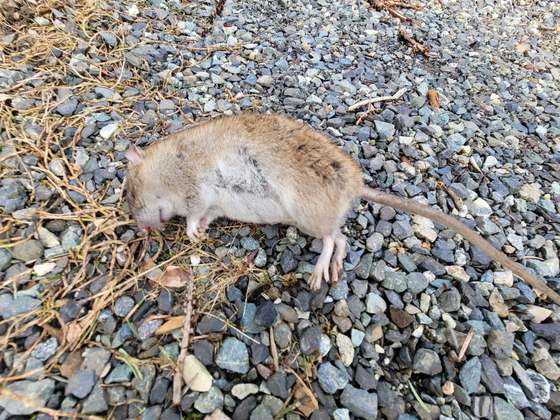
WDFW gives the reproductive figures: litters of six to ten young, a gestation of about three weeks, weaning at around twenty days, and breeding age reached at three to four months. Breeding happens year-round and concentrates in the warmer months.
Set against that, WDFW puts the average life span of a wild rat at under a year. Both halves matter. A rat population is not a stable thing that sits still — it is a fast turnover that either grows or collapses depending on food, shelter and access. Which is why the durable fix is always the access, and why exclusion and repairs is the part of this work that lasts after the trapping is finished.
The native rodents people confuse with them
Three of them, and the differences change what should be done.
Deer mouse. Native, big-eyed, bicolored — brown above and sharply white below, with a tail to match. It is the rural and semi-rural mouse here: cabins, outbuildings, garages, seasonal homes. It is also the hantavirus one, which is covered below and is the single most important identification on this page.
House mouse. Introduced, uniformly gray-brown, small-eared, and the mouse of occupied buildings in town. The common urban rodent complaint in Bellingham, and the subject of droppings in the kitchen.
Vole. Native, stocky, short-tailed, blunt-faced, and almost never a building problem. Voles live in grass and work at ground level, and what they damage is lawn, root crops and the bark around the base of young trees and shrubs. WSU Extension publishes a management guide for exactly that problem. People call them field mice, and the two animals are not the same.
The quickest triage on droppings: rat droppings are the size of a raisin with blunt ends, mouse droppings the size of a grain of rice with pointed ends. That one observation decides most of what follows.
The hantavirus distinction, which is the reason to get the species right
Deer mice, not rats, and the handling advice differs.
The Washington State Department of Health’s hantavirus guidance is built around deer mice, and the risk comes from disturbing dried droppings, urine and nesting material in an enclosed space — a cabin, a crawlspace, an outbuilding, a shed that has been shut for the winter. The central instruction is not to sweep or vacuum dry. Ventilate first, wet the material down, and remove it wet.
That is a specific procedure for a specific animal, and it is the reason the first question on any rodent cleanup is which rodent. A Norway rat problem in a Bellingham crawlspace does not carry the hantavirus risk; the same looking mess in a Mount Baker-area cabin with deer mice in it does.
The rest of what rats do carry — WDFW lists plague, salmonella, leptospirosis and tularemia as able to pass from Old World rats to people — is a reason for gloves, sensible handling and a doctor after any bite or scratch, rather than a reason for alarm. Whatcom County Health and Community Services publishes local guidance on rodents and cleanup as well.
West and east of the Cascades
The split is real for rodents, and smaller than it is for some pests.
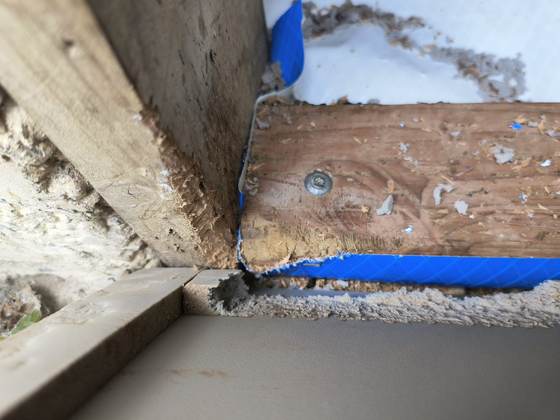
Both rat species occur statewide wherever there is human settlement and industry, so the east-west difference for rats is more about building stock and agriculture than about climate. What does change is the housing: this side of the mountains gives you vented crawlspaces, wet ground and wooden buildings in trees, which produces a very different rodent pattern from a dry-side property on a slab.
For deer mice the picture is about land use rather than longitude. They are animals of field edges, woodland margins and outbuildings, which means rural Whatcom and Skagit produce far more deer mouse work than central Bellingham does, and the seasonal cabins on the Mount Baker Highway produce the most of all.
What is ours and what is not
Worth stating plainly, because the search term pulls in a lot of animals we do not touch.
Ours. Rats, house mice, deer mice and voles — identification, trapping, exclusion, crawlspace and attic cleanup, and the repairs that keep them out. Rodent control sets out the work, and rodents in the attic insulation covers the most expensive version of it.
Not ours. Moles, squirrels, opossums, raccoons and birds. We do not do nuisance wildlife, we do not trap moles, and a job that turns out to be one of those gets referred rather than attempted. That is a deliberate boundary and it is listed openly rather than discovered after a visit.
If you are not sure which you have, the droppings, the location and the damage pattern usually settle it over the phone. Send a photograph of what you found and where, and we will tell you which animal you are dealing with — including when the answer is that it is one we do not handle.
Frequently asked questions
What kinds of rats are in Washington state?
Two. WDFW names the Norway rat, also called the brown or sewer rat, and the roof rat, also called the black rat. Both were introduced to North America on early ships, and WDFW describes them as present wherever people have established permanent residence or industry.
Are rats native to Washington?
The two that live in and around buildings are not. Both the Norway rat and the roof rat are Old World species brought here by shipping. The rodents that are native here are the deer mouse, several voles and a number of field species that do not generally live inside buildings.
How do I tell a Norway rat from a roof rat?
The tail settles it. A Norway rat's tail is shorter than its head and body combined; a roof rat's is longer. Behavior backs it up: Norway rats nest at or under ground level, and roof rats nest in attics, trees and overgrown shrubbery or vines.
Are there roof rats in western Washington?
Yes. WDFW notes roof rats favor saltwater-influenced, warmer climates and are often seen in port cities and coastal towns, which is a fair description of this corner of the state. Bellingham, Blaine and the waterfront communities see them regularly.
What diseases do rats carry in Washington?
WDFW lists plague, salmonella, leptospirosis and tularemia as capable of passing from Old World rats to people. Hantavirus is a separate matter and belongs to the deer mouse rather than to rats. Any bite or scratch should be cleaned immediately and taken to a doctor.
Which Washington rodent carries hantavirus?
The deer mouse, not rats. That is why the distinction matters more than it looks: a droppings cleanup in a cabin or an outbuilding with deer mice in it needs the state health department's wet-down procedure, and the same cleanup after Norway rats does not carry that specific risk.
Are voles rats?
No. A vole is a short-tailed, blunt-faced native rodent that lives in grass and gardens, and it rarely goes indoors. What it damages is lawns, root crops and the bark at the base of young trees, which is a different problem from anything a rat does.
Do you deal with moles and squirrels?
No. Moles, squirrels, opossums and raccoons are outside what we do, and we would rather say so plainly than take a job we are not set up for. Rats, mice, deer mice and voles are ours, and the exclusion work that keeps all of them out is ours.
Sources
- Washington Department of Fish and Wildlife — Living with Wildlife: Rats — read November 12, 2026
- Washington State Department of Health — Hantavirus — read November 12, 2026
- WSU Extension — Vole management in home backyards and gardens — read November 12, 2026
- Whatcom County Health and Community Services — Rodents — read November 12, 2026
Rules change. This page is scheduled for review against its sources by November 12, 2027. If you are reading it after that date and something looks out of step with the current rule, the rule is right and we are wrong — please tell us.
Related guides
Pest problem in Whatcom County?
Family-owned, no long-term contracts, and every treatment is backed by our 100% Service Guarantee.
Most calls in Whatcom County are out within 1–2 days, about 3 during the late-summer peak.
Last updated