
Moisture Ants Mean a Water Problem
Moisture ants only nest in wood that is genuinely wet and already decaying. Finding them is useful information rather than bad luck: they mark the location of a water problem precisely, and the repair that fixes the water is what removes them.
Call 360-410-2199 Request a free inspection
What to do, in order
- If small winged ants swarm indoors, vacuum them up; they do not bite and will not start a nest inside the house
- Before clearing them all, keep a dozen in a sealed bag or jar so identification is not guesswork
- Note the exact baseboard gap, window return, light fitting or fan the swarm came out of, and do not seal it yet, because it leads to the wet wood
- Look for the water: grade falling toward the house, short downspouts, a hose bib, a slow leak under a shower or toilet, a fan venting into the attic
- Do not have the ants sprayed while the wood stays wet; the site is recolonized within a season or two and the rot carries on unseen
- Book the free visit, where we look for water before ants, from the crawlspace sill plate to the roof penetrations and the grade outside
- Fix the water and replace decayed timber first; treatment from us comes after, and only if anything is left
An ant that works as a diagnosis
Most pest findings tell you that something got in. Moisture ants tell you something quite specific about the building itself, and that makes them unusual and, in an odd way, useful.
They will not nest in sound dry timber. It is not a preference; the biology requires wood that is genuinely wet and has already begun to break down through decay. Where they are, that condition exists. Where that condition does not exist, they are not.
So a moisture ant finding is a marker. It says: at this location, in this piece of wood, there is enough persistent water for rot to have taken hold. It does this with far more precision than a damp meter reading and considerably more reliably than looking at a wall.
People ask how wet is wet, and the honest answer involves two numbers rather than one. Framing lumber in a dry building sits somewhere around twelve percent moisture content. The USDA Forest Products Laboratory places serious decay above the fiber saturation point of wood, which averages about thirty percent, and treats air-dry timber held under roughly twenty percent as carrying a sensible margin against fungal damage.
Twenty is the level you want to stay beneath. Thirty is the level at which decay is genuinely running. Those two get transposed in a great deal of pest writing, and the transposition changes what a meter reading means: twenty-two percent in a sill plate is not proof of rot, it is a sill plate that is wetter than it should be and moving the wrong way. Moisture ants follow the fungi rather than the water directly, so a colony marks the far end of that range and not the near edge of it.
The unwelcome part is what it implies about how long the water has been there. Decay does not develop over a wet weekend. By the time timber is soft enough to support a colony, the moisture has generally been present for a matter of years.
What they look like
They are easy to mistake for other small ants until you know the tells.
Small — noticeably smaller than a carpenter ant, and smaller than most of the ants that come into a kitchen. Yellowish, light amber or pale brown rather than black or dark red, which is the most reliable field mark. Slow-moving and not especially defensive. Frequently found in dense concentration in one place rather than trailing across a room.
The swarming stage is often the first sighting. Winged reproductives emerge indoors, typically in late summer or autumn, and produce a sudden cloud of small flying ants in a bathroom, a basement, a utility room or around a window. This is what triggers most calls, and it is alarming out of proportion to the ants themselves. What it is telling you is that a mature colony is established inside the structure, which is the part worth attending to.
A second sign, less known and quite distinctive, is the material they build. Moisture ants produce a carton-like construction from chewed wood and soil, and where they have been established in a wall or a sill for some time you can find a spongy, layered, papery mass in the timber cavity that looks nothing like the clean sanded galleries a carpenter ant leaves.
Where the water usually is
In this county, the places that produce moisture ant findings are consistent enough to list.
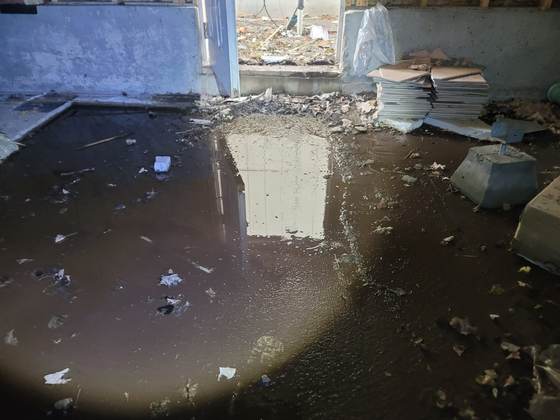
The sill plate and rim joist in a crawlspace. By some margin the most common. This is the timber that sits directly on the foundation, and it takes water from splash-back, from poor grading, from a foundation that wicks, and from persistent crawlspace humidity. It is also structural, which is why we look at it on every visit.
Under a shower, a bath or a toilet. A slow failure at a pan, a waste connection or a wax ring can run for years without ever appearing as a visible leak, keeping the subfloor and joists wet the whole time.
Below a window or a door that has taken driven rain. Failed sealant, missing flashing or a sill without slope. The same conditions that produce carpenter ants in a frame produce moisture ants when the water is heavier and longer-standing.
Around a roof penetration. A chimney flashing, a plumbing vent boot, a skylight curb or a poorly sealed fan outlet. Roof water tracks along framing before it shows on a ceiling, so the wet timber is frequently some distance from any stain.
Deck ledgers and posts at ground contact. Where a deck is attached to a house without proper flashing, the ledger and the rim behind it stay wet permanently. Posts set directly into soil rot from the bottom.
Under a leaking exterior faucet or a hose bib, which is a small volume of water in exactly the wrong place, arriving every time somebody waters the garden.
In an unventilated or wet crawlspace generally, where no single leak exists but the humidity is high enough, for long enough, to produce decay across a broad area.
The condensation cases
Not every water problem is a leak, and the ones that are not tend to go undiagnosed longest.
Crawlspaces without a functioning vapor barrier take moisture continuously out of the ground. In this climate that is a large volume of water over a year, and it is enough on its own to keep framing at a moisture content that supports decay.
Extract fans discharging into an attic rather than through the roof or wall push warm wet air directly into a cold space, where it condenses on the underside of the sheathing and runs down onto the framing. We find this regularly, and the householder is usually surprised because there is no leak to find.
Cold metal in contact with timber — ductwork, pipework, some window assemblies — condenses in winter and keeps the adjacent wood damp through the season.
Air leakage from a heated interior into an unheated cavity does the same thing in wall assemblies, particularly around unsealed ceiling and wall penetrations.
All of these are water problems. None of them involves a drip you could point at.
Why treating them first is the wrong order
We treat moisture ants where it is warranted. We do not lead with it, and the reason is simple arithmetic.
The colony is there because the wood is wet. If the wood stays wet, the site stays suitable, and it will be recolonized — by the same species, from the same sources, generally within a season or two. Treating without repairing buys you a quiet year and a repeat call.
Worse, treating alone removes the indicator. The ants were pointing at a structural problem. Silence them and the decay carries on unobserved, which in a sill plate or a rim joist is a genuinely expensive way to save a small amount of money.
The order that works is: find the water, understand its extent, repair it, replace what has been lost, and then treat if anything remains. Frequently nothing remains, because a colony in timber that has been cut out and replaced has gone with it.
What the repair usually involves
We are not builders and we do not quote building work. What we do is identify precisely what is wet and why, so that the right trade is fixing the right thing.
The common repairs, in rough order of frequency: correcting grade so soil falls away from the foundation rather than toward it; extending downspouts so roof water discharges well clear; installing or repairing a crawlspace vapor barrier; clearing and, where needed, adding crawl ventilation; replacing failed sealant and installing missing flashing at windows, doors and roof penetrations; rerouting a bathroom or kitchen fan to discharge outside; repairing the plumbing failure behind a wet subfloor; and cutting out and replacing timber that has lost structural capacity.
That last one is the item people most want to avoid and most often need. Decayed sill plate, rim joist or post material does not recover when it dries. It has lost strength permanently and the only remedy is replacement.
Where we can, we will tell you the difference between wood that is wet and sound, wood that is superficially decayed, and wood that has gone. The blunt probe test is most of it — sound timber resists a firm push, decayed timber gives, and material that has gone will let a probe sink in without resistance.
What else you tend to find alongside them
A wet crawlspace or a wet wall cavity supports a whole community, and moisture ants are usually not traveling alone.
Springtails, in very large numbers, which are harmless and are themselves a reliable damp indicator. Sowbugs and pillbugs, which need moisture to survive and cannot persist in a dry space. Millipedes and centipedes. Silverfish. Various fungus-feeding beetles.
Above that layer, everything that eats those things: spiders in quantity, and the general elevation of insect activity that makes a damp building feel busier than a dry one.
And in the timber itself, the decay fungi that started the whole process, which in a crawlspace are frequently visible as discoloration, a white or brown growth, or a cubical cracking pattern in the wood.
So a single moisture ant finding often opens into a broader damp-building conversation. That is not us expanding the scope. It is what the finding genuinely means.
Telling them apart from the alternatives
Three things get confused with moisture ants and each changes the answer.
Carpenter ants. Much larger, dark, and able to work timber that is damp rather than saturated. They are the more structurally significant of the two and the treatment involves an outdoor search for a parent colony, which moisture ants do not require in the same way.
Pavement ants and other small household species. Similar in size, but darker, faster, and found trailing to food rather than concentrated in wet timber. These are a kitchen problem, not a building problem.
Termites. Dampwood termites occupy overlapping conditions and are found in similar places. The distinguishing signs are the debris — hard six-sided pellets rather than carton material — and the damage pattern, with galleries running across the grain in a way ant work does not. Where a wood-destroying organism has been identified in somebody’s report, treating it is squarely within what we are certified to carry out, and we will tell you plainly which of these you have.
Getting this right on site matters more here than in most situations, because the three carry very different implications for the building.
If they have just swarmed indoors
A sudden emergence of small winged ants inside a room is the most common way this problem introduces itself, and it is worth knowing what to do in the hour it is happening.
Vacuum them up. They are not dangerous, they will not bite, and the winged reproductives that emerge indoors almost never establish a new colony inside a house — they are trying to get outside. Removing them is cosmetic and it is fine.
Before you clear them all, keep a dozen in a sealed bag or a jar. Identification from a specimen is straightforward and it removes all the guesswork from the visit.
Note exactly where they came from. A swarm exits through a specific point — a gap at a baseboard, a crack at a window return, a light fitting, a bathroom fan, the edge of a floor. That point is directly connected to the nest, and therefore to the wet timber, which is what we actually need to find. People frequently clean up thoroughly and then cannot remember which side of the room it started on.
Resist the urge to seal the exit point immediately. It is the most useful thing in the building right now.
And do not read the size of the swarm as the size of the problem. A mature colony releases reproductives in one concentrated event, so a dramatic emergence and a modest one can come from very similar situations.
Why this is a common finding here
Whatcom County produces more of this than most places, and the reasons are climatic and structural rather than anything to do with housekeeping.
The rainfall pattern matters more than the total. Long, mild, persistently wet autumns and winters mean that timber which gets wet stays wet, because there is little in the way of a hot dry season to drive the moisture back out. A wall that would dry out in a fortnight elsewhere may not dry out here between October and April.
Crawlspace construction is close to universal in the older housing stock, and a crawlspace is a moisture management system whether or not anybody has treated it as one. Where the vapor barrier is missing, torn or absent from the start, the ground gives up water into the space continuously.
Grade is the third factor. A great many lots here fall toward the building rather than away, either by original siting or because landscaping has been built up over decades, and the result is water sitting against a foundation for months at a time.
And a substantial share of the housing predates modern flashing practice entirely, so the details at windows, decks and roof penetrations were never built to the standard that would keep water out of the assembly for fifty years.
None of that is anybody’s fault. It is the reason we look at the same handful of places on every single visit, and it is why the fix is nearly always about water movement rather than chemistry.
When a sale is involved
Moisture ants come up in property transactions more often than any other insect we deal with here, because the places they occupy are exactly the places a buyer’s inspector looks.
Where a buyer’s report has identified moisture ant activity and decayed structural timber, what is usually being asked for is a repair and a treatment, in that order. The repair belongs to a builder. The treatment side of a wood-destroying organism finding is within what we are certified to carry out, and we are glad to handle that part.
What we will not do is give you a document that reads like something it is not. We are not structural pest inspectors and we do not issue those reports. If the transaction needs one, that is a separate professional and we will say so plainly rather than blur the line to keep the work.
The practical advice for sellers is the same as for anybody else, only earlier: the water problem behind a moisture ant colony does not improve while a house is on the market, and it is considerably cheaper to address in your own time than during a negotiation.
What we will not sell you
A treatment as a substitute for a repair. It does not work and it hides the thing that matters.
A recurring plan for an ant that is only present because of a leak.
A structural opinion we are not qualified to give. We will tell you what the timber feels like under a probe and where the water is coming from. Load paths and repairs are an engineer’s or a builder’s call.
Alarm. Moisture ants are not aggressive, they do not damage sound wood, and the underlying problem is usually fixable. The seriousness lies in the decay, and the decay is generally addressable if it is found.
What happens when you call
We look for water before we look for ants.
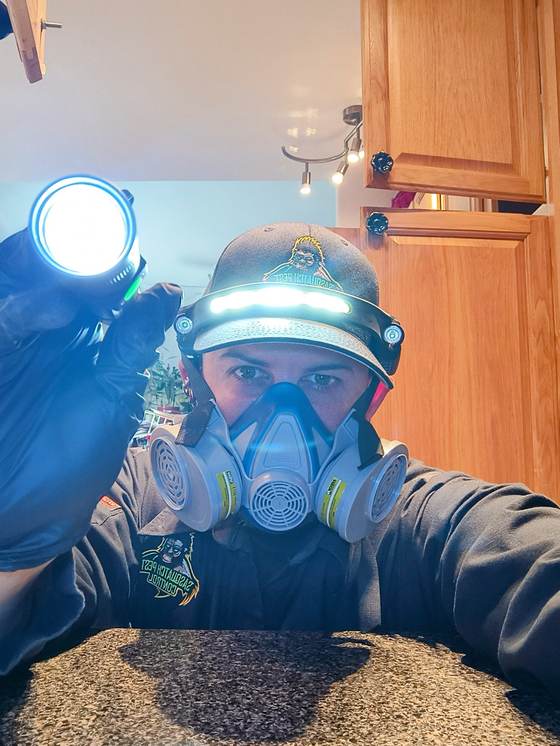
That means the crawlspace in full with a light, the sill plate and rim joist probed rather than glanced at, the plumbing runs and the areas below wet rooms, the window and door openings, the roof penetrations from below where they can be seen, and the exterior — grade, downspouts, hose bibs, deck attachments and anywhere the ground is holding water against the building.
Then we look at the timber and tell you what condition it is actually in.
You get a plain account: where the water is coming from, how far the damage extends, what needs replacing, which trade should do it, and whether any treatment from us is warranted at all. On a fair number of these visits the honest answer is that you need a plumber, a roofer or a drainage contractor and not a pest control company, and we will say so.
Assessment is free, there is no term agreement, and we are not going to sell you a recurring plan for an ant that is only there because your sill plate is wet.
Frequently asked questions
What actually is a moisture ant?
A group of small yellowish or light brown ants that nest only in wood with high moisture content and active decay. Unlike carpenter ants they will not colonize sound dry timber, which is why their presence is so specific a signal.
Are they damaging my house?
They are excavating wood that had already lost its strength to decay, so they are rarely the primary cause of the loss. The rot is doing the structural damage. The ants are telling you where it is.
Should you just spray them?
Treating them without fixing the water gets you a temporary result and a repeat call. We will treat where it is warranted, but the sequence that works is finding the water first, repairing it, then dealing with what is left.
How do I tell them from carpenter ants?
Size and color mostly. Moisture ants are small and typically yellowish to light amber. Carpenter ants are much larger, usually black or black and red, and will nest in timber that is merely damp rather than saturated.
Where do you usually find them?
Sill plates and rim joists in a crawlspace, framing under a leaking shower or bath, below a window that has taken years of driven rain, around a failed roof penetration, and in posts or deck framing at ground contact.
Could there be no leak at all?
Occasionally the water is condensation rather than a leak — an unventilated crawlspace, a fan discharging into an attic, or cold metal against timber. It is still a water problem and it still needs correcting.
What does an assessment cost?
Nothing. We will trace the moisture, probe the affected timber, and tell you what needs repairing and by whom. Fairly often the answer involves no treatment from us at all, and that is a legitimate outcome.
Guides
Ant & Carpenter Ant Control in Whatcom County?
Family-owned, no long-term contracts, and every treatment is backed by our 100% Service Guarantee.
Most calls in Whatcom County are out within 1–2 days, about 3 during the late-summer peak.
Last updated