
Beetle & Pantry Pest Control in Whatcom County
Carpet beetles and pantry beetles are both source problems. The adults you see are looking for a way out; the damage is done by larvae feeding somewhere specific — a wool rug, a bird nest in a soffit, a bag of flour at the back of a cupboard. Find the source and the job is short.
Call 360-410-2199 Request a free inspection
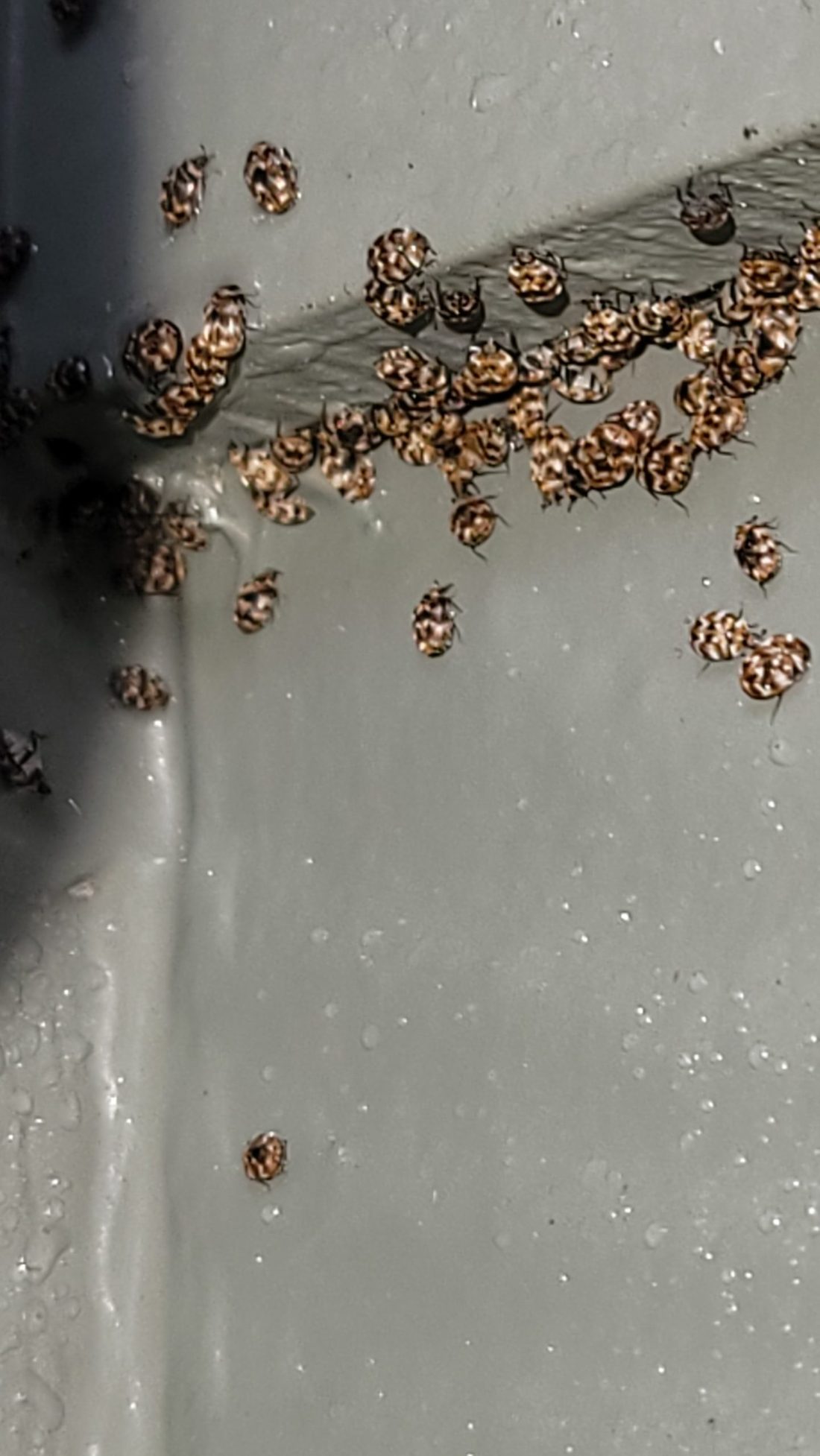
Beetles: the job at a glance
| What it covers | Carpet beetles and pantry beetles, traced to where the larvae are feeding |
|---|---|
| Included | Finding the feeding site, thorough vacuuming, targeted treatment of harborage, and a follow-up check |
| Not included | Spraying food storage or textiles, and removing bird nests, which is bird work we do not take on |
| How long it takes | Pantry beetles drop off fast once the source is gone; carpet beetles take months to confirm |
| What it costs | Quoted from the visit and usually modest; the estimate is free |
Two problems on one page
The service covers two groups of insects that have nothing in common except that both are source problems and both get treated wrong.
Fabric pests — carpet beetles and their dermestid relatives. The larvae feed on keratin and other animal proteins: wool, silk, fur, feathers, leather, and crucially, dead insects and animal remains.
Pantry pests — sawtoothed grain beetles, flour beetles, drugstore and cigarette beetles, and the Indianmeal moth, which is a moth rather than a beetle but behaves identically and turns up in the same cupboard.
In both cases the insects you notice are adults, the damage is done by larvae you have not seen, and the entire job is finding where the larvae are eating.
Carpet beetles: the larvae are the problem
Adults are small, rounded, and often patterned in mottled white, brown and black — the varied carpet beetle is the common one here. They feed on pollen and nectar outdoors, they are harmless, and they are attracted to light. That is why you find them on windowsills and in light fittings.
Larvae are the damage. Small, tapered, densely covered in bristles, and often called woolly bears. They avoid light and move away from disturbance, so they feed in the places nobody looks.
They also shed their skins repeatedly as they grow, and those cast skins are frequently the first real evidence — they look like tiny hollow versions of the larva and accumulate wherever feeding has been happening. If you find cast skins, you have found the site.
What they eat is animal protein. Wool carpets and rugs, wool clothing, felt, silk, fur, feathers, leather, taxidermy, natural-bristle brushes, and pet hair accumulations. They do not eat cotton, linen or synthetics — unless those are soiled with sweat, food or body oils, which supplies what they need.
Where they feed. The edges of wool rugs, particularly under furniture that never moves. Carpet under and behind beds and sofas. The back of closets. Stored wool in boxes. Under baseboards where lint and pet hair accumulate. Inside heating ducts. And in wall voids and soffits — covered next, because that is the one people miss.
The source nobody finds
If there is a carpet beetle problem and no obvious wool, the source is almost always something dead.
Dermestid beetles are scavengers by trade. In nature they clean carcasses and nests. In a building, the richest food available is frequently:
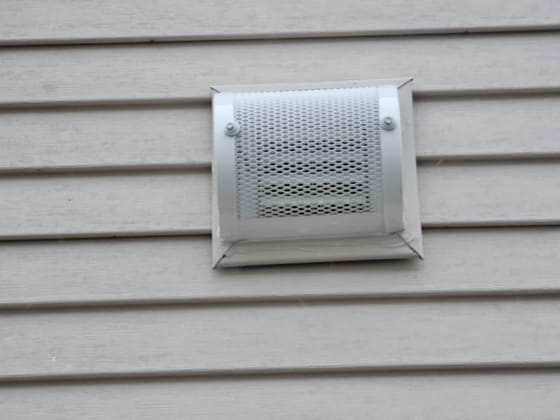
A bird nest. In a soffit, gable vent, dryer vent or eave. Nests contain feathers, dropped food, insect remains and often dead nestlings, and a single abandoned nest supports a carpet beetle population for years — feeding new adults into the house every spring. This is why nest removal matters more than treatment. That work includes removing old nests rather than just closing the entry.
A rodent nest or a dead rodent in a wall void, under a floor or in an attic. Same principle. See rodent control.
An accumulation of dead insects in a wall cavity — which is exactly why we refuse to treat overwintering stink bugs and cluster flies inside wall voids. A few hundred dead insects in a cavity is a dermestid buffet, and the beetles that develop there move inward into the living space.
A dead animal anywhere in the structure, including a chimney.
So when a household has beetles and no wool, the useful question is not “what fabric is being eaten” but “what died, and where.” That reframing resolves a large share of these calls.
Carpet beetle or clothes moth?
The damage looks similar and the treatments differ, so the distinction matters.
Carpet beetles graze irregular patches, often thinning the pile rather than making clean holes, and they will feed in relatively open and lit areas as well as hidden ones. They leave cast skins and fecal pellets roughly the size of a grain of salt. No webbing.
Clothes moths make clean holes, prefer genuinely dark and undisturbed places, and leave silk webbing — tubes, mats, or small cases the larvae carry around. Webbing is the give-away, and it is the single most reliable difference.
Both eat keratin. If you find webbing, see moth control. If you find bristly larvae and cast skins, you are on the right page.
The rash that is not bites
Worth its own note, because it causes real distress and gets misdiagnosed routinely.
Carpet beetle larvae carry fine bristles, and some people develop an itchy, raised, bumpy rash from contact with them or with shed skins in bedding, carpet or upholstery. It looks enough like insect bites that households conclude they have bed bugs.
The distinction matters because the treatments are entirely different and a bed bug job is far more disruptive and expensive. If you have “bites” with no bed bug evidence — no live insects, no cast skins in seams, no fecal spotting on the mattress — and you do have small beetles at windows or bristly larvae in carpet, this is a likely explanation.
That is one reason we verify before treating for bed bugs rather than booking off a description.
Pantry beetles
Different insects, same logic: find the package.

What they are. Sawtoothed grain beetles, flour beetles, drugstore beetles and cigarette beetles are the common ones. All small, brown, and capable of getting into packaging that looks sealed — several can chew through paper, cellophane and thin plastic, and they exploit the folded seams of a bag or box without needing to chew at all.
What they infest. Flour, cereal, grains, rice, pasta, dried fruit, nuts, spices, chocolate, tea, and dry pet food. Drugstore and cigarette beetles have notoriously broad tastes — dried botanicals, potpourri, decorative seed items, book bindings, and stored tobacco.
Where the source hides. The four we find most often, in order:
Pet food, in a large bag stored in a garage or utility room and rarely emptied to the bottom.
Birdseed, same problem, and frequently the single largest reservoir on a property.
Decorative items — dried flower arrangements, seed pods, ornamental corn, potpourri — which nobody thinks of as food and which are exactly that.
Spilled material in a cupboard seam or under a shelf liner, where a tablespoon of flour supports a population indefinitely.
Where it usually did not start. Your housekeeping. Most pantry infestations arrive already inside a package, having been introduced at a processing or storage stage well before you bought it. That is worth saying, because people are embarrassed about these calls and they should not be.
Why we do not spray a pantry
Because the answer is removal, and product does not belong on food surfaces anyway.
Find the source. Inspect everything, including the packages that look fine. Look for small holes, webbing, live insects, and material that looks slightly clumped or dusty. Anything infested goes out of the house, not into the kitchen bin.
Empty and clean. Shelves out where possible, vacuum the seams, corners and shelf-support holes — those small drilled holes in cabinet sides are a classic harborage — then wipe down.
Re-store properly. Airtight glass, metal or rigid plastic containers rather than original packaging. This alone prevents most recurrences, because it stops a new introduction from spreading beyond its own package.
Freeze new bulk goods. Anything bought in bulk, particularly grains, nuts and dried fruit, held in a freezer for a few days on arrival kills anything present.
Then treat, narrowly. Targeted crack and crevice application in the cabinet structure — not on surfaces where food sits. In commercial settings, pheromone monitors tell us whether the population is actually falling.
If someone proposes spraying your food storage, that is worth declining.
Around the county
Older city housing — the Lettered Streets, Columbia, Sunnyland, York and South Hill. Wool rugs and carpet in houses with a century of accumulated lint under baseboards, plus soffits and eaves that have hosted bird nests for decades. The highest carpet beetle volume in the county, and the cases where the source is a nest rather than a rug.
Around Lake Whatcom — Sudden Valley, Silver Beach, Edgemoor. Bird and rodent nesting in cedar construction, and a lot of stored natural fiber in second homes and holiday properties.
Rural and agricultural — Lynden, Everson, Nooksack, Sumas. Stored feed and grain at real scale, which makes pantry beetle work a farm-building problem rather than a kitchen one.
Homes with bird feeders, everywhere. Birdseed storage is the most under- suspected pantry beetle reservoir in this county, and the feeder itself brings birds — and their nests — closer to the structure.
Commercial food handling — restaurants, groceries, bakeries and food storage, where the same species arrive in deliveries and the answer is stock rotation and monitoring rather than treatment. See commercial programs.
What it costs
Quoted from the visit, and usually modest, because these are localized problems rather than structural ones.
The exception is where the carpet beetle source turns out to be a bird nest in a soffit or a dead animal in a wall. At that point the beetle treatment is the small part, and the real job is getting the nest or the carcass out — rodent work where it is a rodent, and a specialist where it is not.
Where a valuable rug or textile collection is involved, that is worth saying at the estimate, because it changes how carefully the work is scoped.
The estimate is free, and if the answer is “throw out the birdseed and store things in jars,” we will tell you that rather than book a treatment.
How we work a carpet beetle job
Confirm what it is. Bristly larvae and cast skins, or webbing. The difference sends the job in two directions.
Find the feeding site, not the adults. Windowsill adults are the symptom. We work outward from where larvae and cast skins actually accumulate — rug edges under furniture, closet floors, under and behind fixed furniture, baseboard lines, heating vents.
Look up if there is no fabric. Soffits, eaves, attic spaces, wall voids and chimneys, for the nest or the accumulation that is really feeding the population. This is the step that resolves the cases nobody else has managed to.
Clean thoroughly. Vacuuming is a substantial part of the treatment, because it physically removes larvae, cast skins, eggs and the lint and hair that feed them. Emptied outside afterwards.
Treat harborage. Carpet edges, under fixed furniture, baseboard voids, closet structure. Not on textiles, and not broadcast across floors people live on.
Deal with the structural source. Where a rodent nest is involved, nest removal and exclusion, because closing the entry without removing the nest leaves the food in place. A bird nest is bird work, which we do not take on; we will say so and treat the beetles once it is out.
Follow up. Dermestid life cycles are long — larvae can develop over many months depending on conditions — so a single clean visit is not proof. We check rather than assume.
Preventing both
For fabric pests: clean wool and natural fibers before storing, keep stored textiles in sealed containers rather than cardboard, vacuum under and behind furniture that rarely moves, and deal with pet hair and lint accumulation along baseboards and in vents. Where a wool rug sits under a heavy piece of furniture, lifting and vacuuming it once a year is worth more than any product.
For pantry pests: airtight containers as standard rather than original packaging, first-in first-out rotation, freezing bulk purchases on arrival, and periodic inspection of the things nobody inspects — pet food, birdseed, decorative botanicals, and the back of the top shelf.
And for both: keep birdseed and bulk pet food out of the house entirely if you can, in a sealed bin in an outbuilding. It is the single most effective change available on most properties, and it addresses both problems at once.
Wood-boring beetles are a different page
Worth separating clearly, because “beetle in the house” covers two unrelated situations and only one of them is on this page.
If you are finding small round exit holes in timber — joists, subfloor, sill plates, furniture — with fine powder beneath them, that is a wood-boring beetle rather than a carpet or pantry beetle. In Whatcom County the common one is the anobiid powderpost beetle, and it is genuinely common in damp crawlspaces here. The pairing with damp is not incidental: the Forest Products Laboratory’s account of wood biodeterioration places anobiids among the wood borers that need a raised moisture content in the timber they attack.
The distinction matters because the driver is moisture rather than food storage or fabric, and the fix is drying the space rather than cleaning a cupboard. See termite and wood-destroying pest control and crawlspace restoration.
Ground beetles, click beetles and June beetles turning up indoors are a third category again — outdoor insects that wandered in, breed nowhere in the house, and generally need nothing beyond a door sweep and a vacuum.
Timing and life cycle
Both groups have long, temperature-dependent development, and that shapes what to expect.
Carpet beetles can take many months to develop from egg to adult, and longer in a cool space. Adults emerge and become obvious in spring and early summer, which is when most of these calls arrive — people see the adults at windows and assume the problem is new, when the larvae have been feeding since the previous year. Because the cycle is long, confirming a clear result takes months rather than weeks.
Pantry beetles move faster in a warm kitchen — weeks rather than months — which is why an infestation in a warm cupboard escalates quickly and why removing the source produces a fast improvement. Activity is year-round indoors, with a noticeable rise in warm weather.
The practical implication for both: judge success by monitoring and by absence of new damage over a season, not by whether anyone has seen an insect this week.
Commercial and institutional
Both groups turn up in specific commercial settings, and the answer is almost always monitoring plus stock and storage discipline rather than application.
Food storage, groceries and bakeries. Pantry beetles arrive in deliveries. First-in first-out rotation, inspection at receiving, and pheromone monitoring in storage areas do more than any treatment. Where a persistent population exists, the source is usually a spill behind a rack or a forgotten pallet rather than the visible stock.
Restaurants. Dry storage and the cabinet structure around it, plus the same receiving discipline.
Museums, collections and historic buildings. Dermestids are the classic collections pest, and here the tolerance is close to zero — a beetle population in a textile or natural history collection is a conservation emergency rather than a nuisance. The approach is environmental control, sealed storage and monitoring, with treatment kept away from the objects.
Hotels and senior living. Carpet beetles in carpet edges and stored linens, where the population is frequently fed by lint accumulation rather than by anything visible.
For all of these the deliverable is the record as much as the result. See commercial programs.
Before you call
Keep a specimen. A beetle or larva in a small sealed bag, or a clear photograph next to something for scale, settles the identification immediately.
Note where the larvae are, not where the adults are. Cast skins in a rug edge tell us far more than beetles on a windowsill.
Related work
If there is webbing, you want moth control. If the source is a nest, it has to come out before treatment means anything; see rodent control where it is a rodent. If a rash is being read as bites, see bed bug control for what genuine bed bug evidence looks like. And the reason we will not treat overwintering insects inside wall voids is on the stink bug and overwintering pest page — dermestids are exactly what that would produce.
Frequently asked questions
I keep finding small beetles on my windowsills. Is that an infestation?
Possibly, but not where you are finding them. Adult carpet beetles are drawn to light and to flowers outdoors, so windowsills are where they collect on the way out. The larvae doing the actual damage are somewhere dark and undisturbed — under furniture, in a closet, in a wall void, or in a nest in the eaves.
We threw out everything in the pantry and they came back. Why?
Then a source was missed. It is usually one of four things: pet food, birdseed, a decorative item containing seed or dried botanicals, or a spill in a cupboard seam. Pantry beetles also breed in surprisingly small quantities of material, so a tablespoon of flour in a crack is enough.
What is the fuzzy little caterpillar-looking thing in my carpet?
Almost certainly a carpet beetle larva. They are small, tapered, densely bristly, and they shed their skins as they grow — so finding cast skins is often the first real evidence. The larvae do all the damage; the adults do none.
Can carpet beetles bite?
No. They cannot bite people. Some people do react to the bristles on the larvae with an itchy rash that gets mistaken for insect bites, which is a genuinely common misdiagnosis — including for bed bugs. It is an irritation, not a bite.
Where do carpet beetles come from if I have no wool?
Usually something dead. Dermestid beetles are scavengers, and the richest food source in most houses is a bird or rodent nest in a soffit or wall void, an accumulation of dead insects in a cavity, or an animal that died in the structure. That is the source we look for first when there is no obvious fabric involved.
Do I need the whole house treated?
Rarely. Both of these are localized problems with a specific source. A house-wide treatment for a pantry beetle living in one bag of birdseed is money spent on the wrong thing, and we would rather find the bag.
Guides
From the blog
Beetle & Pantry Pest Control in Whatcom County?
Family-owned, no long-term contracts, and every treatment is backed by our 100% Service Guarantee.
Most calls in Whatcom County are out within 1–2 days, about 3 during the late-summer peak.
Last updated