
Fly & Gnat Control in Bellingham & Whatcom County
Flies are a symptom. Killing the adults you can see changes nothing, because something is breeding somewhere — and which species you have tells us where to look. The exception is cluster flies, which breed outdoors and overwinter in your walls, so that one is exclusion rather than treatment.
Call 360-410-2199 Request a free inspection
Flies, on video
Flies: the job at a glance
| What it covers | Cluster, fruit, drain, phorid and blow flies and fungus gnats, traced to where they breed |
|---|---|
| Included | Identifying the species, finding and correcting the breeding site, targeted treatment where it helps, and sealing gaps |
| Not included | Repairing a broken drain line under a slab, which is a plumber's job |
| Cluster flies | Sealing before October, booked in late summer; spraying inside wall voids is not the fix |
| How long it takes | Days once the source is dealt with |
| What it costs | Free estimate; one drain is a small job, cluster flies are priced by the sealing needed |
Every fly job is a source-finding job
This is the whole page in one idea, so it goes first.
The flies you can see are adults, and adults are the shortest and least important part of the life cycle. Somewhere there is a moist, organic breeding site producing more of them continuously — a drain, a bin, a bag of forgotten potatoes, a houseplant that gets watered too often, an animal that died in a wall.
Kill the adults and the site keeps producing. Every fly problem that “keeps coming back after treatment” is a source that was never found.
So the useful skill in fly work is not application, it is diagnosis. And the most useful diagnostic tool is the species, because which fly you have tells you where to look.
There is one exception, and in Whatcom County it is a big one.
Cluster flies, the local exception
If you get a large number of slow, dark, slightly hairy flies at upstairs windows on the first warm day of winter, you have cluster flies, and almost everything above does not apply.
They do not breed in your house. Cluster fly larvae develop outdoors, in soil, as parasites of earthworms. There is no source indoors to find and no sanitation problem to fix. Your house is not dirty and there is nothing rotting in the wall.
What happens is this. In autumn, as temperatures drop, adults gather on the warm sunlit sides of buildings — south and west walls take the worst of it — and work their way into gaps around window frames, siding, soffits, attic vents and utility penetrations. They overwinter in wall voids and attics, largely dormant.
Then a warm spell in December or February raises the temperature in those voids, some of them wake, and they move toward light. Light means your upstairs windows, which is why they appear indoors in the middle of winter having apparently come from nowhere.
The fix is exclusion, and the timing matters. Sealing gaps around windows, siding, soffits and vents before October keeps them out. Doing it in January seals in the ones already there. This is exclusion and repair work, and it is best scheduled in late summer alongside the rodent-season sealing.
A vacuum is the right tool for the ones already inside. Treatment inside a wall void kills flies you cannot reach and leaves them there, which on a large population creates its own secondary problem.
Cluster flies do not bite, do not carry disease of consequence, and do not contaminate food the way house flies do. They are a nuisance of scale rather than a risk, which is worth knowing before anyone panics.
What the other species tell you
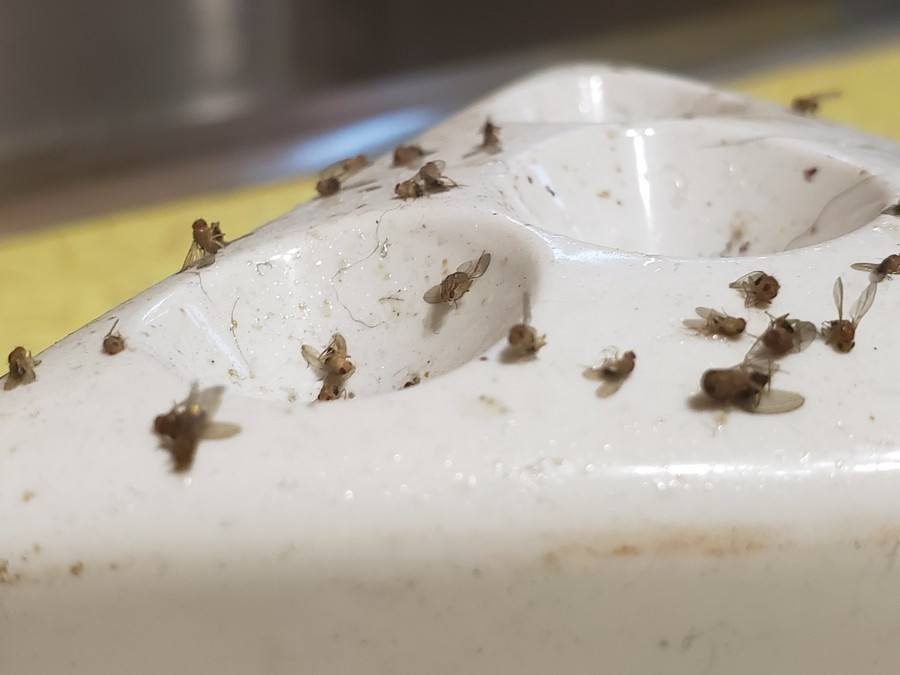
Fruit flies. Small, often red-eyed, hovering around kitchens and bars. The source is fermenting material: overripe produce, spillage under an appliance, recycling that has not been rinsed, a mop bucket, the residue in a drain, or the bottom of a bin. Almost always within a few feet of where you see them.
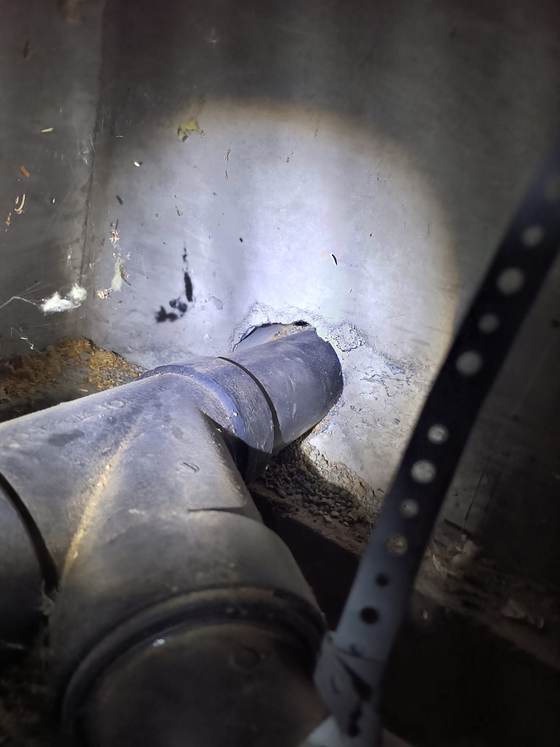
Fungus gnats. Small, dark, weak fliers drifting around houseplants and windows. The source is constantly damp potting soil, where larvae feed on fungi and organic matter in the top layer. This is a watering habit, not an infestation. Let the top inch or two dry properly between waterings and the cycle breaks.
Drain flies. Small, fuzzy, moth-like, sitting motionless on walls near sinks, showers and floor drains. The source is the gelatinous organic film lining the pipe. Covered below, because everyone treats these wrong.
House flies. The familiar one. The source is garbage, manure or decaying organic material, usually outdoors and usually within a short distance. Around the agricultural corridor this is a working reality rather than a housekeeping issue.
Blow flies and bottle flies. Large, metallic blue or green, sluggish indoors. Outdoors they are normal. Indoors, in numbers, they mean something has died — in a wall void, under a floor, in an attic, or in a chimney. If there is also an odor, that is effectively a diagnosis. This is a carcass removal job, and it links straight back to rodent and a wildlife specialist rather than us.
Phorid flies. Small, humpbacked, and notable for running in erratic bursts rather than flying. These matter because of where they breed: decaying organic material in damp, hidden places — under a slab, around a broken sewer line, in a long-neglected drain. In commercial kitchens a persistent phorid population is a recognized signal of a plumbing failure under the floor rather than a sanitation problem above it.
Drains, and why bleach does not work
The single most common wasted effort in fly control.
Drain flies breed in the biofilm — the soft organic layer coating the inside of the pipe above the water line. That film is the food source, the harborage and the nursery.
Bleach runs through it. It contacts the surface for a second or two, then it is gone down the drain, and the film that produced the flies is still there. The same is true of boiling water and most consumer drain products, which are formulated to clear blockages rather than to remove a biological layer.
What works is mechanical plus biological. A stiff drain brush run up and down the pipe wall physically disrupts the film. Then an enzymatic or bacterial bio-foam that expands to contact the whole pipe wall and stays there long enough to digest what remains.
Finding which drain is worth doing before treating all of them. Tape a clear plastic bag or a piece of tape sticky-side-down over a drain overnight; flies emerging get caught, and you have your answer in a morning rather than treating six drains on principle.
Floor drains, rarely used guest bathrooms, condensate lines and the overflow in a sink are the ones people forget.
How we work a fly job
Identify the species. It is the diagnostic, and it usually narrows the search to one or two possibilities immediately.
Find the source. Drains, bins and their surrounds, under and behind appliances, produce storage, houseplants, recycling, mop and cleaning equipment, condensate lines, and where blow flies are involved, wall voids and attics.
Remove or correct it. This is the actual treatment. Sanitation, drain work, watering habits, waste handling, or carcass removal depending on what we find.
Treat where it helps. Targeted application and light traps have a role, particularly in commercial settings, but they support the source work rather than replacing it.
Exclude. Door sweeps, window and vent screening, and the gap sealing that cluster flies specifically require. See exclusion and repairs.
Follow up on the identification. If flies persist after a source is removed, the identification was wrong or there is a second source. Both happen, and both are worth saying out loud rather than repeating a treatment.
Commercial fly work
Different in emphasis rather than method, and this is where fly control earns its keep.

Drains are the number one source in food service, and they are the most consistently under-serviced part of a kitchen. A drain maintenance program is usually the highest-value item on a restaurant’s pest program.
Grease and organic buildup behind and beneath equipment, in floor seams and around drain grates. It accumulates where nobody cleans because nobody can reach.
Waste handling. Dumpster placement, lid condition, how often it is emptied, and whether the pad beneath it is ever washed. If the pad under a dumpster never gets washed, it will keep breeding flies no matter what is done inside.
Doors and air movement. Door sweeps, self-closing doors, air curtains and screening on anything that opens to the outside. That list is not ours — the FDA Food Code names screens, self-closing doors and air curtains as the ways a food establishment is expected to protect an outer opening, so a propped dock door is a code question before it is a fly question.
Phorid flies as a plumbing signal. Worth repeating: a persistent phorid population in a commercial kitchen frequently indicates a broken drain line under the slab. Treating the surface will not resolve it and the useful next call is a plumber.
For food-handling accounts the documentation is part of the deliverable, and light traps are placed and serviced on a schedule with the catch recorded. See commercial programs.
Around the county
The agricultural corridor — Lynden, Everson, Nooksack, Sumas. House flies and stable flies around livestock, manure and feed, at volumes that are a working condition rather than an infestation. Management here is about waste handling, moisture and timing rather than about treating a house.
Older city neighborhoods — Lettered Streets, Columbia, Sunnyland, York. Cluster flies in quantity, because older siding, original window framing and unsealed soffits give them exactly the gaps they need. Also the most likely place to find blow flies indicating something dead in a wall.
Newer construction on open ground — Barkley, Cordata, King Mountain, and the newer stock around Ferndale. Large unshaded south and west elevations are cluster fly magnets in October, and the sealing work is straightforward because the detailing is better.
Restaurants and shops — downtown, Fairhaven and the commercial corridors. Drains, waste and deliveries.
Waterfront and seasonal — Blaine, Birch Bay and Semiahmoo. Houses closed up through winter that fill with cluster flies unnoticed, so owners arrive in spring to windowsills full of them.
What it costs
Quoted from the visit, and it varies more by cause than by species.
A drain fly problem traced to one floor drain is a small job. A cluster fly problem is really an exclusion project priced by how much sealing the building needs. A blow fly problem is a carcass removal, and the cost depends entirely on whether the animal is somewhere reachable.
Where the answer is a watering habit or a bin that needs rinsing, we will tell you that and not charge you for a treatment. Fungus gnats around houseplants are the clearest example — that is advice, not a service.
The estimate is free.
What you can do first
Identify roughly where they are. Which room, which window, near which appliance. Flies concentrate near their source, and that alone narrows it a long way.
Check the obvious sources. Produce, the bottom of the bin, under and behind the refrigerator, recycling, the mop bucket, the dog food bin, and any plant that gets watered often.
Tape the drains overnight if they are small flies near a sink or shower. It identifies the specific drain without guesswork.
Let houseplant soil dry between waterings for two weeks and see whether the problem goes.
Note the season. Sluggish flies at upstairs windows in winter is cluster flies, and it means calling in August for sealing rather than in January for a treatment.
And if there is a smell, tell us on the phone. It changes what we bring.
The fly year in Whatcom County
Late winter and early spring. Cluster flies waking in wall voids on warm days and appearing at upstairs windows. Nothing is breeding — this is last autumn’s population emerging on the wrong side of the glass. Vacuum and plan the sealing.
Spring. Fungus gnats as houseplants get watered more and greenhouse growing starts. Drain flies as activity increases in kitchens and bathrooms that were quiet over winter.
Early summer. Fruit flies begin as produce moves faster and warmer temperatures speed development. House fly pressure builds around agricultural operations.
Late summer. Peak for fruit flies and house flies. Waste handling matters more than anything else in this window — a bin emptied weekly in February is a different object in August.
Early autumn. The cluster fly gathering. Adults congregate on warm south and west walls through October and work into the building. This is the window that decides your winter, and it is why the sealing work belongs in late summer.
Late autumn and winter. Blow flies indoors become more meaningful, because rodents and wildlife are moving into structures and some of them die there. A handful of large sluggish flies in a heated house in December is worth investigating rather than swatting.
Fly identification, simply
Without a microscope, size and behavior get you most of the way.
Tiny, hovering near fruit or drains — fruit fly. Look for red eyes on the common one.
Tiny, drifting weakly around plants and windows — fungus gnat. Poor fliers, often seen walking on soil.
Small, fuzzy, sitting still on a wall near a drain — drain fly. They do not fly much; they sit.
Small, running in erratic bursts rather than flying — phorid fly. The running is diagnostic, and it points at something decaying in a hidden damp place.
Medium, gray, active, in kitchens and around waste — house fly.
Large, metallic blue or green, slow indoors — blow fly. Outdoors normal. Indoors in numbers, look for a carcass.
Large, dark, slow, in quantity at winter windows — cluster fly. The give-away is the season and the sluggishness.
Photograph it if you are unsure. Identification is free and it decides where we look.
Sanitation that actually matters
Not general tidiness — the specific things that produce flies.
Rinse the recycling. A beverage container with residue is a fruit fly nursery, and a bin of them in a warm kitchen produces a population in days.
Wash the bin, not just empty it. The film in the bottom is the breeding site, and emptying leaves it behind. The same goes for the pad under an outdoor dumpster.
Look under the appliances. Spillage that ran under a refrigerator or a stove months ago is one of the most common fruit fly sources we find, and one of the least looked at.
Check the forgotten produce. A bag of potatoes or onions at the back of a pantry accounts for an astonishing share of these calls.
Deal with mop buckets and cleaning water. Standing dirty water is a breeding site, particularly in commercial settings where the bucket lives in a warm room.
Empty and clean drip trays. Refrigerators, dehumidifiers and air conditioners all collect water somewhere, and it is rarely cleaned.
Fallen fruit outdoors, which in this county means plum and apple trees in late summer feeding a population that then comes indoors.
None of that is a substitute for finding the source. All of it removes the sources before they start.
Light traps, and where they belong
Worth a note because they are frequently sold as a solution and are really a monitoring tool.
An ultraviolet light trap catches flying insects that are already inside. It does not address a source, and in a room with a live breeding site it simply fills up. Where it earns its place is commercial: as a monitor whose catch tells you whether pressure is rising or falling, and as a supplement in food-handling areas where a small residual population is unacceptable.
Placement decides whether it works. Away from doorways where it would draw insects in from outside, out of direct sight of the exterior, at the height flies actually travel, and never over a food preparation surface. A trap in the wrong place is worse than no trap.
Residential light traps are rarely worth buying. If flies are a problem in a house, something is producing them, and the trap is treating the symptom at a lower rate than the source is generating it.
Related work
Cluster fly work is exclusion and repairs in practice. Blow flies indoors usually mean rodent control or a carcass to locate, and a wildlife specialist to keep it from happening again. For commercial kitchens see commercial programs. And if the small insects around your damp bathroom are jumping rather than flying, those are springtails and neither this page nor a treatment applies.
Frequently asked questions
Hundreds of sluggish flies appear at my upstairs windows on sunny winter days. What are they?
Cluster flies. They gather on warm south and west walls in October, work into the wall voids and attic to overwinter, and get fooled by warm spells into moving toward light instead of outside. There is no source inside your house to remove — the larvae develop outdoors in soil — so the fix is sealing, not spraying.
Why does spraying not fix a fly problem?
Because the adults you see are a small fraction of the population and they are replaced continuously from wherever the larvae are developing. Unless the breeding site is found and removed, killing adults is a treadmill. Finding the source is most of the work on every fly job.
Small flies around my houseplants — what are those?
Fungus gnats, and they are a watering problem rather than a pest problem. The larvae live in the top inch or two of constantly damp potting soil. Letting the soil dry properly between waterings breaks the cycle, and that usually resolves it without any treatment at all.
Will bleach clear my drain flies?
Not reliably. Drain flies breed in the organic film lining the pipe, and bleach runs straight through without removing it. What works is mechanically brushing the pipe wall and using a bio-foam that clings and digests the film. Bleach is the most common wasted step in a drain fly job.
There are large sluggish flies indoors and a smell. What now?
That combination usually means something died in a wall void, under the floor or in the attic — and the flies are blow flies emerging from it. It is a carcass location and removal job rather than a fly treatment, and the smell resolves once the source is out.
How long does it take?
Once the source is identified, quickly. A drain, a bin, an overwatered plant or a forgotten produce bag resolves within days of being dealt with. Cluster flies are the exception, because that is exclusion work best done in late summer for the following autumn.
Guides
Fly Control in Whatcom County?
Family-owned, no long-term contracts, and every treatment is backed by our 100% Service Guarantee.
Most calls in Whatcom County are out within 1–2 days, about 3 during the late-summer peak.
Last updated