
Pest Control in Happy Valley, Bellingham
Happy Valley is a turnover neighborhood more than a housing type. A large share of it empties and refills twice a year, furniture moves between buildings in the back of pickup trucks, and that single fact drives the bed bug and cockroach pattern you do not see elsewhere in Bellingham.
Call 360-410-2199 Request a free inspection
Happy Valley, Bellingham on the map
A turnover neighborhood
Happy Valley sits below the Western campus and it is defined less by how its buildings were built than by how often they change hands.
A large share of this housing is rented to students, and a large share of that turns over on the same short calendar — emptying in June, refilling in September, with a second churn as leases shift mid-year. Houses divided into units, purpose built apartments, and single-family homes let to four or five people share the same rhythm.
That rhythm is the whole story. It produces a pest profile you will not find in Sunnyland or Edgemoor, and it means the useful advice here is about timing and scope far more than it is about products.
Turnover is the transport mechanism
Bed bugs and, to a lesser extent, German cockroaches move with belongings. They do not fly, they do not travel far under their own power, and they do not appear spontaneously in a clean building. They arrive in things people carry.
So consider what June looks like in this neighborhood: several hundred households packing up at once, secondhand furniture changing hands, mattresses and sofas moving between houses in the back of pickup trucks, storage units loaded and unloaded, and a good deal of it arriving in a different building three streets away. September repeats it in reverse.
That is the single most effective bed bug distribution system in Whatcom County, and it runs twice a year on schedule.
It is worth saying plainly to landlords and to tenants: this has nothing to do with cleanliness. A bed bug problem is a transport problem. Any property with frequent turnover is exposed regardless of how well it is kept, and the operators who handle it best accept that and build detection into the routine rather than treating each incident as an anomaly or a failing.
That framing matters practically, not just morally. Tenants who expect to be blamed report late, and late reporting is exactly what turns a contained problem in one room into a building-wide treatment.
The scope problem in shared housing
This is the thing that most often goes wrong here, and it is not a treatment failure.
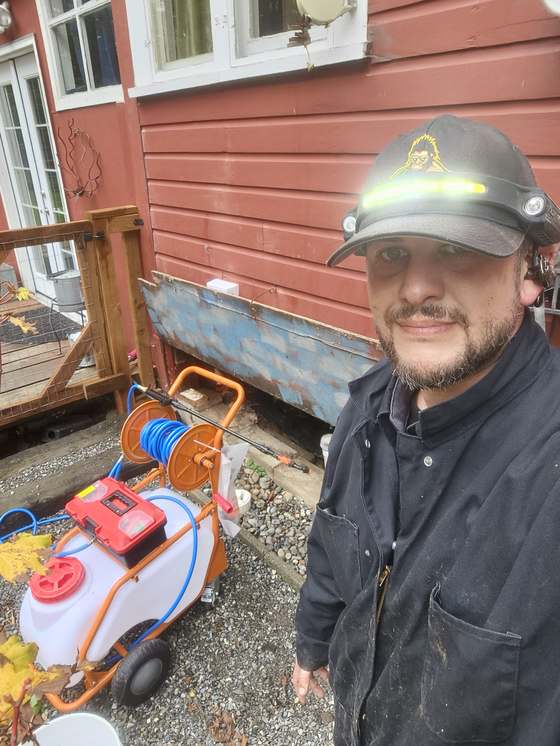
In a building with shared structure — a divided house, a duplex, an apartment block — the pests are a building-level population. Wall voids, plumbing chases, shared attics and common utility runs connect units, and insects move through them without any regard to who pays which lease.
Treat one unit thoroughly and the population in the adjacent units is untouched. It moves back. The tenant reasonably concludes the treatment did not work; the landlord reasonably concludes the tenant reinfested it. Neither is right. The scope was wrong.
What actually resolves it is a building plan: map which units are affected, identify the likely source, treat in a coordinated pass rather than as separate call-outs, and follow up on an interval matched to the insect’s life cycle rather than to the billing cycle.
Landlords who resist that generally pay for the same problem three times, and by the third round it is larger than it was. We say this before taking the work rather than after, and where somebody wants single-unit treatment anyway we will do good work on that unit and be clear about what it can and cannot achieve.
Bed bugs specifically
Early detection is the entire game, and the economics are stark.
A problem caught while it is still one room is a contained job with a predictable cost. The same problem three months later, after occupants have moved between bedrooms and soft furnishings have shifted, is a property-wide treatment at several times the price, with units out of service during the letting season.
What makes early detection realistic in a rental:
Inspect between tenancies. The gap between one tenant leaving and the next arriving is the cheapest and easiest moment to look properly, and it is the one most often skipped.
Use mattress and box spring encasements as standard. They make establishment harder and, more usefully, they make evidence obvious rather than hidden.
Brief whoever cleans or turns units on what to look for, because they are in those rooms more often than anyone else.
Make it safe to report. A tenant who thinks they will be blamed or charged waits. That delay costs far more than the treatment would have.
Our assessment for bed bugs carries a verification fee, credited against treatment if you go ahead. We charge it because verification is slow, detailed work — genuinely going through a room rather than glancing at it — and because free bed bug callouts attract a volume of speculative visits that pushes out real appointments. Everything else we handle here is free to look at.
German cockroaches
The other signature of this neighborhood, and routinely misidentified.
German cockroaches are indoor and human-associated. They do not live outside in this climate. They arrive inside things — appliances, cardboard, kitchen equipment, boxes from a previous flat — and once established they breed faster than an unplanned treatment schedule can knock them back.
They persist in voids: behind and beneath kitchen equipment, in the cavity around a dishwasher, inside the frame of a fridge, in the gaps behind cabinetry. That is why a kitchen can look clean and still have a problem, and why surface treatment alone achieves very little.
Getting on top of them takes a coordinated pass across the affected units, attention to the harborage rather than the visible surfaces, and follow-up timed to the life cycle. Shared kitchens and high occupancy make this harder, and student housing has both.
Because they live indoors with people, an insect found only in a damp crawlspace is not this problem, and it is worth a photograph before anything gets treated as a cockroach job. Identification comes first and it is the cheapest thing we do.
The buildings themselves
Underneath the turnover, Happy Valley’s housing is a mix, and the stock does matter.
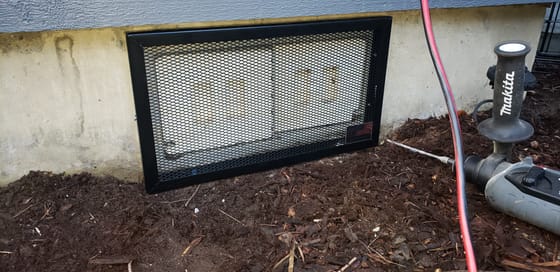
There is older single-family housing, much of it now let to groups, sitting on shallow crawlspaces over bare earth with the familiar consequences: moisture ants in framing that has softened, decay fungus where it stays wet, and the damp-crawl group of sowbugs, millipedes and springtails underneath.
There are houses divided into units at various points over the decades, where the division created new junctions between old framing and new, and those junctions are rarely sealed as well as either section on its own.
And there is purpose-built rental stock of several eras, where the issues are more conventional — service penetrations closed with expanding foam, which stops drafts and does not stop a rodent, and shared refuse areas that concentrate pressure for the whole building.
High occupancy amplifies everything. More people means more food, more waste, more comings and goings, and more doors held open. A house occupied by five adults with different schedules generates conditions a family home does not, and that is a factor rather than a criticism.
Waste, and the thing landlords can actually change
If there is one physical intervention that changes outcomes in this neighborhood, it is refuse.
Shared bins that will not close, overflowing collection points, and rubbish staged outside between collections will support a rodent population that no service schedule overcomes. In a street of multi-occupancy houses this compounds quickly, and by autumn it is feeding a substantial population that then looks for somewhere dry.
The interventions are unglamorous: enough bin capacity for the actual occupancy, lids that close, a hard surface rather than ground contact, and a collection frequency matched to the number of people. Landlords who fix that see a difference. Those who do not are buying quarterly service against a food supply they are providing.
Rodents and the autumn
The seasonal pattern is the Bellingham one, sharpened by the housing.
Through summer, rats live outdoors perfectly well — in blackberry, under decking, in the greenbelt margins and along the creek corridors. Then the rain sets in through late September and October, burrows flood, and that whole population needs somewhere dry within a few weeks. That turn is not folklore: the National Weather Service office in Seattle publishes it, and you can see it coming a fortnight out. The vegetation side of the same problem — brambles, ground cover, what to cut and when — is what WSU Extension in Whatcom County advises on locally.
Student housing at that exact moment is newly reoccupied, full of food, warm, and frequently has a refuse situation that has not yet settled. It is a good target.
The work that prevents it is exclusion, and the right time is August — which in this neighborhood is precisely when the buildings are empty and access is easiest. That is a genuine scheduling advantage and almost nobody uses it. A landlord who seals a house in August between tenancies avoids the entire winter problem; one who waits until a tenant reports scratching in November is dealing with an interior problem in an occupied building.
Spiders, and the reassuring answer
Every September the calls start, and in a neighborhood that has just refilled with people who have not lived through a Pacific Northwest autumn before, the volume is high.
These are giant house spiders. They are harmless, they are long established across western Washington, and the large fast ones people find are wandering males looking for mates rather than an invasion moving indoors for warmth. The ones stranded in a bath are males that got in and could not climb out.
Brown recluse has never been recorded in this part of Washington and the species is not established in the state. Anyone telling a nervous first-year tenant otherwise while holding a quote is selling fear.
The useful measures are exterior: clearing webbing, dealing with harborage under porches and decks, correcting outside lighting that concentrates the insects they eat, and sealing door sweeps and thresholds.
What we will not sell you
A single-unit treatment presented as a building solution. If the population is shared, we say so before taking the work.
Anything with fur or feathers. Birds and wildlife are outside our scope. We do insects and rodents and we will point you to somebody for the rest.
A recurring program that substitutes for a refuse fix. If the bins are the food supply, more visits are an indefinite cost rather than a solution.
Treatment on a hunch. Bites and rashes have many causes, and we would rather verify what you actually have than treat a bedroom for something that was never there.
How we work here
Happy Valley is minutes from our shop and most calls are handled inside a couple of days, with urgent ones faster.
For a single household we start outside — grade, vents, penetrations, refuse, vegetation contact — then underneath where the building has a crawlspace, then inside.
For a landlord or manager we would rather start with the building than with a unit: how many units, which are affected, what connects them, where the refuse goes, and what the turnover calendar looks like. That conversation takes twenty minutes and it is the difference between a plan that works and a sequence of call-outs that does not.
You get a plain account of what we found, what is driving it, what needs doing now, what can wait, and which items are a building or management change rather than a pest treatment. Looking costs nothing for every pest on our list except bed bugs, and nobody here is asked to sign a term agreement.
Between tenancies, which is the whole opportunity
Worth its own section for landlords and managers, because the single most valuable window in this neighborhood is one that most owners spend doing something else.
When a unit is empty it can be inspected properly, treated without coordinating around anybody’s schedule, and sealed without working around furniture. Nothing has to be moved, nobody has to be out of the property for a few hours, and there is no tenant relationship to manage around the work.
In Happy Valley that window falls in late summer — exactly when exclusion work should be done anyway, because the ground and crawlspaces are dry and the autumn rodent movement has not started.
So the two calendars line up almost perfectly, and almost nobody uses it. A practical sequence for a rental here looks like: inspect at handover, deal with anything found while the unit is empty, seal the building envelope in the same visit, and go into the letting season with the property in known condition.
The alternative — waiting for a tenant to report something in November — means treating an occupied unit, coordinating access with several people, and doing exterior work in weather that limits what is possible.
Owners with several properties benefit most, because the work can be batched across a turnover week rather than scattered across a year of call-outs.
What tenants can do, and what they cannot
It is worth being straight with renters, because a lot of the advice aimed at them is either useless or unfair.
Worth doing. Report early and in writing, because a dated report protects you and because early problems are small problems. Keep bedding off the floor and away from walls where you reasonably can. Be careful with secondhand furniture, particularly upholstered items and bed frames, which is where a great deal of this neighborhood’s bed bug movement originates. Keep food in sealed containers, which does more against cockroaches than any spray a shop will sell you. Put refuse in the bin rather than beside it.
Not worth doing. Buying a retail spray for bed bugs. It does not resolve an established population, and worse, it scatters them into adjacent rooms and units, which turns a contained problem into a distributed one and makes the eventual professional treatment harder and more expensive. Foggers and bombs are the same story, only more so.
Not your fault. Bed bugs and cockroaches in shared housing are not evidence of anything about you. They travel with belongings and they move between connected units. Any framing that treats them as a hygiene failure makes tenants hide problems, and hidden problems become expensive ones.
Not fixable alone. If the building is shared, your unit is one part of a larger picture. You can and should report; the scope decision belongs to whoever manages the property.
Fleas, and the pet question
Worth covering because shared houses in this neighborhood turn over pets as often as they turn over people.
Fleas arriving with a new household member are the obvious route, but the one that catches people out is a house that has been empty over the summer and then reoccupied. Flea pupae can sit dormant in carpet and floor seams for months and emerge when vibration and warmth tell them a host has arrived. So a tenant moves into a property that had a pet two occupancies ago and gets bitten in week one, with no animal anywhere in the building.
That is not a mystery and it is not the new tenant’s doing. It is the previous population completing its life cycle on schedule.
Treatment for it is straightforward but it needs the follow-up interval respected, because the pupal stage is protected and a single visit leaves the next emergence untouched. Vacuuming between visits genuinely helps and is the one thing an occupant can do that measurably changes the outcome.
Where there is no pet history at all, a flea problem usually means an animal under the floor or in a void rather than in the rooms. That is a different job, and where the animal is wildlife rather than a rodent it belongs to a specialist rather than to us.
Noise, damage and what a landlord actually pays for
The costs in this neighborhood are rarely the treatment.
They are a unit out of service during letting season. A tenancy that ends early. A review that follows a household through a rental listing. A deposit dispute that turns on who introduced what. Insulation and ducting damaged over a winter by rodents nobody reported. And the compounding cost of treating the same problem across three separate call-outs because the scope was never widened.
Set against that, inspecting an empty unit at handover and sealing the envelope in the same visit is inexpensive. That is the argument we make to owners here, and it is not a sales argument so much as arithmetic.
Where a property is genuinely at the end of its useful envelope — skirting gone, crawl open, refuse situation unfixable — we will say that too, rather than selling a recurring program against a building that needs work we do not do.
Frequently asked questions
Why do bed bugs keep coming back to my rental?
Usually because the treatment was scoped to one unit in a building where the population is shared. Wall voids and plumbing chases connect units, so treating one while the neighbors go untreated relocates the problem. It was not a failed treatment, it was a wrong scope.
Is a bed bug problem my tenants' fault?
No, and framing it that way makes it worse. Bed bugs are a transport problem, not a hygiene one, and any property with frequent turnover is exposed regardless of how it is kept. Tenants who fear blame report late, which is what turns one room into a building.
When is the worst time of year here?
June and September, when leases turn over and secondhand furniture moves between houses. That is the single most effective bed bug transport mechanism in the county, and it is why we push landlords to inspect between tenancies rather than after a complaint.
Can you treat just my unit?
We can, and for some problems that is genuinely enough. For bed bugs and German cockroaches in a shared building it usually is not, and we will tell you that before taking the work rather than after the third visit.
Where do German cockroaches actually live?
Indoors, with people. They are a kitchen, bathroom and appliance-void insect, they arrive in appliances, cardboard and used furniture, and they breed fast. They are not a crawlspace or moisture insect, so anything found only in a damp crawlspace is worth a photograph before it gets treated as a cockroach problem.
Do you work with landlords and property managers?
Yes, and multi-unit work is a good share of what we do here. What we ask for is a building-level plan rather than unit-by-unit call-outs, because that is the only version that actually resolves anything in shared housing.
Is the inspection free?
Free for everything except bed bugs, which carry a verification fee credited against treatment if you proceed. We charge it because verification is slow, careful work and because free bed bug callouts attract speculative visits that push out real appointments.
Pest problem in Happy Valley?
Family-owned, no long-term contracts, and every treatment is backed by our 100% Service Guarantee.
Most calls in Whatcom County are out within 1–2 days, about 3 during the late-summer peak.
Last updated