
Pest Control in Fairhaven, Bellingham
Fairhaven is two jobs sharing a district. A historic commercial core of connected brick buildings where the rodent population belongs to the block, and residential streets of old houses on aging foundations backing onto a creek corridor that runs cover right up to the buildings.
Call 360-410-2199 Request a free inspection
Fairhaven, Bellingham on the map
A district with two halves
Fairhaven is the most architecturally distinct part of Bellingham and, from our side of the work, it is really two different jobs that happen to share a name.
There is the historic commercial core — brick and timber buildings from the boom years, built shoulder to shoulder, now holding restaurants, retail, offices and apartments above. And there is the residential district around it: old houses on old foundations, on streets that run down toward the water and back up against the Padden Creek corridor and the wooded greenbelt.
The commercial half is a shared-structure problem. The residential half is a crawlspace-and-greenbelt problem. Treating either as though it were the other is the most common mistake we see here.
The commercial core, and why the block is the unit
The single most useful thing to understand about doing pest work in a historic commercial block is that the buildings are connected, and almost nobody who leases a unit in one knows it.
Party walls. Shared basements, or basements that were once shared and have been partially divided since. Utility chases and service runs that pass from one building into the next. Drainage extended and re-extended as tenants changed over a century. Voids above suspended ceilings that continue past a wall you assume is solid.
A rodent population in a block like this is a single population using the whole structure. It does not recognize a lease line, and it moves in response to whatever pressure it encounters. Treat one tenant thoroughly and the animals relocate to the neighboring unit, wait, and come back when the pressure eases.
So a tenant can spend years paying for monthly service against a population that was never theirs alone, seeing modest improvement and never a resolution. We have watched it happen, and it is the reason we say this at the first visit rather than the fourth.
Where a building owner, a property manager or several tenants will work to one plan, the result is different in kind rather than incrementally better. That is a harder conversation than selling a single contract and it is the honest one.
Where that coordination is not available — and often it is not — we will still do good work on your unit, seal what can be sealed, and be clear that what you are buying is control of your space rather than elimination of the block’s population.
Old buildings, old openings
The commercial stock here is well over a century old in places, and age brings its own inventory of ways in.
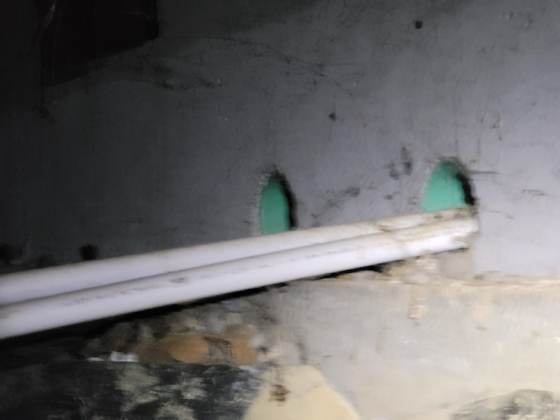
Mortar joints that have weathered and opened, particularly low on a wall or where a downspout has been discharging against it for decades. Old ventilation openings from a use nobody remembers — a coal chute, a boiler intake, a service entry for a utility that no longer exists. Basement window wells that have filled with debris and no longer close properly. Pipe penetrations from three generations of plumbing, each one drilled generously and none of them sealed.
The masonry itself is not the vulnerability. What matters is that behind and above the brick, the floor structure, the roof structure and much of the interior framing are timber, and that timber is subject to exactly the same moisture and carpenter ant problems as a wooden house. A brick wall does not protect a wet joist.
Roof level deserves specific mention. Flat and low-slope roofs on these buildings carry every mechanical service, and each penetration is sealed on a much shorter cycle than the roof itself. Once something is above a suspended ceiling it has access along the full length of the building, which is how a problem that started at a roof unit turns up as droppings above a shop floor at the far end.
Food service in a hundred-year-old building
A good share of the district is restaurants and cafés, and it is a genuinely specific job.
The building is the first constraint. Older drainage, floors resurfaced repeatedly over decades, equipment fitted into rooms not designed for it, and voids behind and beneath fixtures that cannot easily be reached or cleaned. Those voids are where German cockroaches persist, and they are the reason a kitchen can be immaculate and still have a problem. A spotless surface tells you nothing about what is behind the equipment.
Waste is the second and it is where the real progress sits. A dumpster with a broken lid, an enclosure that will not close against the ground, or bins staged in an alley overnight will support a rodent population that no service schedule overcomes. In a shared block this is doubly true, because one tenant’s waste practice feeds the population that turns up in the business next door.
We put that in the report rather than quietly servicing around it. Billing monthly while working around an open enclosure would be dishonest, and it also does not work.
Deliveries are the third. Cardboard and pallets arrive from elsewhere with whatever traveled in them, and stored-product insects in dry goods come in inside the product rather than through a door. Treating a perimeter for those accomplishes nothing; the work is finding the source lot.
Drains and grease are the fourth. Drain flies come from the slime layer that coats floor drains, sink traps and the underside of drain covers. Surface treatment does nothing to them, and mechanical cleaning ends the problem within a fortnight. Grease interceptors and the ground around them are their own reservoir.
Scheduling matters as much as technique in this district. We work around service hours rather than turning up mid-rush, and for most Fairhaven accounts that means early or between services.
The residential streets
Away from the commercial core, Fairhaven’s housing is old, individual and often substantial — a mix of turn-of-the-century houses, later infill, and a good number of properties that have been divided into units at some point.
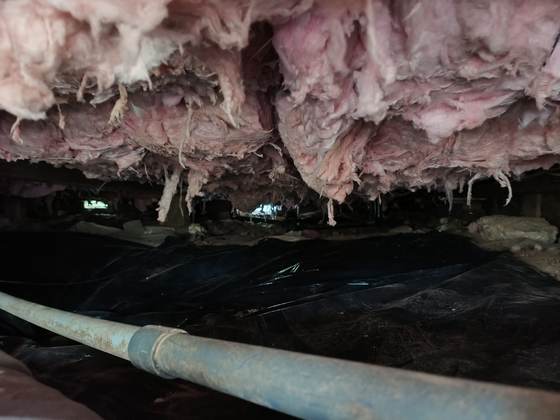
The underlying condition is the one that runs through all of Bellingham’s older stock: a shallow crawlspace over bare earth, frequently with a vapor barrier that is absent or has been pushed aside by whoever last ran a pipe. Ground moisture goes straight into the space and into the joists above it, continuously, in a climate that supplies plenty.
Everything moisture-driven follows from that. Moisture ants colonize framing that has softened, and finding them is useful information rather than merely a problem — the water is the disease and the ants are the symptom. Decay fungus runs where the wood stays wet, and decay rather than insects is what actually costs structural capacity here. Sowbugs, millipedes and springtails live in the damp and occasionally come up through a gap around a pipe.
Carpenter ants are the expensive one. They prefer wood that has begun to soften and keep a parent colony outdoors — a stump, a fence post, a landscape timber, a woodpile — with satellite nests inside the structure. On these lots, with mature planting and old trees, the parent is nearly always findable if somebody looks, and finding it is the difference between a result and a repeat visit.
Steep lots are a Fairhaven feature worth naming. A house built into a slope has part of its foundation buried and part exposed, and the transition between them is where water and insects both find their way in. Sloped crawlspaces hold water at the low end long after the rest has dried, and that low end is where the decay and the ants will be.
The creek corridor and the greenbelt
Padden Creek and the wooded corridor running through the district are among the best things about living here, and they are a permanent source of pressure.
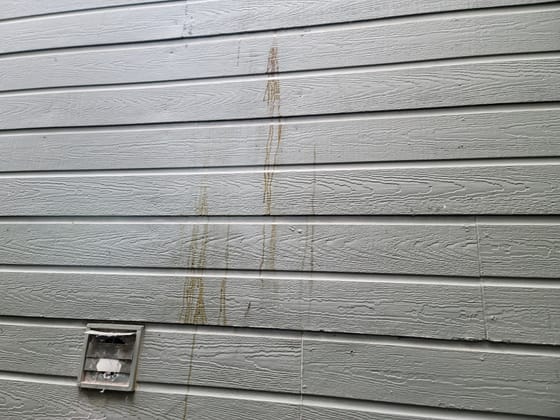
A greenbelt is continuous cover. It runs from one end of a neighborhood to the other with no break, and it delivers rodents right up to the foundations of the houses that back onto it. On an open block an animal has to cross exposed ground to reach a building. Here it does not.
That pressure is not going away and it should not. Nothing applied to your property will reduce the population living in the corridor, and any company suggesting otherwise is selling something.
What is achievable is the building envelope, and it is genuinely achievable. The crawl vents screened with material that will still be there in ten years. The gap where a deck meets the house closed. The branch that bridges to the roof trimmed. Grade corrected where landscaping runs straight up against the siding. Woodpiles moved off the wall. That work is finite and it holds.
Trapping alone on a greenbelt-adjacent property is a recurring cost rather than a solution, and we would rather tell you that at the first visit than bill you quarterly for it.
Apartments and divided houses
Fairhaven has a substantial rental stock, including older houses divided into units and apartments above the commercial spaces, and that changes how some work has to be scoped.
Where units share a structure, the insects belong to the building rather than to any one unit. Wall voids, plumbing chases and framing cavities connect units, and insects move through them without regard to who pays which lease. Treating one unit while the ones either side go untreated relocates the problem — usually next door, often back again a month later. Tenants reasonably conclude the treatment failed. It did not fail; it was scoped wrong.
What works is a building plan: map the affected units, identify the source, treat in a coordinated pass, and follow up on an interval matched to the life cycle rather than the billing cycle. Landlords who resist that generally pay for the same problem three times.
Bed bugs and German cockroaches are the two that most reward this approach and punish the alternative hardest. Both travel readily between units, and both are far cheaper to resolve early and thoroughly than late and piecemeal.
Bed bug verification is the single exception to our free assessment, and the fee comes off the treatment if you go ahead. Everything else costs nothing to have us look at.
Visitors, and what the season does
Fairhaven is a destination, and the seasonal swing shows up in our work.
Food service volume rises sharply through the summer and falls away after, which means a program built on identical monthly visits year-round is simultaneously overserving the winter and underserving the peak. We would rather scale it to the season than bill a flat schedule.
Outdoor seating is the other seasonal factor. Wasps and yellowjackets converge on outdoor food from late July onward, when colonies are at their largest and the workers have switched from protein to sugar. By August a patio can be a genuine customer-experience problem rather than a hygiene one. Some of the fix is physical, some is waste timing, and very little of it is something applied.
Wasps sit under structural and health pests in the PNW Insect Management Handbook, written jointly by WSU, Oregon State and the University of Idaho for this part of the country.
Lodging in the district brings the bed bug exposure that comes with any guest turnover. It is a transport problem rather than a hygiene one, and the operators who handle it best build detection into the routine rather than treating each incident as an anomaly.
Spiders, and the autumn calls
Every September the phone starts about large fast spiders indoors, and in a district with this much greenbelt, this much mature planting and this much old crawlspace, the volume is high.
They are giant house spiders — harmless, long established across western Washington, and the large ones people find are wandering males looking for mates rather than an invasion. Brown recluse has never been recorded in this part of the state and the species is not established anywhere in Washington. The state Department of Health keeps a page on the spiders people actually find here, and it says the same.
What reduces the population is unglamorous and effective: clearing exterior webbing, dealing with harborage under porches, decks and in crawl vents, correcting exterior lighting that concentrates the insects they feed on, and sealing door sweeps and thresholds. For a business with a lit sign and a patio, the lighting point matters more than most owners expect.
What we will not sell you
Anything with fur or feathers. Birds on a parapet, an animal in a ceiling void — none of that is ours. We do insects and rodents, and we will tell you which you have and hand you a better number for the rest.
A resolved block from a single-unit contract. If your building is connected to its neighbors and only you are treating, we will say what that can and cannot achieve rather than implying more.
A recurring program over a wet crawlspace. Drying, removal and drainage come first. Quarterly service laid over an unresolved moisture problem is an indefinite cost.
Treatment for old damage with no current activity. Galleries and exit holes persist for decades after the insects have gone.
How a visit here works
For a residential property we start outside and walk the whole perimeter, including the greenbelt side, which is the elevation people rarely look at and where a good share of the findings are. Grade and drainage, the siding-to-foundation transition, vents, penetrations, vegetation contact, and the state of any previous exclusion work. Then underneath properly with a light, which on this housing stock is where the answer is. Then the attic and the interior.
For a commercial property we start with your operating constraints — hours, service times, access, what may be placed where — because those shape everything after them. Then the exterior and the waste situation, the receiving area, the basement and any shared structure, the ceiling void, and the roof.
Either way you get a plain account: what we found, what is driving it, what needs doing now, what can wait, and which items belong to a builder, a roofer, a drainage contractor or a waste provider rather than to us. In a district of buildings this old, a real share of the answer is not work we get paid for, and we say it anyway.
Inspections are free for every pest we handle, bed bugs excepted, and there is no long-term contract.
Buildings on the water side
The properties running down toward the bay and the marine edge pick up a factor the rest of the district does not.
Salt in the air works on every metal component of a building envelope — vent screens, flashing, fasteners, door hardware, and any hardware cloth from a previous exclusion attempt. It corrodes faster here than it does half a mile inland, which means an exclusion specified for a sheltered site is a temporary result. Anything we install on this side is chosen for the exposure, because a job that fails in three winters was not worth the money.
Wind-driven rain is the companion problem. It goes into assemblies designed for rain that falls downward, and it works trim, siding and flashing loose over time. The consequence is a wall on a weather elevation that stays damp and supports moisture ants in framing that looks perfectly sound from inside.
Marine bank, riprap and driftwood along the shoreline edge are good rodent harborage sitting close to housing, in the same way the greenbelt is on the other side of the district. It is part of the shoreline, it belongs there, and the work is at the building rather than the bank.
Renovation, and the moment to act
A great deal of this district is being restored, and renovation is simultaneously the best and the worst time for pest work.
Best, because an open wall is the only time anyone sees what a century did to the framing — old carpenter ant galleries, moisture damage around a window that failed decades ago, a run of soft sill plate, a nest in a cavity nobody could otherwise reach. Correcting any of it is never cheaper than while the finish is already off, and sealing penetrations is trivial during a remodel and awkward forever afterwards.
Worst, because a building under renovation is wide open. Doors propped, sections of wall off, temporary covers, materials stacked outside, and frequently nobody there overnight to notice anything. We regularly see buildings acquire problems during a remodel that they did not have before it started, particularly across an autumn.
If you are planning work here, the useful sequence is to have somebody look before the walls close, make envelope sealing part of the project rather than an afterthought, and be deliberate about the crawlspace or basement while access is easy.
Frequently asked questions
Why does my Fairhaven business keep getting rodents after treatment?
Because these commercial buildings are connected. Party walls, shared basements and utility chases run between them, so the population belongs to the block rather than to your unit. Treating one tenant while the buildings either side do nothing moves the problem rather than ending it.
Does the greenbelt cause the problem?
It supplies it rather than causes it. Padden Creek and the wooded corridor are continuous cover running right up to the buildings, so the pressure is permanent. What decides your outcome is the building envelope, not the greenbelt, which is not going anywhere and should not.
Are restaurants here a different job?
Yes. Food service in a century-old building means older drainage, equipment fitted into spaces never designed for it, and voids behind fixtures that cannot easily be reached. Those voids are why a spotless kitchen can still have a problem, and the waste enclosure is usually the real driver.
What is under these old houses?
Usually a shallow crawlspace over bare earth, frequently with a vapor barrier that is missing or has been pushed aside. That single condition supports moisture ants, decay fungus and the whole damp-crawl group, and it is where most of our findings here come from.
Do the brick buildings have different problems than the wooden ones?
Somewhat. Masonry gives you mortar joints that have weathered, old ventilation openings, and floor and roof structures that are still timber. The wall may be brick but the framing inside it is wood, and that is what carpenter ants and moisture care about.
How fast can you get to Fairhaven?
A day or two for most calls, and often faster for something urgent. It is a short run from our shop on the Guide Meridian, and for a business we will work around service hours rather than turning up mid-rush.
Is there a charge for the assessment?
No, for every pest except bed bugs, which carry a verification fee credited against treatment if you proceed. That applies to commercial buildings as well — we will walk it properly and put a scope in writing.
Pest problem in Fairhaven?
Family-owned, no long-term contracts, and every treatment is backed by our 100% Service Guarantee.
Most calls in Whatcom County are out within 1–2 days, about 3 during the late-summer peak.
Last updated