
How to Choose a Pest Control Company in Whatcom County
Check the license first, because Washington publishes them and the lookup is free. Then ask three questions: will they identify the species before quoting, can they say what is driving it, and what happens if it returns. A quote given without a visit is not a quote.
Call 360-410-2199 Request a free inspection
The short version
| License check | Free and public through the Washington State Department of Agriculture search; get the number and look it up yourself |
|---|---|
| Applicator vs operator | The applicator license covers the business of applying pesticides; the operator license covers an employee doing the work |
| Category for timber pests | PCO Structural, covering pests that attack building material such as termites, carpenter ants and wood-boring beetles |
| Paperwork for a property sale | Needs a licensed structural pest inspector working for a licensed company; we hold neither credential |
| Price before a visit | A starting position, not a price, because crawlspace condition and how open the building is cannot be judged by phone |
| Application records | The applicator keeps them for at least seven years and owes the owner of the treated land a copy |
| Contracts | The exit matters more than the term: cancellation notice, early termination charges, repayable first-visit discounts |
| Complaints | Go to the same state agriculture department that issues the licenses; keep your records and dated photos |
- Look up the company's license on the state's site yourself and note which categories it carries.
- If a sale depends on it, ask whether they hold the structural pest inspector credential and the matching company license.
- Insist on a visit before any figure, and ask for the species rather than the group.
- Ask what is driving the problem, and where the terms for a return visit are written down.
- Before you sign, ask how you cancel and what leaving early would cost you.
- Once the work is done, ask for the application record and file it somewhere safe.
What a useful version of this page looks like
Most articles on choosing a pest control company are written by pest control companies and list criteria the writer happens to meet. That is an advertisement with a numbered list in it.
The test of whether a page like this is worth anything is simple: does it name a criterion the writer fails? This one does, and the failure is in the section on licensing, which is the section that matters most. Read that part first if you are only going to read one.
Everything else here is what we would tell a friend who asked, including the parts that send them elsewhere.
Start with the license, because it is free and public
Washington licenses this trade, and the licenses are a matter of public record. The Washington State Department of Agriculture runs a license search on its own site, open to anybody, at no cost. There is no reason to take a company’s word for its licensing when the state will tell you directly.
Two things are worth knowing before you look.
The license types are different things, not seniority grades. The Washington Pesticide Application Act defines a commercial pesticide applicator as “any person who engages in the business of applying pesticides to the land of another,” and a commercial pesticide operator as “any employee of a commercial pesticide applicator who uses or supervises the use of any pesticide and who is required to be licensed.” One attaches to the business of applying; the other attaches to an individual doing the work. A company’s crew may be licensed as operators. That is normal and it is not a lesser thing.
A license carries categories, and the categories are the useful part. A Washington pest control license record shows the license type, its status, its expiration date, and the categories the holder carries. For structural work the two that matter are PCO General, which covers general structural and household pest control, and PCO Structural, which WSDA describes as the control of pests that attack structural material — fungus, termites, carpenter ants and wood-boring beetles.
That second one is worth asking about specifically. If your problem is in the timber of the building rather than on the kitchen counter, a company whose licensing does not include the structural category is not the right company for it.
Ask for the number, then look it up yourself. Not because most companies are lying, but because it takes two minutes and a company that gets awkward about the request has answered a different and more important question.
The credential most people do not know exists
Here is the part that decides whether this page is honest.
There is a separate Washington license called a structural pest inspector license, created under a different statute from the one that licenses pesticide application. RCW 15.58.205 provides that no individual may perform services as a structural pest inspector, or advertise that they perform those services, without holding that license from the director. The same section adds a second requirement that surprises people: that license “is not valid for conducting a complete wood destroying organism inspection unless the inspector owns or is employed by a business with a structural pest inspection company license.”
So there are two credentials there, an individual one and a company one, and both are needed before anybody can produce the report a property sale runs on. State law defines a complete WDO inspection as one carried out “for the purpose of determining evidence of infestation, damage, or conducive conditions as part of the transfer, exchange, or refinancing of any structure in Washington state.”
We do not hold either of those credentials. We hold treatment licenses. If a lender, a buyer, an escrow officer or a real estate agent has asked you for a wood-destroying organism report on a sale, the document has to come from a licensed inspector working for a company that holds the inspection company license, and that is not us. We will tell you that on the phone rather than after taking a booking, and the same is true if you call us in a panic three days before closing.
What we are certified to do is the treatment of the organisms an inspector’s report identifies, which is separate work and is usually the part that comes next.
This distinction is not a technicality and it is the most common way a pest control company misleads a homeowner in this state, usually by accident. The word “inspection” gets used loosely by everyone, including us in the sense of a free assessment before a quote, and it is not the same thing as the regulated activity above. If a transaction depends on it, ask directly whether the company holds the structural pest inspector credential and the matching company license, and ask the same question of us.
The questions that actually separate good from bad
Long question lists are easy to produce and hard to use. These five do most of the work.
“What species is it?” Ask before any figure is discussed. The answer should be a species or a straightforward “I want to look at this properly before I say.” “Ants” is not an answer — odorous house ants, moisture ants and carpenter ants are three different jobs with three different prices and one of them is really a building repair. A company that quotes before identifying is quoting a product, not solving a problem.
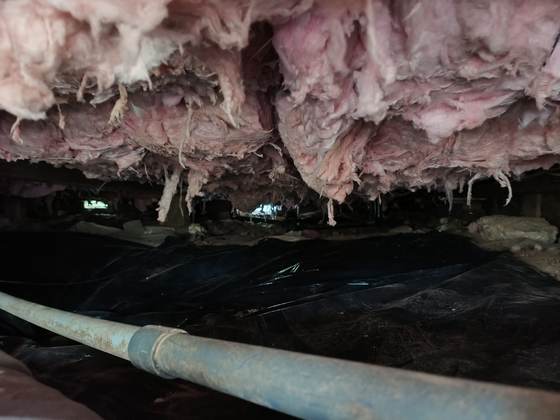
“What is driving it?” There is always a reason: food, water, harborage, or a way in. If nobody can name the driver, the treatment is aimed at the symptom and you will be having this conversation again. In this county the driver is frequently water — a blocked crawl vent, a downspout at the foundation, a torn ground cover — and a company that never looks under the house will not find it.
“What happens if it comes back?” The useful version of this question is not whether they will return but on what terms, and for how long, and written down where. Ask what the stated conditions are and whether they are published anywhere you can read before you sign. Our own re-service terms are set out in full, with their limits, on a page you can read before you buy anything. Any company can put a promise in an advertisement. The conditions are where you find out what the promise is worth.
“Is there a contract, and how do I leave?” The length of the term matters less than the exit. Ask about the cancellation notice, any early termination charge, and whether a discounted or free initial visit becomes repayable if you cancel. That last one catches people. Ask before signing; afterward is not a negotiation.
“Who is actually coming, and what will they do on the visit?” A route technician doing a twenty-minute lap of the building is a different service from someone spending an hour with a light in the crawlspace, and both get sold under the same words.
Red flags, in rough order of how much they should worry you
A quote without a visit. For anything beyond a wasp nest you can point at, this is not a price. The two variables that move a job most in this county — what the crawlspace is like, and how open the building is — cannot be judged from a phone call. A figure given before either is known will move once someone arrives.
Pressure at the door. Door-to-door selling is legal and some of it is honest, but the combination of an unscheduled visit, a same-day discount, and an inspection of your property offered on the spot is the standard structure of a bad deal. Nothing in this trade is genuinely urgent to the hour. Take the card, look up the license, call back tomorrow.
Fear-based selling. Watch for a diagnosis that arrives with an emotional charge attached: your home is being eaten, this is a health emergency, this spreads to the neighbors. Some pest problems are genuinely serious and a competent technician will say so calmly and be able to explain why. If the argument is doing more work than the evidence, be careful.
Species that do not live here presented as your problem. Brown recluse and black widow both come up in local sales conversations and neither is established here. So does “termites” used as a single scary noun, when the species we actually deal with in Whatcom County are dampwood and subterranean termites, with quite different biology and quite different implications. A company that does not know which one it is looking at is not qualified to tell you what it means. On the spiders, the Washington State Department of Health is the quick check: brown recluse are not established anywhere in Washington, and widow spiders belong to the drier country east of the Cascades.
A promise that sounds absolute. Nobody can commit to a building never having another insect in it, and any assurance phrased that way either has conditions that are not being shown to you or is not going to be honored. The useful version is narrow, written and specific.
Reluctance about the paperwork. A licensed applicator has to keep records of what was applied and has to give the owner of the treated land a copy. Hesitation about that is a serious signal.
No mention of anything except a treatment. On a Whatcom County house, an assessment that produces no observation about drainage, ventilation, grade or an open gap somewhere is an assessment that did not look very hard.
What a license does not tell you
Worth saying, because the licensing section above could give the wrong impression. A license is a floor, not a recommendation.
What it establishes is that somebody passed the examinations, carries the categories, keeps up the continuing education and pays the fees. Those are real things and a company without them should be ruled out immediately. What it says nothing about is whether the technician will go into your crawlspace, whether anyone will identify the ant, whether the recommendation will be honest, or whether the company answers the phone in February.
So the license check is a screen you run first and quickly. Everything after it is judgment, and the questions in the next section are how you exercise it.
On price, briefly
Price is the thing people want to lead with and the thing that tells you least early on, because two quotes for the same problem are usually two different jobs. What is included, whether repair work is in or out, how many visits, and what the terms are on coming back all move the figure more than any margin does.
That subject has its own page here, which sets out what actually moves a number in this county and how to read a quote against another one. The relevant point for choosing a company is narrower: a figure produced without a visit is not comparable to one produced after somebody has been under the house, and treating them as though they were is how people end up disappointed by the cheaper of the two.
Franchise or local, which is the wrong question
People ask this a lot and it is not the axis that decides anything.
A national operation brings scale, availability, standardized procedures and somebody to escalate to. A local one brings knowledge of this specific housing stock, this climate and this county’s seasons, and usually the same technician each visit. Both models produce good companies and bad ones.
The things that actually predict quality — does anybody identify the species, does anybody look at the building, is the recommendation honest, are the terms written down — cut straight across the distinction. Apply the criteria to the company in front of you rather than to the category it belongs to.
The one place the distinction genuinely bites here is regional knowledge. A technician trained on a national curriculum in a dry state can be perfectly competent and still not know that the explanation for most of what happens in this county is under the floor and made of water. Ask about Whatcom County specifically and listen for whether the answer is local.
Insurance and the practical questions
Ask whether the company carries general liability insurance and whether it can produce a certificate. Most can, most will, and property managers and commercial accounts should ask as a matter of routine rather than as a challenge.

The other practical items, none of them glamorous: is the vehicle marked, does the technician identify themselves, are appointments given as a time or as a day, does anybody tell you afterward what was done, and does the phone get answered by a person who can find your account. Those are not quality signals about pest biology. They are signals about whether the business is run, and a business that is not run will fail you at the point where you need it.
What you are entitled to afterward
Washington is specific about this and most customers do not know it.
A commercial pesticide applicator must keep records of each application including the location, the year, month, day and the beginning and ending times, the product name as it appears on the registered label, the EPA registration number, the crop or site treated, the amount applied, the concentration, and the name of the individual who made the application. Those records must be kept for no less than seven years, and the applicator must provide a copy to the owner of the land the pesticide was applied to.
That is a record of what was done. It is worth asking for, worth keeping, and worth reading — the EPA registration number lets you look up the label yourself and read the same safety directions the technician was working to.
Reviews, and what they can and cannot tell you
Read the text, not the score. Almost every company in this trade shows a high average, so the number carries very little signal. What carries signal is the content: did the problem actually resolve, did the company come back when asked, how do they respond when somebody is unhappy, and are the detailed reviews describing the same service you are being sold.
A negative review answered like an adult is worth more than a page of five-word praise. And in a county this size, the most reliable source is still somebody on your street who had the same problem last winter.
Where we are the wrong choice
This is the section that makes the rest of the page worth reading, so it is specific rather than modest.
A wood-destroying organism report for a property sale. Covered above. We do not hold the inspector credential or the company license and cannot produce that document. Call a licensed inspector.
Wildlife. Birds, bats, squirrels, raccoons, opossums. Not our work, not our licensing, and a company that offers everything is usually good at less of it than it claims.
Mosquitoes and ticks. We do not sell treatment for either. In this county mosquito problems are usually a standing-water problem on or near the property, which is a drainage conversation rather than a spraying one.
Free assessment, with one exception. The pre-service visit is free for everything except bed bugs, which carry a paid verification visit — that one is credited against the treatment if you proceed, but it is a real charge if you only want the visit. We would rather say that on this page than have it appear on an invoice.
Formal monitoring on a single-family home. Logged trap counts and trend reporting are a commercial-account service. On an ordinary house, from us or anyone else, “monitoring” means a technician checking the same places each visit.
Scale. We are a local company. In late September and October, when the rodent calls start, the schedule tightens. If you need somebody within twenty-four hours during the autumn peak, a larger operation may genuinely serve you better, and being honest about that is cheaper than missing an appointment.
Anything upstream of the pest. Where the answer is a drainage contractor, a plumber, a builder or an insulation company, that is what we will tell you, and we will not sell you a recurring plan as a substitute for it.
If something goes wrong
Most disagreements in this trade are about expectations rather than competence, and most of them resolve in one phone call if the call happens early. Say what you expected, say what happened, and ask what they propose. Do it in writing as well as by phone, dated, and keep the copy.
If that does not work, the agency that issues these licenses is the agency that enforces the statutes behind them. The Washington State Department of Agriculture is the regulator for pesticide application in this state, and the license record you looked up at the start is held by the same department that takes complaints about the work.
Two things make a complaint effective and both are things you have to do at the time rather than afterward: keep the application records you were given, and photograph the situation with dates. A dated record beats a recollection every time, in this as in every other dispute.
Buying this for a business
Briefly, because a commercial buyer is asking a different set of questions.
The license check is the same. What is added is documentation: a device map, a record of each visit, trend information over time, and material available when an auditor or a health inspector asks for it. If you are running a food business, a care setting, a school or a warehouse, ask specifically what the service produces on paper, because that is half of what you are buying and it is the half that fails audits when it is missing.
Also ask who covers you when your usual technician is on vacation, how emergency calls are handled outside normal hours, and whether the company has worked in your type of facility before. A residential route service scaled up is not the same thing as a commercial program.
A short checklist
Take this to whichever company you call, including this one.
Look up the license yourself on the state’s site. Ask which categories it carries. Ask whether they hold the structural pest inspector credential if a sale depends on it. Insist on a visit before a price. Ask for the species, not the group. Ask what is driving it. Ask what happens if it returns, and where those conditions are written. Ask how you cancel and what it costs. Ask for the application record afterward. And notice whether anybody ever tells you that something is not needed.
The last one is the strongest signal available. Recommending work is what every company does. Declining work is a demonstration of the judgment you are actually paying for, and it is much harder to fake than a review score.
Frequently asked questions
How do I check a Washington pest control license?
The Washington State Department of Agriculture publishes a license search on its own site. It is free and open to anybody. A company that will not give you a license number to look up has told you something useful without meaning to.
What is the difference between an applicator and an operator license?
State law defines a commercial pesticide applicator as a person who engages in the business of applying pesticides to the land of another, and a commercial pesticide operator as an employee of one who uses or supervises the use of pesticides. One attaches to the business, one to the individual.
Is a treatment license the same as an inspector credential?
No, and this is the distinction that catches people out during a property sale. They are separate licenses under separate statutes, and holding one says nothing about holding the other.
Do you hold the structural pest inspector credential?
No. We hold treatment licenses. If a lender, an escrow officer or a buyer has asked for a wood-destroying organism report on a sale, that document has to come from somebody else and we will say so rather than take the booking.
What should a quote be based on?
A visit. A figure given over the phone before anyone has seen the building is a starting position rather than a price, and the two most expensive variables in this county — crawlspace condition and how open the building is — cannot be assessed from a call.
What records am I entitled to after a treatment?
Washington requires a commercial applicator to keep records of the application, including the product name, the EPA registration number, the location, the amount and concentration, and the date and times, and to provide a copy to the owner of the land treated.
Should a long contract worry me?
The term matters less than the exit. Ask what the cancellation terms are, whether there is an early termination charge, and whether a discounted first visit becomes repayable if you leave. Ask before signing, because that is the only point at which the answer is negotiable.
What is the single strongest signal of a good company?
Somebody telling you that you do not need something. Every company can recommend work. A company willing to talk itself out of a sale is demonstrating the judgment you are actually hiring.
Sources
This is information, not legal advice. We are a pest control company, not attorneys. What follows is our reading of published rules, with links so you can check them yourself. For advice on your own situation, talk to a lawyer, to WashingtonLawHelp, or to your city or county code enforcement office.
- RCW 17.21.020 — Washington Pesticide Application Act definitions — read September 2, 2026
- RCW 17.21.100 — Records of pesticide application — read September 2, 2026
- RCW 15.58.205 — Structural pest inspector license required — read September 2, 2026
- RCW 15.58.030 — Washington Pesticide Control Act definitions — read September 2, 2026
- WSDA — Pesticide and SPI license search — read September 2, 2026
Rules change. This page is scheduled for review against its sources by September 2, 2027. If you are reading it after that date and something looks out of step with the current rule, the rule is right and we are wrong — please tell us.
Related guides
From the blog
Pest problem in Whatcom County?
Family-owned, no long-term contracts, and every treatment is backed by our 100% Service Guarantee.
Most calls in Whatcom County are out within 1–2 days, about 3 during the late-summer peak.
Last updated