
Pest Control in Silver Beach, Bellingham
Silver Beach is Bellingham's lake neighborhood, and two things set the work. Much of it began as summer cabins now lived in year-round, and all of it drains into the reservoir that supplies the city's drinking water, which genuinely changes what we are willing to put on the ground.
Call 360-410-2199 Request a free inspection
Silver Beach, Bellingham on the map
A summer place that stayed
Silver Beach runs along the Bellingham end of Lake Whatcom, and a great deal of it began as somewhere to spend July rather than somewhere to live.
Much of the original stock went up as cabins and lake places — light construction, small lots close to the water, built to a standard appropriate to a warm season and a few months of occupancy. Over the decades those were insulated, extended, re-roofed and converted, and they are now year-round housing. Newer infill has filled the gaps between them.
The gap between what a building was made for and what it is now asked to do explains a great deal of our work here, and it sits alongside a second fact that governs how we are willing to work at all: this ground drains into the reservoir that supplies Bellingham’s drinking water.
Working inside the catchment
Lake Whatcom is the drinking water source for the city and much of the surrounding area, and Silver Beach sits directly on it.
We treat that as a real constraint on method rather than as a line in a brochure, and it is worth being specific about what it means in practice.
On the lake side of a property we lead with exclusion, habitat modification and contained placements rather than anything broadcast. We look at the forecast before scheduling exterior work, because applying anything ahead of heavy weather in a catchment is a poor decision regardless of what a label permits. The forecast in question is the one the National Weather Service puts out from its Seattle office, the office responsible for this corner of the state. Rodent control products, where they are used at all, go in tamper-resistant, weather-protected stations rather than anywhere open. And where the correct answer is a drainage correction, a regrade, a gutter repair or removing the wet timber that is feeding the problem, we say so — none of which is work we get paid for.
There is a second reason for the same restraint. This is owl, hawk and eagle country, and those birds hunt exactly the population we are managing. Where we use rodent control products we choose programs and active ingredients selected to limit secondary poisoning risk to non-target wildlife and to pets.
Residents here tend to already care about this, which makes the conversation an easy one. It is also simply the correct way to work on ground that drains into what comes out of the tap.
What the original construction left
The converted-cabin stock shares a set of characteristics, and every one is a pest consideration once a building is occupied through a wet winter.
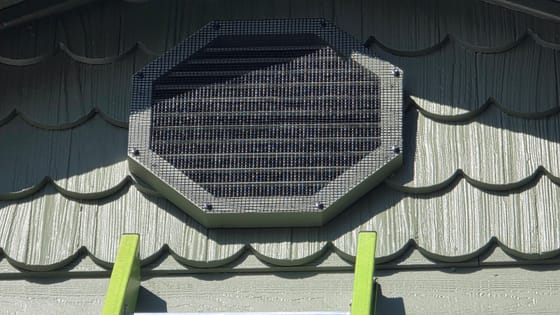
The underfloor space. Frequently skirting, piers or a shallow crawl rather than a properly sealed foundation, with bare earth beneath and a vapor barrier that is absent or has been pushed aside. It was never intended to be part of a conditioned building. It is the easiest way into most of these properties and it is where our findings usually are.
Light framing and retrofitted insulation. Small dimension lumber, minimal sheathing, and insulation added decades later into cavities not designed for it. Retrofit insulation is warm and undisturbed, which is precisely what a rodent is looking for in October.
Additions. Almost every one of these places has been added to at least once, and each addition created a junction between old framing and new — at the roofline, at the rim, where a new floor meets an old one, around whatever services were rerouted. Those junctions are rarely as tight as either section on its own.
Decks and skirting. Nearly universal, often enclosed at the base, and the sheltered space underneath is dry, undisturbed harborage that on many properties connects straight into the underfloor space.
Services running underneath. Water, waste and heat ducts passing through an unsealed floor cavity, each with a penetration around it. Something in that space has access to the whole underside of the building.
Steep lots and the water problem
Silver Beach falls to the lake, and slope decides where the trouble is.
Water moves downhill through soil, arrives at the uphill foundation, and finds the lowest point available. A crawlspace stepped into that slope is dry at one end and persistently damp at the other, with the joists above the wet end quietly taking on moisture for years.
Everything moisture-driven follows. Moisture ants need timber that has already softened, and finding them is a finding about water rather than about ants. Decay fungus runs where the wood stays wet, and decay rather than insects is what actually costs structural capacity in this climate. Silverfish, sowbugs and springtails live in the damp end and occasionally come up through a gap around a pipe.
The corrections are drainage and grading rather than pest work: roof water discharged well away from the uphill wall, grade that slopes away rather than toward, and a sound barrier over clean ground. Where a crawl has been wet long enough that insulation is hanging down, removal comes before anything else — wet material holds moisture, accelerates decay above it and makes ideal nesting.
We will tell you when the person you need next is a drainage contractor. On this housing stock that is often, and it costs us the recurring service.
Cedar, and the carpenter ant problem
There is a great deal of cedar in this neighborhood and it is old enough to matter.
Carpenter ants do not eat wood; they excavate galleries in it to nest, and they strongly prefer material that has begun to soften. Fifty or more years of weather does exactly that to cedar trim, fascia, deck framing, fence posts and the bottom edge of siding.
The structural point most treatment misses: a mature population keeps a parent nest outdoors — a stump, a standing dead tree, a fallen log, an old landscape timber, a woodpile — with satellite nests inside the building. The satellites are what people see. Treating those while the parent sits twenty feet away in the garden buys a couple of quiet months, and that is the entire reason this work has a reputation for coming back.
So a first visit here is investigative before it is anything else. We are looking for the parent: the stump nobody thinks about, the section of deck framing that stays wet, the dead limb over the roof, the old timber wall, the wood stacked against the house. Where we find it, the result holds.
Firewood deserves a specific mention because wood heat is common here. A stack against the wall is harborage directly against the building, it holds moisture against the siding, and it is frequently the parent colony itself. Stacked off the ground and away from the structure, with only a day’s worth brought inside, it stops being any of those things.
The wooded side
Where the neighborhood backs onto wooded ground rather than water, it behaves like forest edge.
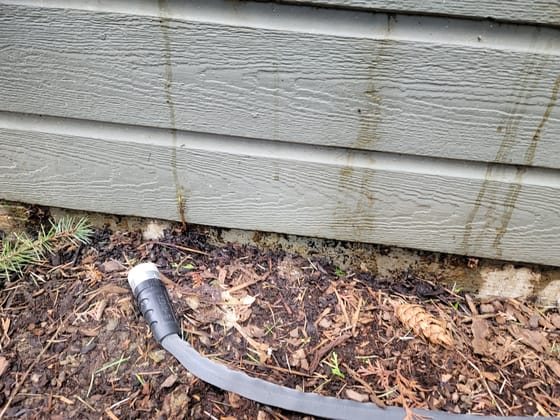
Deer mice and rats use continuous cover to reach the buildings, finding crawl vents, skirting, the gap under a deck and the point where a service line enters. Spider and centipede pressure is among the heaviest in the city, because damp wooded ground beside water produces insects in enormous quantity and everything that eats insects follows.
For spiders and the rest of that group the regional reference is the PNW Insect Management Handbook, assembled by the three Northwest land-grant universities.
The fix is at the interface rather than in the woods: trim the branch bridging to the roof, screen the vents with material that will last, close the deck gap, pull planting and woodpiles back off the building. Trapping alone against a treeline is a subscription rather than a solution.
Docks, boathouses and stored gear
Worth its own note because they are common here and routinely left out of scope.
A boathouse, a covered slip or a storage shed near the water is a dry, sheltered, undisturbed void next to habitat — good rodent harborage by any measure. What makes it better is what people keep in it: cushions, life jackets, rope, canvas, tarps and covers, all of which become nesting material over a winter, and often some food or bait as well.
A property treated at the house while the boathouse goes untouched has a permanent base twenty yards away. Including those structures in the scope usually costs very little and changes the picture, and where a structure is genuinely beyond sealing we will say that and focus on removing what is attracting them instead.
Hard containers for anything soft, no food stored down there, and a clear floor do most of the available work without us.
One question comes up on nearly every waterfront property, so here is the answer before it is asked: we do not put rodent bait on a dock, in a boathouse, or anywhere a station could end up in the lake. A tamper-resistant station is designed to keep a child or a dog out of it, not to survive being knocked into water. Out over the water we use traps instead, secured and checked on a set interval, which means returning rather than leaving something working unattended by the shoreline. That costs us visits and it is the only version of this we are prepared to run on the reservoir.
The lake, the insects and the evenings
Living on water changes the insect load in a way that surprises new residents.
The lake produces midges and other aquatic insects in quantity, particularly on warm evenings, and that production feeds everything above it. Spiders arrive to eat them, which is why lakeside houses have webbing on the water elevation that inland houses do not.
Exterior lighting matters more here than almost anywhere in the city. A bright white fixture on a lakeside deck on a July evening is doing more to create a spider problem than anything else on the property, and changing the fixture is more effective and cheaper than any treatment.
That is genuinely most of the residential spider advice we give here, and we would rather give it than sell a quarterly perimeter service that fights the lighting rather than the cause.
The autumn, and the right window
The seasonal pattern is the Bellingham one with the wooded and lakeside supply added.
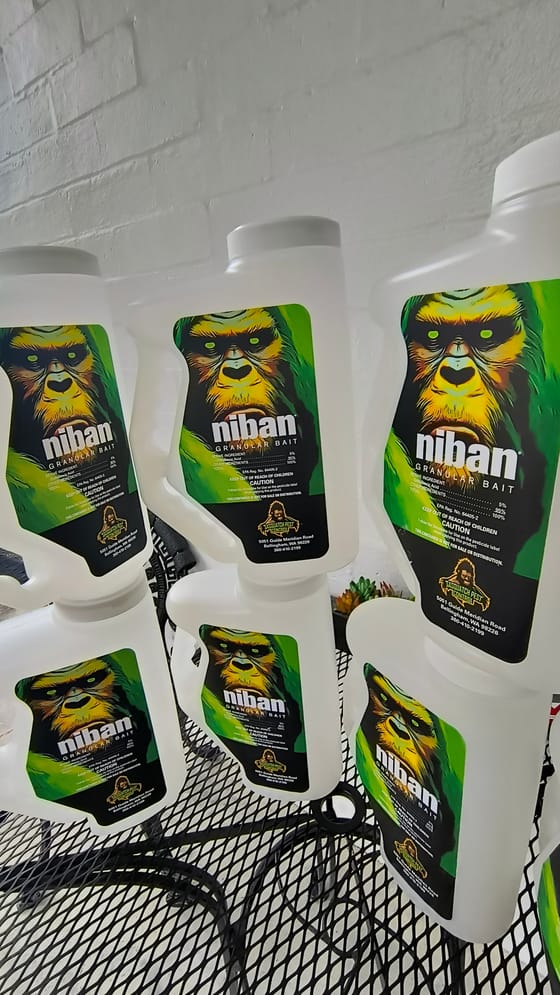
Through summer, rodents live outdoors and do very well. Then the rain sets in through late September and October, the ground saturates, burrows flood, and the population needs somewhere dry within a few weeks. On this housing stock the underfloor space of a lightly built converted cabin is warmer, drier and less disturbed than almost anything else on offer.
The prevention window is August: dry ground, dry crawlspaces, easy exterior access, and the movement still weeks away. Work completed then means the winter problem does not happen. Work deferred to spring is remediation of a winter’s worth of damage — soiled insulation, chewed ducting, and occasionally something dead in a space nobody can easily reach.
Spiders and the September calls
They are giant house spiders. Harmless, long established across western Washington, and the large fast ones people find are wandering males looking for mates rather than anything moving in for warmth. The ones stranded in a bath are males that got in and could not climb back out.
Washington has no established brown recluse population, and none has ever been recorded in this county.
Beyond the lighting point above, what reduces the population is clearing exterior webbing, dealing with harborage under decks and in crawl vents, and sealing the door sweeps and thresholds most of them use to get in.
What we will not sell you
Broadcast applications on the lake side. In a drinking water catchment that is the wrong tool, and we would rather quote exclusion and habitat correction even where it is a smaller job.
Anything with fur or feathers. Wildlife is outside our scope, and on a wooded lakeside lot that question comes up often. We will tell you what you have and hand you a better number.
A recurring program over a wet crawlspace. Drying, removal and drainage come first. Service laid on top of an unresolved moisture problem is an indefinite cost with no end date.
Endless trapping against the treeline. If the building is not sealed, that is a subscription rather than a result.
How a visit here works
We start outside and the walk takes a while on these lots. Every elevation where the building meets earth, the drainage and where it actually discharges, the condition of the cedar, the deck and its ledger, the skirting and underfloor access, the stumps and standing dead wood, the firewood, the branches over the roof, and the outbuildings and anything near the water.
Then underneath, properly, with a light, working to the low end of a stepped crawl rather than reporting from the hatch. Then the attic, then the interior.
You get a plain account of what we found and what is driving it, what needs doing now, what can wait, and which items are a drainage, carpentry or tree job rather than a pest treatment. On a converted cabin on a slope in a catchment, a real share of the answer is not work we get paid for, and we say it anyway.
Every pest we handle is free to assess except bed bug verification, which is charged and then credited against the treatment. No term agreement is required for any of it.
Ants that are not carpenter ants
Two other ants turn up here regularly and both get misidentified as the expensive one.
Odorous house ants come in from outside along the slab edge, the sill or a service penetration, drawn by whatever is available in a kitchen. They are a nuisance rather than a structural signal, and they respond to a combination of exterior treatment and closing the specific route they are using. On a lakeside lot with mature planting they are extremely common in spring.
Pavement ants behave similarly, working up through cracks in a slab, a patio or a path and appearing indoors near the floor.
Neither is telling you anything about the building. Moisture ants and carpenter ants are; these two are simply foraging. That distinction matters because it decides whether the conversation is about a treatment or about a repair, and selling somebody a structural investigation for a pavement ant trail would be as dishonest as ignoring a moisture ant finding.
Winged carpenter ants in spring get called in as termites more often than anything else we identify. The quickest tell is the waist — sharply pinched on an ant, uniform on a termite — and getting that right first costs nothing.
Seasonal and part-time occupancy
A number of properties here are second homes, family places used at weekends, or lettings that run heavily in summer and sit quiet through the winter, and the occupancy pattern changes the risk.
An unoccupied house is quiet, undisturbed and dry while the whole neighborhood is wet outside. Nobody hears the scratching in November, nobody sees the droppings in December, and nobody notices the wasp nest in the eave growing through July. A problem that would be caught in its first week at an occupied house runs uninterrupted for months.
So the practical advice for a part-time owner is about timing rather than product. Get the exclusion done in late summer before the place is closed up — the crawlspace is dry, the wasps are finished, and the autumn movement has not begun. Have somebody look at it mid-winter if that is possible at all. And where an owner cannot easily be here, we can do the assessment while they are in town and schedule the work around their travel rather than ours.
Wasps deserve a specific mention for lightly used property. A queen founds a nest in a sheltered eave in April or May, and with nobody there to notice it the colony grows all summer without interruption. The nests we find at quiet lakeside houses in August are routinely larger than anything at an occupied address, for exactly that reason.
Frequently asked questions
Does the drinking water catchment actually change how you treat?
Yes, and we would rather be held to that than say it as a slogan. On the lake side we lead with exclusion, habitat correction and contained placements over anything broadcast, we watch the forecast before exterior work, and we say when the right answer is a drainage fix instead.
My house started as a cabin. Why does that matter?
Because it was built for three warm months and is now lived in through the winter. Light framing, an underfloor space that was never meant to be part of a conditioned building, and additions whose junctions with the original structure are rarely sealed well.
Why are carpenter ants so common on this street?
Cedar and water. Fifty or more years of weather softens cedar trim, fascia and deck framing into ideal nesting material, and the parent colony is usually outdoors in a stump, a dead limb or the woodpile rather than in the house at all.
Is a boathouse or dock a pest problem?
It can be. Anything with a dry, sheltered, undisturbed void near water is good rodent harborage, and stored cushions, life jackets and rope become nesting material over a winter. It is worth including in the scope rather than treating the house alone.
What comes off the wooded side?
Deer mice and rats using continuous cover to reach buildings, and heavy spider and centipede pressure. Damp wooded ground next to water produces insects in quantity, and everything that eats insects follows them to the buildings.
How steep are these lots and does it matter?
Many fall sharply to the water, and it matters a great deal. Water moves downhill through soil to the uphill foundation wall, and a crawlspace stepped into a slope holds it at the low end long after the rest has dried.
Do you charge to come out?
Only for bed bug verification, and that comes off the treatment if you proceed. Every other pest we handle is free to assess, including going under the building, which on this housing stock is where the answer usually is.
Pest problem in Silver Beach?
Family-owned, no long-term contracts, and every treatment is backed by our 100% Service Guarantee.
Most calls in Whatcom County are out within 1–2 days, about 3 during the late-summer peak.
Last updated