
Pest Control in Irongate, Bellingham
Irongate is light industrial, and it behaves nothing like the rest of Bellingham. Metal buildings that cannot be sealed, yards full of stored material that is better habitat than anything indoors, vehicles parked for weeks, and long stretches when nobody is on site to notice a thing.
Call 360-410-2199 Request a free inspection
Irongate, Bellingham on the map
An industrial neighborhood in a residential city
Irongate is Bellingham’s light industrial quarter, and almost nothing that applies to the rest of the city applies here.
There are no crawlspaces to speak of, very little of the century-old timber framing that defines the older neighborhoods, and hardly any residents. What there is instead: metal and tilt-up buildings on concrete slabs, roll-up doors by the dozen, yards full of stored material, contractor and trade premises, fabrication and auto shops, storage facilities, distribution, and long stretches of every week when the entire area is empty.
That produces a genuinely different discipline. Industrial pest control runs on realistic goals for buildings that cannot be closed, on documentation, and on a willingness to tell a client that the reason the program is not working has nothing to do with the program.
The building cannot be sealed, and that is the starting point
The single most useful thing we bring to an Irongate account is refusing to pretend otherwise.
A shop with two or three roll-up doors open through the working day, a personnel door propped in warm weather, a slab that has settled slightly at one corner and a dock leveler with a gap beneath it is not a sealable envelope. It never was. Quoting as though it could be is how a client ends up disappointed by a program that was never capable of the result.
What is achievable, and it is genuinely worth having:
A defended perimeter. Exterior placements positioned against how the building is actually approached rather than spaced decoratively around it.
Controlled interior placement where the sensitive equipment, stock and wiring are, rather than uniform coverage of a large empty floor.
Attention to the specific openings that matter: door seals and sweeps that have worn through, the gap under a settled roll-up, thresholds, and the penetrations where compressed air, power and dust extraction leave the building.
Honest findings about the yard, which is where the population actually lives.
That is a program with a shape and a rationale rather than a subscription, and it holds up when somebody asks what they are paying for.
The yard is the problem
Most interior rodent activity in this neighborhood is the visible end of an exterior population, and the exterior is almost always more habitable than the building.
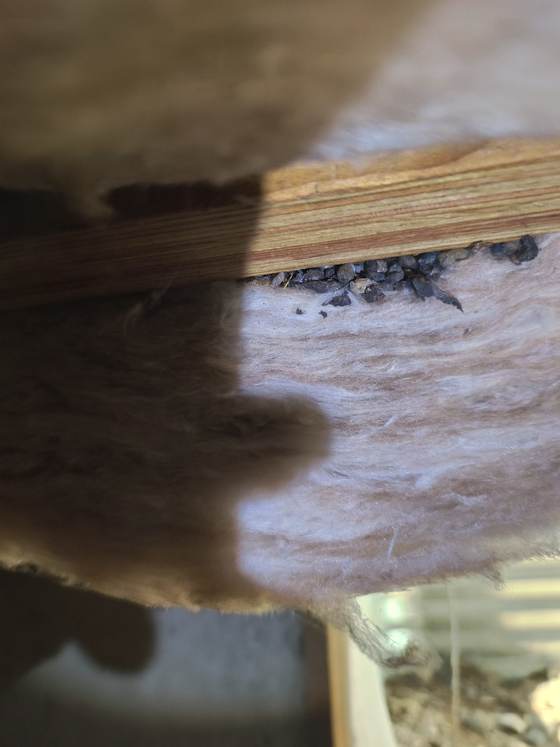
Stacked material. Lumber, pipe, steel, fencing, formwork, offcuts and pallets stored on the ground provide dry, sheltered voids in enormous quantity. A stack of pallets is a purpose-built rodent apartment block, and every contractor yard has one.
Equipment and plant standing outdoors. Machinery, trailers, skips, mixers and anything that has not moved in a month is harborage, and frequently harborage with wiring in it.
Vegetated margins. The strip along a fence line, the ditch at the back of a lot, the undeveloped parcel next door and the untended ground between two premises. It is nobody’s explicit responsibility, it runs continuous cover the length of the block, and it delivers animals directly to your doors.
Waste and salvage. Skips without lids, scrap accumulations, cardboard baled outdoors and awaiting collection, and the informal pile that every yard has in one corner.
None of that is treatable in the way a building is. What changes it is storage practice: material up off the ground on racks where possible, pallets stacked and rotated rather than left to settle, a managed gap between stored material and the building wall, and vegetation cut back off the fence line. UC’s IPM program makes the same point about harborage: take away the sheltered voids and there is much less left to control.
We put those findings in writing rather than quietly servicing around them. A client who racks their material sees a difference in a season. A client who does not is paying us to manage a symptom indefinitely, and they deserve to know which of those they have chosen.
Nobody is here at night
This is the factor that most distinguishes Irongate from a retail or hospitality setting, and it cuts both ways.
Industrial premises are frequently unoccupied from late afternoon Friday until Monday morning, and many are quiet every evening. That is a great deal of undisturbed time — exactly the condition rodents prefer — and it means the early signals nobody is present to notice go unnoticed for weeks rather than a day.
A restaurant finds out it has a problem quickly because twenty people work in it every evening. A fabrication shop finds out when something fails, or when a technician happens to look behind a rack.
Two practical consequences follow. Monitoring matters more here than in a staffed environment, because the devices are doing the noticing that people do elsewhere. And the service record matters more, because it is the only continuous account anybody has of what has been happening in the building.
It also means our scheduling should suit the site rather than the route. On many Irongate accounts the useful visit is early, before machinery is running and before a yard fills with vehicles and deliveries.
Vehicles and fleet
The most expensive damage we deal with in this neighborhood is almost never in a building.
A vehicle parked for weeks is a warm, dry, undisturbed enclosure containing insulation, upholstery and a wiring harness. For a rodent looking for somewhere to nest in November that is close to ideal, and the resulting damage is expensive, occasionally dangerous, and completely invisible until something stops working.
Fleet vehicles, seasonal plant, trailers, work trucks over a shutdown, and anything stored on gravel beside a vegetated margin are all exposed. So is the machinery that comes out of storage each spring.
Where a client has vehicle or plant storage, it belongs in the scope rather than being treated as somebody else’s problem. Practical measures are unglamorous and they work: park away from stored material and fence lines where you can, keep the ground around the parking clear, avoid leaving food or wrappers in cabs, and have somebody check stored vehicles periodically over winter rather than discovering it in April.
Break rooms, and the food nobody counts
A recurring conversation here starts with a client saying there is no food on site, so a rodent problem makes no sense.
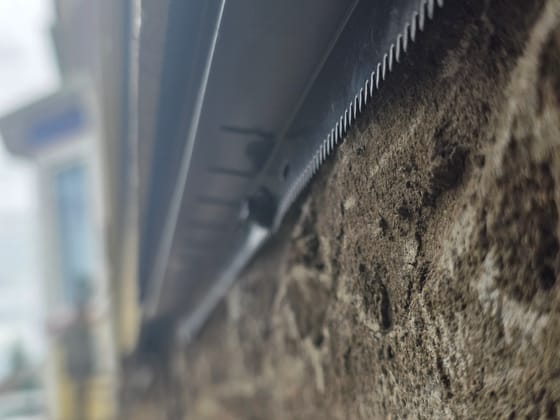
Rodents need harborage and water as much as they need food, and industrial sites supply both generously — floor drains, wash bays, condensate, leaking taps and outdoor standing water. But there is nearly always food too, and it is in predictable places.
The break room and its bin. The vending area and whatever has fallen behind it. Desk drawers in the office. A microwave nobody cleans. Crumbs under a mess-room bench. Pet food if somebody keeps a yard dog. Birdseed or grain if the business handles it at all.
None of that is a criticism of anybody’s housekeeping; it is simply where the food is on a site that does not think of itself as having any. It takes very little to sustain a population that is otherwise living out in the yard, and it is usually the easiest thing on the whole findings list to fix.
Stored product and materials
Where a business handles feed, seed, grain, packaged food, pet products or dry goods of any kind, there is a second category worth separating out.
Beetles and moths that infest stored product arrive inside the product, on a pallet, rather than walking in through a door. Treating the building perimeter for them achieves nothing and a good deal of money gets spent that way.
The work is tracing back to the source lot: starting with whatever has sat longest and furthest back, checking spillage in racking seams, under pallets and in the corners of a storage area, and being systematic. It is usually one damaged bag or an old spill quietly producing adults for months. After that it is rotation, sealed containers where practical, cleaning residue out of seams, and monitoring long enough to be sure it is finished.
For businesses storing packaging, textiles, upholstery materials or anything with natural fiber, dermestid beetles are worth knowing about as well. They scavenge protein and fiber, and an accumulation of dead insects in a light fitting or a neglected corner will sustain a population that then damages stock.
Self-storage and long-term storage
There is a good deal of storage capacity in this neighborhood and it has its own character.
Units are sealed, dark, undisturbed for months at a time, and full of exactly the materials that make good nesting: cardboard, textiles, paper, upholstered furniture, and frequently food that somebody did not think about when they packed.
Corridors and roller doors provide travel routes between units, and a problem in one unit is not contained by a partition that stops short of the deck.
For an operator the useful approach is perimeter and corridor focused, with attention to the loading areas and the exterior, plus a tenancy policy about food storage that is actually enforced. For a customer, the practical advice is simple: nothing edible, nothing in cardboard where a hard container would do, and check anything upholstered before it goes in.
Roofs, mezzanines and the spaces above
Industrial buildings put a great deal of service equipment on the roof and a great deal of storage on mezzanines, and both are under-inspected.
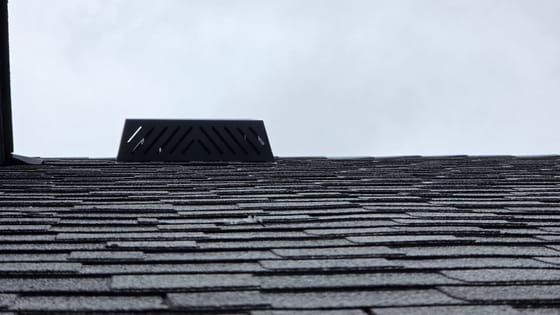
Roof penetrations for extraction, compressed air, power and refrigeration are sealed on a much shorter cycle than the roof membrane itself. Ponding water where drainage is imperfect accelerates that. Once something is through the roof plane it has the ceiling space, and on a large building that connects everything.
Mezzanines and racking tops collect dust, dropped material and long-forgotten stock, and they are rarely walked. On more than one Irongate site the finding that explained months of activity was on a mezzanine nobody had been up to in a year.
Both belong in a proper survey, and both are commonly skipped by whoever quoted before us.
Documentation
For most accounts here the record is a real part of the value, and it should be built to be read by somebody other than the person who ordered the service.
Devices mapped and numbered so a replacement technician, an insurer or an auditor can follow the logic. Service records in a sequence that shows trend rather than just attendance. Findings written plainly, including the housekeeping, storage and maintenance items that we could quietly work around instead.
That last part is the difference between a program and a subscription. If the driver is a fence line nobody cuts or a stack of pallets against a wall, the report should say so even though saying so reduces what we can sell.
What we will not sell you
A sealed industrial building. Repeating it because it is the promise most often made in this neighborhood and it cannot be delivered.
More devices instead of a yard fix. Where the population lives in stored material, adding interior stations is an indefinite cost with no end point.
Anything with fur or feathers. Birds on an industrial roof and wildlife in a yard are outside what we do. We handle insects and rodents and we will point you to somebody for the rest.
Perimeter treatment for stored-product insects. They arrived in the product. Treating the outside of the building for them is money spent on the wrong problem, and it is one of the most common misdiagnoses in this kind of work.
A quarterly program on a site with an unmanaged skip. We will quote the program and name the skip, and if only one of those gets actioned it should be the skip.
How we work in Irongate
We start with your operating reality — hours, access, safety requirements, whether there are areas we cannot enter, what may be placed where, and any audit or insurance obligation. On an industrial site those constraints are the job rather than an obstacle to it.
Then the yard and the perimeter, honestly: the stored material, the fence lines, the standing plant and vehicles, the waste and salvage, the drainage, and every door and penetration on the building.
Then inside — the floor, the racking, the mezzanine, the break room, the service voids — and the roof.
You get a written scope with realistic goals stated up front, a clear separation between what is ours to fix and what is a storage, housekeeping or maintenance change on your side, and a record built for somebody else to read.
Quoting costs nothing, there is no term agreement, and if the honest answer is that a morning spent racking your pallets would do more than a year of our service, that is what the report will say.
Wasps, and why they matter more on an industrial site
Stinging insects are a safety issue in this neighborhood in a way they are not at a house, and the reasons are specific to how these premises are used.
Yellowjackets nest in the ground along fence lines, in banked or disturbed ground, under stored material, in the void beneath a pallet stack and inside equipment that has not moved for a few weeks. Every one of those is somewhere a forklift, a mower, a delivery driver or somebody moving stock is going to encounter without warning, and the colony is at its largest and most defensive in late summer — exactly when yard activity peaks.
Oregon State runs Solve Pest Problems as a plain-language regional guide, and stinging insects around a property are part of what it addresses.
They also take wall and soffit cavities on metal buildings, entering through a gap in cladding, a failed vent screen or the junction where a roof meets a wall. On a large building that nest can be twenty feet up and completely invisible until somebody is working at height near it.
Paper wasps favor the underside of canopies, inside open equipment, electrical cabinets and unused vehicle cabs. A nest inside a cab or a control panel is a genuine hazard for whoever opens it next.
The practical answer is the same one that works everywhere and is almost never done: a walk of the eaves, the yard edges and the standing equipment in late spring, when a founding nest is the size of a golf ball. That is a cheap half-hour. The same nest in August is a scheduling problem, a stop-work conversation and occasionally an incident report.
For a site with employees, contractors and delivery traffic, it is also worth knowing where the nests are even when they are not going to be treated, so that people can be told.
Water, drains and the wet corners
Industrial sites supply water more generously than anyone realizes, and it is half of what sustains a population that has no obvious food source.
Wash bays and their drainage. Floor drains and trench drains, and the organic film that lines them. Compressor and refrigeration condensate. Coolant and process water. A leaking outside tap nobody has reported. Roof drainage discharging onto ground that never dries. Standing water in a low corner of a yard, in an unused sump, or in equipment left uncovered through a wet season.
Drain flies breed in the film inside drains rather than in the room, so spraying achieves nothing and mechanical cleaning ends it within a fortnight. Where a site has a persistent small-fly issue, the drains are the first place we look and very often the last place anybody has cleaned.
Standing water in a yard is also a straightforward rodent asset. It is not usually expensive to correct, and correcting it does more than another quarterly visit would.
Neighboring sites, and the shared perimeter
One thing worth saying plainly to anyone in a business park.
Your fence line is somebody else’s fence line. The undeveloped parcel next door, the yard behind you, the ditch running between two premises and the margin along the access road all support the population that reaches your building, and none of it is under your control.
That does not make your program pointless — a defended building in a poor neighborhood still gets a materially better result than an undefended one. But it does mean expectations should be set against reality, and it means that where two or three adjacent operators will each manage their own margins, everybody’s outcome improves at once.
Where we service several premises in one park we will say, without naming anybody, when the pressure on one site is plainly coming from an adjacent one. That is more useful than letting a client conclude their program has failed.
Frequently asked questions
Can an industrial building be made rodent-proof?
No, and anybody promising it has not looked at your roll-up doors. What we quote instead is a defended perimeter, controlled interior placement, and honest attention to the yard and housekeeping that are actually supporting the population.
Why is the yard more important than the building?
Because that is where the population lives. Stacked material, pallets, equipment on gravel and vegetated fence lines are better habitat than your shop floor. An interior sighting is usually the visible end of an exterior population nobody is managing.
Something chewed the wiring in a truck that sat over winter — why?
That is the most expensive damage we see out here. A parked vehicle is a warm, dry, undisturbed box full of insulation and wiring, and a fleet left standing for weeks is close to ideal. It is worth including vehicle storage in the scope rather than treating buildings alone.
Nobody is here evenings or weekends. Does that matter?
A great deal. Long undisturbed stretches are exactly what rodents want, and a problem that would be noticed in a day at a staffed premises runs for weeks here. Monitoring matters more in a building nobody walks at night.
Do you provide documentation for insurance or audit?
Yes, and for most industrial accounts that is half the value. Devices mapped and numbered, service records that follow a logical sequence, and findings written plainly — including the housekeeping ones we could quietly service around instead.
We have no food on site. Why do we still get rodents?
Rodents need harborage and water as much as food, and both are usually available. The food is often the break room, a vending area or somebody's desk drawer, and it takes very little to sustain a population that is otherwise living in the yard.
Is there a charge to come and quote?
No. We will walk the yard, the perimeter, the doors, the interior and the roof, and put a written scope together, at no cost. Bed bug verification is the only assessment we charge for and that is rarely relevant out here.
Pest problem in Irongate?
Family-owned, no long-term contracts, and every treatment is backed by our 100% Service Guarantee.
Most calls in Whatcom County are out within 1–2 days, about 3 during the late-summer peak.
Last updated