
Who Pays for Pest Control in a Washington Rental
Washington law requires a landlord to run a reasonable pest control program at the start of a tenancy and during it — except in a single-family residence, and except where the tenant caused the problem. That carve-out is what most disputes actually turn on.
Call 360-410-2199 Request a free inspection
The short version
| The governing law | RCW 59.18.060(4), part of the list of landlord duties in the Residential Landlord-Tenant Act |
|---|---|
| At the start of a tenancy | Every landlord, single-family houses included, must provide a reasonable pest control program at move-in |
| During the tenancy | The landlord must control infestation, except in a single-family residence and except where the tenant caused it |
| Single-family rentals | No ongoing pest program duty, but the duty to maintain roofs, walls and foundations still applies to a rented house |
| Tenant-caused infestation | The statute does not define it; it is fact-specific and decided case by case, not by a pest control company |
| Bellingham rentals | Owners register every year under BMC chapter 6.15, and the city's safety checklist names pests and rodent entry openings |
| Where to get the legal answer | Washington Law Help, a local tenant service, city or county code enforcement, or a lawyer for anything contested |
- Report the infestation to the landlord in writing, by email or a dated letter, and keep a copy.
- Photograph droppings, damage and the gap you think it came through, with dates on each photo.
- Describe what you have noticed, such as scratching in the wall most nights, rather than what you have concluded.
- Ask where the pest is getting into the rental and what will close that opening, not only about treatment.
- Keep a log of who you told about the pests, when you told them, and what was said.
- Take the lease and liability question to Washington Law Help, a tenant service or code enforcement.
The question behind the question
Almost nobody calls us to ask about the Residential Landlord-Tenant Act. They call because there are rats in the crawlspace and a disagreement about who is paying, and the disagreement has been going for three weeks while the rats have not stopped.
So it is worth setting out what the law actually says, in the words it uses, with a link so you can read it yourself. This is not legal advice — we are a pest control company and not attorneys — but the text is short and it is more specific than most people expect.
What the statute says
The relevant provision is RCW 59.18.060(4), part of the list of landlord duties in the Residential Landlord-Tenant Act. It requires a landlord to:
“Provide a reasonable program for the control of infestation by insects, rodents, and other pests at the initiation of the tenancy and, except in the case of a single-family residence, control infestation during tenancy except where such infestation is caused by the tenant”
Read that slowly, because there are four separate things in one sentence.
One: a program at the start of the tenancy. This applies to every rental, including single-family houses. The landlord must provide a reasonable pest control program at the initiation of the tenancy.
Two: control during the tenancy. This is the ongoing duty, and it is the one most people assume covers everything.
Three: the single-family carve-out. The ongoing duty applies “except in the case of a single-family residence.” A house rented as a single-family home sits outside the during-tenancy obligation.
Four: the tenant-caused exception. Even where the ongoing duty applies, it does not extend to infestation the tenant caused.
Three and four are where nearly every real dispute lives.
The single-family carve-out, and what it does not do
This is the part that surprises people, and it cuts both ways.
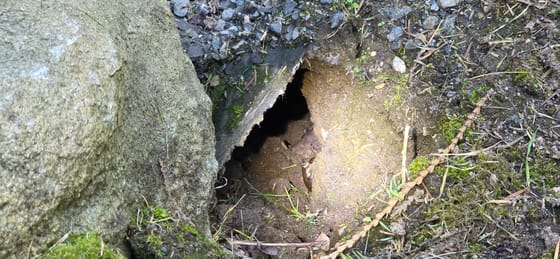
If you rent a house — a standalone single-family residence rather than a unit in a building — the RLTA does not impose a general ongoing pest control program on your landlord. Washington Law Help puts it plainly: for single-family rentals, the Act does not require the landlord to maintain a reasonable program for control of pest infestations.
That sounds like the end of the conversation. It is not, and here is why.
The landlord’s other duties in the same statute do not have a single-family exception. The obligation to maintain the structure — roofs, walls, foundations — applies to a rented house exactly as it applies to an apartment building. A landlord must keep the building in a condition that meets the applicable codes and is fit for habitation.
And pests get into buildings through structural defects.
So the practical position in a single-family rental is frequently this: the landlord may not owe you a quarterly pest control program, but a crawl vent with the screen rusted through, a crawl access hatch that no longer closes, a gap where the siding meets the foundation, a failed door sweep, a hole around a pipe — those are building conditions, and they are the things that let the animal in.
Which reframes the whole conversation. Instead of “who pays for the exterminator”, the more productive question in a rented house is usually “what about this building is open, and whose job is it to close it?”
Washington Law Help makes the same point: tenants in single-family rentals can request repairs for structural issues that are allowing pests to enter.
We are not going to tell you how that argument comes out in your particular situation. We will say that it is a better argument than most tenants realize they have, and that it happens to point at the work that actually solves the problem.
“Caused by the tenant”
The other exception. The statute does not define it, and the honest answer is that it is fact-specific and gets decided case by case rather than by a pest control company.
What we can offer is what we see on jobs, which is that the argument almost always concentrates on the same few things: food left accessible, waste management, clutter that provides harborage, and pet food. Those are the factors a landlord will point to.
And what a tenant can usefully point to in return is the building. A quarter-inch gap around a copper pipe is not caused by anyone’s housekeeping. Nor is a corroded crawl vent screen, a broken window, a door that does not seal, or an addition whose junction with the original house has been open since 1978.
Where both are present — and they often are — it is a genuinely mixed picture, and that is a conversation for the parties rather than for us.
One thing worth saying to both sides: the argument is usually more expensive than the work. A rodent population does not pause while responsibility is settled, and a job that would have cost a few hundred dollars in October costs considerably more in February with contaminated insulation in it.
Bed bugs are their own situation
Bed bugs come up more than anything else in rental disputes, and they are worth separating out for two reasons.
First, they arrive by being carried. Luggage, second-hand furniture, a bag that spent a night somewhere else. That makes the origin question genuinely difficult, and it is why bed bug disputes get bitter.
Second, in a multi-unit building they do not respect the boundary between one tenancy and the next. They move along wall lines, under doors, and through the gaps around plumbing and wiring. A treatment scoped to one unit while the unit next door is untreated is frequently money spent twice. UC IPM says the same of apartment buildings: because the insects travel between adjoining units, control has to take in the neighbors and not only the unit that complained.
That has a practical implication that cuts across the responsibility argument: whoever is paying, treatment scoped to the building produces a better result than treatment scoped to the complaint. In a shared building, the party in a position to coordinate that is nearly always the landlord or the manager.
What Bellingham’s rental program does and does not cover
Inside Bellingham city limits there is a second layer, and it is commonly misunderstood, so here is what it actually is.
Bellingham Municipal Code chapter 6.15 establishes the Rental Registration and Safety Inspection Program. Anyone owning residential rental property in the city must register annually — apartments, houses, duplexes and accessory dwelling units alike.
Most non-exempt registered units are inspected on a cycle of roughly once every three to three and a half years. On a property with up to 20 units, no more than four are inspected per cycle; on 21 or more, no more than 20%, capped at 50. Inspections may be carried out by City inspectors or by qualified private inspectors.
The inspection covers health and safety components: structural integrity, weather exposure, plumbing and sanitation, heat and water facilities, ventilation, defective or hazardous electrical wiring, safe and functional exits, and smoke and carbon monoxide detectors.
The ordinance does not name pests, but the inspection checklist does. It is worth being exact here, because the two documents are easy to confuse. The chapter of the municipal code describes the program without mentioning pests. The city’s published Rental Property Safety Inspection Checklist — the one the city and the private inspectors both work from — names them in four places:
- Openings in the foundation larger than a quarter inch, listed as a potential for insect infestation
- Exterior walls that are not rodent proof
- Wall, floor or ceiling coverings damaged so that there is access for rodents and insects
- Under the owner’s obligations, pest or rodent harborage or infestation, and visible evidence of rodents or insects such as bed bugs, ants, cockroaches or silverfish
So a city inspection can fail a unit on pests, or on the openings that let them in. It is still not a pest inspection in the sense of somebody looking for a population under the floor: it is a checklist walk, on a sample of units, every few years. The state duty and the city program remain separate things doing separate jobs.
If you are the tenant
Practical steps, in order, none of which requires a lawyer to begin.
Report it in writing. Not a phone call, not a text you will lose. Email or a letter, dated, describing what you found and where. Keep a copy. Washington Law Help specifically recommends asking for repairs in writing.
Photograph everything, with dates. Droppings, damage, the gap you think it came through, the state of a crawl vent if you can safely see it.
Say what you have noticed, not what you have concluded. “Scratching in the wall above the bed, most nights, starting around 9pm” is worth more than “we have rats.”
Ask about the building, not only the treatment. Where is it getting in, and what will close it. That question is harder to deflect than a request for an exterminator and it points at the durable fix.
Keep a log of who you told, when, and what was said. If this ends up disputed, a dated record is the most useful thing you will have.
Get advice from the right place. Washington Law Help, a local tenant service, or city or county code enforcement. Not us — we can tell you what is in your crawlspace, not what your lease means.
If you are the landlord
Also practical, and mostly about arithmetic.
Speed is the whole economy of this. A single-room bed bug introduction found in October and treated properly is a fraction of the cost of a building-wide population in February. The same is true of rodents and insulation. Every week of dispute makes the eventual invoice larger, and it lands on the building either way.
Scope by structure, not by complaint. In a shared building this is the most common false economy in the trade. Treating the unit that called while the adjacent unit goes untreated means the treated unit gets recolonized.
Deal with the envelope once. Crawl vents rescreened in metal, a crawl access that latches, penetrations sealed, door sweeps replaced. It is a one-off cost that does not recur, it addresses the structural duty you owe anyway, and it is cheaper over five years than a recurring service contract. We will happily argue ourselves out of the subscription on this point.
Put the findings in writing to your tenants. Where something is genuinely on their side — waste, food storage, a bird feeder — saying so in writing early is worth more than raising it after an invoice.
Register and keep up with the city program if you are inside Bellingham. It is annual, and the inspection cycle is predictable.
The parts of the building that decide this
Since the single-family analysis and a large share of the multi-unit arguments both end up pointing at the structure, it is worth being concrete about which parts of a building are usually the reason a pest got in. These are the items a tenant can reasonably raise as repairs and a landlord can reasonably close once.
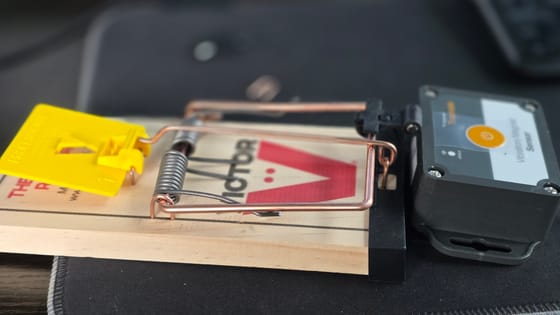
Crawlspace vent screens. The most common rodent entry on older housing in this county by a wide margin. The original screening corrodes in this climate, gets broken by yard equipment, or was plastic to begin with. A failed vent is not a small gap — the opening behind it is sized for airflow, which is generously sized for an animal.
The crawl access hatch. Frequently a sheet of plywood that has been off and back on a dozen times for utility work and no longer seals, or is missing altogether.
Foundation penetrations. Water, waste, gas, electrical, cable and heat pump lines all pass through the wall somewhere, and most were sealed to keep weather out rather than animals. A quarter of an inch is enough for a mouse.
Door sweeps. Particularly on garage side doors and basement doors, where the seal has hardened or worn at the corners. This is the single largest entry at ground level and one of the cheapest to fix.
Where an addition meets the original building. Built at different times to different standards, and reliably imperfect at the junction.
The roofline — soffit and fascia junctions, gable and roof vents with failed screening, and anywhere a lower roof meets an upper wall.
Grade and drainage. Soil built up against siding, downspouts discharging at the foundation, blocked or buried crawl vents. These are not pest defects on their own, but a wet crawlspace is an insect factory and it corrodes the vent screens faster.
None of that list is exotic and none of it is expensive relative to the alternative. All of it is building condition rather than housekeeping, which is why it tends to sit on the landlord’s side of the line — and why it is the more productive thing to argue about.
A note on timing
There is a seasonal shape to this that neither party usually factors in.
Rodent pressure in Whatcom County rises sharply from late September, peaks through October and November, and stays elevated all winter. That is when the calls come, and it is the worst time to be starting a dispute: the population is growing weekly, the exterior work is weather-dependent, and the crawlspace is wet.
The cheapest version of this entire problem is exclusion work done in late August, before the push. Almost nobody does it then, because in August nothing is wrong. For a landlord with several properties it is the single highest-return piece of maintenance in the calendar, and it is genuinely cheaper than the recurring service that gets sold instead.
For a tenant, the practical version is: if you had a problem last winter and it was dealt with, the time to ask about closing the building is the following summer, not the following October.
If you are neither, and just live next door
One situation that fits nowhere else and comes up often enough to mention.
Rodents do not respect property lines, and a good share of the rat work we do on smaller lots is sustained by something on a neighboring property — a neglected outbuilding, an open compost heap, unsecured feed, a vacant house. Where that neighbor is a rental, the responsibility question above is happening between two people neither of whom is you.
There is no clean answer to that. What we can say is that a building of your own that is properly closed keeps animals out regardless of what is next door, that county or city code enforcement is the route where a property is genuinely neglected, and that a conversation with a neighbor is usually cheaper and faster than either.
What we will and will not do
We will come out, work out what is actually happening, find where it is getting in, and put the findings and the recommended work in writing in a form either party can hand to the other. That document describes the building and the work. It is not a determination of liability and it does not pretend to be one.
We will treat what needs treating and tell you plainly where the answer is a repair rather than a treatment.
We will not take a side in a dispute, offer an opinion on who is responsible under the lease, or write a letter designed to win an argument for whoever is paying us. A company that will do that for you would do it to you.
And we will not sell a recurring plan to a landlord as a substitute for closing a building. It is more profitable for us and worse for everyone else.
Where to go for the actual legal answer
Repeating this because it matters: the above is our reading of published rules, linked below with the date we read them. It is not legal advice and your situation may turn on facts we know nothing about.
For the legal answer, the free and reliable starting points are Washington Law Help, your local tenant advice service, and city or county code enforcement. For anything contested or expensive, a lawyer.
For what is under your floor and how it got there, that one is ours, and the assessment is free.
Frequently asked questions
Does my landlord have to pay for pest control?
In most rentals, yes, at the start of the tenancy and during it. The exceptions are a single-family residence, where the ongoing duty does not apply, and any infestation the tenant caused. Those two exceptions cover a large share of arguments.
Why are single-family rentals treated differently?
The statute says so directly. The duty to control infestation during a tenancy applies except in the case of a single-family residence. The initial-program duty and the landlord's structural repair duties still apply, which matters more than people expect.
What counts as tenant-caused?
It is fact-specific and we are not the ones who decide it. In practice the argument usually turns on food storage, waste, clutter and whether the building had a defect that let something in. A building defect is not tenant-caused.
Can my landlord charge me for the exterminator?
They may try, and whether it is lawful depends on the circumstances and the lease. Washington Law Help describes writing a demand letter to dispute a charge. This is the point at which a tenant service or an attorney is worth more than a pest control company.
Does Bellingham's rental inspection cover pests?
In part. The municipal code chapter does not mention pests, but the city's published inspection checklist does: foundation openings larger than a quarter inch, exterior walls that are not rodent proof, and visible evidence of rodents or insects such as bed bugs or cockroaches. It is a checklist walk on a sample of units every few years, not a pest inspection.
What should I do first as a tenant?
Report it in writing and keep a copy, with the date. Photograph what you found. A written, dated record is the single most useful thing you can have, whichever way the responsibility question goes.
Will you tell a landlord the problem is structural?
We will describe the building defect we found and what it will take to close it, in writing, and you are free to hand that to anybody. What we will not do is take a side in a dispute or offer an opinion on who is liable.
Sources
This is information, not legal advice. We are a pest control company, not attorneys. What follows is our reading of published rules, with links so you can check them yourself. For advice on your own situation, talk to a lawyer, to WashingtonLawHelp, or to your city or county code enforcement office.
- RCW 59.18.060 — Landlord duties (Residential Landlord-Tenant Act) — read August 31, 2026
- Washington Law Help — Pest infestations — read August 31, 2026
- Bellingham Municipal Code ch. 6.15 — Rental Registration and Safety Inspection Program — read August 31, 2026
- City of Bellingham — Rental Property Safety Inspection Checklist — read September 10, 2026
Rules change. This page is scheduled for review against its sources by August 31, 2027. If you are reading it after that date and something looks out of step with the current rule, the rule is right and we are wrong — please tell us.
Related guides
From the blog
Pest problem in Whatcom County?
Family-owned, no long-term contracts, and every treatment is backed by our 100% Service Guarantee.
Most calls in Whatcom County are out within 1–2 days, about 3 during the late-summer peak.
Last updated