
Earwig, Sowbug & Pillbug Control in Whatcom County
Earwigs live outdoors in damp mulch, leaf litter and under anything lying on the ground. They wander indoors and die there without breeding, so interior spraying achieves very little. What works is drying and clearing the first few feet around the foundation, and closing the gaps they come through.
Call 360-410-2199 Request a free inspection
Earwigs: the job at a glance
| What it covers | Earwigs, sowbugs and pillbugs living in the damp band around the foundation |
|---|---|
| Included | Perimeter and harborage treatment, closing entry routes, and advice on pulling mulch back from the siding |
| Not included | Treating the house interior, an annual plan for pillbugs, or spraying a whole garden |
| Timing | Clearing habitat in early spring, before numbers build toward the midsummer peak |
| What it costs | Generally modest, set by perimeter length, harborage and any exclusion work; free estimate |
They live outside, and that is the whole point
Earwigs are outdoor animals that occasionally end up indoors by accident.
They need consistent moisture — enough that a dry heated house kills them within days. They do not breed indoors, they do not feed on anything in your house, and they do not establish populations in wall voids the way a genuine indoor pest does. Every earwig you find in a bathroom came in from outside within the last day or two.
That single fact reorganizes the whole job. Interior spraying treats insects that were going to die anyway and does nothing about the population producing them. What works is changing the conditions in the first few feet around your foundation and closing the routes in.
The same is true of sowbugs and pillbugs, which turn up in the same places for the same reasons and are covered on this page because the answer is identical.
What they actually are
European earwig. Introduced, long established, and the dominant species in this region — reddish-brown, flattened, with the distinctive forceps at the rear. Males have curved pincers, females straighter ones.
They are nocturnal. During the day they wedge themselves into tight, dark, humid spaces, which is why turning over a board or lifting a pot produces a sudden scatter. At night they come out to feed.
The pincers are used in defense and in interactions with other earwigs. Against a person, a large one can produce a pinch you would notice and nothing more. No venom, no sting, no medical relevance.
The ear thing is folklore. It has no basis. They are not drawn to ears, they do not burrow into them, and the name is simply very old.
Sowbugs and pillbugs are not insects at all — they are terrestrial crustaceans, with gill-like breathing structures that require constant humidity. Pillbugs roll into a ball when disturbed; sowbugs do not. Both eat decaying plant material and neither damages anything indoors.
One genuinely interesting thing about earwigs: the female guards her eggs and tends the newly hatched young, which is unusual among insects and has nothing to do with pest control but is worth knowing.
Where they live, in the first three feet
Almost every earwig problem is a perimeter problem, and the population is in a narrow band around the building.
Bark mulch and compost held against the foundation. This is the single biggest factor on most properties — deep mulch right up to the siding is close to ideal earwig habitat, and it is standard landscaping practice.
Leaf litter in beds and against walls.
Under anything lying on the ground. Boards, bricks, pavers, stacked pots, firewood, landscape fabric, children’s toys, a tarp that has been there since spring.
Dense low ground cover — ivy, vinca, thick low plantings — which holds humidity at soil level all day.
Under siding at grade, in the gap behind trim, and in the joints of retaining walls.
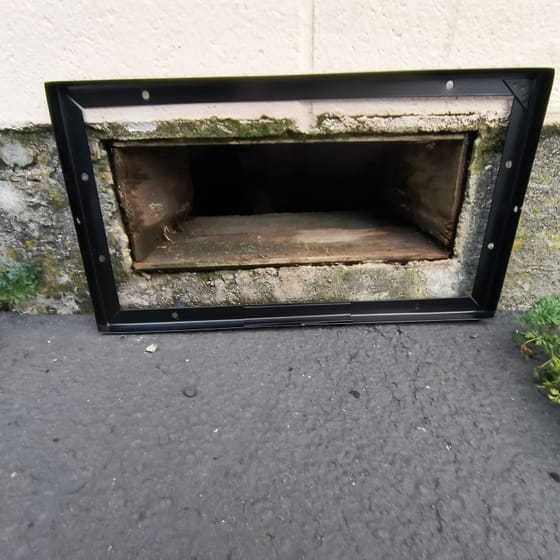
Damp crawlspaces, which in this county are frequently continuous with the outdoor habitat through unscreened vents.
Move any of those and you will find them. That is not a sign of infestation; it is what the outdoors looks like in a wet climate.
How they get in
They are following moisture and dark, and they are small and flat.
Under exterior doors with worn or missing sweeps. Through sliding door tracks. Around window frames at ground level. Through unscreened or damaged crawlspace and foundation vents. Around utility penetrations. Up through gaps at the sill plate. And directly through open doors on summer evenings, drawn by porch lights.
Indoors they head for the humid rooms — bathrooms, laundry, kitchens, and basements — because those are the only places that suit them, and it is why the same two rooms produce all the sightings.
The garden question
Worth being even-handed about, because earwigs are genuinely both.
Useful. They are omnivores and significant predators of aphids, mites, insect eggs and other soft-bodied pests. A garden with earwigs has fewer aphids, and in some horticultural systems they are actively valued.
Damaging. They also chew seedlings, soft fruit, flower petals and foliage. In this county the recurring complaints are dahlias, strawberries, lettuce and other tender greens, and corn silk.
The damage pattern is distinctive: irregular, ragged holes chewed through leaves and petals, appearing overnight, often with small dark droppings nearby. It gets attributed to slugs regularly. Slug damage comes with slime trails and earwig damage does not, which usually settles it.
Where earwigs are damaging a specific crop, the useful response is targeted rather than broad. Rolled damp newspaper or a length of hose left near the affected plants overnight gives them somewhere to hide by morning, and can be emptied. A shallow container of oil sunk to soil level works on the same principle. Both are better than treating a whole garden for an insect that is also eating your aphids.
What actually works
Pull the mulch back. A clear, dry band of six inches to a foot between mulch or soil and the siding removes the habitat immediately against the building. This is the highest-value change on most properties and it costs nothing but an afternoon.
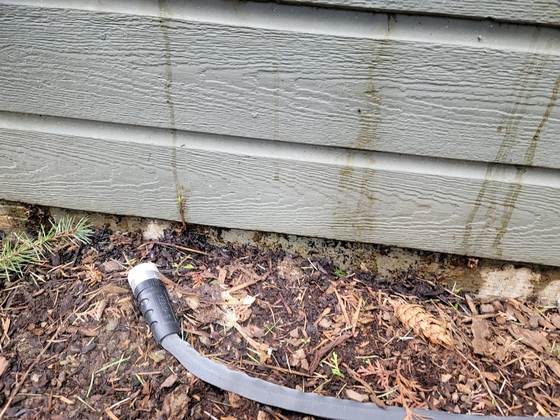
Lift what is lying on the ground. Boards, pots, bricks, tarps, firewood — off the soil, off the wall, or gone.
Thin the ground cover immediately against the foundation. Ivy and dense low planting against a wall holds moisture all day.
Fix the water. Gutters clear, downspouts discharging well away from the foundation, irrigation not spraying the siding, and grading that moves water away rather than holding it against the building.
Close the gaps. Door sweeps, weatherstripping, window and vent screening, and sealing at utility penetrations — which is exclusion and repair work and reduces several other problems at the same time.
Deal with the crawlspace if it is damp and open, because it is functionally part of the outdoor habitat. See crawlspace restoration.
Change the lighting. White exterior lights near doors draw insects, and where insects gather so do the things that eat them. Warm-toned bulbs or moving fixtures away from entries makes a visible difference.
Then treat, at the perimeter. A targeted exterior band and harborage application does help, particularly in a heavy year, and it works far better once the habitat has been reduced. Interior treatment is rarely warranted.
A word on diatomaceous earth, since it is the thing most people have already tried by the time they call. It works by abrading the waxy layer on an insect’s cuticle so that the animal dries out, which means it only does anything while it is itself dry. Put down around a foundation here it is useful for as long as the weather stays fine, and after the first real rain it cakes and stops working. In a dry crawlspace or under a deck it keeps earning its place. Broadcast over an open mulch bed in a Whatcom County October it is dust you paid for.
Why we do not spray indoors for these
Because the insects indoors are already dying.
An earwig in your bathroom has left the conditions it needs and has a very short future regardless of what anyone applies. Treating interior baseboards puts product where people live to kill insects that were not going to survive the week, and it does nothing to the population outside that keeps supplying more. The EPA asks householders to start with whether a pesticide is warranted at all, and whether taking away what the pest needs would settle it instead. For an animal already dying of dryness on your bathroom floor, that is not a close question.
A vacuum handles the ones you find. The perimeter work handles the reason they keep appearing.
Around the county
Gardened city neighborhoods — Columbia, Sunnyland, York, Roosevelt, Cornwall Park, Happy Valley. Mature planting, deep mulch beds against foundations, and older homes with worn door sweeps and unscreened crawlspace vents. The highest volume of these calls.
The lake and forest margins — Sudden Valley, Silver Beach, Edgemoor. Heavy leaf litter, shaded lots that never dry, and ground cover directly against cedar siding.
Rural and agricultural properties — Lynden, Everson, Nooksack, Sumas. Field margins, irrigation, stacked material and outbuildings, plus genuine crop damage in market gardens and berry rows.
Newer landscaped developments — Barkley, Cordata, King Mountain and the newer stock around Ferndale. Fresh deep bark mulch installed right to the siding on every lot is close to a purpose-built earwig habitat, and these properties frequently have their worst year two or three summers after landscaping.
Waterfront — Blaine, Birch Bay and Semiahmoo. Damp ground, driftwood and stored material, and seasonal homes where the perimeter goes unmanaged for months.
What it costs
Quoted from the property and generally modest, because it is perimeter work rather than structural.
The number is driven by how much perimeter there is, how much harborage reduction is needed, and whether crawlspace or exclusion work is part of it. Where the honest answer is “pull the mulch back and fit a door sweep,” we will tell you that and not book a treatment.
The estimate is free.
The year in earwigs
Late winter. Overwintered females are underground in nest chambers tending eggs. Nothing is visible above ground and nobody calls.
Early spring. Eggs hatch, young emerge, and the population begins building. This is the cheapest point of the year to change the habitat, because clearing mulch and lifting debris in March removes shelter before numbers develop.
Late spring and early summer. Growth. Numbers climb steadily, garden damage begins on tender growth, and the first indoor sightings appear.
Midsummer through early autumn. Peak. Adults are numerous, active every night, and this is when almost all the indoor calls arrive. Also peak garden damage — dahlias, strawberries, lettuce and corn silk.
Autumn. Numbers fall as conditions cool and adults die off. Survivors move down into soil and protected spaces.
Winter. Dormant underground.
The pattern that matters: the population is set in spring by how much damp shelter exists around the building, and experienced in August by whoever lives there. Habitat work in March costs an afternoon; treatment in August is managing a population that was already decided.
Sowbugs and pillbugs, specifically
They get their own note because the reassurance is different.
They are crustaceans — closer relatives of crabs than of insects — and they breathe through structures that must stay moist. That is why they die quickly indoors and why they are found under exactly the same boards, pots and mulch as earwigs.
They eat decaying plant material and are genuinely useful in a compost heap or a garden bed, breaking down organic matter. Occasionally they will graze seedlings or soft fruit lying on wet soil, which is the only garden complaint worth taking seriously and it is minor.
Indoors they do nothing at all. They do not bite, damage, contaminate or breed. They are simply in the wrong place and dying.
So the honest answer for a household finding a few pillbugs in a bathroom or garage is: vacuum them, pull the mulch back from the wall, fit a door sweep, and nothing else is warranted. If a company proposes a treatment program for pillbugs, that is worth questioning.
Why the mulch matters so much
Worth expanding, because it is the single most actionable thing on this page and because the advice runs against standard landscaping practice.
Bark mulch does exactly what it is meant to: it holds moisture in the soil and moderates temperature. Held against a building it also creates a permanently damp, dark, insulated strip at ground level directly against the siding — which is precisely the habitat earwigs, sowbugs, pillbugs and millipedes all require.
Landscapers install it to the wall because it looks finished. Nobody is doing anything wrong; the consequence is simply not part of the design conversation.
What to do instead. Keep a clear band of six inches to a foot between mulch and siding, using gravel, bare soil or nothing. It looks slightly less tidy for about a week and then reads as a normal edge. It also keeps siding out of contact with damp material, which matters for carpenter ants, moisture ants and dampwood termites far more than it matters for earwigs.
The same applies to firewood, which should be off the ground and away from the house rather than stacked against a wall, and to landscape fabric, which holds a humid layer beneath it indefinitely.
If a property does one thing from this website, this is a strong candidate. It reduces six or seven different problems at once and costs an afternoon.
Commercial and multifamily
Earwigs come up in specific commercial contexts and the answer is the same perimeter logic at a different scale.
Apartment and condominium complexes with extensive landscaped beds against ground-floor units. Residents on the ground floor get all the complaints, and the cause is the landscaping specification rather than anything in the units. Treating unit by unit is expensive and ineffective; adjusting the beds and treating the perimeter is neither.
Food service with outdoor seating, where the planters and the damp beneath decking supply the population.
Institutional and municipal buildings with mature planting held to the foundation.
Greenhouses and growing operations, where the conditions are deliberately what earwigs want and the management is about exclusion from specific crops rather than elimination.
For all of these, the useful arrangement is a spring perimeter program timed before the population builds rather than reactive treatment in August. See commercial programs.
What we will and will not sell you
We will do perimeter and harborage treatment where the population is genuinely heavy, close the entry routes, deal with a damp crawlspace that is acting as habitat, and set up a spring perimeter program for a property where the landscaping cannot practically change.
We will not treat the interior of a house for insects that are dying on the floor anyway. We will not sell an annual plan for pillbugs. And we will not treat a whole garden for an insect that is also eating the aphids in it.
Where the honest answer to a call is “pull the mulch back a foot, fit a door sweep on the utility door, and see how next summer goes,” that is what you will get, free, on the phone. It is worth more to us that you call again about something that genuinely needs us.
What to do before we come
Note which rooms. Bathrooms, laundry and kitchen means humidity is the driver. A bedroom on an upper floor suggests something different and is worth mentioning.
Note when. Overnight appearances are normal for a nocturnal insect. Daytime activity in numbers suggests a large population immediately outside.
Look outside at night with a torch, an hour after dark, at the mulch beds against the house. If the ground is moving, that is the population and that is where the work goes.
Leave the perimeter as it is so we can see what is there. Clearing everything the day before makes the assessment less useful.
Traps, and what they are good for
Worth a short note because the internet is full of earwig trap advice and most of it is aimed at the wrong problem.
Traps work on earwigs, genuinely. Rolled damp newspaper, a length of old hose, or a flowerpot stuffed with straw and inverted on a cane all exploit the same instinct — a tight, dark, humid space to spend the day in. Set them near the affected plants in the evening and empty them in the morning.
What they are good for is protecting a specific plant or bed. What they will not do is reduce a property-wide population, because you are competing with every board, pot and inch of mulch already available.
So they belong in a garden, targeted at the dahlias or the strawberry row, rather than as a control method for a house.
Related work
Because this is a moisture and perimeter problem, it overlaps with silverfish and centipedes and millipedes — both of which live in the same damp band around a building. The durable fixes are exclusion and repairs and, where the crawlspace is the reservoir, crawlspace cleanout and restoration.
Frequently asked questions
Do earwigs actually go in your ears?
No. It is a very old folk name with no basis, and there is no meaningful risk of it. They are looking for tight, dark, humid spaces to hide in during the day, and an ear is neither the sort of space they seek nor somewhere they can do anything if they got there.
Can those pincers hurt me?
Barely. The pincers are defensive and used mainly against other earwigs. A large one can deliver a pinch you would notice on soft skin, and that is the extent of it — no venom, no sting, no bite worth calling a bite.
They keep appearing in my bathroom and kitchen. Are they breeding in the house?
Almost certainly not. Earwigs need consistent moisture and outdoor conditions to complete their life cycle, and indoors they dry out and die within days. Persistent appearances mean a large population immediately outside and a route in, not a population under your floor.
Why are there so many this year?
Wet spring and early summer weather produces good survival, and dense damp ground cover gives them somewhere to build numbers. In this county that combination is common, which is why earwigs are one of the most consistently reported insects here.
Are they damaging my garden?
They can, and they also help. Earwigs eat aphids and other soft-bodied insects, which is genuinely useful, while also chewing seedlings, soft fruit, flower petals and corn silk. Dahlias, strawberries and lettuce take the most noticeable damage locally.
What are the gray armored bugs that roll into a ball?
Pillbugs, and their non-rolling relatives are sowbugs. They are crustaceans rather than insects, they breathe through gill-like structures and need constant damp, and they feed on decaying plant material. Same moisture problem, same solution, and they do no damage indoors at all.
Guides
From the blog
Earwig Control in Whatcom County?
Family-owned, no long-term contracts, and every treatment is backed by our 100% Service Guarantee.
Most calls in Whatcom County are out within 1–2 days, about 3 during the late-summer peak.
Last updated