
Pest Control in Vista Ridge, Ferndale
Vista Ridge is newer construction on elevated ground, and both halves change the work. A new house is tight but not sealed, and higher, drier ground trades the moisture pests of the valley floor for perimeter and occasional invaders instead.
Call 360-410-2199 Request a free inspection
Vista Ridge, Ferndale on the map
New houses on high ground
Vista Ridge is newer construction on elevated ground on the edge of Ferndale, and it is close to the opposite of the older neighborhoods down by the river in almost every respect that matters to us.
The buildings are recent, built to a modern code, with continuous foundations, modern materials and consistent detailing. The site is higher and drains better. The landscaping is young. And the whole development went up over a short period to a common specification.
Every one of those changes what we look for, and most of them are advantages. The mistake is assuming they add up to a house that nothing can get into, because they do not.
Tight is not the same as sealed
Modern construction is genuinely good at what it was designed for. It is airtight to a standard older housing never approached, it manages water intelligently, and it is insulated properly.
None of that is rodent exclusion, which is a different specification with different materials, and it is not what anyone was checking on the way through.
The failures are consistent enough that we can predict most of them before arriving.
Service penetrations closed with foam. Every house has a dozen — water, waste, gas, electrical, data, refrigerant lines for a heat pump, the dryer vent. On new construction they are typically sealed with expanding foam, which does exactly what it is meant to do about air and water, and which a mouse chews through without slowing down. This is the single most common route we find on newer houses.
Crawlspace vent screening stapled rather than fitted. A screen that is tacked over an opening rather than mechanically fixed into it comes away at a corner within a few years, and then the vent is simply an opening.
Garage door corners. Standard doors meet standard slabs imperfectly, and the bottom corners are where it shows. Stand inside with the door shut: daylight means a gap.
Behind siding trim and at transitions. Where two materials meet, where a run of siding stops at a corner board, and behind the trim around a bay or a cantilever, there are voids that were never intended as access and function as it.
None of that is bad building. It is a building detailed for weather rather than for wildlife, and the fixes are small.
The warranty question, worth asking early
On a house of this age some of what we find may not be a maintenance item at all.
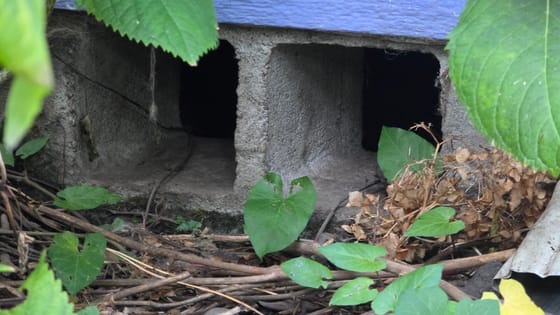
Missing or improperly fixed crawlspace screening, a garage door that does not meet the slab, an unsealed penetration through a rim joist, a soffit vent with no mesh behind it — depending on the age of the house and the terms, several of those can be warranty items rather than owner responsibility.
We are not the people to interpret your warranty, and we will not pretend to be. What we will do is write down precisely what we found and where, in a form you can hand to a builder, before you decide who is paying to fix it. That costs you nothing and it occasionally saves a fair amount.
What higher ground gives you, and what it costs
Elevation and drainage are a genuine advantage and it is worth being specific about which problems they remove.
The moisture-driven work largely goes away. Crawlspaces here are drier, so there is much less decay, far fewer wood-boring beetles, and very little of the softened framing that carpenter ants prefer. Moisture ants — which are a report about wet wood rather than a pest in their own right — are rare up here and common on the valley floor.
That is real, and it means a large part of what we do downtown is simply not needed in Vista Ridge.
What replaces it is exposure. An elevated, open, sunlit site with wind across it is precisely what the autumn invaders are looking for, and it is what several of them find first.
The autumn arrivals on a sunny wall
From late September the warm elevations of these houses collect the seasonal crowd, and a new subdivision on a ridge gets it more than a sheltered street does.
Multicolored Asian lady beetles work whichever wall holds the low afternoon sun, gathering in numbers on the siding before pushing into gaps around trim, laps and vents. Brown marmorated stink bugs do the same on the same walls. Cluster flies collect in upstairs rooms and window channels. Western conifer seed bugs turn up individually indoors and alarm people considerably more than they deserve to.
A lady beetle will nip if it is picked up. That aside, nothing in the group reproduces indoors or does the structure any harm.
That last point decides the whole approach. Because they do not reproduce inside, the number in the house is entirely a function of how many got in. Spraying indoors repeatedly through the winter kills what is present and does nothing about the supply. Sealing the openings, and treating the exterior in the narrow window before the wave arrives, addresses the supply.
Timing is the part that goes wrong. Too early and the exterior work has faded before they arrive; too late and they are already on the wall. The date shifts by a fortnight or more from one year to the next depending on how the first cold afternoons fall, so it is a thing to have arranged in advance rather than to chase once the beetles are already on the siding. Nothing about that is guesswork: the low temperatures that start it show up in the National Weather Service’s Seattle-office forecast days before the beetles do.
Rodents from open ground
Ferndale’s rodent pressure comes off adjacent farmland, and a development on the edge of town sits directly in the path of it.
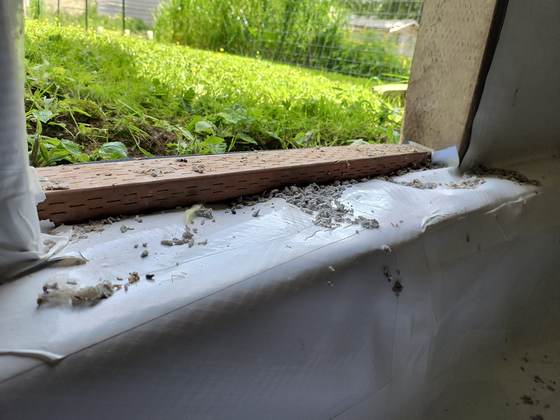
The pattern is the same one every property near worked ground gets, and it is not about cold weather. Cover disappears when ground is cut or worked, over a few days, and the population living in it has to relocate immediately. The nearest buildings with a gap are where a good share of it goes.
On a new house, that meets the builder gaps described above. A brand-new subdivision with foamed penetrations and stapled vent screens is not a harder target than an old house; it simply has fewer routes, and they are more predictable.
Because the development is uniform, this is unusually efficient to deal with. Find the route on one house and it very likely exists on the whole street, and a specification that closes it can be applied to all of them.
Young landscaping is a window that closes
Right now the planting here is small, set back and open, and the foundation line can be seen and reached the whole way round most of these houses.
That is a real advantage and it is temporary.
Every mature neighborhood in this county has the same story: planting installed when the houses were new, allowed to grow, and now hard against the siding over a deep bed of accumulated duff. That combination — permanent cover touching the wall, over damp organic material — is the single most productive thing to fix on an older lot, and it takes years of growth to create.
Keeping a genuine gap between planting and siding now, and keeping mulch off the wall, costs nothing. Reclaiming one in fifteen years means taking out established shrubs somebody has grown attached to.
The irrigation matters as much. New landscaping gets watered heavily to establish, and water applied against a foundation is the start of the moisture story that this ridge otherwise does not have.
Mulch depth, irrigation and what to plant where are garden decisions, and WSU publishes its guidance on them through Hortsense.
Heat pumps, line sets and modern mechanicals
Newer houses here carry equipment that older ones do not, and it introduces routes and harborage that nobody thinks to check.
A heat pump line set passes through the wall, and that penetration is frequently the largest single hole in the building envelope. It is usually sealed with foam and covered with plastic trunking, which handles weather and does nothing whatever about a mouse. It is one of the first places we look on a house of this age.
The outdoor unit sits on a pad against the wall, generally with a gap underneath, and that gap is dry, sheltered and undisturbed. Good harborage, directly against the building.
Condensate lines and their drains are worth a look as well, because standing water in a warm sheltered spot is exactly what small flies breed in.
None of this is difficult to deal with. It is simply newer than most of what gets checked, and a technician working from habit on older housing can walk past all three.
The first five years, and what to do in each
On a new house the useful work is front-loaded, and doing it early costs a fraction of doing it later.
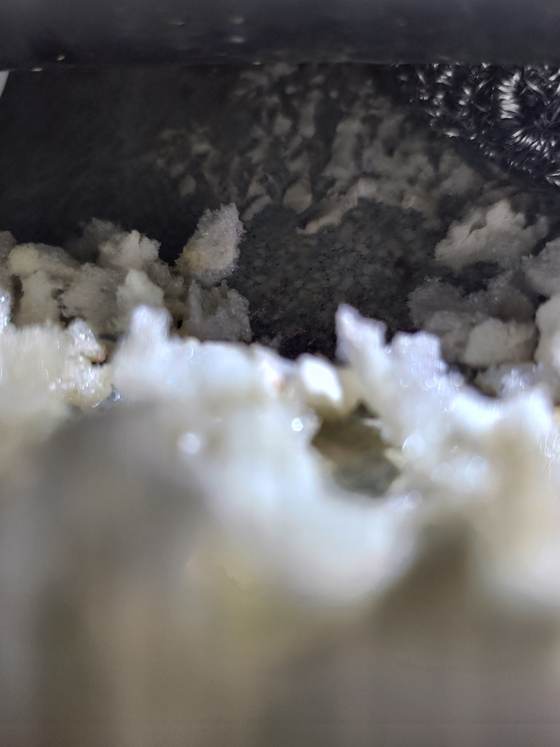
In the first year, while everything is still accessible and the planting is small, close the builder gaps: penetrations done mechanically rather than with foam alone, vent screening fixed into the opening rather than stapled over it, and the garage door seal checked from the inside with the door shut. That is a morning, and it is most of the battle.
Through the first few years, keep the landscaping off the walls as it establishes and keep the irrigation off the foundation. That window closes permanently once the planting matures, and reclaiming it later means removing shrubs somebody has grown attached to.
From about the fifth year, start looking at the roof line, because that is when trees planted at handover begin to reach it. A branch on a roof bypasses everything sealed at ground level.
Spiders, lighting and modern siding
New houses get a reputation for spiders that surprises their owners, and the explanation is not the house.
Exterior lighting concentrates flying insects, and where the insects are, the spiders that eat them follow. Modern siding, trim, and the sheltered vertical faces around entries, gables and soffits give them somewhere to build.
The autumn wave is mostly giant house spiders, and what people see is males moving to find females — which is why they appear singly, at speed, across a floor, in September and October, rather than as an accumulation.
Changing exterior lighting to warmer, lower, more directed fittings does more than anything applied to a wall, because it removes the food supply rather than the individuals.
Wasps in the soffits
Wasps in new-construction soffits are on the Ferndale list for a reason and this is where it shows most clearly.
Modern soffit and fascia detailing creates long continuous voids with small openings at intervals — vents, joints, the end of a run at a gable — which is what a queen is looking for in spring. They are twenty feet up, they are not visible from the ground, and nobody inspects them.
The result is a nest that goes unnoticed until midsummer, by which time it is established and above a door or a patio.
The useful move is looking in June rather than reacting in August, and on a uniform development the vulnerable detail is in the same place on every house.
Bald-faced hornets build the large gray paper nests people photograph. European paper wasps build small open combs under railings and deck rails and are far less inclined to defend them. Honey bees are not our work, and if a colony has taken up residence in a wall we will point you at somebody who removes them.
Families, pets and the way we work here
This is family housing, mostly with young households, and that shapes placement more than anything technical.
Anything placed goes where children and pets do not go and cannot reach — enclosed and secured stations rather than open placements. Interior work is planned around the rooms in use.
We will show you the label before we treat, tell you what is being applied and where it is not being applied, and give you the re-entry directions without being asked. Every product this company carries is published on this site with its full label and safety data sheet, which is unusual and is deliberate.
Where there is a version of the job that uses less or nothing — a repair instead of a treatment, a bait instead of a spray — we will offer it rather than wait to be asked. On a house this new, that is frequently the whole answer.
What we would rather you did not pay for
A recurring perimeter treatment on a five-year-old house whose actual problem is a foamed penetration and a garage door gap will produce a visible result forever and will never finish.
The honest quote on most Vista Ridge rodent calls is a morning of hardware: proper vent units, hardware cloth mechanically fixed, penetrations closed with something that will not be chewed, and a garage door seal. That ends the route. It does not repeat.
Where somebody has already sold you a plan for that, we will tell you what the plan is doing and what it is not.
What a new house does not have, and why that matters
It is worth listing what is genuinely absent here, because it explains why a quote for a Vista Ridge house should look nothing like a quote for one downtown.
There is no accumulated duff against the foundation, because the beds are new. There is no forty-year-old landscape timber going soft in the ground. There is usually no outbuilding yet. There is no post-and-pier skirt to repair, no disused chimney, no basement in wet soil, and no century of abandoned service penetrations from three generations of heating.
That is a genuinely short list of problems, and it is why the honest job on most of these houses is small. A morning of hardware, a conversation about landscaping before it matures, and a look at the roof line every few years.
Anybody quoting a new house in this development for a full ongoing program should be asked which of the items above they are actually addressing, and what the plan is expected to finish rather than merely to suppress. A fair answer to that question is easy to give when there is one.
How a visit works here
We start outside at ground level and we know roughly what we are looking for before we get there: the foundation line, every service penetration, vent screening and how it is fixed, sweeps and thresholds, and the garage door corners from the inside with the door shut.
Then the elevations that get the sun, because that is where the autumn work is decided, and the soffit line for wasps.
Then underneath and inside, with a light, properly — which on a house this age is usually quick and is worth doing anyway, because a clean crawlspace established as clean is a useful baseline.
You get a plain account of what is active, what is a route rather than a source, which items may be warranty rather than maintenance, and what is worth doing before autumn. We charge nothing to attend and quote. Only bed bug verification is billed, and that comes back off the treatment. No agreement ties you to anything ongoing.
Frequently asked questions
The house is nearly new. How is anything getting in?
Because tight is not the same as sealed. New construction is excellent at air and weather, and that is what it was detailed for. Rodent exclusion is a different specification, and the places it fails are consistent: service penetrations foamed rather than closed, garage door corners, crawlspace vent screening stapled rather than fitted, and gaps behind siding trim.
Is expanding foam a rodent barrier?
No, and it is the single most common misunderstanding we run into on newer houses. Foam stops air and water, which is what it is for. A mouse chews through it without difficulty. A penetration needs something mechanical behind or instead of the foam — hardware cloth, a proper escutcheon, or copper mesh packed in first.
Are we better off up here than down by the river?
For some things, genuinely yes. Higher, better-drained ground means less of the moisture-driven work — fewer wet crawlspaces, less decay, fewer moisture ants. What you get instead is more perimeter pressure and more of the autumn invaders, because an exposed elevated site with sun on it is exactly what they gather on.
Why are there so many spiders on a brand-new house?
Mostly the lighting and the siding. Exterior lights concentrate flying insects, and modern siding and trim create sheltered vertical surfaces to build on. It is a food-supply question rather than a sign of anything wrong, and adjusting lighting does more than anything applied to the wall.
Is our builder's warranty relevant?
It can be, and it is worth checking before you pay anybody. Missing crawlspace vent screening, an unsealed penetration or a garage door that does not meet the slab may well be a defect within a warranty period rather than a maintenance item. We will tell you what we found in writing whether or not you use us to fix it.
The landscaping is new. Does that matter?
Right now it helps you and it will not always. Young planting is small, open and set back, so the foundation line is visible and reachable. Give it eight years unmanaged and it will be against the siding with a bed of duff underneath, which is the condition every older neighborhood in this county is dealing with. Keeping a gap now is much easier than reclaiming one later.
Does it cost anything to have it looked at?
Nothing, unless it is bed bugs — verification is billed and then deducted from the treatment price. On a newer house the assessment is quick, and it is worth doing early — the cheapest time to close a builder gap is before anything has found it.
Pest problem in Vista Ridge?
Family-owned, no long-term contracts, and every treatment is backed by our 100% Service Guarantee.
Most calls in Whatcom County are out within 1–2 days, about 3 during the late-summer peak.
Last updated