
Pest Control in Pacific Highlands, Ferndale
Pacific Highlands is a modern subdivision with sidewalks, parks and stormwater ponds designed into it. Those green corridors are the pest story: permanent undisturbed cover threaded between the houses, on lots close enough that one yard's problem becomes the street's.
Call 360-410-2199 Request a free inspection
Pacific Highlands, Ferndale on the map
A subdivision built around green space
Pacific Highlands is modern subdivision housing with sidewalks, parks, planted verges and stormwater management designed into the layout rather than added afterward.
That design is genuinely good, and it is also the pest story. A development built around green space has green space threaded through it — buffer strips, pond margins, park edges, planted corridors between blocks — and every one of those is permanent, vegetated, undisturbed ground running directly past the backs of houses.
Combine that with lots close enough that neighbors share fence lines and a common construction era, and you get the two features that define the work here: continuous habitat, and problems that behave as a street rather than as an address.
The green corridors are the point
It is worth being clear that none of this is a defect. Retaining green space and managing stormwater on site is better planning than the alternative, and nobody should read this as an argument against it.
But from where we stand, a vegetated corridor is a vegetated corridor. What makes it good habitat is exactly what makes it good amenity: it is left rough rather than manicured, it holds moisture, it carries continuous ground cover, and almost nobody walks into the middle of it.
The consequence is a standing population living permanently a few yards from the buildings, rather than arriving seasonally from somewhere distant. The houses that back onto a buffer, a pond margin or a park edge get materially more pressure than the houses in the middle of a block, and that difference is visible in the pattern of calls we get from any street here.
That is not solvable at the source, and it should not be. It is entirely solvable at the building.
Stormwater ponds and their margins
Detention and retention ponds are a specific case worth separating out.
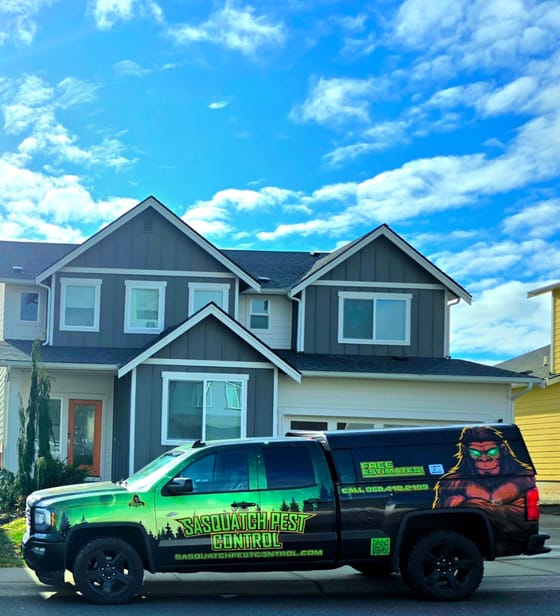
The water itself supports very little that troubles a house. What matters is the margin: a deliberately rough, vegetated buffer that holds moisture year-round, is maintained rarely and lightly, and often carries dense grass and scrub. That is high-quality rodent habitat and it is designed to be high-quality habitat for other reasons.
It also constrains what can be done nearby. Anything applied to ground that drains to a pond reaches the pond, so work at that boundary moves to enclosed stations, trapping and exclusion rather than to anything sprayed. That is the better method for rodents anyway, and it is not a compromise.
The seasonal note is that pond margins get cut, usually once or twice a year, and when they do the population living in them relocates within days. A house backing onto a buffer will see activity spike in the week the maintenance happens. That is predictable, which means the sealing work is best done before it rather than after.
Close lots, shared problems
On lots this size the buildings are close enough that a population works several of them.
A rat living under a deck two doors down is not two doors down in any meaningful sense; it is thirty yards away on a route that includes your foundation. A wasp nest in one soffit is in a construction detail that exists identically on eight other houses. An ant colony under a shared driveway forages into both.
This is why the calls here come in clusters, and why the most economical work on a street is often a run of houses at once rather than one at a time. Per household it is cheaper, it removes the source rather than pushing it next door, and it is the version that finishes.
Where that is not practical, work on a single house still matters and it is worth saying why. The route into your building is on your building. Closing it limits what reaches you regardless of what a neighbor does or does not do. It is not as good as doing the street. It is much better than nothing.
Fence lines, and what accumulates along them
The boundary between two close lots is one of the more productive things to look at here and almost nobody does.
A fence line collects. Leaf litter builds up along it. Shrubs get planted against it and grow into it. Bins, firewood, garden furniture, bikes, cuttings and building materials get stored beside it because it is out of the way. On both sides at once.
The result is a continuous strip of sheltered, undisturbed material running the whole depth of the lot, connecting the green corridor at the back to the buildings at the front. It is a route and a harborage in the same feature, and it exists on nearly every lot in the development.
Clearing a foot either side of a fence line, and keeping stored material off the ground and away from it, is free, takes an afternoon, and does more than most treatments.
One construction era, one set of details
Everything in a development like this went up over a few years to a common specification, which is unhelpful for character and extremely helpful for diagnosis.
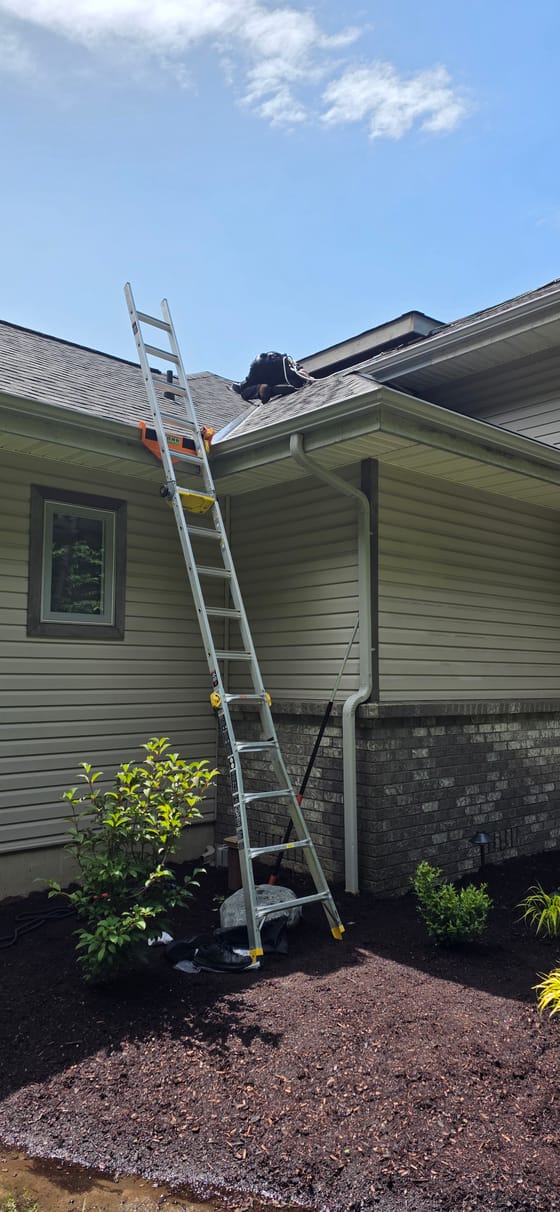
Every house has the same vent type, the same soffit detail, the same garage door and slab relationship, the same way the services were run through the rim joist, and the same trim transitions. So when we find a route on one house, we know where to look on the rest.
That works in the resident’s favor in two ways. A first visit is faster, because we are checking known details rather than searching. And where several households want the same work, one specification covers all of them.
The failure points on housing of this age are consistent: service penetrations sealed with expanding foam, which stops air and water and does not stop a mouse; crawlspace vent screening stapled over an opening rather than mechanically fixed into it; the bottom corners of the garage door; and the voids behind trim at material transitions.
Rodents, and what a route actually looks like
There is nothing exotic about the way anything gets into these houses, which is good news.
Look for daylight at the garage door corners from the inside with the door closed. Check every service penetration — water, waste, gas, electrical, data, the dryer vent, the heat pump line set — for foam rather than a mechanical closure. Check crawlspace vents by pulling gently at a corner of the screen. Check where a deck or patio was built against the house for an unscreened space underneath.
The one people miss is the roof. Where the green corridor carries mature trees and a branch reaches a roofline, that is a bridge over everything sealed at ground level, and rats climb well. Climbing is ordinary behavior for a roof rat, as UC’s IPM guidance on rats describes, which is why a well-sealed foundation on its own can disappoint.
Closing those is a morning of hardware per house and it does not repeat. It is the highest-value work available on this housing.
Ants along the irrigated side
The most common non-rodent call here is ants along a foundation, and it is usually a nuisance rather than damage.
Odorous house ants and pavement ants forage along warm, watered foundation lines and come indoors along them, typically on the side of the house that gets both irrigation and afternoon sun. Baiting along the trail resolves it. Spraying the trail frequently splits the colony and makes the following month worse, which is why a visible immediate result is not the measure to judge it by.
Carpenter ants are a different animal with a different meaning — they excavate galleries in wood — and moisture ants are a report about wet timber rather than a pest problem in their own right. Three insects that look similar to most people and mean three different things, which is why identification comes before treatment.
Reducing irrigation against the wall and keeping a gap between planting and siding does more here than most of what can be applied.
Wasps, and why the whole street gets them
Wasps in new-construction soffits are on the Ferndale list and this development demonstrates it.
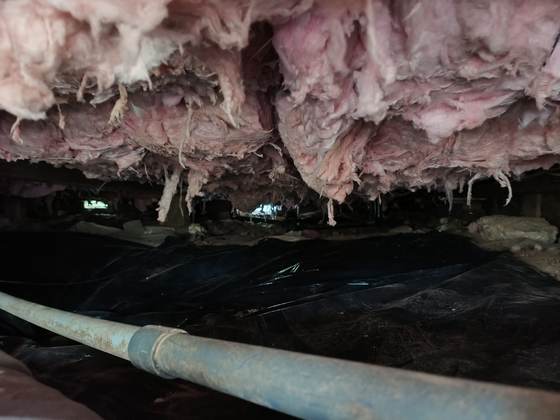
Modern soffit and fascia detailing produces long continuous voids with small openings at intervals — vents, joints, the end of a run at a gable — which is precisely what a queen looks for in spring. They are high up, invisible from the ground, and nobody inspects them until there is traffic.
Because every house shares the detail, a good nesting year produces nests up and down a street rather than at one address, which residents reasonably find alarming and which is entirely normal.
The regional reference on nesting insects in buildings is the PNW Insect Management Handbook, kept up by WSU with Oregon State and the University of Idaho.
Ground nests along the green corridors and pond margins are the ones that cause injuries, because they are found by mower rather than by eye. On amenity ground that is a maintenance hazard as much as a resident one and is worth reporting.
Honey bees we do not treat. If a colony is in a wall we will identify it and point you at somebody who removes them properly.
Parks, play equipment and where nothing gets applied
A development designed around parks has play equipment, sports courts and open grass that children use daily, and that has a straightforward consequence for how work near them is done.
Nothing gets applied to amenity ground where children play. Where a problem genuinely sits on that ground, such as a wasp nest in a bank beside a path or rodent activity around a shelter or a bin, the work is physical and enclosed: trapping, secured stations, removal of the nest, and closing whatever is providing the harborage.
Timing matters as much as method. Work near a play area is done when it is not in use, and where an area needs to stay clear for a period afterward we will say so plainly and in writing rather than leaving a small sign nobody reads.
This is management ground rather than resident ground, so most of it runs through the association or the city. If you have found something on a shared space, reporting it is a great deal more useful than working around it.
When somebody builds next door
Developments like this fill in over years, and an active construction site beside occupied houses reliably produces a wave of calls.
Two things are happening at once. Ground is being cleared and disturbed, which displaces whatever was living in it into the nearest buildings within days. And a site generates precisely what attracts rodents: stored material, waste, cover, and quiet at night.
It is temporary, and it helps to know that rather than to assume something has permanently changed. The work is the same as always, which is to close the routes into your building, and doing it while the ground next door is being worked is far better than doing it afterward.
The autumn crowd on the sunny side
From late September the seasonal visitors arrive on whichever elevations hold the afternoon sun.
Multicolored Asian lady beetles gather on warm siding and then push into gaps around trim, laps and vents. Brown marmorated stink bugs do much the same. Cluster flies accumulate in upstairs windows. Spiders come in for their own reasons and get noticed at the same time.
Apart from the occasional nip from a lady beetle, none of them bites, and not one of them breeds indoors or damages the building — which is what decides the approach rather than a reason to dismiss them. Because they do not reproduce inside, the number indoors depends entirely on how many got in. Sealing, plus correctly timed exterior work in the narrow window before the wave, addresses the supply. Repeated interior spraying through the winter addresses what is already in the room and nothing else.
Children, pets and how work gets placed
This is family housing with small yards, parks and sidewalks, and a great deal of outdoor life at ground level.
Placement is planned around that. Anything placed goes in enclosed, secured stations where children and pets cannot reach it, and interior work is planned around the rooms in use.
We will show you the label before we treat, name what is being applied, tell you which surfaces are involved and which are not, and give the re-entry directions unprompted. Every product this company uses is published on this site with its full label and safety data sheet.
And where a repair will do the job instead of a product, that is what we will recommend, even though it is the smaller invoice.
What we would rather you did not pay for
A recurring perimeter treatment on a house whose real problem is a foamed penetration and a green corridor at the back will produce a visible result indefinitely and will never finish.
A treatment for wasps you have not found yet, sold as prevention, is not worth what it costs. Looking in June is.
And where the honest answer is a fence line cleared, a bin lid, less water against the wall and a branch cut back from the roof, none of that is billable and it is still the answer.
Sidewalks, streetlights and the insects they gather
A development with continuous street lighting and sidewalks running past every house has a feature that nobody thinks of as a pest factor, and it accounts for a noticeable share of the spider calls we get here.
Lighting concentrates flying insects. Insects concentrate the things that eat them. A house with a bright entry light, a lit garage apron and a streetlight at the property line is providing a reliable food supply on its own walls every night from spring through autumn, and the webbing that appears around the eaves and the porch is the consequence rather than the problem.
Changing to warmer, lower and more directed fittings genuinely reduces it, and it does so by removing the supply rather than the individuals. It also has the advantage of being a one-off change rather than something anybody has to keep paying for, and on a street where the houses share a lighting specification it is a change the whole row benefits from at once.
How a visit works here
We start at the back boundary — what the lot backs onto, how close the cover gets, whether there is a pond margin or a buffer strip, and what has accumulated along the fence lines.
Then the building at ground level, checking the known failure points for this housing rather than searching: penetrations, vent screening and how it is fixed, sweeps, garage door corners from the inside, and under any deck.
Then the roof line for vegetation contact and the soffit run for wasps.
Then underneath and inside, with a light, properly.
You get a plain account of what is active, what is a route and what is a source, what is worth doing before the pond margins are next cut, and what would be better done as a street than as a house. It costs nothing to have us come and assess it. Bed bug verification is billed and then deducted from treatment, and no ongoing agreement is required.
Frequently asked questions
Are the stormwater ponds causing this?
The margins around them are, more than the water itself. A detention pond has a vegetated buffer that is deliberately left rough, holds water and cover year-round, and is not maintained like a lawn. That is good habitat by design, and the houses backing onto it get the most pressure. It is not a fault in the pond — it is what a pond is.
My neighbor's yard is the problem. What can I do?
Work on your own building still helps a great deal, because the route into your house is on your house. Sealing it limits what reaches you regardless of what is next door. Where several neighbors have the same issue, doing a run of houses together is far cheaper per household and it is the version that actually finishes.
Is the greenbelt off limits to treatment?
Largely, and for sound reasons — it is usually not your land, it often drains to open water, and broad treatment of a habitat strip is neither lawful nor sensible. The work is at the boundary and on the building: exclusion, enclosed stations where appropriate, and removing what makes your yard the attractive end of the strip.
We have small children and a dog. How does that change things?
It changes placement, not whether we can help. Anything placed goes where children and pets cannot reach it, in enclosed and secured stations. We will walk you through the label before we treat and tell you the re-entry directions rather than waiting to be asked, and where a repair will do the job instead of a product we will say so.
Everyone on the street has wasps. Is that normal?
It is, and it is a good example of why this kind of development behaves as a unit. The houses share a construction detail — usually a soffit or vent junction — so a nesting opportunity that exists on one exists on all of them. Checking in June rather than reacting in August is worth a great deal.
Why are the ants only along one side of the house?
Usually irrigation and sun. A watered, warm foundation line is a foraging route, and the side that gets both is the one that gets the traffic. Watering less against the wall and keeping a gap between planting and siding does more than most of what can be applied.
Is an assessment free?
Yes, other than bed bug verification, which is charged and comes off the treatment. Here the assessment includes the back boundary as well as the building, because on these lots the boundary is usually where the answer starts.
Pest problem in Pacific Highlands?
Family-owned, no long-term contracts, and every treatment is backed by our 100% Service Guarantee.
Most calls in Whatcom County are out within 1–2 days, about 3 during the late-summer peak.
Last updated