
Pest Control in Downtown Lynden
Downtown Lynden is a compact retail core with turn-of-the-century and mid-century houses immediately behind it, sitting in the middle of dairy country. The commercial buildings share walls, the houses are old, and the fly pressure arrives from outside the town entirely.
Call 360-410-2199 Request a free inspection
Downtown Lynden, Lynden on the map
A small core in the middle of farm country
Downtown Lynden is a compact commercial street with turn-of-the-century and mid-century houses on the blocks immediately behind it, and the whole of it sits surrounded by dairy and berry ground.
That last point is not scenery. It is the single biggest difference between pest control here and pest control in a downtown of similar size somewhere else, and it accounts for the calls that people find hardest to understand.
The other two features are more familiar. The commercial buildings are attached and continuous behind their finishes. The houses behind them are genuinely old, with everything that implies about how many ways there are into them.
Flies that were not produced in your building
The most common complaint in a Lynden food premises in July is flies, and the most common assumption about them is wrong.
House flies and stable flies develop in moist organic material — manure packs, soiled bedding, silage spoilage, feed waste, wet margins around waterers. There is a great deal of that within a short flight of the town, and adults travel considerably further than most people assume from where they were bred. Fly management around dairies is long-standing ground for WSU Extension in Whatcom County, and their material is written for the people producing the flies rather than the people receiving them.
So a premises can be run immaculately, with the bins right and the doors right and the cleaning right, and still receive flies in numbers, because the supply is not on the property and never was.
That changes what a sensible response looks like. Interior spraying kills what is in the room now and does nothing about the next arrivals, so it becomes a weekly cost with no end. What actually works is keeping them out and giving them nothing: door discipline and air curtains where they are justified, fly screening on openings that stay open, light traps positioned away from the door rather than beside it, and waste handled so the premises does not become a local breeding site in its own right.
The last of those is the part any business can control, and it is the part worth spending on.
Drain flies and fruit flies, which are your building
Small flies are a different problem entirely from the ones arriving off the fields, and they are usually very fixable.
Drain flies breed in the organic film on the inside of a drain line, under a floor waste, or in the trap beneath equipment that is rarely moved. Fruit flies breed in anything fermenting: a mop bucket, the tray under a dispenser, the underside of a soda gun, a crate of produce.
In both cases the adults are the visible end of something living somewhere specific and small, which is good news — find it, clean it properly, and they stop within days and stay stopped.
Finding it is the actual work. Moving equipment rather than looking around it, checking floor wastes and the joint where equipment meets the floor, and taping a simple overnight trap over a suspect drain to confirm rather than guess. A premises that gets sprayed weekly for small flies has usually never had that half hour spent on it.
Attached buildings, and why one unit is not the job
The commercial row behaves as one building whatever the addresses say.
Wall cavities run past party walls where they were never properly stopped. Chases pass vertically between floors. Suspended ceilings create a connected plenum across a whole floor plate. Roof voids run the length of a terrace. In older commercial stock, services were cut in as needed across decades and closed up rarely.
A population living in that connected volume works a territory that contains several units and moves between them freely. Which is why a treatment in one unit produces two good weeks and then stops: it cleared what was inside, and the source was never inside.
The version that finishes is done at building or block level, with the owner or the neighbors involved, addressing the shared voids and the exterior of the whole structure. That is a harder conversation than a single service call and it is the one worth having, and we will put what we found in writing so it can be taken to the people who need it.
Where a business sits above or below a home
Mixed use is normal on a street like this, and the dynamic is worth naming plainly because it usually gets discussed as a dispute when it should be discussed as plumbing.
A commercial kitchen is a concentration of food, warmth, moisture and shelter operating daily. That is not a criticism; it is what a kitchen is. What matters to whoever lives above is that the routes connecting the two are almost always open — the risers, the extract runs, the penetrations cut for gas, water, waste and power, and the gaps around them that nobody closed.
Sealing that path protects everybody in the building at once and is cheaper than any of the alternatives. Either party can start it.
Cockroaches, and why they persist downtown and nowhere else
German cockroaches are largely a shared-building problem in this county, and a compact commercial core is where the shared buildings are.
They arrive on goods, deliveries, packaging and secondhand equipment. They establish in warm harborage close to food and water. And in an attached structure they disperse through the same routes as everything else, so a single untreated unit keeps a whole row supplied.
Two things decide the outcome. The treatment is baiting and harborage reduction rather than spraying surfaces — the strains in circulation respond to bait and are frequently driven deeper into voids by residual sprays, which looks like progress and is not. And it has to be done across the affected part of the building at the same time rather than one unit at a time.
That second point requires somebody with authority over the building to say yes, and it is usually what decides whether a block clears in a month or struggles for two years.
The houses behind the street
The residential blocks immediately behind Front Street hold the older stock, and it behaves like old housing everywhere.
A century of services has been cut into these buildings. Knob and tube, then rewiring. Wood or coal, then oil, then gas or electric. Galvanized, then copper. Waste lines replaced in sections. Phone, then cable, then data. A dryer vent through a wall in the seventies. Rooms added, porches enclosed, kitchens moved.
Every one of those was made by somebody focused on making the new thing work, and most were never closed behind. The result is a building with many small routes rather than one obvious one, and a survey that finds three of them has not finished.
The crawlspace is where this gets settled. On older stock the under-floor space tells you what the last thirty years actually did: whether there is a vapor barrier and what state it is in, whether the perimeter is sound, whether the framing near the ground has gone soft, and whether the vent screens have corroded from the side nobody looks at.
Cluster flies, lady beetles and the autumn wall
From late September the sunny elevations collect the seasonal crowd, and in open country around a small town they arrive in numbers.
Cluster flies are the local specialty and they cause the most confusion. They breed outdoors in soil, parasitizing earthworms, and they have nothing whatever to do with hygiene, food or waste. In autumn they gather on warm walls, work into gaps around trim and vents, and overwinter in wall voids and attics — appearing indoors on mild winter days in numbers that seem impossible relative to any opening anybody can find.
Multicolored Asian lady beetles and brown marmorated stink bugs do the same thing on the same walls at the same time.
Of the three, only the lady beetle bites, and it amounts to a pinch. None of them raises a generation indoors or harms the fabric of a building, and it is that fact rather than any wish to make light of them that settles how they are dealt with. Because they do not reproduce inside, the number in the building depends entirely on how many got in. Sealing the entry points and treating the exterior in the narrow window before the wave addresses the supply; spraying rooms through the winter deals with what is already in them and nothing else.
Rodents, and the ways in that get used
The routes downtown are ordinary and consistent.
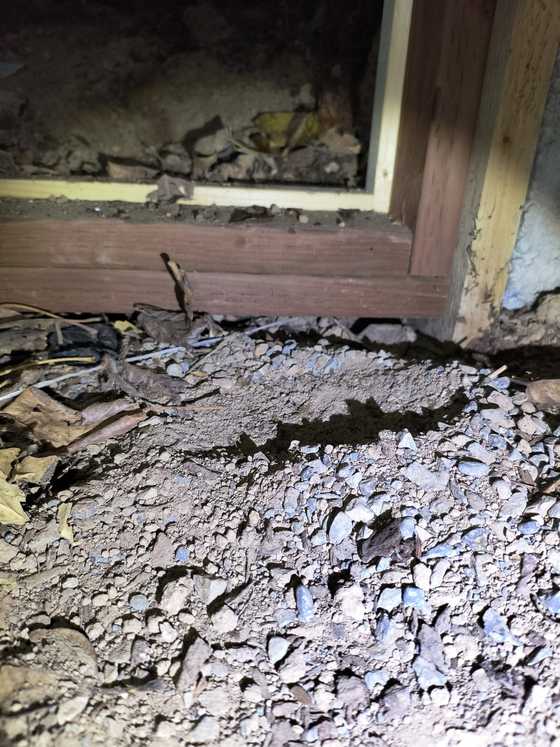
At ground level on the commercial side: worn door sweeps, the gap under a roller shutter, unsealed service penetrations, a broken air brick, a light well with no cover, and a rear yard with waste stored against the wall. On the older houses: damaged skirting, a crawl hatch that is a board leaning on an opening, corroded vent screens, and the space under a porch or deck that was never screened.
And the one people forget on older stock, which is the drainage. Disused or broken drain runs under and beside old buildings are a genuine route into a structure, and a rat problem that resists everything sensible at ground level is occasionally coming up rather than in.
Waste in a shared rear yard is the other half. Bins that do not close, stored cardboard, and food waste held between collections will support a population that no treatment out-runs. Where several businesses share a yard it has to be agreed rather than assumed.
Deliveries, storage and what arrives in the boxes
Retail and food premises get a family of problems that houses do not, and they walk in through the delivery door.
Indianmeal moths, sawtoothed grain beetles and weevils live in dry goods — flour, grain, pulses, nuts, dried fruit, spices, pet food, birdseed. They arrive inside sealed packaging, because the infestation started upstream, and emerge on a shelf weeks later.
The detail worth knowing is that webbing inside intact packaging means it arrived that way. That single observation decides whether the conversation is with a supplier or with the premises, and getting it the wrong way round wastes a lot of effort.
Stock rotation, an inspection gap around and behind storage, dealing with spillage in the awkward places under fixtures, and pheromone monitoring so a problem is caught below the level anybody would notice by eye — that is the whole program.
Birds on the storefronts
A retail street with parapets, signage and sheltered ledges attracts nesting, and the pest consequence is usually not the birds.
It is what accumulates: nesting material in gutters and downspouts, droppings on frontages and walkways, and the insects that live in an occupied nest and move inward when it is abandoned. Bird mites and carpet beetles both do this, and both get diagnosed as something else because nobody connects them to a nest above a shop sign.
Much of what nests here is protected, and the timing and method matter. Where there is an active nest we will say what may lawfully be done and when, and where the answer is that it waits until the nest is finished, we will say that too.
Wasps above a public street
Downtown wasp nests are mostly aerial and mostly high — soffits, parapets, signage voids, ventilation grilles and roof edges, in places nobody visits between one year and the next.
They matter more here than on a residential street because a nest above a pavement or a shop doorway is above people who never chose to be near it, and a shop entrance with a nest in the fascia in August is a hazard and a trading problem at once.
Access is the constraint. Some of these need equipment, and some need doing at a time when there is nobody underneath.
Stinging insects in and on buildings have a Northwest reference of their own: the PNW Insect Management Handbook, published jointly by the region’s three land-grant universities.
Honey bees are separate and we do not treat them. In berry and dairy country pollinators are worth more than we are, and a colony in a wall or an old chimney needs somebody who removes them properly.
Vacant units, and the gaps between tenants
An empty commercial unit in an attached row is a liability for everybody in the building, and it is nobody’s priority until it becomes a problem.
Nothing is being cleaned. Nobody notices droppings, a smell or activity behind a fixture. Waste from the fit-out or the previous tenant frequently sits. Utilities may be off, so there is no heating cycle and no air movement. And the unit is connected to its neighbors through exactly the same shared voids as every occupied one.
What that produces is a quiet, undisturbed reservoir in the middle of a row, supplying the units either side, with nobody in a position to report it.
The practical answer is that a vacant unit should be checked periodically by whoever holds it rather than left until a new tenant opens the door. It is a short visit and it is far cheaper than the alternative, which is a fit-out that turns into a treatment program for three businesses.
If you are next door to one and having a problem you cannot explain, that is worth saying when you call.
What we will not do here
We will not treat one unit in an attached row, call it solved, and book you in again in six weeks. If the source is in the shared structure we will say so on the first visit and put it in writing.
We will not spray a premises weekly for flies that are being produced on farm ground a mile away. That is charging for the weather.
And we will not sell a business a program for what is genuinely a waste, storage or delivery problem. Where the answer is a bin lid, a cleared alley or a routine for breaking down cardboard, that is the answer and it does not involve us.
Storage above and behind the shops
The upper floors and back rooms of an older commercial building are frequently used for storage rather than trade, and they get looked at rarely.
Stock, fixtures, seasonal display, paperwork and packaging sitting undisturbed in a low-traffic space is exactly the material that supports both rodents and stored-product insects, and being out of the customer’s sight means a problem develops there for months before anything appears downstairs.
Keeping an inspection gap around the walls and getting stored material up off the floor makes that space checkable, which is most of the battle.
How a visit works downtown
We start outside and at the back — the service side, the yard, the bin store, the delivery door, ground-level openings and the drainage covers, because that is where the routes are.
Then the interior, and in a food premises the harborage rather than the surfaces: behind and beneath equipment, in voids, around services, wherever warmth and moisture meet shelter.
Then the vertical connections — risers, chases, ceiling plenums, roof void — because those turn one floor’s problem into a building’s problem. On a house, the crawlspace instead, properly, with a light.
You get a plain account of what is active, where it is based, what is a route and what is a source, which items are yours and which belong to a landlord, a neighbor or a supplier. The assessment is free unless it is bed bug verification, which is charged and then credited against the treatment, and nothing requires a term agreement.
Frequently asked questions
Why are there so many flies in town in the summer?
Because the town sits in the middle of the ground that breeds them. House flies and stable flies develop in moist organic material on farm ground, and adults travel a considerable distance from where they were bred. A premises downtown can be immaculate and still receive flies produced a mile away, which is why the work here is exclusion and management rather than treatment alone.
We are a food premises. When can you work?
Around your hours, usually after close, and we would rather plan that at booking than negotiate it on the day. Kitchens get worked properly when the line is down, and a rushed visit during service finds less and disturbs more.
Our building shares walls with the neighbors. Does that matter?
A great deal. Behind the finished surfaces an attached row is largely continuous, and a population living in the shared voids treats each unit as one room of a bigger space. That is why a treatment can work and then stop working. The fix is at the building or the block level rather than the address.
The house is a hundred years old. Is that a problem?
Not a hopeless one. Age means more openings and a longer survey, because a century of plumbing, wiring, heating and remodeling has been cut into the building and rarely closed behind. It is findable and mostly fixable work, and the crawlspace is where it starts.
Do the cluster flies in the upstairs windows mean anything is wrong?
No. They breed outdoors in soil, not in your house, and they gather on sun-warmed walls in autumn before working into gaps. They do not bite, breed indoors or damage anything. The useful response is sealing and correctly timed exterior work rather than spraying rooms all winter.
Can you deal with birds on the storefronts?
Some of it, and the timing and method matter because much of what nests here is protected. What we can usually address is the harborage — the ledges, the signage voids and the gaps behind fascia — and the insects that move indoors out of an abandoned nest, which is the part that surprises people.
What does an assessment cost?
Nothing, unless it is bed bug verification, which carries a fee that comes off the treatment. On a shared building it is worth having regardless, because it establishes whether the source is in your unit or in the structure you share.
Pest problem in Downtown Lynden?
Family-owned, no long-term contracts, and every treatment is backed by our 100% Service Guarantee.
Most calls in Whatcom County are out within 1–2 days, about 3 during the late-summer peak.
Last updated