
Pest Control in the Pepin Creek Area, Lynden
Pepin Creek is Lynden's west-side growth area, where new housing is going up on ground that was farmed until recently and the creek itself is being realigned into a new riparian corridor. Construction, agriculture and a protected waterway all meet here at once.
Call 360-410-2199 Request a free inspection
Pepin Creek, Lynden on the map
A growth area, mid-change
The Pepin Creek area on Lynden’s west side is the part of town that is currently becoming something else. New housing is going in on ground that was farmed until recently, the city has been realigning creek flows into a new riparian corridor and stabilizing banks downstream, and land has been acquired specifically to protect and expand riparian habitat along Pepin and Fishtrap Creeks.
That is three things happening at once on the same ground: agricultural land being built on, a protected waterway being restored, and construction active across the middle of it.
Every one of those has a pest consequence, and the combination produces a pattern that neither a settled neighborhood nor a finished subdivision would produce.
Ground that was farmed until recently
Land does not stop being what it was on the day the surveyors arrive.
Former farm ground carries a resident rodent population that has lived there for generations, along with the cover and food supply that supported it. When that ground is cleared and graded, the population does not vanish. It moves, within days, to whatever is closest — and on a development site, what is closest is the new houses.
That is why so many people here get mice within weeks of moving into a building that is a few months old, and why it feels like a verdict on the house when it is nothing of the kind. It is a displacement event, and the buildings happened to be there when it happened.
The second half of it is that the surrounding land is still worked. Cut and harvest strip cover from large areas within days, and each time that happens the animals living in it relocate that week. So this area gets the agricultural pattern — sudden, seasonal, event-driven arrivals — layered on top of the construction one.
Both are predictable, which is the useful part. The work to close a building is worth doing before the next time ground is disturbed, not after.
What gets grown on the remaining fields, and on what schedule, is WSU Extension Whatcom County’s area rather than ours.
Tight is not sealed
New construction here is good at what it was designed for: air, weather and insulation, to a standard older housing never approached.
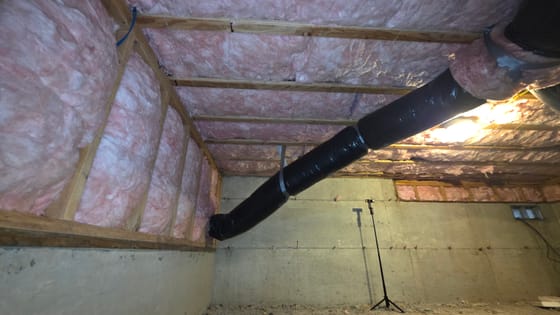
Rodent exclusion is a different specification with different materials, and it is not what anyone was checking on the way through. The failures are consistent enough to predict before arriving.
Service penetrations closed with foam. Every house has a dozen or more — water, waste, gas, electrical, data, the heat pump line set, the dryer vent — and on new construction they are typically sealed with expanding foam. That handles air and water exactly as intended and a mouse chews through it without slowing down. It is the most common route we find on new houses.
Vent screening stapled rather than fitted. A screen tacked over an opening instead of mechanically fixed into it lifts at a corner within a few years, and then the vent is just an opening.
Garage door corners. Stand inside with the door closed and look at the bottom corners. Daylight means a gap, at floor level, into a space connected to the house.
Behind trim and at transitions. Where two materials meet, at corner boards, and behind the trim around a cantilever or a bay, there are voids that were never intended as access and serve as it.
None of that is bad building. It is a building detailed for weather rather than for wildlife, and the fixes are small, mechanical and permanent.
While the site next door is still active
An active construction site beside occupied houses reliably produces a wave of calls, and it is worth knowing why rather than assuming something has gone permanently wrong.
Two things are happening. Ground is being cleared, which displaces whatever lived in it into the nearest buildings. And a site generates exactly what attracts rodents: stored material, waste, offcuts, cover, and quiet at night.
It is temporary. What is not temporary is the state of your building, and the right response is to close it while the pressure is high rather than to wait for the site to finish and hope.
There is a practical note as well: on a live site, boundaries move and access changes. If a job needs work along a boundary that is currently a construction fence, tell us and we will plan for it rather than discovering it.
The creek corridor, and where nothing gets applied
A riparian corridor being actively restored and protected is not somewhere to be applying pesticide, and the restriction is the correct one.
Anything applied to ground that drains into the corridor reaches the water. So work at that boundary moves to enclosed, secured stations, to trapping, and to physical exclusion of the building itself. For rodents that is the more durable method regardless, because it addresses the route rather than the individuals crossing a surface.
What it means in practice is that boundary work here is slower and more mechanical than a perimeter spray, and a cheaper quote that consists of a spray along a creek buffer is not a comparable service — it is a different and worse one.
The corridor will also become better habitat over time, not worse, because that is the point of restoring it. A property backing onto it should expect the pressure to be a permanent feature and should be closed accordingly rather than treated repeatedly.
Stormwater, ditches and standing water
New development comes with stormwater management, and it is worth separating the designed water from the accidental water.

Designed facilities — detention and retention ponds, swales, bioretention — support very little that troubles a house. What matters about them is the margin: deliberately rough, vegetated, maintained lightly, holding cover and moisture year-round. That is good rodent habitat by design, and houses backing onto it get more pressure. It is not a fault; it is what the feature is.
Accidental water is different. Water standing for weeks in ruts, excavations, uncovered materials and equipment on an active site can breed mosquitoes, and that is a site-management matter rather than something any treatment on a house addresses.
Ditches are the third category. Agricultural drainage around this area is long-established, and a ditch line with vegetation along it is a corridor in exactly the way a creek is.
Landscaping: the window that is open right now
Right now the planting here is new — small, set back, and open — and on most of these houses the foundation line can be seen and reached the whole way round.
That is a real advantage and it is temporary.
Every mature neighborhood in this county tells the same story: planting installed when the houses were new, allowed to grow, now hard against the siding over a deep bed of accumulated material. That combination is the single most productive thing to fix on an older lot, and it takes years of growth to create.
Keeping a genuine gap between planting and wall now, and keeping mulch off the siding, costs nothing. Reclaiming one in fifteen years means removing established shrubs somebody has grown attached to.
Irrigation matters as much. New landscaping gets watered heavily to establish, and water applied against a foundation is the beginning of the moisture story that this ground otherwise would not have.
The first autumn in a new house
The first autumn is when people find out what their house does, and on the edge of open ground it is a busy one.
From late September the sunny elevations collect the seasonal crowd. Cluster flies — which breed outdoors in soil and have nothing to do with hygiene — gather on warm walls, work into gaps, and overwinter in voids. Multicolored Asian lady beetles and brown marmorated stink bugs do the same. On a new subdivision with open ground around it there is nothing to intercept them.
Nothing in that group bites, reproduces inside, or harms the building itself, which is why the response is sealing combined with exterior work timed to the narrow window ahead of the wave. Too early and it has faded; too late and they are already on the wall. Because the trigger is weather rather than a date, the right week shifts from season to season, and the only reliable way to catch it is to have the visit on the calendar before the first cold snap arrives. We book that week off the Seattle forecast office’s outlook rather than off the calendar.
The same autumn is when the field rodents arrive, for the reasons above. A house closed properly in August has a very different first winter from one closed in November.
Heat pumps and modern mechanicals
Houses here carry equipment that older housing does not, and it introduces routes nobody thinks to check.
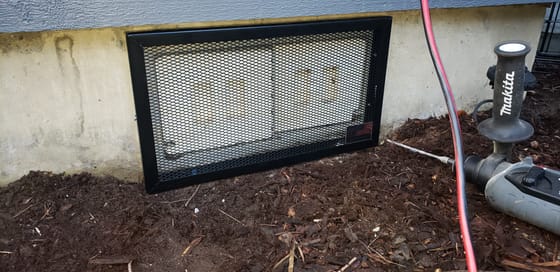
The heat pump line set passes through the wall, and that penetration is frequently the single largest hole in the envelope — usually foamed and covered with trunking, which handles weather and nothing else. The outdoor unit sits on a pad against the wall with a gap underneath: dry, sheltered, undisturbed, and directly against the building. Condensate lines and their drains hold standing water in a warm sheltered spot, which is what small flies breed in.
None of it is difficult. It is simply newer than most of what gets checked.
What the corridor will become
Worth thinking about now rather than in ten years: the restored corridor is designed to improve as habitat, and it will.
Riparian planting matures. Cover thickens. The bank stabilizes and holds vegetation it could not hold before. That is the entire purpose of the work and it is good for the creek, the water quality and everything that depends on both.
From a building’s point of view it means the pressure at that boundary is not a temporary condition associated with construction. It is a permanent feature that will strengthen, and a house backing onto it should be closed properly once rather than treated repeatedly forever.
That is the argument for spending on hardware now while the building is new, the ground is accessible and the planting is small. Everything about doing this work gets harder and more expensive later.
Buying new here: what to ask before you sign
People move into this area straight from a builder, and there are three questions worth asking that nobody thinks to ask.
Ask what was done about rodent exclusion specifically, as distinct from air sealing and weatherproofing. The honest answer is usually that nothing was, and that is not a scandal — it is not part of the specification — but it tells you what you are taking on.
Ask what the warranty covers and for how long, and get it in a form you can read. Vent screening, a garage door that does not meet the slab, and unsealed penetrations through a rim joist can be defects rather than maintenance items, depending on the terms.
And ask what the lot backs onto and what the long-term plan for it is: creek buffer, stormwater tract, future phase, or farmland that will be built on. Each of those is a different situation five years out, and it is much easier to find out before than after.
Wasps in new soffits
Wasps in new-construction soffits are a real pattern and this is where it shows.
Modern soffit and fascia detailing creates long continuous voids with small openings at intervals — vents, joints, the end of a run at a gable — which is precisely what a queen looks for in spring. They are high up, invisible from the ground, and nobody inspects them until there is traffic.
Because every house on a street shares the detail, a good nesting year produces nests along a whole row rather than at one address, which residents reasonably find alarming and which is normal.
The useful move is looking in June rather than reacting in August, and on uniform housing the vulnerable detail is in the same place on every building.
Dust, disturbance and the first two years
One more thing about living beside active work, and it is the part people find hardest to plan for: the pressure does not arrive once and settle. It arrives every time the ground moves.
A phase being cleared, a road being cut, a utility trench, a pond being formed — each of those displaces whatever was living in that patch, and each produces its own small wave into whatever is nearest. In a growth area that can happen several times across two or three years rather than once at the beginning.
The practical consequence is that judging your house by one quiet season is misleading in both directions. A first summer with nothing at all does not mean the building is closed; it means nothing has been disturbed near you yet.
Close the building on its own merits rather than in response to the last event, and it stops mattering what happens next door.
What is worth doing, in order
On a house here the ranking is unusually clear and most of it is not a treatment.
Close the builder gaps first — penetrations done mechanically rather than with foam alone, vent screening fixed into the opening, garage door seal. That is a morning and it is most of the battle.
Keep the landscaping off the walls while it is still small, and keep the irrigation off the foundation.
Get the exterior autumn work timed properly for the first season, then judge whether it is needed every year.
And where the boundary is a creek buffer or a stormwater margin, treat that edge as permanent and close the building rather than expecting anything applied to hold.
What we would rather not sell you
A recurring perimeter program on a two-year-old house whose actual problem is a foamed line set and a garage door gap will produce a visible result forever and will never finish.
A spray along a creek buffer is not something we will quote, whatever anybody else is offering.
And where the mosquitoes are coming off standing water on a construction site, nothing applied to your building will change that, and we will say so.
How a visit works here
We start with the surroundings, because on this ground they are the whole story: what is being worked, what is being built, how close the creek buffer or the stormwater margin gets, and what state the ground next door is in.
Then the building at ground level, checking the known failure points for new construction rather than searching: penetrations including the line set, vent screening and how it is fixed, sweeps, and the garage door corners from inside with the door shut.
Then the soffit line for wasps and the elevations that hold the afternoon sun, because those decide the autumn.
Then underneath and inside, with a light — quick on a house this age, and worth doing anyway, because a crawlspace established as clean is a useful baseline for later.
You get a plain account of what is active, what is a route rather than a source, which items may be a builder’s responsibility rather than yours, and what should be done before the next time ground nearby is worked. The assessment costs nothing beyond bed bug verification if that ever applies, and nothing about the work requires a term agreement.
Frequently asked questions
Why did we get mice as soon as we moved in?
Because the ground was disturbed. Clearing and grading displace whatever was living in a field within days, and they move to the nearest structures — which, on a development site, are the new houses. It is an event rather than a verdict on the building, and it is why closing the builder gaps early matters so much here.
The house is brand new. How is anything getting in?
Tight is not the same as sealed. New construction is detailed for air and water, and that is a different specification from rodent exclusion. The consistent failures are service penetrations closed with expanding foam, vent screening stapled rather than fitted, and the bottom corners of the garage door.
Can you treat near the creek corridor?
Not with a perimeter spray, and that restriction is correct. Anything applied to ground draining into a riparian corridor reaches the water. Work at that boundary uses enclosed stations, trapping and physical exclusion, which for rodents is the more durable method anyway.
There is still construction going on nearby. Should we wait?
No — the opposite. While ground is being worked next door is exactly when the pressure is highest and when closing your building pays for itself. Waiting until the site is finished means living through the whole displacement period with the gaps still open.
This was a field two years ago. Does that change anything?
It does for the first few seasons. Former farm ground carries a resident rodent population and a seed bank, and the surrounding land is still worked. What changes is that the cover comes and goes on an agricultural schedule rather than a garden one, and a cut or a harvest nearby produces a wave within a week.
Is the standing water on the site a mosquito problem?
Sometimes, and it is worth separating temporary construction water from permanent stormwater design. Water standing in ruts and excavations for weeks can breed mosquitoes; a properly designed stormwater facility is a different thing. Neither is treated by anything applied to your house.
Does it cost anything to have somebody come out?
Nothing for the assessment, other than bed bug verification if it ever applies, which is billed and then credited against treatment. On a new house the visit is quick and it is worth doing before the first autumn rather than after.
Pest problem in Pepin Creek?
Family-owned, no long-term contracts, and every treatment is backed by our 100% Service Guarantee.
Most calls in Whatcom County are out within 1–2 days, about 3 during the late-summer peak.
Last updated