
Pest Control in Homestead, Lynden
Homestead is housing built around a golf course on Lynden's west side, close to Fishtrap Creek and the park beside it. Irrigated turf, water features and a creek corridor put three kinds of permanent habitat within a short walk of every house here.
Call 360-410-2199 Request a free inspection
Homestead, Lynden on the map
Houses built around a course
Homestead is residential development on Lynden’s west side arranged around a golf course that opened in the early nineties, with Fishtrap Creek and the park beside it a short distance away.
Three features shape the work and all three are about ground rather than buildings. There is a large area of irrigated, fertilized turf. There are water features and drainage associated with it. And there is a creek corridor and park margin nearby, which is continuous undisturbed habitat running past the whole area.
The housing itself is the easy part: consistent, of a known period, with a predictable set of openings. Most of what we deal with here arrives from outside it.
Irrigated turf is a habitat, not a lawn
A golf course, common lawns and irrigated garden planting produce one of the most reliable pest patterns in the county, and it starts underground.
Watered, fertilized turf supports a heavy population of soil invertebrates — worms, larvae, grubs — and dense grass provides continuous cover at ground level. That is a food supply and a shelter layer over a large contiguous area, maintained deliberately, year after year.
Nothing about that is a fault of the course. It is what a course is, and it is also what a well-kept lawn is on a smaller scale. But it is the reason the animals below turn up here rather than three streets away.
Moles and voles, which are not the same animal
These two get blamed for each other constantly and the confusion costs people a season, so it is worth being precise.
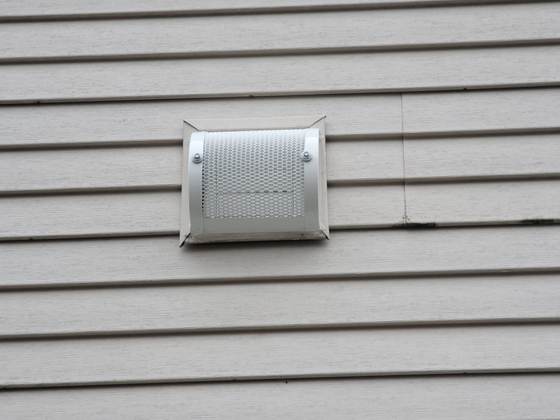
Moles work below ground. They tunnel in pursuit of worms and larvae and push the spoil to the surface as conical mounds. They eat essentially no plant material at all. What a homeowner sees is mounds and a lawn that feels spongy or lifts underfoot, and what they conclude is that something is eating the grass. Nothing is.
Voles work at the surface. They cut shallow runways through the thatch and ground cover, leave small clean openings, and do eat plant material — roots, bulbs, and crucially the bark at the base of young trees and shrubs over winter. A ring of bark stripped at ground level will kill a young ornamental outright, and it happens under long grass or snow where nobody sees it.
The tell is in the workings. Winding surface trails with clipped vegetation, appearing when long grass is cut short, means voles. Pushed-up soil means moles. A property can have both.
Neither is much of a building problem — voles occasionally enter a crawlspace or a garage, moles essentially never — which is worth saying because the alarm is usually out of proportion. The damage is to the ground.
What lives in the turf underneath
Behind the mole question sits a third one that only gets asked when the lawn starts dying in patches.
European chafer and crane fly larvae are the two that matter in this county. The first feeds on roots, the second on roots and crowns, and both do their damage in spring when the grass is trying to grow and cannot. What people see is turf lifting like a loose carpet, irregular yellowing, and birds working the lawn hard in the mornings.
The connection to moles runs the opposite way from what most people assume. A lawn with a heavy larval population is a lawn worth tunneling under, so the grub problem usually arrives first and the mole arrives because of it. Removing the animal while the food source stays put simply invites the next one.
Lawn and turf pests have their own factsheets in WSU’s Hortsense, which is the place to read about grubs before anybody treats a lawn.
The adult crane flies in autumn — long-legged, conspicuous, frequently indoors — are harmless. They do not bite, they do not damage anything, and they are not the part worth treating.
Most of this is turf management rather than pest control, and where that is the honest answer we will say so and tell you what to ask a groundskeeper. WSU Extension’s Whatcom County program publishes on crane fly and chafer in local turf, and it is a better starting point than anything we could sell you.
The creek corridor and the park margin
A vegetated creek corridor is among the best rodent habitat there is: continuous cover, food and water running for a considerable distance, with almost no disturbance. The park margin adds to it.
The houses closest to that corridor take materially more pressure than the ones in the middle of the development, and that difference shows up plainly in the pattern of calls.
It cannot be fixed at the source and should not be — a riparian corridor is worth having. It is entirely fixable at the building, which is where all the useful work is.
The seasonal note is that margins get cut and maintained, usually once or twice a year, and when they are, whatever was living in them relocates within days. Activity spikes in the week the maintenance happens. That is predictable, so the sealing work is best done ahead of it.
Water features and where product does not go
Ponds and drainage associated with a course change the toolkit near them, for good reasons.

Anything applied to ground that drains to open water reaches the water. So work near a pond margin, a ditch or the creek moves to enclosed, secured stations, to trapping, and to physical exclusion of the building itself.
That is not a reduced service. Closing the route and removing the individuals is more durable for rodents than treating a surface they walk across, and the water constraint pushes the job toward the better method rather than away from it. What it does mean is that boundary work here is slower and more mechanical than a perimeter spray, and that is worth understanding before comparing quotes.
Open water also produces its own nuisance insects — midges and other non-biting flies emerging in numbers on still evenings — which are genuinely unpleasant and are not a treatable structural problem. Where the honest answer is screening and lighting, we will give it.
Geese, and the birds a course attracts
Managed turf beside water attracts waterfowl, and while geese are not a pest control matter in themselves, what they leave is relevant.
Droppings on paths, lawns and around water margins support fly breeding in warm weather, and accumulations near a house become a nuisance in their own right. The management of that is a grounds question rather than ours.
Where it does become our work is when nesting on or around buildings leaves material in gutters and voids, and the insects living in an abandoned nest move inward. Bird mites and carpet beetles turning up indoors weeks later, with no apparent connection to anything, are frequently traceable to a nest nobody thought about.
Nineties housing, and its particular openings
Housing of this period is consistent enough that we can predict most of what we will find before arriving.
Crawlspaces are typically vented, with original screening now around thirty years old, corroding from the ground side where nobody inspects. Service penetrations were sealed with expanding foam where they were sealed at all — which handles air and water and does nothing about a mouse. Garage doors have generally been replaced once, and the bottom corners are where daylight shows from inside. Siding often runs close to grade.
None of that is a defect. It is a building of its period, and the repairs are small, mechanical and permanent.
The other period feature is the landscaping. Planting put in when these houses were new is now thirty years mature, and on many lots it is against the siding over a deep bed of accumulated material. That combination — permanent cover touching the wall, over damp organic matter — is the most productive single thing to change on a mature lot, and it costs an afternoon rather than an invoice.
Rodents, and the routes they actually use
Nothing exotic gets into these houses.
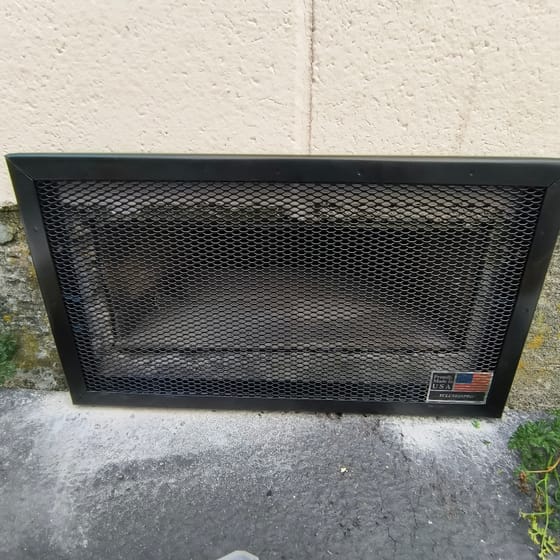
Corroded crawlspace vent screens. Foamed service penetrations. The bottom corners of the garage door. A crawl hatch that is a board against an opening. The unscreened space under a deck or patio built against the house. And where planting or stored material sits against siding, the corridor that lets something reach all of the above unseen.
The one that gets under-rated here is the roof. Trees planted when the development was new now reach rooflines, and a branch touching a roof bypasses everything sealed at ground level. Rats climb well and will use it. Trimming vegetation contact is worth as much as most foundation work.
Carpenter ants and the landscape timber
Carpenter ants here mostly come out of wood on the ground rather than out of a forest.
They do not eat wood — they excavate galleries in it to nest, and they take softened, damp timber far more readily than sound dry timber. Thirty-year-old landscape ties, raised beds, old deck framing, fence posts, a stump left when something came down, and firewood that has been in the same place long enough to go soft at the base are all exactly what they want, and all of it is close to a building.
The pattern is a parent colony outdoors sending satellite colonies outward, with a rim joist or a wall void serving a satellite as well as a log does. The signals are large black ants indoors in spring, winged ants emerging indoors later — which mean a mature reproducing colony — and frass, the sawdust-like material pushed out of galleries, which means an active nest directly above where it lands.
The work is finding the parent colony, not treating what crosses a kitchen floor.
Wasps, and the ground nests on amenity ground
Yellowjackets here are a late-summer problem and the ground nests are the ones that cause injuries, because they are found by mower rather than by eye.
On a development with a lot of maintained and semi-maintained ground, that is a hazard for grounds staff as much as for residents, and a nest along a bank, a verge or a rough edge is worth reporting rather than stepping around.
Aerial nests in soffits, sheds and under deck rails are more visible and easier to deal with. Bald-faced hornets build the large gray paper nests people photograph; European paper wasps build small open combs under railings and are markedly less inclined to defend them.
Honey bees are not our work, and near berry country they are worth more than we are. A colony in a wall gets identified and referred to somebody who removes them properly.
Who acts, and where the line falls
Housing arranged around shared amenity almost always has an association behind it, and the first question on any job here is which side of the line the source is on.
Work on your lot — the building envelope, the garage, the crawlspace, planting against the walls, what is stored outside, drainage near the foundation — is ours to do directly and it is where the durable improvement is.
Pressure arriving from common ground is a different conversation. Shared landscaping, course margins, water features, road verges and greenbelt strips support populations, and those populations do not recognize a line they cannot see.
We raise this at the start rather than at the end for one reason: somebody who pays for thorough work on their own property, next to an untouched source thirty feet the other side of a boundary, will get a partial result and will reasonably feel they were sold something. Where the answer involves the association or the course, we will say so and put it in writing so it can be handed over.
Winter, when the ground is quiet
The season people ignore here is the one where the useful work happens.
Course maintenance eases off, the turf stops growing, the margins get cut back, and the animals that spent the summer in cover start looking for somewhere warmer. That combination is exactly why rodent activity indoors peaks well after the weather turns rather than during it.
It is also when a building can be worked on properly. Planting is cut back and the foundation line is visible, the ground is not being irrigated, and a crawlspace inspection in January tells you what the wet months are actually doing under the floor rather than what a dry July suggests.
If a job here is going to be done once and done properly, the quiet months are when to do it.
Placement on a course boundary
One thing about working here differs from anywhere else, and it is worth stating plainly.
People and dogs go onto course margins to retrieve things. That is normal, it is not going to stop, and it decides where anything can be placed. Everything near a boundary goes in enclosed, secured stations, sited where somebody stepping off a fairway edge will not encounter it.
Tell us where people actually walk rather than where the boundary line is. The two are rarely the same, and we would much rather be told than guess.
We will also walk you through the label before we treat, name what is being applied and where it is not being applied, and give the re-entry directions unprompted. Every product this company carries is published on this site with its full label and safety data sheet.
What we would rather you did not pay for
If the lawn damage is moles, the honest answer is that this is a grounds problem, it does not threaten the building, and it does not justify a treatment program.
If the nuisance insects on a summer evening are coming off open water, nothing applied to your house will change that.
And if the rodent route is a thirty-year-old vent screen and a garage door seal, the answer is a morning of hardware rather than a schedule of visits. It ends the route, and it does not repeat.
Talking to the course before assuming
Where a problem genuinely originates on course ground, the useful first step is a conversation rather than a complaint.
Course maintenance teams generally know their own ground well, they have their own turf programs, and they are usually aware of a wet corner, a rough margin or a stretch of bank that is causing trouble. A specific, factual report — where, what, and when it was observed — gets a better response than a general one.
We will give you that in writing if it helps.
How a visit works here
We start at the boundary: what your lot backs onto, how close the turf, the water and the creek margin get, and what has accumulated along the fence line.
Then the building at ground level — foundation line, vent screening and how it is fixed, sweeps, penetrations, garage door corners from the inside with the door shut, and any deck perimeter.
Then the roof line for vegetation contact and the soffit run for wasps.
Then the crawlspace, entered rather than peered into, with a light, end to end.
You get a plain account of what is active, what is historic, what is driving it, which items are turf or grounds work rather than pest work, and what is worth doing before the margins are next cut. The assessment costs nothing unless it is bed bug verification, which is billed and credited back against treatment, and no term agreement is required.
Frequently asked questions
What is making mounds and ridges in the lawn?
Two different animals, and it matters which. Moles tunnel below for worms and larvae and push up conical heaps of soil; they eat no plant material. Voles work at the surface, cutting shallow runways through the thatch and eating roots, bulbs and bark at the base of young shrubs. Treating for the wrong one wastes a season.
Is the golf course the source of the problem?
The turf and the margins around it support the populations, yes, but the course is not doing anything wrong. Irrigated, fertilized grass grows a heavy invertebrate population, and rough edges, water features and creek margins provide the cover. The work is at your boundary and on your building rather than on the course.
Can you treat near the water features and the creek?
Not with everything, and the limits are the right ones. Anything applied to ground that drains to open water reaches the water, so work near a pond margin or the creek corridor moves to enclosed stations, trapping and physical exclusion. For rodents that is the more durable method anyway.
Our house is from the nineties. Does the age matter?
It shapes what we look for. Housing from that period generally has vented crawlspaces with original screening now thirty years old, service penetrations sealed with foam if at all, and garage doors that have been replaced once with the seal at the bottom corners as the weak point. Predictable rather than problematic.
Balls and equipment come over the fence. Does that matter to you?
Only for one reason, and it is a good one: anything placed near a course boundary has to be somewhere people and dogs retrieving a ball will not reach it. That means enclosed and secured stations, sited deliberately, and we would rather you point out where people actually walk than guess.
Why are there so many crane flies in the fall?
Because irrigated turf is where they lay. The adults are harmless, do not bite and do not damage anything indoors — they are simply conspicuous. The larvae in the lawn are the part that matters, and that is a turf-management question rather than a household pest one.
Does it cost anything to have somebody look?
No, apart from bed bug verification, which is billed and then taken off the treatment. The walk here covers your boundary with the course as well as the house, because that is usually where the source sits.
Pest problem in Homestead?
Family-owned, no long-term contracts, and every treatment is backed by our 100% Service Guarantee.
Most calls in Whatcom County are out within 1–2 days, about 3 during the late-summer peak.
Last updated