
Scratching in the Walls at Night
Scratching inside a wall after dark is almost always a rodent using the cavity as a route rather than living in it. The timing, the height and the character of the sound narrow it down quickly, and the fix is finding the way in rather than treating the wall.
Call 360-410-2199 Request a free inspection
What to do, in order
- Write down the clock time the scratching starts and stops on two nights: onset near dusk and again before dawn fits rats or mice
- Listen for height: low near the floor points to the crawlspace, high at the ceiling line to the attic, and sound that travels means a run
- Dust flour or talc overnight at the crawl hatch, under the sink or along the baseboard of the loudest room to catch prints
- Keep poison out of the cavity you can hear, and do not cut into that wall looking for the animal
- Skip ultrasonic plug-ins, and do not take a quiet week as the end of it; the rodent has often just moved
- Then call: the free rodent visit goes into the crawlspace and up to the attic hatch, and the work runs find the way in, trap, then seal
The sound is information
Almost every call that starts with scratching in a wall begins the same way: it is dark, the house is quiet, somebody is lying in bed, and there is a small persistent noise on the other side of the plaster.
It is an unsettling thing to listen to and it is also useful data. Before anybody comes out, the sound itself narrows the field considerably — when it happens, where in the structure it is, and what kind of noise it is. Those three things tell an experienced person most of what they need to know.
So it is worth going through them properly, because a homeowner who pays attention for two nights can usually describe the problem better than a technician can guess it.
When it happens
Rodents are crepuscular and nocturnal, which in practice means two activity peaks: shortly after dark and again in the hours before dawn.
If the scratching starts within an hour of sunset, runs in bursts, quiets in the middle of the night and picks up again around four or five in the morning, that is a textbook rodent pattern. It is what we hear described most often and it is the one we handle.
Noise that is loudest in the middle of the day, particularly in the roof space, usually is not a rodent. Daytime activity overhead points toward animals that are outside what we do, and we would rather tell you that on the phone than arrive, take a fee and refer you on afterwards.
Noise that is constant, unvarying and mechanical is worth ruling out before you call anybody. Ductwork, a loose vent damper, expansion in a flue and water movement in pipes have all been mistaken for animals, and they do not follow the dusk-and-dawn pattern.
Where in the wall
Height matters more than people expect.
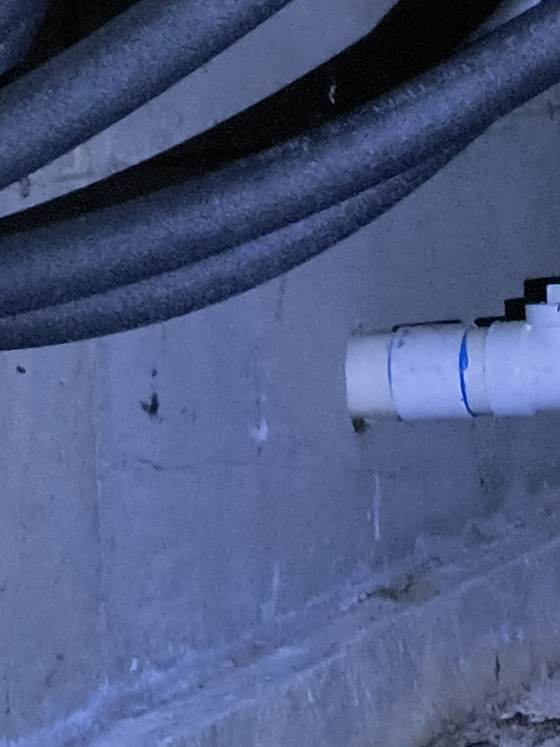
Low in the wall, near the floor. Most often mice or rats moving up from a crawlspace. The wall cavity connects to the floor structure at the bottom plate, and any penetration through that plate — a pipe, a wire, a duct boot — is an open door between the two spaces. Low noise almost always means the underfloor space is worth looking at first.
High in the wall, or at the ceiling line. Usually something moving between a wall cavity and the attic, using the top plate the same way. Roof rats in particular are comfortable climbing and will happily work the vertical cavities of a house.
Behind a kitchen or bathroom wall specifically. Those walls carry the most plumbing and therefore the most holes, and they also carry the warmth and the food smell. A disproportionate share of the calls we take involve one of those two rooms.
Moving. If the noise travels along a wall over a few seconds, you are hearing an animal use a run. That is the most helpful description you can give us, because it tells us the cavity is a corridor rather than a nest, and it points at where the corridor goes.
What the noise sounds like
Scratching and scrabbling. Claws on framing or on the back of the drywall. Generic to all rodents, and the most commonly reported.
Gnawing. A harder, more rhythmic, more grinding sound. Rodent incisors grow continuously and get worn down on whatever is available, which regrettably includes timber, plastic and cable sheathing. Gnawing is the sound that should move a job up your list, because it is the one that ends in damage.
Fast scurrying. Light, quick and brief — typically mice. A house mouse weighs less than an ounce and sounds like it.
Heavier, slower movement, sometimes with a thump. More consistent with rats. People often describe it as sounding “too big to be a mouse,” and they are usually right.
Squeaking, or many small sounds at once. A nest with young rather than a single animal passing through, which changes both the urgency and the amount of trapping involved.
Why the wall is a hallway, not a home
Here is the thing most homeowners have backwards, and it changes what a sensible response looks like.
Rodents very rarely nest inside a wall cavity by choice. A stud bay is narrow, it has poor access to food, and it is a difficult place to raise young. What it is, is an excellent protected route between the places they do want to be.
The nest is generally somewhere with more room: the crawlspace, the attic insulation, a soffit, a boxed-in section of ceiling, the back of a cabinet run, or an unused corner of a garage. The wall is how the animal gets from there to your kitchen and back.
This matters practically. Cutting into the wall you can hear is nearly always the wrong move — you get a hole in your plaster and no animal, because the animal is not there during the day. The work that resolves the problem happens at the ends of the corridor and at the point where something got into the building in the first place.
What is actually in there
In Whatcom County the realistic list is short.
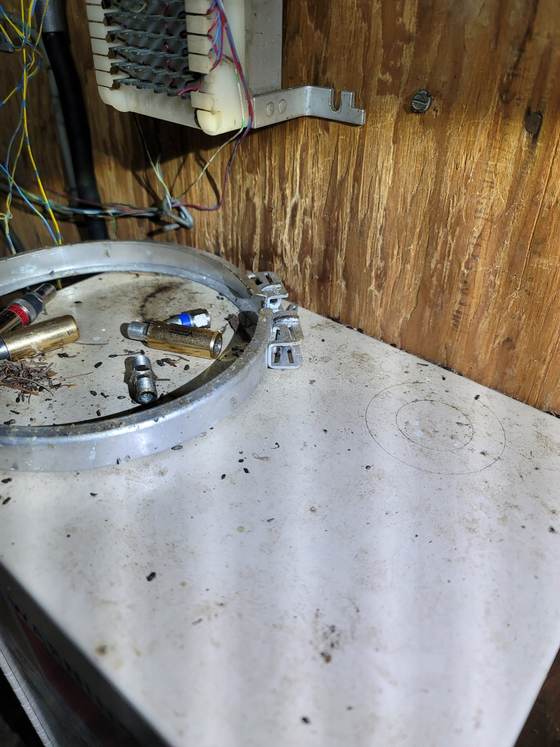
Norway rats. Ground-oriented, heavy-bodied, strong burrowers. They favor crawlspaces, the underside of decks, and the ground floor of a building, and they move up into walls from below. Most of the rat work in the county is this species.
Roof rats. Present locally, more of a climber, more likely to be operating in the upper structure and coming in at the roofline rather than at ground level. If the noise is high and there are branches touching the roof, this is the candidate.
House mice. The most common thing in a wall by a wide margin. They will use an opening a quarter of an inch across, they breed quickly, and a “single mouse” is usually not a single mouse.
Deer mice. More common where a property backs onto woodland or open ground, and more of a seasonal problem — they push into buildings when the weather turns rather than living inside year-round. Their droppings and nesting material warrant more careful cleanup than a house mouse’s, which we cover in the work rather than leaving to you.
And a fourth possibility we will name plainly: something we do not handle. If what is in your roof turns out to be wildlife, that is not our department. We do insects and rodents. We will tell you what you appear to have, and point you toward somebody equipped for it, at no charge and with no attempt to sell you a rodent program on the way past.
Why it started now
Rodent calls in this county are strongly seasonal, and the pattern is worth knowing.
The push begins as nights cool in September, peaks through October and November, and stays elevated all winter. What changes is not the number of animals outside but their motivation — cover dies back, natural food declines, and a heated building with a quarter-inch gap becomes considerably more attractive than it was in July.
Which is why the scratching that starts in mid-October so often follows a completely uneventful summer. Nothing about your house changed. The weather did.
A secondary trigger is disturbance. Site clearing, demolition, a neighbor’s drainage work, a hedge coming out — anything that removes established harborage nearby will push animals to find new accommodation, and buildings within a couple of hundred feet get the traffic.
What not to do
Do not put poison into a wall cavity. This is the single most common self-inflicted problem we get called to fix. The animal dies where you cannot reach it, and a decomposing rodent inside a closed cavity produces a smell that lasts for weeks and attracts flies on top of it. Sometimes the only remedy is opening the wall to find it. It is also worth knowing that the EPA’s restrictions on rodenticide products keep loose pellets out of consumer products and require the bait to be sold inside a tamper-resistant station, which is not something that goes into a cavity in the first place.
Do not rely on ultrasonic devices. They are widely sold and there is no credible evidence they work. Animals habituate to sound quickly, and a rodent with an established food source is not deterred by a noise.
Do not seal the building while animals are inside it. Exclusion is the right answer, but the sequence matters. Close everything with a population still indoors and you have trapped them in with your insulation and wiring rather than outside where they belong.
Do not cut an exploratory hole. As above, the animal is not home during the day, and you will have made a hole for nothing.
Do not wait for it to stop. Silence is not resolution. It usually means the activity moved to a part of the structure you cannot hear from your bedroom.
What we actually do about it
The work has three parts and they run in a deliberate order.
First, find the way in. This is the whole job, in the sense that everything else is temporary without it. We work the exterior systematically at ground level and up: foundation and grade, crawlspace vents and their screens, the crawl access hatch, utility penetrations where pipes and cables enter, the gap under a poorly hung garage door, where a deck ledger meets the wall, the joint between an addition and the original building, and along the roofline where soffits, fascia and roof-wall junctions frequently have openings nobody has ever looked at.
Inside we look at the routes rather than the wall you can hear — the crawlspace in full rather than from the hatch, the attic at the hatch and further where it is safe, the plumbing chases, and the underside of cabinet runs.
Second, remove what is inside. Trapping, not poison, for anything within the building envelope. Trapping means we know how many animals came out, we take them away, and nothing dies in a place you cannot reach. Placement matters enormously here: traps set on the actual runs, in the actual voids, checked and adjusted rather than laid out and forgotten. Rats in particular are wary of new objects and often need a few days before they will commit.
Third, close the building. Sealing done in materials that hold — metal mesh, proper sheet metal, mortar where appropriate, correctly fitted vent covers and crawl access — not expanding foam on its own, which a rodent goes through in an evening. This is the part that decides whether you are calling somebody again next October.
Where insulation has been contaminated, we will tell you honestly whether it needs to come out or whether it can be left. That is a real cost and we do not recommend it lightly, but there are situations where leaving fouled material in a roof space is the wrong call, and we would rather have that conversation directly.
Two things you can check tonight
Neither of these requires tools, and both make the visit shorter.
Put flour or talc down. A light dusting on a hard surface where you suspect traffic — the crawlspace hatch, the back of a cabinet under a sink, along a baseboard in the room where the noise is loudest — will hold prints by morning. Tail drag between the prints suggests a rat. Small, closely spaced prints suggest a mouse. Nothing at all in three nights is itself useful, because it moves attention to a different part of the building.
Note the exact time twice. Not “some time in the night” but the actual clock time the noise starts and stops, on two separate nights. A consistent onset tracking sunset is a rodent. Sound that begins whenever the heating comes on is probably not an animal at all.
Why the houses here leak where they do
Whatcom County housing has a few recurring weaknesses that account for a large share of what we find, and knowing them helps you understand why we go where we go.
Crawlspace vents are the standout. Older buildings were fitted with vents whose screens have rusted or been broken by yard equipment, and a failed vent screen is not a small gap. It is an open doorway sized for the animal we are looking for. Replacing them in metal is one of the highest-value pieces of work on a typical property here.
Crawl access hatches come second. A great many of them close approximately rather than properly, and a hatch that has been off and back on a dozen times for utility work rarely seals afterwards.
Then the penetrations. Every building has a set of holes drilled for water, waste, gas, power, cable and heat pump lines, and the great majority of them were never sealed to any standard beyond keeping the weather out. A gap that looks tidy from the outside frequently opens into a floor cavity.
Additions are the fourth. Wherever a later structure meets an older one, there is a junction, and junctions built at different times to different standards are where openings survive undetected for decades.
Garage doors round it out. A door whose bottom seal has hardened, split or worn at the corners leaves a genuine entry, and the garage is very often connected to the rest of the house by more openings than anybody realizes.
None of that is a criticism of the housing stock. It is simply a list of where to look, and it is why an hour spent on the outside of a building is worth more than an afternoon spent listening at the wall.
What to expect on timing
For a mouse situation in a reasonably sound building, the usual shape is a couple of weeks: trapping running while the sealing work is done, activity dropping off through it, then a quiet check afterwards.
Rats take longer, sometimes considerably. They are neophobic — genuinely suspicious of anything new in their environment — and a rat that has decided a trap is a threat will step around it for days. Anyone quoting you a same-evening resolution on a rat in a wall is telling you what you want to hear.
Buildings with structural difficulties — an inaccessible crawlspace, a complex roofline, an addition with a poorly closed junction — take longer again, and we would rather say that at the start.
A note on the noise itself
People ask us fairly often whether they should be worried, or just annoyed.
The honest answer is that the risk from the noise is low and the risk from what is causing it is not nothing. Rodents gnaw, and cable sheathing is one of the materials they gnaw. They contaminate insulation and stored goods. They carry parasites and pathogens, and they are prolific enough that a small problem becomes a larger one over a winter rather than staying still.
None of which is a reason to panic at two in the morning. It is a reason to have somebody look while the problem is still one animal and one gap.
Getting it looked at
If you can tell us roughly when the noise happens, roughly where in the house it is, and what it sounds like, we can usually tell you on the phone what we expect to find and whether it is even our sort of job.
The assessment is free for rodent work — that includes going into the crawlspace properly rather than reporting from the hatch, because on most of the houses in this county the underfloor space is where the explanation is. You get a direct account of what is there, what let it in, what it will take and what it will cost, and you decide from there. No term agreement, and nothing sold on the strength of a noise nobody has verified.
Frequently asked questions
Does the time of night tell you anything?
It tells us a lot. Activity starting within an hour of dusk and again before dawn fits rats and mice. Sustained daytime noise in the roof usually points to something we do not handle, and we will say so rather than sell you a rodent job.
Will it go away on its own?
Rarely, and waiting has a cost. A rodent that has found a route uses it repeatedly, brings others, and does damage to insulation and wiring in the meantime. The noise is the cheapest stage of the problem to deal with.
Should I put poison in the wall?
Please do not. An animal that dies inside a sealed cavity cannot be removed easily and the smell lasts weeks. Inside a building we trap, because trapping means we know the result and we can take the animal away.
Why do you keep talking about the outside of my house?
Because that is where the problem is solved. Whatever is in the wall got there through an opening, and until that opening is closed, removing the animal only creates a vacancy. The wall is the symptom and the gap is the cause.
It stopped after a few nights. Am I fine?
Not necessarily. Rodents move around a building and a quiet week often means activity has shifted to another part of the structure rather than ended. It is worth a look while you still know roughly where the noise was.
How long does resolving it usually take?
For a straightforward mouse situation, often a week or two of trapping alongside the sealing work. Rats can take longer because they are cautious about new objects. Anyone promising same-day elimination inside a wall is guessing.
What does it cost to have somebody look?
The assessment is free for rodent work, including going into the crawlspace and up to the attic hatch. You get a plain account of what we found and what it will take before you decide anything.
Rodent & Mouse Control in Whatcom County?
Family-owned, no long-term contracts, and every treatment is backed by our 100% Service Guarantee.
Most calls in Whatcom County are out within 1–2 days, about 3 during the late-summer peak.
Last updated