
What Drives the Cost of Pest Control
Pest control is quoted from the property because the property sets the number. Which pest, whether the job is one visit or a timed cycle, how large and complicated the building is, how long the problem has been running, and above all how reachable the work is: those five move a quote more than anything else.
Call 360-410-2199 Request a free inspection
The short version
| The pest | Sets whether the job is one visit or a cycle timed to the insect's development, as with fleas and bed bugs |
|---|---|
| Building shape | Perimeter, height and the number of junctions move a quote more than square footage does |
| Crawlspace access | The biggest swing in this county: clearance, standing water, stored boxes and distance from the hatch |
| How long it has run | Turns a pest job into a materials job, such as replacing soiled insulation and vapor barrier |
| Treatment vs exclusion | A treatment is priced as a visit; sealing and crawlspace work are priced like small construction jobs |
| Recurring plans | Pay off where pressure is continuous; a problem with a shape, like one wasp nest, is a one-off |
| Phone estimates | Honest only as a range with stated assumptions; a firm figure needs someone to see the building |
| Bed bug pricing | The one service with published figures, because its scope is counted in rooms |
Why there is no price list here
Somebody arrives at a page like this wanting a number, and the honest thing to say first is that the number does not exist yet. Not because it is being withheld, but because it has not been determined — the property determines it, and nobody has looked at the property.
That sounds like an evasion. It is not, and the way to prove it is to set out exactly what moves the figure, in enough detail that you can work out the shape of your own quote before anybody quotes it. A reader who finishes this page should be able to predict roughly where their job sits, recognize a quote that makes sense for their building, and spot one that has been produced by a script rather than by somebody who came and looked.
Everything below applies to Whatcom County housing stock and Whatcom County weather. Some of it generalizes; the crawlspace section really does not.
The pest, and whether the job has a shape or a cycle
The first fork is not severity. It is biology.
Some problems are a single event. A wasp nest under an eave that somebody can reach from a ladder is one visit, and its price is essentially the visit. A mouse in a kitchen where the entry turns out to be a broken vent screen is a small amount of work and a small amount of material.
Other problems are a cycle, and a cycle is priced as a cycle because it cannot be done in one go. Fleas are the clearest example: eggs and pupae in carpet and bedding are not reached by an application aimed at adults, so the work has to be repeated at an interval matched to how fast the next stage matures. The same logic sits behind German cockroach work in a commercial kitchen and behind bed bug work anywhere. The number of visits is not padding. It is the insect’s development schedule showing up on an invoice.
So the first question that moves your quote is whether the organism in your building can be dealt with in an afternoon or has to be dealt with over six weeks. That is decided by the species, not by the technician, and it is why “how much is a treatment” is a question with no answer until somebody knows what they are treating.
Two further wrinkles belong here. Some species need the treatment placed rather than applied — bait in a void, in a chase, behind an appliance — and placement takes time that broadcast application does not. And a few problems are cheapest when the answer is that nothing needs doing, which is a real outcome and one we will state plainly when it applies.
Size, and then construction, which matters more
Square footage is the obvious variable and the least interesting one.
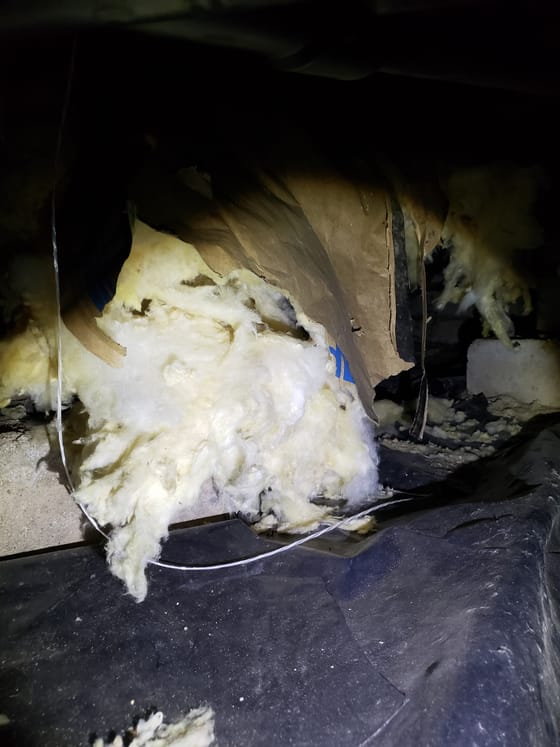
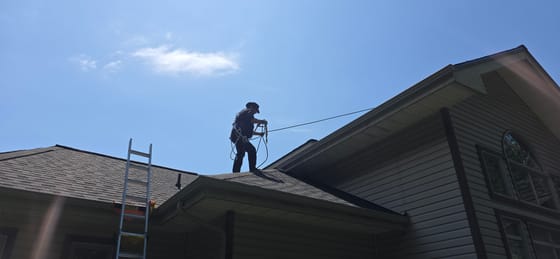
What actually drives an exterior job is the perimeter and the elevation. A long, low, rambling single-story with additions has far more foundation line, more vents, more penetrations and more roof-to-wall junctions than a compact two-story with the same floor area. The compact house, on the other hand, puts more of its work at height, and height means ladders, staging and a slower pace.
Construction then decides how much of that perimeter is workable.
Foundation type. A great deal of pre-war housing in the older Bellingham neighborhoods sits on post-and-pier, which means a genuine crawlspace with a genuine set of gaps. Newer stock on a continuous stem wall has fewer openings and better-detailed ones. A slab-on-grade building has almost no under-floor work at all and correspondingly little of the cost that dominates the older stock.
Siding. Vinyl carries open channels at panel ends and at the J-channel; cedar moves with the seasons and opens laps; stucco and masonry crack in particular places and take a different material to close. The same linear foot of wall is not the same amount of work in each of those.
Complexity. Dormers, a shed roof meeting a wall at a change of pitch, an addition from a different decade with its own detailing, a wraparound deck with a ledger board — every one of those is a junction, and junctions are where the openings are. Two houses of identical area can differ by an hour or by a day depending on how many corners they have.
Outbuildings and attached structures. A detached garage, a shop, a barn, a pump house: each is a separate building with its own perimeter, and each can be a reservoir feeding the house. Whether they are in scope changes the number substantially, and it is worth being explicit about that in both directions.
Access, which is the biggest single swing in this county
If one paragraph on this page saves you from a surprise, it is this one.
Crawlspace access is the largest variable in Whatcom County pricing, and it is almost entirely invisible from the outside. Two houses that look identical from the street can differ several-fold on any rodent, moisture or structural job, and the reason is under the floor.
What is being measured:
Clearance. Working on your back in eighteen inches is a different activity from working on your knees in three feet. Everything takes longer — moving, cutting, fastening, carrying material in and debris out — and the fatigue is real, so the rate of work drops as the day goes on.
Standing water and saturated ground. A wet crawlspace slows the work, requires more protective equipment, and frequently means the underlying problem is not ours to fix at all. It also usually means the job in front of us is larger than the one that was described on the phone.
Stored belongings. A crawlspace or an attic full of boxes has to be cleared before anything can be reached, and clearing is billable time doing nothing that resembles pest control. This is the one factor a homeowner can move on their own, and moving it is worth real money.
Distance from the hatch to the work. Every trip out for a tool or a length of material is made twice. A hatch in the middle of the footprint and a hatch at one corner of a long building produce different days.
Whether there is an access at all. Sealed, buried under a deck, or opening into a closet stacked to the ceiling — all common, and all mean the job starts with making a way in.
Attics repeat the same logic with different specifics: truss spacing, the depth and condition of the insulation, whether there is a walkboard, and whether the hatch is in a hallway or above a wardrobe.
The general rule is that the reachable part of a building is cheap to work on and the unreachable part is not, and almost nothing about which is which can be determined from the driveway.
Severity, and how long it has been running
These two get collapsed into one word — “bad” — and they are not the same variable.
Extent is how much of the building is involved. One entry point and a handful of droppings behind a stove is a contained job. Activity in the crawlspace, the wall voids and the attic is a building-wide job, and the difference is not linear because a widespread population has to be worked everywhere simultaneously or it simply relocates.
Duration is how long it has been going on, and duration is what converts a pest problem into a building problem. A rodent population in its first autumn has left droppings. The same population in its third autumn has soiled and compressed the insulation, worked the vapor barrier apart, and left urine staining on framing. Nothing about the animals changed. What changed is that the scope now includes removal and replacement of materials, which is a different category of work with a different basis of pricing.
The same applies to moisture. Wet timber in its first season is a drying problem. Wet timber four winters later has lost section, and lost section is replaced rather than treated — by a contractor, on a contractor’s terms.
When a company asks how long you have been seeing it, that is not small talk. It is the question that most changes the answer.
Treatment, repair, and the line between them
This is the distinction that explains most of the confusion about pest control pricing, and almost nobody sets it out.
A treatment is an application. Its cost is dominated by the visit: getting there, the time on site, the product, the record of what was done. Product cost is a smaller share than people assume. Two treatments on similar properties land in similar places, which is why treatment is the part of this industry that can be routed, scheduled and sold as a plan.
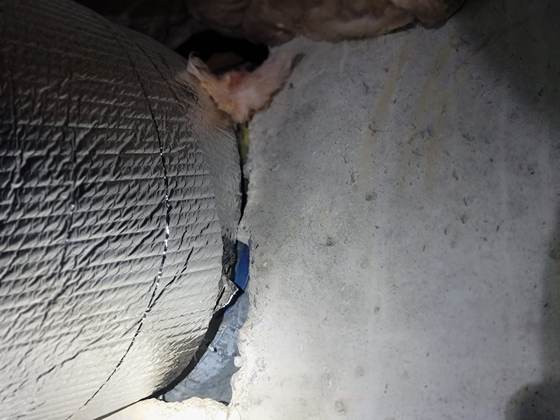
Exclusion and crawlspace work are construction. Hardware cloth, sheet metal, mortar, fasteners, vapor barrier, insulation — and hours. Hours in confined space, hours on ladders, hours cutting material to fit an opening that is not a standard shape. It is priced the way a small building job is priced, because that is what it is, and it is completely insensitive to the pest control price list that a treatment sits on.
That is why a rodent quote can come back looking nothing like a spider quote and both can be reasonable. One of them is a visit. The other is two people, a van of materials and a day and a half under a house.
It is also why the material specification matters to the price and to the outcome. UC IPM’s guidance on rats is that every opening larger than a quarter inch should be closed, and that lightweight chicken wire is not a rodent material — rats pass straight through it. Doing it properly means the right mesh at the right gauge, fastened to sound substrate. Doing it cheaply means doing it twice.
The honest summary: on a rodent problem, exclusion is usually a larger single figure than a treatment and a smaller total than repeated treatment over a few years. Which of those you are buying should be explicit in the quote.
One-off against recurring, argued both ways
Recurring plans have a bad reputation, partly earned. Here is the case for each, stated fairly.
A recurring program is genuinely the right purchase when the pressure is continuous. Rural and acreage property with feed, outbuildings and a long treeline margin. Waterfront and creekside property, where a permanent rodent corridor supplies food, water and cover all winter. Food service and food storage, where the consequence of a lapse is regulatory rather than inconvenient. Multifamily buildings, where shared walls and chases mean one unit’s problem is everybody’s. In each of those the pressure does not go away, so managing it on a schedule costs less per year than responding to it.
A one-off is the right purchase when the problem has a shape. A wasp nest. A single autumn’s spider wave. An overwintering insect complaint that is really a sealing job. A mouse entry that turns out to be one vent. Paying monthly for any of those is buying insurance against something that already happened.
UC IPM draws the same line: a one-time service answers an incidental infestation, while a recurring service manages an existing problem and works against future ones over a long period. The failure mode is selling the second where the first was called for.
Two things to check before signing anything recurring. Oregon State’s guidance is to be wary of long-term contracts and to ask whether you actually require ongoing help. And ask what the plan does about the building. If the answer is nothing — if no gap gets closed, no vent gets screened, no door sweep gets replaced — then the plan is managing a symptom on a schedule and will need to keep doing so indefinitely. That is a subscription, and it is the single most common way money gets spent badly in this trade.
The visit quote and the phone quote
UC IPM’s advice on hiring is direct: a company should identify the pest, show you the problem areas, and give you a written diagnosis and a plan setting out the treatments and products proposed, the frequency of visits, and an estimate of the total. Oregon State adds the obvious companion, which is to get estimates from more than one operation and compare what is actually in them.
None of that can happen down a phone line, and it is worth understanding what a telephone number really is.
A price given before anybody has seen the property is an average with a risk premium attached. The company does not know your crawlspace clearance, your foundation type, how long it has been running or whether the insulation is finished. It has three options: quote high enough to cover the worst case, quote an average and revise on arrival, or quote low and find the rest later. The first is expensive for you if your job is easy. The third is the one that generates the phone call from the driveway explaining that the situation is more involved than expected.
There is one honest version of a phone number, and it sounds like a range with its assumptions attached: this is the usual band for a job of that description, here is what would push it up, and we will confirm when we see it. That is useful. A single confident figure from somebody who has asked you three questions is not.
You can make a phone estimate considerably better by supplying what actually moves it. The age and story count of the building. Whether there is a crawlspace and roughly how much room is under there. Whether the access is clear. How long you have been seeing it, and where. Whether the insulation has been disturbed. Photographs help more than descriptions.
What makes a job cost more later than it does now
This is the most useful section on the page, and it is the one that argues against our own busiest months.
A wasp nest in April is one insect. A founding queen builds something the size of a golf ball. The identical location in September holds a colony that has been building all summer and is at its most defensive, in a season when people are outside doing yard work. Same nest, same address, a different job entirely.
Rodents move from a pest problem to a materials problem. First autumn: trapping and sealing. Third autumn: trapping, sealing, and removal and replacement of contaminated insulation and vapor barrier, which is the expensive half and is not pest control at all. The animals did not become more expensive. The building did.
A gap at grade becomes a moisture problem, then somebody else’s trade. Siding sitting in soil or bark mulch wicks water. Wet timber attracts moisture ants and dampwood termites. Sustained wetting produces decay, and decayed wood that has lost structural section is replaced by a carpenter. There are three price steps in that sentence and the first one is a shovel and an afternoon.
Carpenter ants follow the same escalation because they follow the water. A colony in softened timber caught in its first year is a treatment. The same colony after several years is a treatment plus a repair, and the repair is the larger number.
Bed bugs multiply by room. The scope is counted in rooms, and rooms increase with time as people move themselves and their belongings around a house trying to escape the problem. Early is smaller, and this is the one service where the figures are published because the scope is predictable enough to publish.
And deferral has a specific trap in the autumn. Once something is living inside a building, sealing it is no longer the first step — closing a structure with an active population inside produces animals that cannot get out. The order becomes trap, confirm quiet, then seal, which is more visits and more elapsed time than the same sealing done in August on an empty envelope. The work you deferred did not merely wait. It acquired a prerequisite.
The general form of all of these: pest work gets more expensive by changing category, not by drifting upward. It stops being an application and becomes a repair; it stops being a repair and becomes a contractor’s job. Each of those steps is a multiple, not a percentage, and each of them is avoidable by acting while the problem is still in the cheap category.
Reading a quote
Compare scope, not headline figures. Specifically:
What is included, counted in visits. One visit, three, a season? What triggers a return, and is that in writing?
What is excluded, and whose trade it is. A good quote names the things it is not doing — the downspout dumping against the foundation, the soft sill, the roof detail — and says who does them. A quote that mentions none of those on a building that plainly has them is either not looking or is planning to raise them later.
Whether repair is in the price. This is where quotes diverge most. A rodent quote that covers trapping only, next to one that covers trapping and sealing, is not a cheaper version of the same thing. It is a different job.
What is being applied and where. Product names, the target pest, where it goes. Both extension sources treat that as basic, and a company reluctant to put it in writing is telling you something.
Terms. No cancellation penalty, no skip fee, and a clearly stated position on what happens if the problem persists.
The warning signs are the mirror of that list: a recommendation made before anyone looked at the building, urgency attached to a price that expires, a figure well below everyone else’s for a complex job, and vagueness about products. Oregon State also flags door-to-door selling, which in this county tends to arrive in waves in early summer.
Where money actually gets wasted
Worth listing, because these are the recurring ways people spend without buying anything.
Treating a moisture-driven insect without addressing the water. Moisture ants and dampwood termites are a symptom of a wet building. Treatment without drainage work buys a quiet season.
Trapping without sealing. The population outside is unchanged and the door is still open.
Interior treatment for overwintering insects. Once cluster flies or stink bugs are dormant in a wall cavity, very little applied indoors reaches them, and what does succeed leaves an accumulation of dead insects that carpet beetles develop in. The extension consensus on this is unusually unanimous.
Treating the wrong thing entirely. A lawn application aimed at cluster flies, whose larvae are inside earthworms distributed across every property in the neighborhood, is money spent against biology.
A twelve-month plan on a building that needed an afternoon. The most expensive version of this is the one where the afternoon still has not happened after three years of visits.
What we do about all of this
We quote from the property, and the assessment is free for everything except bed bug verification, which is a paid confirmation visit credited toward the work if you go ahead.
Practically that means somebody walks the outside slowly, gets into the crawlspace and the attic, and comes back with a list in priority order — with the items that are ours separated from the items belonging to a roofer, a drainage contractor or an afternoon of your own. You get that list before any work is agreed, including the parts we are not going to do.
Where a smaller job would do, we will say so. Where the honest answer is that the pest problem is really a water problem or a construction problem, we will say that too, even though it means quoting less work than you called about. There are no term agreements, and the retreatment terms are stated up front rather than discovered later.
The related pages worth reading alongside this one are pest exclusion and repairs, which is where most of the cost variance on this page actually lives, and the Whatcom County pest year, which is the calendar version of the same argument: the cheapest month to deal with almost anything here is not the month you will feel like calling.
Frequently asked questions
Why will nobody publish a price for this?
Because the same words describe wildly different jobs. Two neighbors who both say they have mice can need an afternoon of screening or a week of crawlspace work, and a number printed on a page would be wrong for whichever of them read it second.
Can I get a real number over the phone?
You can get a range, and a range is worth having. What you cannot get is a number that survives contact with the building, because the things that move it most are access, construction and extent, and none of those are visible from a phone call.
Is a recurring plan cheaper than calling when something happens?
It depends entirely on whether your property has continuous pressure. A rural building with outbuildings and a long perimeter genuinely does. A tight in-town house with one seasonal complaint does not, and a plan sold to it is a subscription rather than a service.
Why is crawlspace work priced so differently from a treatment?
Because it is construction rather than application. The cost is hours and materials, and the hours are set by clearance height, standing water, stored belongings and how far the work area sits from the hatch. Two identical houses can differ by a factor of several on that alone.
Does waiting really make it more expensive?
Reliably, and usually more than people expect. The pattern is that a pest problem becomes a building problem: rodents become contaminated insulation, a gap at grade becomes wet timber, and at some point the fix stops being ours and starts belonging to another trade.
What should I be comparing between two quotes?
Scope rather than headline figures. How many visits are included, what triggers a return, what is excluded and whose trade that belongs to, what products are proposed, and whether the repair work is in the price or is a separate job somebody has quietly left out.
Should I ask for the cheapest option?
Ask instead whether a smaller job would do. Those are different questions. The first invites a corner to be cut somewhere you cannot see; the second is a legitimate request that a good company can usually answer with a shorter scope and an honest explanation.
Sources
- UC Statewide IPM Program — Hiring a Pest Control Company — read September 2, 2026
- Oregon State University — Solve Pest Problems: How to Hire a Pest Control Company — read September 2, 2026
- UC IPM Pest Notes — Rats (rat-proofing and materials) — read September 2, 2026
Rules change. This page is scheduled for review against its sources by September 2, 2027. If you are reading it after that date and something looks out of step with the current rule, the rule is right and we are wrong — please tell us.
Related guides
Pest problem in Whatcom County?
Family-owned, no long-term contracts, and every treatment is backed by our 100% Service Guarantee.
Most calls in Whatcom County are out within 1–2 days, about 3 during the late-summer peak.
Last updated