
WDO Reports in a Washington Property Sale
A wood-destroying organism report in a Washington property sale is a regulated document with its own requirements, and it is written by a licensed inspector. Treating what that report identifies is separate work. Knowing which one you need saves the two weeks most transactions lose to the confusion.
Call 360-410-2199 Request a free inspection
The short version
| Who writes the report | A separately licensed structural pest inspector, working under a company license with a WSDA inspection control number |
|---|---|
| Which report a sale needs | The complete kind under WAC 16-228-2045. The specific kind is for proposals and estimates and may not be used in a transaction |
| Organisms on the list | Fungus, termites, carpenter ants and wood-boring beetles; decay fungus counts, and carpenter ants carry the same weight as termites |
| Where Sasquatch fits | We treat the organisms somebody else's report identified. We are not structural pest inspectors and do not issue that report |
| The water and the timber | Moisture sources go to a drainage contractor, plumber or roofer; wood that has lost structural capacity goes to a builder |
| Treatment quote timing | Free, usually within a couple of days, and independent of when the licensed inspector finishes the report |
| Excluded areas on a report | A required element listing what could not be seen; an inaccessible area is a gap in the picture, not a clean result |
- Ask for the treatment quote while the licensed inspector is still writing the report, instead of waiting for it to be final.
- Get the water source corrected first, or alongside, so a builder replacing a sill plate knows the drainage is handled before closing the wall.
- Have the builder replace failed sill plate or rim joist timber before final treatment, and borate-treat the new wood before it is covered.
- Leave treatment of the remaining wood-destroying organisms until the structural work is done. At that point the work is ours.
The confusion that costs two weeks
Here is the sequence we see, several times a year, and it wastes the same two weeks every time.
A sale is under way. Somebody’s report comes back with findings — dampwood termites in the sill plate, carpenter ant galleries in a rim joist, decay in a crawlspace. The buyer’s lender wants it addressed. Everybody starts phoning pest control companies.
And then a week disappears while people work out that the document and the treatment are two different things done by two different kinds of licensee, and that the company they called can do one and not the other.
This page exists to compress that week into a phone call. It is not legal advice — we are a pest control company and not attorneys — but the distinction is not complicated once somebody sets it out.
What counts as a wood-destroying organism
Broader than people assume. In Washington the group covers organisms that attack structural material: fungus, termites, carpenter ants and wood-boring beetles.
Two things follow from that list.
Decay fungus is on it. In this climate that is the finding we encounter most, and it is frequently the most consequential. Wood that has been wet long enough for rot to establish has lost strength permanently, and it does not recover on drying. The Forest Products Laboratory is blunt about the timing in its work on wood biodeterioration: a large share of the strength is gone in the early stages, before the timber looks obviously rotten, which is why a probe tells you more than a look does.
Carpenter ants are on it. Homeowners tend to file carpenter ants under nuisance insects rather than under structural pests. In a transaction they are neither — they are a wood-destroying organism, and a finding involving them carries the same weight as a termite finding.
Two different documents
This is the part worth understanding properly.
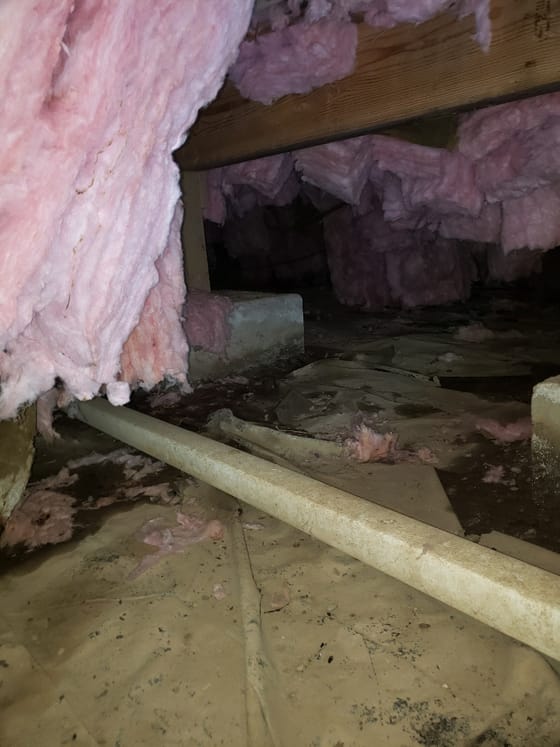
A complete WDO inspection report is the regulated document. Under WAC 16-228-2045, a report identifying damage or infestation by wood-destroying organisms must be a complete report, and a complete report has specific requirements. Among them:
- a WSDA Inspection Control Number, obtained under RCW 15.58.450 and displayed prominently in the upper third of the front page
- the date the inspection was conducted, on the first page
- the name of the property owner, their representative, or the purchaser
- the complete property address
- the name of the inspector and their WSDA license number, on the first page
- documented findings of damage, infestation, and conditions conducive to either
- diagrams showing where findings are and where areas were inaccessible
- a list of all excluded areas
WSPMA material adds that it is illegal for a business to conduct complete WDO inspections without a valid company license from the director.
A specific inspection is the other kind. WSPMA describes it as being for on-site proposals or estimates — and, importantly, it may not be used in a real estate transaction, a restriction that must be stated on the document in bold print.
So the short version: the document a transaction needs is the complete one, and it comes from a separately licensed inspector with a company license and an inspection control number.
Where we sit, precisely
We want to be exact about this, because being vague about it would win us work we should not have.
We are not structural pest inspectors. We do not perform the inspection a sale requires and we do not issue that report. If your transaction needs one, you need a different licensee, and we will tell you that rather than take the job and sort it out later.
We are licensed to treat wood-destroying organisms. That is a WSDA license category — PCO Structural — and it covers the control of pests that attack structural material, including fungus, termites, carpenter ants and wood-boring beetles. Treating what somebody else’s report identified is squarely our work.
What you get from us afterwards is a treatment record: which items were treated, what product was used, where, and on what date, plus a note of which items are building repairs rather than pest treatments. It is deliberately not a findings document, because a document setting out findings of wood-destroying organism damage is the regulated report described above, and issuing one is not something we do.
That boundary is not a limitation we are apologizing for. It is the reason you can rely on what we do say.
What actually has to happen after a finding
A report with findings on it usually generates three separate pieces of work, and confusing them is where money gets wasted.
One: the water. Almost every wood-destroying organism finding in this county sits behind a moisture problem. Dampwood termites and moisture ants require wet wood. Decay fungus requires wet wood. Carpenter ants prefer timber that has already begun to soften. The water is the cause and the organism is the consequence, so a treatment applied to a building that stays wet is a treatment that will be needed again.
The usual sources: grade falling toward the foundation, downspouts discharging at the wall, a missing or torn crawlspace vapor barrier, blocked or buried crawl vents, a slow plumbing failure under a bathroom, a deck ledger with no flashing, a failed window sill detail, a bathroom fan discharging into an attic.
Fixing that is a drainage contractor, a plumber, a roofer or a builder. Not us, and we will say so.
Two: the timber. Wood that has lost structural capacity does not recover. Where a sill plate, rim joist, post or beam has gone, it needs cutting out and replacing, and that is a carpenter’s or a builder’s job. Where it is wet but still sound under a probe, correcting the water may be enough.
Three: the organism. The treatment. Ours.
An efficient transaction runs those in parallel rather than in sequence. The common failure is treating first, repairing later, and discovering the repair exposed material that should have been treated while it was open.
Sequencing it so it does not take a month
The order that saves time and money.
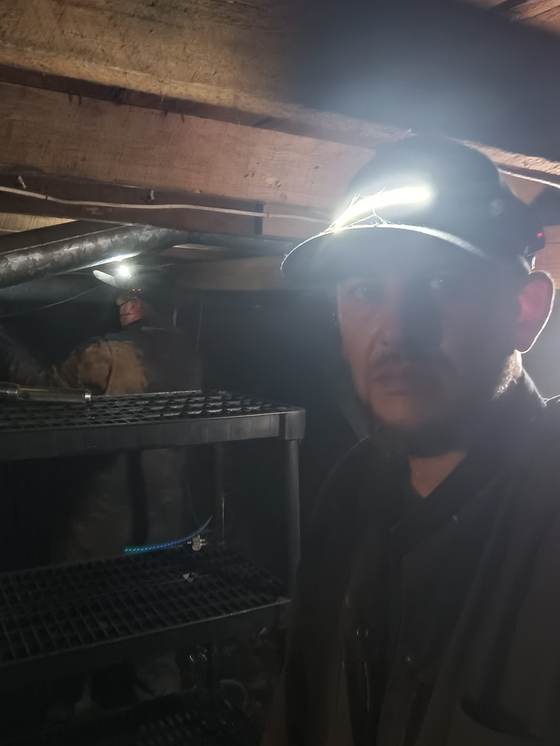
Get the treatment quote while the report is being written. The two are independent. Waiting for the report to be finalized before phoning anyone adds a week for no reason. We can look at a property and price the likely treatment scope on the strength of what has been found so far.
Water first, or at least concurrently. Not because it delays anything, but because a builder replacing a sill plate wants to know whether the drainage is being corrected before they close the wall.
Structural replacement before final treatment where it overlaps. New timber going into a location with a history is worth borate-treating before it is covered, which costs very little at that moment and a great deal later.
Treatment of what remains.
Documentation as it happens, so that nobody is reconstructing what was done three weeks later while a closing date moves.
What we find behind these reports, in this county
Since the point of a report is to tell you what is there, it is worth setting out what “there” usually turns out to be in Whatcom County, because it differs from the national picture in ways that matter to a transaction.
Decay comes first, and it is usually the largest number. The climate here does most of the work: a long, mild, persistently wet season from October to April, and no hot dry stretch to drive moisture back out of timber that has taken it on. Wood that gets wet in this county tends to stay wet. Findings that read as an insect problem are, more often than not, a water problem with an insect living in it.
The sill plate and rim joist are the usual location. That is the timber sitting directly on the foundation, and it collects water from splash-back, from grade that falls toward the building, from a foundation wicking ground moisture, and from general crawlspace humidity. It is also structural, which is why a finding there carries more weight than the same finding in a fence post.
Dampwood termites rather than subterranean. The species that drives the industry in other parts of the country is a minor concern here. The local one requires wood that is already wet and decaying, which constrains it — and which means a dampwood finding is always also telling you about moisture. Worth checking for mud tubes on a foundation wall regardless, because a subterranean finding is a different and more serious conversation.
Carpenter ants at scale on wooded lots. Properties with mature trees, stumps, standing deadwood and accumulated garden timber produce carpenter ant findings at a rate the rest of the county does not. On those, the difficulty is rarely the treatment; it is locating the parent colony, which may be a hundred feet from the building on land the seller owns.
Wood-boring beetles, frequently historic. A beetle finding is not automatically live. Several species infest only freshly felled or recently milled timber and die out once the wood has seasoned, and treating those is spending money on a problem that already ended. Establishing whether an infestation is active matters more here than anywhere else on a report, because the honest answer is quite often that no treatment is warranted.
Crawlspaces that have never been looked at. A great deal of the older housing stock here has a vented crawlspace with an original vapor barrier in pieces or none at all, corroded vent screens, and an access hatch that stopped sealing decades ago. None of that is a pest finding on its own. All of it decides whether the building has pest findings.
Reading a report without panicking
Reports are written to be complete rather than to be reassuring, and a first read tends to land badly. A few things that help.
Separate the three categories. Damage, active infestation, and conditions conducive to infestation are different things with different urgency. A report listing conducive conditions and no activity is describing a risk, not a problem — and conducive conditions are usually the cheapest thing on the page to fix.
Look at where, not only what. Damage in a fence post, a deck rail or a detached shed is not damage in a sill plate. The location is what determines whether this is a maintenance item or a structural one.
Check the excluded areas list. It is a required element and it tells you what could not be seen. An inaccessible section of crawlspace is a gap in the picture rather than a clean result for that area, and it is disclosed precisely so it can be weighed.
Ask what the water source is. If the report identifies decay or a moisture-dependent organism and nobody can say where the water is coming from, the diagnosis is incomplete regardless of how thorough the document looks. That question is worth asking before anybody quotes anything.
Do not assume the estimate matches the scope. A repair estimate and a treatment scope cover different work. Getting them separately makes both easier to evaluate and usually cheaper.
The timeline, realistically
Transactions run on dates, so here is what the treatment side actually takes.
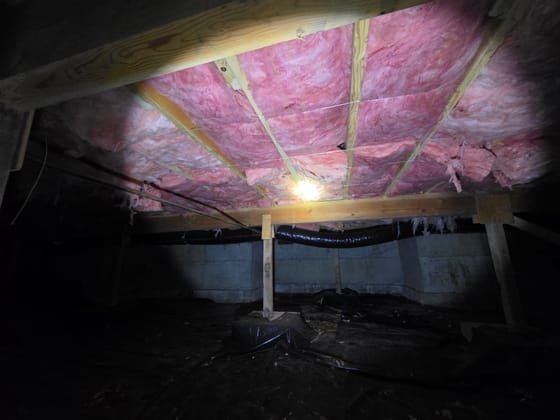
Getting a quote: a couple of days. We come out, look at what has been found, and price it. There is no queue for this and it does not depend on anybody’s inspection schedule.
Straightforward treatment: usually within the week of instruction. A localized carpenter ant or dampwood termite treatment is not a long job.
Where structural replacement is involved: longer, and not our timeline. A builder cutting out and replacing a section of sill plate sets that schedule. The useful thing is to get the builder looking at it in parallel rather than after we have quoted.
Where drainage or roofing is the underlying cause: longer again, and weather-dependent. This is the item most likely to slip a closing date, and it is the one people leave until last.
The pattern worth avoiding is sequential: report, then treatment quote, then builder quote, then drainage quote, each waiting on the last. Run them concurrently from the day the findings land and the whole thing compresses to about a two weeks.
For sellers
Two things, both unglamorous.
Deal with it before you list. A finding discovered during a transaction is negotiated under time pressure with somebody else’s estimate in front of you, and the concession is reliably larger than the repair would have cost. The same work done in your own time, with your own choice of contractor, is cheaper and less stressful.
Look at the crawlspace. It is where the findings come from. Sill plate and rim joist probed rather than glanced at, vapor barrier intact, vents clear and screened, no standing water, no timber in ground contact. If somebody is going to find something, it is better that it is you.
For buyers
Read the excluded areas. A complete report lists what could not be inspected, and that list is genuinely informative. An inaccessible crawlspace corner or a sealed area is not a clean bill of health for that area — it is a gap in the picture, and it is disclosed precisely so you can weigh it.
Look at the conducive conditions, not only the findings. A report noting timber in ground contact, poor drainage and inadequate ventilation with no current infestation is telling you what will happen next. That is more actionable than a finding, because it is cheaper to fix.
Get the treatment quoted separately. The scope on a repair estimate and the scope of a pest treatment are different, and bundling them makes both harder to evaluate.
Ask what the water source is. If nobody can tell you, the diagnosis is incomplete regardless of how thorough the report looks.
An open question we are not resolving here
In the interest of not overstating the position set out above: the WSDA category description for PCO Structural indicates that the category may perform specific wood destroying organism inspections — the proposal-and-estimate kind that cannot be used in a transaction. WSPMA’s material describes the same distinction.
If that reading is right, our licensed scope is somewhat wider than this page claims. We have not acted on it, because a category description and a trade association article are not a regulatory determination, and the cost of being wrong about a licensing boundary is not a paragraph of copy.
It is a question for WSDA or an attorney and it is on our list. Until it is answered in writing, we describe our scope conservatively. We mention it here rather than quietly, because a company that only discloses the uncertainties which happen to favor it is not being straight with you.
A note on refinancing
Most of this page is written around a sale, because that is where the volume is, but refinancing produces the same requirement and a slightly different dynamic.
In a refinance there is no counterparty negotiating against you, which removes the time pressure and the concession arithmetic. What is left is a lender with a condition to satisfy and an owner who now knows something about their own building that they did not know last month.
That is a better position to be in than it feels. Findings discovered during a refinance can be dealt with properly, in sequence, without a closing date moving — water first, then structure, then treatment — which is the order that actually holds and the one a sale rarely allows.
It is also the moment to deal with the conducive conditions rather than only the findings, since nobody is waiting on you. Crawlspace vapor barrier, drainage, grade, ground contact: unglamorous, one-off, and the reason the next report comes back clean.
What we will do
Come out, look at what has been found, and quote the treatment — free, and usually within a couple of days.
Tell you plainly which items on a report are pest treatments and which are building repairs, including the ones that are not work we get paid for.
Trace the water, because that is what decides whether any of it holds.
Point you to a licensed structural pest inspector where the transaction needs the report itself, and to a builder, a plumber or a drainage contractor where those are the answer.
No term agreement, no charge for the assessment, and nothing dressed up to look like a document it is not.
Frequently asked questions
What is a wood-destroying organism, exactly?
In Washington the group covers fungus, termites, carpenter ants and wood-boring beetles — organisms that attack structural material. Decay fungus being on that list surprises people, and in this climate it is the one we find most.
Who writes the report a sale needs?
A separately licensed inspector. The document has requirements of its own, including a WSDA inspection control number displayed on the front page, the inspector's license number, diagrams, and a list of excluded areas.
Can Sasquatch write one?
No. We are not structural pest inspectors and that document is not something we issue. What we are certified to do is treat the wood-destroying organisms a report identifies, which is separate work and the part people usually need next.
Why did my lender ask for this?
Lenders and buyers commonly require it for a sale, exchange or refinancing when there is reason to look. The requirement usually comes from the transaction rather than from the state, so ask your lender or agent what specifically they need.
The report found dampwood termites. What now?
Two trades. A builder replaces timber that has lost structural capacity, and a licensed applicator treats the organism. Behind both there is nearly always a water problem, and fixing that is what stops it recurring.
How long does the treatment side take to arrange?
Usually days rather than weeks, because it does not depend on the inspection schedule. Calling for the treatment quote while the report is being written is the single easiest way to save time in a transaction.
What does it cost to get a treatment quote?
Nothing. Coming out to look at the findings and putting a price on the treatment is free, and we will tell you honestly which items on a report are building repairs rather than pest treatments.
Sources
This is information, not legal advice. We are a pest control company, not attorneys. What follows is our reading of published rules, with links so you can check them yourself. For advice on your own situation, talk to a lawyer, to WashingtonLawHelp, or to your city or county code enforcement office.
- WAC 16-228-2045 — Complete wood destroying organism inspection reports — read August 31, 2026
- WSPMA — Understanding specific vs. complete WDO inspection reports — read August 31, 2026
- WSDA — Structural Pest Inspectors licensing — read August 31, 2026
Rules change. This page is scheduled for review against its sources by August 31, 2027. If you are reading it after that date and something looks out of step with the current rule, the rule is right and we are wrong — please tell us.
Related guides
Pest problem in Whatcom County?
Family-owned, no long-term contracts, and every treatment is backed by our 100% Service Guarantee.
Most calls in Whatcom County are out within 1–2 days, about 3 during the late-summer peak.
Last updated