
Pest Control in East Blaine
East Blaine is where the city runs out. Established residential streets give way to larger lots, outbuildings and open county within a few blocks, so the housing is suburban and the pest pressure arriving at it is agricultural and forested.
Call 360-410-2199 Request a free inspection
East Blaine, Blaine on the map
Where the city runs out
East Blaine is the part of town that stops being town. Established residential streets run east from the older core, and within a few blocks the lots get bigger, the gaps between houses widen, outbuildings appear, and then it is open county.
That transition is short — a matter of blocks rather than miles — and it is the whole story of the pest work here. The housing is ordinary suburban housing. The pressure arriving at it is agricultural and forested. Those two things do not usually sit this close together.
The practical effect is that two houses six streets apart can need genuinely different jobs, and neither the address nor the city limit tells you which is which. What tells you is how much cover is within a couple of hundred yards of the back door.
Pests do not know where the city ends
It is worth stating directly because it comes up on nearly every first visit out here: a municipal boundary means nothing to a mouse.
People inside the city limits are frequently surprised to be dealing with field rodents, and they should not be. A house that is three blocks from a cut field is three blocks from a cut field. The line on the map does not sit between them and neither does anything else.
What actually varies across East Blaine is the distance to cover and the amount of it. On the western streets, backing onto other houses, the pressure is ordinary residential pressure — a neighbor’s woodpile, an untended hedge, a compost heap. On the eastern edge, backing onto open ground or a treeline, it is the full rural pattern arriving at a suburban building that was never detailed for it.
We read that off the property rather than off the street name.
The late-summer arrival
The most reliable event in the East Blaine calendar is a sudden rodent problem in late summer or early autumn, and its cause is misunderstood almost universally.
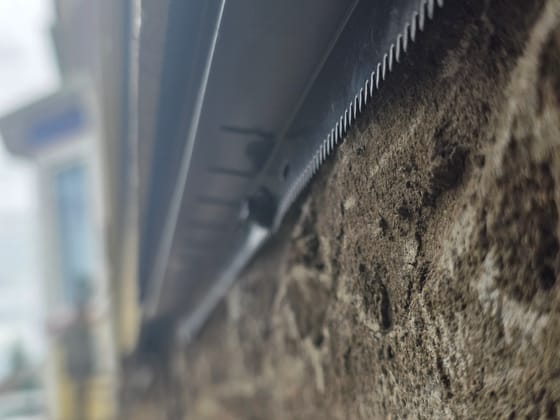
People assume cold weather drives animals indoors. Cold is a factor, but it is rarely the trigger, and the timing gives it away: the arrivals usually start weeks before there is any cold to speak of.
What actually happens is that cover disappears. A field that has supported a substantial population all summer is cut or worked over the course of a few days. Several hundred acres of shelter becomes bare ground in a week. Every animal living in it has to be somewhere else immediately, and the nearest structure with a gap in it is where a good number of them go.
Because it is driven by an event rather than a season, it arrives suddenly and in numbers. That is why a property with no activity at all in July has a genuine problem by the middle of August, and why the householder is convinced something must have changed about their house. Nothing changed about the house. Something changed about the field.
The useful consequence is that this is predictable. If the ground behind you is worked, the work to close the building should be done before it is worked rather than after the animals are already in.
The Northwest bulletins behind advice of that kind are published through the WSU Extension publications store, which is worth a look if you farm or manage ground yourself.
Suburban buildings meeting rural pressure
The buildings here were, for the most part, detailed as town houses — and there is nothing wrong with that until the pressure on them stops being town pressure.
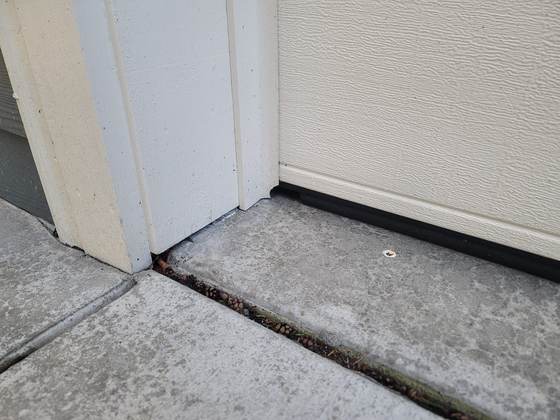
The openings we find are the standard residential ones, and there is nothing exotic about any of them. Crawlspace vents with screening that has corroded from the ground side. Service penetrations for water, waste, power and dryer vents, drilled oversize and never closed. The bottom corners of a garage door, which show daylight from inside if you stand in there with the door shut. A crawl hatch that is a board leaning against a hole. The gap where siding stops short of the foundation.
None of that matters much on an interior lot in a subdivision. All of it matters a great deal when there are field rodents arriving in numbers a hundred yards away.
The work is unglamorous and it is permanent. Quarter-inch hardware cloth correctly fixed rather than stapled over, proper vent units rather than patched screening, sweeps that actually meet the ground, and penetrations closed with something that will not be chewed through. That is a morning’s work per building and it ends the route rather than the individuals using it.
Outbuildings, and the order things fill up in
Once lots get to a certain size out here, there is a shed, a shop, a barn, a carport or all four, and they change the shape of the job.
Outbuildings sit closer to cover and are built and sealed to a lower standard than the house. They fill first, every time. And a full shop forty feet from a house is a permanent supply — the house is not being colonized from the field, it is being colonized from the shop.
That is why sealing a house on a property whose outbuildings are open does not work as expected. It does not remove a population. It concentrates it, and concentrates it right next to the building you care about.
On a property with several buildings the honest unit of the job is the site. Where somebody only wants the house done, we will do it and we will say plainly what it will achieve and what it will not, so that the result is not a surprise in six weeks.
The treeline and the carpenter ants
Where East Blaine backs onto standing timber and mature hedgerow, carpenter ants become a spring and summer story in their own right.
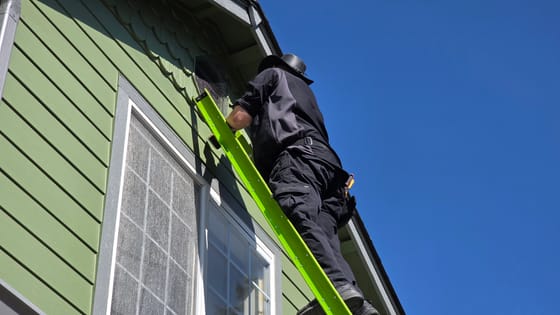
Carpenter ants do not eat wood. They excavate galleries in it to nest, and their natural habitat is stumps, fallen logs, standing deadwood and the soft punky wood at the base of living trees. A treeline behind a property supports a number of colonies that have nothing at all to do with the house.
The way they reach a building is the part most people have never been told. A mature colony maintains a parent nest outdoors and then pushes satellite colonies out from it. Satellites contain workers and older larvae but not the queen, and a wall void, a rim joist or the timber around a skylight suits one as well as a log does.
That is why a house on the edge of cover gets carpenter ants when a house six streets west does not. The colony is already there. It only has to move part of itself indoors.
The signs come in a sequence. Large black ants indoors in March or April, one or two at a time, usually near a window or a sink — foraging, and an indication that something nearby is active. Winged ants emerging indoors later, which mean a mature reproducing colony and, if they are coming out inside rather than flying in, a colony in the structure. And frass, the sawdust-like material pushed out of galleries, which means an active nest directly above wherever it is landing.
Finding the parent colony is the work. Killing the individuals crossing a kitchen floor is not.
Firewood, and the thing everyone does
Nearly every property out here stores firewood, and nearly all of it is stored against the house because that is convenient in February.
Stacked wood against a wall is a covered, dry, undisturbed harborage directly against a building, and it holds carpenter ants, spiders, beetles and rodents in whatever proportion the season provides. Bringing an armful inside brings whatever is in it inside.
The fix is small and nobody wants to hear it: get the stack off the wall and off the ground, keep it away from the building, and bring in what you will burn rather than a week’s supply to sit by the stove. That change alone accounts for a measurable share of the winter callouts on this side of town.
Voles, moles and the things that ruin the ground
On the larger lots out here two animals get blamed for each other constantly, and the confusion costs people a season.
Voles work at the surface. They cut shallow runways through long grass and ground cover, leave small clean openings, and eat plant material — roots, bulbs, and the bark at the base of young trees and shrubs over winter. The damage that matters is the last of those: a ring of bark stripped at ground level will kill a young fruit tree outright, and it happens under snow or long grass where nobody sees it until spring.
Moles work below and eat almost no plant material at all. They tunnel after worms and larvae and push spoil up in conical heaps. The damage is to the surface of a lawn and to anything whose roots get disturbed, not to the plants themselves.
The tell is in the workings. Winding surface trails with clipped vegetation, appearing when long grass is cut short, means voles. Mounds of pushed-up soil and a lawn that lifts underfoot means moles. A property can have both, and frequently does.
Neither of them is much of a building problem — voles occasionally get into a crawlspace or a garage, moles essentially never — which is worth saying because the alarm about them is usually out of proportion to what they actually do. On a place with fruit trees or ornamental planting the vole damage is real and worth acting on; the mole hills are a groundskeeping annoyance.
What actually reduces vole pressure is removing the cover they depend on: keeping grass short around the base of young trees, pulling mulch back from trunks rather than mounding it against them, and guarding the stems of anything newly planted. That is work anybody can do in an afternoon and it is more effective than anything we would apply. The advice is WSU Extension’s for this county as much as ours, and on a place with young fruit trees it is worth acting on before winter.
Wells, septic systems and where things can go
As lots get larger toward the county, properties move onto wells and septic systems, and that shapes placement rather than limiting what can be achieved.
Nothing goes near a wellhead. Nothing goes over a drain field. Where work is needed close to either, we will say so before we do it and explain what is being used and why. Out here that is a normal part of the conversation rather than an obstacle, and a company that does not raise it is not paying attention.
Wasps on a larger lot
Yellowjackets here are a late-summer problem and the dangerous ones are in the ground.
Ground nests get found by machine — a mower, a strimmer, a tractor working a boundary — rather than by eye, and that is how people end up needing a hospital. On a larger lot with rough edges and banks, knowing where the activity is before August is genuinely worth something, and it costs nothing to have somebody look while they are already on the property.
Aerial nests in eaves, sheds and outbuildings are more visible and less dangerous, though a nest in a shop doorway is still a problem. Bald-faced hornets build the large gray paper nests people photograph; European paper wasps build small open combs under railings and are far less inclined to defend them.
Honey bees are not our work. If a colony is in a wall we will say so and point you at somebody who removes them properly.
The autumn crowd on the sunny wall
From late September onward the eastern streets get a set of visitors that belongs specifically to the rural edge, and they turn up together on the first genuinely cold afternoons.
Multicolored Asian lady beetles gather on sun-warmed siding, working whichever elevation gets the low afternoon light, and then push into gaps around trim, siding laps, window frames and attic vents. Brown marmorated stink bugs do much the same thing on much the same walls. Cluster flies accumulate in upstairs rooms and window channels in numbers that seem out of all proportion to any opening anybody can find. Spiders come in for reasons of their own, and this is when people notice them.
The reason this is worse on the edge of open ground than three streets west is supply. All of these overwinter in numbers determined by the surrounding landscape rather than by the building, and a house with fields, rough margins and a treeline behind it simply has more of them arriving at it.
Only the lady beetle bites, and it is a nip rather than an injury. What none of them does is raise young inside or harm the structure. That is not a reason to dismiss the problem — a bedroom ceiling covered in beetles is genuinely miserable, and a stink bug crushed underfoot announces itself for an hour — but it does decide what a sensible response looks like.
Because they do not reproduce inside, the number indoors is entirely a function of how many got in. Spraying indoors repeatedly through the winter kills what is already present and does nothing at all about the supply. Sealing the openings and treating the exterior at the right moment in early autumn addresses the supply. That difference is the whole gap between a house that has this every single year and one that does not.
Timing is the part that is easy to get wrong. Exterior work done too early has faded before the wave arrives; done after they are already on the wall, most of the benefit has gone. It is a narrow window and it moves with the weather, which is why it is worth booking rather than reacting.
What is worth paying for and what is not
The most valuable work out here is physical and it is finished when it is finished: vents, sweeps, penetrations, hardware cloth, and the outbuildings done at the same time as the house.
The least valuable is a recurring perimeter treatment on a property whose real problem is a quarter-inch gap and an open shop. It will produce a visible result, it will need repeating forever, and it will not close the route.
Where the answer to a rodent problem is a morning with a drill rather than a schedule of visits, we will say so, and we will quote the morning.
How a visit works here
We start with the boundary and the cover — what is behind the property, how close it is, whether it gets worked, and what is stored between it and the building. That sets the expectation for everything else.
Then the outbuildings, because on a lot with any of them that is usually where the population actually is.
Then the house at ground level: foundation line, vents, sweeps, penetrations, garage door corners, and where planting or stored material meets siding. Then underneath, with a light, through the whole crawlspace rather than a look from the hatch.
You get a plain account of what is active, what is old, what is driving it, what should be done before the ground behind you is next cut, and which items are building work rather than pest work. Coming out and quoting is free. Bed bug verification is the only exception, its fee is taken off the treatment, and nothing here locks you into a term.
Frequently asked questions
Why do the mice arrive all at once in late summer?
Because the cover disappears all at once. Cutting and harvest strip shelter off a large area within days, and the animals living in it relocate to the nearest structure that week. It gets blamed on the first cold nights, but the move has usually already happened by then.
We are inside the city limits. Why do we get farm pests?
Because pests work from terrain rather than from a boundary line. A house three blocks from open ground is three blocks from open ground regardless of which side of a municipal line it sits on. What changes across East Blaine is not the city limit but how much cover is within a couple of hundred yards.
Is a suburban lot here treated like a rural one?
It depends where on the slope of that transition you are. A tight lot with neighbors on both sides is a city job. A half-acre with a shop and a treeline behind it is a rural job with a suburban address. We quote what is actually in front of us rather than what the street name suggests.
Should the shed and the shop be part of it?
If you have them, yes. Outbuildings sit nearer the cover and are sealed to a lower standard, so they take the pressure first, and a house next to a full shop is being supplied from forty feet away. Doing the house alone concentrates the problem rather than reducing it.
What are the big black ants in the kitchen in April?
Most likely carpenter ants foraging from a colony outdoors, usually in the treeline behind the property rather than in your walls. One or two indoors is a signal that something nearby has become active. Winged ants emerging inside is a more serious signal and means a mature nest, possibly in the structure.
Do you charge extra to come out here?
No. East Blaine is twenty-two miles from us and there is no rural surcharge anywhere in our pricing. Distance affects which day we can be there rather than what it costs.
Is an assessment free?
Yes, for everything except bed bug verification, which carries a fee that comes off the treatment if you proceed. On a larger lot the assessment covers the outbuildings and the boundary as well as the house, because that is usually where the answer is.
Pest problem in East Blaine?
Family-owned, no long-term contracts, and every treatment is backed by our 100% Service Guarantee.
Most calls in Whatcom County are out within 1–2 days, about 3 during the late-summer peak.
Last updated