
Pest Control in Birch Bay Village, Blaine
Birch Bay Village is a gated development with its own marina, golf course and common ground, which makes it two jobs rather than one. Your lot is yours, the grounds around it belong to the association, and a great deal of the pressure arrives from the second.
Call 360-410-2199 Request a free inspection
Birch Bay Village, Blaine on the map
A private development, not a neighborhood
Birch Bay Village is a gated residential community with a Blaine address, its own marina, its own golf course, private roads and a substantial amount of common ground held by the association.
That structure, rather than the housing, is what shapes pest control here. In an ordinary neighborhood a property line is a legal detail and a pest problem is entirely the householder’s. Here a great deal of the ground around your house is not yours, the vegetation on it is not managed by you, and a significant share of what turns up at your door came from it.
Getting a good result depends on being clear about that boundary early, and it is the first thing we work out on site.
First, it is not Birch Bay
The names cause real confusion and it is worth separating them.
Birch Bay is the unincorporated shoreline community — the beach, the state park, the seasonal cabins and the drive along the bay. It has its own page on this site and its own set of problems.
Birch Bay Village is a private gated development inland and north of it, with a Blaine mailing address, controlled access, and its own amenities. Almost nothing about the two is the same from our side of the work: different housing eras, different access, different ownership of the ground, different pressures.
If somebody quotes you for one thinking of the other, the quote will be wrong.
Two jobs, one property
Practically, every call here divides into work on your lot and pressure arriving from common ground, and the division decides what a treatment can achieve.
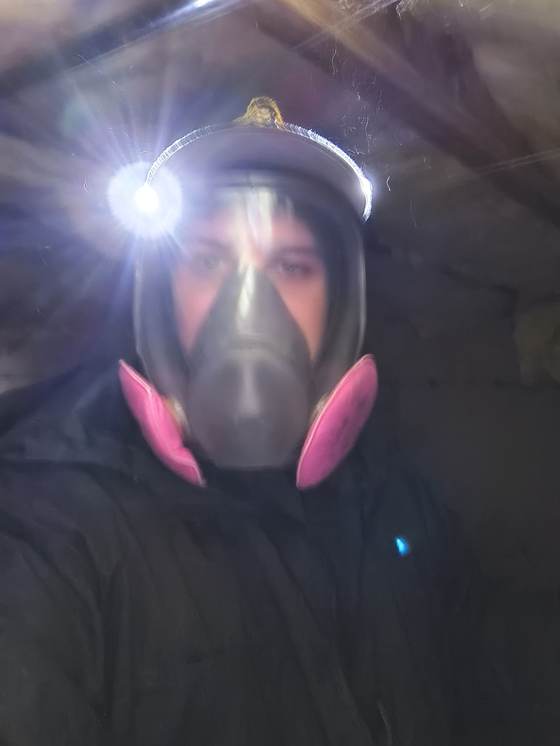
On your lot is everything you control: the building envelope, the landscaping against the walls, the garage, the crawl space, what is stored outside, drainage close to the foundation. All of that is ours to work on directly and it is where most of the durable improvement is.
Off your lot is the rest: common landscaping, the golf course and its irrigation, the lagoon and marina margins, the road verges, the greenbelt strips and whatever is stored in shared areas. That ground supports populations, and those populations do not stop at a boundary they cannot see.
The reason this matters is not to duck work. It is that a homeowner who pays for a thorough job on their own lot, next to an untouched source thirty feet away on common ground, will get a partial result and feel misled. We would rather say at the start which of the two we are dealing with, and where the answer involves the association we will put it in writing so it can be taken to them.
Irrigated turf, voles and moles
A golf course, common lawns and irrigated planting produce one of the most reliable pest patterns in the county, and residents here see it constantly.
Watered turf supports a heavy invertebrate population — worms, larvae, grubs — and dense grass gives continuous cover at ground level. Two very different animals exploit that, and they get confused with each other routinely.
Voles work at the surface. They cut shallow runways through the thatch, leave small neat openings, and eat plant material — roots, bulbs, bark at the base of young shrubs. What people notice is winding surface trails appearing in the grass, especially when it is cut short after being long.
Moles work below. They tunnel for invertebrates and push spoil to the surface in conical mounds, and they eat almost no plant material at all. What people notice is the mounds and a spongy, lifting lawn.
They need different handling, and treating for the wrong one wastes a season. The clue is in the workings: surface runways with clipped vegetation means voles, mounds of pushed-up soil means moles, and a lawn can genuinely have both. If you want a second opinion on which you are looking at, WSU Extension’s Whatcom County office covers both animals and is local.
Neither of them enters buildings often, which is worth saying because the panic about them is usually disproportionate. Voles occasionally get into a crawl space or a garage; moles essentially never. The damage is to the ground rather than to the house.
The lagoon, the marina and where product cannot go
Open water inside a residential development changes the toolkit, and it changes it for good reasons.
Work near the lagoon edge, along the marina and around drainage that reaches either has to respect the water, which means the sprayed residual that would be routine around a foundation two hundred yards inland is not the right approach here. Placements move to enclosed stations and to trapping, and physical exclusion takes on more of the load.
That is not a lesser service. For rodents around water, exclusion and trapping are the more durable answer anyway, because they deal with the route in rather than with the individuals using it. What it does mean is that a job along the water is slower and more mechanical, and it is worth understanding why before somebody wonders what they are paying for.
The water edge also produces its own set of nuisance insects — midges, non-biting flies emerging in numbers on still evenings — which are genuinely unpleasant and are not a treatable structural problem. Where the honest answer is screening and light management rather than treatment, we will say so.
Fifty-year-old housing, and what that predicts
Much of the Village dates from a development era that had its own construction habits, and those habits produce a fairly predictable set of entry points.
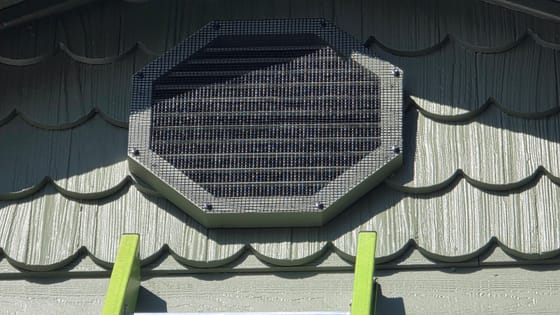
Crawlspaces are typically vented, with the original screening still in place — which by now has had five decades of weather working on it from the ground side where nobody inspects. Service penetrations for water, waste, electrical and telephone were drilled generously and rarely closed up afterward. Siding often runs down close to grade. Garage doors have been replaced once, usually, and the seal at the bottom corners is where daylight shows from inside.
None of that is a defect. It is a building from its period, and it is why we can walk up to a house here and have a fair idea of where to look before we have looked.
The other era feature is the landscaping. Planting installed when these houses were new is now mature, and a great deal of it is hard against the walls with fifty years of accumulated duff underneath. That combination — permanent cover touching siding, over damp organic material — is the single most productive thing to fix on most lots here, and it costs nothing but an afternoon.
Rodents, and the routes they actually use
The pressure here comes from the greenbelt strips, the water margins, the irrigated ground and the general abundance of cover, and it is rats as well as mice.
The routes in are ordinary. A corroded crawlspace vent. A gap where a service line passes through the rim. The bottom corner of a garage door. A crawl hatch that is a board resting against an opening. Where a deck or a patio has been built up against a house, the space underneath is both a route and a place to live, and it is nearly always unscreened.
The one route people under-rate here is the roof. Mature trees planted decades ago now reach the roofline, and a branch touching a roof is a bridge that bypasses everything sealed at ground level. Rats climb well and they will use it. Trimming contact between vegetation and the building is worth as much as most of what happens at the foundation.
Carpenter ants and the wood around the house
Blaine carries carpenter ant pressure and the Village has its own version of it: mature landscape timber, decades-old decks and fences, landscape ties, and stored firewood, all of it now soft in the places that stay damp.
Carpenter ants excavate galleries rather than eating wood, and they take softened timber far more readily than sound timber. A landscape tie that has been in the ground since the seventies is ideal, and it is generally within thirty feet of a building.
The sequence is the usual one — a parent colony outdoors, satellite colonies pushed outward, and a rim joist or wall void serving a satellite as well as anything natural. The signs are large black ants indoors in spring, winged ants inside later on which mean something mature and reproducing, and frass accumulating below a joint, which means an active nest above it.
The useful work is finding the parent colony rather than treating what walks past a baseboard, and on these lots it is frequently in the landscaping rather than in the woods.
Timber, firewood and planting close to a house all sit on the landscape side of this, and WSU’s Hortsense factsheets are written for that ground.
One detail specific to a development of this age is the deck. A great many of these houses gained a deck at some point in the last forty years, built up close against the siding, and the space beneath it is almost never screened. That space is dry, sheltered, invisible and directly against the building — it is simultaneously a route in, a place to live, and the one part of the foundation line that cannot be inspected without dismantling something. Where a rodent problem here resists everything sensible, the deck is where we look next.
Wasps, and the amenity problem
Yellowjackets here are the standard late-summer story with one local complication: a great deal of the ground is amenity ground that people walk across in shorts.
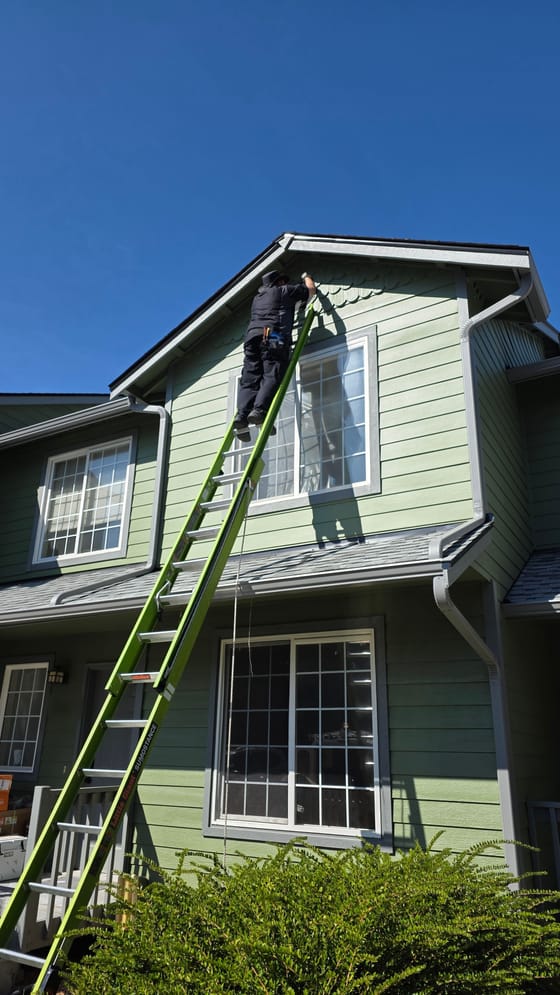
Ground nests along verges, in bank slopes and at the edges of maintained turf are the ones that cause injuries, and they are found by mower rather than by eye. On common ground that is a maintenance-crew hazard as much as a resident one, and it is worth reporting rather than stepping around.
Aerial nests under eaves, in soffits and inside outbuildings are more visible and easier. Bald-faced hornets build the large gray paper nests people photograph; European paper wasps build small open combs under railings and deck rails and are markedly less defensive.
Honey bees we do not treat. If a colony has established in a wall we will identify it and put you in touch with somebody who removes them properly.
Getting in, and getting it scheduled
Access is the one genuinely different piece of logistics here.
Controlled entry means a plan made before the appointment rather than at the gate. Some residents arrange it themselves, some route it through the office, and the association’s procedure is the association’s to set — we will follow whatever it is if you tell us what it is when you book. Turning up unannounced wastes your slot and makes a nuisance of us at the gatehouse.
Private roads and shared parking are worth mentioning too, particularly if a job needs a vehicle close to the building for equipment or for removing material.
Where work spans a lot boundary onto common ground, it needs somebody at the association to agree it before we do it. We are used to that conversation and we can supply what is needed in writing.
What is living in the turf itself
Underneath the vole and mole question sits a third one that nobody asks about until the lawn starts dying in patches, and it is worth separating from the other two because the animals are only the symptom.
Irrigated, fertilized turf grows a heavy population of soil-dwelling larvae. European chafer and crane fly larvae are the two that matter in this county — the first eats roots, the second eats roots and crowns, and both are at their most damaging in spring when the grass is trying to grow and cannot.
What the homeowner sees is turf that lifts like a loose carpet, yellowing in irregular patches, and birds working the lawn hard in the mornings. What they often conclude is that something is burrowing.
The connection to moles is direct and it runs the other way from what people assume. A lawn with a heavy larval population is a lawn worth tunneling under, so the grub problem tends to arrive first and the mole arrives because of it. Dealing with the animal while the food source stays put invites the next one.
This is turf management rather than pest control for the most part, and where that is the honest answer we will say so and tell you what to ask a groundskeeper. On common ground it is the association’s turf and the association’s decision.
Boats, trailers and the storage compound
A development with its own marina has boats, and a development of this kind usually has somewhere to put them, along with trailers, RVs and the equipment that comes with all three.
A storage compound is a concentrated version of the outbuilding problem. Vehicles and vessels sit undisturbed for months, they contain upholstery, insulation, wiring looms and often stored food, and they are parked in rows close together with cover growing up around them.
Rodents find that combination extremely quickly, and the damage is characteristic: chewed wiring, insulation pulled into nests, and fouling inside enclosed spaces that nobody opens until spring. On a boat it is frequently a wiring loom, which is an expensive discovery in April.
The work is straightforward — checking before lay-up rather than after, removing anything edible, and using enclosed stations placed around a compound rather than product applied to individual vehicles. The part that needs organizing is that a compound is shared ground, so it works when it is done for the compound and not much at all when it is done for one boat.
What we would rather you did not pay for
If the lawn damage is moles, the honest position is that this is a grounds problem rather than a building problem, it does not threaten the house, and it does not warrant a treatment program.
If the source of a rodent problem is common ground, the honest position is that a thorough job on your lot will reduce what reaches you and will not end it, and you should know that before you commit rather than after.
And if the nuisance insects on a summer evening are coming off open water, no amount of anything applied to your building is going to change that. Screens, door discipline and lighting will do more, and none of that is billable.
We would rather tell you all three than sell around them.
How a visit works here
We start on the boundary, working out what is yours and what is the association’s, because that decides everything downstream.
Then the exterior of the building at ground level: foundation line, vents, screens, sweeps, penetrations, the garage door corners, and where planting and duff meet siding. Then the roof line and any vegetation touching it.
Then underneath and inside, with a light, through the whole crawlspace rather than a look from the hatch.
You get a plain account of what is active, what is historic, where it is coming from, what we can do on your lot and what needs to go to the association — the last of those in a form you can hand over. Looking costs nothing, bed bug verification excepted, and that fee is deducted from the treatment price. We do not tie the work to a contract.
Frequently asked questions
Is Birch Bay Village the same as Birch Bay?
No, and it is worth being clear about because the names cause genuine confusion. Birch Bay is the unincorporated shoreline community with the beach and the state park. Birch Bay Village is a separate gated residential development with a Blaine mailing address, its own marina, golf course and private roads. Different places, different work.
How do you get through the gate?
You tell us how when you book, and we follow whatever the association's procedure is. Some residents arrange it directly, some go through the office. What we will not do is turn up unannounced and expect to be waved in, which wastes your appointment and irritates the gatehouse.
The problem is coming from the common ground. Whose job is that?
Usually the association's, and that is worth establishing before anybody pays for anything. If the source is on your lot we deal with it for you. If it is in common landscaping, on the golf course or along the lagoon edge, work on your lot alone will not hold, and the useful conversation is with the association rather than with us.
What is making the ridges and mounds in the lawn?
Voles make shallow surface runways and small openings; moles push up conical mounds from tunnels well below. They are different animals with different solutions, and the shared feature is irrigated turf with a good invertebrate population underneath. Identifying which you have is the first thing, because treating for the wrong one achieves nothing.
Our house is from the seventies. Does the age matter?
It shapes what we look for. Housing from that era in this area tends to have vented crawlspaces, original vent screening that has now had fifty years of weather, and generous unsealed penetrations for services. None of that is damage. It is a period of construction, and it means the entry points are broadly predictable.
Can you treat around the marina and the water?
With care, and with limits we will explain on site. Placement near open water is restricted, so work along the lagoon and marina edges leans on trapping, stations and physical exclusion rather than anything sprayed. That is the correct approach regardless, and it is not a compromise.
Does an assessment cost anything?
No, other than bed bug verification, which is charged and credited back against treatment. Here that assessment includes the boundary between your lot and the common ground, because knowing where the source sits decides who should be doing what.
Pest problem in Birch Bay Village?
Family-owned, no long-term contracts, and every treatment is backed by our 100% Service Guarantee.
Most calls in Whatcom County are out within 1–2 days, about 3 during the late-summer peak.
Last updated