
Spiders Appearing Every Fall
Spiders appearing all over the house for a few weeks in autumn is a mating season rather than an infestation. Mature males leave their webs to find females, they walk, and they walk indoors. It peaks over three to six weeks and then stops on its own.
Call 360-410-2199 Request a free inspection
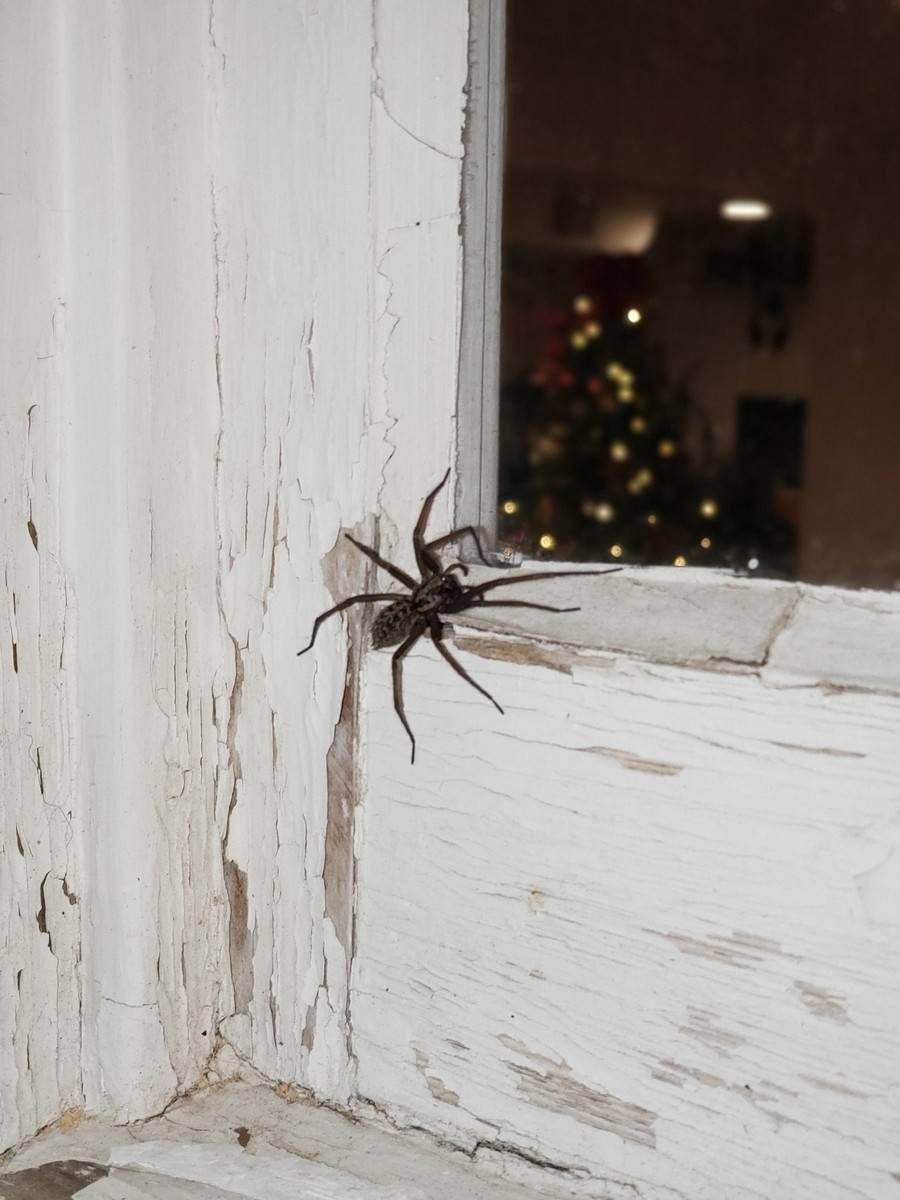
What to do, in order
- Expect the wave from late August into October; it is males walking to find females, and it tapers off by November
- Replace worn door sweeps first, especially on garage side doors and basement doors with daylight under them
- Swap bright white lights by the doors for warmer bulbs or motion sensors so fewer insects pull spiders in
- Drape a towel over the edge of the tub in September so walkers that fall in can climb out
- Skip peppermint oil, chestnuts and ultrasonic plug-ins, and put that money toward a door sweep
- Book sealing and any exterior treatment for the second half of August, before the walk starts; our look at the openings is free
It happens on a schedule
There is a specific and consistent pattern to this, and once you see it as a calendar event rather than an invasion it becomes considerably easier to live with.
Every year, from somewhere around the last week of August through October, a significant proportion of the region’s spiders reach sexual maturity at approximately the same time. The males then abandon the sedentary life they have led up to that point and go looking for females.
They do this on foot. A mature male funnel weaver or orb weaver covers substantial ground over those weeks, moving mostly at night, following edges and surfaces, going through and around whatever is in the way.
Houses are in the way. A building sitting in this landscape is a large obstacle with a great many horizontal gaps at ground level, and a proportion of the spiders walking past will go under a door rather than around a foundation.
Then, in late October and November, it stops. The males have found females or have not, and either way their season is over. The wave ends as reliably as it began.
What it is not
Several intuitive explanations for this are wrong, and they matter because they lead to the wrong response.
It is not spiders coming in from the cold. Spiders in this region are adapted to the winter here and do not need to be indoors to survive it. Most native and established species overwinter perfectly well outside, as adults, juveniles or eggs. The idea that they are seeking central heating is intuitive and it is not what is happening.
It is not an infestation. An infestation is a population arriving and building up inside a structure. This is not that. What runs through these weeks is movement by animals that reached maturity on a schedule, and it subsides without anything having established itself.
It is not a sign that anything has gone wrong with your house. The same wave happens to well-sealed new construction and to drafty older stock; the difference is quantity, not principle.
It is not because you did something differently this year. Year-to-year variation is driven by the preceding summer’s weather and insect abundance far more than by anything a household changes.
Did they walk in, or were they already inside?
The usual account of this — ours included, until we went back and checked it — is that the spiders walked in from outside. There is a second account, from a source that outranks most of what gets published on the subject, and the two belong side by side rather than one instead of the other.
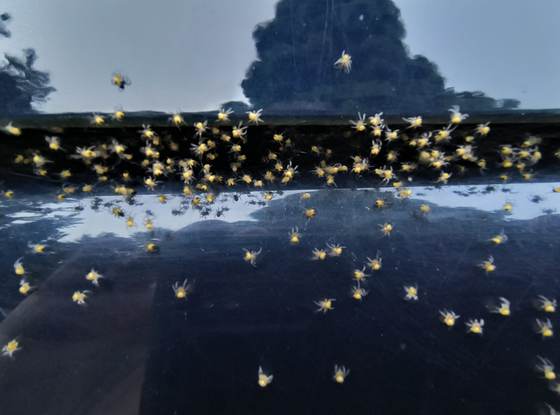
The Burke Museum holds the state reference collection for arachnology in this region, and its position is that house spiders are largely a distinct indoor-adapted lineage rather than outdoor spiders that came in. Generally fewer than five percent of the spiders seen indoors, on that reading, have ever been outdoors at all — which is also why the museum points out that carrying one out to the lawn is not returning it anywhere. The male crossing a kitchen floor in September hatched in the building or in the crawlspace beneath it, and September is simply the month he stopped sitting in a web and started walking.
The first account is not wrong either. Mature males living along a foundation, in a window well, under a deck or in a woodpile do cross thresholds in these weeks, which is precisely why a worn door sweep changes what a household sees. Both things happen. How the total divides between them is a question for people with a collection and a microscope rather than for a pest control company, and we would rather say that than pick the version that sells better.
What matters is that the two readings recommend the same work. Under either one the population was in and around the building well before anybody noticed it. Under either one the gap at floor level is worth closing, because the same threshold is a route in from the yard and a route up from the crawlspace. Under either one the insect supply is the lever, because spiders settle where they can eat and nowhere else. And under either one the whole thing stops in November without a treatment having been involved.
Which spiders
The autumn walkers here are a fairly consistent cast.
Giant house spiders. The large, fast, brown, long-legged ones that produce most of the alarm. Males walking in autumn are what people find in bathtubs and running across floors at night. Harmless.
Other funnel weavers, including the hobo spider, which is closely related and whose fearsome reputation has been substantially retracted by the researchers and agencies that once promoted it.
Cross orb weavers. Outdoors rather than in, but very visible in this season because the females are at full size and their wheel webs appear across doorways, between shrubs and along fence lines. They are the reason people walk into a web on the way to the car in September.
Cellar spiders, which are indoors year round rather than seasonally, but get noticed more when everybody is looking.
Wolf spiders, ground hunters that come in at floor level and are sometimes mistaken for something more serious because of their size and speed.
The one worth genuine caution locally is the western black widow, and it is not part of the autumn walk at all. The state Department of Health describes it as common to eastern Washington, and the range follows the drier, warmer country east and south of the Cascades, so on this side of them it is uncommon. Where one does turn up here it is sitting in an undisturbed dry place — a woodpile, a meter box, a crawlspace corner, the underside of stored material — rather than crossing a living room in September.
Why the bathtub
This gets asked more than anything else on the subject, so: they do not come up the drain.
Modern plumbing has a water trap in it — the U-bend under every fixture — that a spider cannot pass. What happens instead is that a spider walking across a bathroom at night encounters a smooth-sided ceramic or acrylic basin, walks in, and cannot get out again. The sides offer no purchase.
Sinks and tubs are simply pitfall traps, and the spider you find in the morning walked in from the room.
If you would like fewer of them, leaving something in the tub that offers a route out — a towel over the edge, a face cloth — genuinely works.
Why some rooms and not others
The distribution inside a house is about routes rather than about preferences.
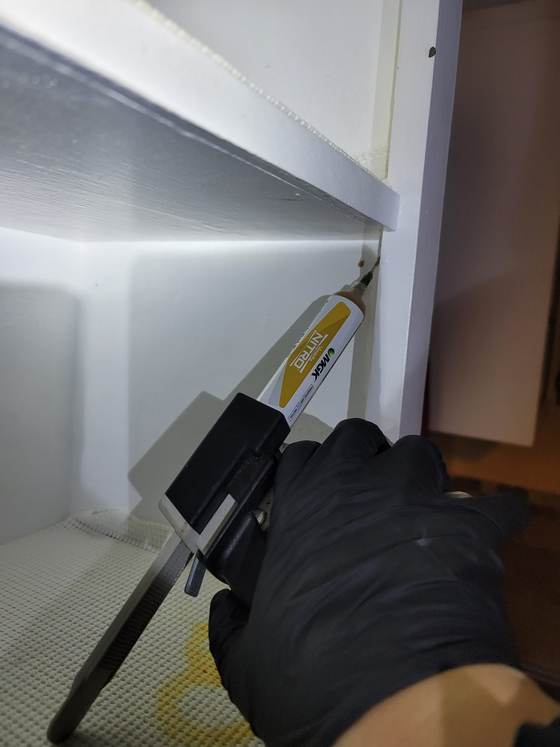
Ground floor beats upstairs, comfortably, because entry is at floor level.
Rooms with exterior doors take the most, particularly where a door sweep has worn, hardened or lifted at the corners.
Basements and garages are entry-rich: bigger gaps, more penetrations, less sealing, and doors that are opened frequently.
Bathrooms and utility rooms collect them because of the smooth basins and because of the plumbing penetrations that connect to the floor structure.
Rooms on the wooded side of a building take more than rooms facing a street.
North-facing walls tend to be damper and support more of the insect life that spiders follow.
Upstairs sightings usually mean either a route up through a wall cavity or a spider that has been in the building a while.
Why some years are worse
The variation is real and it is predictable in hindsight.
A warm summer produces more insects, more insects support more spiders, and more spiders reach maturity to walk in September. A cool wet summer does the reverse.
The weather during the dispersal matters as much. A warm dry September has spiders moving actively night after night. A cold wet one suppresses movement and spreads the same number of individuals over a longer, less noticeable period.
Local disturbance contributes too. Clearing, construction, a hedge coming out or a lot being developed nearby displaces populations, and buildings within a couple of hundred feet see the difference.
And moisture on the property compounds everything. A damp crawlspace, poor drainage, vegetation against walls and standing water all support insect populations, and the spider numbers track the insects.
The timing nobody uses
Here is the practical point of this whole page.
The work that reduces the autumn wave is most effective when it is done in the second half of August, before the dispersal begins. Sealing an entry point in late August means the spiders never get in. Sealing it in late September means sealing around the ones that already have.
Almost nobody calls in August, because in August nothing is wrong. The calls start in the third week of September, when the wave is already running.
If this happens to your house every year — and for most houses in this county it does — then next year’s version of it is decided by what gets done at the end of next summer. That is worth putting in a calendar.
What actually reduces it
In rough order of how much difference each makes.
Door sweeps and thresholds. The single largest lever. A gap you can see daylight through under an exterior door is a highway. Replacing worn sweeps, particularly on garage side doors and basement doors, is cheap and immediately effective.
Exterior lighting. Bright white light near doors and windows pulls in insects in volume, and the spiders follow the food. Warmer color temperatures, motion sensors instead of dusk-to-dawn, and moving fixtures away from entrances all reduce the whole chain rather than one link of it.
Weatherstripping and window seals, especially on older stock where frames have moved.
Screens repaired, and sliding door tracks closed at the ends.
Utility penetrations sealed — the holes cut for water, waste, gas, power, cable and heat pump lines.
Vegetation pulled back off the walls. Shrubs, climbers and overhanging growth are both habitat and bridge, and a clear band around a building helps with several problems at once.
Webs removed regularly, inside and out, through the season. Consistent removal genuinely discourages rebuilding in the same spot.
Crawlspace moisture addressed, because a wet underfloor space is an insect factory and everything above it scales accordingly.
Clutter reduced in garages and storage areas, which is where the spiders you would actually rather avoid choose to live.
A month-by-month view
If it helps to think of this as a yearly cycle rather than an annual surprise, here is roughly how the spider year runs in this county.
January to March. Very little visible. Overwintering adults are inactive, egg sacs are waiting, and the few spiders indoors are established residents like cellar spiders. A good time for sealing work, because nothing is moving and the weather is bad enough that indoor jobs are welcome.
April and May. Egg sacs hatch and enormous numbers of tiny spiderlings disperse, some of them by ballooning on silk threads. Almost none of this is noticed. Insect populations begin to rise.
June and July. Growth. Spiders are outdoors, small, and building the webs that will be conspicuous later. Orb weaver webs start appearing in gardens toward the end of this period. Insect numbers peak, which determines how many spiders make it to autumn.
August. Females reach full size and their webs become obvious. Males begin maturing. The last two weeks are the window where preventive work does the most good, and the point at which almost nobody thinks about it.
September. The wave. Males walking, indoor sightings daily in some houses, orb webs across every doorway in the morning. This is when the phone rings.
October. Continuing but easing through the month. Egg sacs are laid. Weather increasingly suppresses movement.
November and December. Effectively over. What you see indoors from here is resident rather than transient.
Two things fall out of that. The useful maintenance months are the quiet ones, and the season you are experiencing in September was determined by a summer you have already had.
Where treatment fits
We do treat for this, and we will be clear about what it does.
A targeted exterior application in late summer, at entry points, around door and window frames, at the foundation line and under eaves, reduces how many spiders cross the threshold and shortens how long they survive once inside. Applied before the wave, it makes a noticeable difference to a bad season.
What it does not do is prevent the dispersal. Spiders will continue to walk across your property because they live in the landscape around it, and no treatment applied to a house changes that.
We also do not treat orb weavers outdoors as a matter of course. A wheel web across a doorway is easily removed with a broom, the spider will rebuild somewhere else, and it spends the rest of its short life removing flies from your garden.
Where somebody has a serious phobia, the priority shifts and we will say so without treating it as an unreasonable request. It is a genuine quality-of-life issue and the approach — entries, lighting, webs, insects — is the same, just pursued harder.
What does not work
There is a large market in autumn spider remedies and most of it does nothing.
Peppermint oil, and essential oils generally. Widely recommended online. There is little evidence of any lasting repellent effect at domestic concentrations, and what effect exists evaporates within days. It smells pleasant, which is most of its appeal.
Chestnuts on windowsills. A folk remedy with no supporting evidence whatsoever. It persists because the season ends on its own a few weeks after people try it.
Ultrasonic plug-in devices. No credible evidence of effect on spiders or on anything else. Reviewed repeatedly and consistently found not to work.
Vinegar sprays. Kills what they land on directly, does nothing afterwards.
Diatomaceous earth scattered around a room. A real mechanism against insects that cross it repeatedly, but spiders walk on the tips of their legs and cover ground quickly, and it is ineffective once damp. It is also a respiratory irritant when scattered loosely indoors.
Conkers, sprays, sachets and gadgets generally. If a product claims to make a house spider-free through the autumn, the claim is doing the selling.
We mention these not to be dismissive of people trying things — everybody tries something — but because money spent on them is money not spent on a door sweep, which actually works.
Living with the season
For most households the proportionate response is a small set of habits rather than a program.
Keep a glass and a piece of card somewhere handy, because the catch-and-release method takes ten seconds and works on anything.
Leave a towel over the edge of the tub in September.
Shake out shoes and gloves left in a garage or a shed, which is sensible year round.
Knock down webs at doorways in the morning rather than walking into them at night.
And know that the third week of October is roughly when it starts easing, and November is when it is done. It is a season, and seasons end.
The other autumn arrivals
Spiders are not the only thing walking in during those weeks, and it is worth knowing what else the season brings because the calls tend to arrive together.
Rodents. The same cooling that triggers the spider dispersal drives the annual rodent push, which runs from late September through November. If your house is getting spiders under a door, it is worth checking the same openings for the gaps that matter to a mouse.
Cluster flies. Large sluggish flies gathering on warm south and west walls in October, then finding their way into attics, wall voids and upstairs rooms to overwinter. They reappear on warm winter days, which confuses people.
Stink bugs and boxelder bugs. Congregating on sunlit walls in the same weeks and using the same gaps to get into wall cavities and attics.
Ladybird beetles, which do the same thing and are more welcome.
Wasps. Not arriving so much as ending. Late-season colonies are at maximum size and their foragers are looking for sugar, which is why they turn up around bins and fruit in September before dying off with the frosts.
The reason to mention all of this on a spider page is that the remedy overlaps almost entirely. Door sweeps, weatherstripping, sealed penetrations, repaired screens and closed vents deal with the spiders, the mice, the flies and the overwintering beetles at once. Work done in August for one of them is work done for all five.
If somebody in the house is frightened of them
We deal with this often and we would rather address it directly than skirt it.
A serious fear of spiders is common, it is not a character flaw, and for the people who have it the six weeks from late August are genuinely difficult — rooms avoided, sleep disrupted, a household reorganized around where something was last seen.
If that describes your situation, say so when you call. It changes the priorities. The measures are the same but the emphasis shifts: sealing done before the season rather than during it, bedrooms and bathrooms prioritized over a garage, webs cleared on a schedule rather than when noticed, and a treatment timed to the front of the wave rather than the middle of it.
It also changes how we talk about the result. We will not tell you your house will be spider-free, because it will not be and a promise like that fails badly. What we will do is set out honestly how much of a reduction is achievable, so that the season is planned for rather than endured.
What we will do
We will walk the building, show you the specific openings the spiders are using on your house rather than a generic list, and tell you which two or three changes would make the largest difference.
Where a treatment is worth doing, we will say when to do it — which is usually sooner than you have called — and what to expect from it, including the parts it will not fix.
Assessment is free, there is no term agreement, and if what you have is an ordinary September in a house at the edge of the woods, you will hear that rather than a quote for a quarterly plan.
Frequently asked questions
Are they coming inside to get warm?
Mostly no, and this is the most persistent myth about it. Spiders do not seek heat, and most of the ones you see are not looking for shelter. They are males walking to find females, and your house happens to be in the way.
How long does it last?
Typically three to six weeks, from late August or early September into October depending on the year and the weather. It tapers rather than stopping abruptly, and by November it is over.
Why is it always the same rooms?
Because entry is at ground level and by route rather than by preference. Basements, ground-floor bathrooms, garages, utility rooms and any room with an exterior door take most of it, and bathtubs collect what cannot climb out.
Is it worse in some years?
Yes, and the driver is the preceding season. A warm summer with good insect numbers produces more spiders reaching maturity, and a dry warm September has them moving more actively than a cold wet one.
When should preventive work be done?
Late August, before the wave starts. Almost everybody calls in the third week of September, by which point the sealing that would have helped most is being done around insects already inside.
Will treatment stop it completely?
No. A treatment reduces what gets in and how long they survive once inside. Nothing available stops a seasonal dispersal across a wooded county, and anybody claiming otherwise is overselling.
What does it cost to have somebody look?
Nothing. We will walk the exterior, show you where they are getting in, and tell you which of the practical measures would make the most difference on your particular building.
From the blog
Spider Control in Whatcom County?
Family-owned, no long-term contracts, and every treatment is backed by our 100% Service Guarantee.
Most calls in Whatcom County are out within 1–2 days, about 3 during the late-summer peak.
Last updated