
Restaurant & Food Service Pest Control
A restaurant is judged on a walkthrough that happens without warning, so the program has to hold on any given Tuesday rather than on a scheduled one. Most of the work is drains, deliveries and the back door. Visits are scheduled around service, and findings reach you the same day rather than in a monthly summary.
Call 360-410-2199 Request a free inspection
What gets checked, at a glance
| Visit records | A dated entry each visit covering what was found, what was done, and what was recommended to whom |
|---|---|
| Device map | Where devices are used, a map that a stranger to the kitchen could follow |
| Paperwork on file | Licensing and product documentation for anything applied, ready when somebody asks for the program |
| Health inspector's focus | Droppings or activity in storage and prep, gaps at the back door, the dumpster area, and program records |
| Visit timing | Before opening or after close, vehicles off the frontage, technicians in plain uniform |
| Cockroach clearance | Two or three visits close together at the start, then recurring prevention |
| Findings | Reach you the same day |
| Who fixes structure | Exclusion items split in the program between what we do and what a landlord or contractor must do |
Judged on an ordinary Tuesday
A processing plant is audited on its records over a year. A restaurant is judged on a walkthrough that arrives without an appointment, looks at what is there that day, and writes down what it sees. The rules behind that walkthrough trace back to the FDA Food Code, the model state and local regulators build their own food rules from.
That difference shapes everything. There is no preparing for it, because the point of it is that you cannot. So the only strategy that works is a building and a program that hold on an ordinary day — a Tuesday in February when the walk-in is being restocked, someone has called in sick, and nobody was expecting anybody.
Which means the useful question is not “are we ready for the inspector”. It is “what does this building do when nobody is watching it”, and the answer is almost always about three things: the drains, the deliveries and the back door.
The three that account for most of it
Drains and the organic film. The single largest source of recurring complaints in food service, and the one most often treated at the wrong end. Small flies — drain flies, phorid flies, fruit flies — do not fly in. They breed in a film of organic material, and a restaurant produces that film continuously in drain lines, under equipment plinths, in floor cracks, in a mop sink, behind and beneath anything that is never moved. Spraying the adults clears the air for an evening. The population is back inside a week because the breeding site is untouched.
Deliveries. The other end of the building, and the one nobody watches. Cockroaches arrive in cardboard, produce, beverage crates and returnable containers. Stored product insects arrive inside dry goods. A restaurant with excellent housekeeping and no receiving standard will keep importing problems it then pays to remove.
The back door and the dumpster. The back door stands open in a busy kitchen because the kitchen is hot, and it is the shortest route between the dumpster enclosure and the food. Whatever the enclosure is supporting has a direct, regularly opened path inside. On a great many sites we walk, the whole rodent picture is a dumpster twenty feet from a propped door.
Fix those three and most of the rest becomes manageable. Skip them and no visit schedule will hold.
Cockroaches, and the difference between elimination and management
German cockroaches are the defining restaurant pest, and it is worth being clear about something the trade is often vague on: a German cockroach population can be eliminated. Not suppressed, not managed — eliminated. If a program is not aiming at that, you are buying maintenance on a problem that did not have to be permanent.
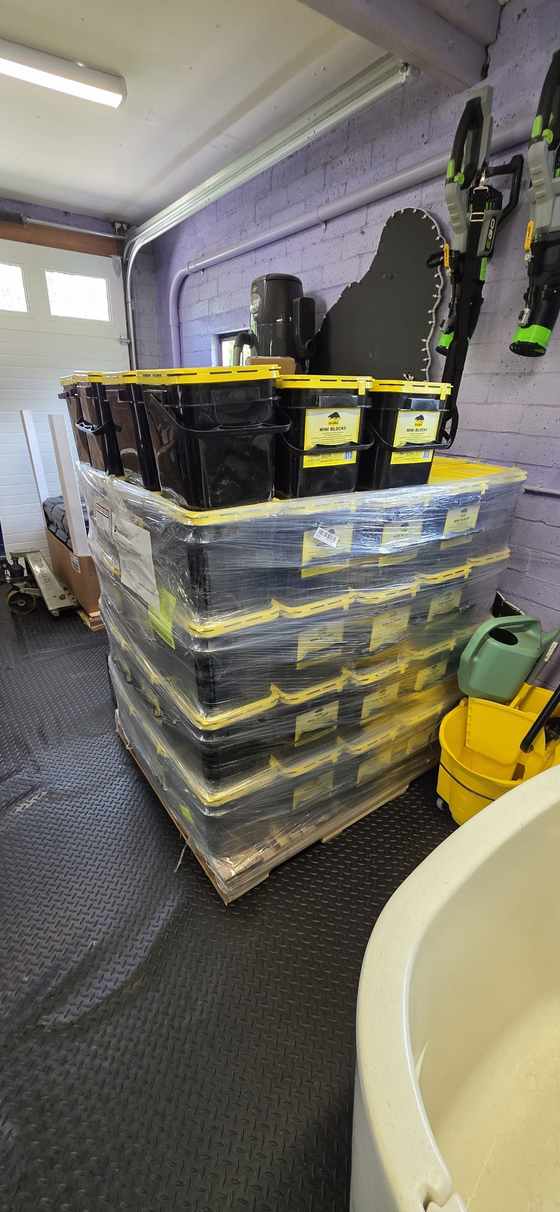
Getting there needs a few things done properly.
Identification first. German cockroaches, which breed indoors in warm voids and equipment, are a different job from the larger, slower roaches that come up from a damp crawlspace, a floor drain or a sewer connection. The second is a moisture and exclusion problem and baiting alone will not settle it. Deciding which is on the glue board before quoting is the difference between a program that ends it and one that repeats.
Baiting rather than repellent spraying. Repellents scatter a population into voids you cannot reach and make the job longer. This is the most common way a restaurant’s own efforts, or a cheap contract, make things worse before we arrive.
Getting into the harborage. They live inside equipment — motor housings, control panels, the void under a plinth, the gap behind a stainless splashback, the hollow leg of a prep table. Work that treats the room and not the equipment treats the wrong place.
Frequency at the start. Two or three visits close together at the beginning, not one a month for a quarter. The population is on a breeding cycle and the schedule has to be built against it rather than against a billing period.
After that, recurring service is prevention: monitoring, receiving discipline and keeping the conditions from rebuilding. That is a genuinely different purchase from the initial clearance, and it should be described as one.
Rodents in a restaurant
Inside Bellingham the rodent picture is rats — Norway rats at ground level using foundations, drains and voids, and roof rats where trees, wires or a fence reach a roofline. Mice are more of a county animal than a city one, which surprises people.
In a restaurant the places that matter are:
- The dumpster enclosure and the ground around it, which is the reservoir
- The back door and its threshold, which is the route
- Drain lines and any abandoned or dry connection, which is the route nobody looks at
- Voids behind and beneath equipment, which is the harborage
- Dry storage and the racking, which is the reward
- Ceiling voids and above suspended tiles, particularly in older downtown buildings
The work is exclusion first — the threshold, the penetrations, the gap at a pipe, the vent with no screen — then trapping to clear what is inside, then management of the exterior conditions that keep pressure on the building. Treating without closing produces a permanent contract, which is a good business model for somebody and a poor purchase for you.
Bars, breweries and taprooms
Bellingham has an unusual density of breweries and taprooms for a city this size, and they are not simply restaurants that serve less food. The pest picture is different enough to be worth its own paragraph.
Small flies are the dominant problem and beer is the reason. Sugar residue gets everywhere a line runs and everywhere a glass is set down: drip trays, the underside of a bar top, the well, the gap between a cooler and the wall, the floor beneath a keg cooler, and the drain that takes the rinse. Fruit flies breed in a film that is thinner than most people picture — a residue nobody would call a spill is enough. The work is finding the ones that never get cleaned because they are never seen.
Drip trays and the soda gun holster are the two most reliably productive places on any bar we inspect, and they are on nobody’s cleaning rota because they look self-cleaning.
Keg and cold rooms bring the cold-storage problem in miniature: activity concentrates at the warm side of the envelope, at the door seals and surrounds, and in the condensate drain, which stays wet permanently.
Production breweries add grain. Spent grain is a substantial volume of wet organic material leaving the building on a schedule, and where it is stored before collection decides whether it is a fly and rodent problem or just waste. Malt storage brings stored product insects, which arrive inside the sack rather than through the door.
Late hours also change the scheduling. A taproom closing at midnight and opening at noon has a genuinely narrow service window, and the program has to be built into it rather than fitted around a nine-to-five assumption.
Patios, decks and outdoor service
Outdoor seating extended the season here and it added exposure, so it is worth saying what changes.

Wasps are the main one, and August and September are the heaviest weeks of our year. A nest in a patio umbrella, under a deck rail, in a heater housing or above a service door is a customer-facing safety problem rather than a nuisance, and on a patio it is also a liability question. These are the calls we prioritize out of order.
Waste on a patio is the second. A bin that works indoors is under-specified outdoors in summer, and an open bin twenty feet from tables is a fly generator and a wasp attractant in one.
The third is structural: decking creates a covered void at ground level, and where that void sits against a building with food in it, it is harborage in the best possible position. Screening the perimeter of a deck is unglamorous and it does more than anything applied.
Shared buildings, which change the scope
A great deal of Bellingham’s food service sits in connected buildings: downtown blocks, Fairhaven, strip retail on the arterials, and converted older stock where a restaurant shares a wall, a chase and a roof void with a neighbor.
In those buildings your pest scope is not your lease. A German cockroach population in the unit next door has access to your kitchen through the same plumbing chase that connects your sinks. A rodent problem in a shared ceiling void belongs to everybody. And a dumpster enclosure shared between six tenants is managed to the standard of the least careful of them.
We will say plainly when a problem cannot be resolved inside your four walls and what the building-level scope would be. That is a harder conversation than treating your own space, and it is the honest one. Where a landlord is responsible for common areas, a dated record of findings is what turns a request into something actionable.
Working around service
Discretion and scheduling are not a nicety in food service, they are most of what makes a program tolerable.
Visits happen before opening or after close on almost every account. Vehicles can stay off the frontage. Technicians work in plain uniform. Where daytime access is unavoidable, back of house comes first and the front is a walk-through rather than a production.
Placements go where they cannot be seen by guests, cannot be reached by staff carrying trays, and cannot affect food, packaging or contact surfaces. In a food setting mechanical control — trapping, monitoring, exclusion — carries more of the load than it does elsewhere, because it introduces nothing into the environment.
And where a job genuinely cannot be done safely around food, we will say so and propose the alternative rather than working around the constraint quietly.
Grease, waste and the outside of the building
The exterior is where most restaurant pest pressure is generated, and it is usually somebody else’s job, which is why it drifts.
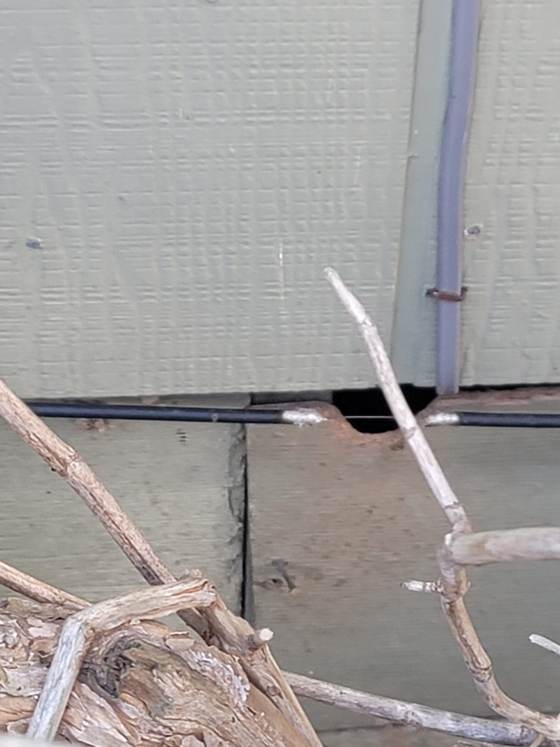
The grease interceptor. Organic material, warmth and moisture in a confined space. On the schedule it is fine. Off the schedule it is a fly breeding site and an odor complaint waiting to happen.
The dumpster enclosure. Whether the lids close, whether the gates close, whether the ground can be washed and is washed, and how often it is emptied through summer. This single item moves more rodent pressure than anything inside the building.
Cardboard. Stacked flat against a wall outside, it is harborage and it is also the thing cockroaches arrived in. Broken down and removed promptly it is neither. Corrugated board is close to ideal cockroach harborage — warm, dry, dark, and full of flutes exactly the width of an insect that wants its back and its belly touching something at once. A stack held for a week is not storage, it is a breeding site with a delivery schedule.
Drainage and standing water, including where a hose is used to wash down and the water has nowhere to go.
Vegetation and stored equipment held against the building, which gives cover right up to the wall.
The record, and what to have ready
Restaurants do not face the annual audit burden a processing plant does, but there is a version of it and it turns up unannounced.
What a program produces is a dated record of each visit: what was found, what was done, what was recommended and to whom. Where devices are used, a map somebody unfamiliar with the site can follow. And the licensing and product documentation for anything applied.
The value of this is not that it satisfies anybody by itself. It is that when somebody asks whether you have a pest management program, the answer is a file rather than a sentence, and that the recommendations you have been given exist in writing with dates on them.
We are not your health authority and a pest program does not guarantee an inspection outcome. It removes one of the standard reasons for a poor one.
Staff, and the part training actually changes
Every restaurant has turnover, and pest outcomes track a small number of behaviors that new staff do not automatically know:
- Breaking down and removing cardboard rather than stacking it
- Not propping the back door, or propping it with a screen in place
- Reporting a sighting rather than assuming somebody else has
- Keeping the mop sink and its surrounds clean, because it is a breeding site
- Rotating dry stock and dealing with a split bag immediately
- Not stacking anything against the wall in dry storage, so the floor can be seen
We will brief a team on these when it is useful, in ten minutes rather than an hour, because the list is short and the return on it is larger than anything else available for the same money.
The year in food service
Spring. Small fly pressure begins as temperatures rise. Ants appear, predominantly odorous house ants, and a repellent spray from a cash-and-carry will split the colony rather than kill it.
Summer. Peak fly pressure, patio and outdoor service adding exposure, waste volume up, and doors open. The dumpster enclosure decides the summer.
August and September. The heaviest weeks of our year, driven by stinging insects, which around a restaurant means nests at entries, patios and waste areas, where they are a customer-facing safety problem rather than a nuisance.
Autumn. Rain saturates the ground and displaces the outdoor rodent population; the first sustained cold decides where it goes, and a warm kitchen with a propped door is the best address on the block. This is when rodent calls spike and when the exclusion done in spring pays for itself.
Winter. The quiet season for arrivals and the working season for structure: thresholds, penetrations, drain work and the exclusion that cannot be done in a busy summer.
Where we work
Restaurant and food service work runs across Bellingham — downtown, Fairhaven, the Guide Meridian and Sunset corridors, and the neighborhood kitchens between them — and out through Ferndale, Lynden, Blaine, Birch Bay and Sudden Valley, then south into Mount Vernon, Burlington and Sedro-Woolley. Cafes, bars, breweries, taprooms, bakeries, commissaries and institutional kitchens are the same category of work.
Starting
We walk the site with somebody who knows the kitchen, ideally outside service. The walk covers receiving, dry storage, the line, the dish area, drains and the mop sink, the walk-in surrounds, ceiling voids where they are accessible, the back door, and the dumpster enclosure — which is usually the most informative five minutes of the visit.
What comes back is a written program: areas in scope, the exclusion items split into what we do and what a landlord or contractor has to, visit frequency and timing around service, the monitoring layout, the documentation package, and the housekeeping and receiving items that will decide the result.
There is no long-term contract requirement. For a walk before opening or after close, call or text.
Frequently asked questions
Will anyone see you working?
Not if it is planned properly. Most restaurant visits happen before opening or after close, vehicles can stay off the frontage, and technicians work in plain uniform rather than anything conspicuous. Where daytime access is unavoidable we work back of house first and keep the front to a walk-through. Discretion is a scheduling problem rather than a technique problem, and it is designed in at the start.
Why do the small flies keep coming back after treatment?
Because they are breeding in something rather than flying in. Drain, phorid and fruit flies develop in the organic film inside drain lines, under equipment plinths, in a cracked floor holding residue, in a mop store or behind a tank. Treating the adults empties the air for a day. Until the film is found and removed, the population is replaced from the same place within the week.
Can you get rid of cockroaches for good, or is it a monthly thing?
A German cockroach population can be eliminated rather than managed, and if a program is not aiming at that you are paying for maintenance. It takes correct identification, baiting rather than repellent spraying, attention to the harborage inside equipment and voids, and usually two or three visits close together rather than spread across a quarter. Ongoing service after that is prevention, which is a different purchase.
We are in a shared building. Does that change anything?
Substantially. In a strip of connected units, a shared wall, a shared chase and a shared dumpster enclosure mean your neighbor's problem is your problem, and a program scoped to your four walls will keep being reinfested. We will tell you when what you actually need is a conversation with the landlord about the whole building, even though that is a harder sell than treating your own space.
What does the health inspector actually look at that we can control?
In pest terms it is evidence and access: droppings or activity in food storage and prep areas, gaps at the back door and around penetrations, the state of the dumpster area, and whether there is a program with records behind it. The last one is the easiest to have ready and the one most often missing when somebody asks for it.
How is a restaurant program priced?
From the walk. The variables are the size of the back of house, how many separate storage and prep areas there are, the state of the drains and the dumpster enclosure, whether there is an active problem to clear before a program starts, and the visit frequency the site needs. Most restaurants sit on a recurring schedule because the pressure is continuous.
This is one of the programs described on our commercial pest control page, which covers how a program is built, what the record looks like, and the compliance surface it contributes to. For a site walk, call or text 360-410-2199.
Commercial pest control in Whatcom County?
Family-owned, no long-term contracts, and every treatment is backed by our 100% Service Guarantee.
Most calls in Whatcom County are out within 1–2 days, about 3 during the late-summer peak.
Last updated